
Are Biopics Even Real Movies Anymore? | Micheal Review [Podcast]
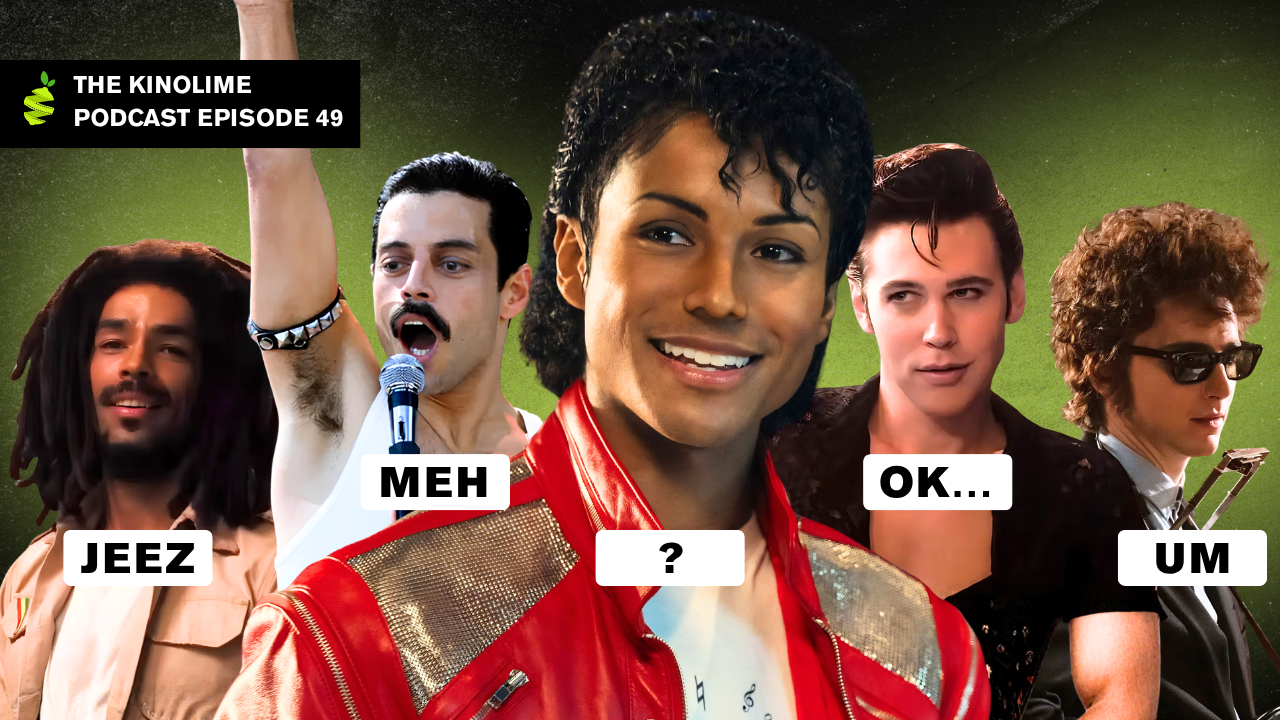
John and Danny dive into one of the year’s most divisive films: Michael. What starts as a debate about the Michael Jackson biopic quickly turns into a larger conversation about the state of modern musical biopics, nostalgia-driven filmmaking, and whether these movies are still “films” or have evolved into full-blown theatrical experiences.
The two unpack the formula behind today’s biggest biopics, from Bohemian Rhapsody to Elvis, while debating character versus icon, spectacle versus substance, and why audiences continue showing up in massive numbers for these stories. Along the way, they discuss performance, storytelling, controversy, box office trends, and the challenge of portraying legendary artists honestly on screen.
Whether you loved Michael or hated it, this episode explores what screenwriters can learn from one of the most talked-about movies of the year.
Full Transcript: Kinolime Podcast Episode 49: Are Biopics Even Real Movies Anymore? | Micheal Review
Participants
John Schramm - Head of Development, Kinolime
Danny Murray - Creative Executive, Kinolime
John: Welcome to the Kinolime Podcast. Today’s a joyous day because we’re talking about one of my favorite movies of the year: Michael.
Danny: Your favorite movie of the year is Michael?
John: I clapped at the end of this movie.
Danny: Shocker.
John: And Danny hated it, which means we’re going to have a healthy debate today.
For all the screenwriters listening, this is one of those movies where you can learn so much from what works and what doesn’t. I learned very early on to watch bad movies just as carefully as great ones.
So before we dive in: if you don’t want spoilers, go see Michael first.
John: I really enjoyed Michael. But I’m very divided on it as a film.
What fascinated me most was this question: Are biopics even movies anymore?
Because I don’t know. They almost feel like experiences now.
And honestly? I loved the experience.
Danny: The funny thing is, you didn’t really love the film itself. You loved the feeling it gave you.
This movie turned you back into twelve-year-old Long Island Johnny moonwalking in the front row of the theater.
Danny: That’s why these movies work. It’s nostalgia. Every person who grew up with Michael Jackson wants to relive that feeling again.
And this movie taps directly into that.
John: But people aren’t just showing up opening weekend. This movie is dominating.
People are going back on Tuesdays to watch it again. That doesn’t happen unless audiences are emotionally connecting to something.
Are Musical Biopics Still “Movies”?
Danny: Most modern musical biopics are basically:
Wikipedia pages,
mixed with greatest hits albums.
That’s the structure now.
You get:
family conflict,
emotional scene,
hit song,
celebrity cameo,
concert sequence.
Then repeat.
Danny: If you really look at the structure of Michael, the movie keeps repeating the same cycle:
Joe gets angry at Michael,
Michael feels lonely,
Michael plays with an animal or visits a sick kid,
an executive says “You got the stuff, kid,”
then there’s a big concert sequence.
That happens like four times. There’s not really escalating conflict.
John: No, there is an arc. The movie is about a boy trying to break free from his father’s control.
Michael wants independence. He wants to become a solo artist. He wants to express himself creatively outside the Jackson 5.
That’s clearly there.
Danny: Honestly? I started rooting for Joe Jackson because he was the most compelling character in the movie. He’s this steelworker saying:
“I will destroy myself if it means my family succeeds.”
That’s dark and fascinating.
Meanwhile Michael mostly:
dances,
looks sad,
and plays with animals.
John: But Michael’s conflict is internal. He’s carrying:
his family,
his brothers,
his father’s expectations,
and the pressure of becoming the greatest performer in the world.
That matters.
The Performances
John: Say what you want about the script, but Jafar Jackson was unbelievable.
Not only did he impersonate Michael physically, but there were moments where I genuinely forgot I wasn’t watching Michael Jackson himself.
The dancing. The singing. The movement.
It was eerie.
Danny:I’ll absolutely give the movie that. The concert recreations were insane.
The Thriller sequence especially was ridiculously accurate.
Character vs. Icon
Danny: The biggest issue with these giant musical biopics is that they focus on the icon instead of the person. They’re designed to preserve the myth.
Because the estates and families involved don’t want messy portrayals.
Danny: That’s why movies like this rarely feel emotionally dangerous.
They smooth out:
the controversies,
the contradictions,
and the uncomfortable parts.
John: But the movie ends before the allegations era. That’s important.
The film is focused specifically on:
Michael’s rise,
the Jackson family,
and his transition into becoming a solo artist.
The “Fun” Debate
John: I think critics sometimes forget that movies are also supposed to entertain. And Michael entertained me. It was fun. That matters.
Danny: You’re trying so hard to defend this movie. Every time I criticize it, you start philosophizing:
“But what even IS cinema?”
John: Because I genuinely think audiences miss having fun at the movies.
That’s why films like Top Gun: Maverick exploded. People wanted spectacle again.
Danny: I like fun movies too. I just didn’t think this one was emotionally honest enough for me.
The Evolution of the Musical Biopic
John: I think musical biopics are evolving into something different. They’re becoming:
concert experiences,
nostalgia events,
theatrical fan celebrations.
Not traditional dramas.
Danny: That’s true. And honestly, the most interesting biopics usually focus on:
one specific period,
one emotional crisis,
or one defining moment.
Not an entire Wikipedia summary of somebody’s life.
Dream Biopic Ideas
John: I’d love to see a Nirvana biopic.
Kurt Cobain is one of the most fascinating public figures ever.
There’s so much emotional depth there.
Danny: I’d want a Kobe Bryant biopic focused entirely on 2004.
One difficult year. One emotional crisis.
That’s where great character drama lives.
Final Thoughts
John: At the end of the day, cinema is personal.
Some people want:
deep psychological character studies,
political storytelling,
and emotional devastation.
Other people want:
spectacle,
music,
energy,
and fun.
And honestly? Both are valid.
I had an absolute blast watching Michael.
Danny: Even though I didn’t love the movie, I still think films like this are great learning tools for screenwriters.
Study them.
Ask yourself:
what works,
what doesn’t,
what audiences forgive,
and why certain stories connect.
Because whether you loved Michael or hated it… people are showing up for it.
And that means something.