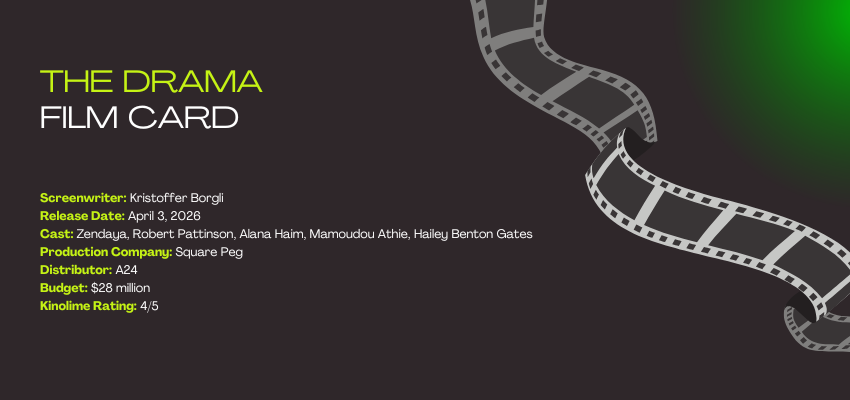
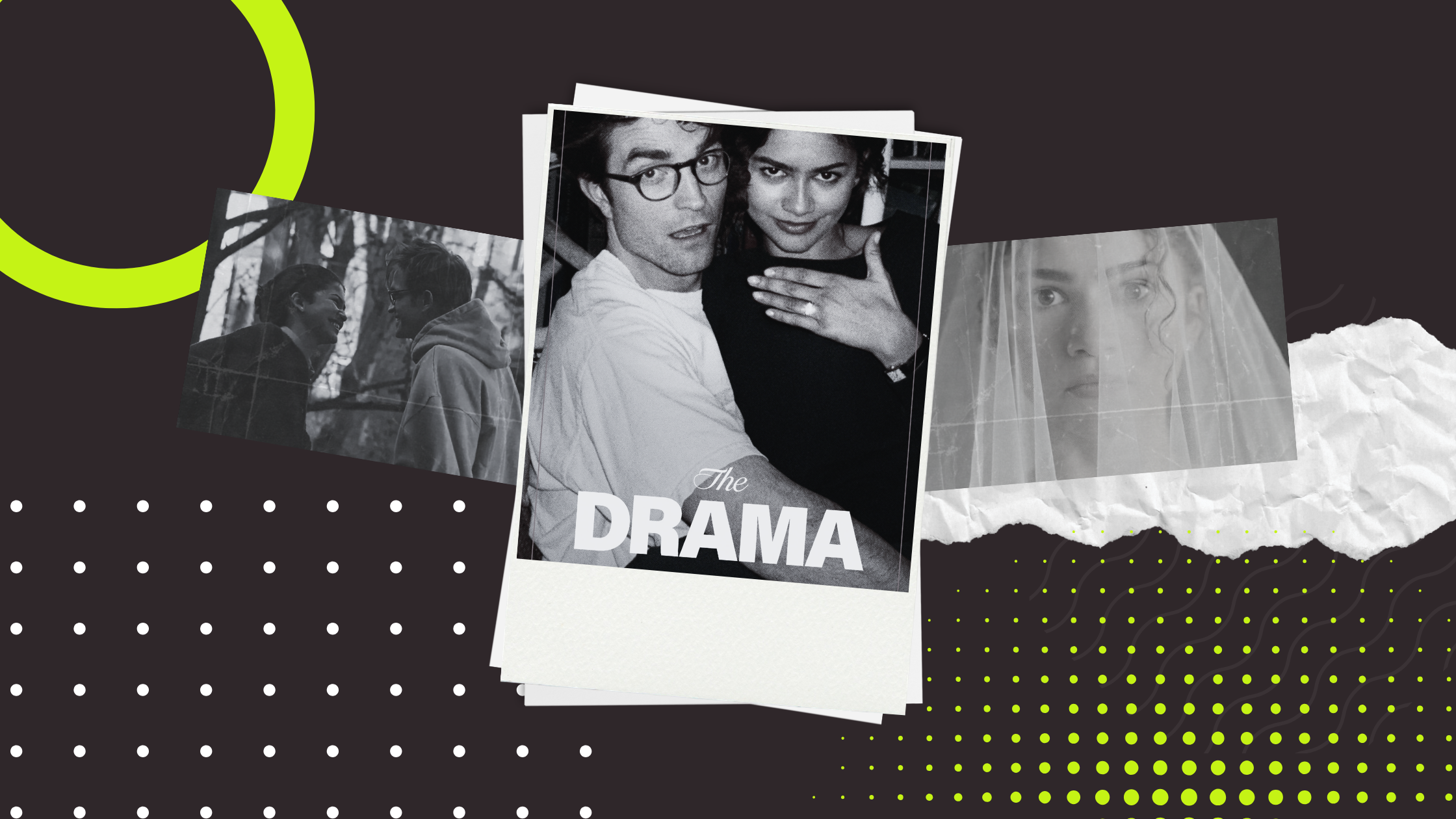
The Drama, written by Kristoffer Borgli and starring Zendaya and Robert Pattinson, is a film released by A24 earlier this year. A romantic black comedy but with “drama” in its title, the film is an exemplary blend of romantic comedy, black comedy, and drama.
The film often misleads the audience into expecting things to play out according to one genre’s template before completely subverting their expectation with elements of another genre. And incorporated into these shifts are complex discussions surrounding issues of violence, how society influences its teenagers, and the boundaries of empathy and understanding.
Opening Image
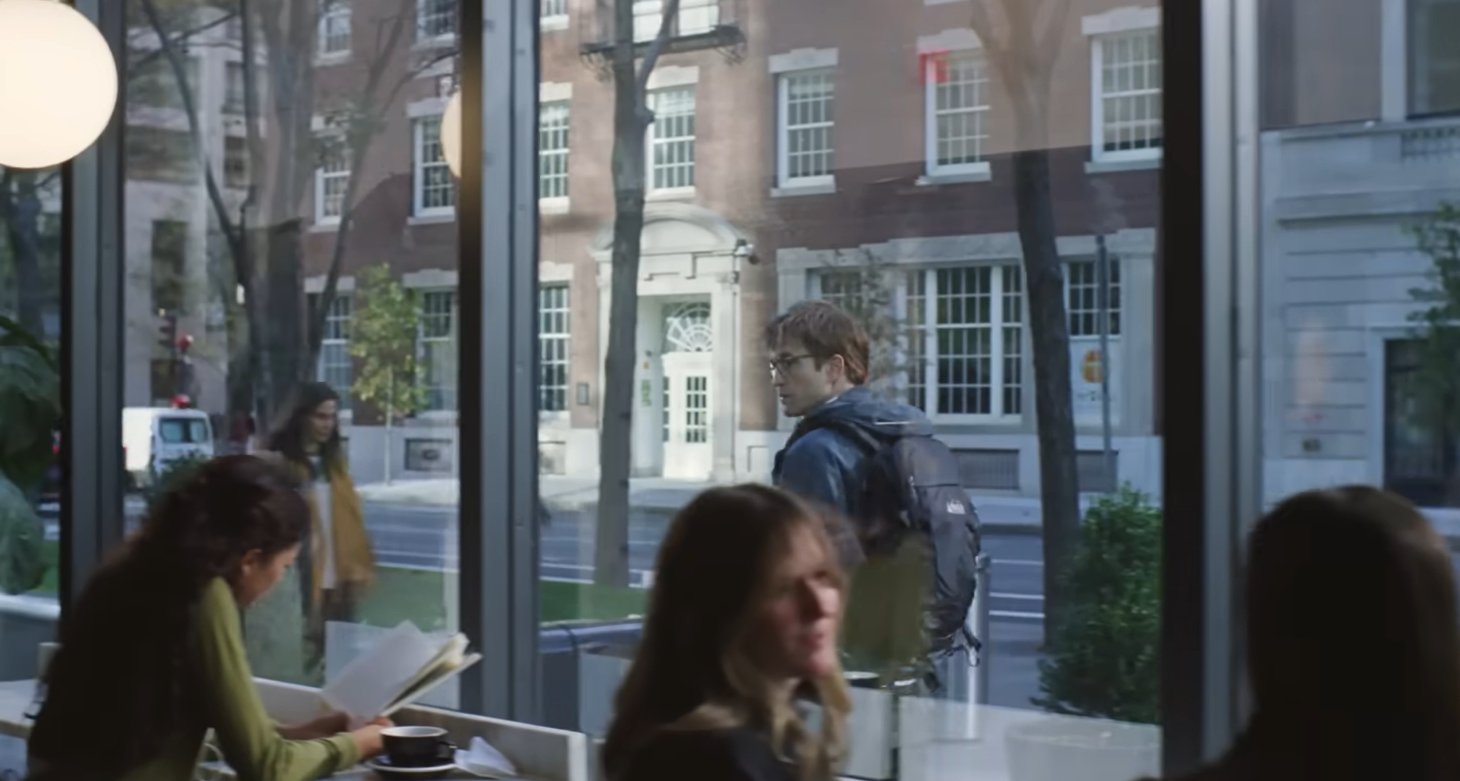
The Drama opens with the lightheartedness of a romantic comedy. Charlie, “a thirty-something British expat with a slender build and sympathetic face,” spots Emma, “also thirty-something, charming but reserved,” at a coffee shop. He pretends to have read the book that Emma is reading, and approaches her to talk to her about it, only to be entirely ignored.
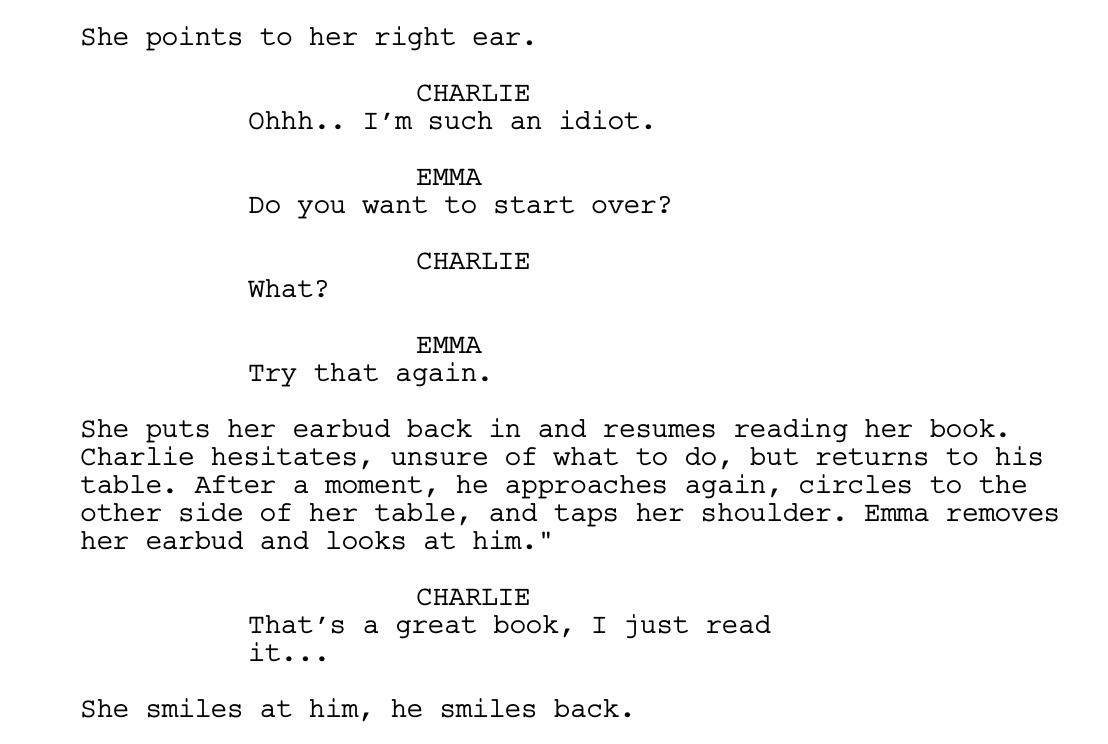
This is a use of the “miscommunication troupe” prevalent in romantic comedies. Except this time, the lovers don’t wait until halfway into the film to realize that they have the wrong idea about each other. Instead, Emma explains to a frustrated Charlie that she is deaf in her right ear, and completely did not hear him.
Set Up
The film then cuts to three years later, to Charlie preparing his wedding speech with his best man Mike. It is through their wedding speech preparations that we speed through the romantic comedy part of their shared life.
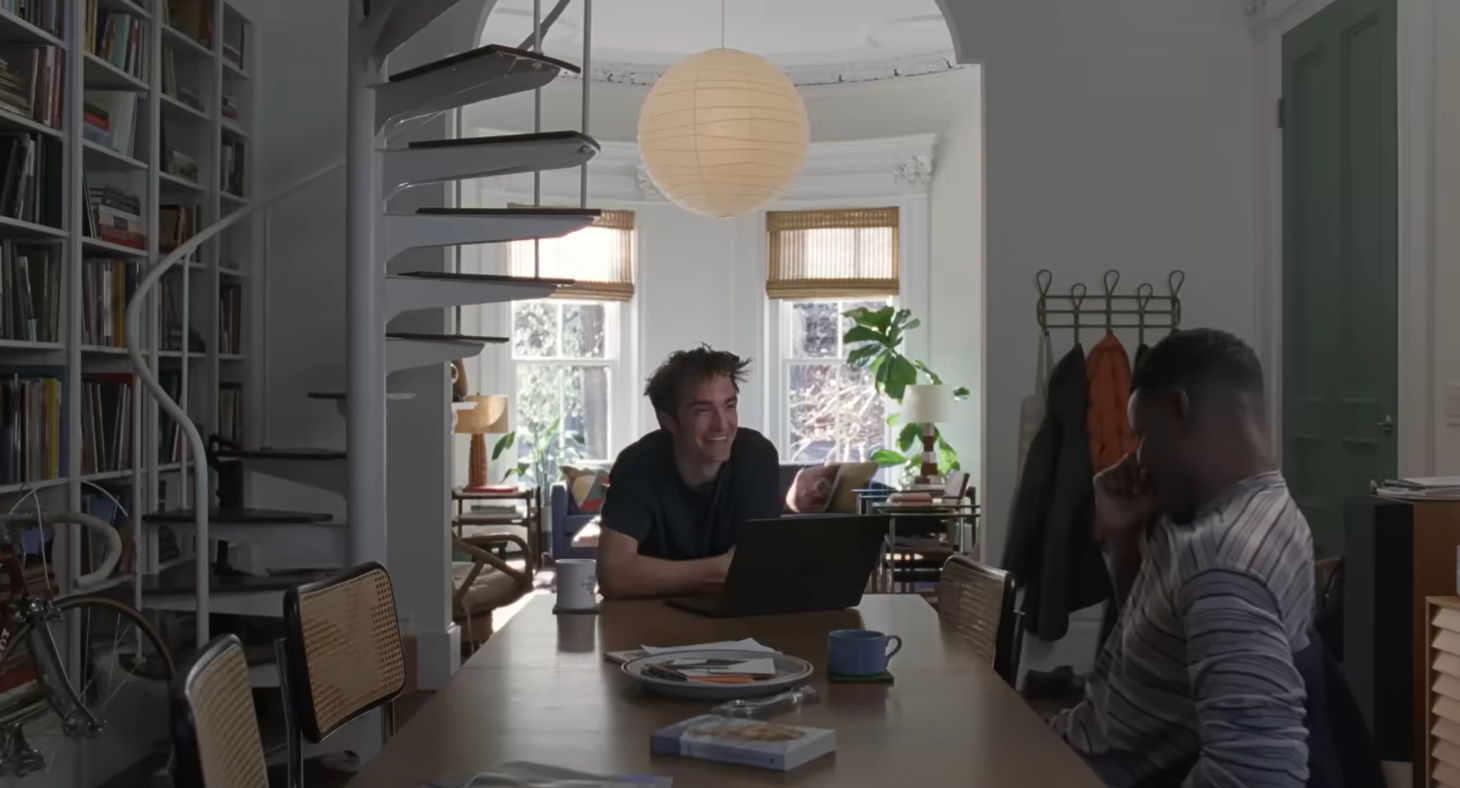
Charlie talks about how he loves Emma’s laugh and the way she is always able to turn Charlie’s drama into comedy (a wink at the film’s blend of genres here). He tries to add to his speech a description of how compatible he and Emma are sexually, to Mike’s objections.
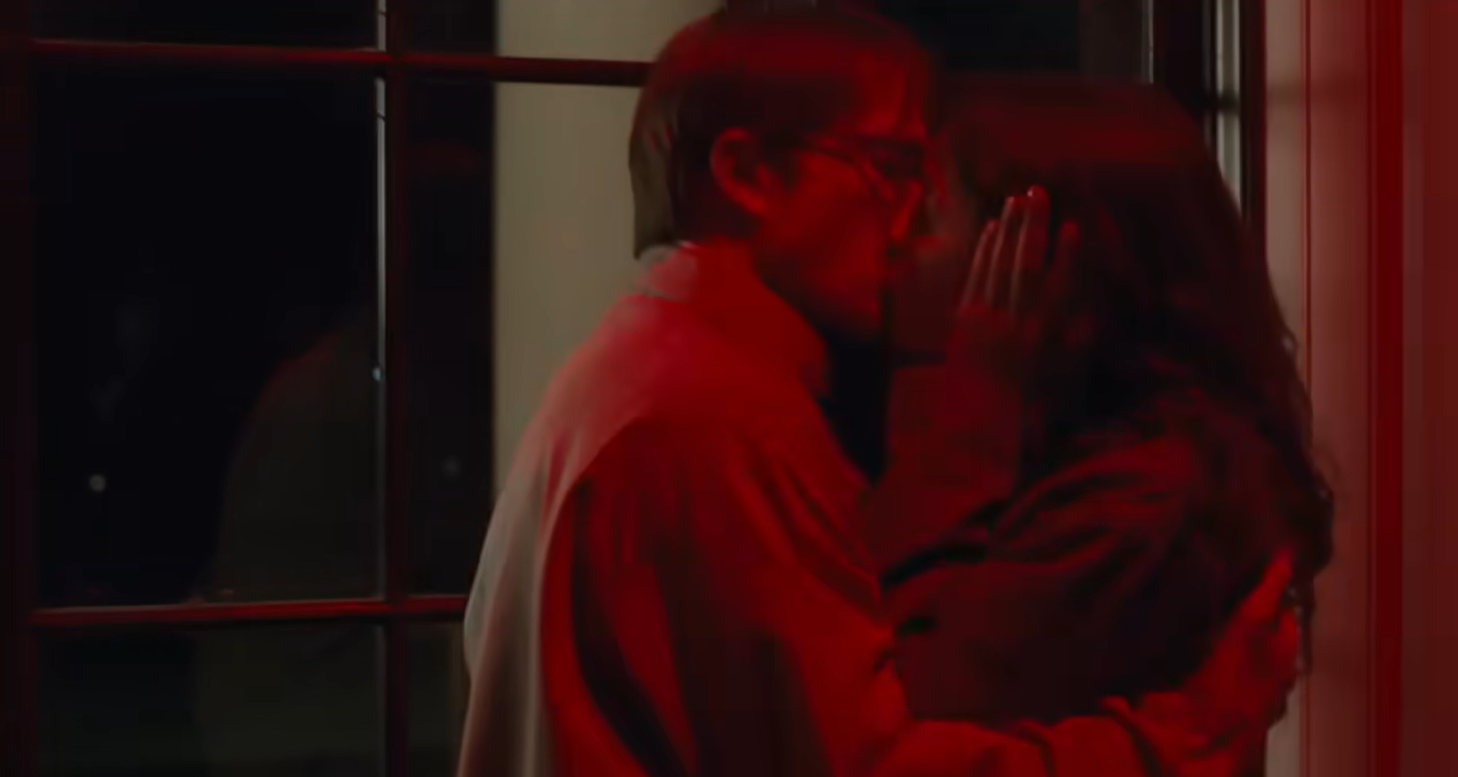
Then we cut to Emma’s side, also preparing for her wedding speech with her bridesmaid Rachel. She recounts how her first kiss with Charlie was between locked doors, with fire alarm blazing over them.
Inciting Incident
In some ways, this film has two inciting incidents: one to mislead the audience into thinking that The Drama is a simple drama, and a real one, which opens the black comedy plotline, and which occurs around page 20, later than most films.
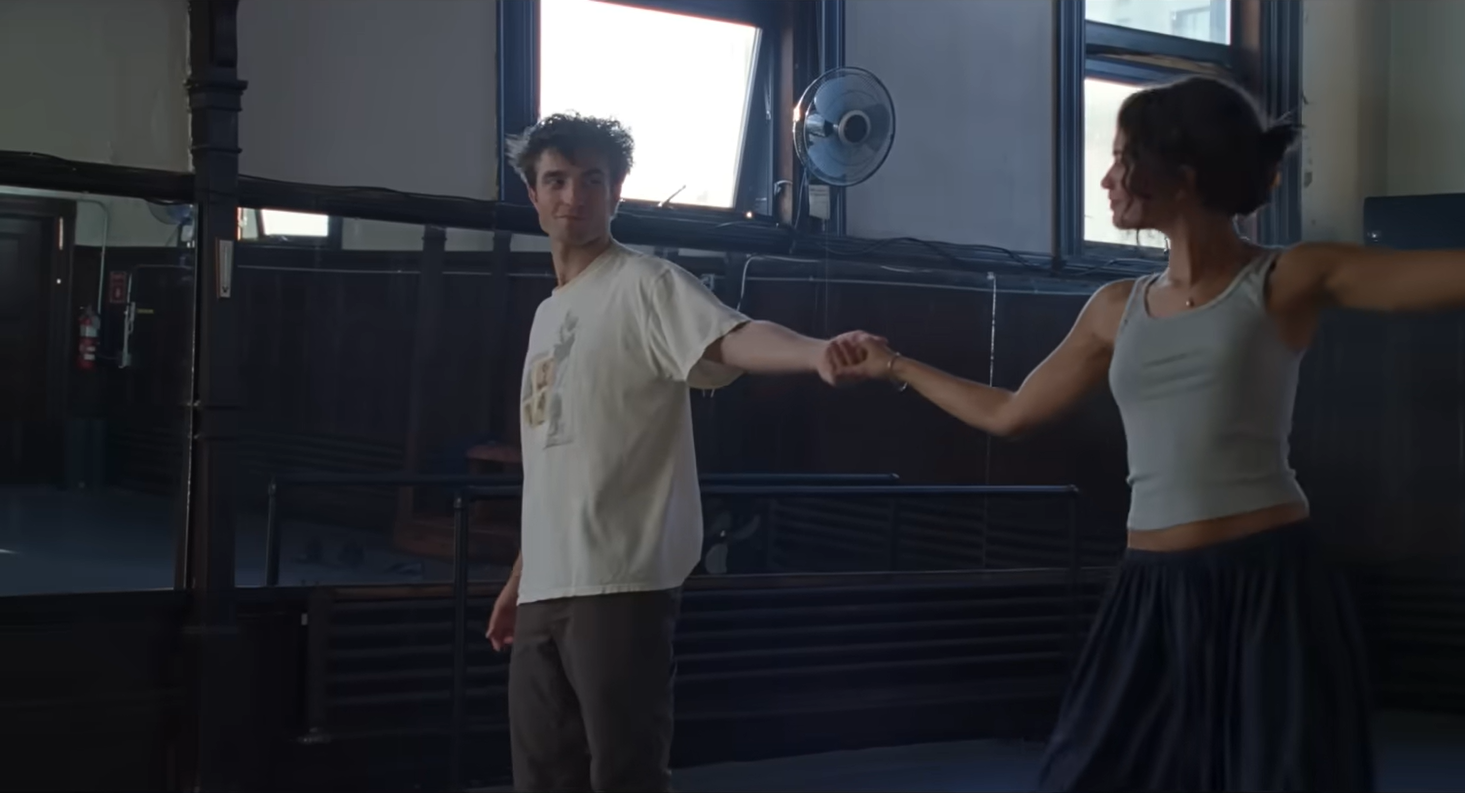
At a dance class, Emma wants to use a song that they like, “I Love This Life,” at the wedding, but the dance instructor is too serious about her job to let them.
On the way back from the dance lesson, Emma and Charlie spot Pauline, their wedding DJ, on the street smoking heroin. These two events set up the expectation for the film to be one of those “Things go wrong one by one until everything erupts into a dramatic chaos at the wedding” stories. The next scene, however, diverts us from this track entirely.
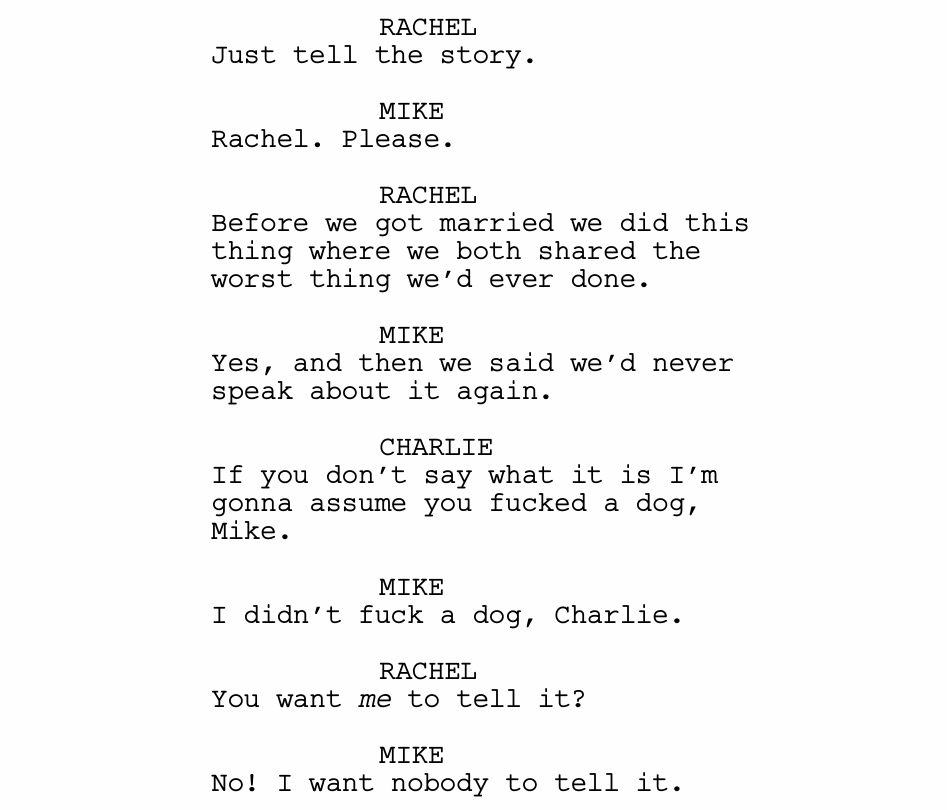
Emma, Charlie, Mike, and Rachel get together at a wine-tasting for the wedding. All drunk, they begin telling each other the worst thing they’ve ever done. Mike once used his ex-girlfriend as a human shield against a dog; Rachel locked a “slow” kid into a closet in the middle of nowhere; Charlie cyberbullied someone who later moved away.
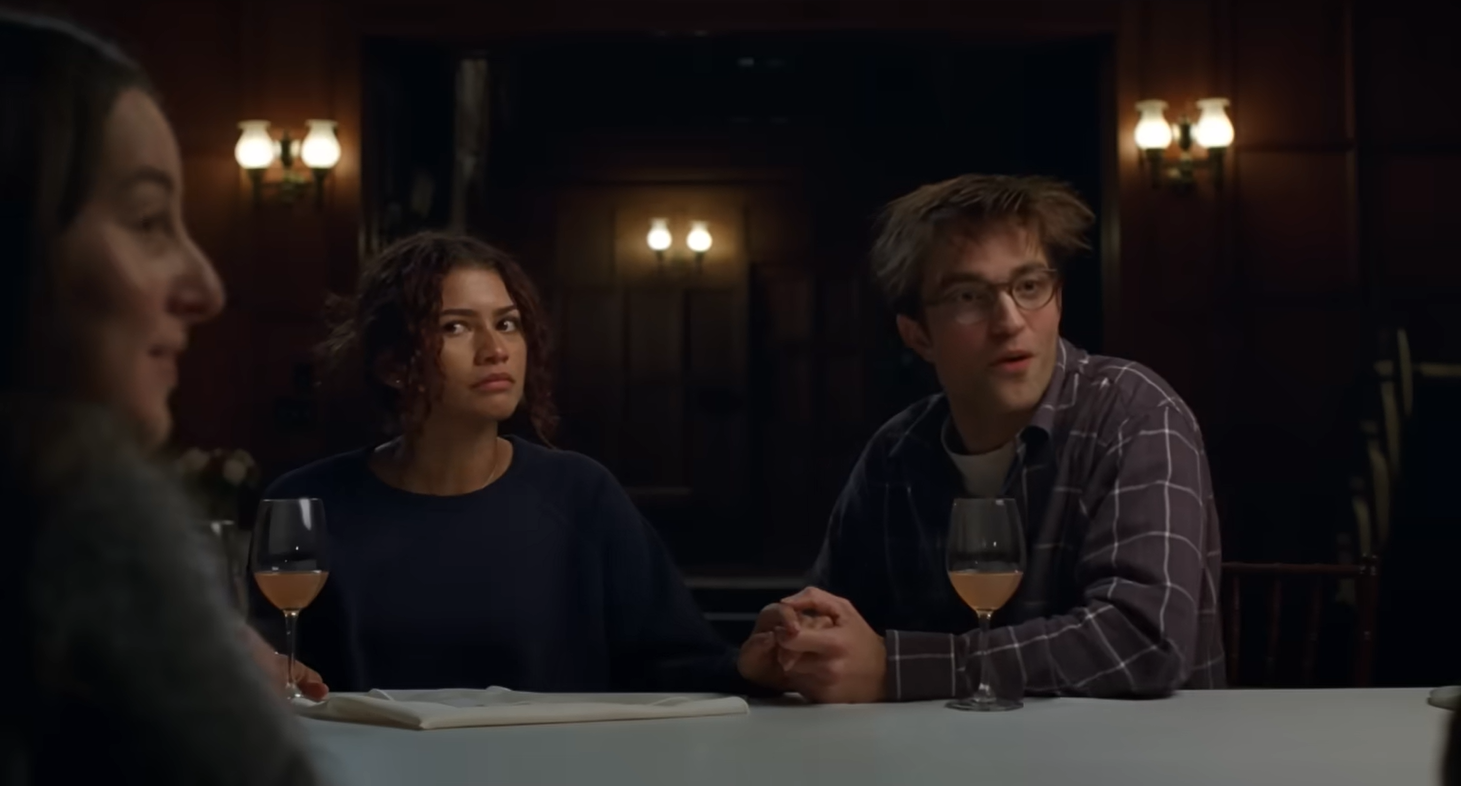
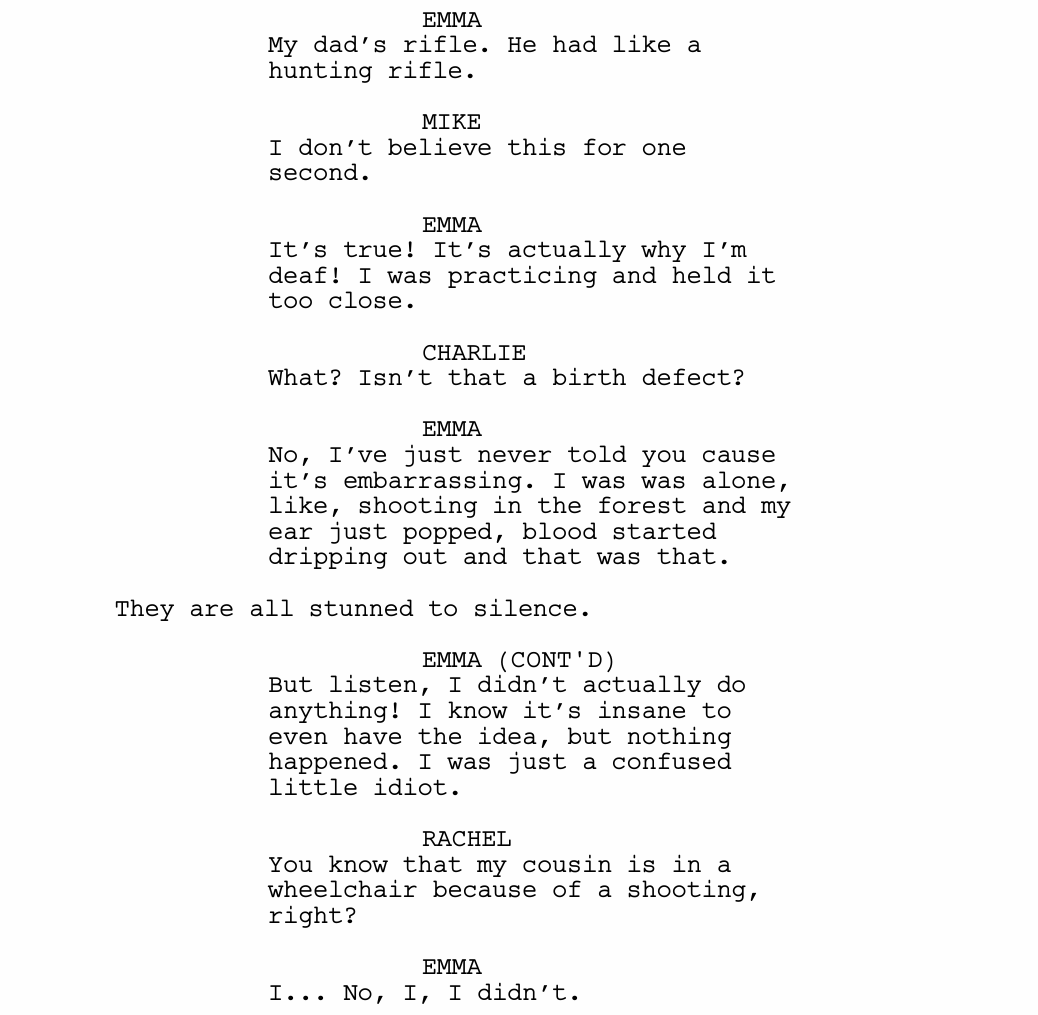
When it is Emma’s turn, she reveals that she almost did a school shooting when she was 16, and that practicing firing a rifle close to her ear is how she became deaf in her right ear. Rachel becomes especially upset because her cousin Sam is paralyzed in a school shooting.
Debate
Charlie and Emma have a talk the next morning. Charlie tries to find reasoning behind why Emma wanted to be a mass shooter. Was she bullied? Yes, but Emma says she was never “pushed to the edge.”
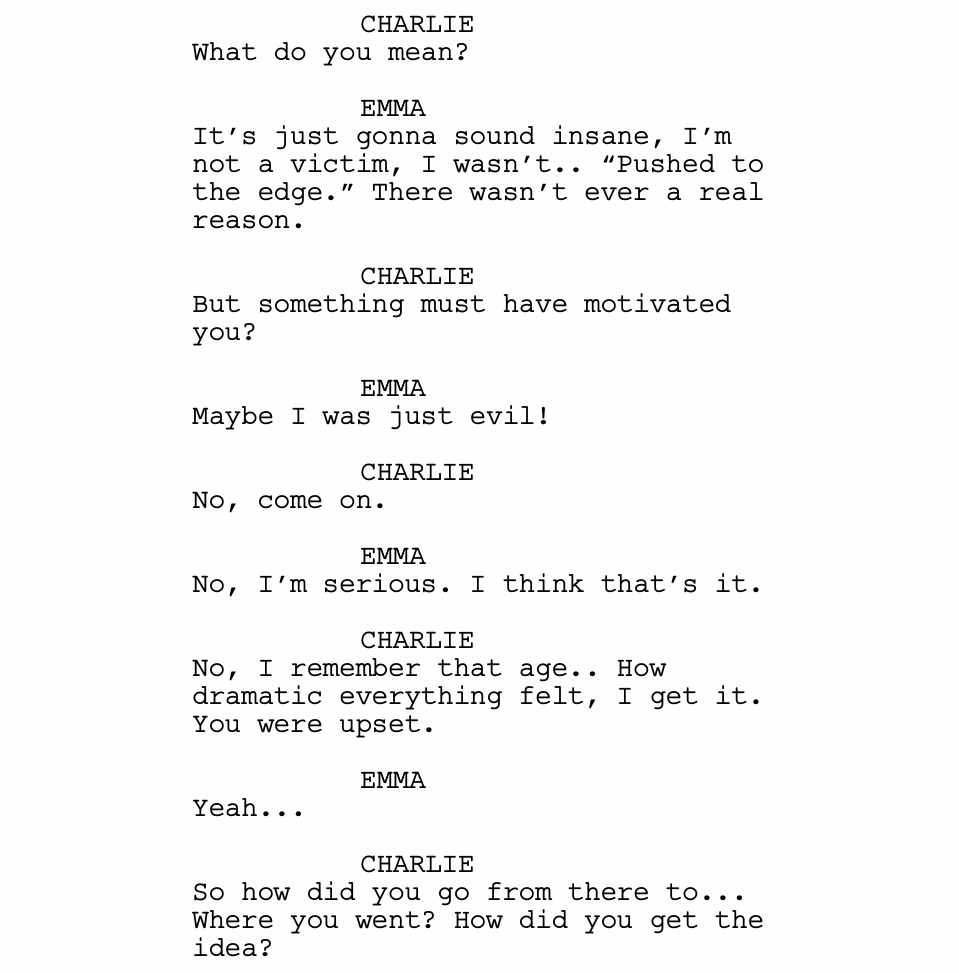
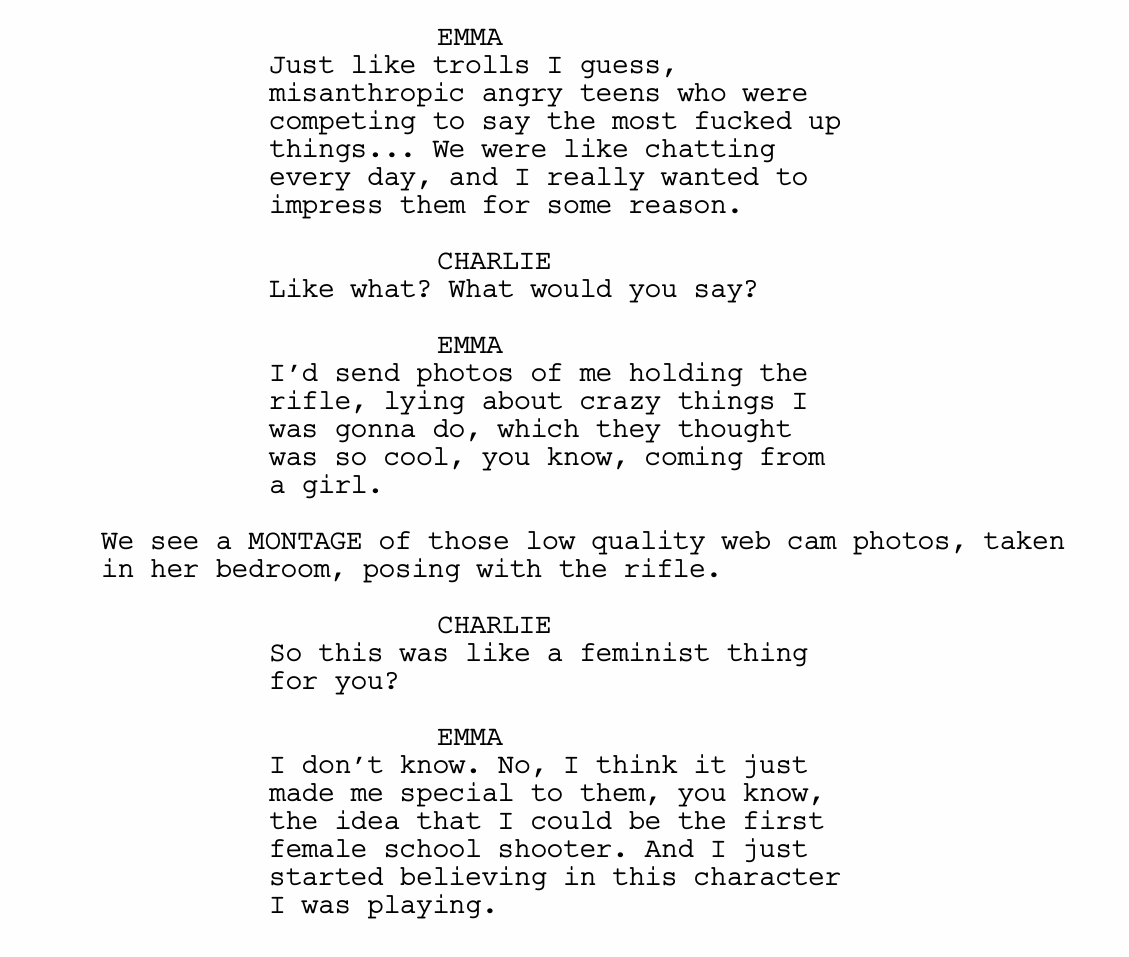
Here, the film subverts the troupe of the outsider kid who gets pushed over the edge and becomes the villain of the story. In fact, the film makes a point that what happened to Emma can happen to anyone, because that’s how our society functions; that’s what teenagers see and absorb.
Break Into Two
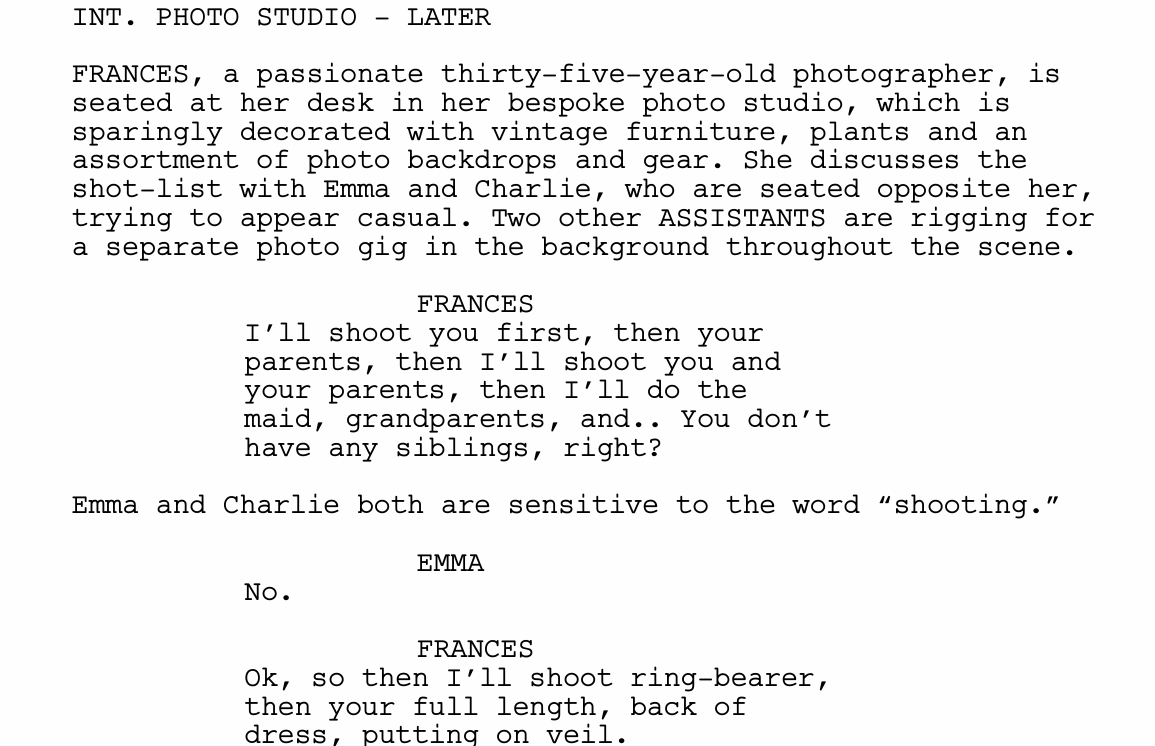
Emma and Charlie interrupt their talk to go to their wedding photoshoot. This scene contains some of the funniest black comedies in the film, when the photographer Frances keeps talking about “shooting” someone, and Emma and Charlie flinch at every mention.
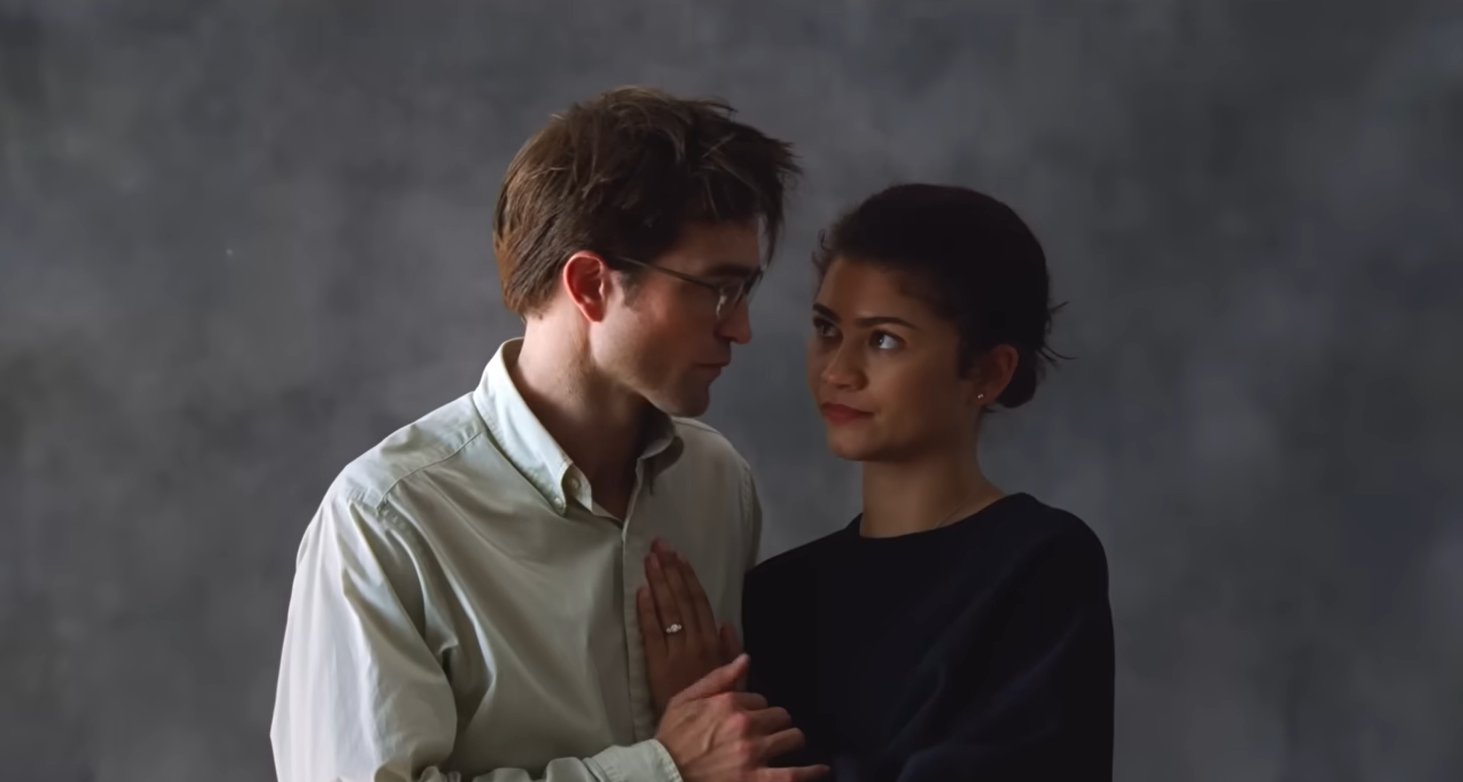
They act uncomfortably with each other during the photoshoot, while Frances asks them to “remember that you know each other really well” and remember what they like about each other.
Fun and Games
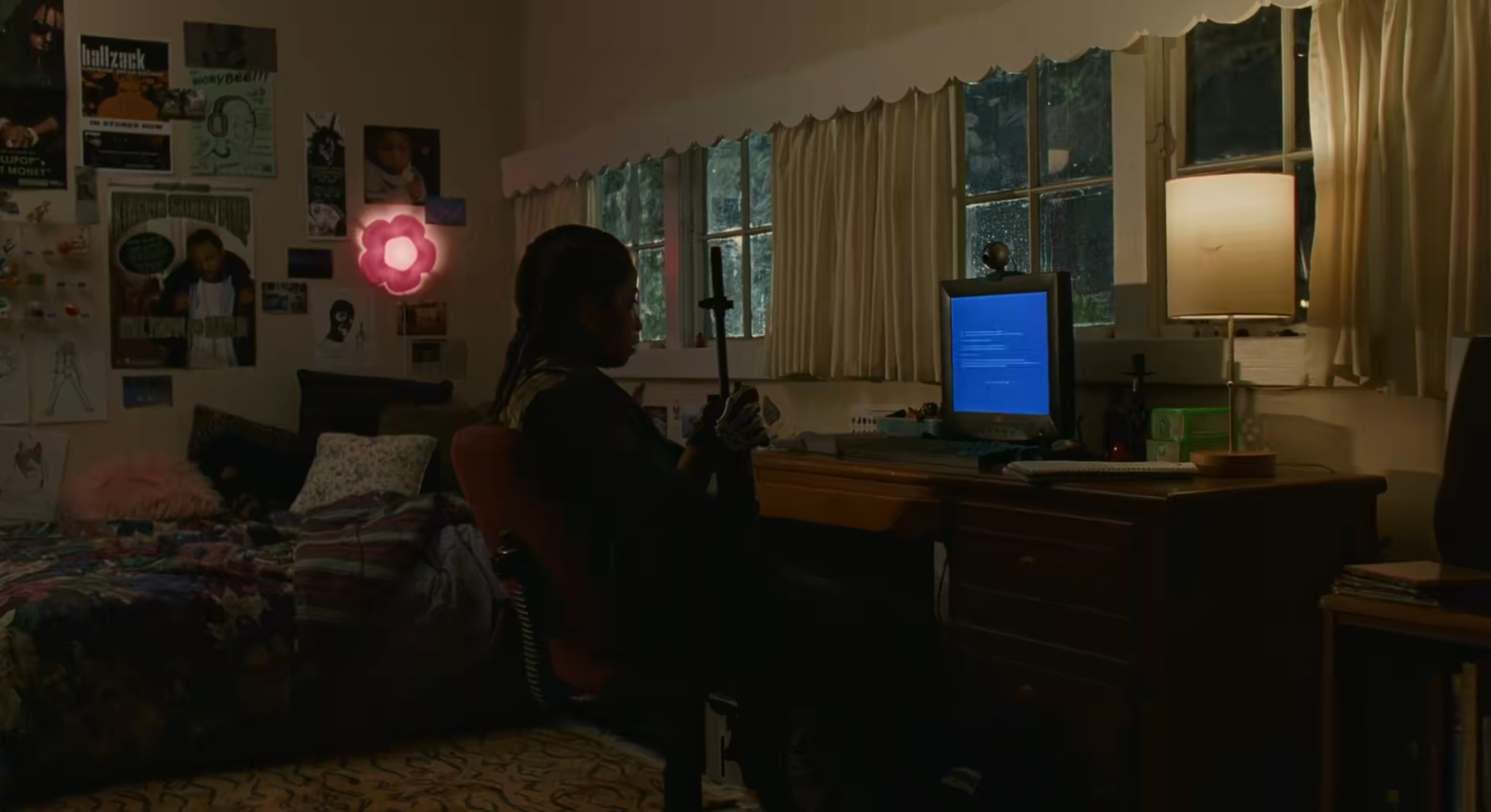
After returning home, Emma and Charlie resume their conversation about Emma’s past. Flashback shows another moment of dark humor, when young Emma tries to record a confessional video of wanting to do school shooting, but her computer keeps glitching and takes forever to restart.
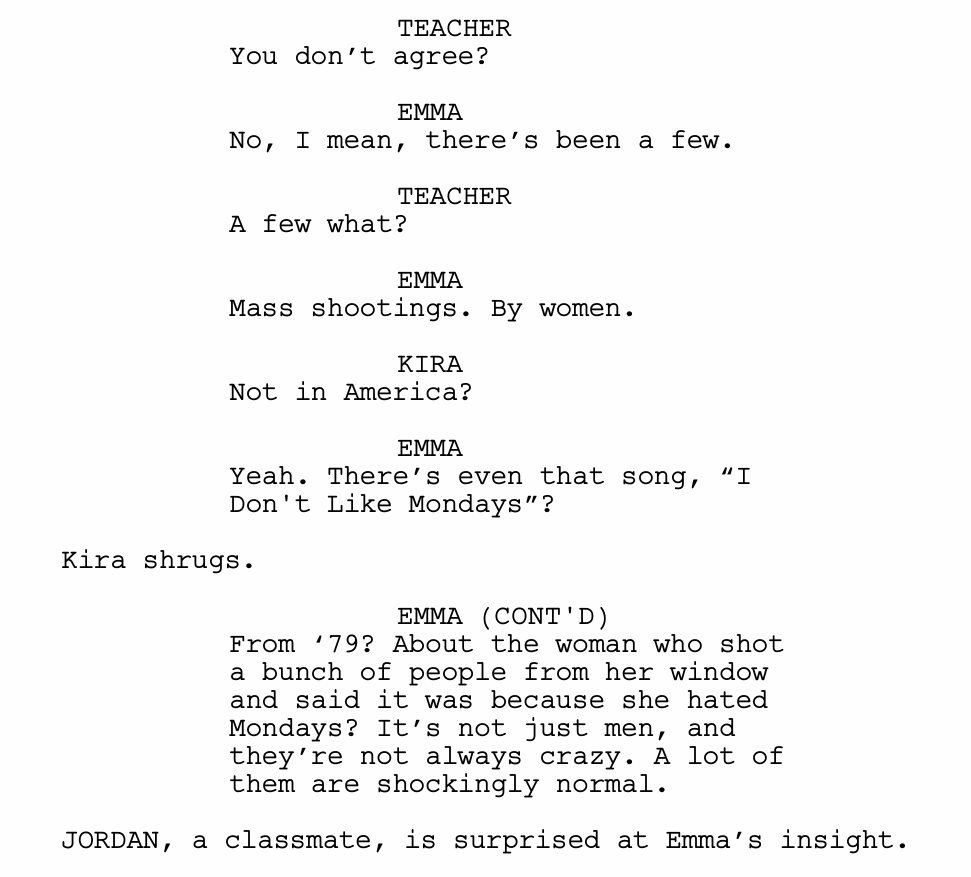
Emma talks about experiencing a moment of doubt when she found out about a shooting on the news. She joined the school’s memorial of the victims of the shooting, and the class discussion on the topic of female shooters.
Young Emma is asked to join a gun control activist group, and after that, she gives up the idea of committing mass shooting herself.
After telling Charlie all of that, Emma asks to stop talking about it until after the wedding. Charlie agrees, but the problem hangs in the air, unresolved. Meanwhile, Rachel is not responding to Emma’s text or email.
Midpoint
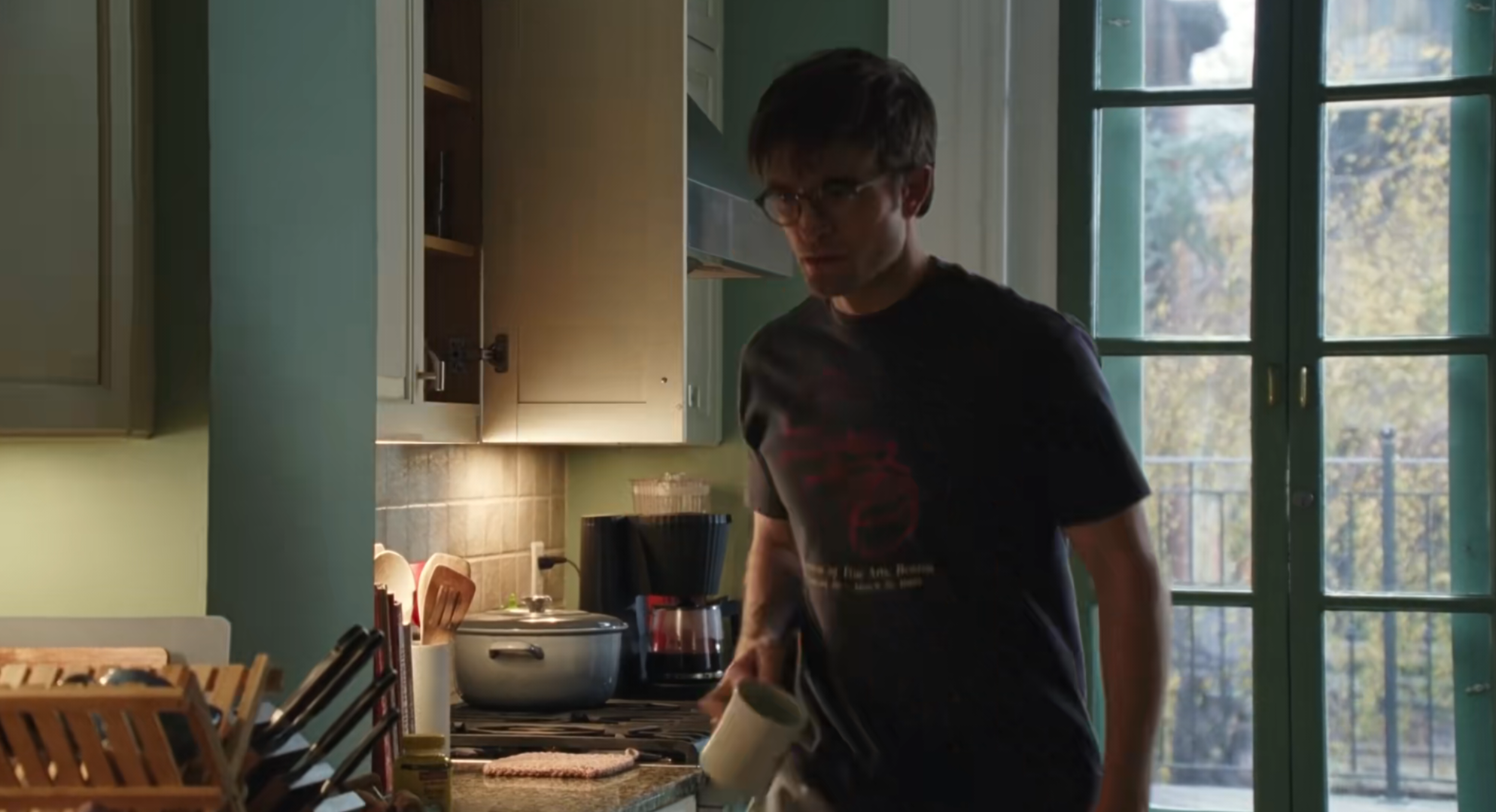
The next morning, Charlie is in the kitchen making coffee, and finds himself now triggered by the mug that reads “Coffee or I’ll shoot!” He tries to edit the wedding speech, but ends up deleting the whole thing.
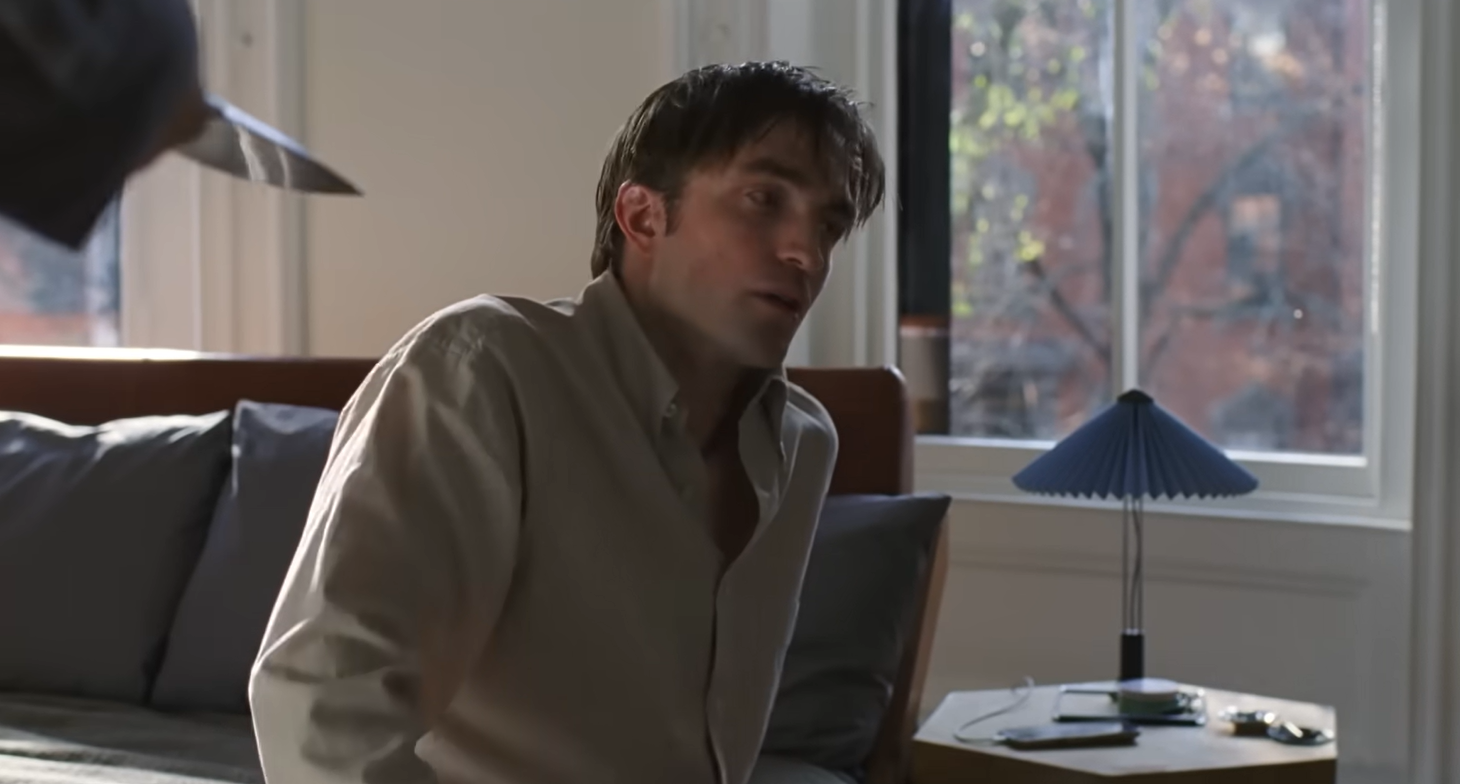
Emma discovers the mug that Charlie has thrown away and feels hurt. Halfway through making a smoothie, she talks to Charlie with a knife in her hand, which freaks Charlie out.
Bad To Worse
Charlie continues trying to find reasoning behind Emma’s actions. He asks her about the childhood neighbor of Emma’s who died in a car accident, but Emma says she didn’t witness it or know the kid well. He tries to explain Emma’s actions through teen anger being culturally prevalent in America.
After they tried and failed to have sex, Emma suggests for them to “start over” and initiates a scene similar to their first meeting. Charlie is not interested. Emma confronts him about the mug.
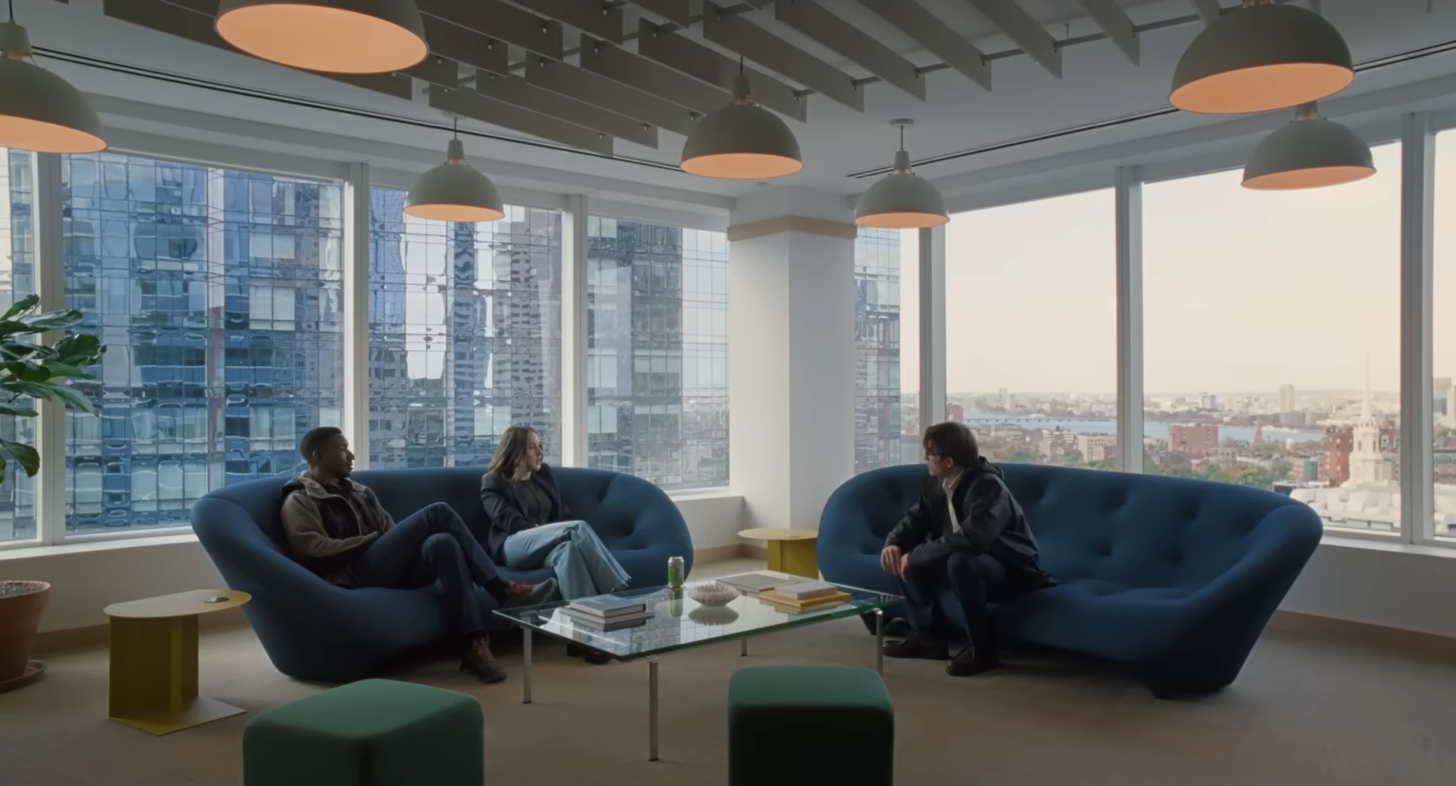
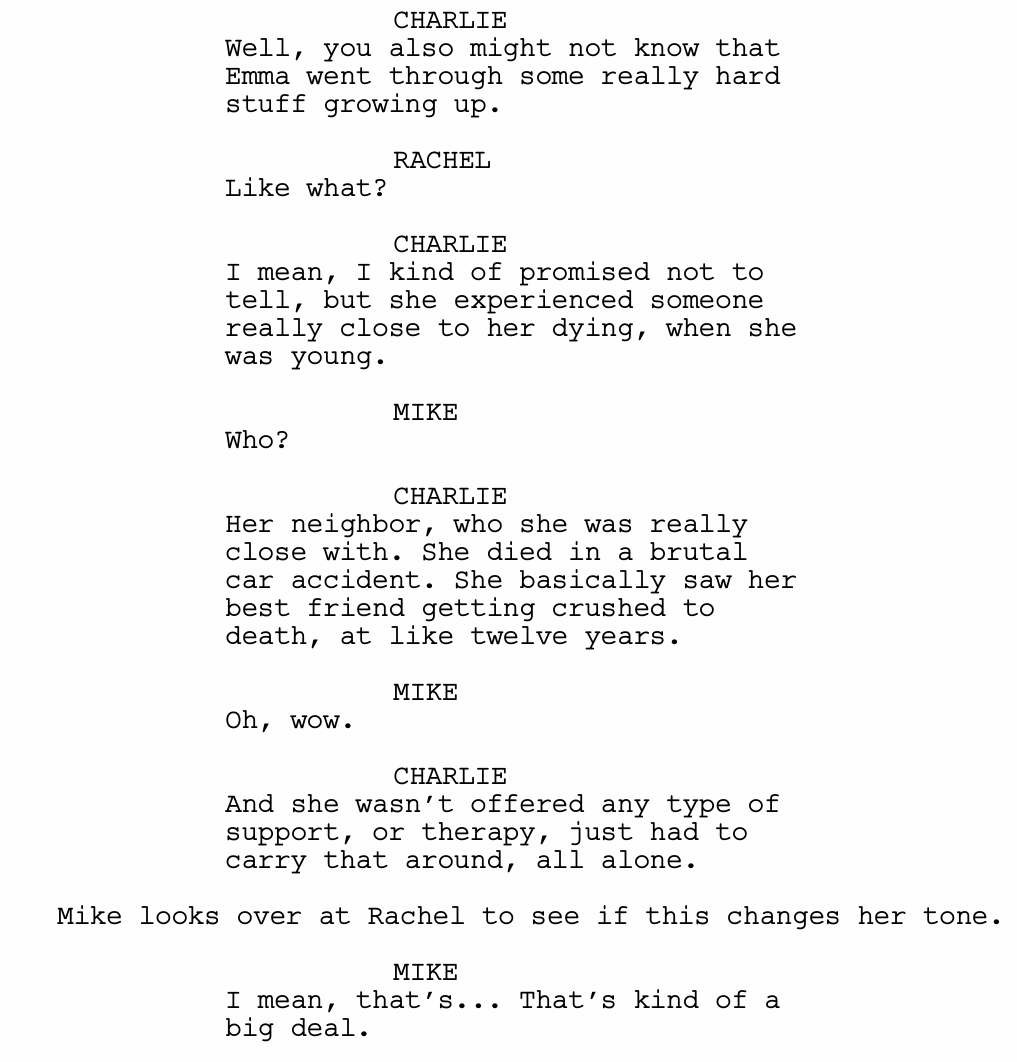
The next day, Charlie talks to Rachel and Mike, attempting to convince them to still come to the wedding. He ends up exaggerating how Emma’s neighbor’s accident affected her, fitting her into an easier-to-understand narrative.
Rachel decides to talk to her cousin Sam. She says that if Sam is okay with it, she will go to the wedding. Charlie runs into Sam downstairs and tries to convince her of Emma’s goodness, leaving Sam confused and slightly weirded out.
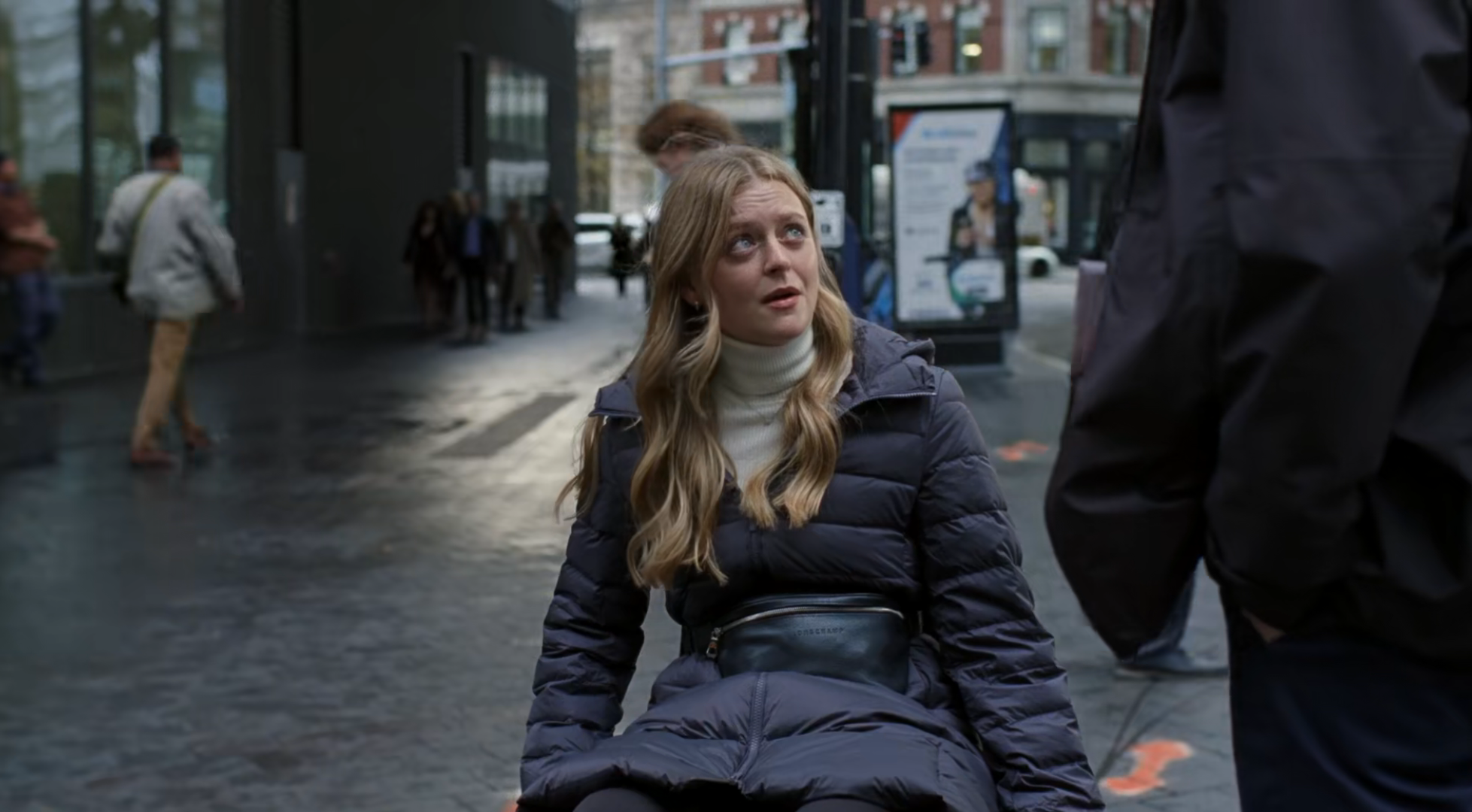
At lunch, Charlie asks his coworker Misha what she would do if her boyfriend Blake tried to do a mass shooting when he was a teenager. He gets defensive when Misha says she would call the police.
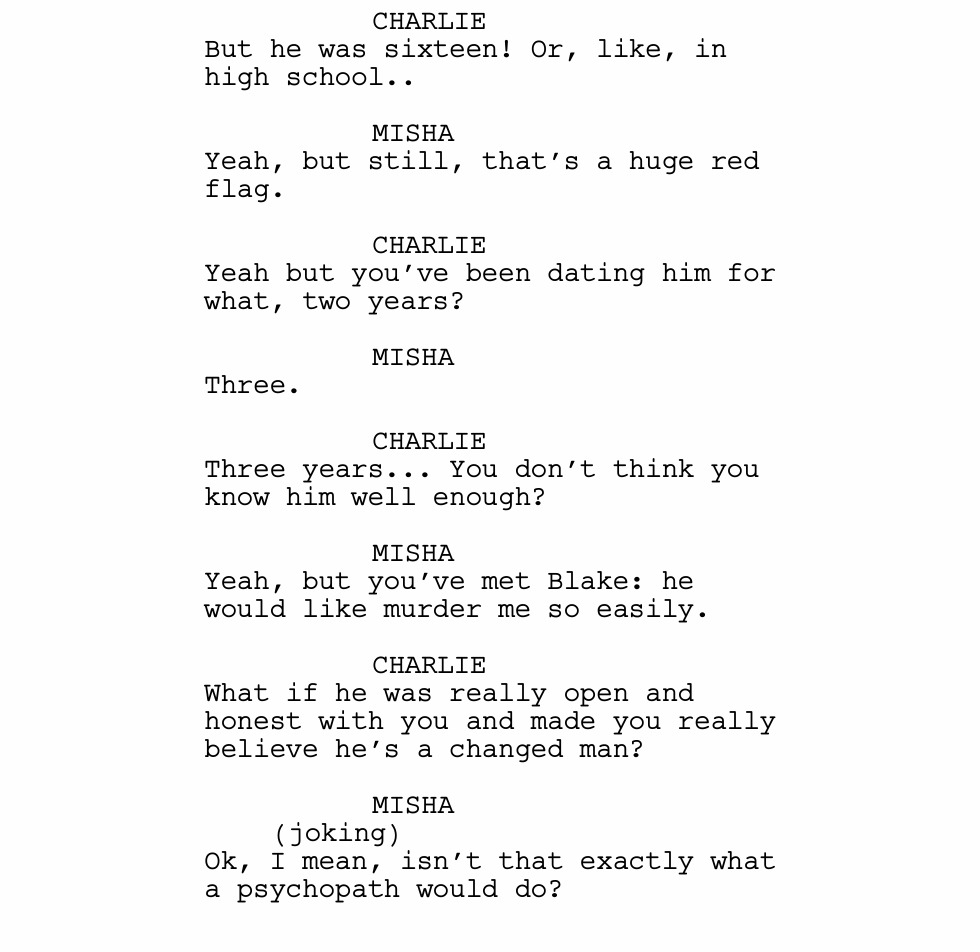
In some ways, Charlie and Misha’s debate represents the kind of debate that will take place amongst its audience after the end of the film.
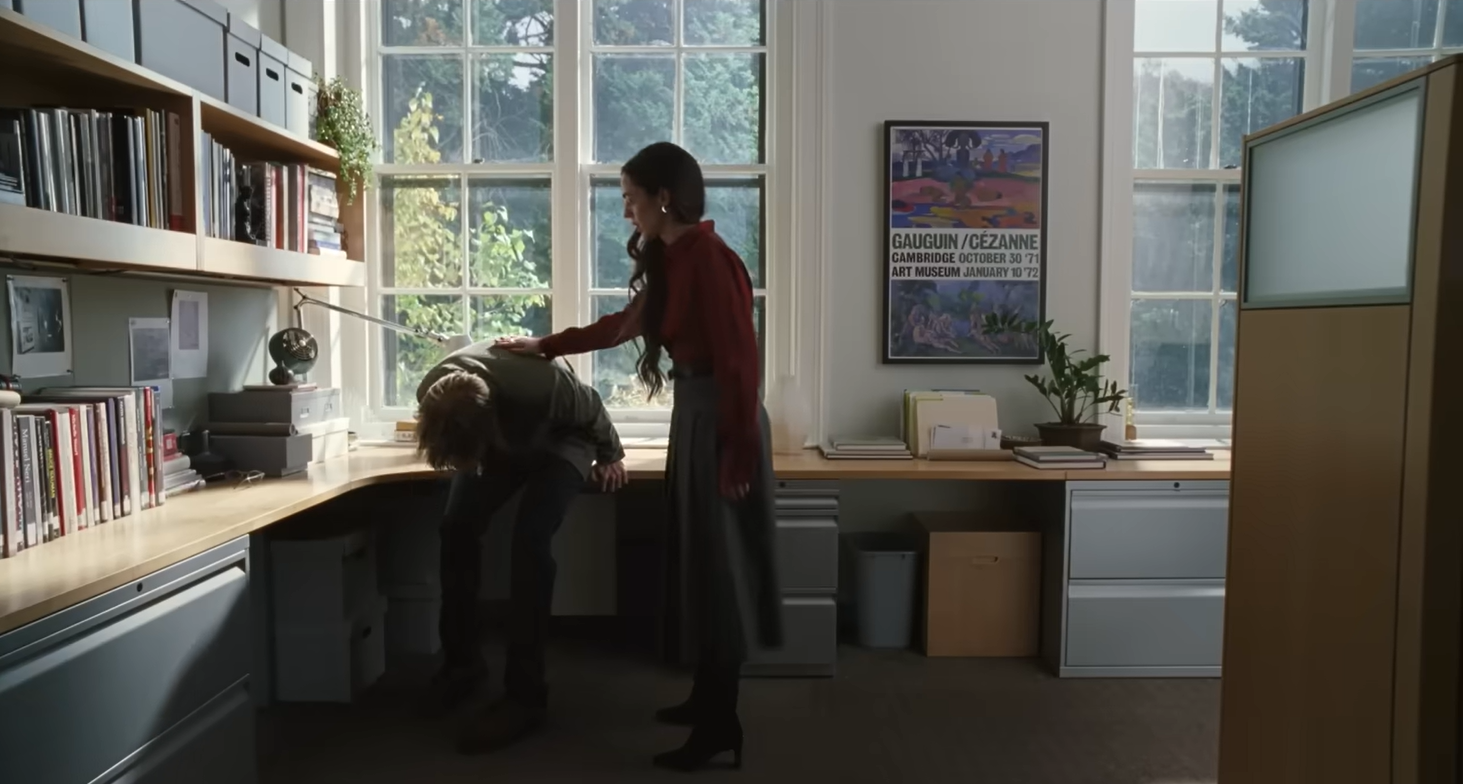
Charlie breaks down crying, and when Misha comforts him, he kisses her. He immediately regrets it and stops, and asks Misha to act like it never happened.
At the wedding venue, Emma and Charlie confront their DJ Pauline about seeing her smoking heroin, but Pauline insists that she never did it. Emma fires Pauline.
Break Into Three
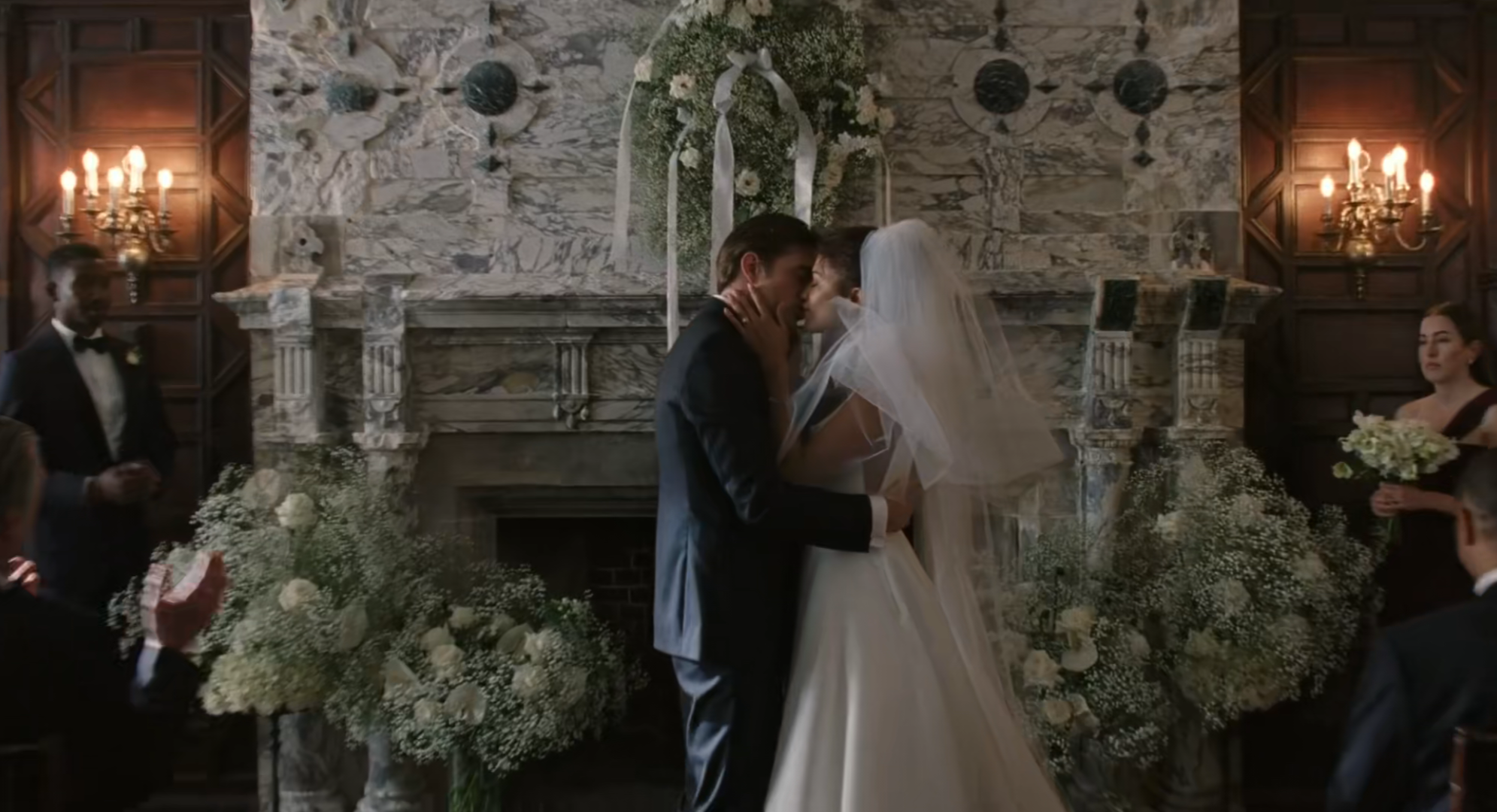
It is the wedding day! Emma and Charlie act happy. Emma’s father Roger gives a speech. He talks about how Emma loved inventing characters and putting on little shows, an echo of how Emma said her obsession with being a school shooter feels like role-playing.
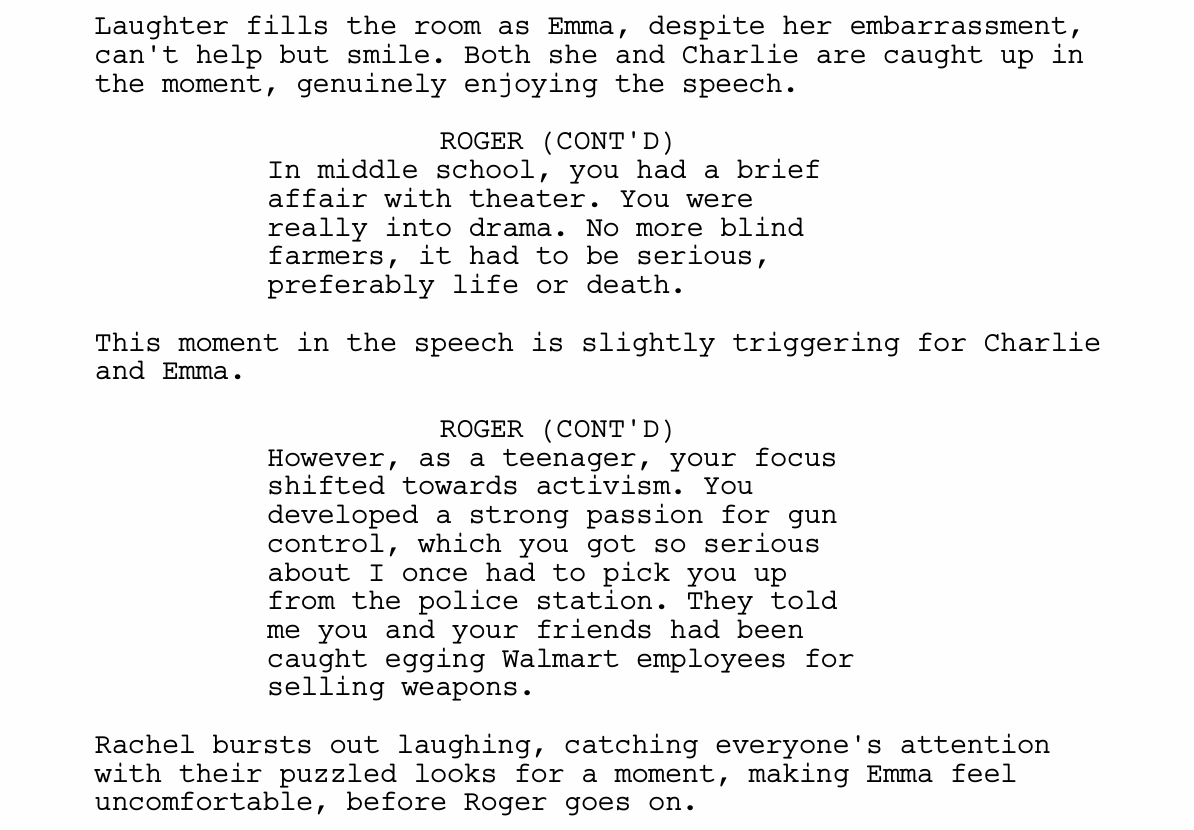
The speech gets interrupted, first by Rachel’s sarcastic laugh, then by their new, unreliable DJ Ivan making a gunshot-like sound from the speakers. After that, a drunken Rachel gives a passive-aggressive speech, mocking Emma’s dishonesty and Charlie’s decision to still marry her.
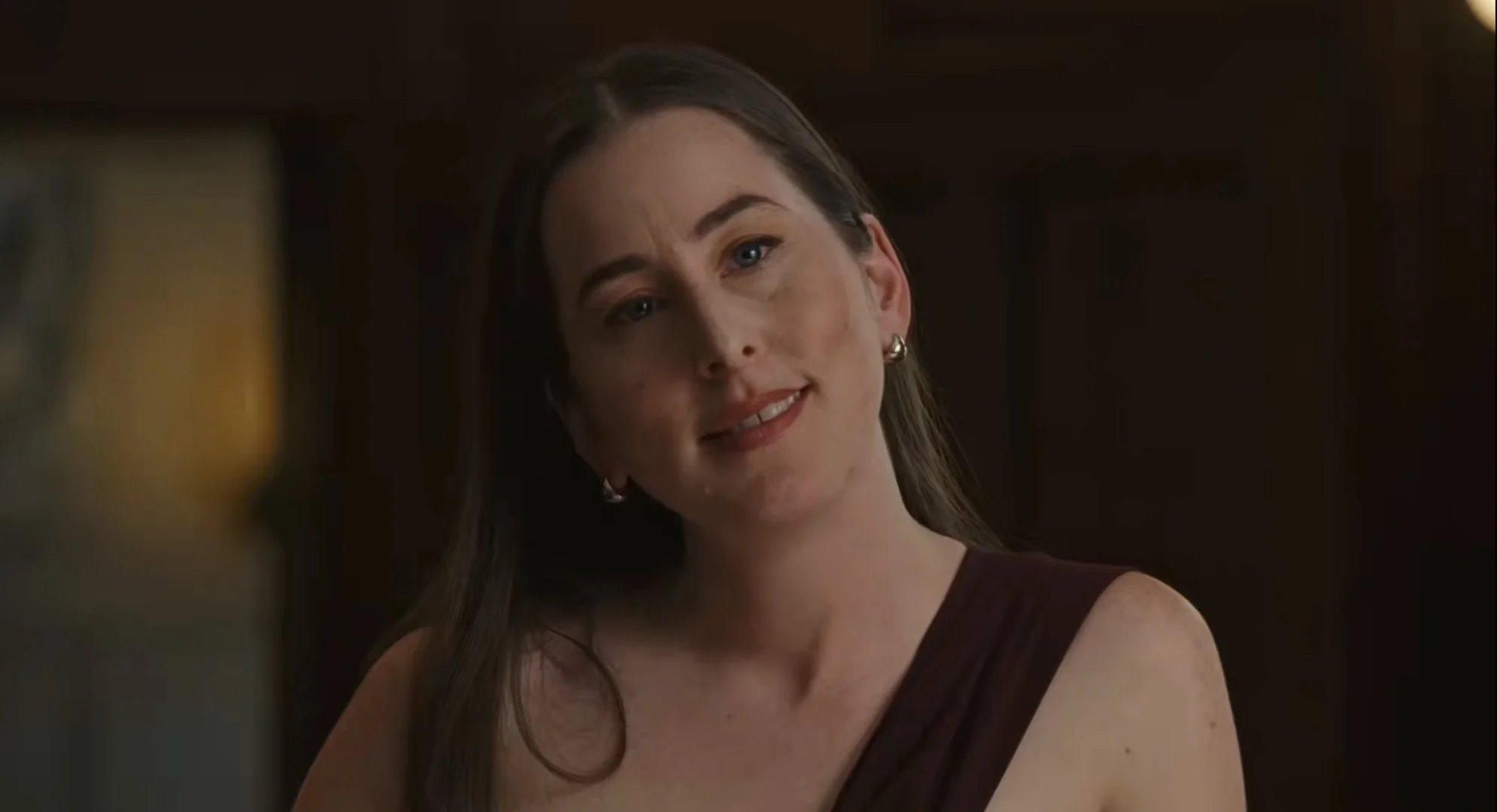
Emma, anxious and uncomfortable, goes to the bathroom to calm herself, but catches Misha talking to someone about a school shooting. Emma is afraid that Rachel has told Misha and decides to talk to Misha with Charlie. Misha, thinking that Emma wants to talk to her about kissing Charlie, confesses immediately, escalating the rift between Emma and Charlie.
Finale
Returning to the wedding, Emma is unable to make her speech, while Charlie ends up apologizing to Emma in his speech for cheating on her with Misha, and shouts to the room that Emma “didn’t do anything!”
Misha’s boyfriend Blake, thinking that Charlie harassed Misha, marches to Charlie. We cut away to after the wedding here, to Charlie entering their apartment alone with a bloodied face.
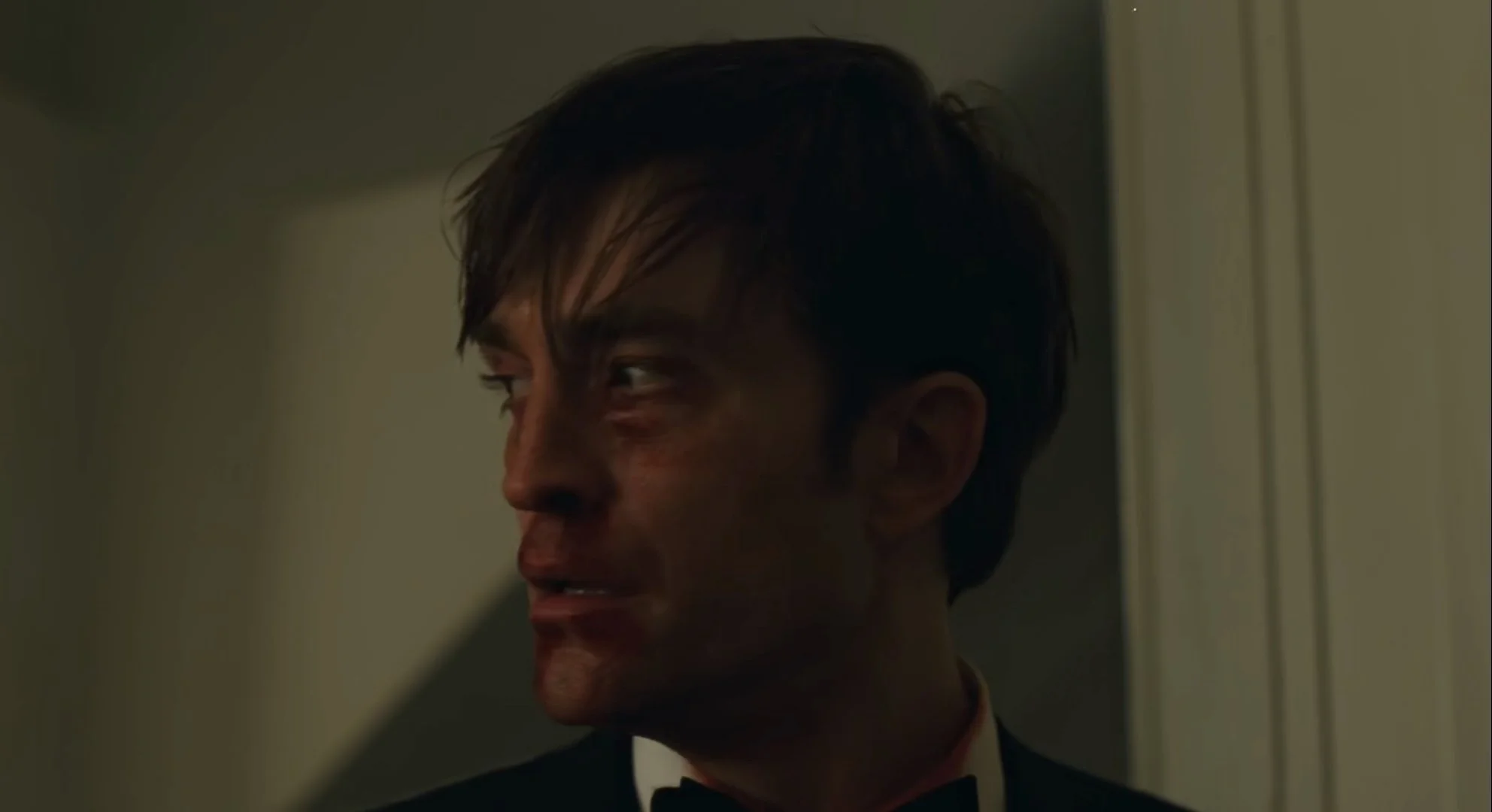
This is one of the few writing choices in this movie that I can’t fully appreciate. The cutaway does create a moment of comedy, but, on the drama side, it feels like the film has been building to a climax that never comes. Instead, we only learn of the chaos at the wedding through flashbacks: Blake attacked Charlie at the wedding and Emma ran out.
Charlie tries to call Emma, but is unable to find her. He hears the song “I Love This Life” playing from his phone, and goes to a late-night diner, where Emma has previously suggested for them to go after the wedding. Emma enters, sits down in front of him, and acts as if they are meeting for the first time. They shake hands and decide to give each other the chance to start over.
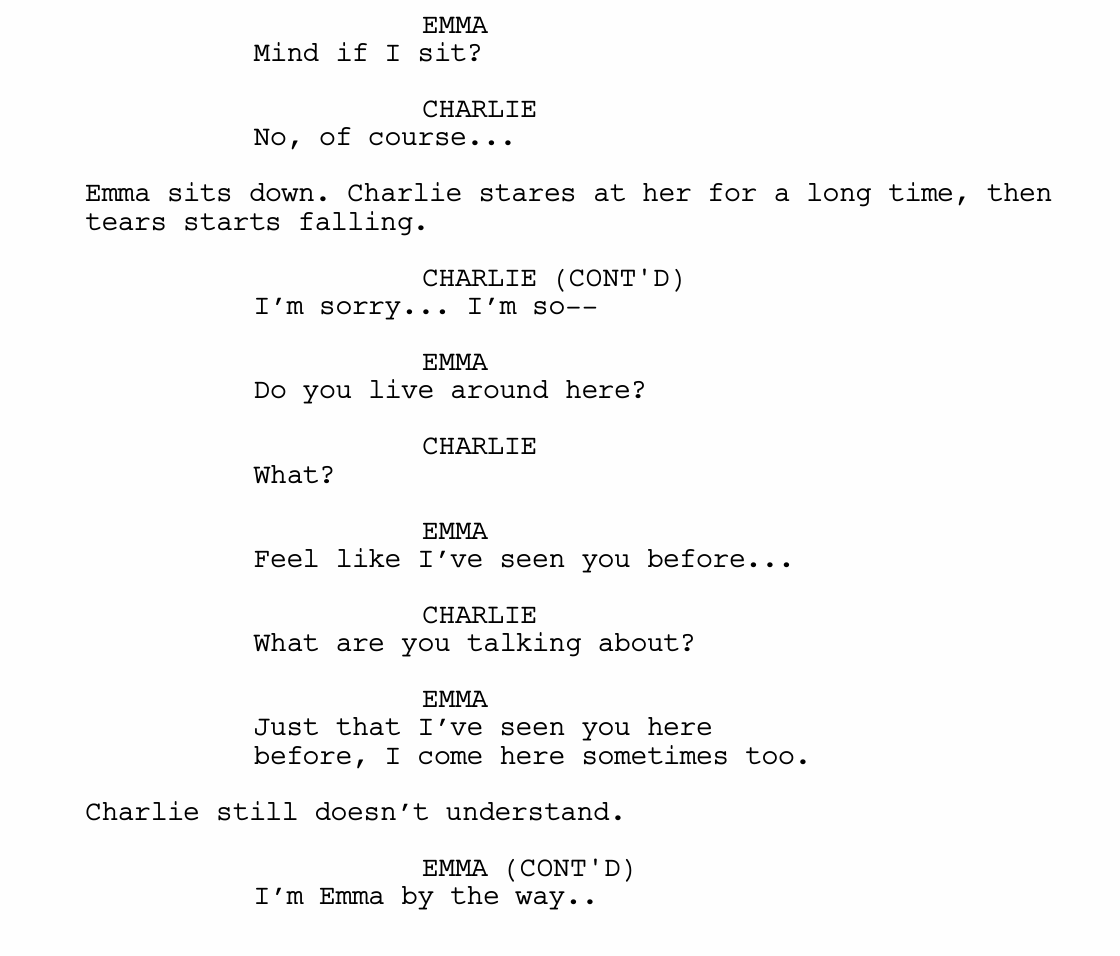
This ending is a perfect example of the rule of three, where the idea of meeting for the first time occurs three times throughout the film. Eventually, The Drama wraps around the black comedy and the drama of the story, and returns to the tender romantic comedy of the opening scene, allowing the story to end on a more hopeful note.
Of course, I know there are people who will disagree with me, who think that it’s an open ending, or that the problems between Emma and Charlie are not truly solved. Or people might think that one character doesn’t deserve the other’s forgiveness. But in a way, this kind of debate is what The Drama is aiming for. Through integrating complex themes and topics, The Drama asks questions without completely answering them, and inspires discussions beyond its ending.