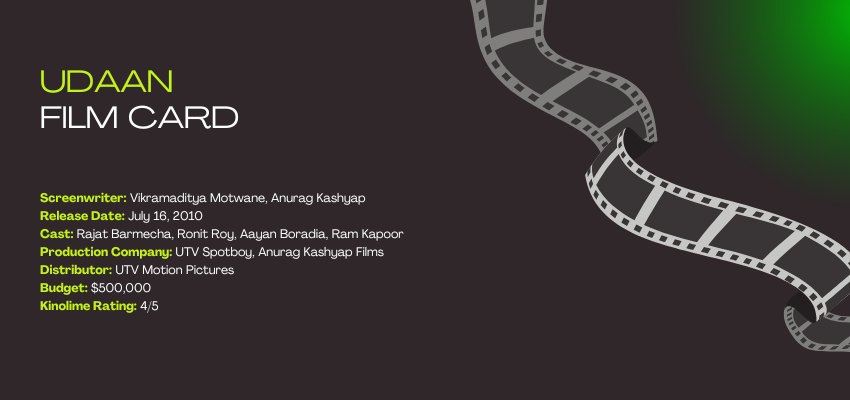
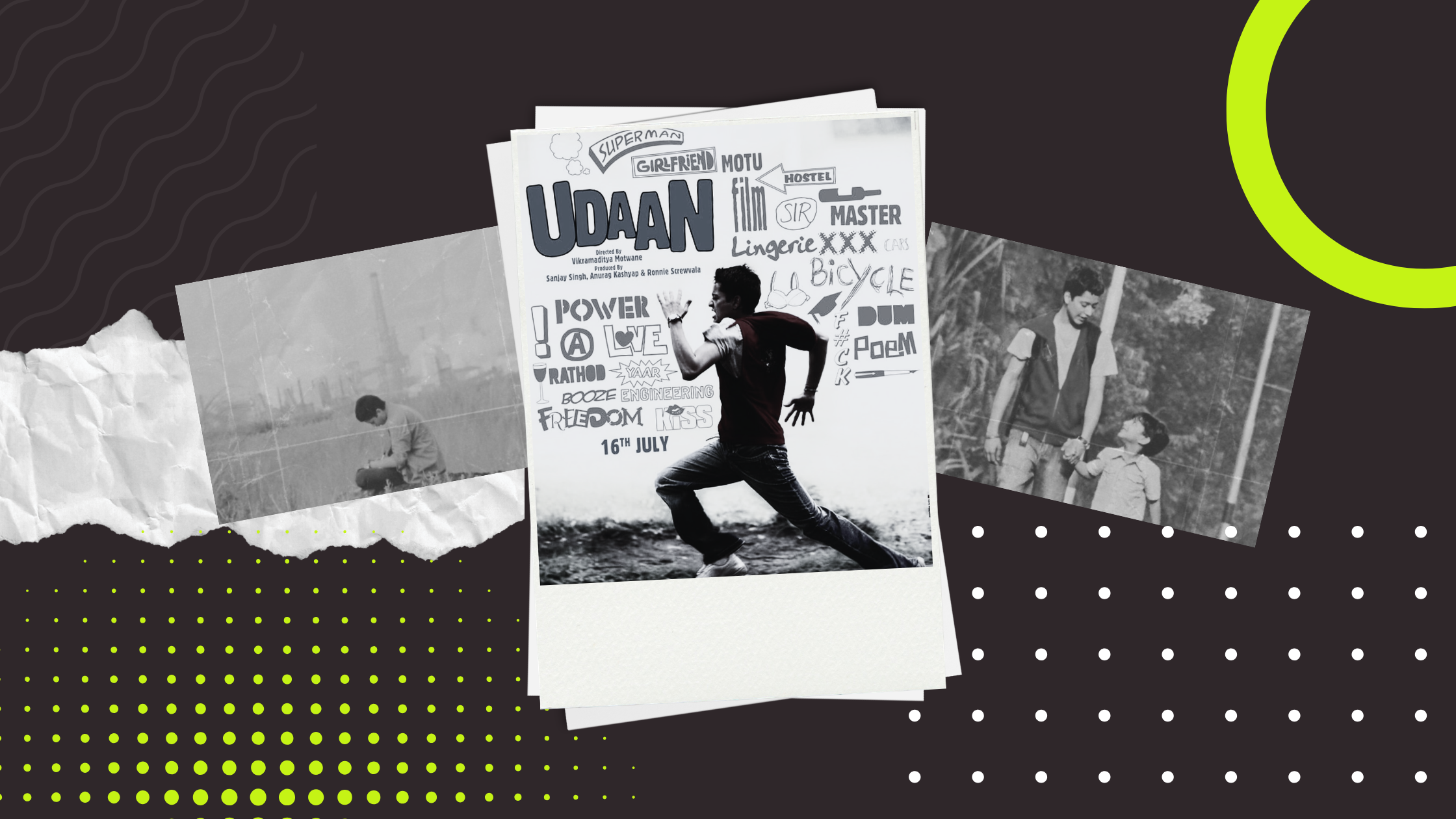
To celebrate the launch of Kinolime South Asia, we thought it’d be appropriate to show some appreciation for all that Indian Cinema has done for the film industry. And what better way than a good, old-fashioned script analysis? Initially, I was planning on covering an older classic, such as one of Satyajit Ray’s films. However, as I began my research, I realized that I couldn’t find any of his screenplays in English anywhere. In fact, I couldn’t find the English screenplays for almost any of the Indian films I’ve seen. And the few I did find were usually over 300 pages long (I forgot how lengthy Bollywood films could be). I eventually found a mostly in-English screenplay for a lovely little film titled Udaan, which premiered at the Cannes Film Festival in 2010, and was the first Indian film at the festival in seven years. And even though the action lines have all been translated to English, all of the dialogue is still in Hindi, which admittedly made writing this a very difficult task. But the film’s absolutely tremendous, so I’m rolling with it. Many of the Bollywood films I’ve watched have been very melodramatic, over-the-top in their execution, and somewhat heavy-handed (none of these are critiques, by the way). But Udaan was different. Despite the expected melodramatic tone, it handled its emotions in a very raw and realistic way. Whereas many of the Bollywood films I’ve seen felt like watching a theatrical production, this movie made me feel like I was in the room with characters, watching their lives unfold before me. It was charming, beautiful, and heartbreaking at every turn–and like I said before, devastatingly realistic.
Also, please bear with me on this script analysis, as I’m relying solely on memory, context, and Google Translate to analyze this script. As I said earlier, none of the script’s dialogue is in English, only the action lines. So while I will give context for various pieces of dialogue, I’m not going to directly translate everything. Instead, this analysis will mainly focus on pace, themes, and plot.
OPENING IMAGE
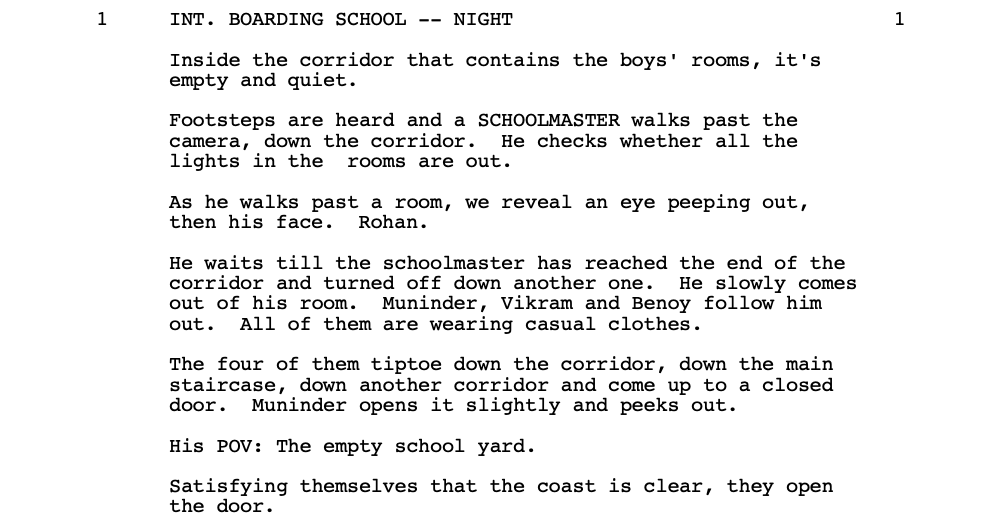
The film opens at a boarding school, as we see the schoolmaster roaming the halls at night. As he passes one corridor, we discover four young boys (including our protagonist, Rohan), all about 17, hiding carefully. They shush each other, not wanting to get caught for whatever it is they’re doing.
SET UP
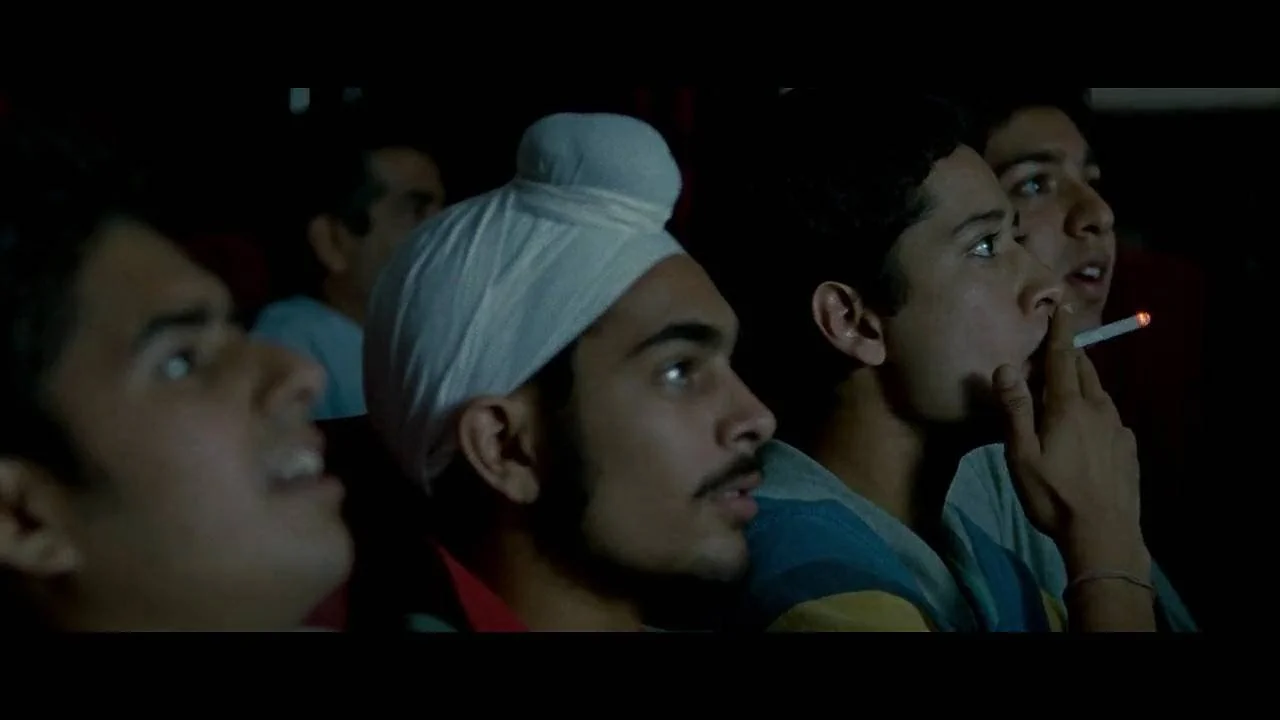
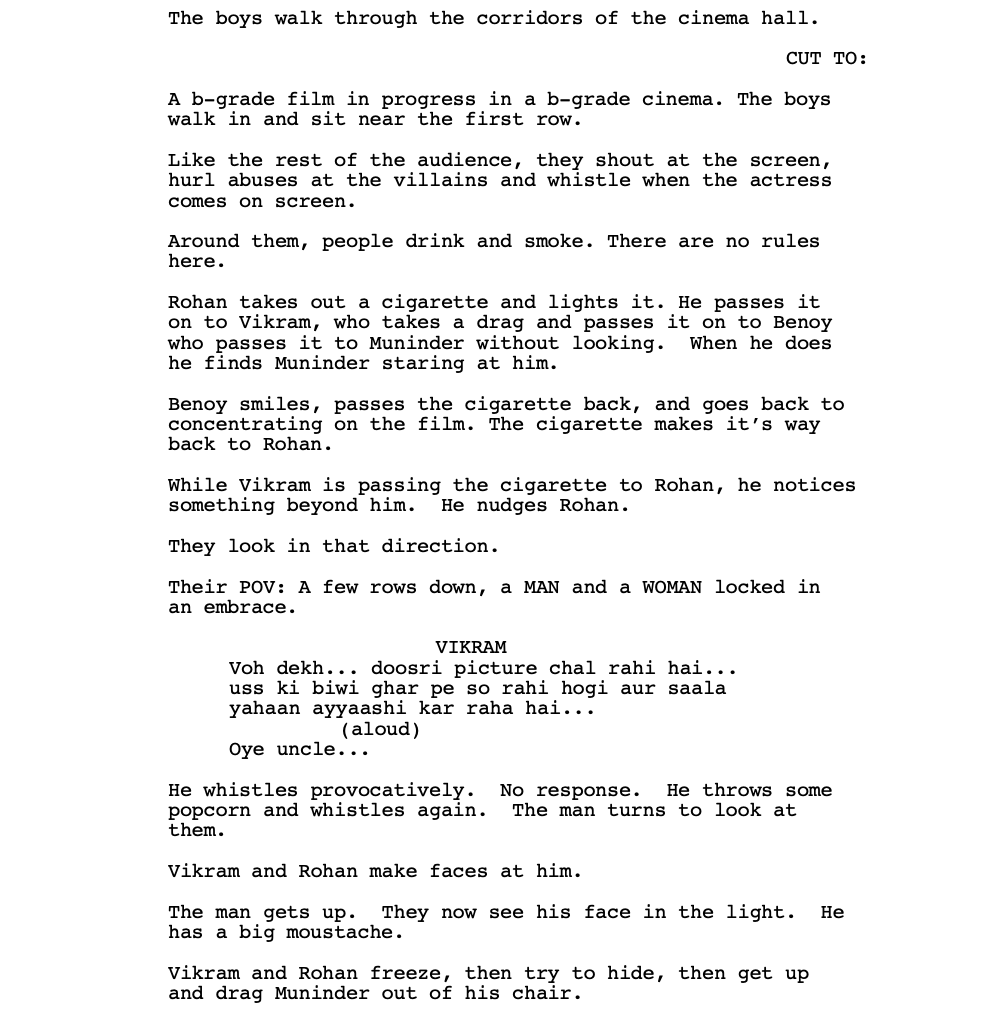
The boys sneak away to a local pornographic theater, where they are almost immediately caught by one of the teachers at their school.
INCITING INCIDENT
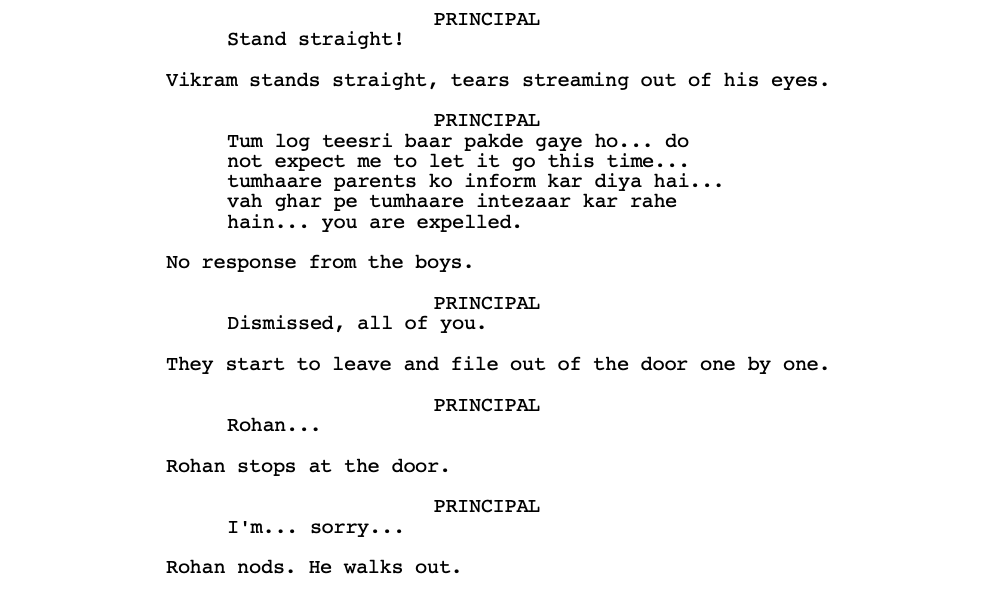
The boys get called into the Principal’s office, where it’s announced that they’ve all been expelled. Despite his decision, the Principal lets out a soft apology specifically for Rohan, who hasn’t seen his father in several years.
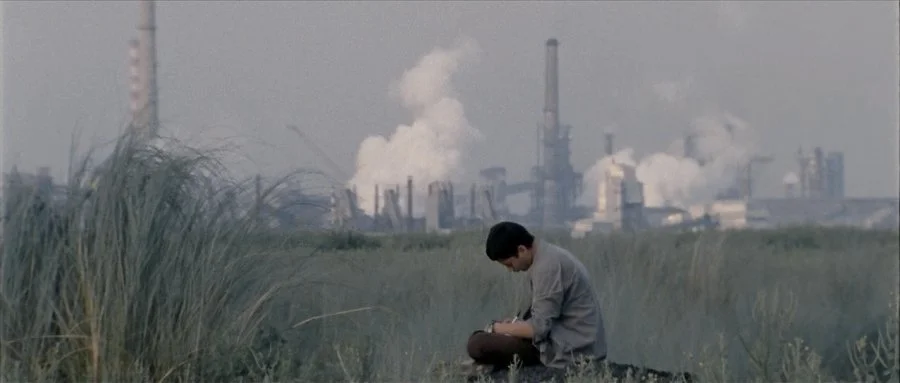
Before he leaves, we find Rohan alone in the woods writing a poem about his experience.
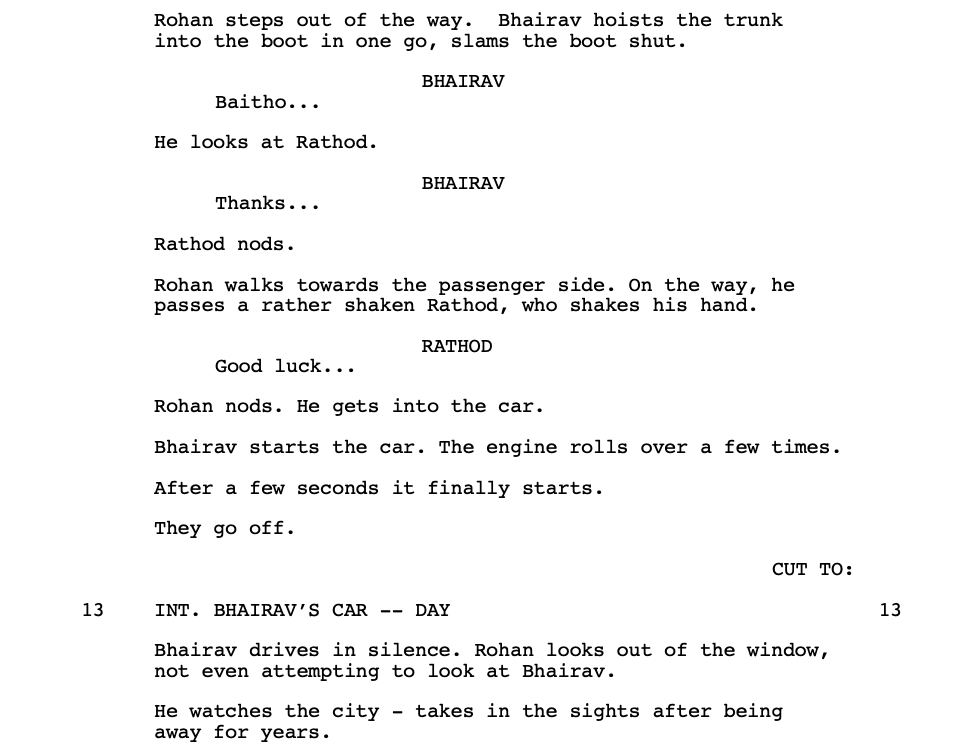
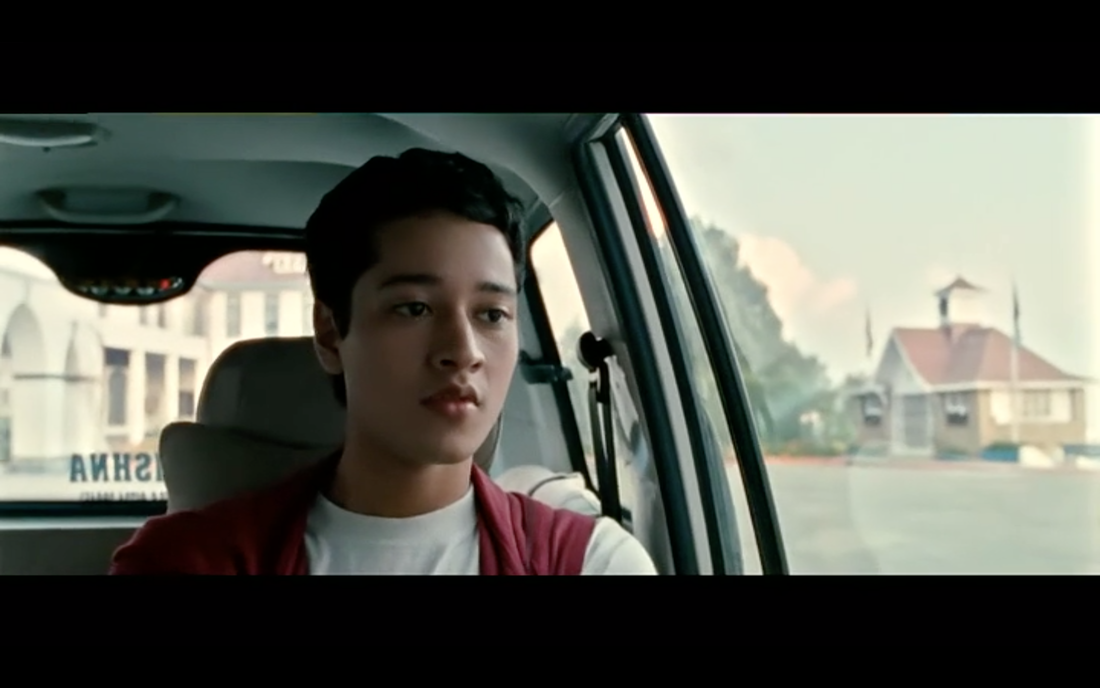
He takes a train back to his home in Jamshedpur, where his father, Bhairav, picks him up without any embrace. Their relationship is obviously a difficult one.
DEBATE
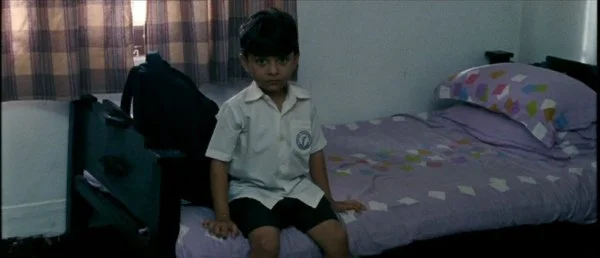
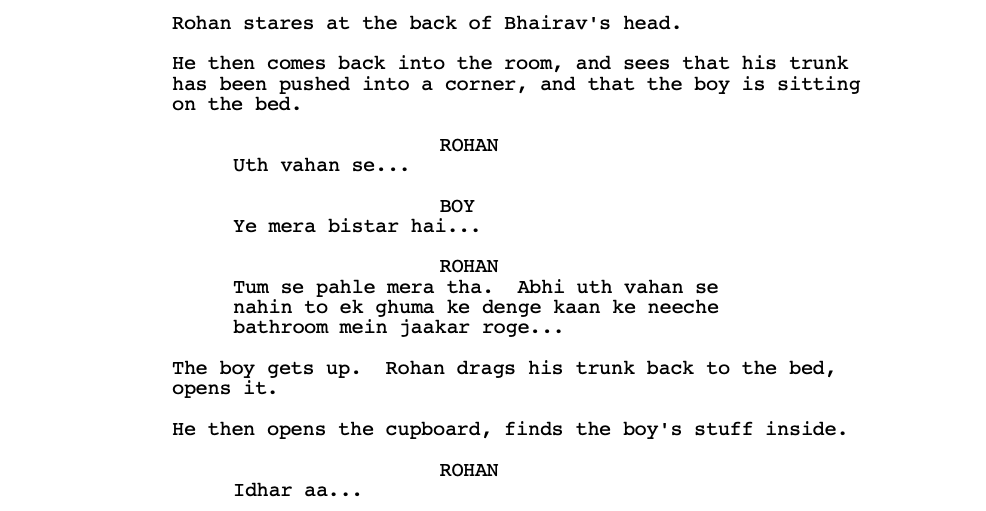
When Rohan and Bhairav return home, Rohan makes a shocking discovery: his mother has died, and his father has had another child (whose mother is also no longer in the picture). The child’s name is Arjun, Rohan’s half-brother. Already, he’s put a claim to Rohan’s old bedroom, which Rohan reacts to harshly. Obviously, there is no immediate brotherly bond.
BREAK INTO TWO
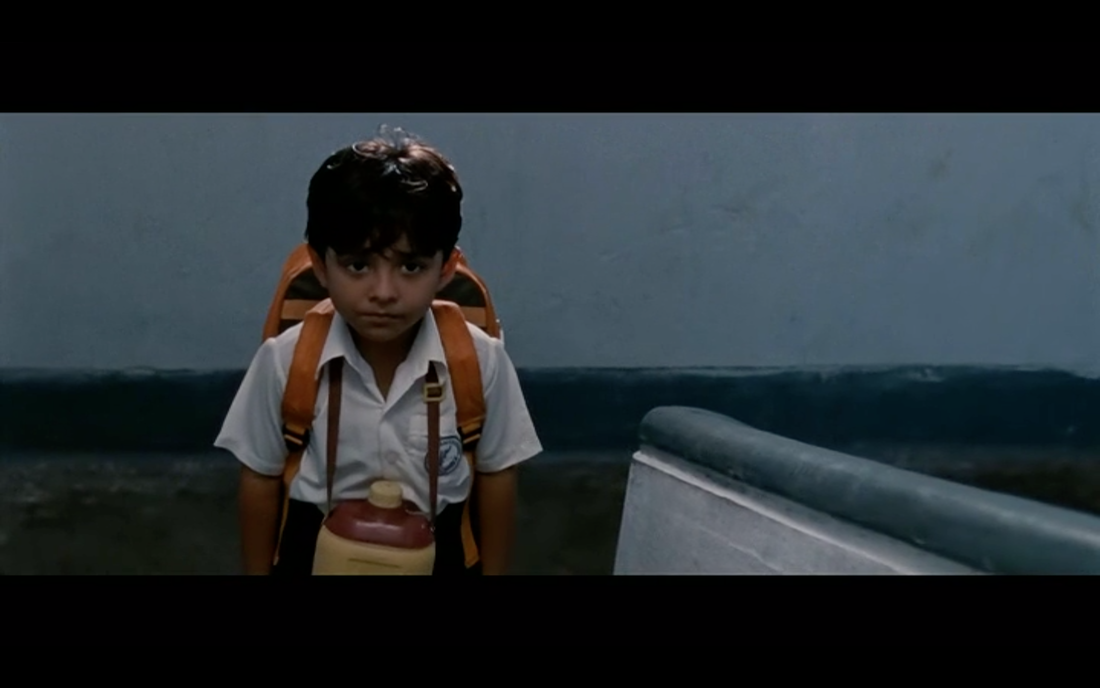
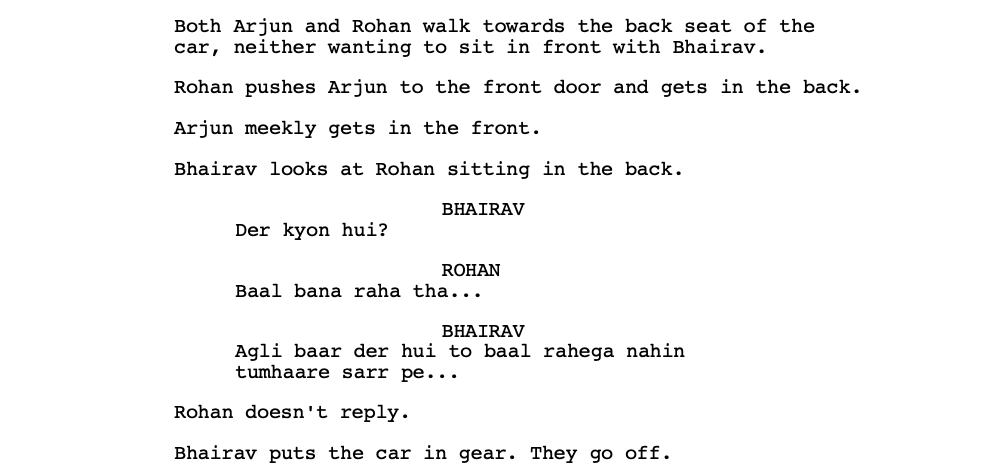
Act 2 begins with Bhairav, Rohan, and Arjun going to visit Bhairav’s brother, Jimmy. During this trip, we see hints of just how strict Bhairav truly is, with him even threatening to shave Rohan’s head if he acts up.
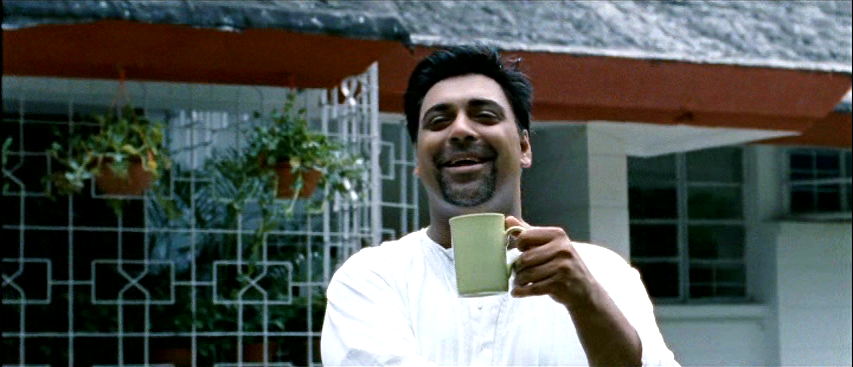
At Jimmy’s, Rohan confesses that he dreams of being a writer. Jimmy supports and encourages this idea, but Bhairav strictly goes against it, saying that Rohan will study to be an engineer and work at his factory.
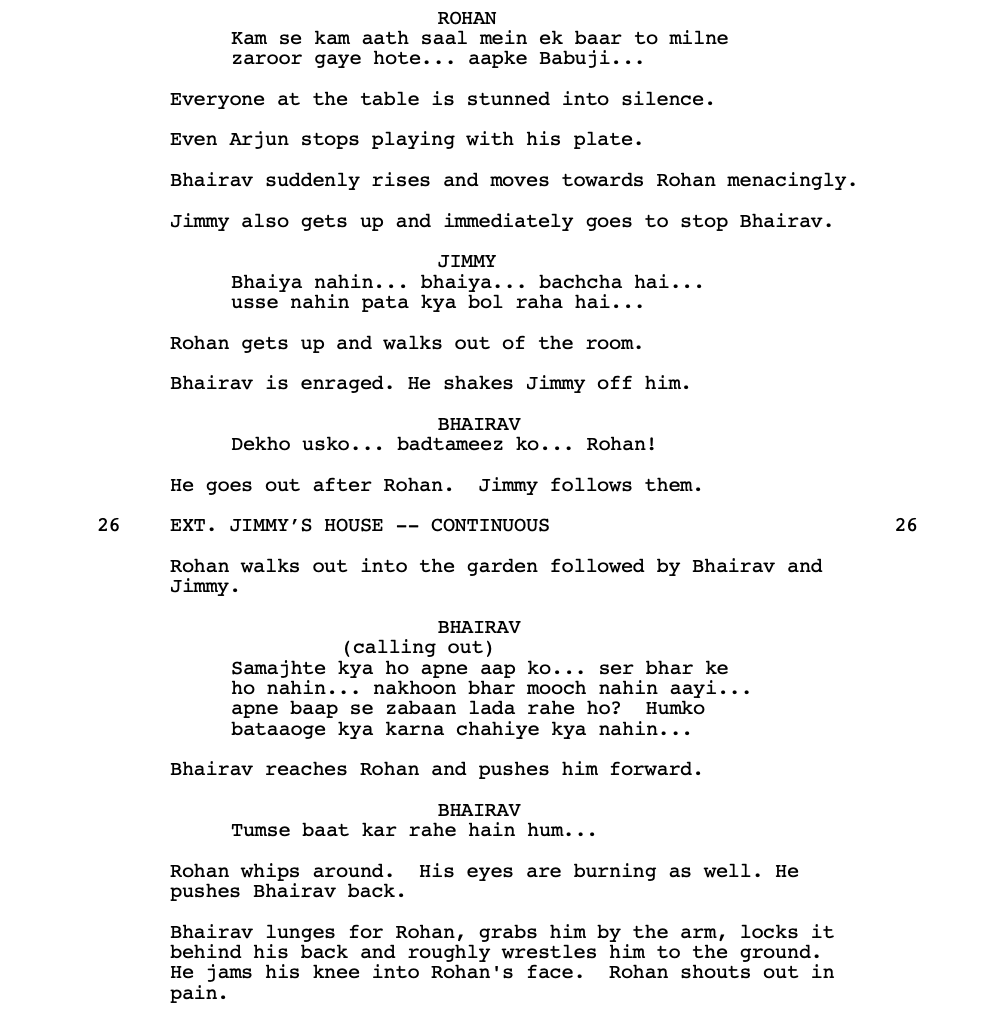
As a defense to this strict position, Bhairav mentions how strict his own father was, to which Rohan replies with a comment about how his grandfather would never ignore his own son for 8 years. Immediately, Bhairav explodes.
MIDPOINT
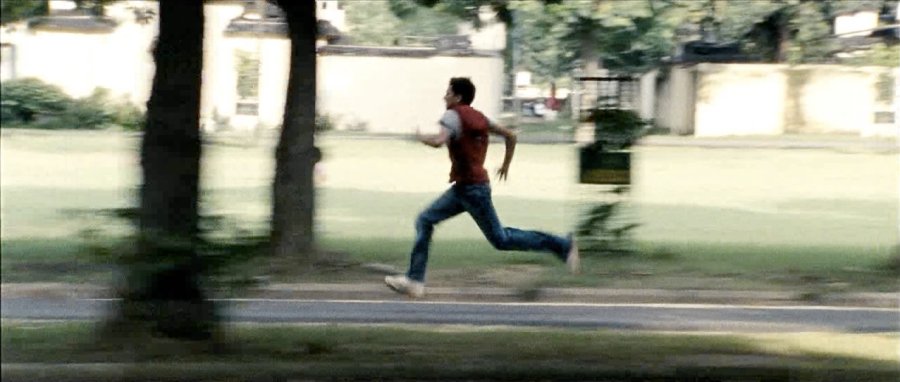
The halfway point of the script finds Rohan simultaneously entertaining his father’s strict rules while writing in secret.
Every morning, he is forced to run until exhaustion. And every day after that, he is forced to work at his father’s factory, where Bhairav berates him and constantly calls him a failure.
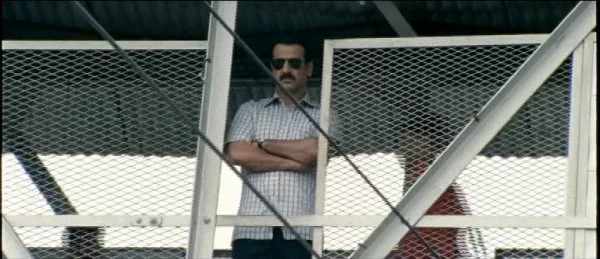
However, back at home, Bhairav’s intense brutality towards Arjun starts to help form a bond between the two brothers, even if it is subtle.
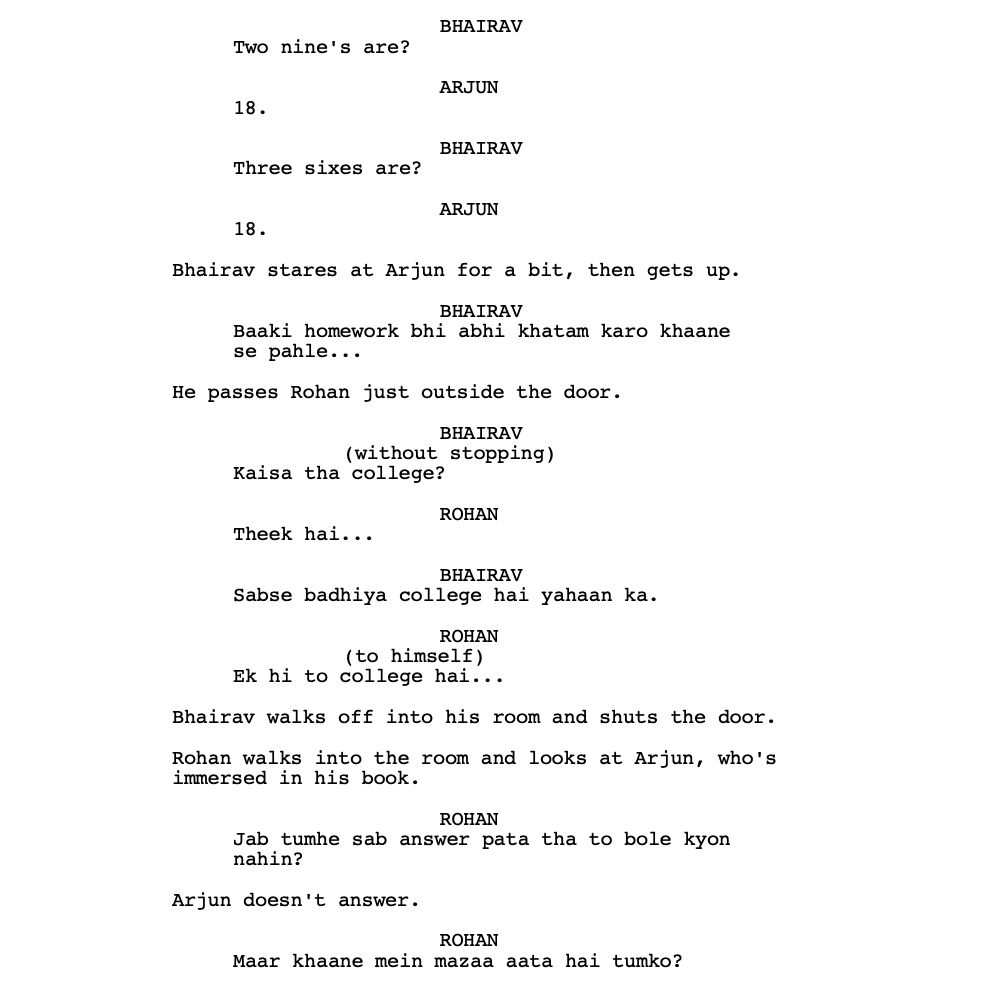
BAD TO WORSE
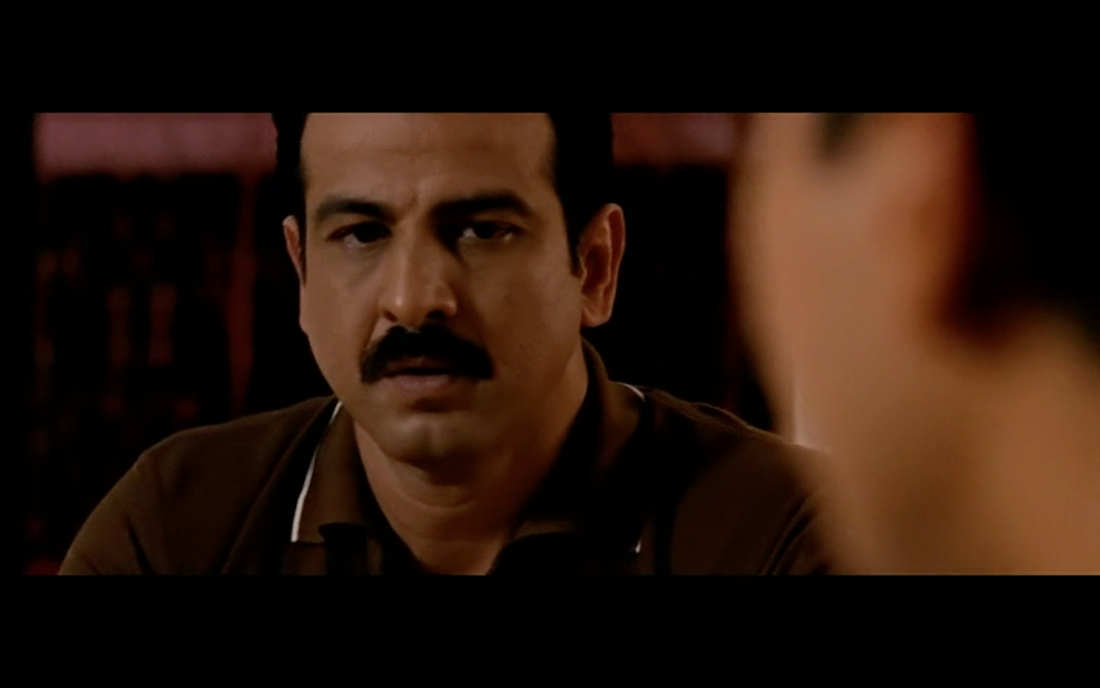
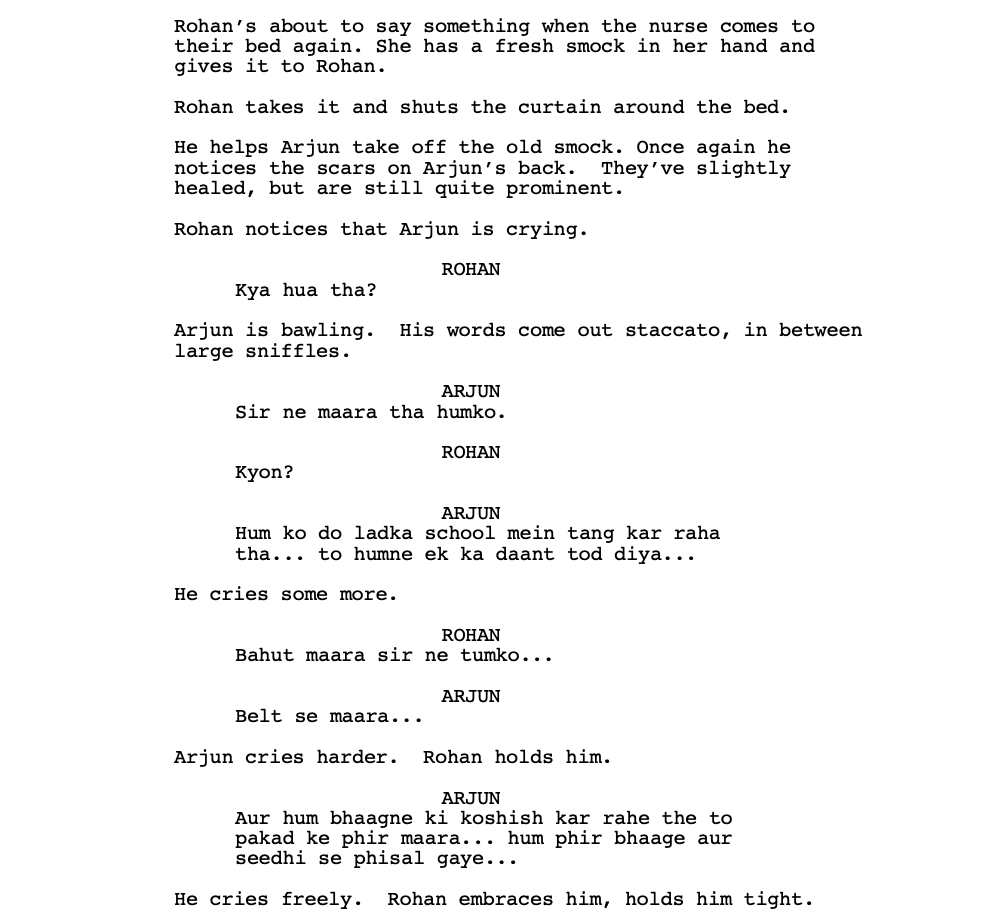
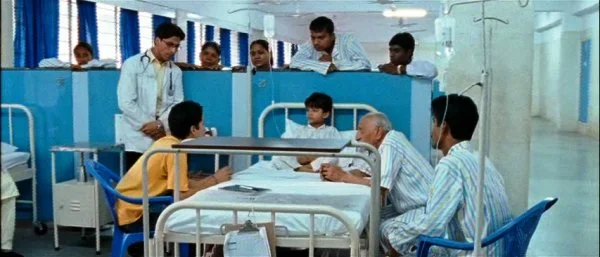
Act 3 finds Bhairav drinking more heavily as a result of losing a contract at work, making him more prone to outbursts and further worsening the conditions at the home. At one point, Rohan even comes home to find Arjun being taken to a hospital for unknown injuries. Now attached to his little brother, Rohan stays by his bedside constantly, even reading him some of the poetry he’s written. Then, Arjun confesses that he’s injured as a result of Bhairav brutally beating him after a mishap in school.
BREAK INTO THREE
Act 3 begins with Rohan escorting Arjun out of the hospital and back home, symbolising their bond growing stronger.
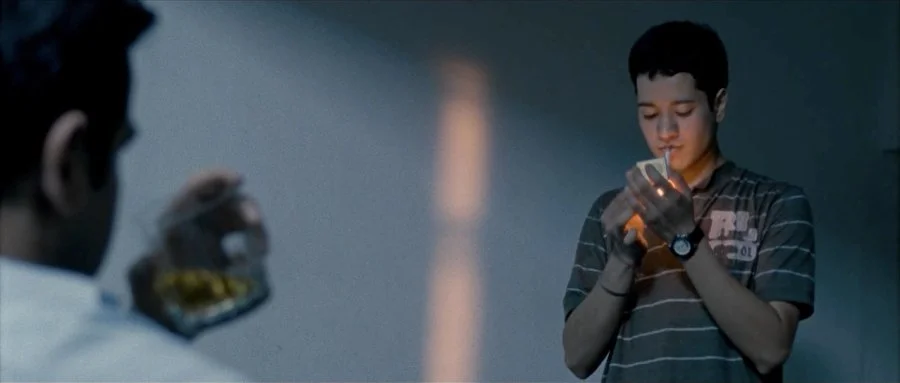
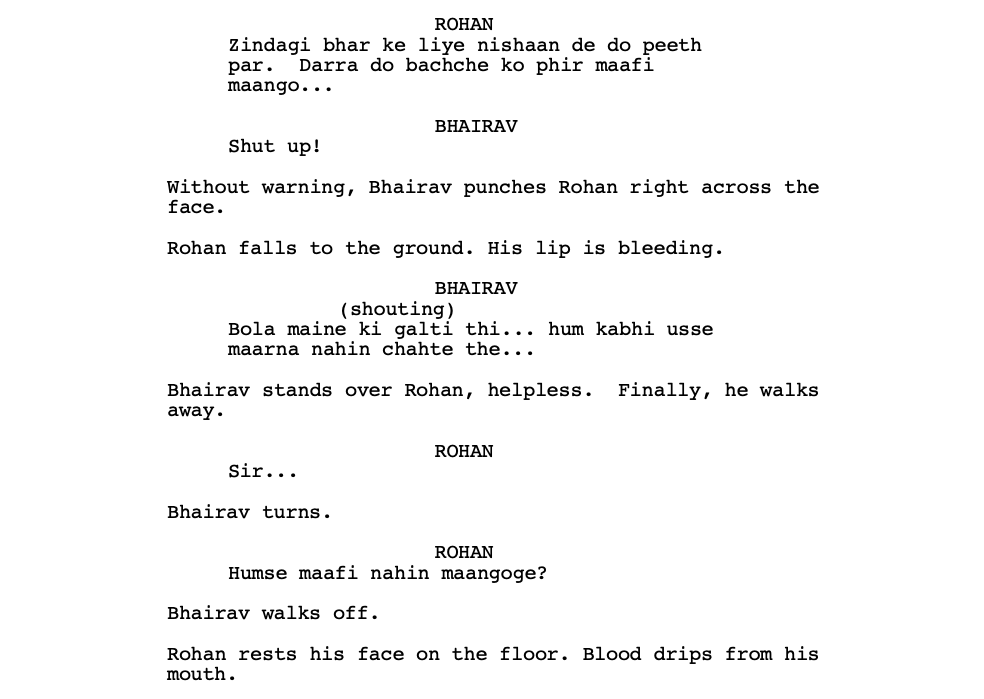
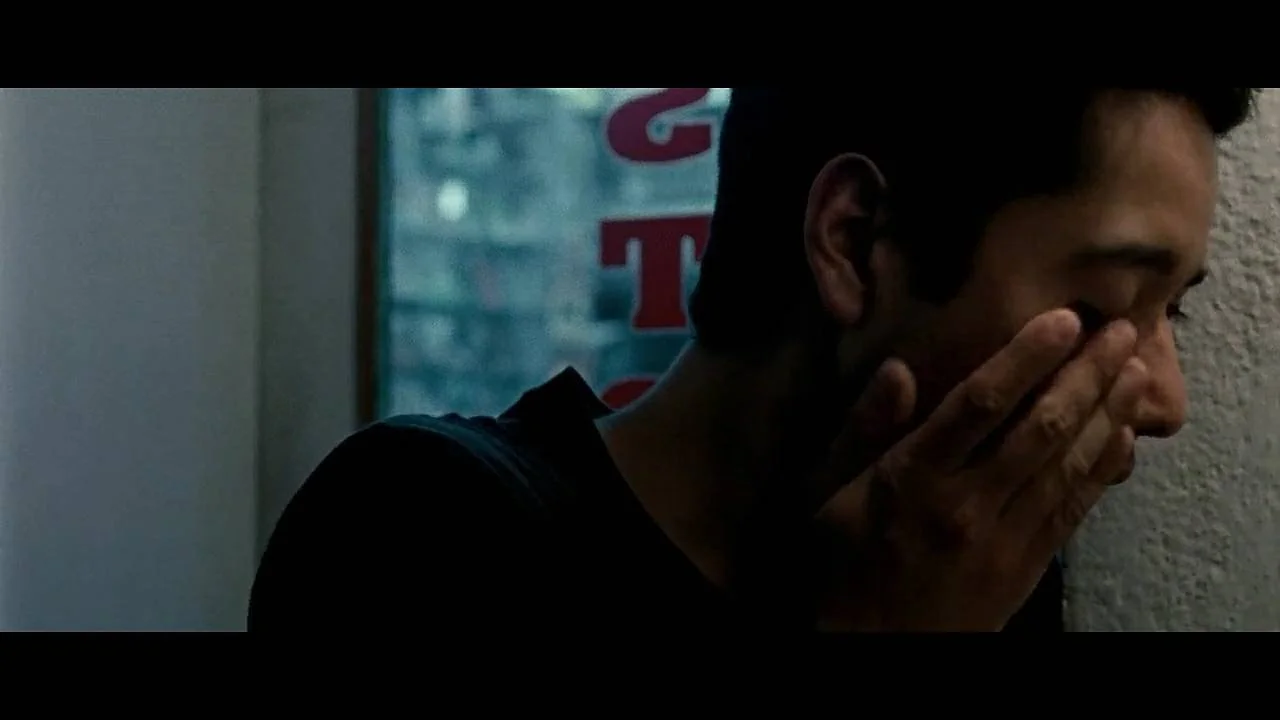
But when they arrive home, Rohan discovers that Bhairav has been drinking again…and something’s on his mind. Bhairav discovered that Rohan had been intentionally failing his engineering classes as an act of defiance (also that he had been smoking), and as expected, he beat his son once again.
FINALE
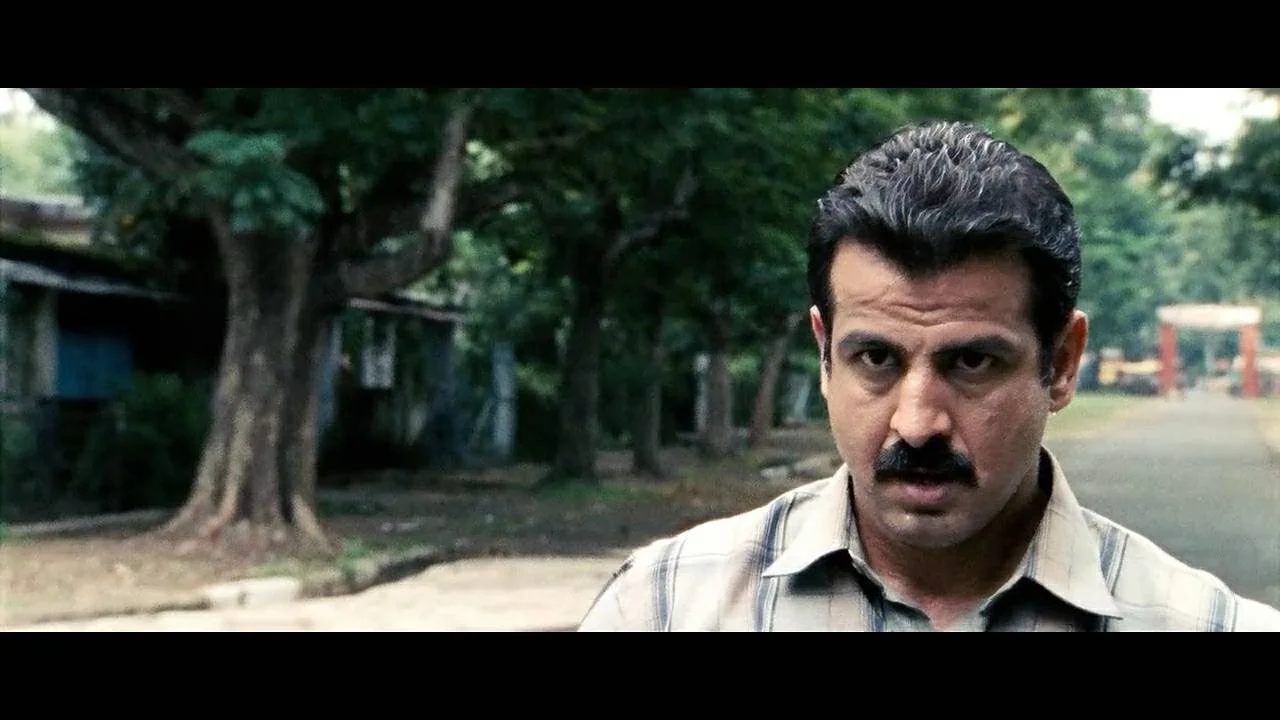
The next morning, Bhairav apologizes to his sons for the way he’s been acting. While it seems like a promising character direction at first, Bhairav then provides three updates:
Rohan is to begin working at the factory full-time. If he doesn’t want to study, then he must begin to work.
Arjun is going to be sent away to boarding school, just as his older brother was so many years ago.
Bhairav is planning on getting remarried.
Later, Jimmy attempts to reason with his brother, saying how talented a writer Rohan is. Expectedly, Bhairav doesn’t care to listen.
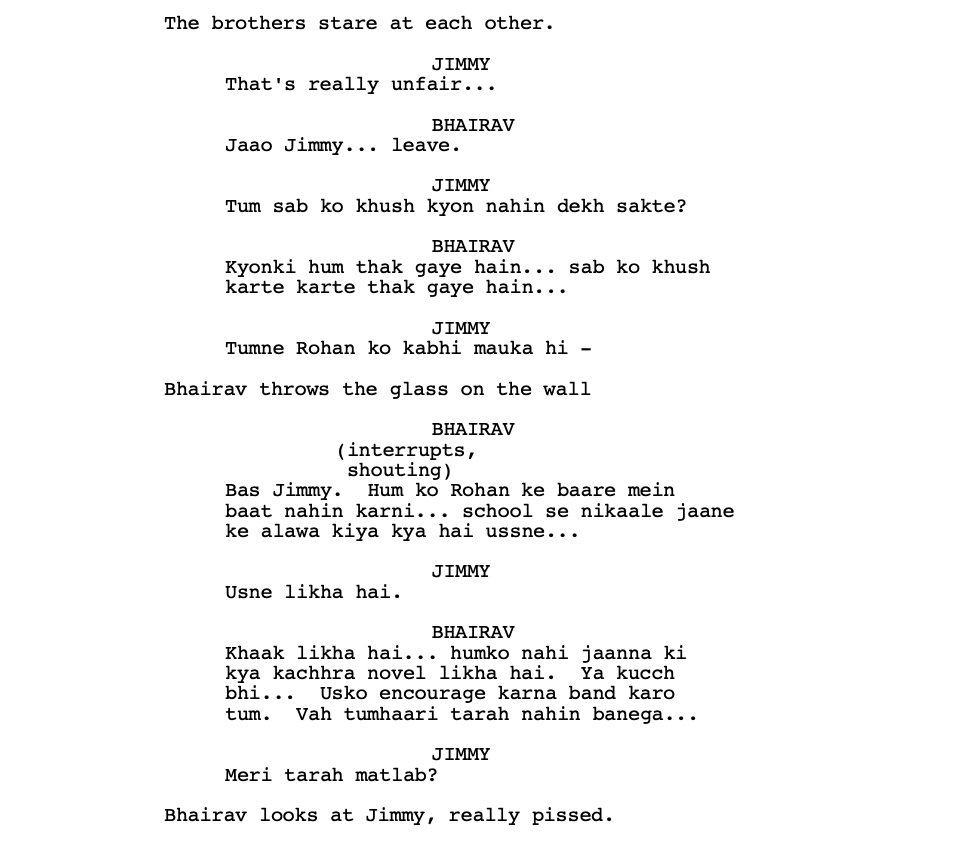
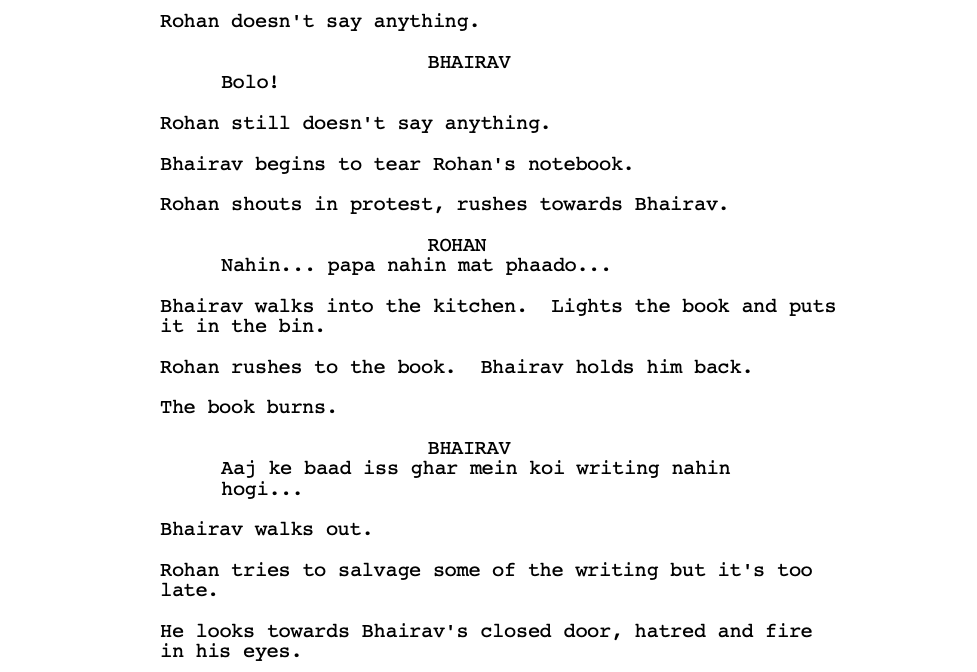
The next day, Rohan returns home to find his father holding his notebook. He tells his son that there will be no more writing in this house and lights the book on fire, the final straw in their strenuous relationship.
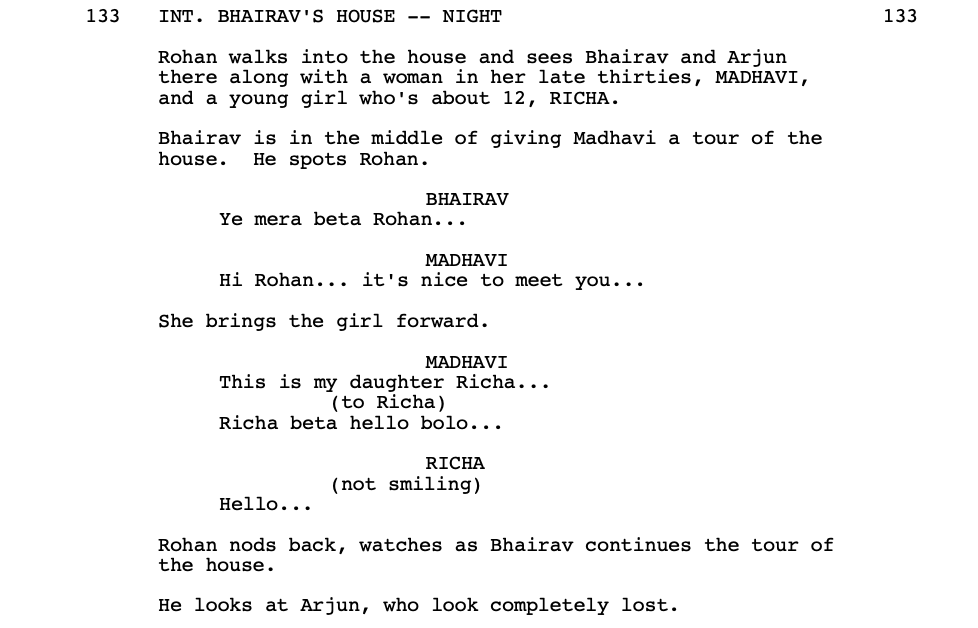
Several days after this incident, Rohan returns home to find his father giving a tour of the house to a woman (Madhavi) and her daughter, Richa. As it turns out, this woman is Bhairav’s new wife and stepdaughter, and it seems like they’re already moving in. Rohan can’t believe it and looks over to Arjun, who doesn’t seem to understand what is happening.
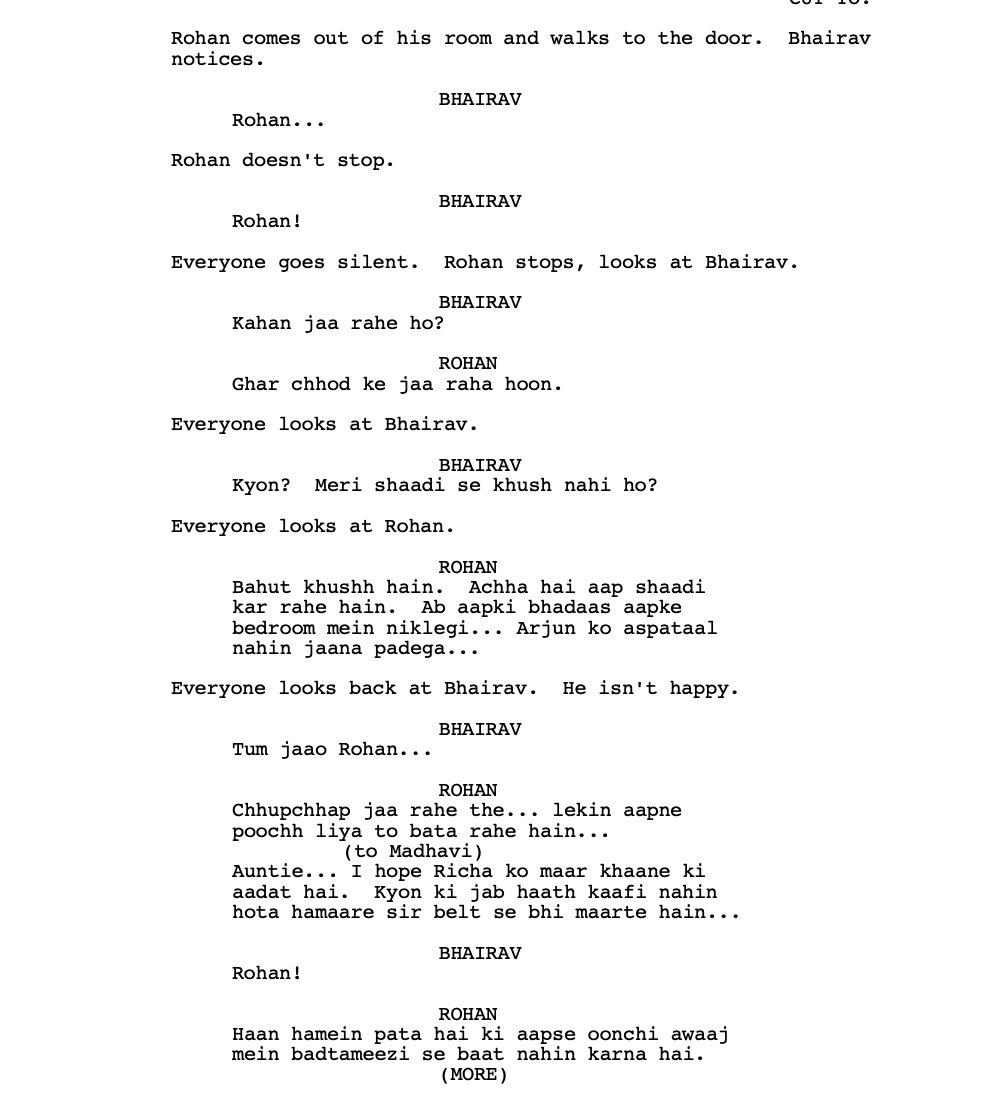
After attempting to put up with his father’s new charade for several weeks, Rohan finally snaps and tells him off. He says he isn’t happy with their situation, and even tells Madhavi that Bhairav will surely beat her daughter.
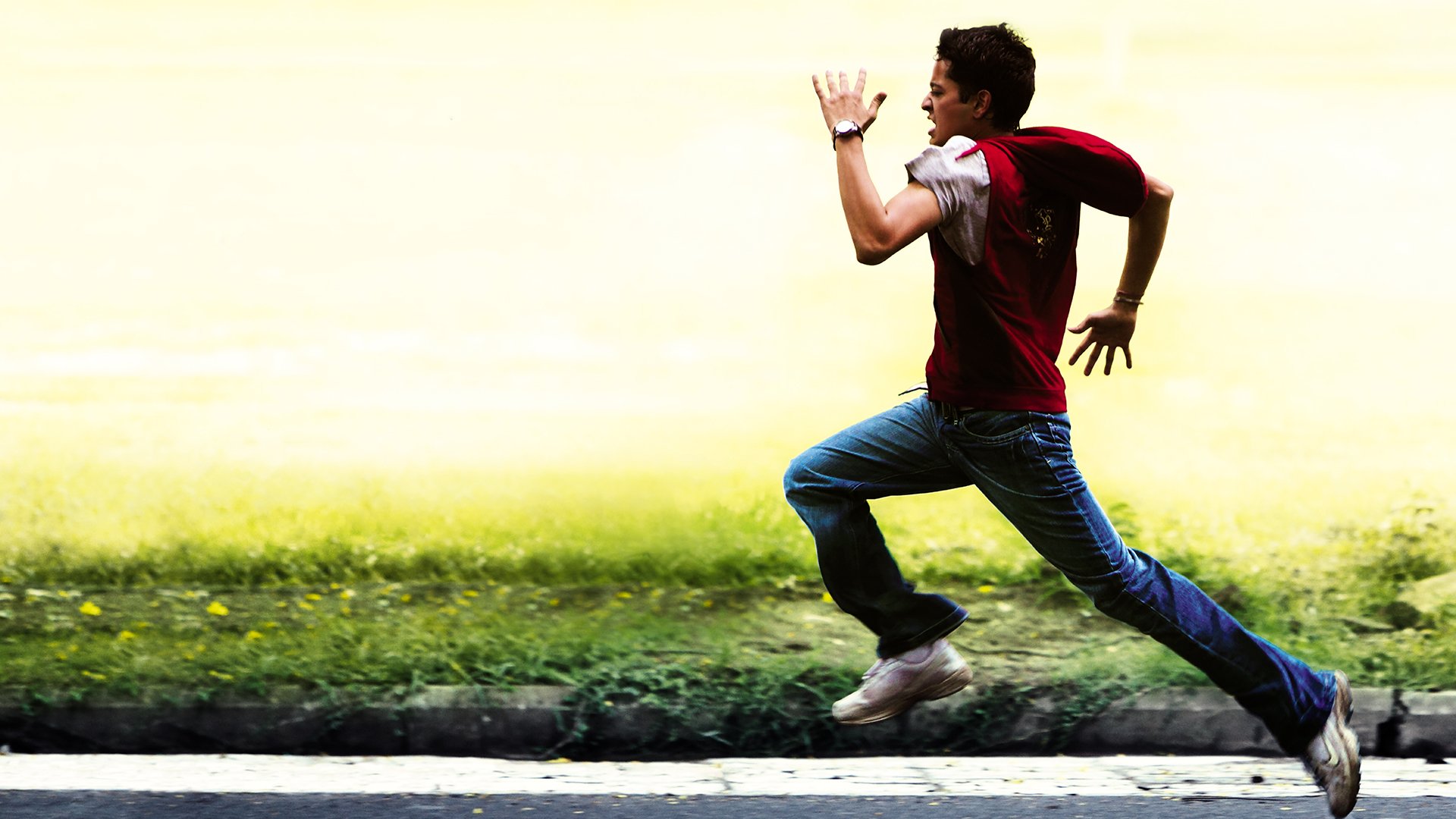
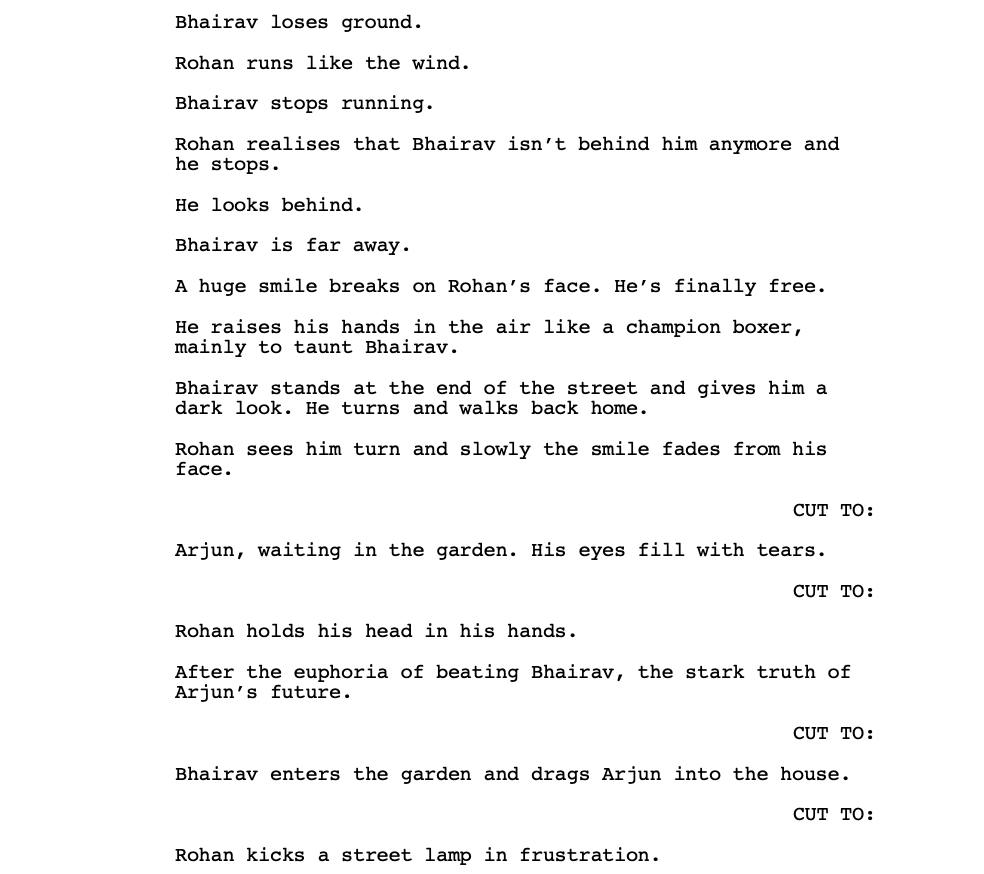
Bhairav chases Rohan out of the house, but for the first time in the entire film, Rohan is faster than his father. The chase goes on for several blocks before Rohan finally turns around to notice that he’s outrun Bhairav. He keeps running away, with no intention of coming back, but happens to catch something in the distance that makes him question this decision: Arjun.
CLOSING IMAGE
Rohan takes shelter at Jimmy’s house for a day before finally deciding that he’s going to make his way to Bombay. Jimmy doesn’t question him or even try to convince him otherwise. He simply acknowledges his nephew’s decision.
Early the next morning, as Rohan makes his departure, we suddenly realize that he’s stopping back at Bhairav’s house first. When he gets there, he finds Arjun sitting on the steps. He convinces the boy to come with him, and that they will have a happy life together somewhere far away from their father. Arjun agrees, and the two walk away from the home for good.
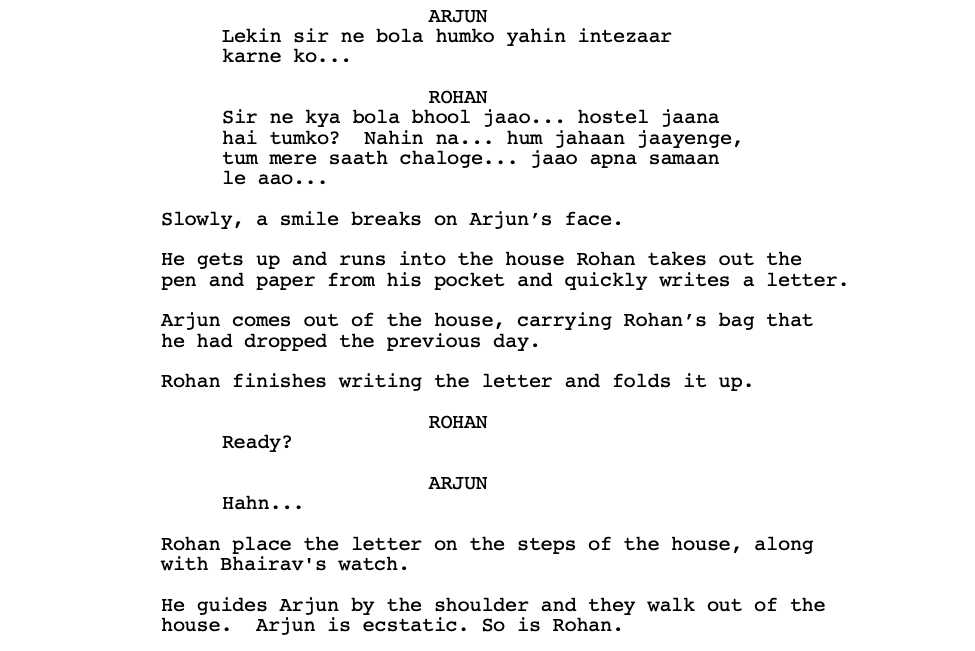
As they walk away, a voice-over of Rohan reading a letter he wrote for Bhairav plays. In the letter, he explains why he’s taking Arjun away, why they will never speak to him again, and for him to enjoy his new wife and daughter. A final f-you to Bhairav: “You don’t like my writing? Well, I bet you’ll read this.”
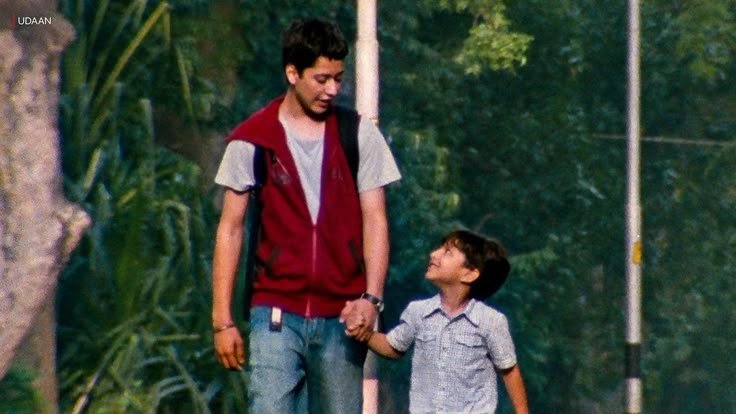
We briefly see a shot of Bhairav reading it in tears before cutting back to Rohan and Arjun walking down the streets of Jamshedpur. As they do so, Rohan extends a hand to Arjun, who happily takes it in stride.
WHY IT’S GREAT
This film is great primarily due to its execution. It’s not the most original film in the world. Plenty of movies have the premise of an artistic child who goes against their aggressive parents’ wishes. But none of them felt quite as real as this one, which, as I mentioned before, was unexpected to me as a novice fan of Indian cinema. The way Bhairav communicated with his family felt both on-the-nose and subtle in all the right places, making his character utterly frightening and unpredictable the entire time–mirroring how it must have felt to live under his roof as Rohan and Arjun did. Additionally, the relationship between Rohan and Arjun grew so slowly throughout the course of the film that I truly believed it when Rohan’s hate turned to sympathy. They may not know each other well, but these two boys are brothers who find themselves in the exact same shitty situation. Nobody knows about their struggles more than each other, and their coming together at the end was the perfect footnote to this point. Overall, this film was such a raw, heartbreaking take on the damage an overbearing parent can do to their children, and I recommend everyone give this modern Indian classic a watch.