World-Building on the Page: A Beetlejuice Script Analysis
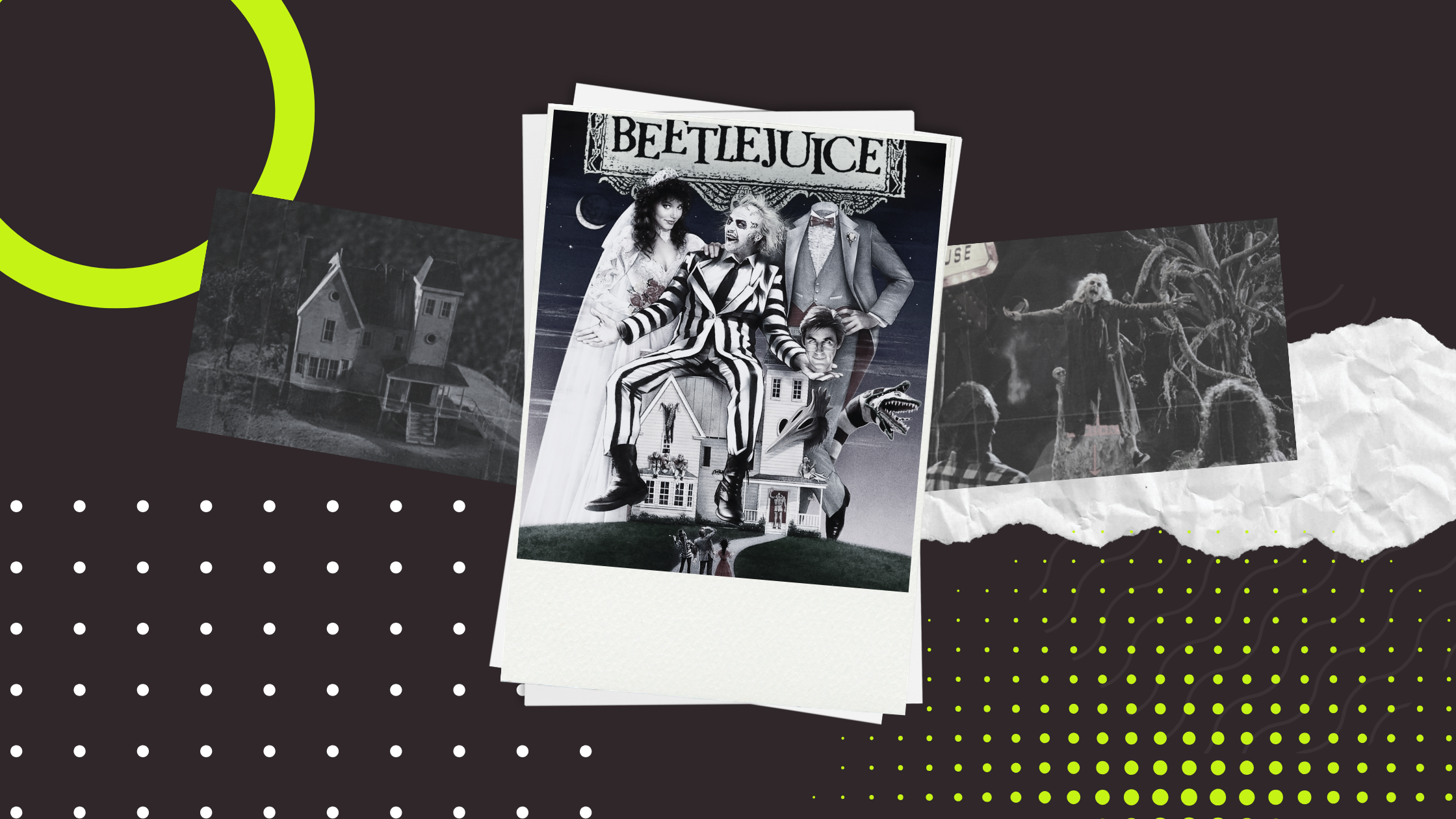
Warren Skaaren’s Beetlejuice, based on Michael McDowell’s original screenplay of the same name, presents the audience with an entirely new take on what happens after we die. It’s not paradise, and it’s not Hell–instead, it’s really just annoying. In just 92 minutes, the film manages to answer almost every question we have about death, poke fun at every haunted-house movie that came before it, and create an entirely convincing underworld centered on a very specific ghost-run bureaucracy. Not to mention that Michael Keaton’s titular character, Beetlejuice, only has under 10 minutes of screentime, and his purpose in the script is never once questioned. As you’re watching this movie, it almost seems impossible that the writers were able to squeeze in so many particular elements in such a short amount of time, but they pull it off spectacularly. So how did they do it? Well, the answer comes down to one thing: world-building.
World-building, especially in film, is especially difficult to master. Screenwriters who adapt their scripts from novels don’t have the same problem that original screenplay writers have; their world has already been built for them over the course of hundreds of pages, and now they just have to decide what to include and how to include it. World-building for the screen, in my opinion, is far more challenging. The writers have to develop their world independently, coming up with every single detail of how it functions, regardless of whether or not something appears in the film. It’s tedious, it’s exhausting, and if you try to take shortcuts, the audience will eat you alive. And the shorter the film is, the harder this is to pull off. But Skaaren and McDowell never flinched. They knew their world top-to-bottom, knew what parts of it to let us in on, and turned it into the perfect setting for a film that ended up being one of the best horror-comedies of all time.
Also, it should be noted that there were MANY changes made between the writing of this script and the final film, so I’ll make sure to point those out to you whenever they appear (HINT: The original script was much darker and stranger).
OPENING IMAGE
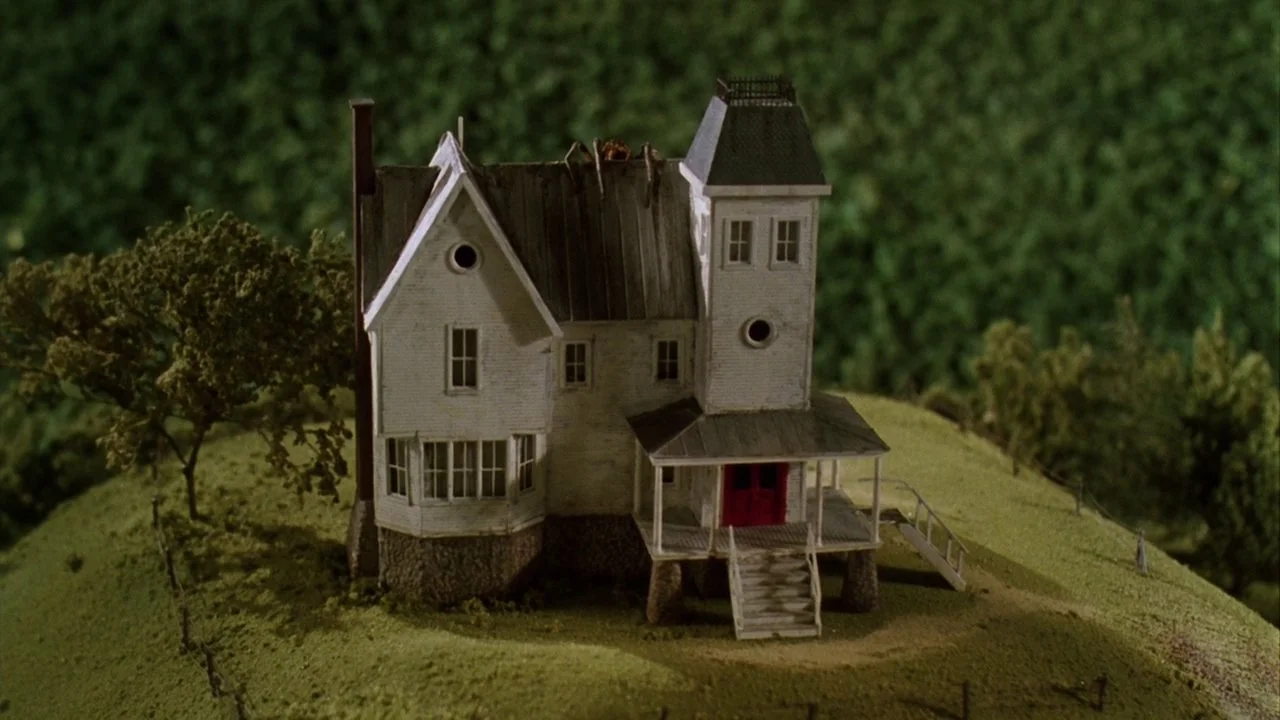
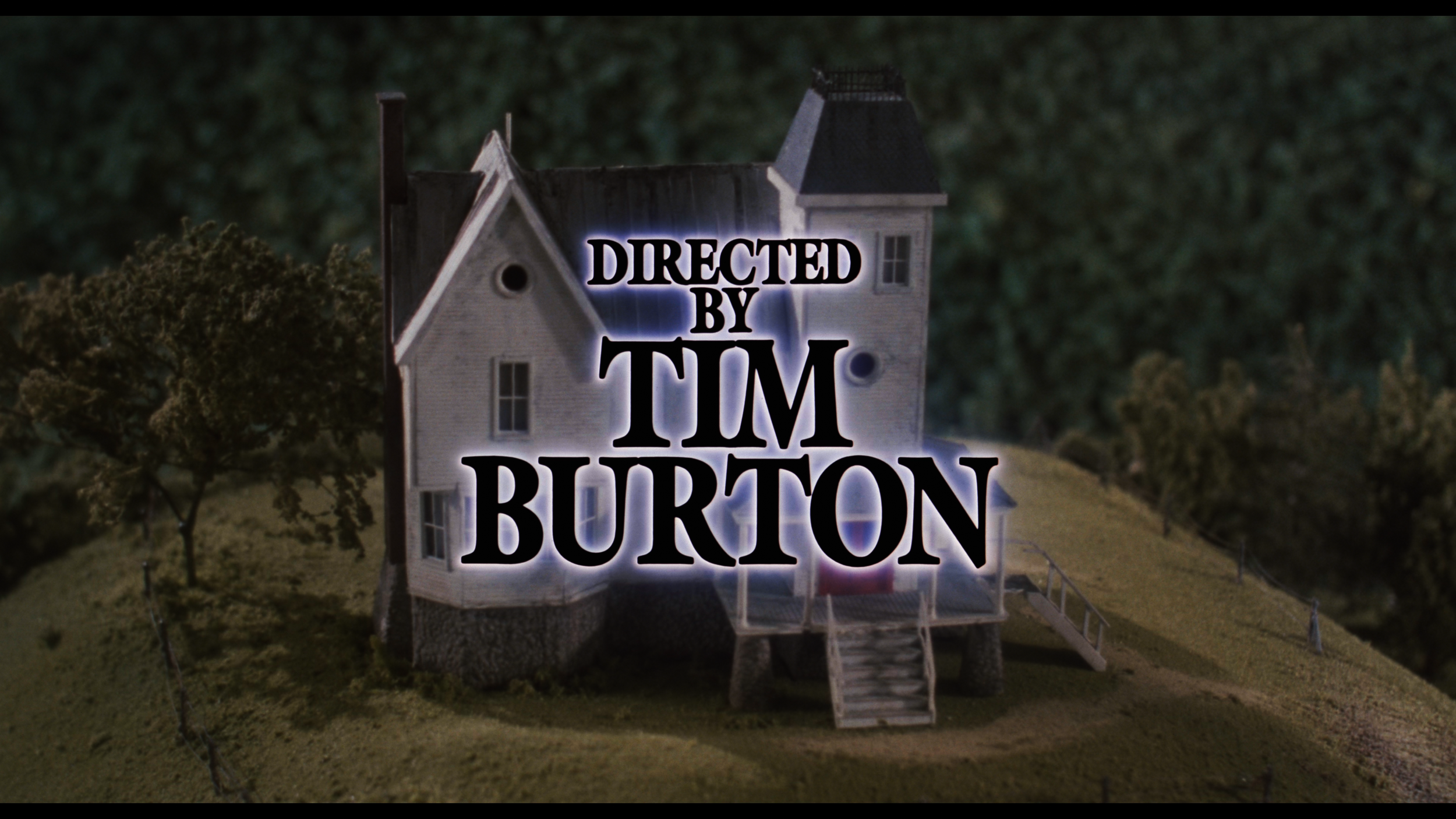
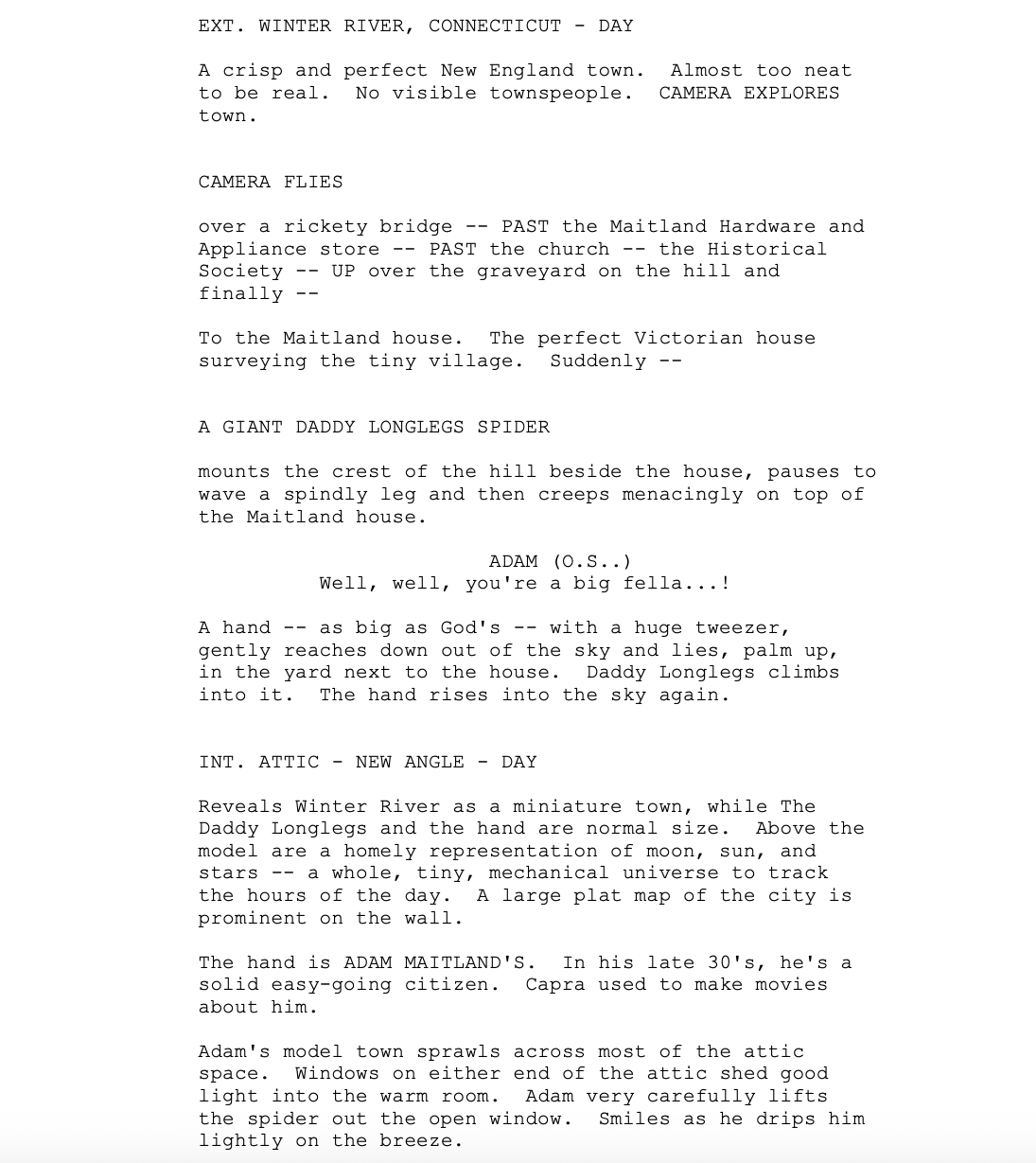
The film opens with a continuous POV shot as the camera explores a stereotypical, quiet New England town. As you look closer, you begin to notice that there aren’t any people here, and that all of the buildings and grass look a bit…plastic. We stop at a gorgeous Victorian house on the edge of the town, when suddenly, a large spider crawls into frame. We quickly realize that we weren’t exploring the town at all–it was a model. And just like that, the writers of this film let it be clear that this is their world that they’ve created, and you have no idea what’s coming next.
SET UP
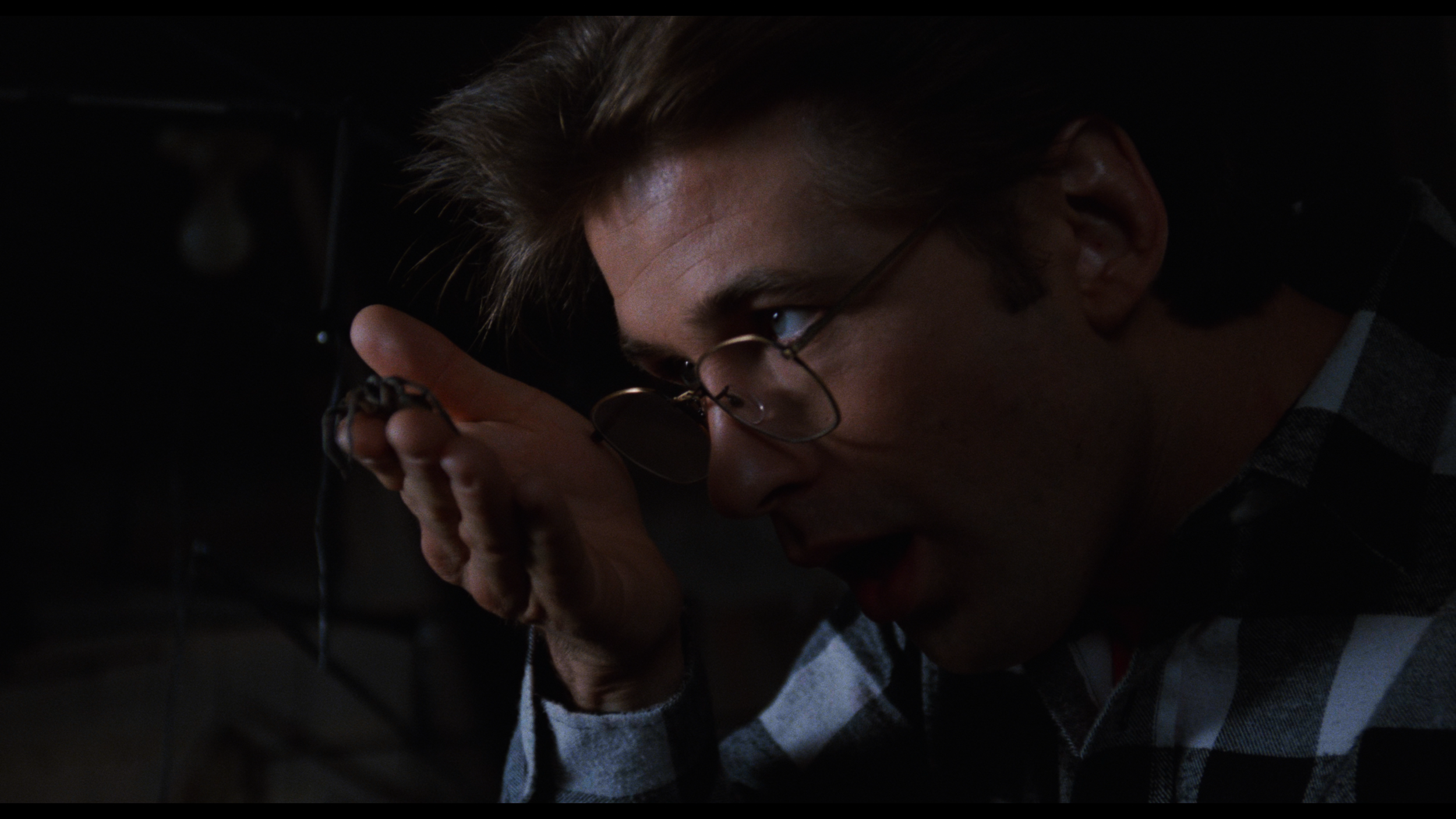
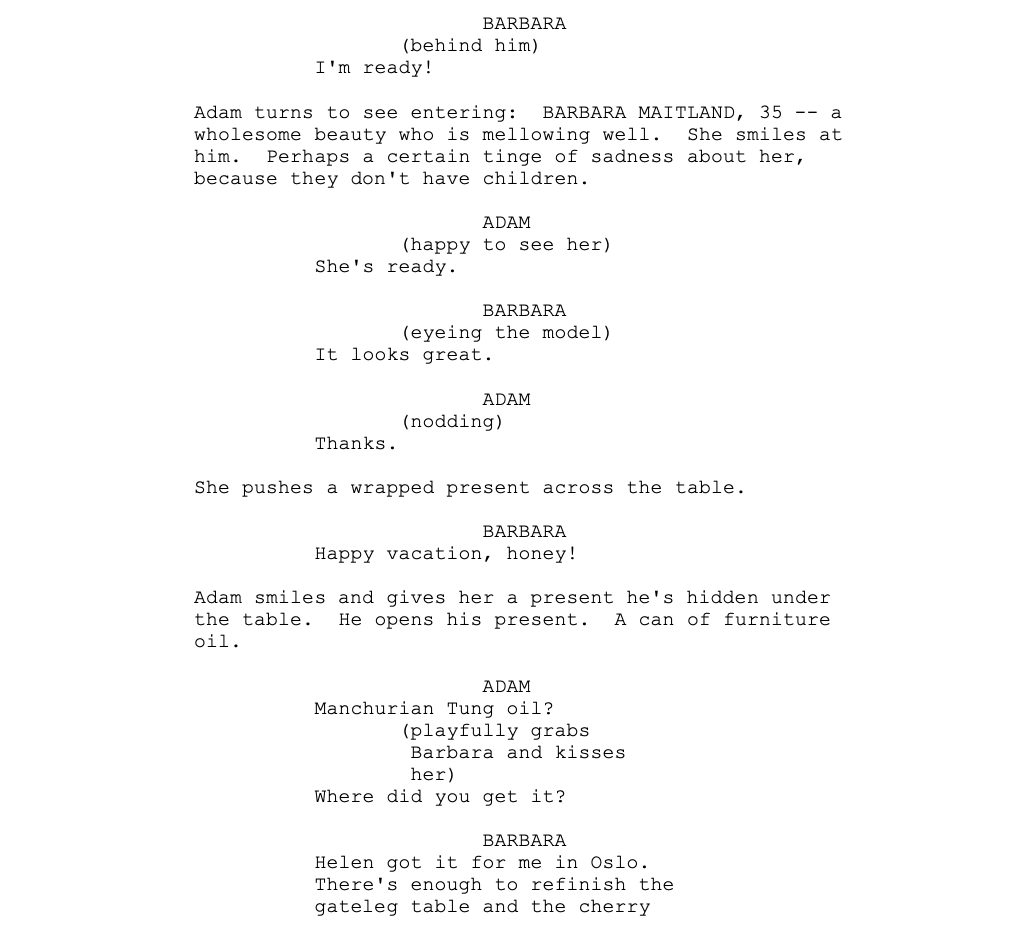
We soon discover that the owner of the model is Adam Maitland, a dorky artist who owns a craft store with his wife, Barbara. This is their home; the setting of their quiet, perfect life together. The two exchange gifts with each other as a way to kick off their vacation–one they’re spending at their favorite place on Earth: their house.
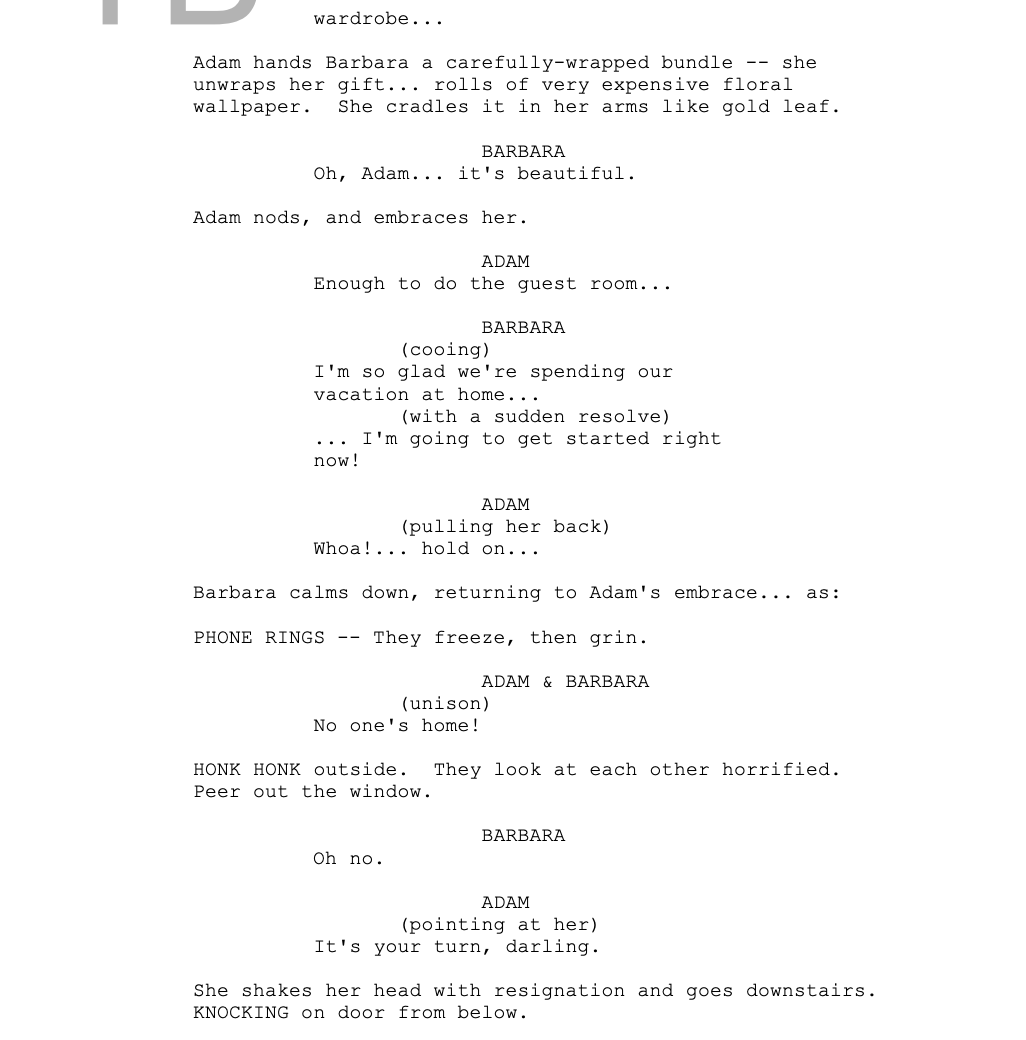
Their moment of serenity is quickly interrupted by a local realtor, Jane. She once again tries to pitch them on selling the place, saying that a rich man from New York is willing to pay above market price in cash. They quickly turn her away, refusing to give in whatsoever. They don’t care about money; they just care about their home.
INCITING INCIDENT
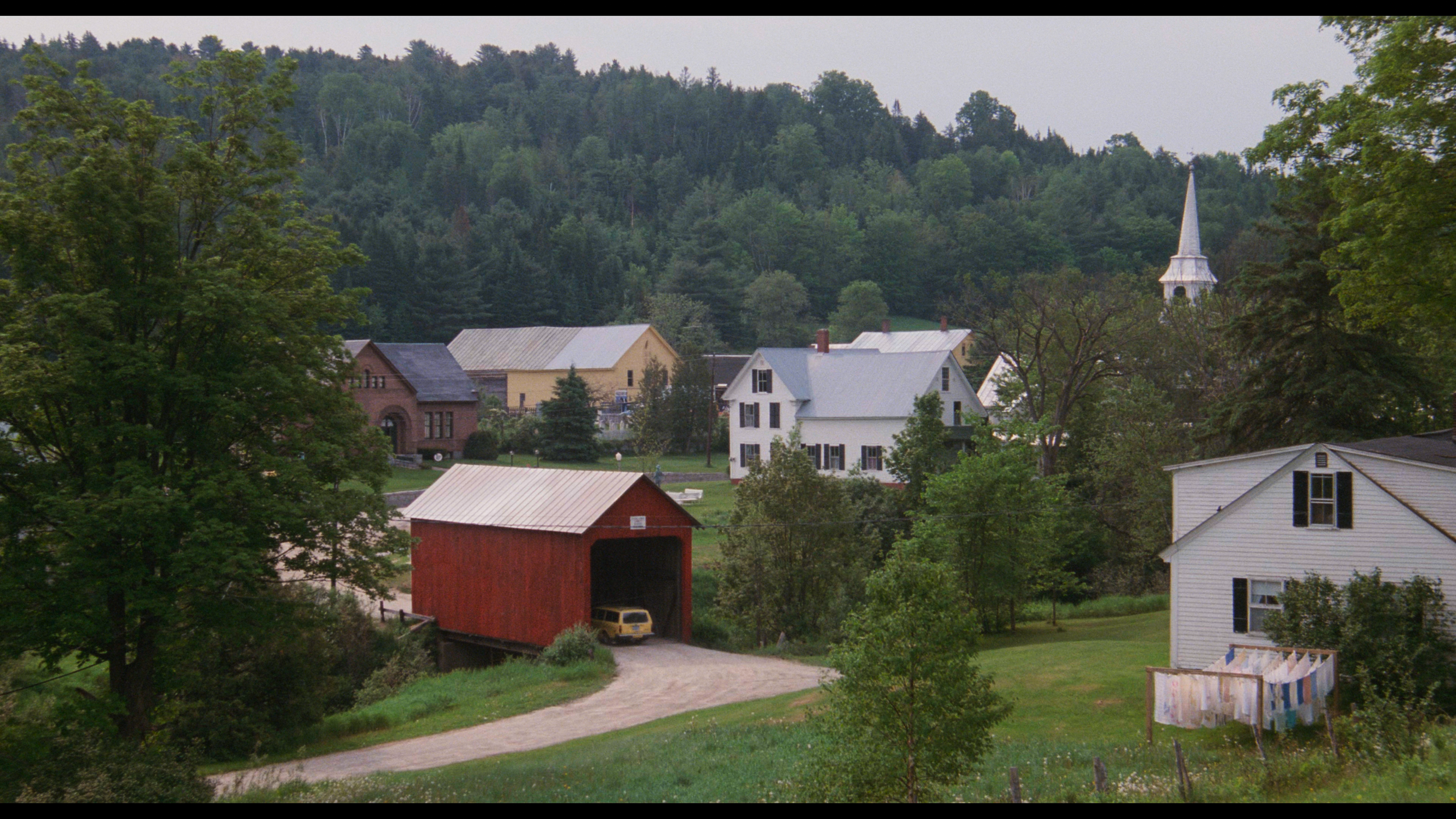
Barbara and Adam decide to make a quick run to their store before anybody in town can realize they’re still around (and thus ruining the secret that their vacation is really just a break from the real world). They hop in the car and drive over.
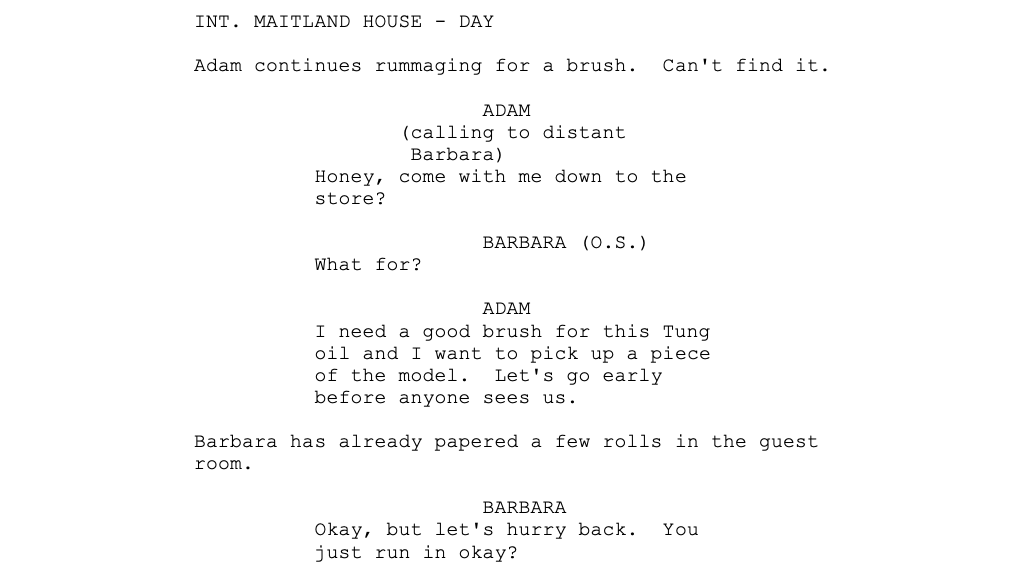
They finish their errand, hop back in the car, and make their way across the old rickety town bridge when suddenly a dog walks in front of the car.
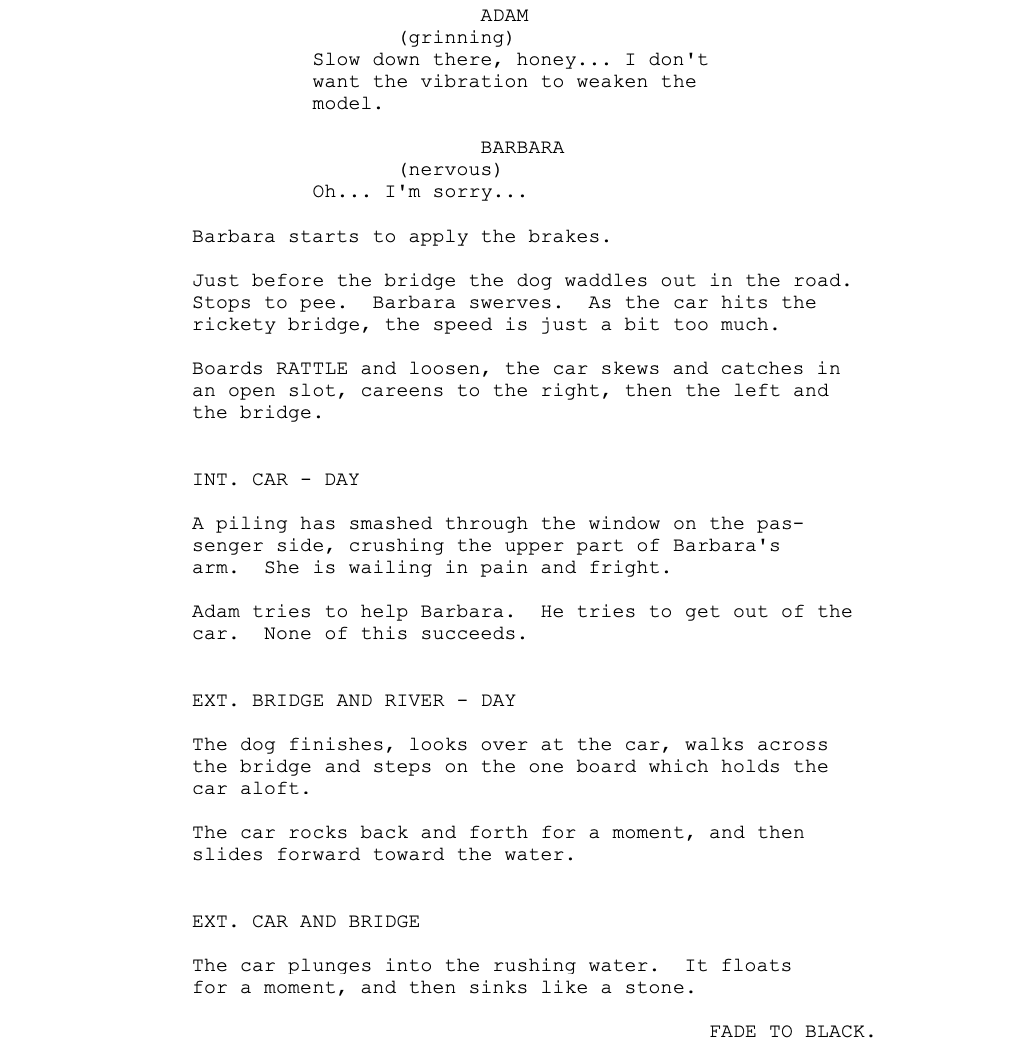
Just when you think the two are certainly dead, we cut back to them returning to their home, completely unscathed….but something’s not right.
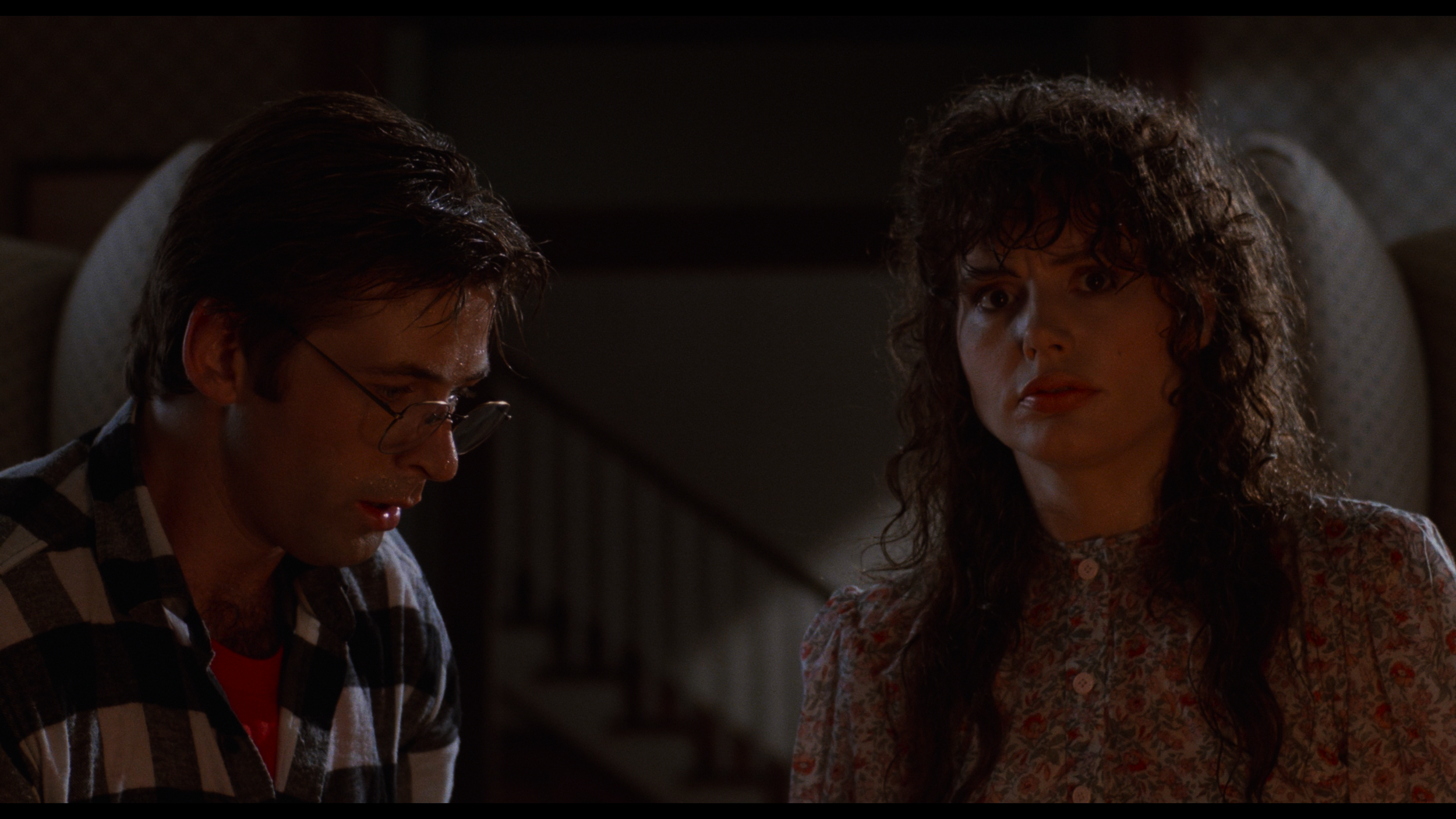
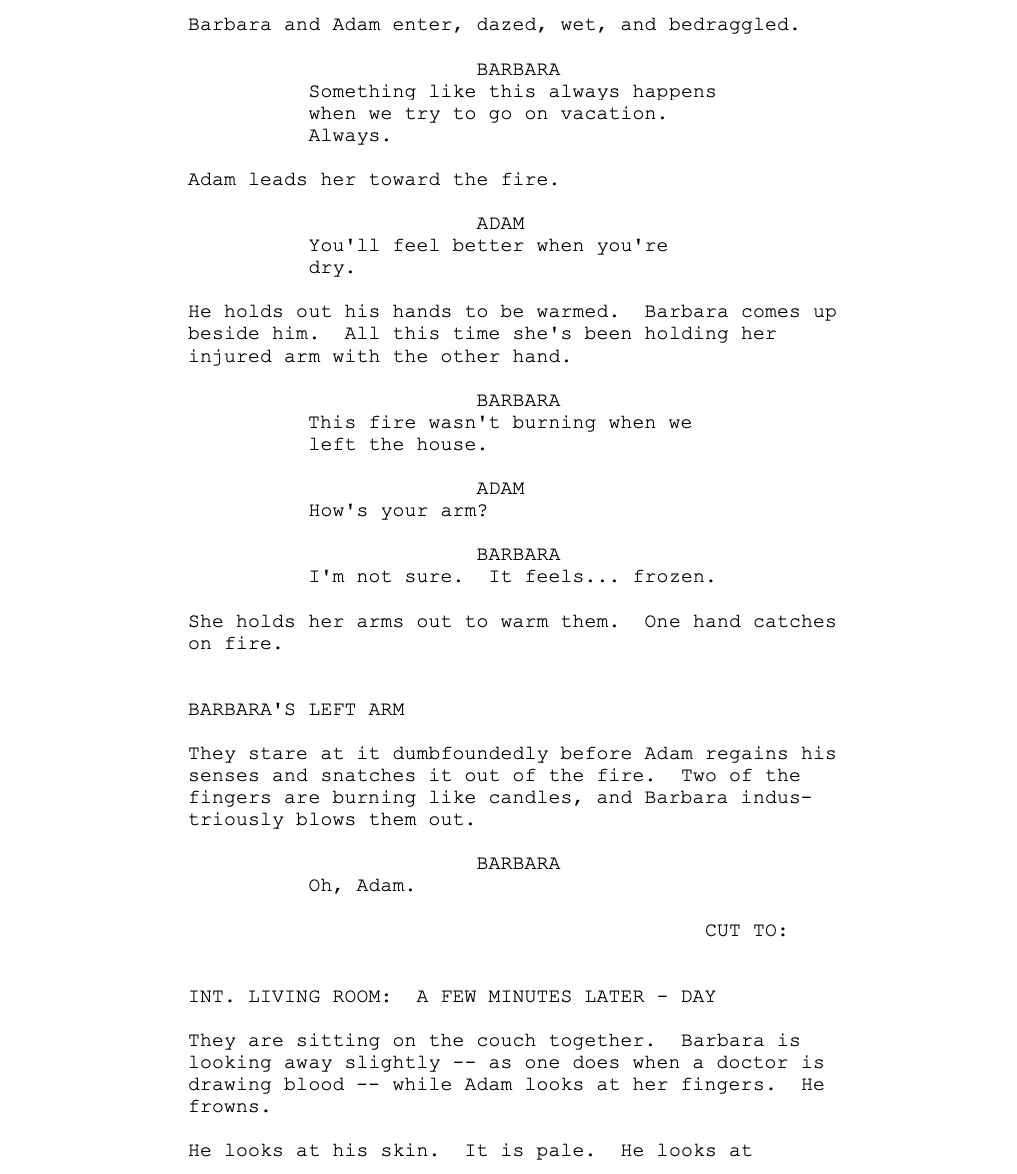
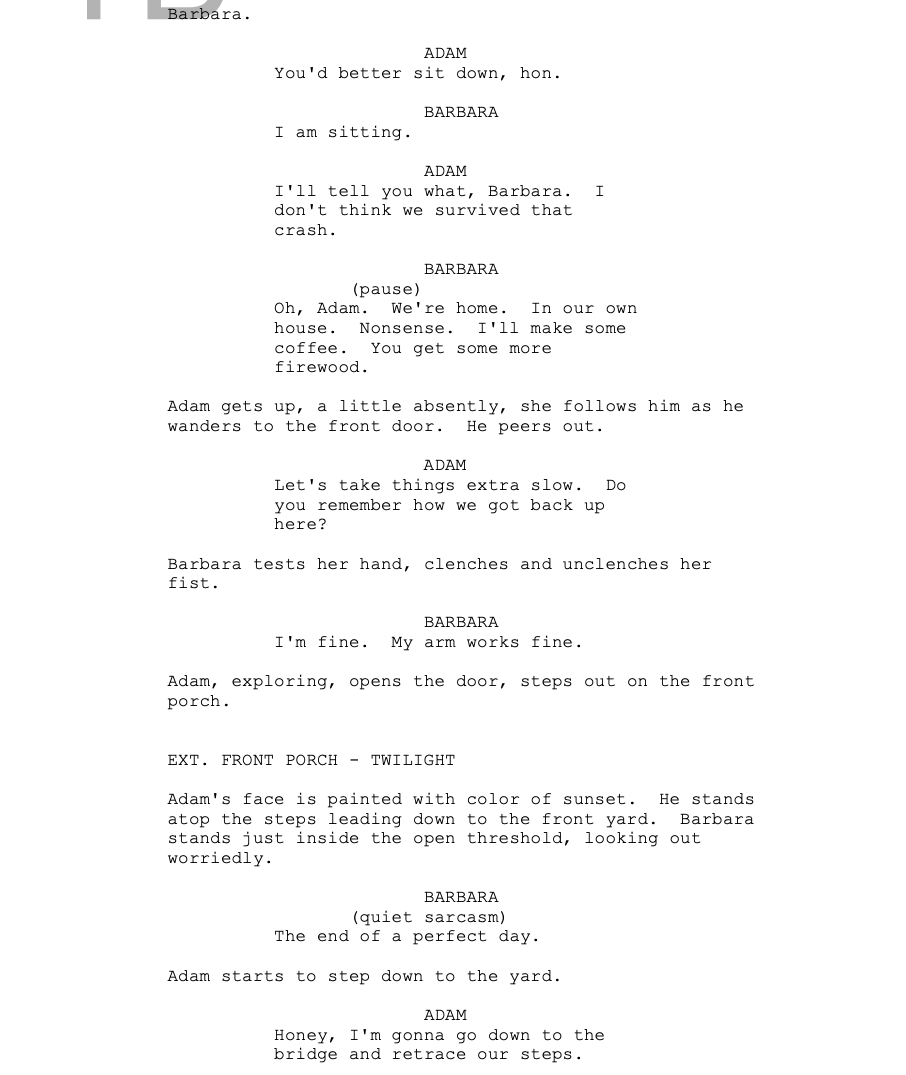
Adam, suspicious of the oddities that have been plaguing them since the crash, walks out the front door to retrace their steps. Just as he steps off the porch–POOF–he disappears.
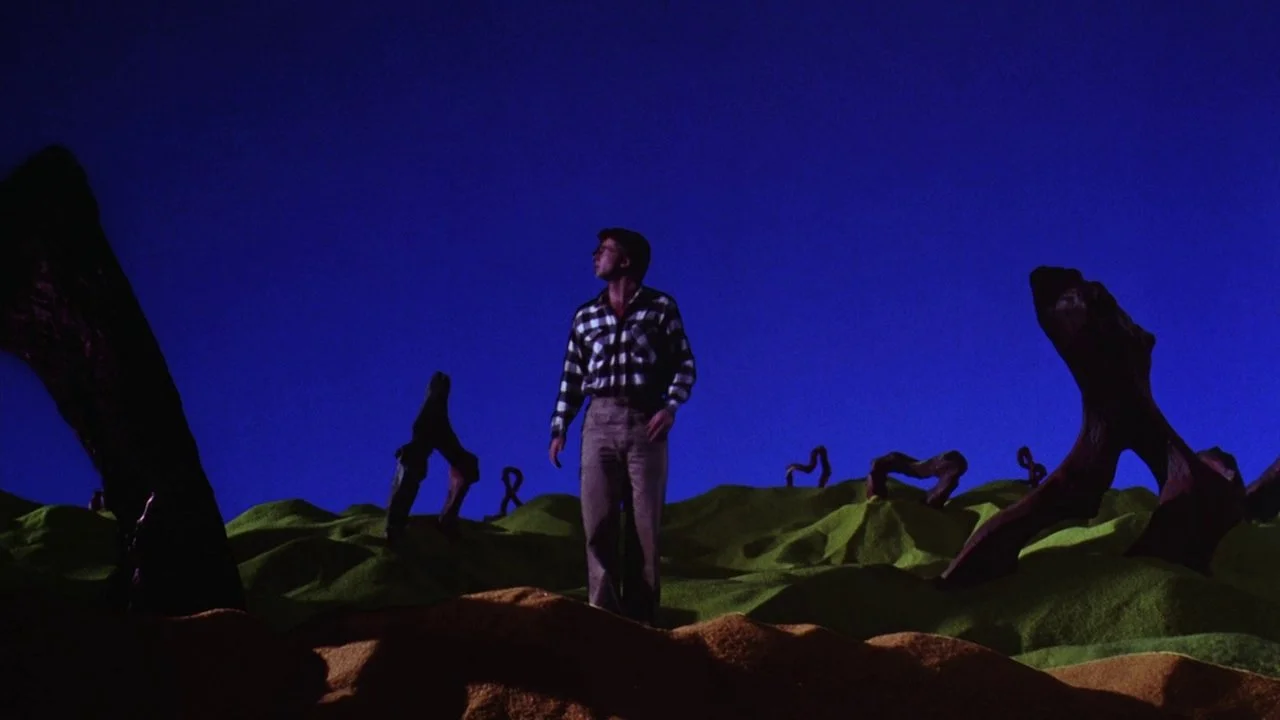
From Barbara’s perspective, Adam completely disappears. But from his perspective, he was just thrown into the VOID, an empty white space with nothing but large gears rolling around. One of the gears starts barreling towards him, ready to crush him, when–POOF–he’s back in their house, pulled in by Barbara.
NOTE: In the final film, Adam gets sent to a Dali-esque version of the planet Saturn. And the monsters aren’t large, violent gears, but rather giant, bloodthirsty sandworms.
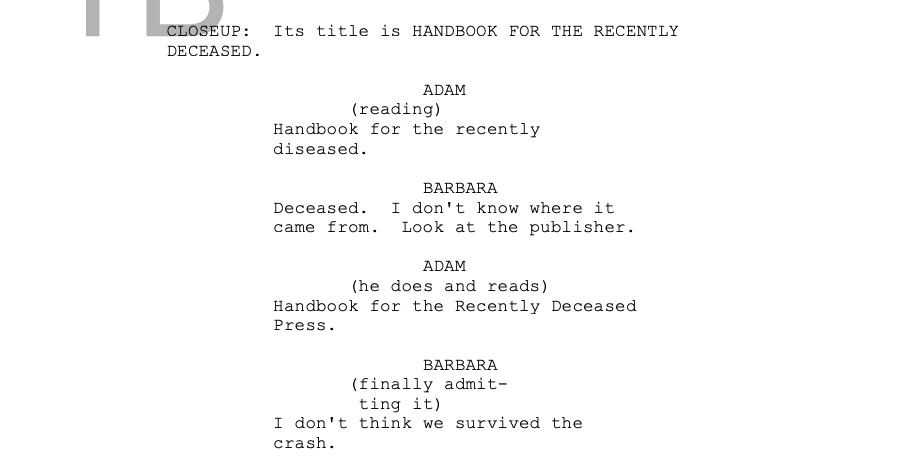
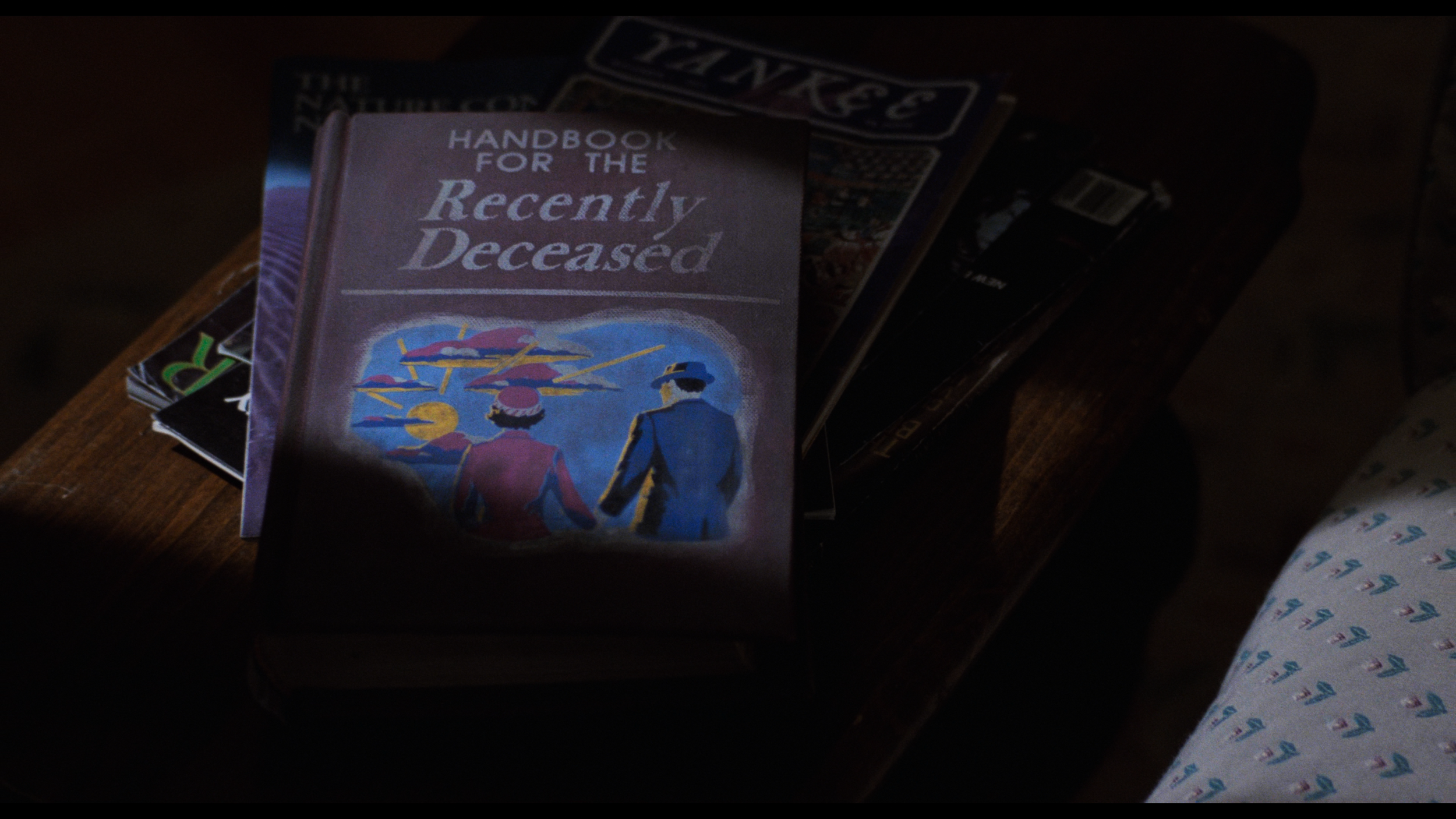
Anyways, Barbara tells Adam that he was gone for two hours in her time, even though it felt like thirty seconds. No, something’s definitely wrong here. And that’s when they see it: an ancient, leather-bound book sitting on their coffee table; one they have never seen before.
DEBATE
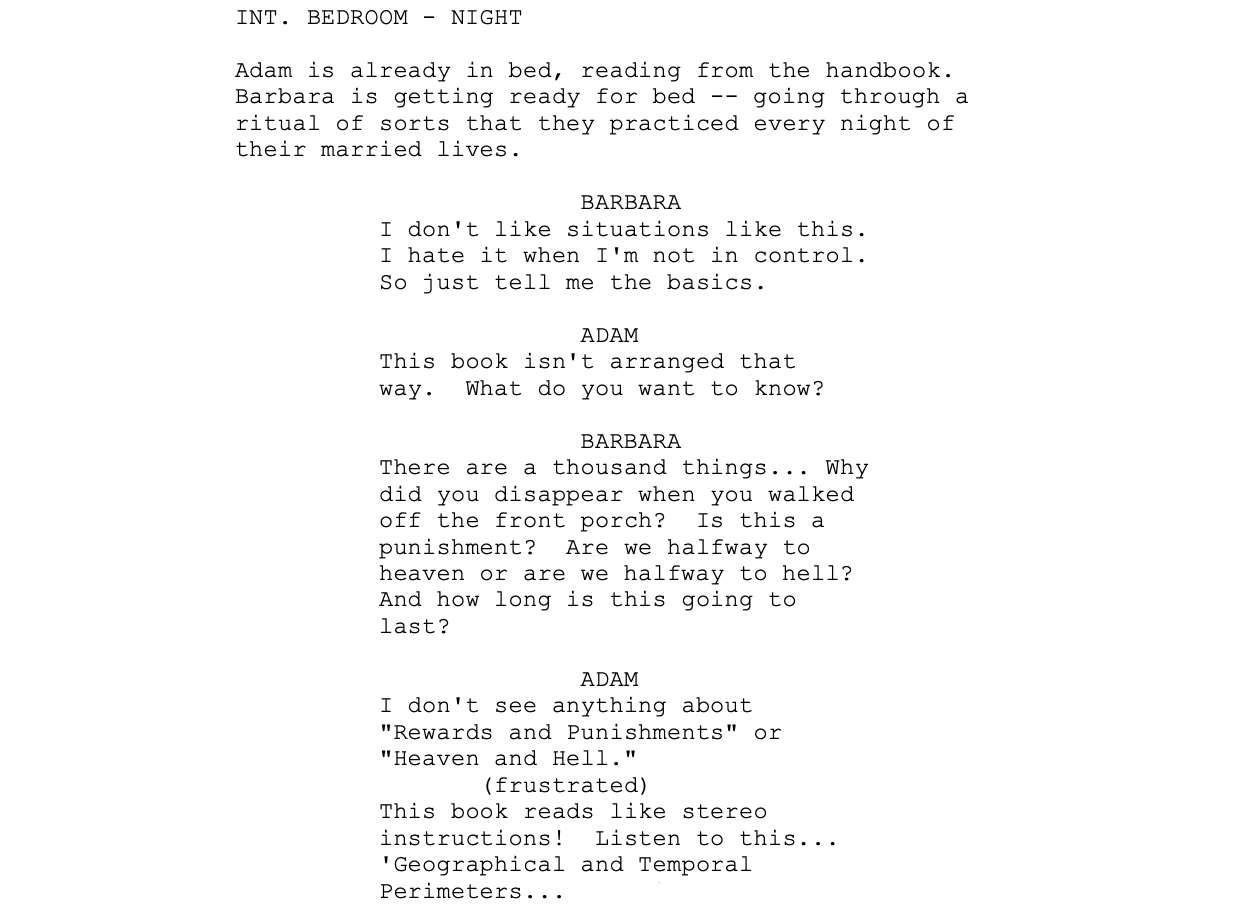
Adam and Barbara go over the Handbook while lying in bed, desperately attempting to figure out what dying really means.
Then, only one day later, chaos arrives. Jane sold their house, and the new tenants have just arrived.
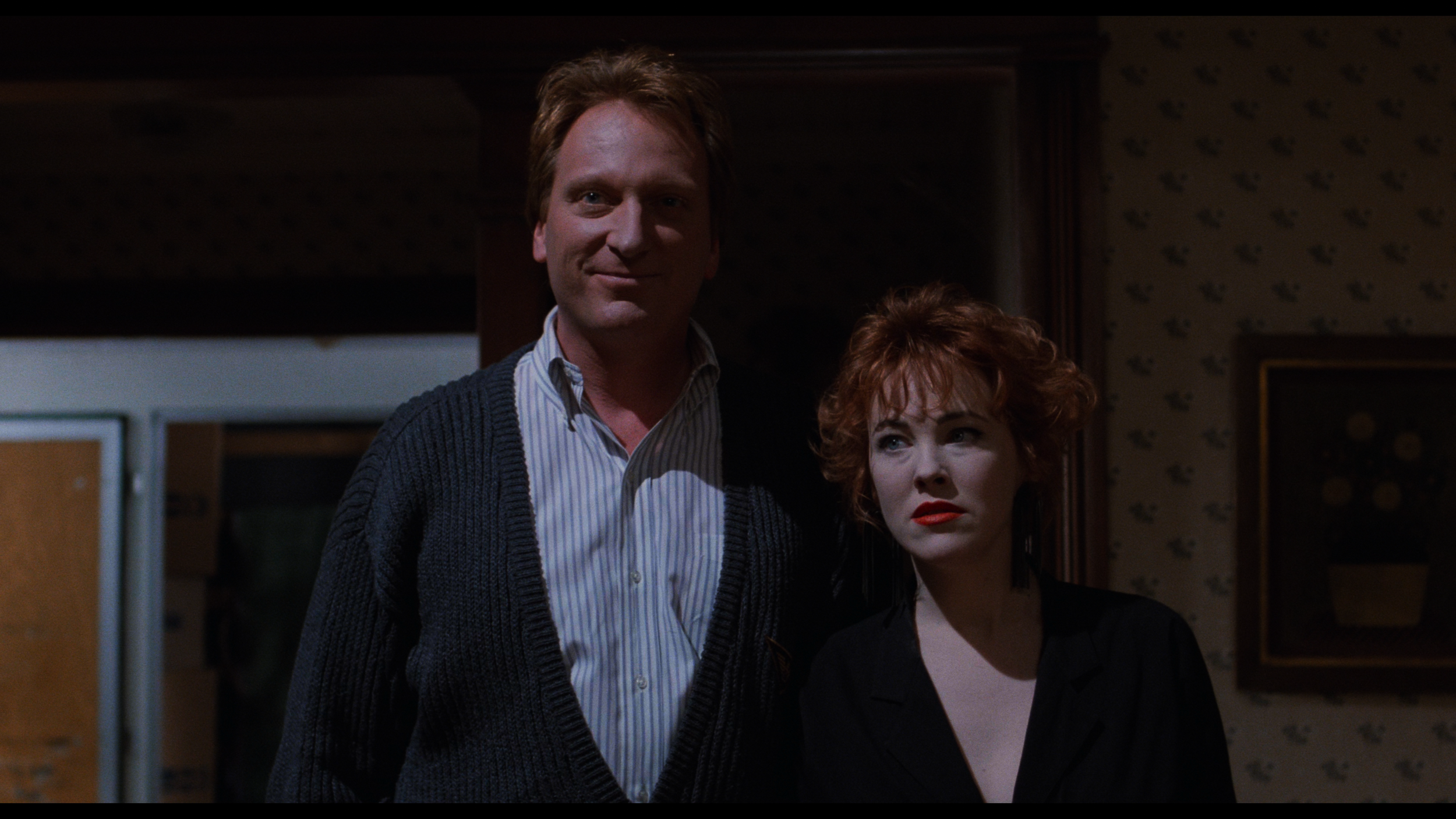
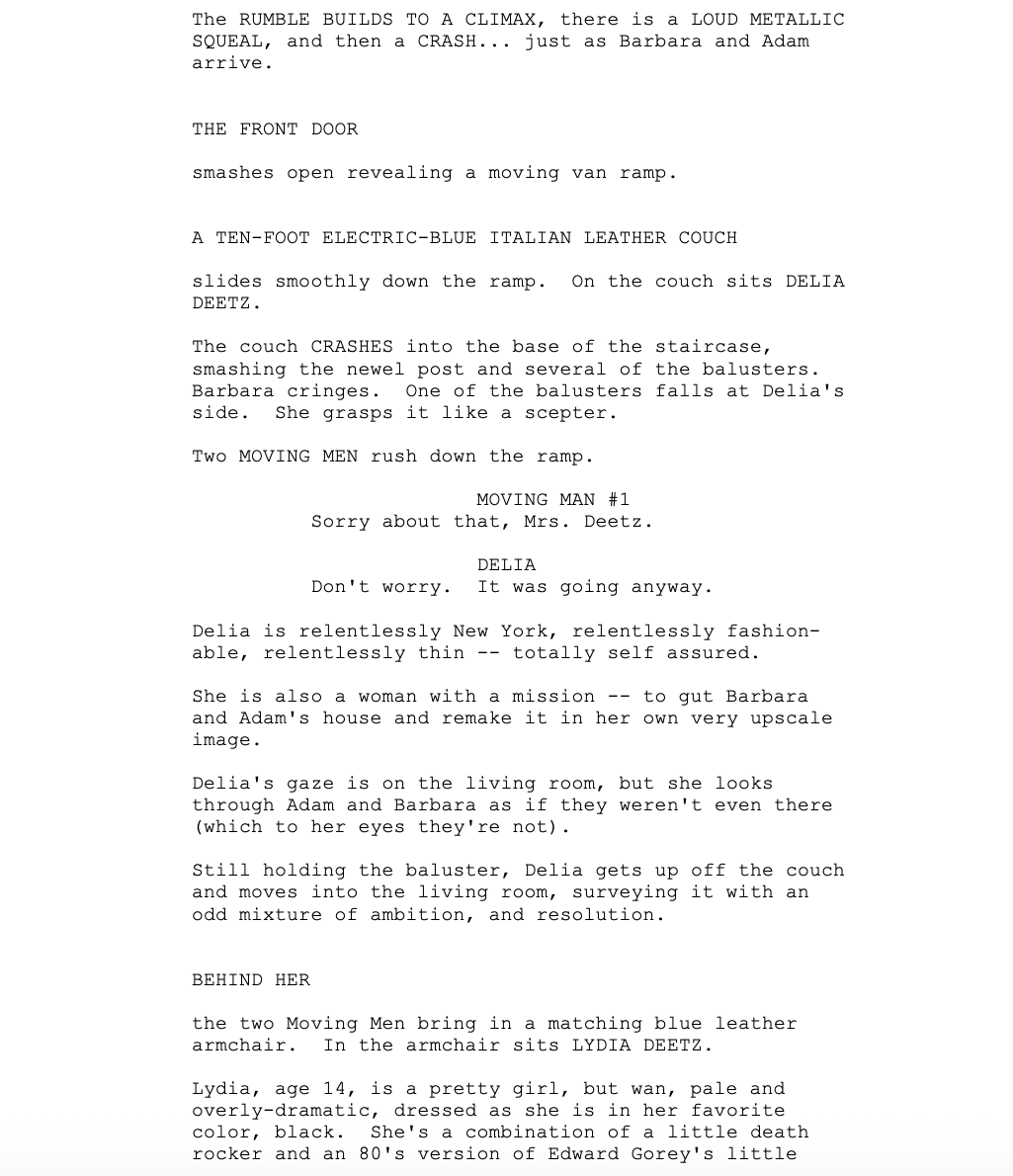
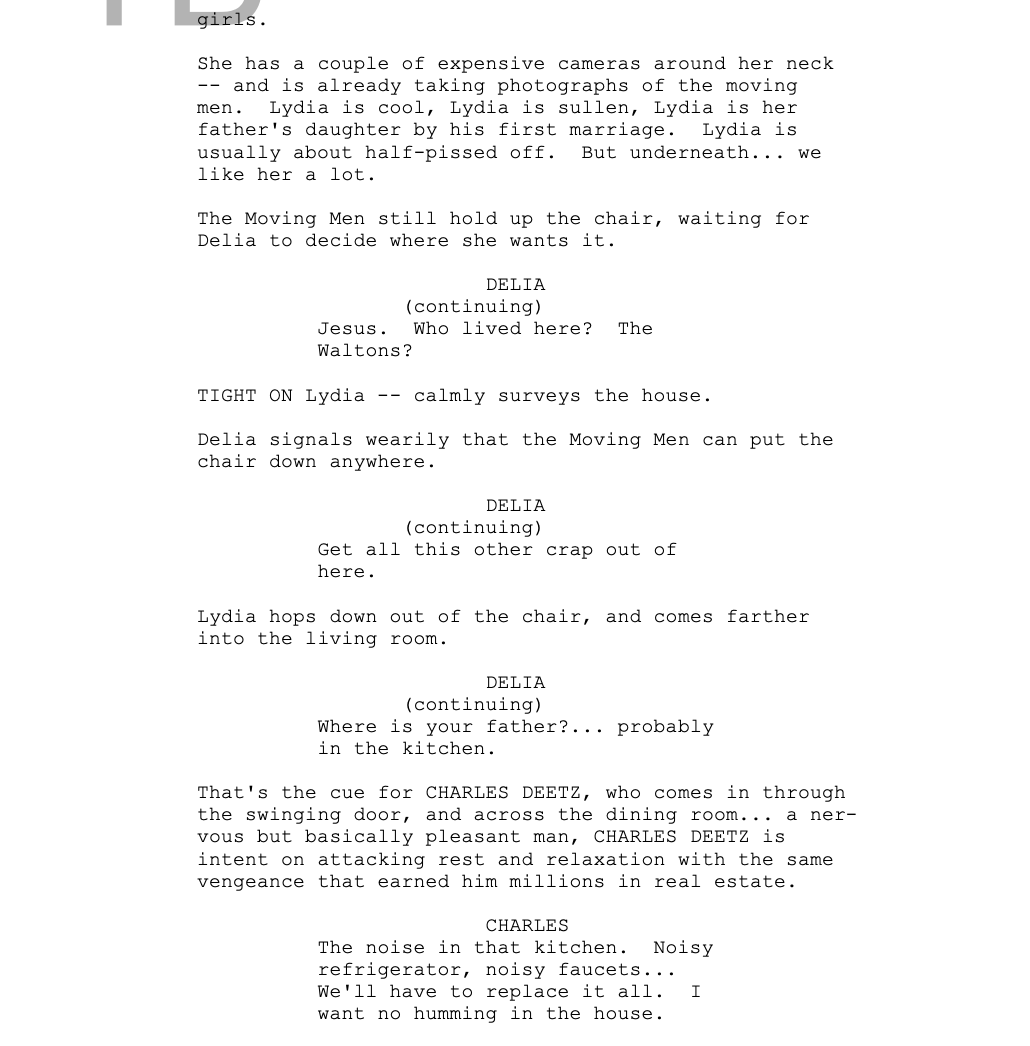
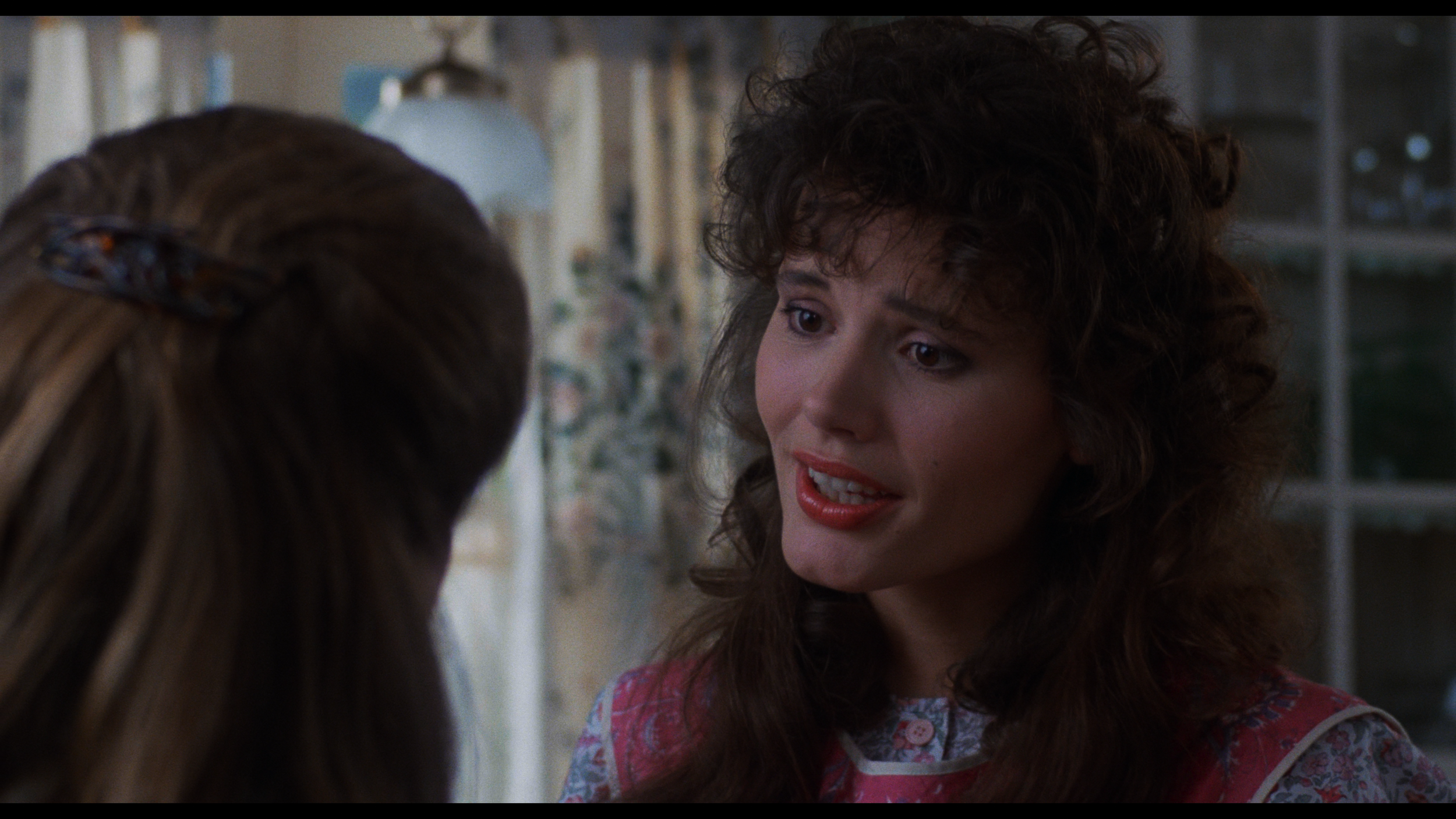
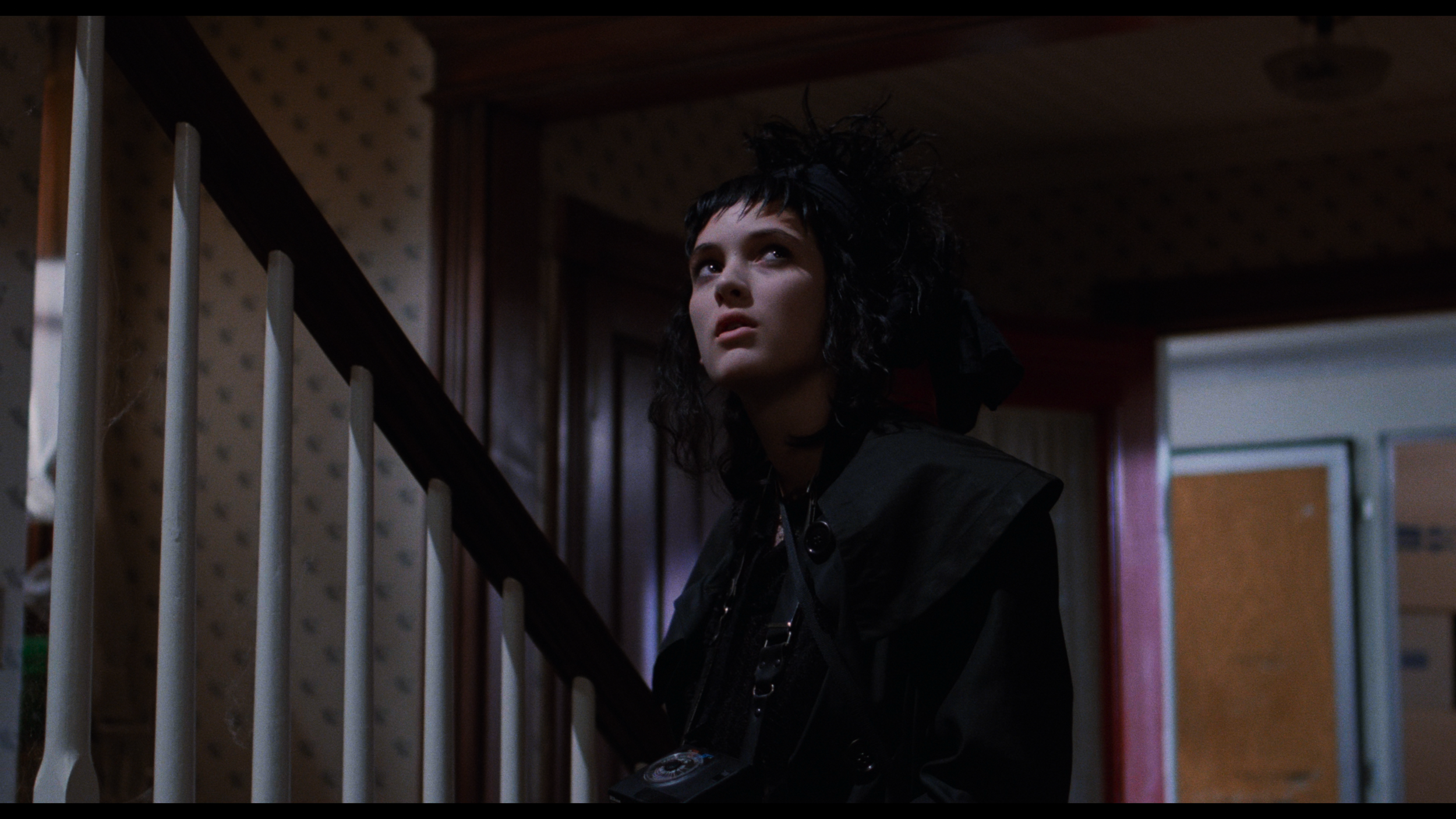
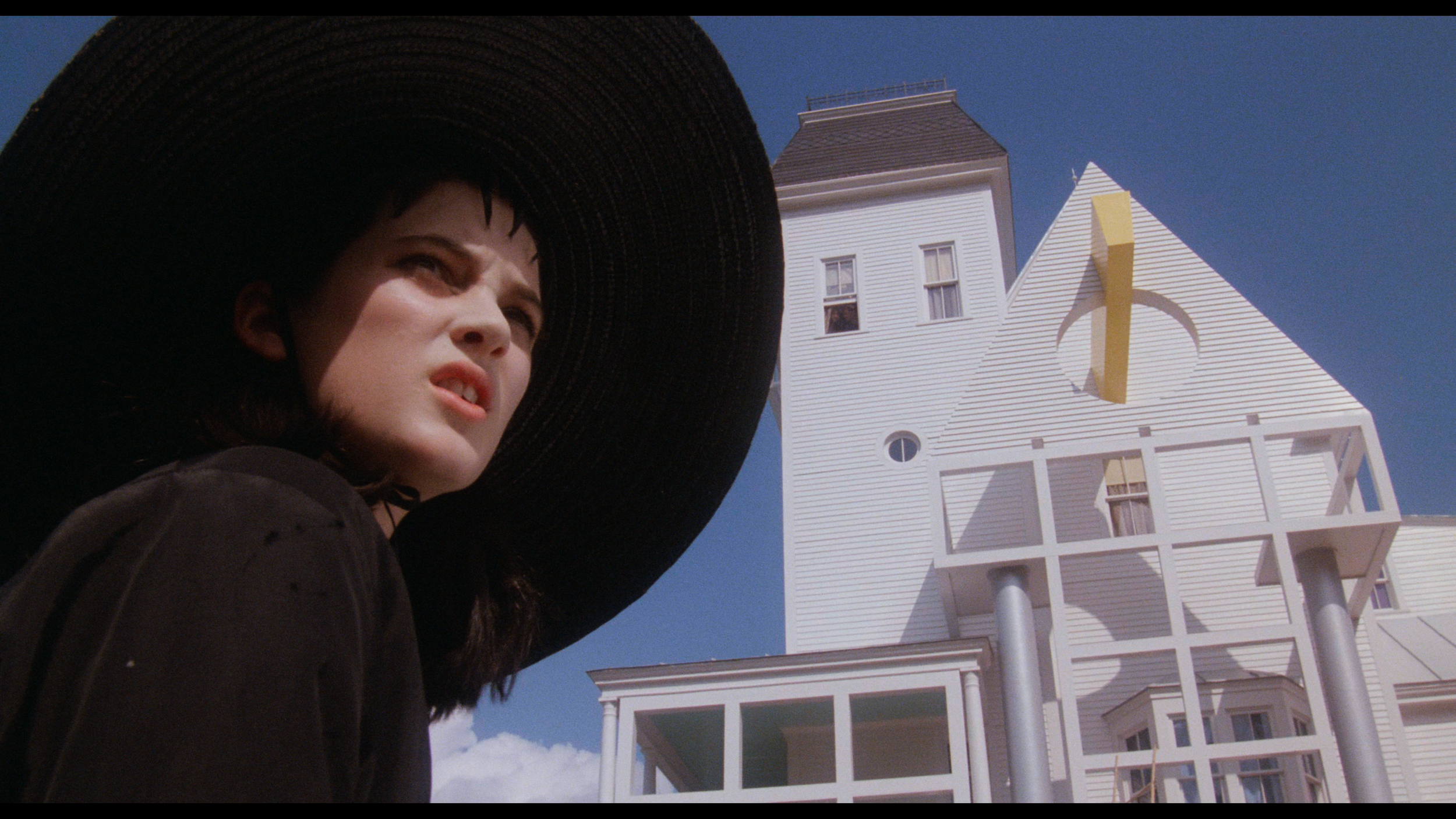
Charles is your typical city man who’s just looking to get away from it all, and in doing so, he’s forced his 14-year-old daughter, Lydia (a spooky, melancholic girl), and his wife, Delia (a self-obsessed socialite who never wanted to leave the city) to join them.
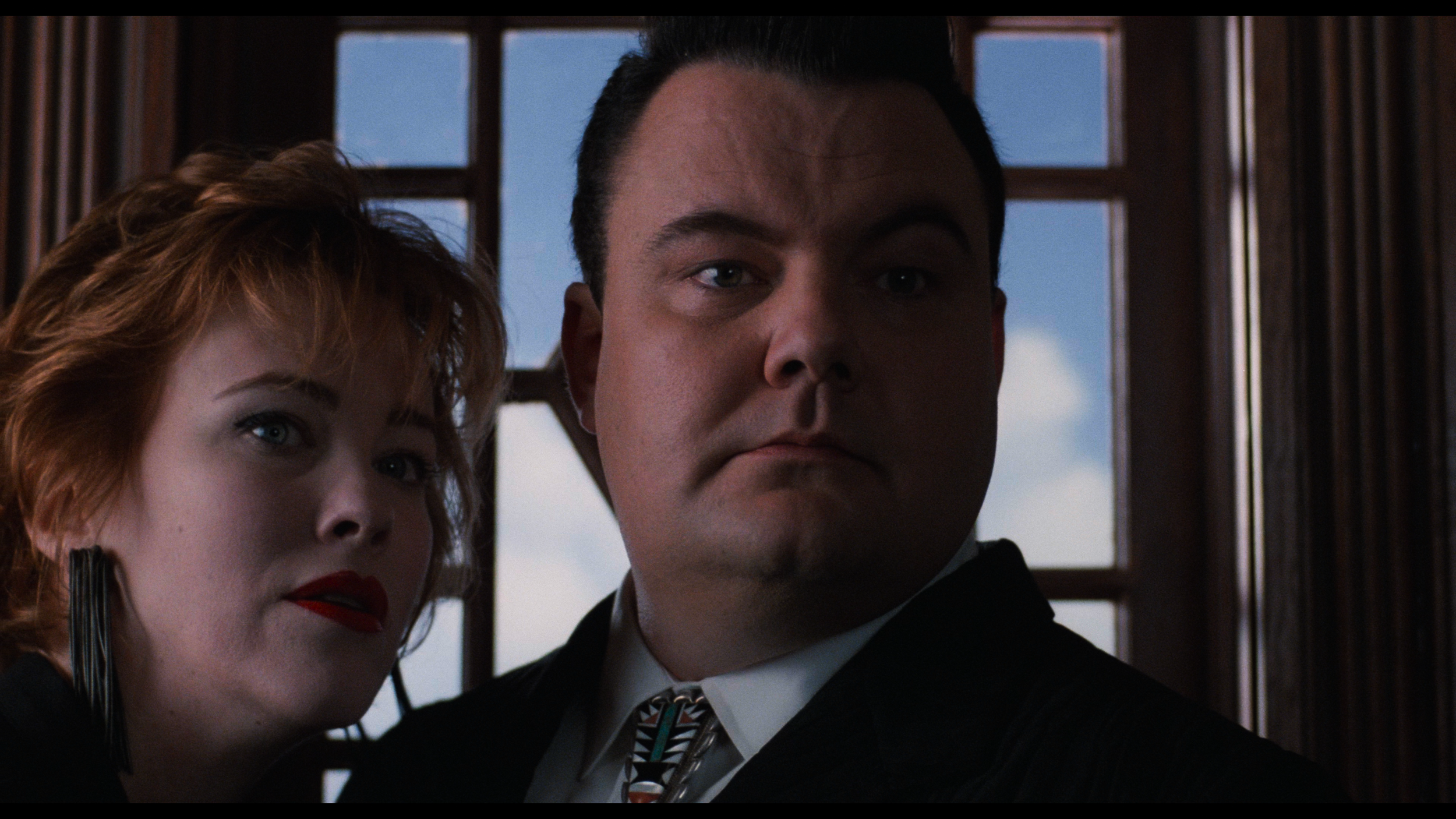
And to make things worse, Delia’s brought along Otho, her chubby, gay New York bestie, to help with the “much-needed” redecorating.

Desperate to get these horrible people out of their house, Adam suddenly stumbles upon the greatest trick there is in the book (literally): like any good ghosts, they have to scare them.
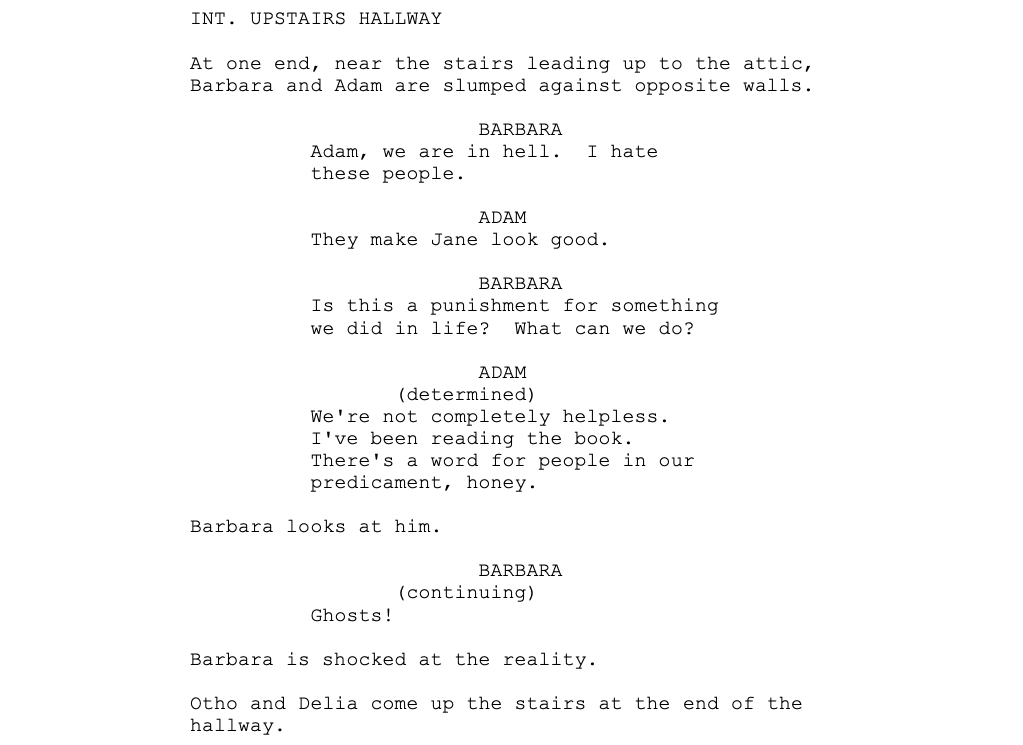
But despite Otho’s ability to subtly hear the Maitland’s footsteps, nobody can see them. Barbara tries to hang herself in the closet for them to find, but they shove her aside like any old coat.
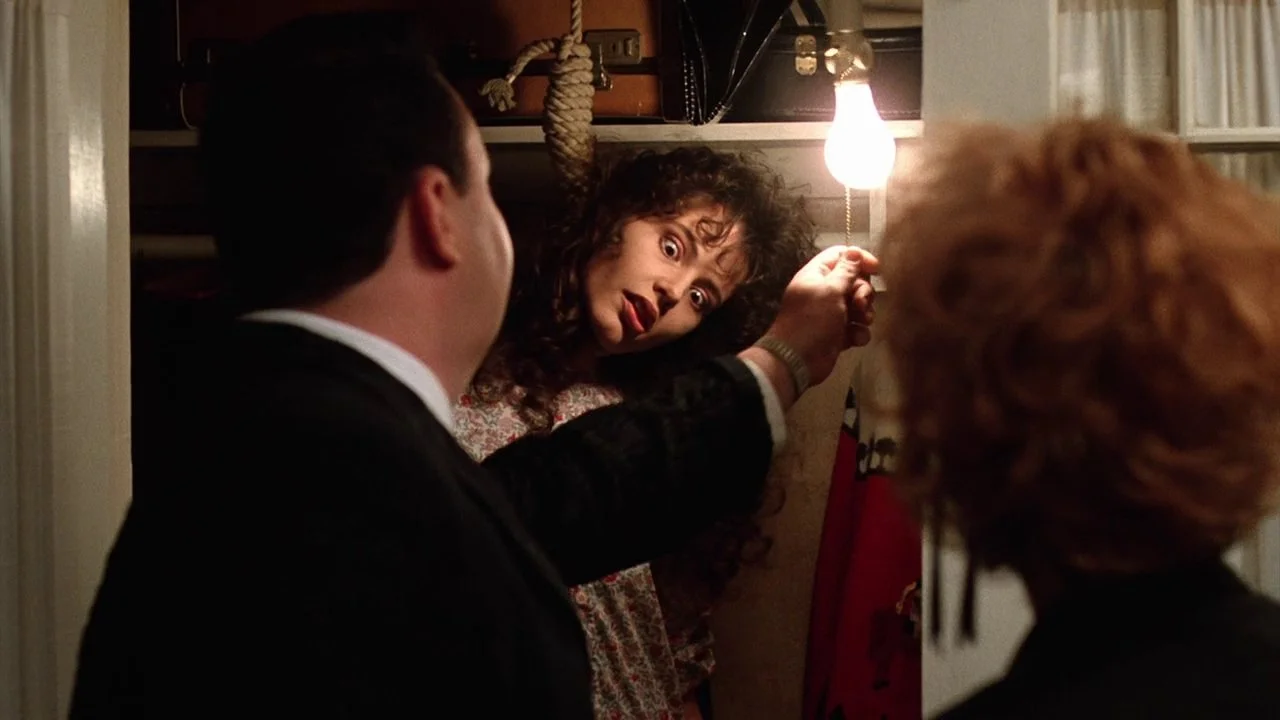
Adam tries to cut off his head to scare them with his corpse, but Otho and Delia only notice the horrible interior design of the study. Nothing is working with these people.
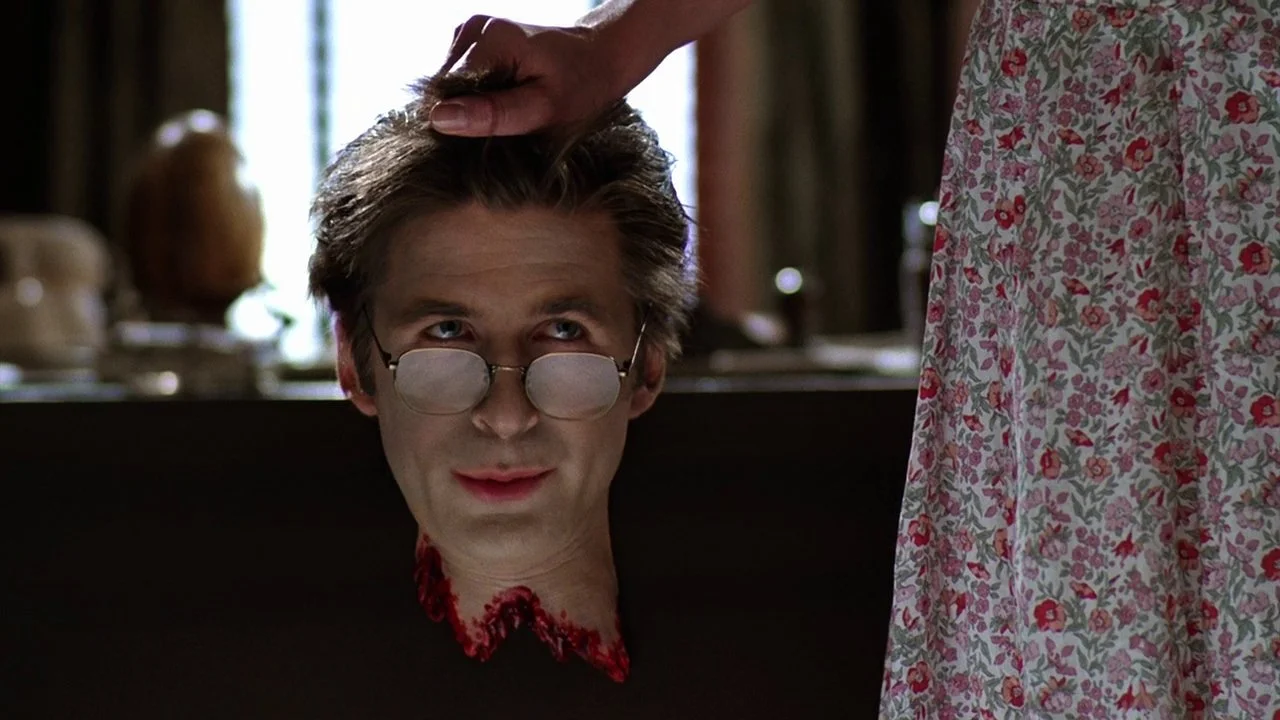
Desperate to escape, Barbara runs out the back door to see just how bad it is for herself, and finds herself right on Titan, one of Saturn’s moons, and being chased by a sandworm (I don’t know why Adam got the weird gear-monster universe when he left, but this is obviously the better choice for the film).
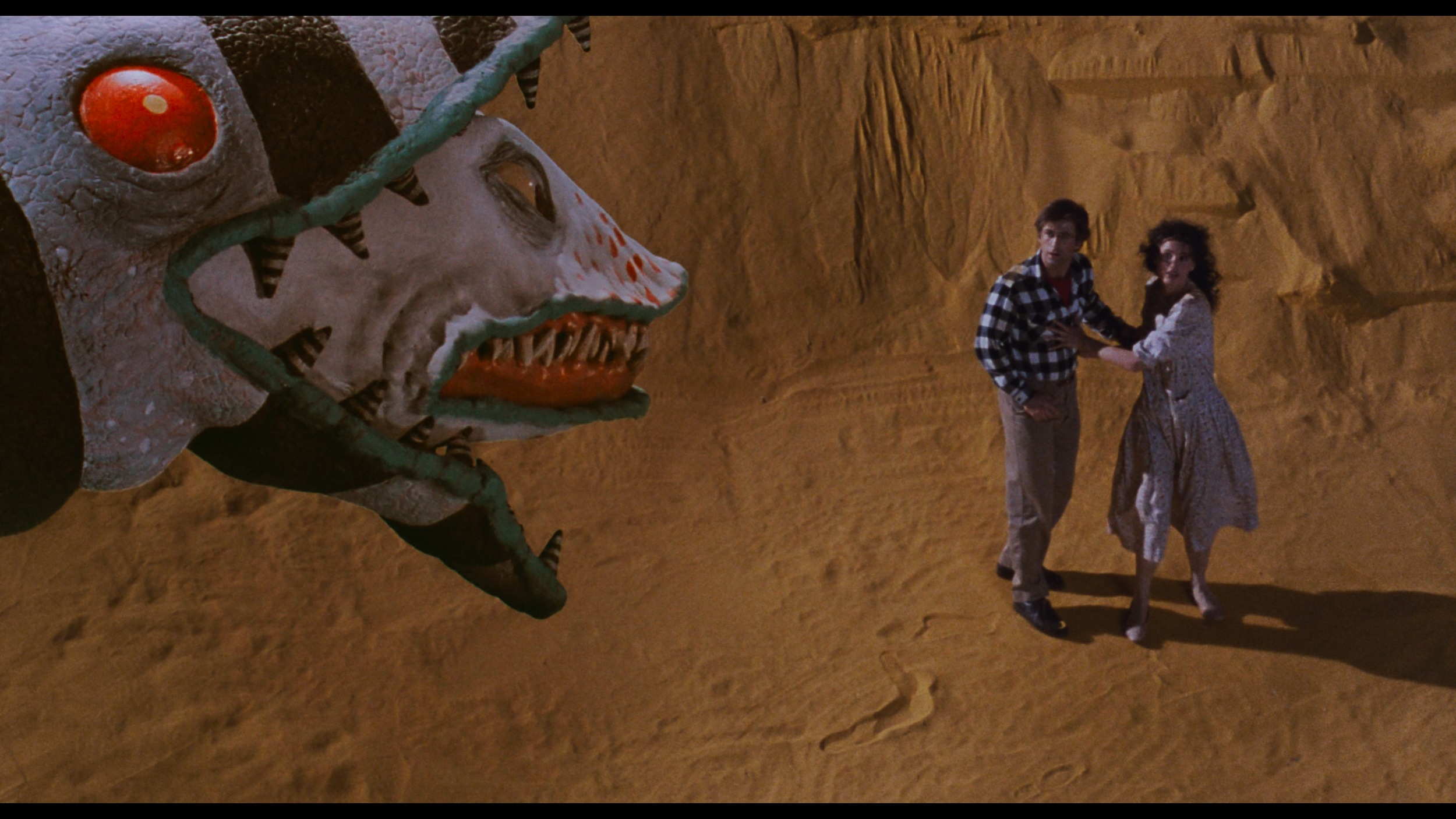
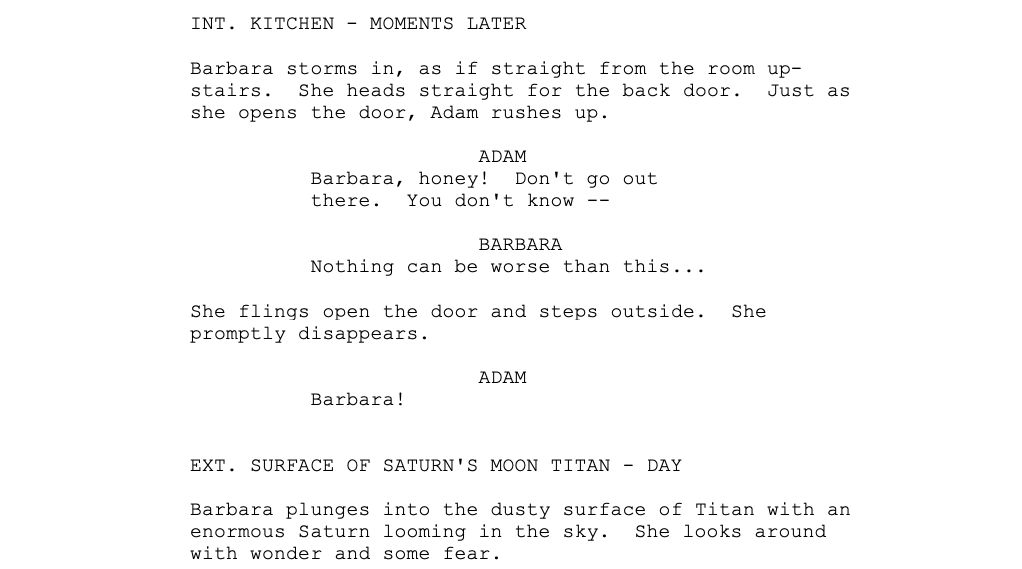
They manage to find the door back to their house, just in time to avoid being eaten by the sandworm.
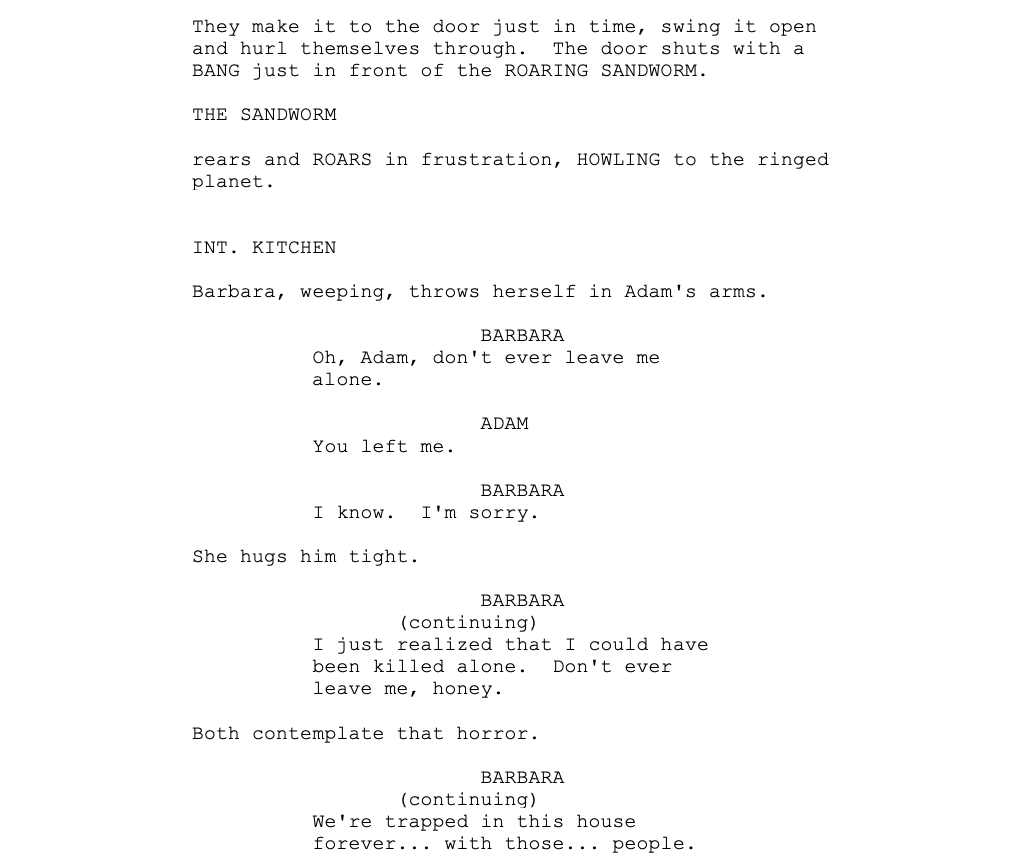
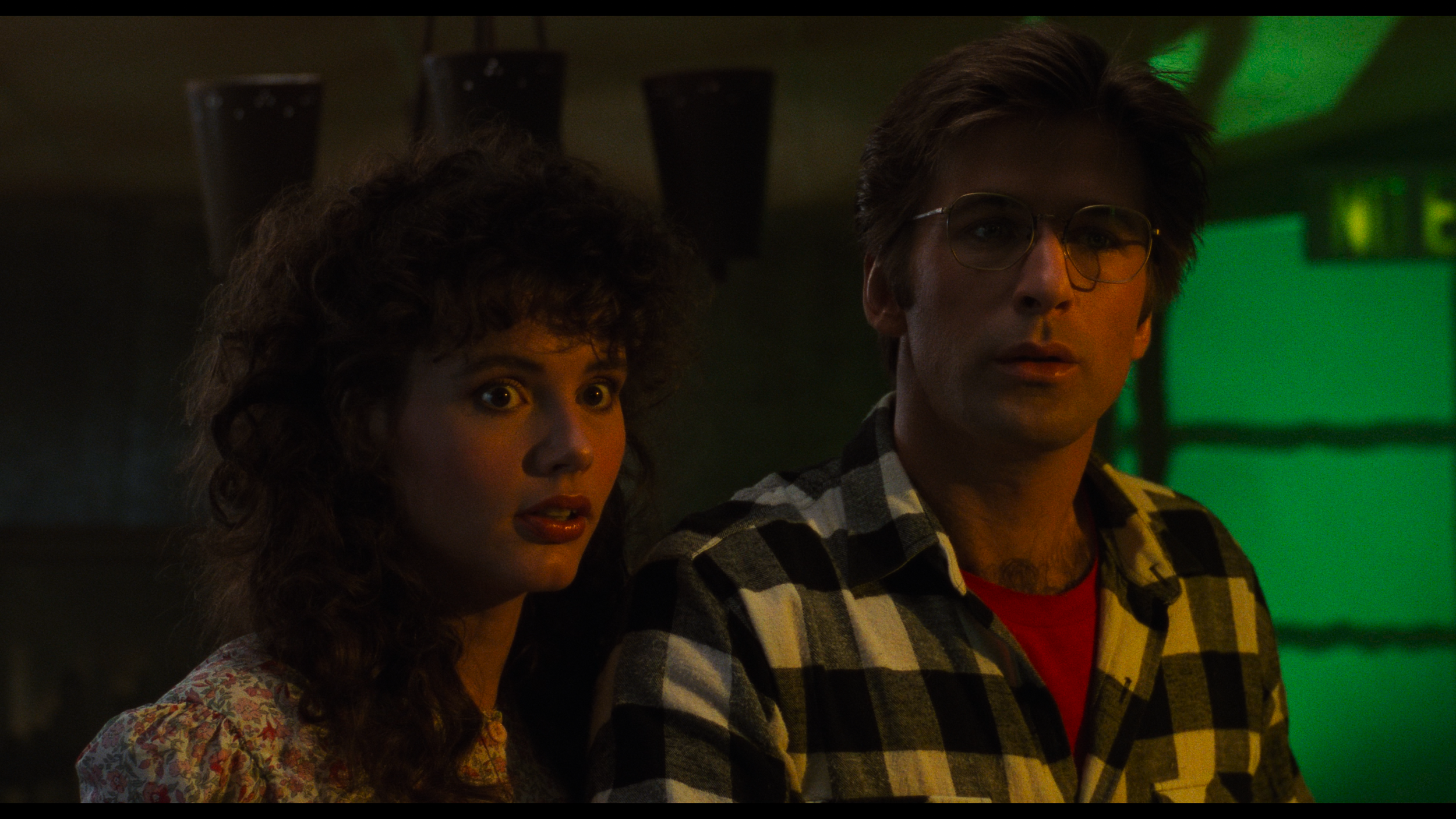
They might actually be in Hell. Luckily, they were able to lock the attic before any of the Deetzes could get up, giving one room in their home that can act as a shelter. They mainly spend their time up there complaining and spying on their new neighbors (who aren’t supposed to see them). That is, until one day, Lydia happens to make eye contact with them.
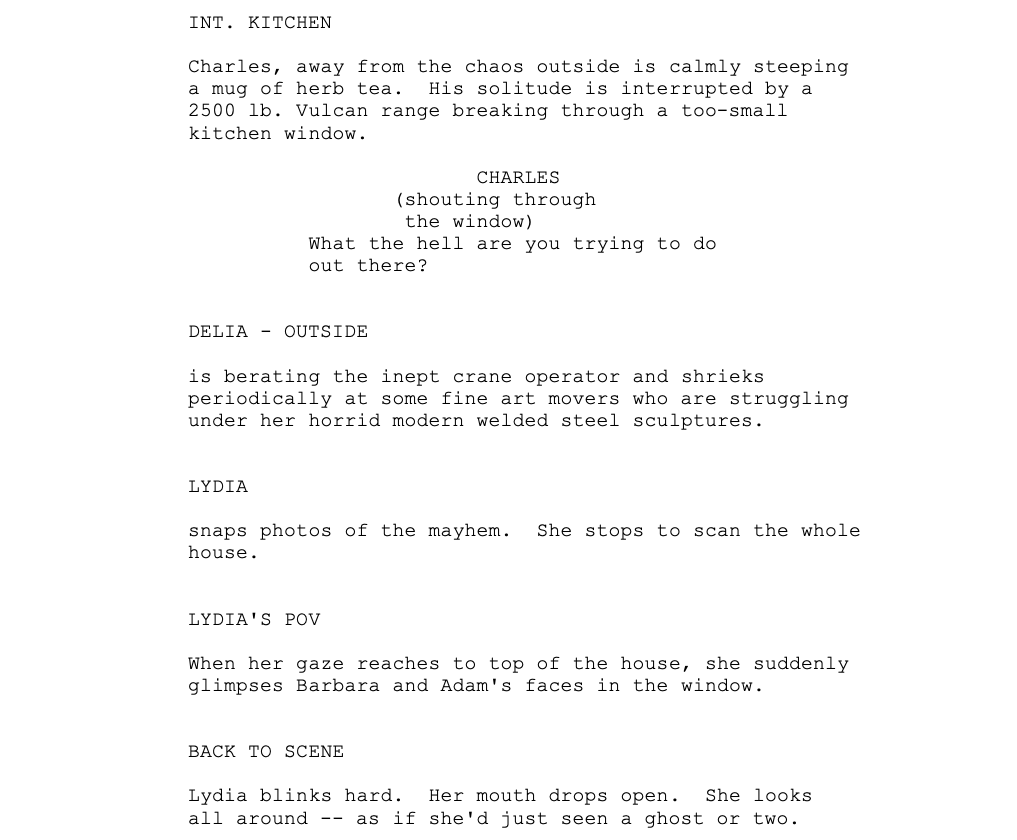
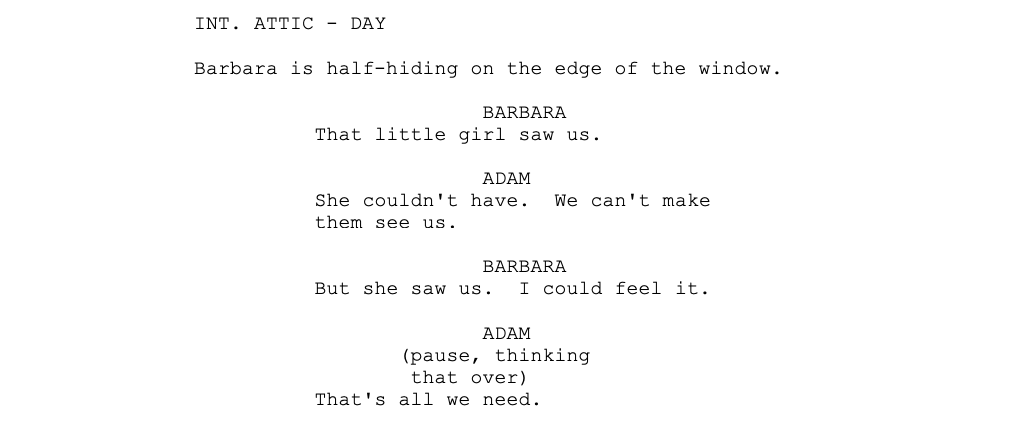
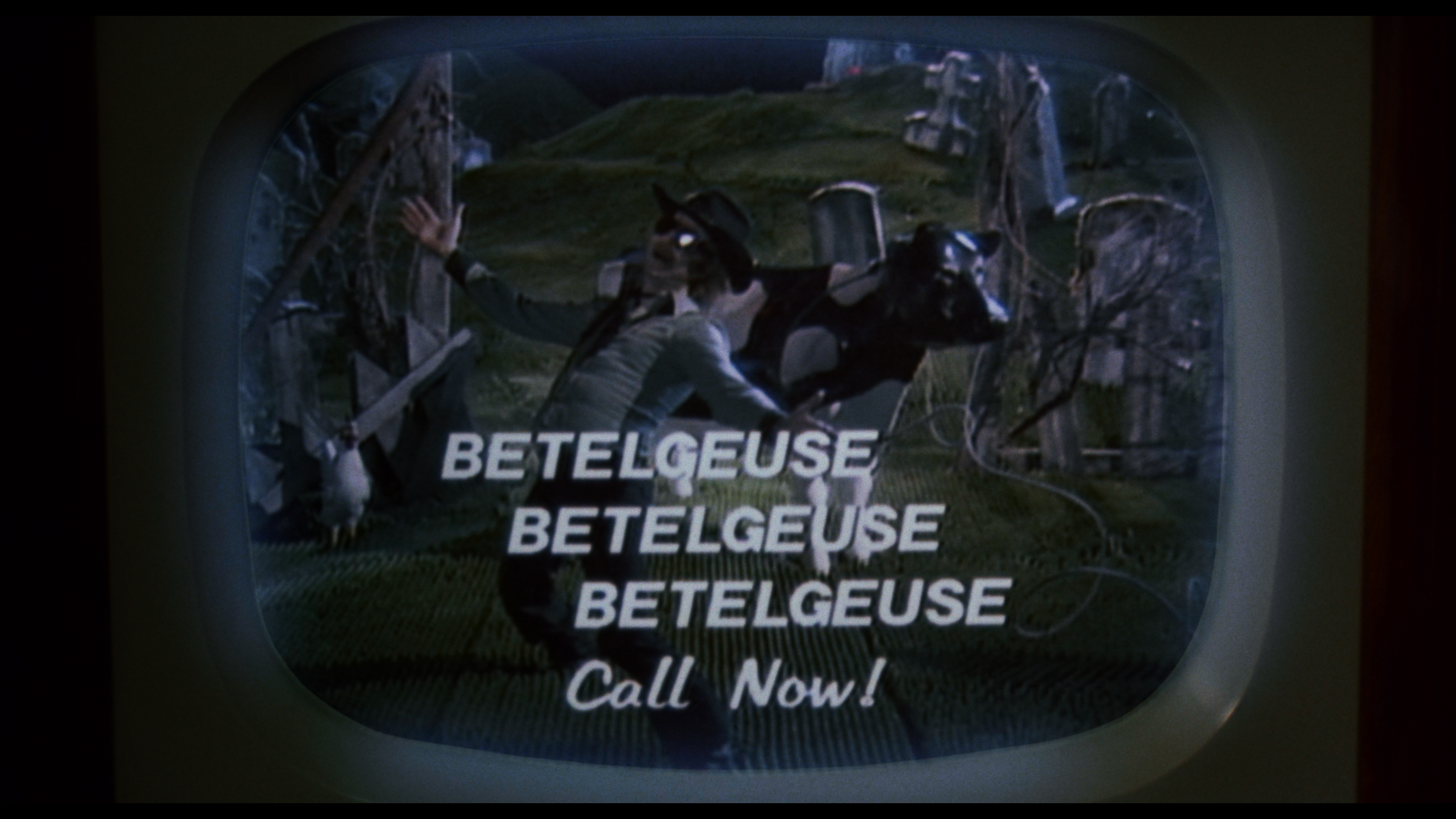
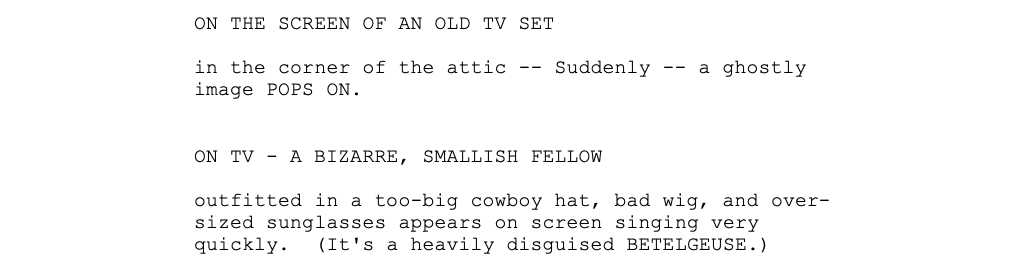
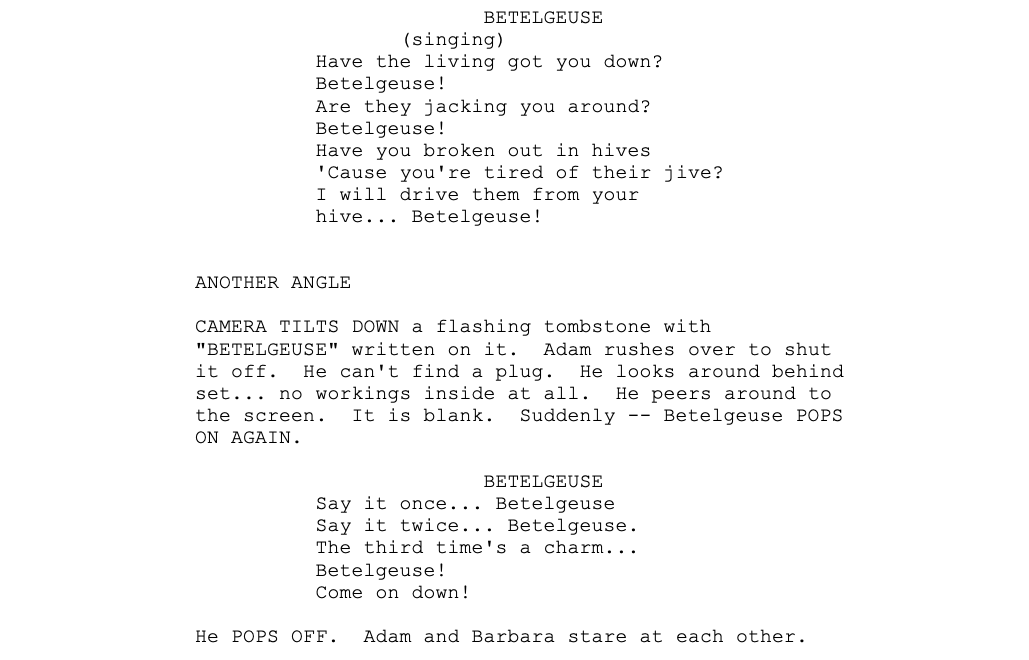
Suddenly, the TV in the attic flickers on, and it starts playing the strangest commercial Adam or Barbara has ever seen in their lives.
BREAK INTO TWO
Act 2 begins with Adam and Barbara, who had just had the strangest introduction to Beetlejuice, finally discovering some sort of answer in the book.
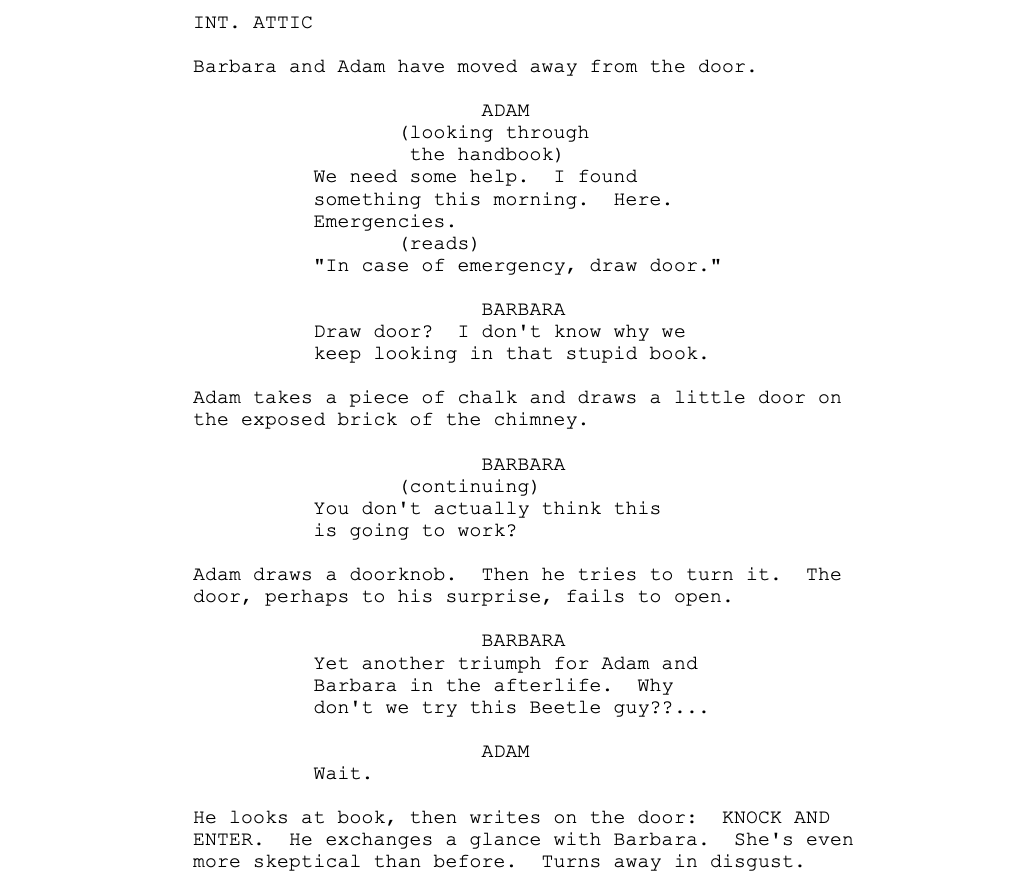
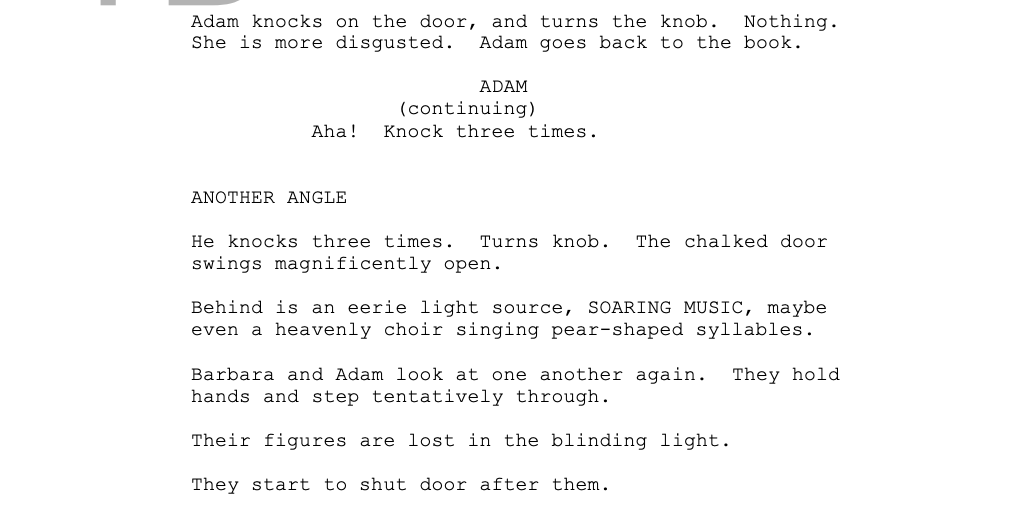
Together, they step confidently into this mysterious underworld. Because whatever’s down there, it can’t be any worse than living with the Deetzes.
MIDPOINT
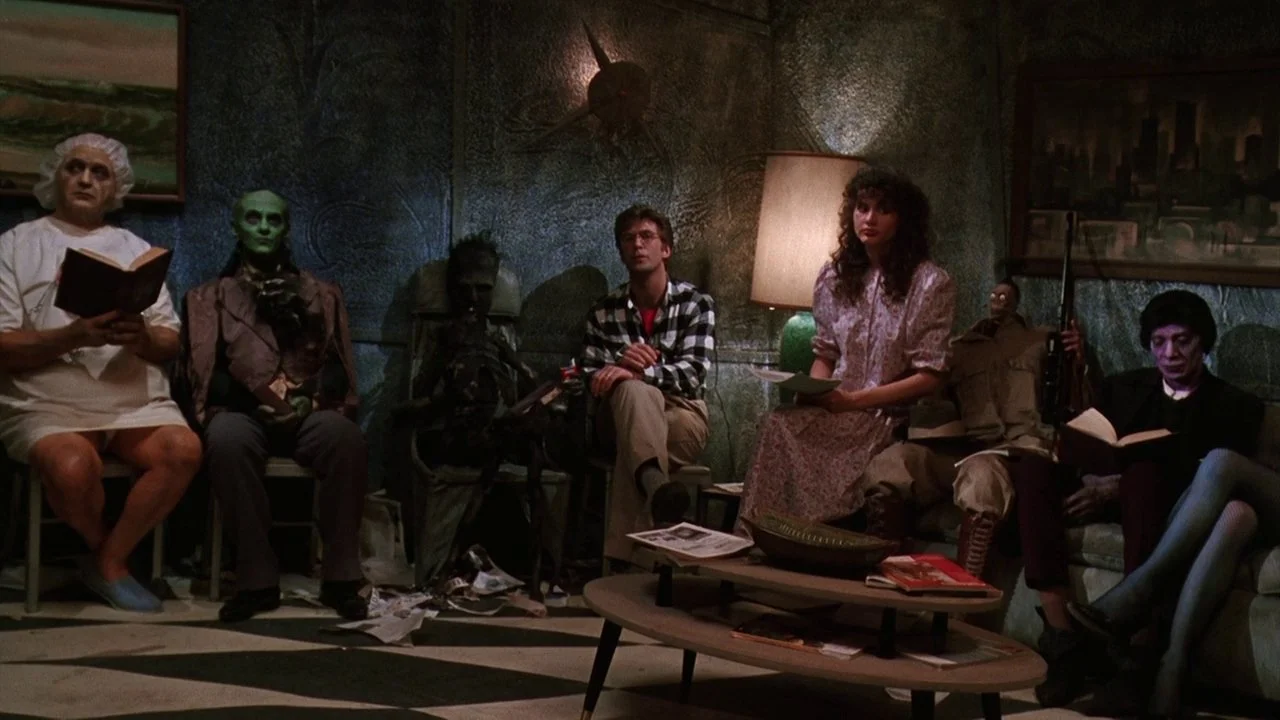
The halfway point finds Barbara and Adam in the unnamed underworld, which turns out to resemble a DMV more than any sort of afterlife.
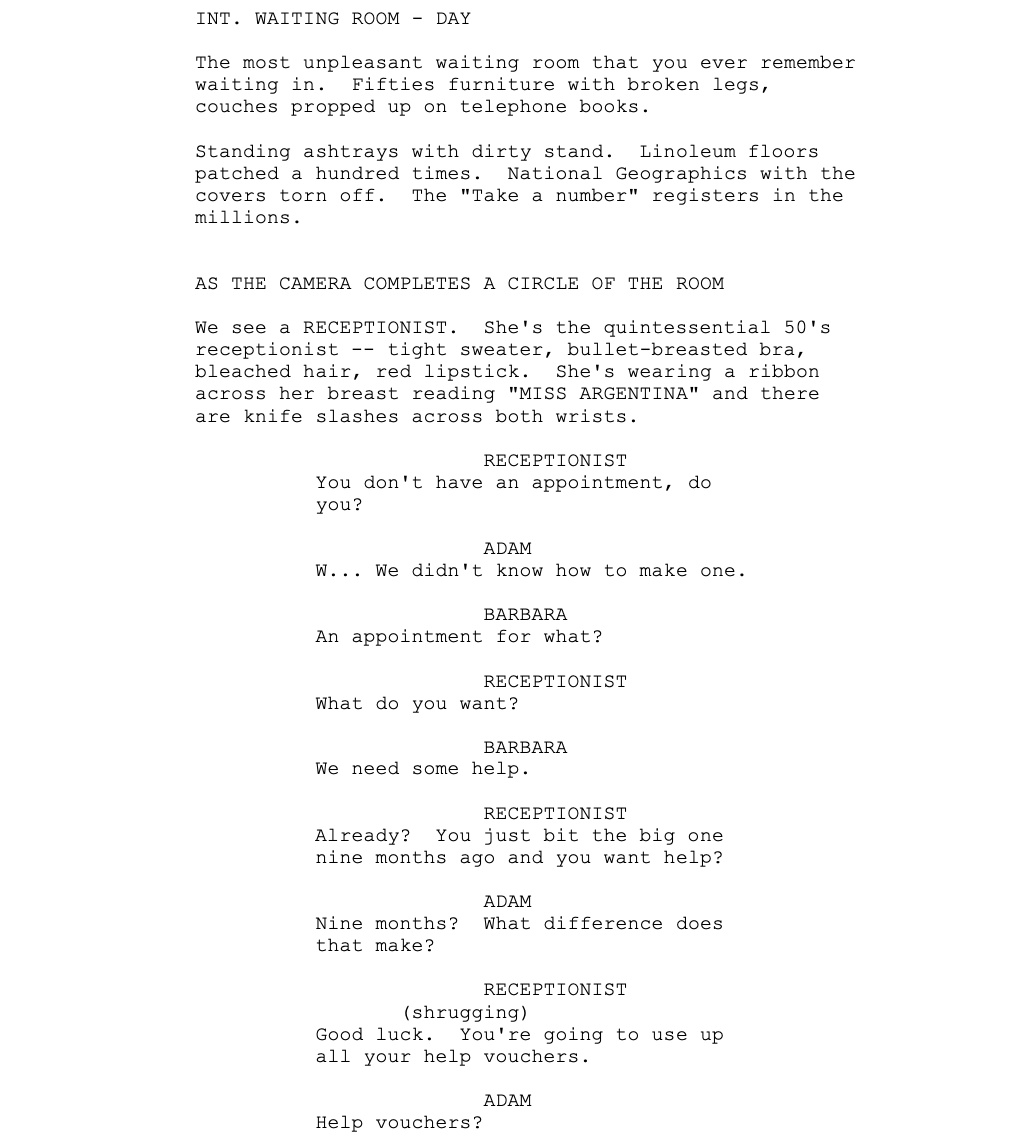
The receptionist tells them they’re going to have to wait to see their caseworker, Juno, so they take a seat in the waiting room, which is filled with dozens of other recently deceased people.
As this is happening, Lydia decides to break into the attic to see what’s going on up there.
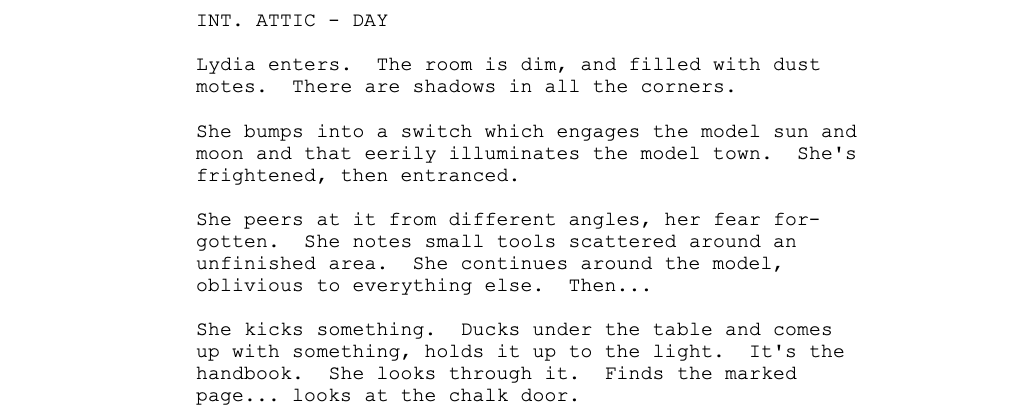
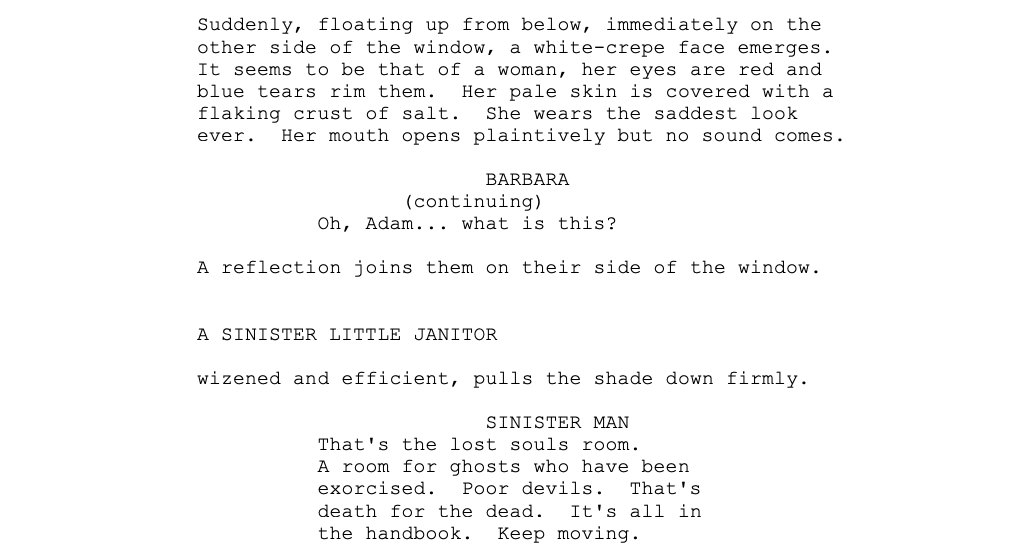
As Barbara and Adam explore the underworld, we get random little tidbits about how it all functions. For example, what happens to ghosts who have been exorcised:
Finally, they meet their caseworker, Juno, who tells them exactly how to handle their situation with the Deetzes.
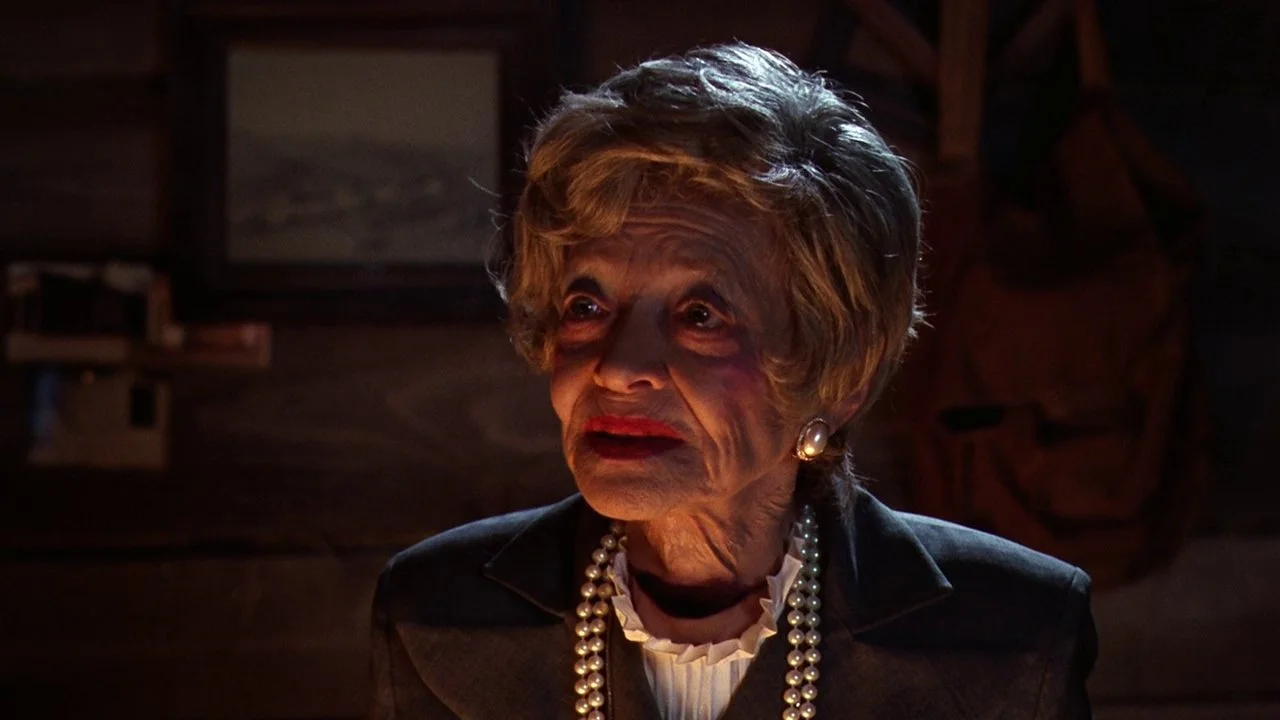
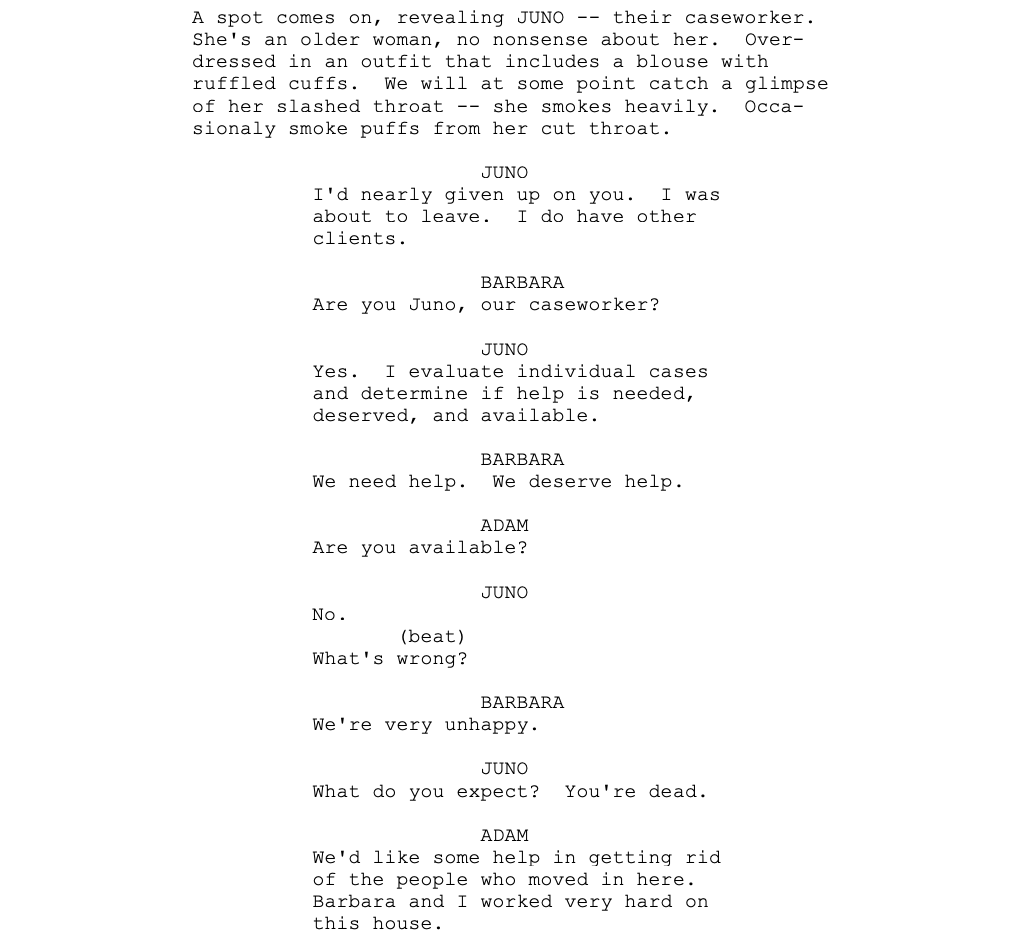
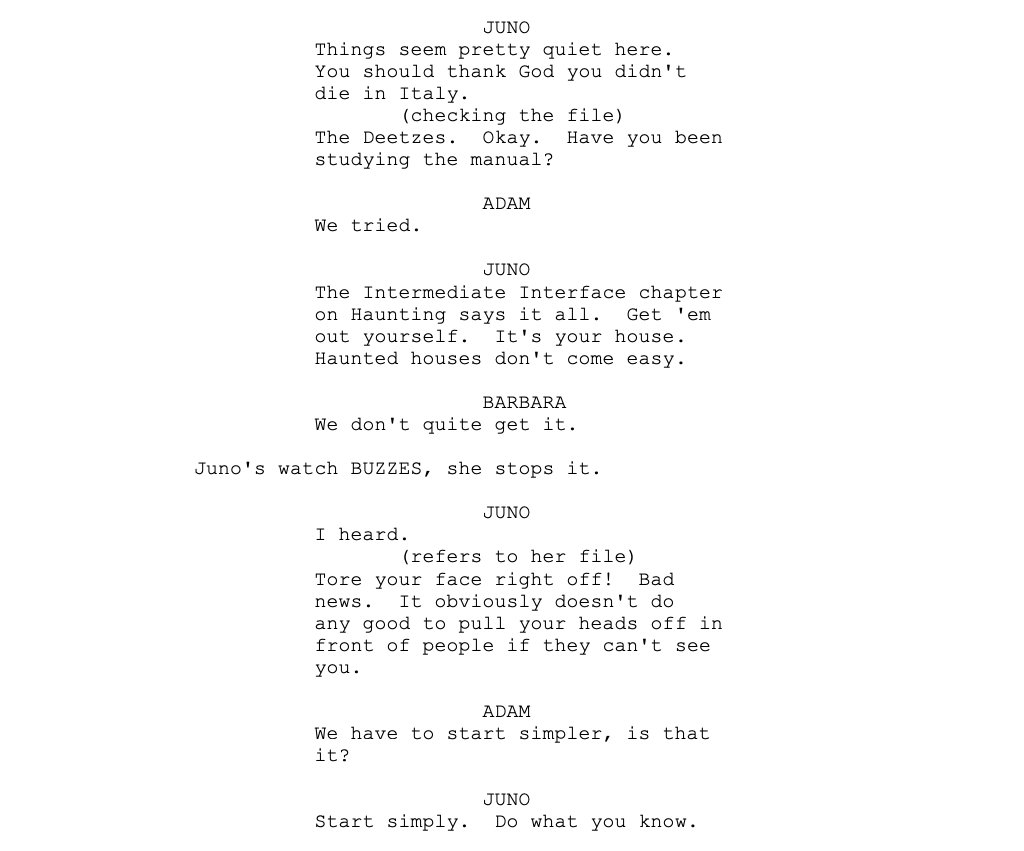
That’s when Barbara asks about Beetlejuice, the man in their TV.
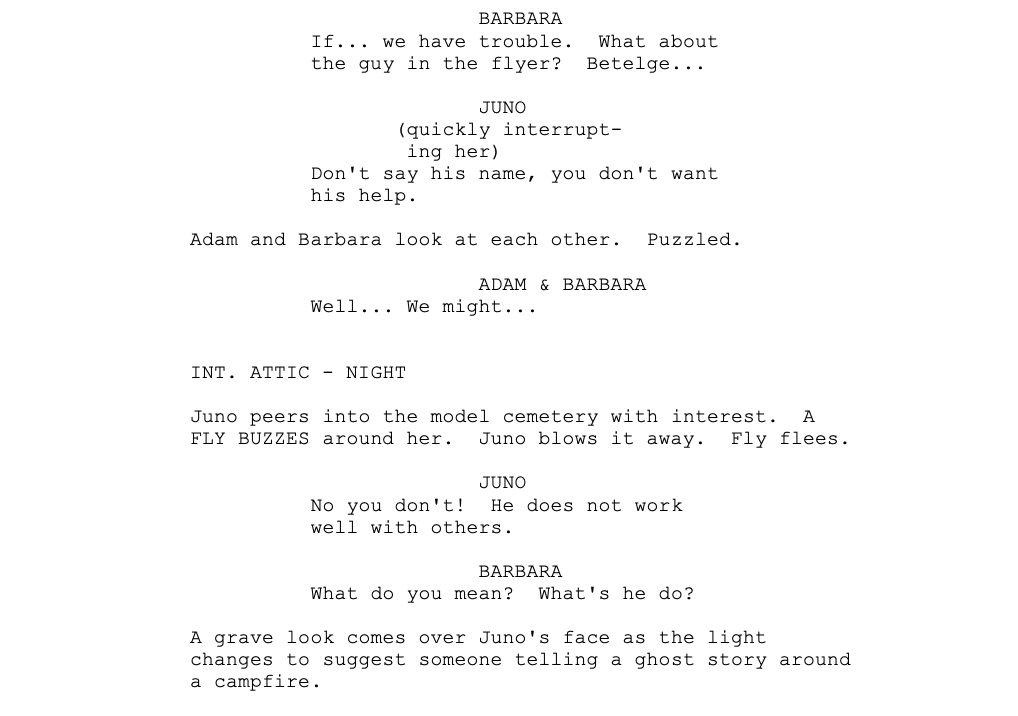
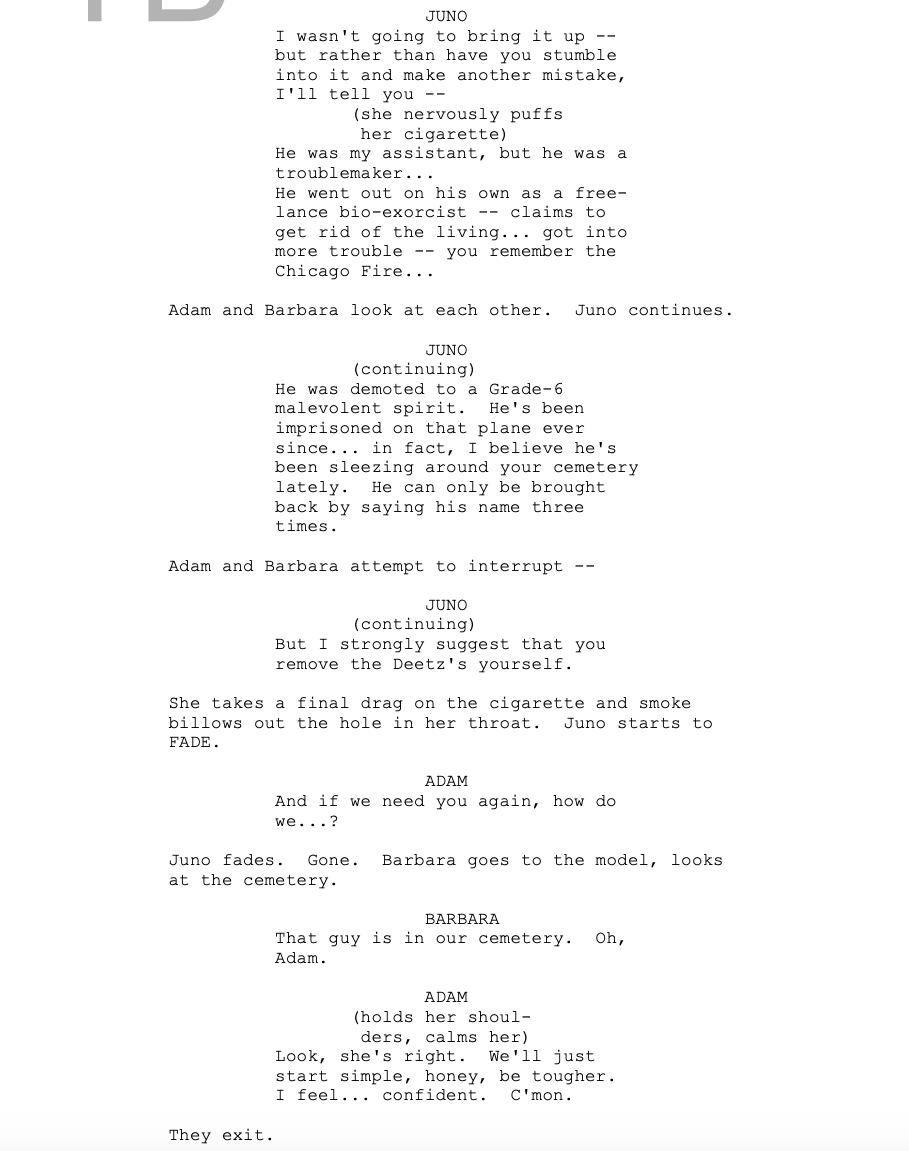
BAD TO WORSE
While Barbara and Adam concoct ways to rid the Deetzes from their house, Charles acts fast to try to figure out a way to capitalize on their new little town. It’s become a battle between the upper and middle classes; a battle between the living and the dead.
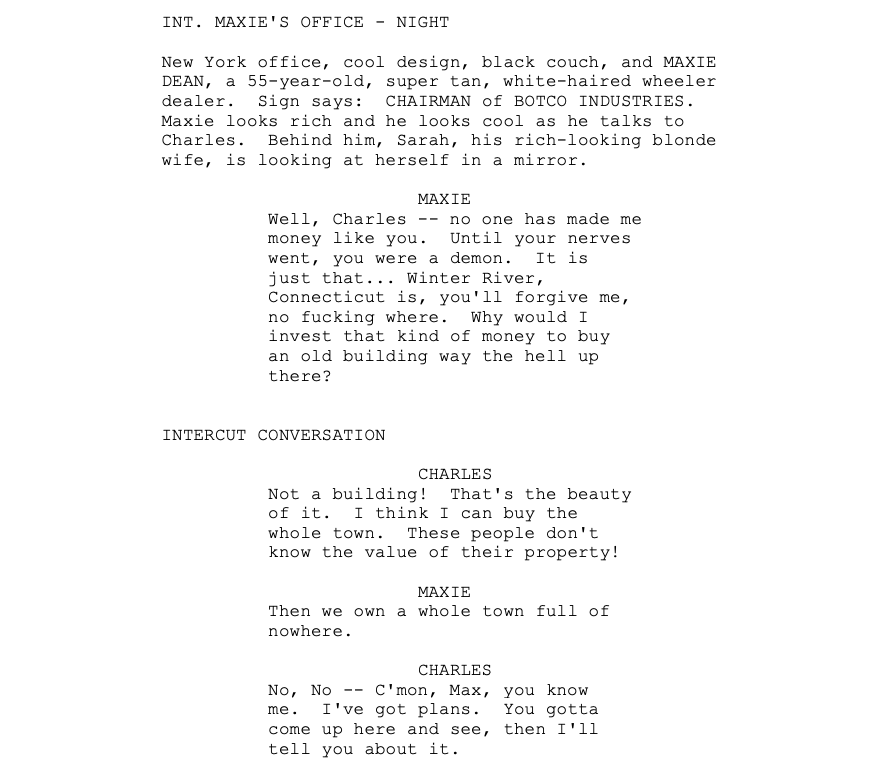
During this phone conversation, Adam bursts in wearing a sheet, attempting to scare Charles (this is the best plan they could come up with). But Charles brushes Adam off, thinking he’s Lydia, and pays no mind to it.
As Adam and Barbara argue about whether or not the sheet thing is going to work, they suddenly get noticed by none other than Lydia.
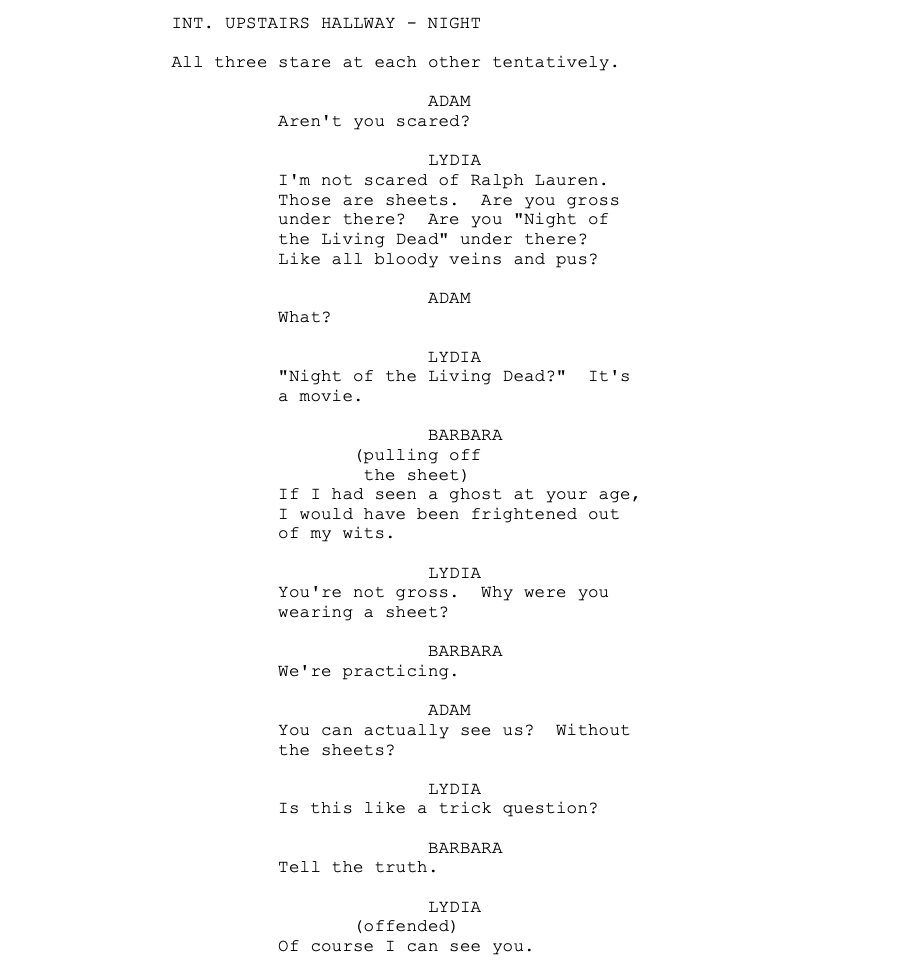
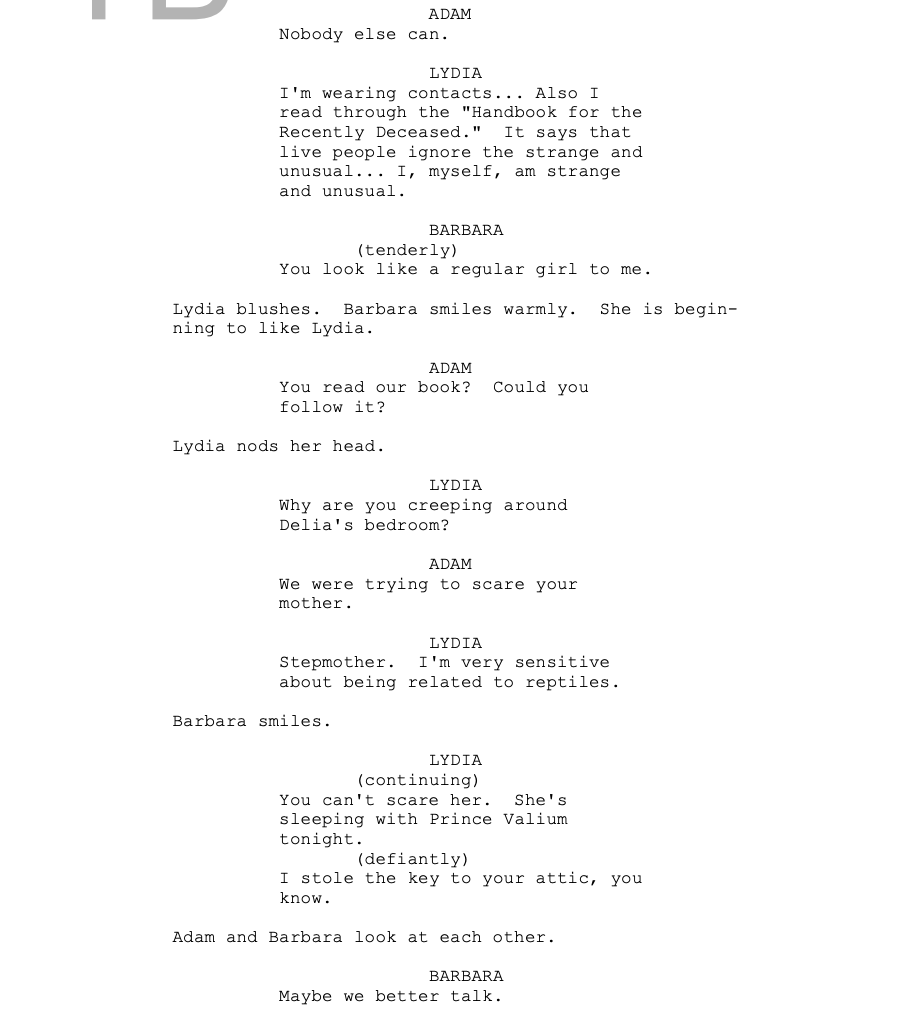
They go up to the attic and have a surprisingly nice conversation. Lydia likes them, and they kind of like her, too. Still, though, there’s no way of dealing with the rest of the family. “Charles never walks away from equity”, as Lydia put it.
Finally, after Lydia leaves, Adam and Barbara decide to do the unthinkable: summon the one and only Beetlejuice.
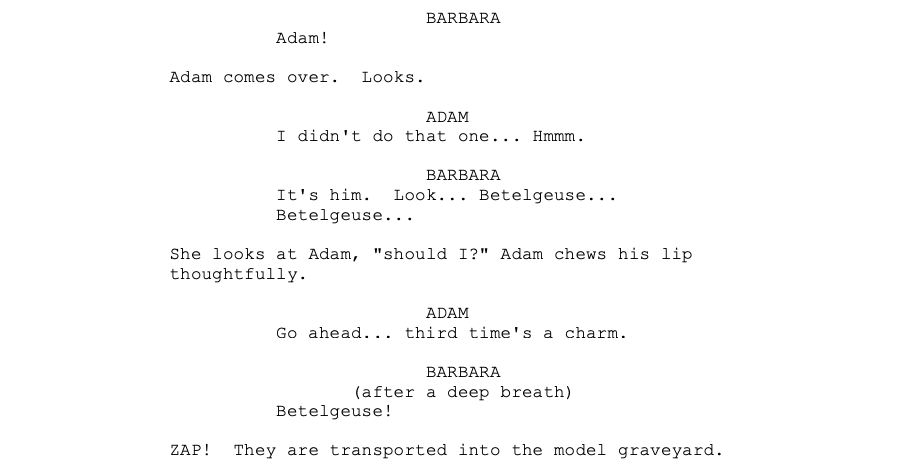
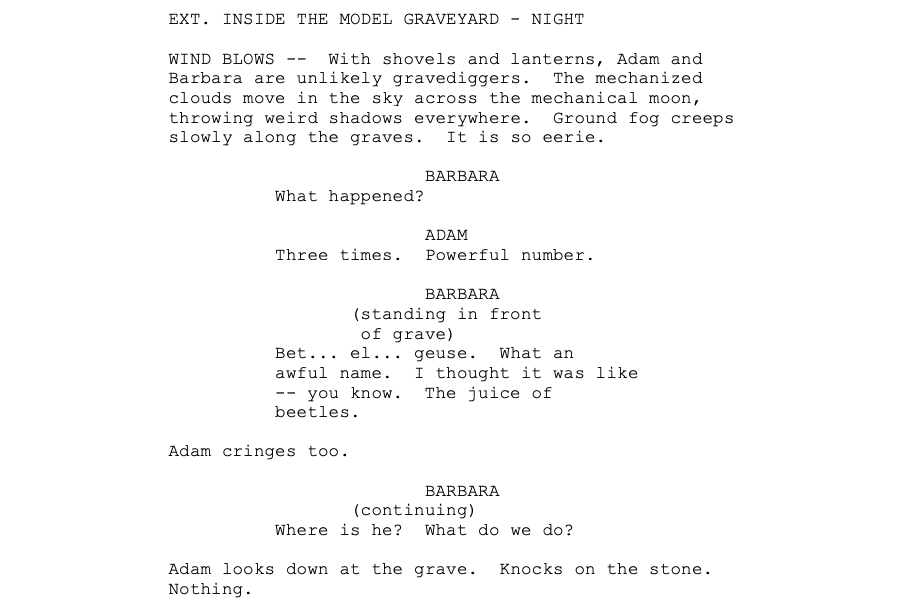
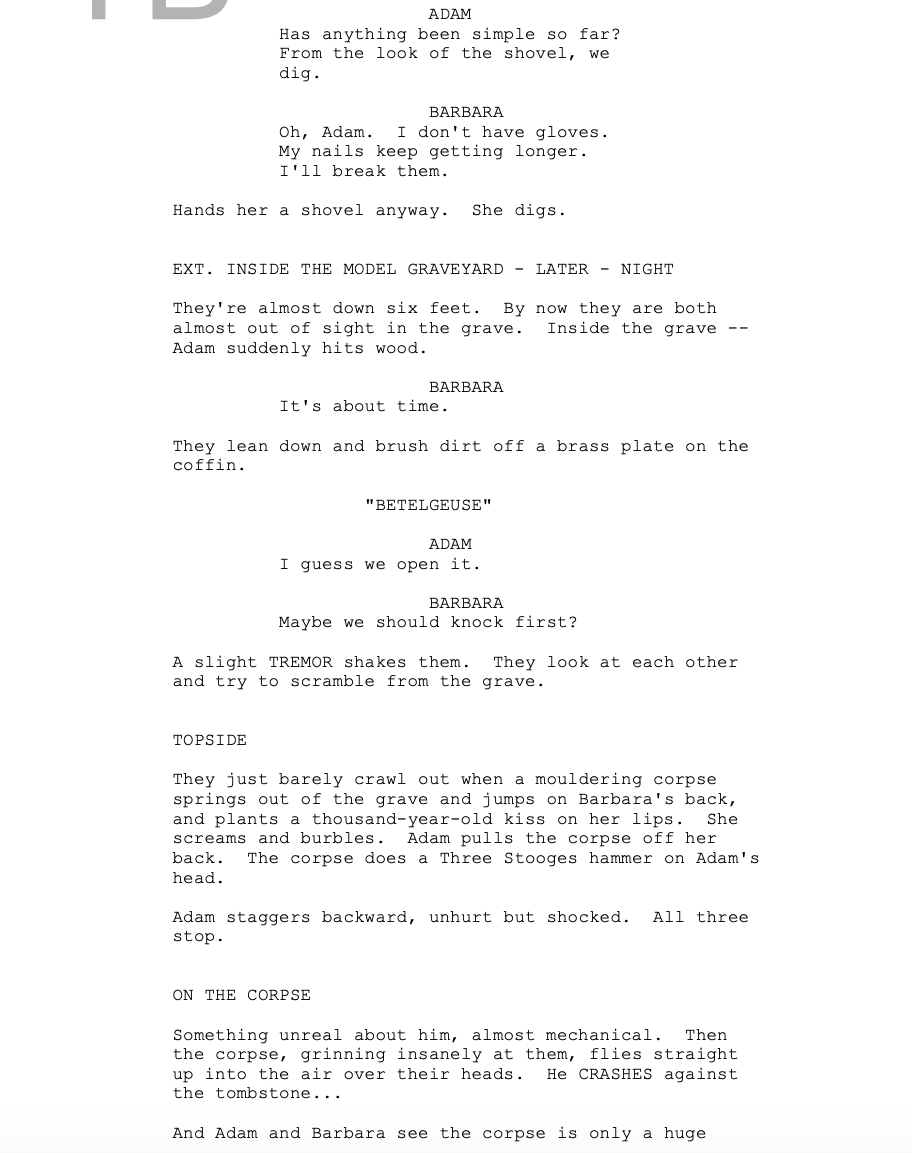
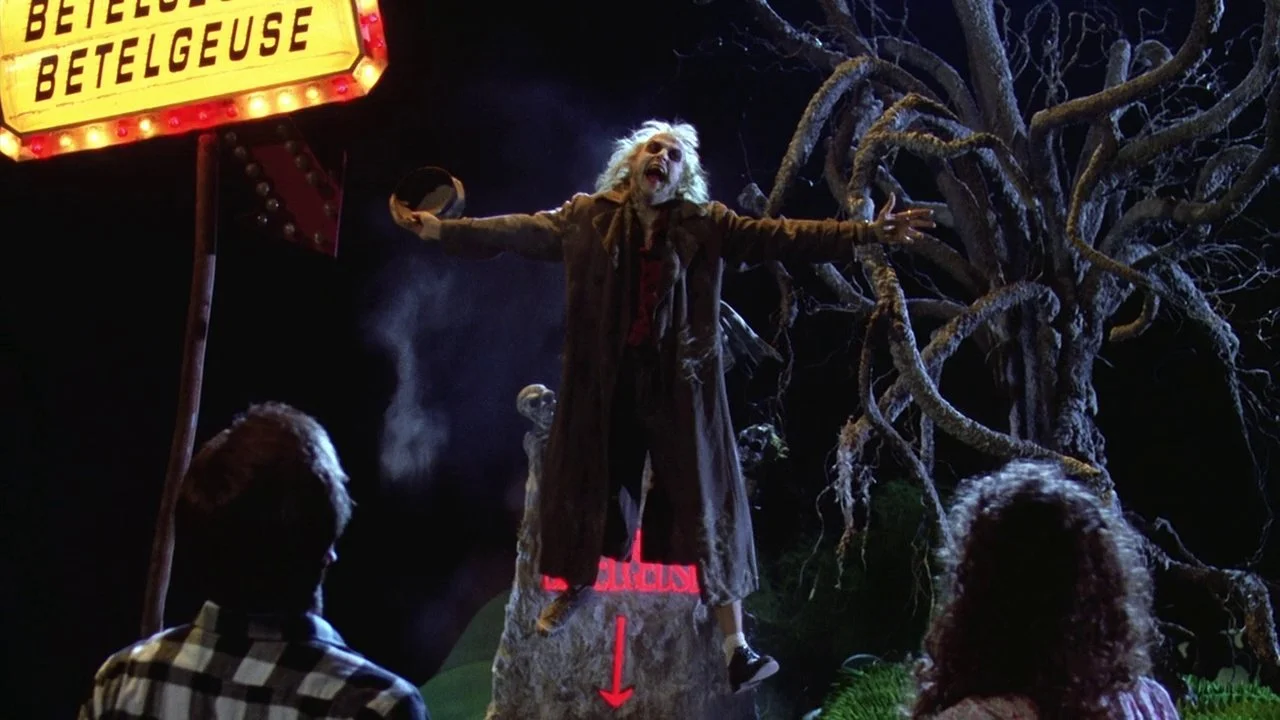
Suddenly, HE rises from the grave spectacularly (Beetlejuice is a real showman, you know). Right away, the Maitlands are disgusted. He’s crude, perverted, scary, and just downright ridiculous (but entertaining throughout, I might add). Basically, he’s like an undead used-car salesman.
They reject his offers and decide to handle the Deetzes themselves, and from the looks of it, they’re right in time. Delia is throwing a dinner party for her friends from the city…
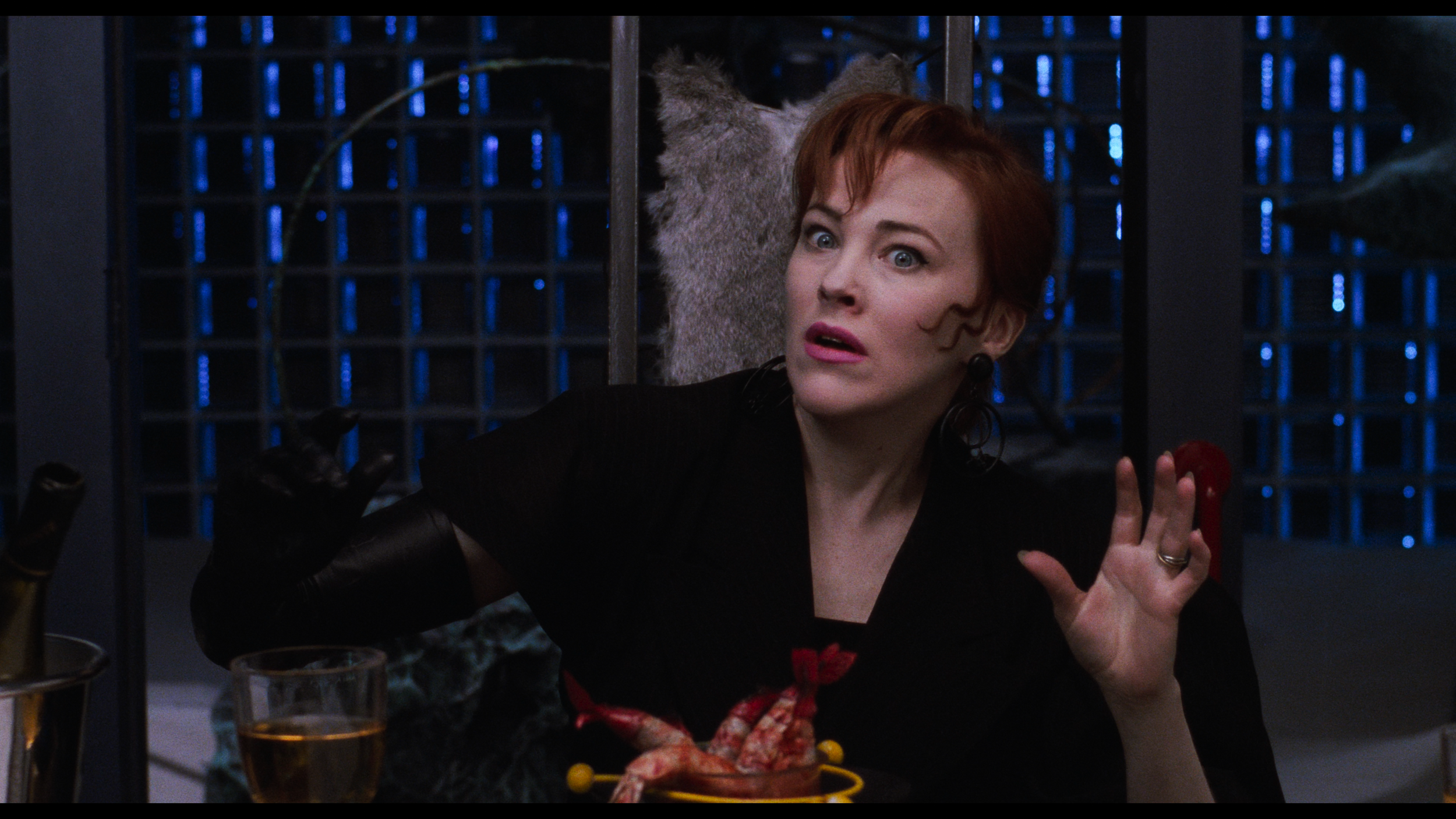
As Delia attempts to impress her table of guests, she suddenly bursts out in song–against her will and with a voice that certainly isn’t hers. Suddenly, the entire table begins to join her, dancing along and keeping the beat. They’re possessed! And the ghosts are making them put on a full-fledged performance.
Just when Adam and Barbara are starting to get elated over the “success” of their haunting, Lydia comes up to the attic to deliver some unfortunate news.
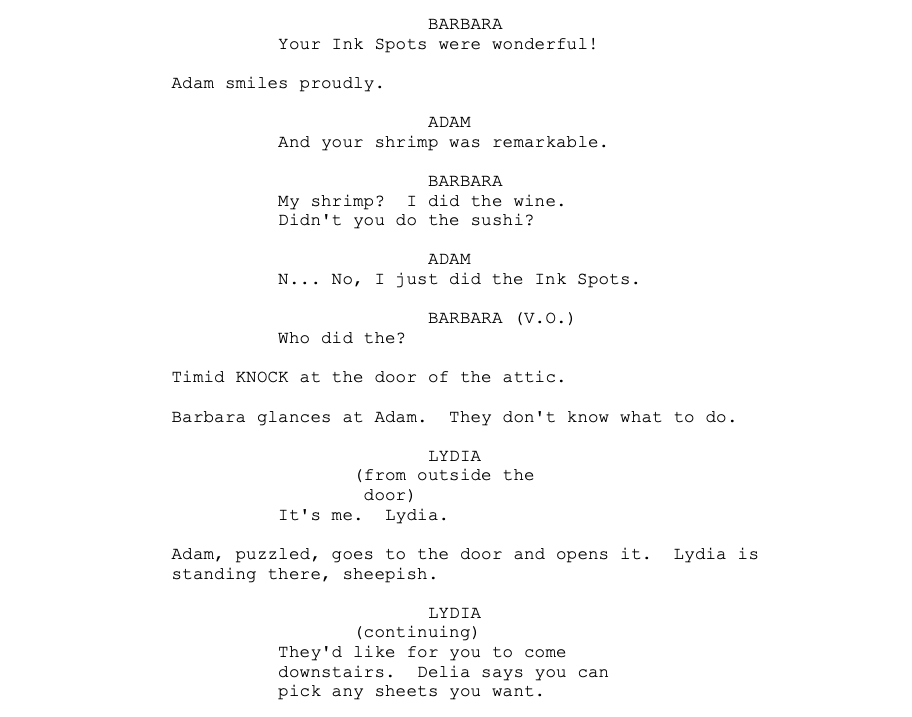
Turns out, everyone had a blast during the event. The guests are all excited by the sudden evidence of an afterlife, and Charles is already concocting ways to make money off of the whole ordeal. Turns out, this was just another failure.
That is, until Beetlejuice takes a crack at it…
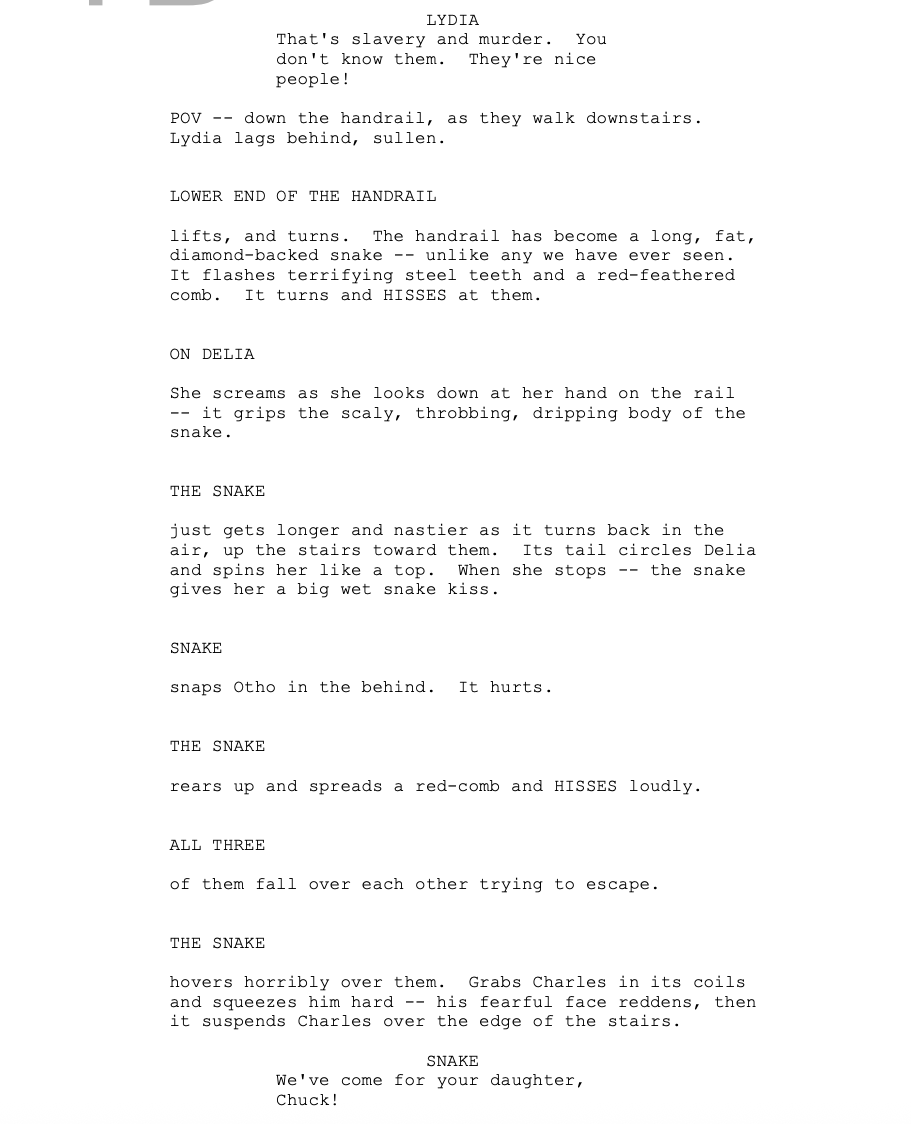
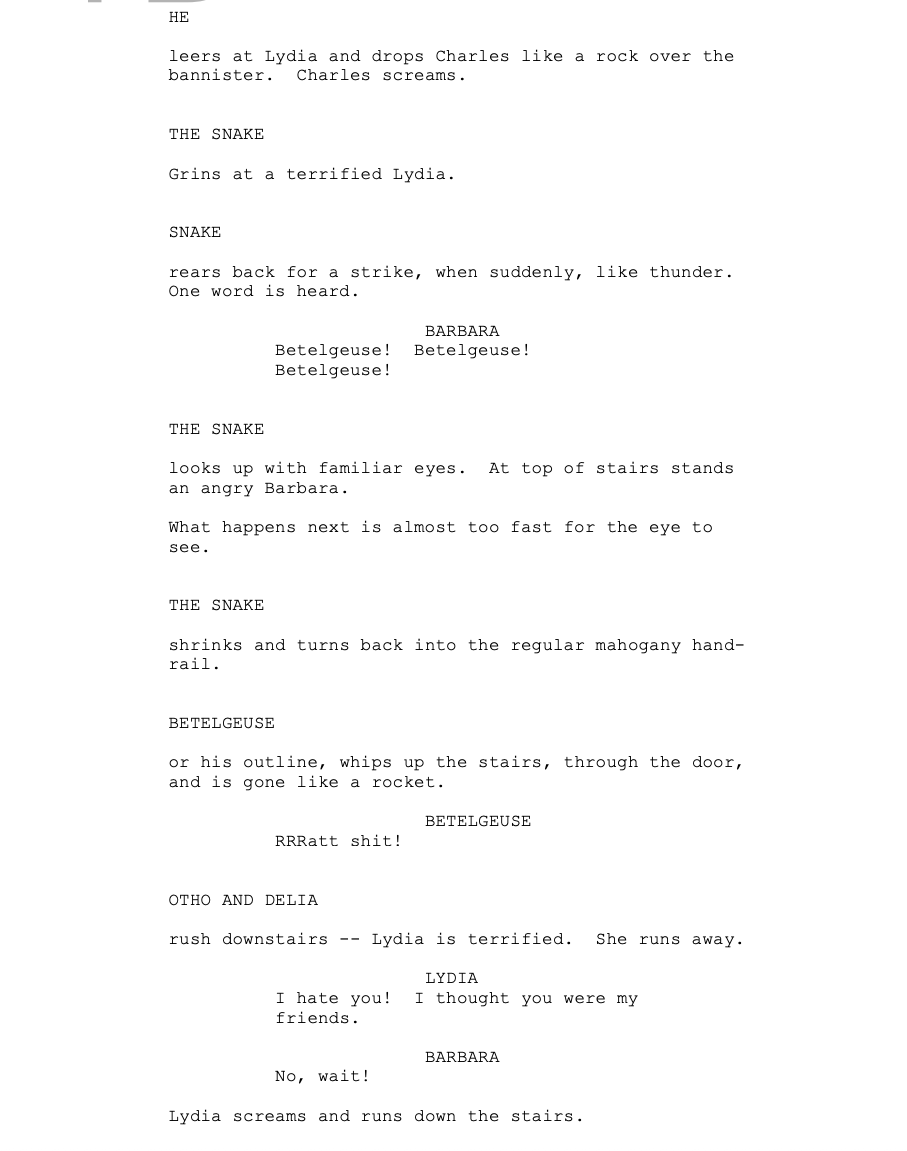
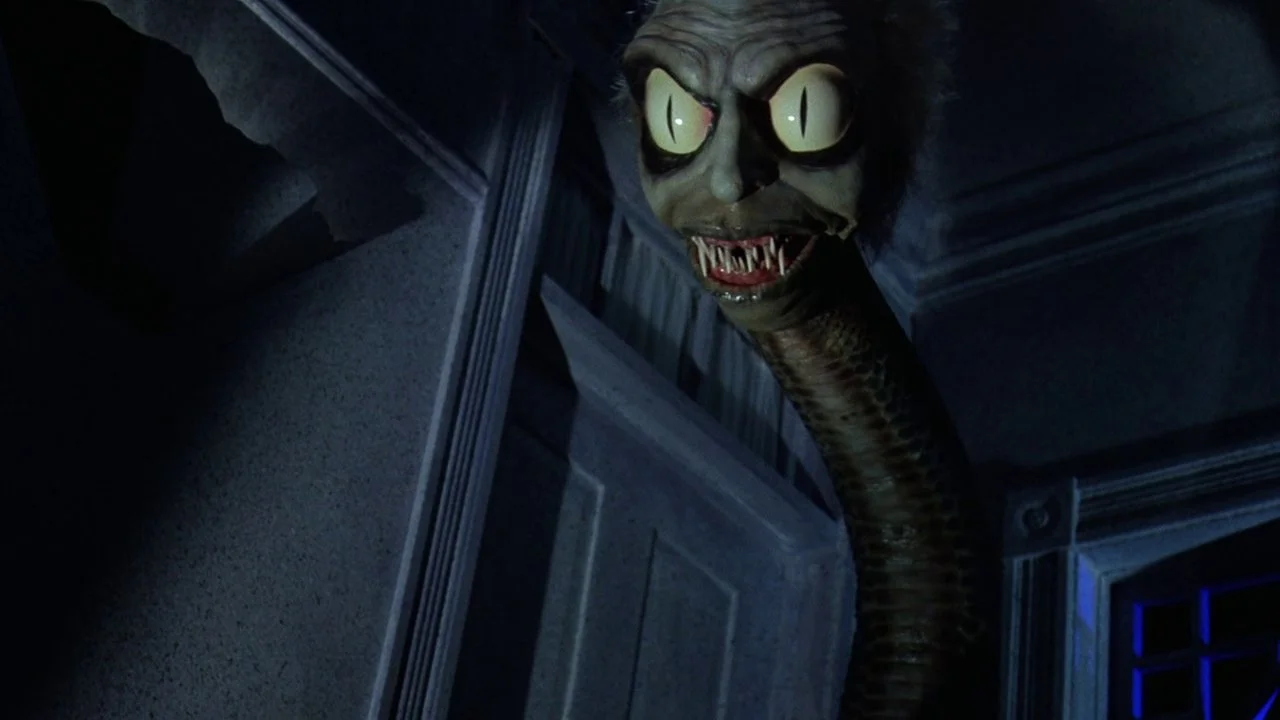
Act 2 concludes with Lydia hating the Maitlands, the Deetzes absolutely terrified (but still refusing to leave), and Beetlejuice haunting the model graveyard. Nothing is going right, everything’s a disaster, and the movie is as entertaining as it could be. Oh yeah, and Otho has the handbook.
BREAK INTO THREE
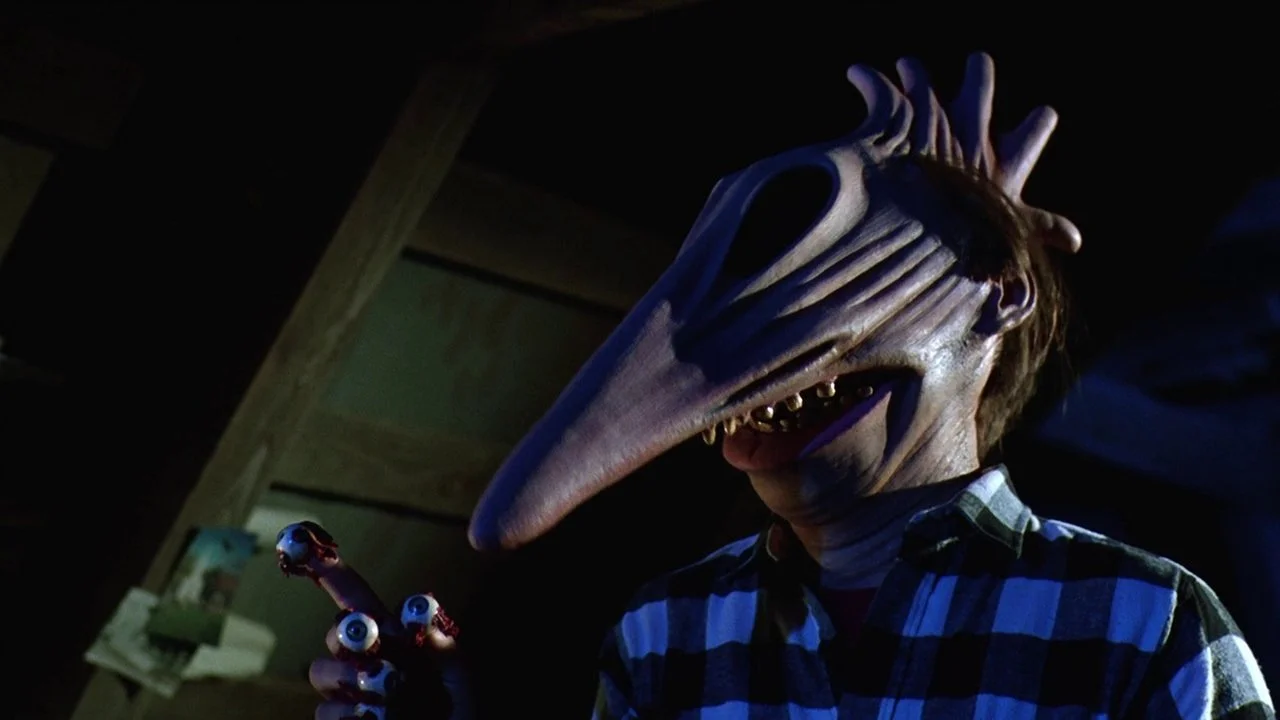
Act 3 begins with a severely depressed Lydia encountering Beetlejuice in the attic. She tells him that she wants to kill herself so that she can be dead too. And he wants to get out. So, he promises that if she summons him, he can solve both of their problems in one fell swoop. But just before she can say his name three times, Adam and Barbara rush back in to stop her. Oh yeah, and at this moment, Barbara and Adam look like monsters (another poor attempt at scaring the Deetzes).
That’s when their heartfelt moment is cut short. Delia’s friends and Charles’s business associates are downstairs, and they’ve got something planned.
FINALE
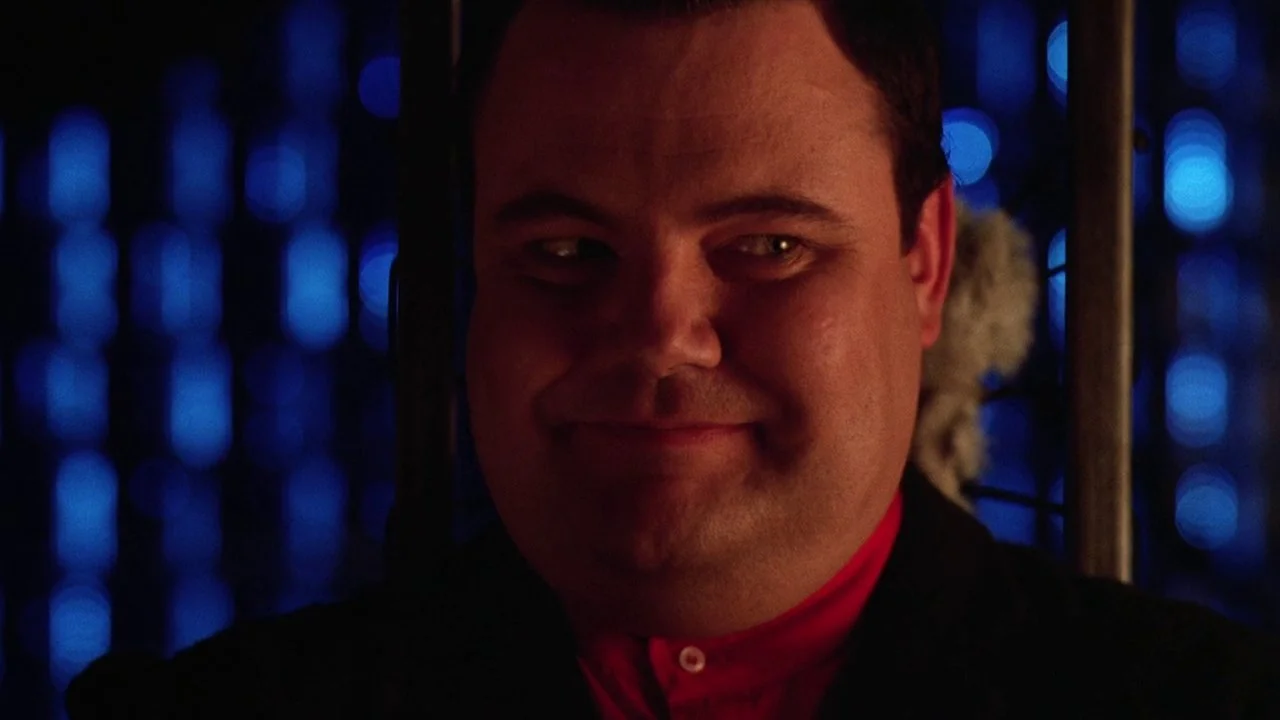
Otho, with some help from the handbook, thinks he’s found a way to get the Maitland’s attention.
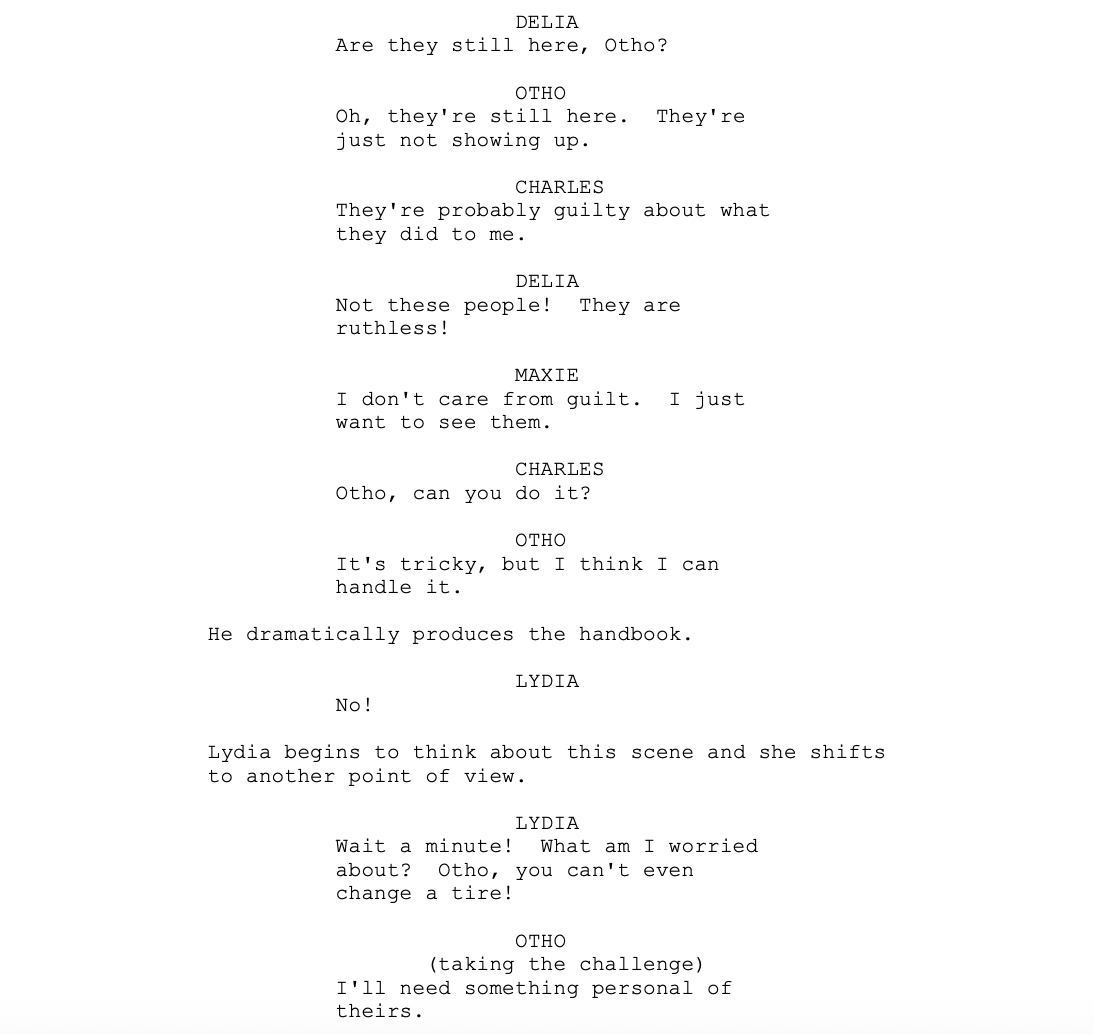
Delia retrieves their wedding outfits from the closet, lays them on the dining room table, and the entire party begins a seance.
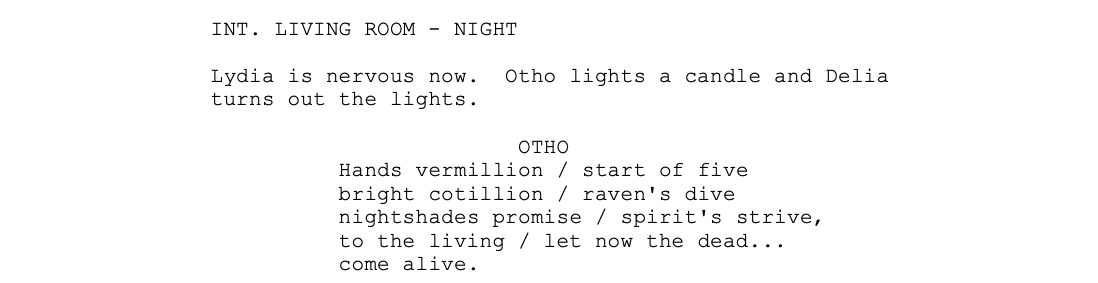
Back up in the attic, Barbara suddenly begins to fade away. Adam reaches for her desperately, but POOF, she’s suddenly gone.
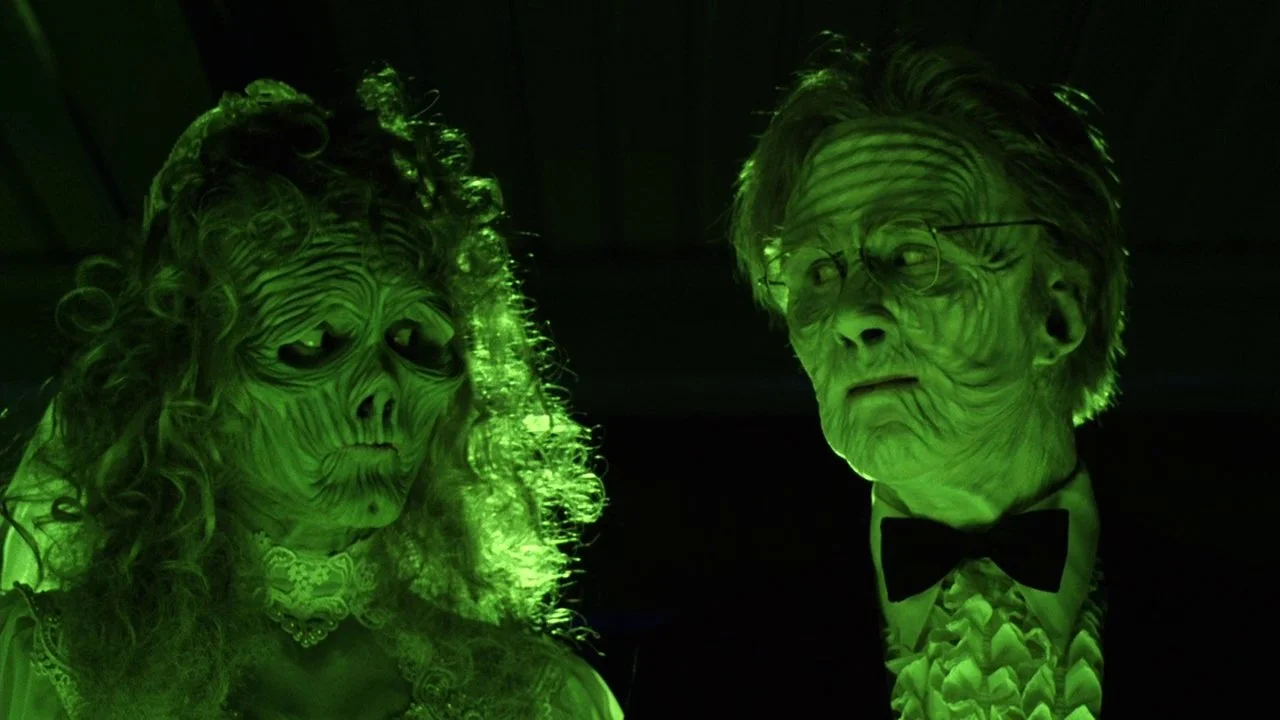
Back at the seance, Barbara suddenly appears in her wedding dress, standing on the table for everyone to see. But she can’t move or speak; she’s just stuck there, forced to watch the events in horror. Moments go by, and then the same thing happens to Adam.
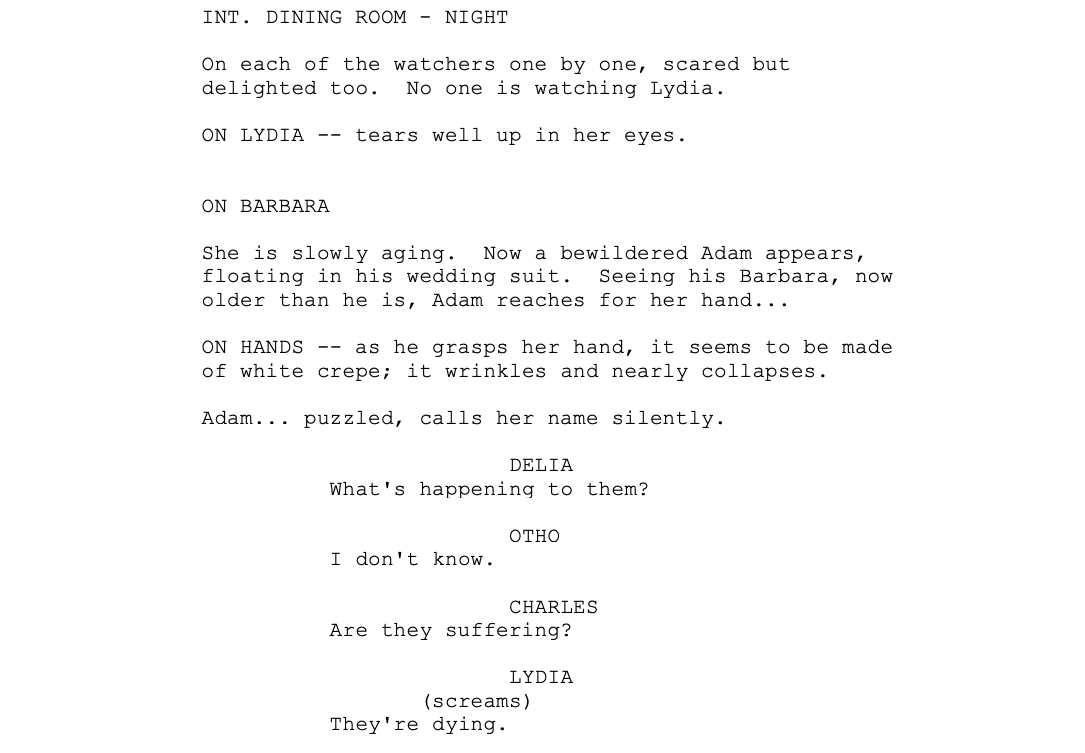
The couple rapidly ages, decaying quickly in front of an entire party of guests to marvel at. Lydia begs Otho to stop, but it’s too late. With nothing else to lose, Lydia runs over to the miniature town and calls upon the one person left who might be able to help: Beetlejuice.
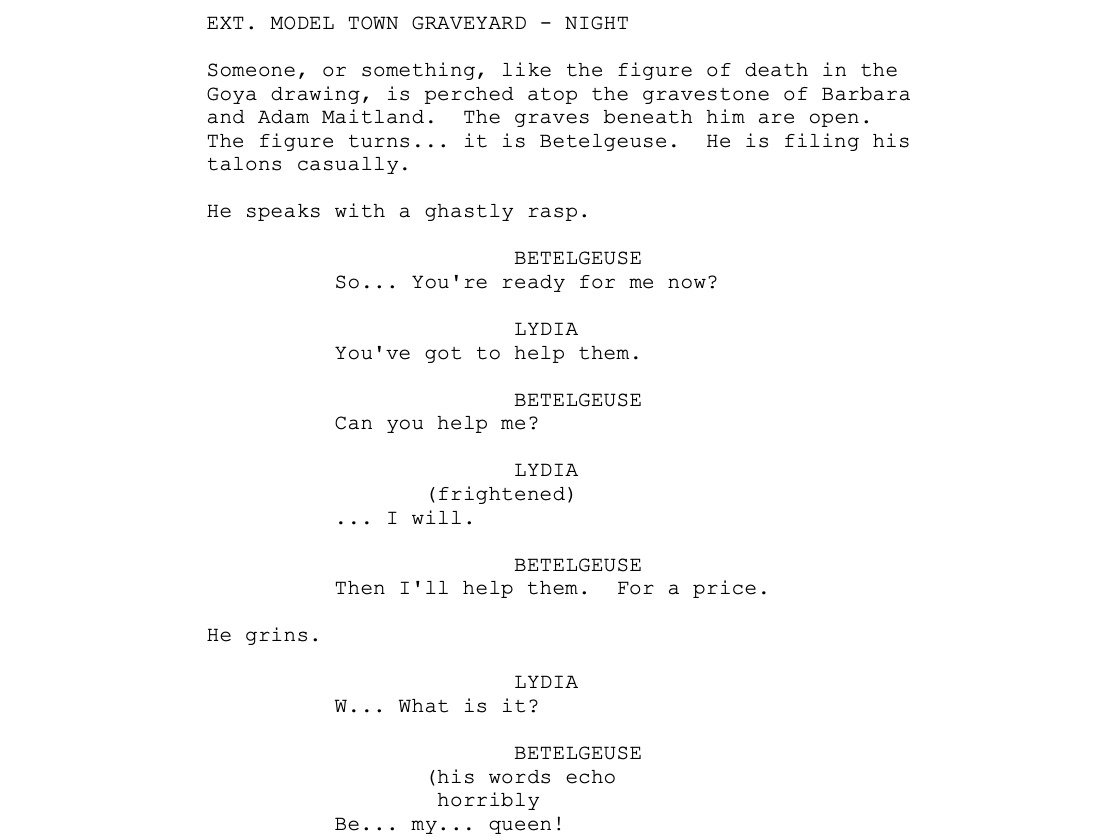
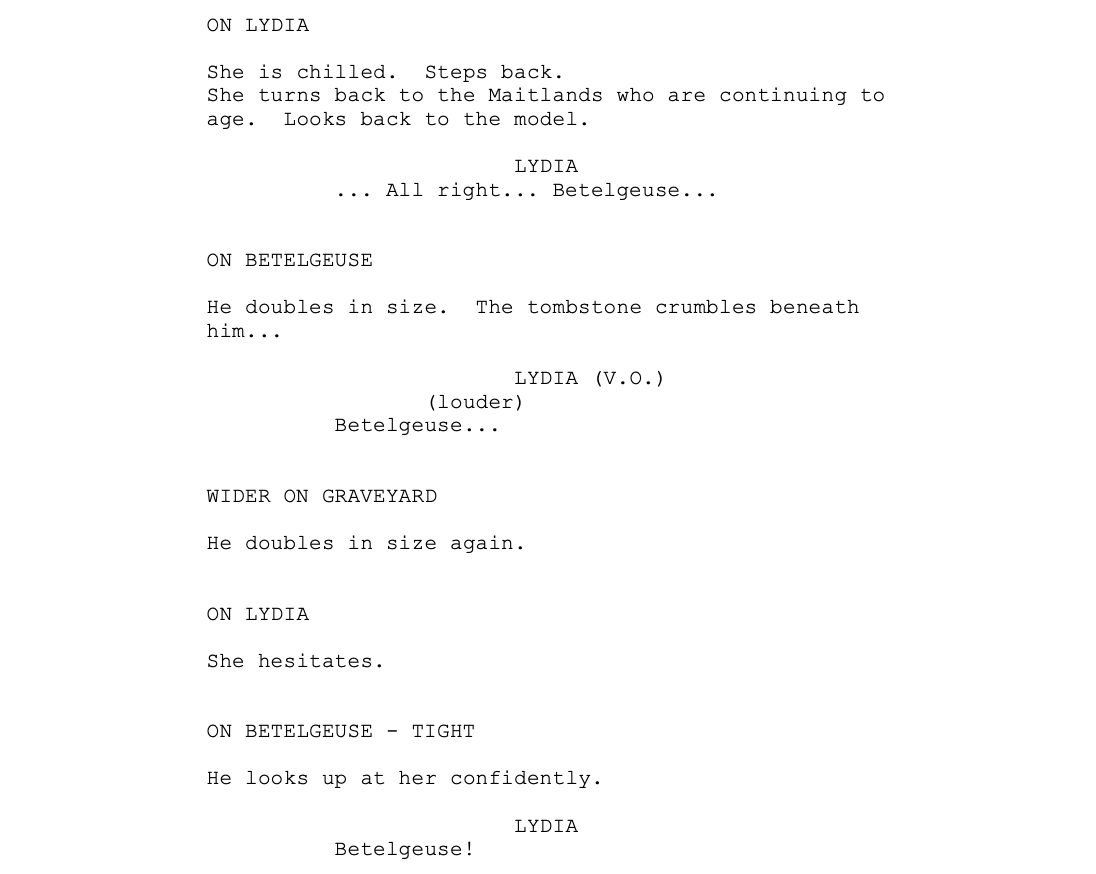
And just like: it’s showtime. Beetlejuice jumps right into action and begins to torment the party–all while having as much fun with it as possible.
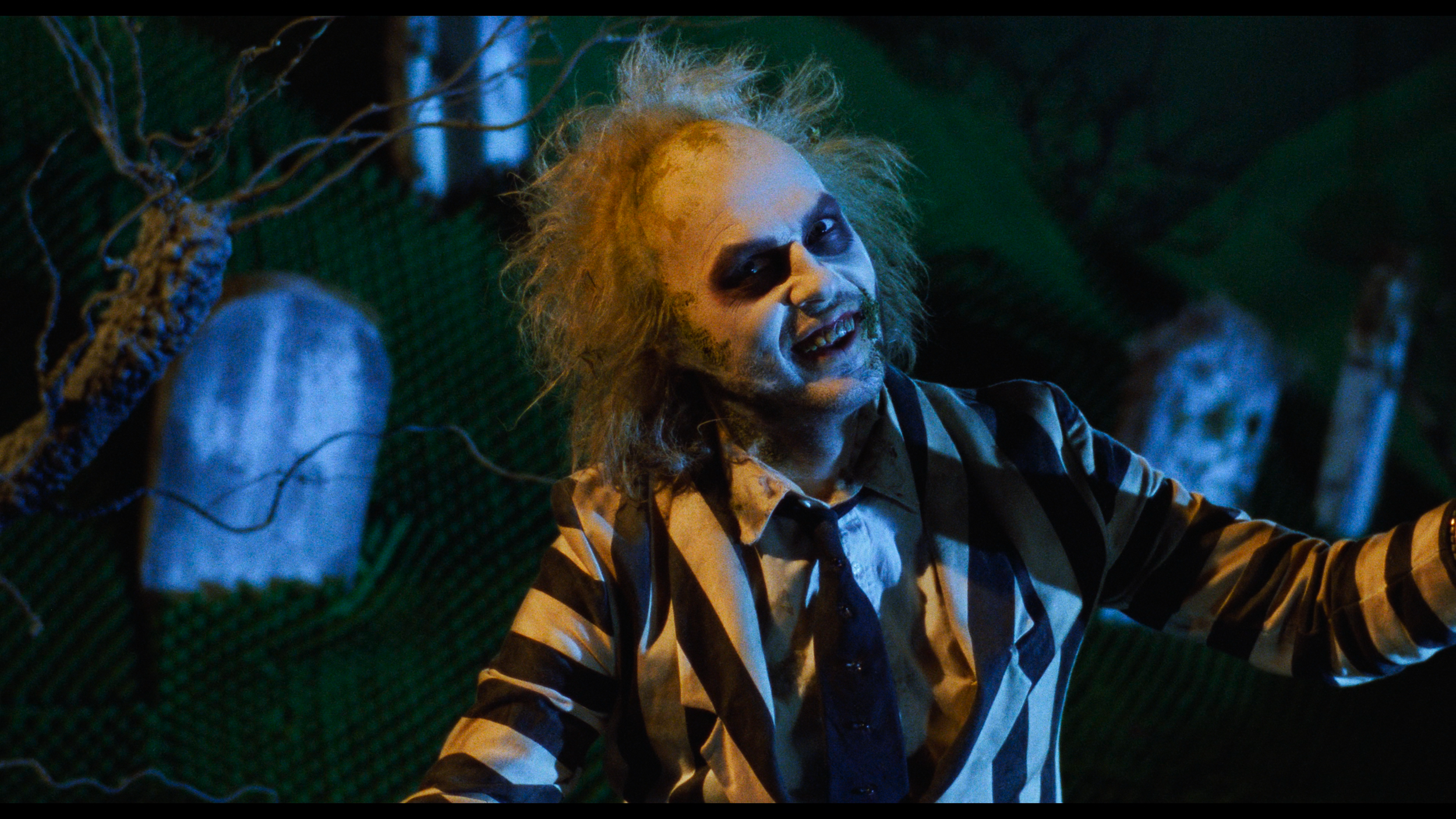
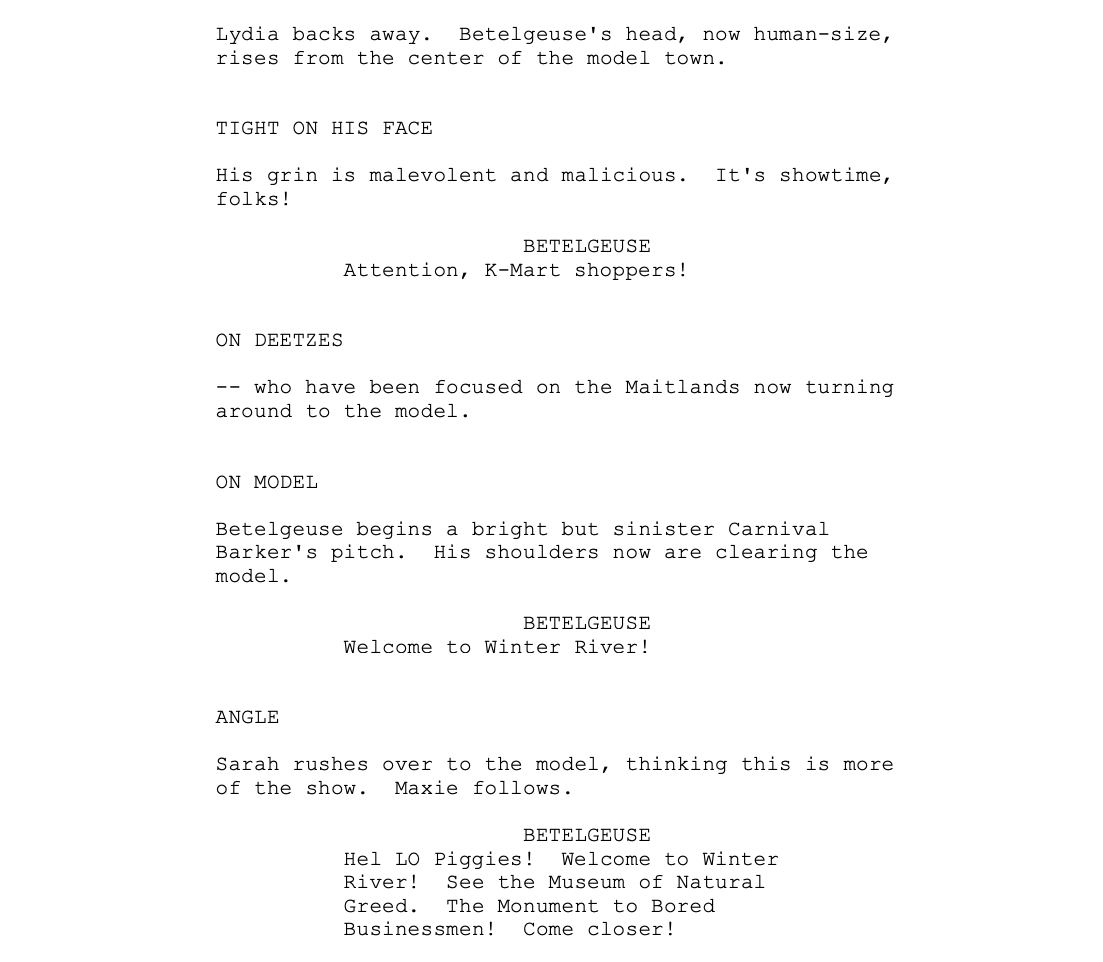
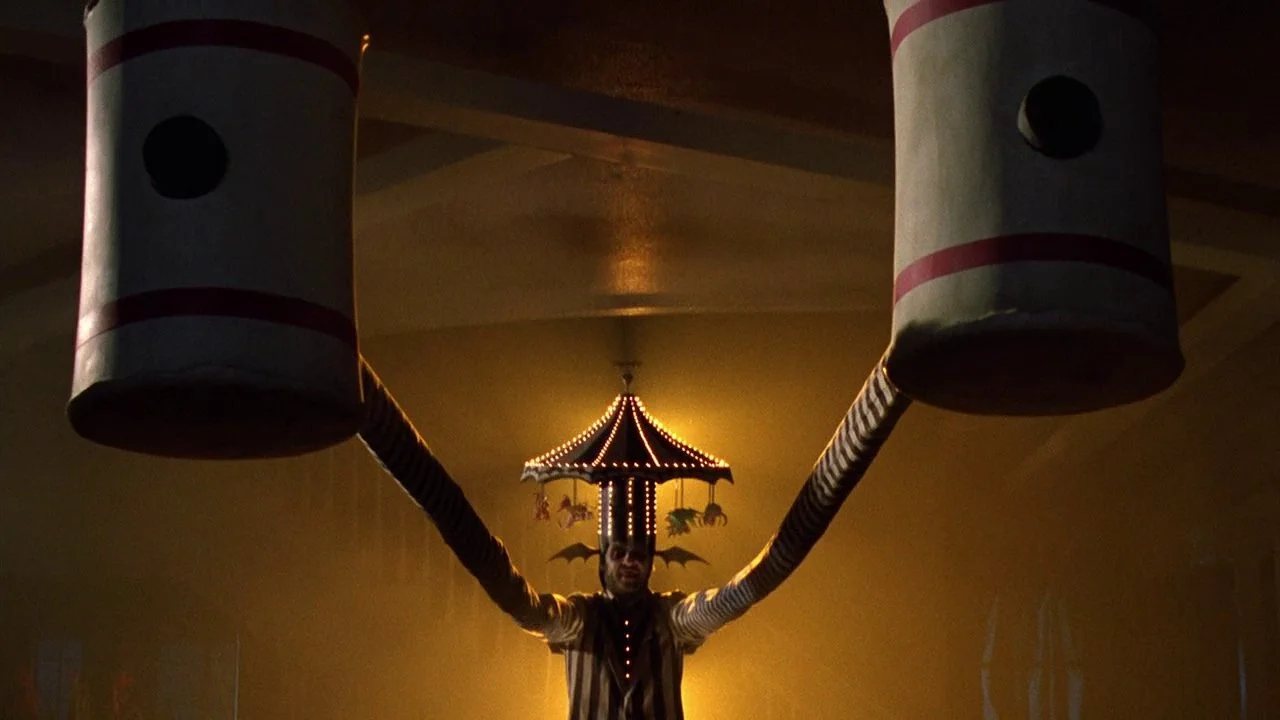
His first victims are Max and Sarah, whom he sends into the ceiling by turning his arms into large sledgehammers.
He then runs over to the Maitlands and knocks them down onto the table, where they quickly start to regenerate themselves.
Then he moves on to Otho, whom he easily scares out of the house by simply changing his outfit. NOTE: the original script also had a zombified version of Giorgio Armani enter the house and tell Otho that he’s too fat to be fashionable, but that didn’t make the cut for some reason…
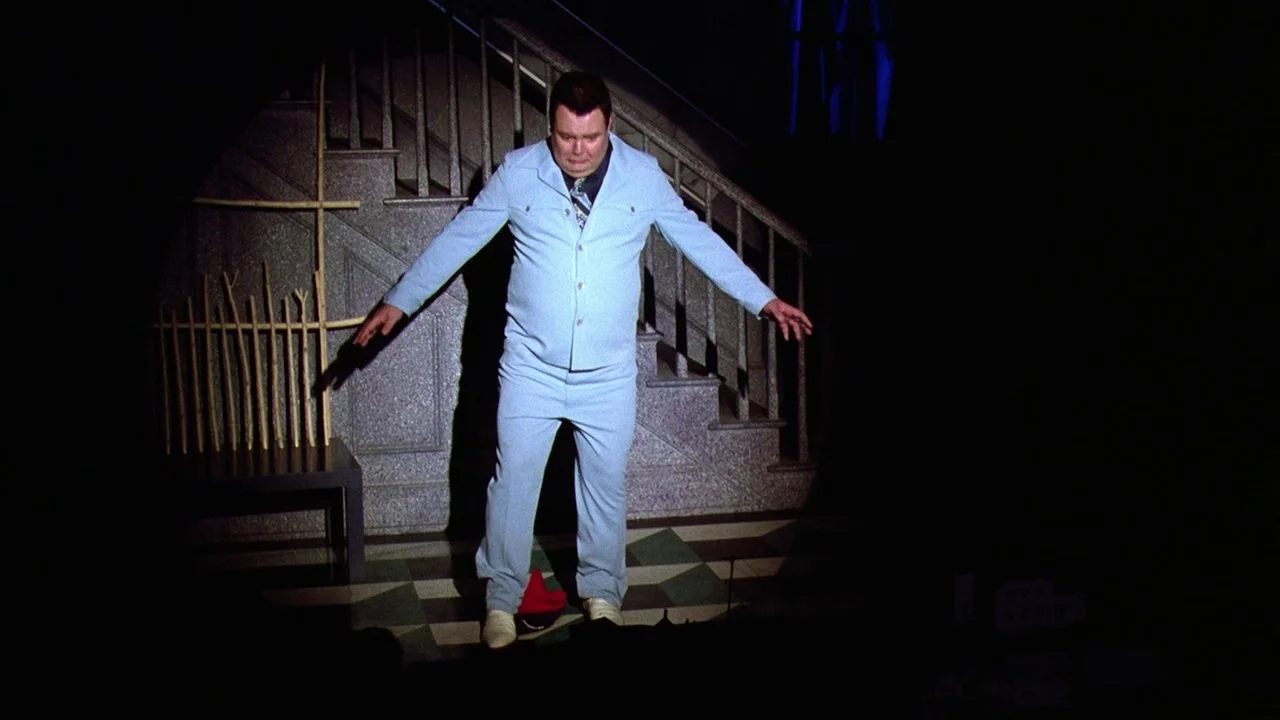
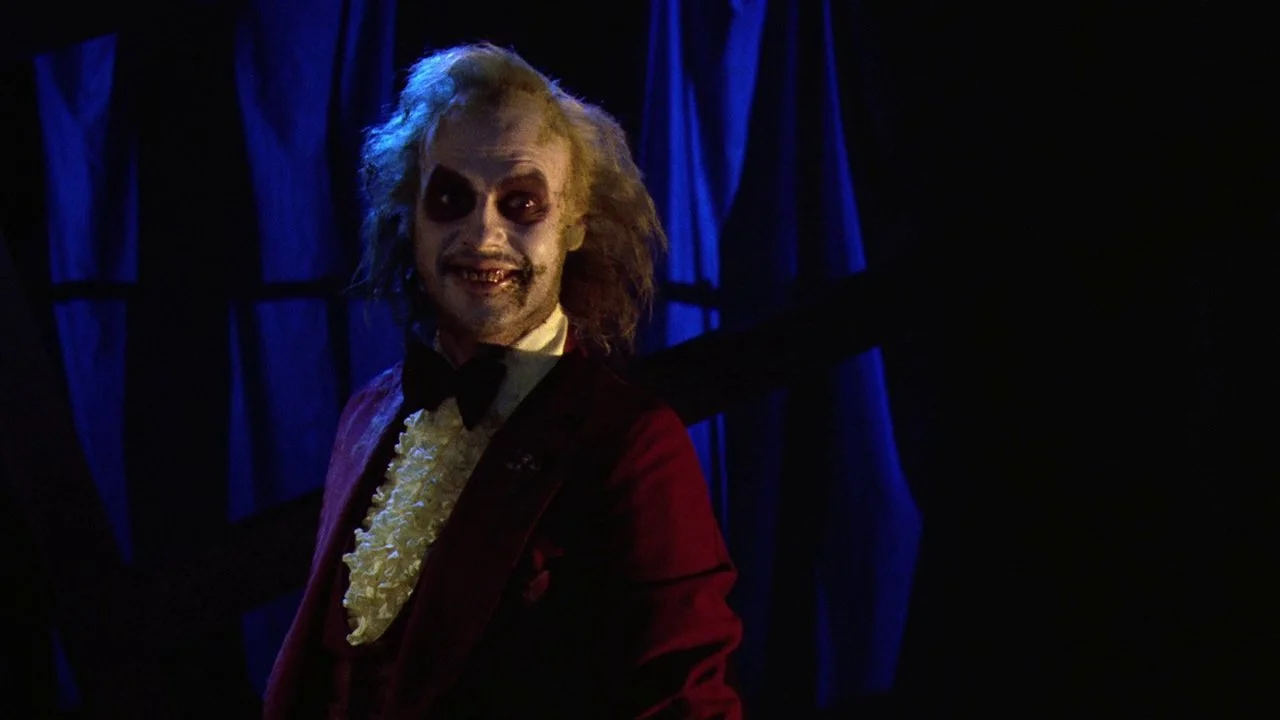
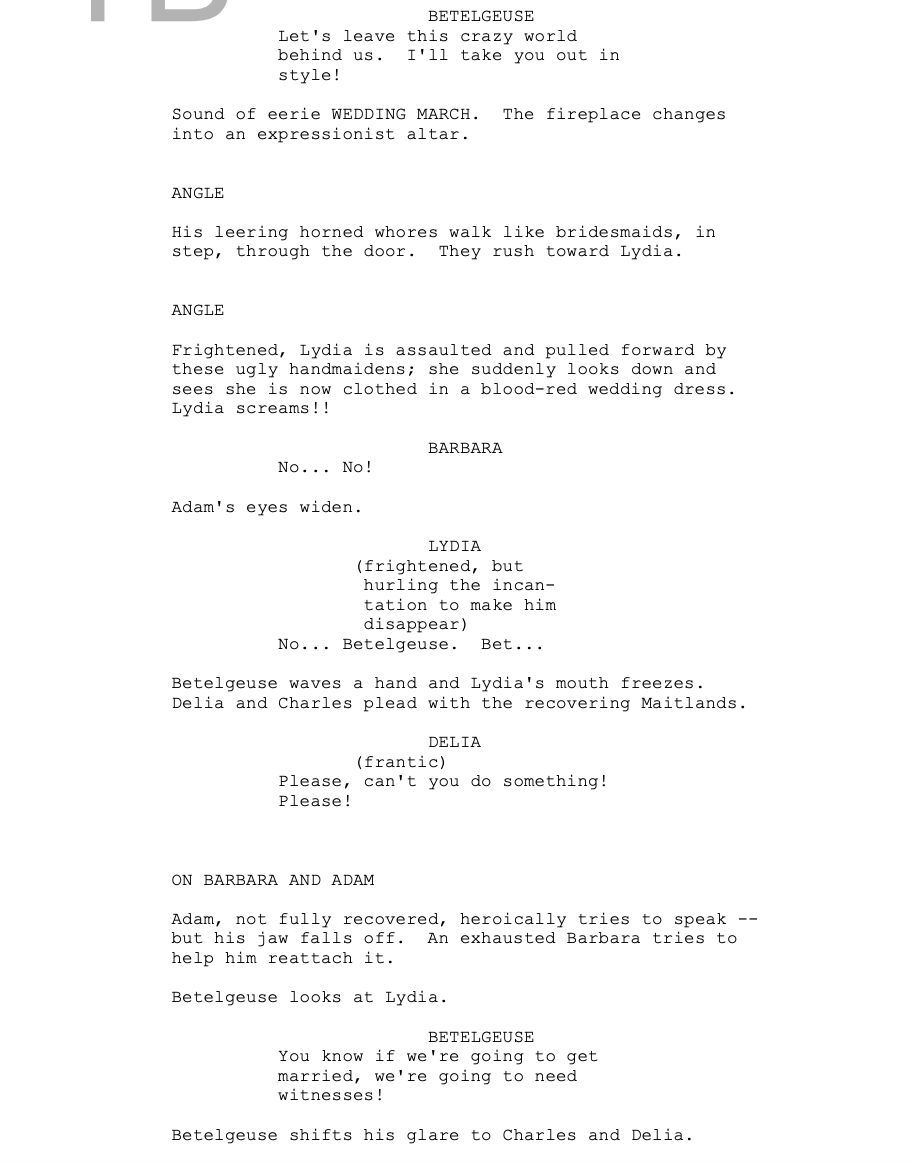
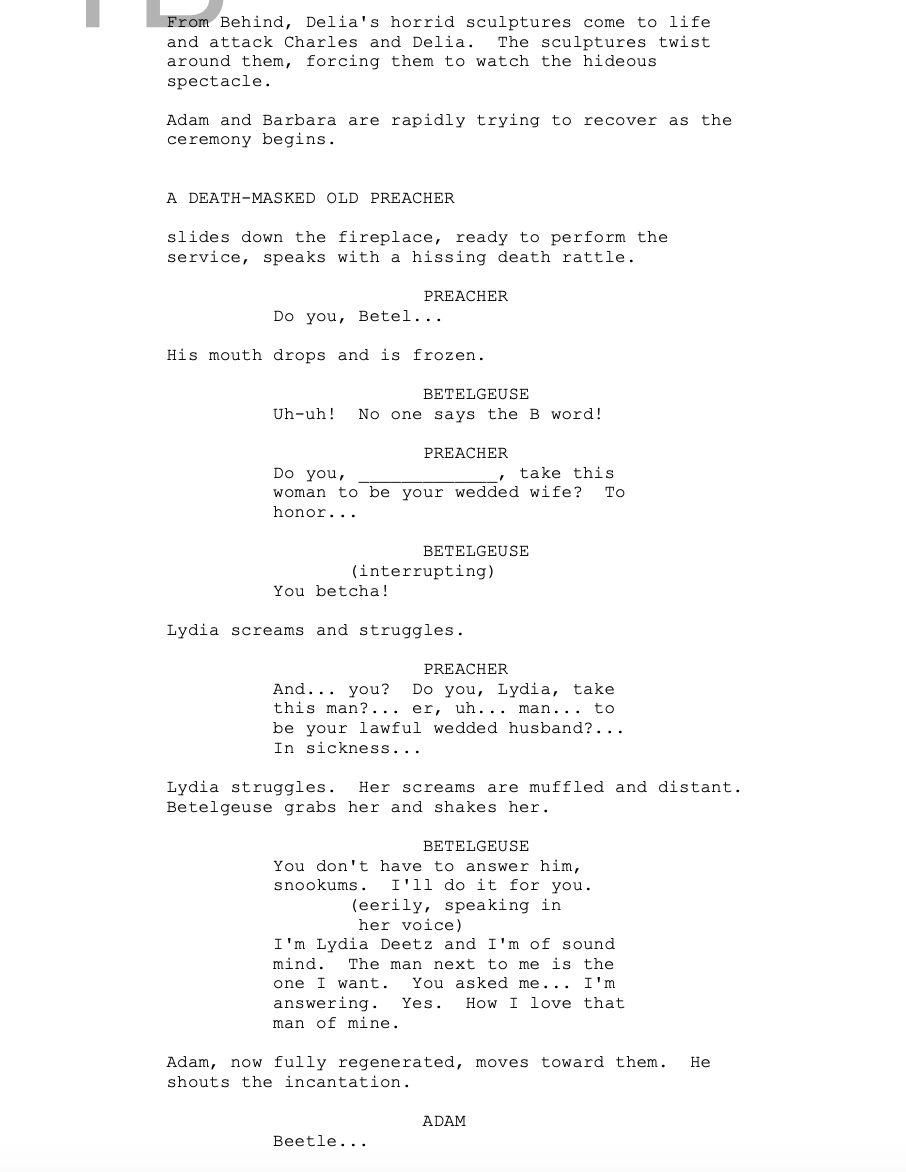
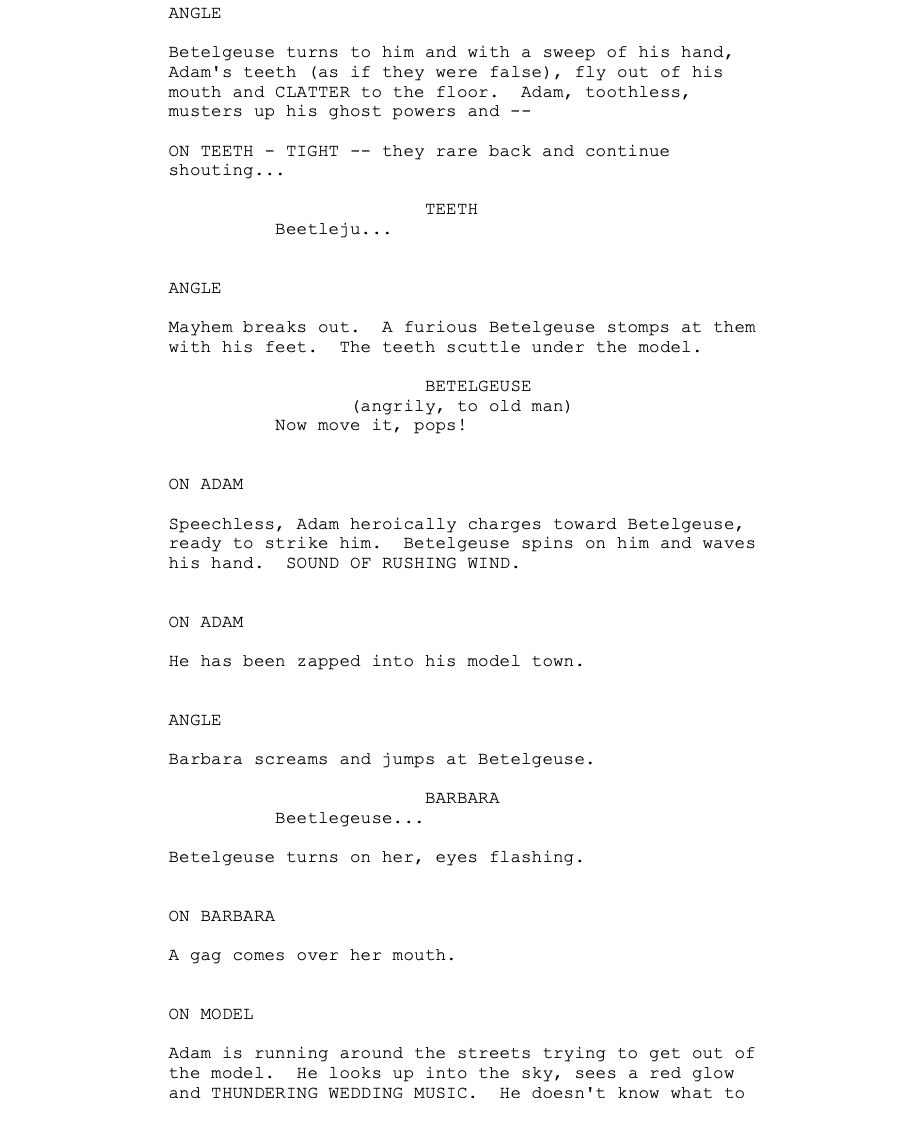
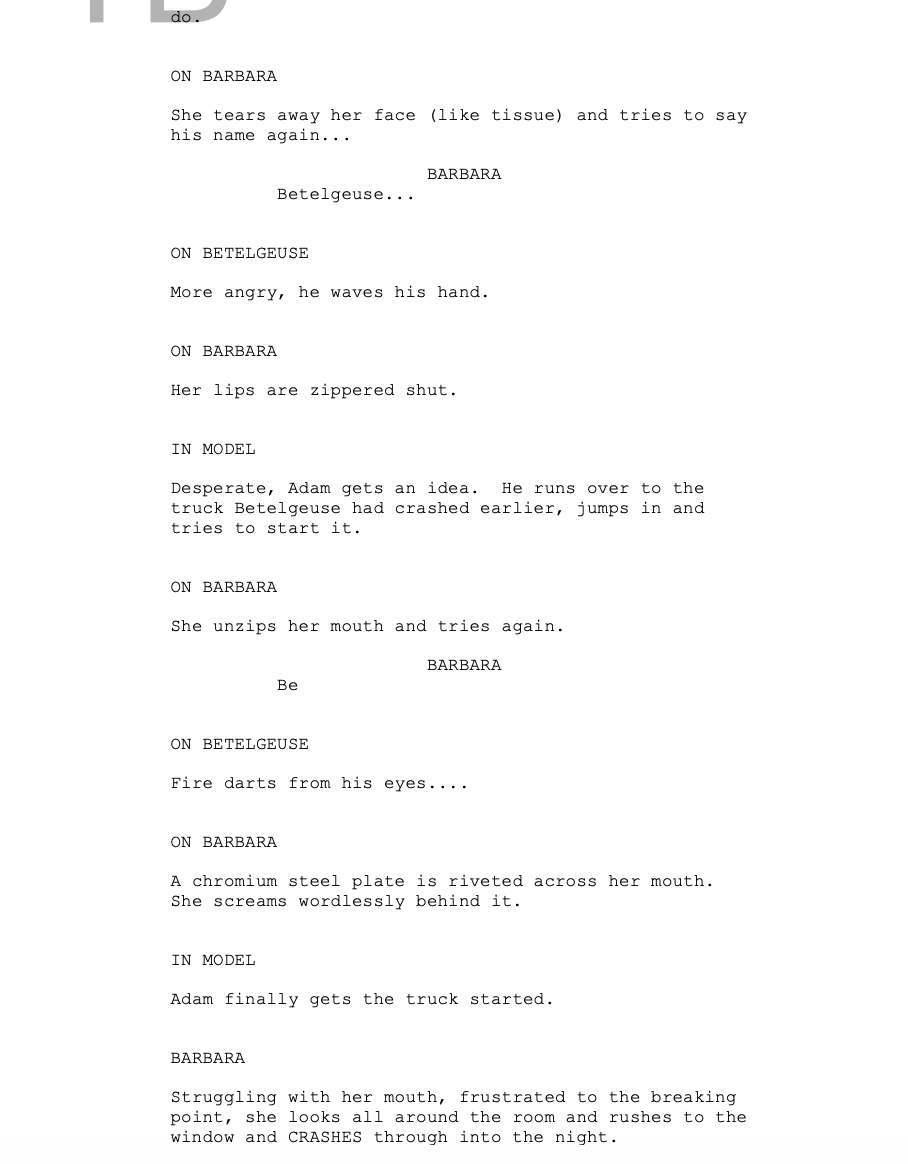
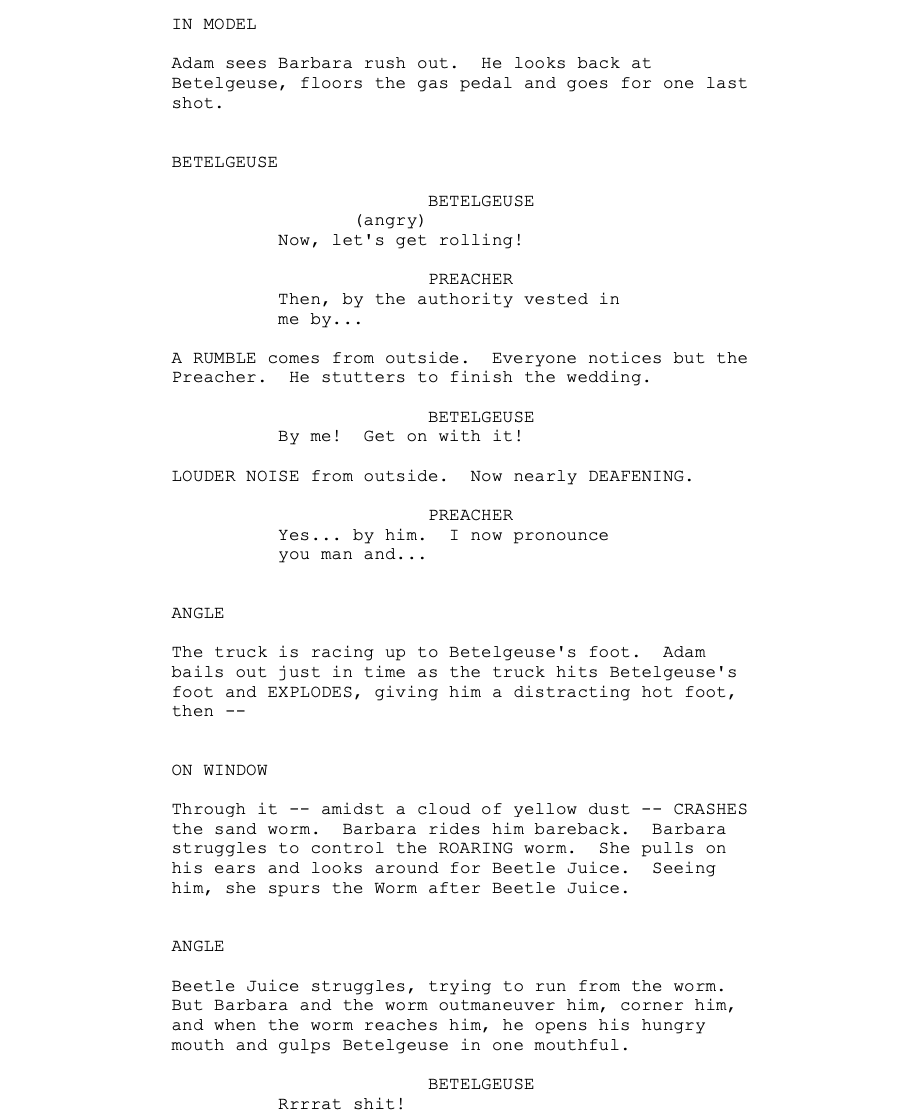
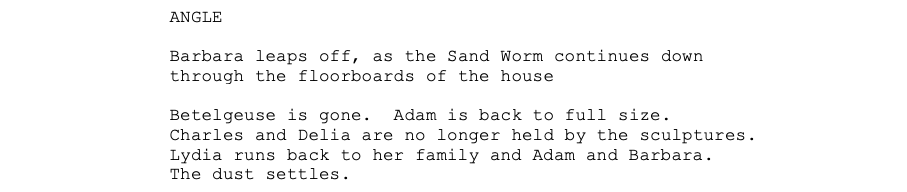
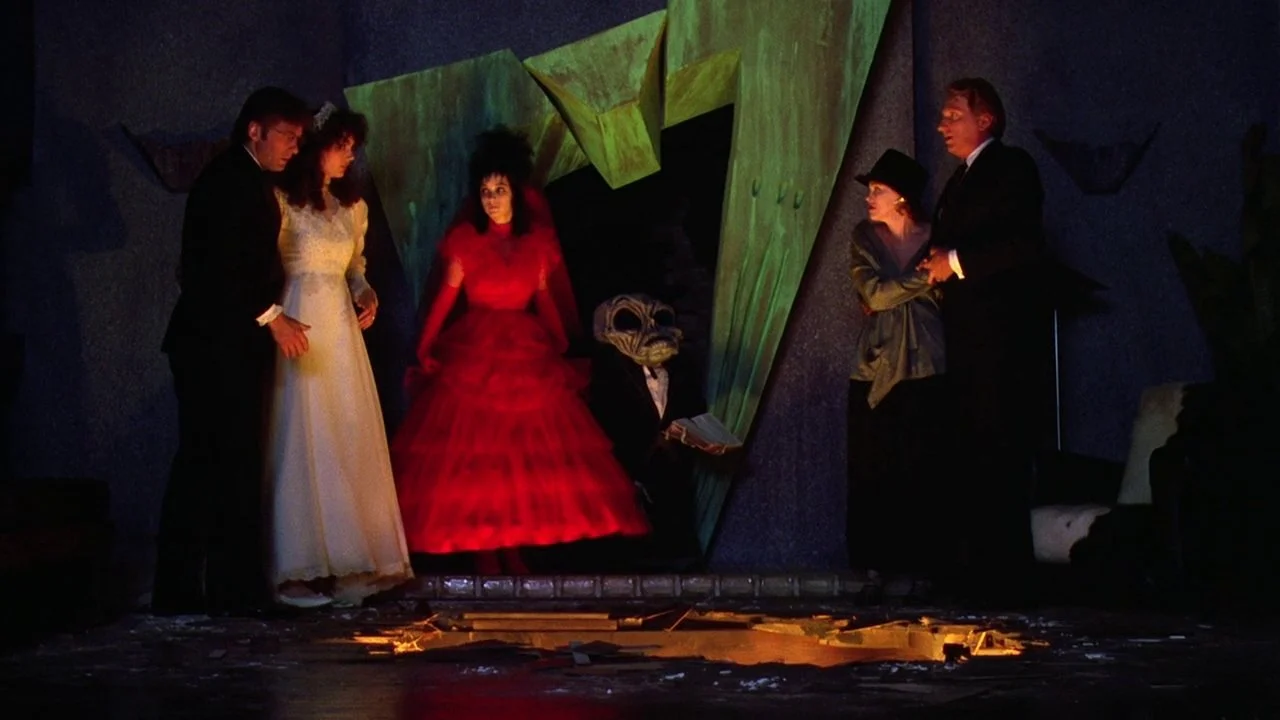
With Delia and Charles not really being a threat, Beetlejuice jumps right into the marriage ceremony. NOTE: I’m just going to include the next couple of pages directly. This scene gets so out of hand, with so many fun details, that it’d be an absolute crime to try to gloss over any of it.
CLOSING IMAGE
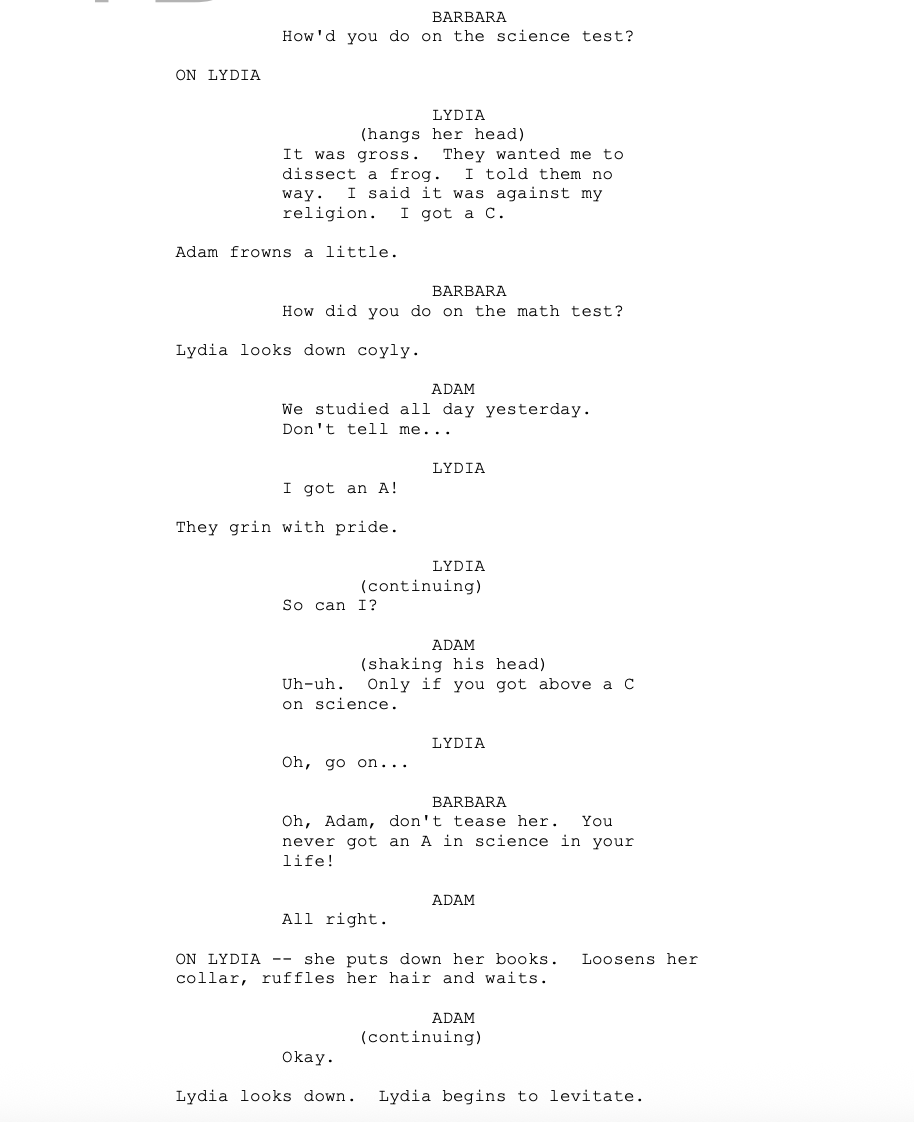
Months later, we find that Lydia is living in the house with Adam and Barbara, who help her with her schoolwork. Charles and Delia, not wanting to disturb them, moved back to the city, but refuse to sell the house under any circumstances.
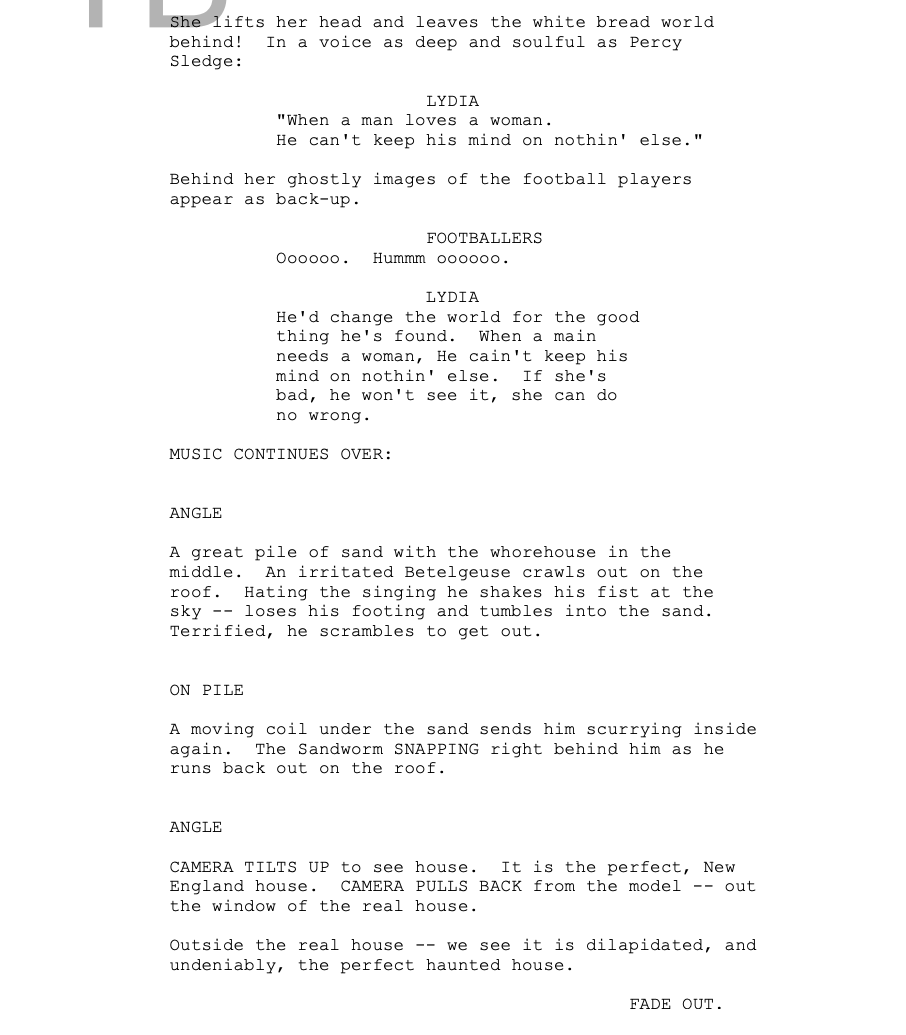
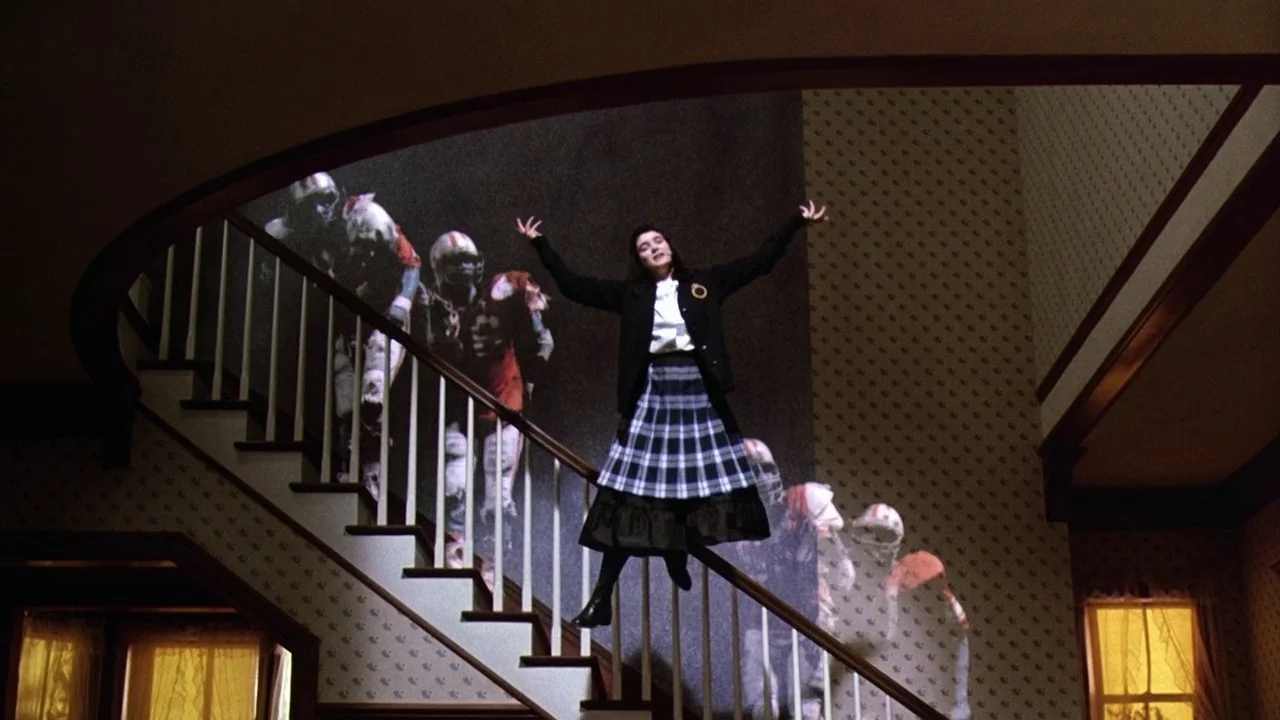
It’s the perfect happy ending. Charles and Delia went back to their element, Lydia got to stay, Adam and Barbara got to keep their house (and have a kid, in a way), and Beetlejuice got sent back to wherever it is he came from. Hell, even some stupid football players who died in a bus crash got to have some. Does it really make perfect sense? No. Does it matter? Not really. Because, as I’ve said, this is the writers’ world, and we don’t need to know everything about it.
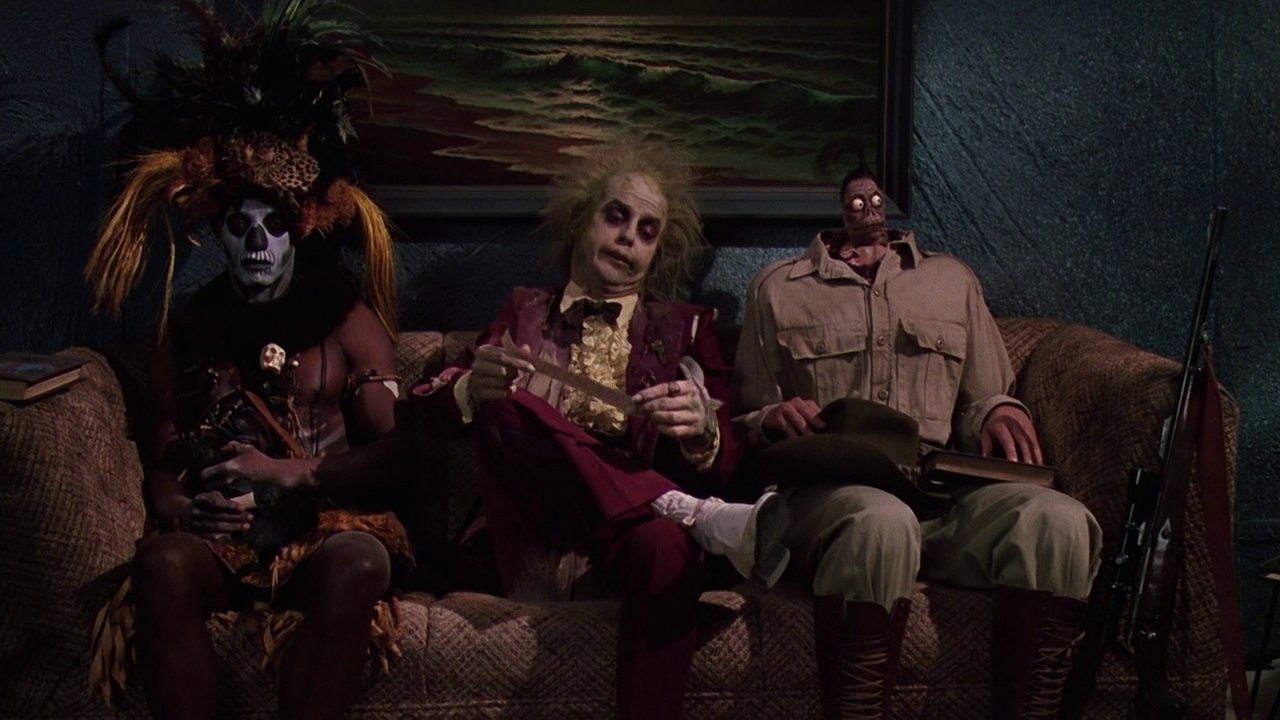
Although I should once again note that this ending changed slightly in the final film, because, after all, this movie is also TIM BURTON’s world, in fact, most of the changes in this film were made to lean into Burton’s fun visual gags and spice up Beetlejuice’s character to match Keaton’s energy, and they all totally worked. But the ending is something I especially like more in the film version. In it, Charles and Delia stay in the house. Instead of forcing their city lifestyle into this country home, they revert it to its old ways and use it as a place to relax, living happily amongst the Maitlands. Also, rather than kicking and screaming from the model town, Beetlejuice gets sent to the waiting room for the recently deceased. Not wanting to wait several hundred years for his appointment, he secretly switches tickets with another customer (a jungle explorer with a shrunken head–one of Burton’s additions to the story, no doubt). When the shrunken head man discovers this, he sprinkles some magic dust onto Beetlejuice, shrinking his head too. And the audience is left with the image of a once again belittled Beetlejuice screaming as his skull gets tinier and tinier and tinier.
WHY IT’S GREAT
I can go on about this script for hours if you’d let me. First of all, it’s just so much damn fun. It’s rare to come across a movie that has a genius premise, then introduces a perfect lineup of characters, and then manages to put those characters in the absolute most entertaining scenarios for every single conflict throughout the entire film, but this movie is one of those movies. At every single turn, you think it can’t possibly get better, but it always does. Secondly, it’s a very underrated spoof of the horror genre. In the same way that The Cabin in the Woods manages to fictionalize “rational” explanations for every single cabin-horror trope, Beetlejuice does the same for ghost stories. Why do they haunt houses? Because if they leave, they get sent to Saturn. Why do they scare the new tenants? Because it’s the only way to get annoying people out of their house. Why are the evil spirits scared of being exorcised? Because if they do, they get sent to a boring ass janitor’s closet for all of eternity. Even when it’s just Juno saying a throwaway line, it leaves the audience going “oh, that’s why that happens in scary movies”. As I said, the writers really thought hard about this universe they’ve created, and they gave us just enough insight into how it functions the entire way. And the last reason why I like this film is that it really highlights just how stupid our own existence really is. Sure, the mundane tasks of going to the DMV, dealing with caseworkers, or having to read boring manuals all sound like Hell. And doing it on a day-to-day basis is enough to drive anyone crazy, but guess what? Being dead isn’t going to be any better. In fact, it might just end up being more of the same.