Why Children of Men Still Feels So Terrifyingly Relevant Today: Script Analysis
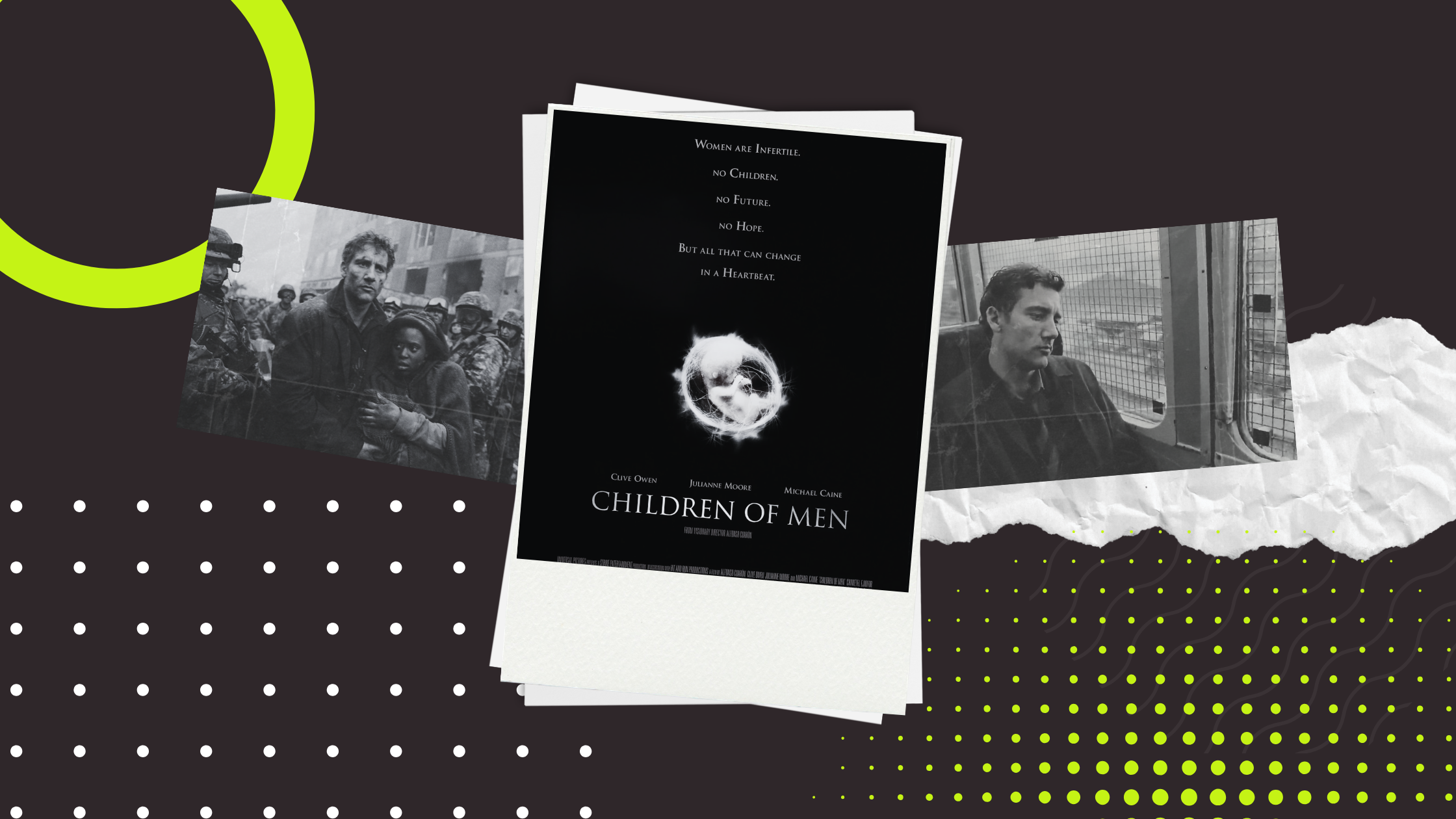
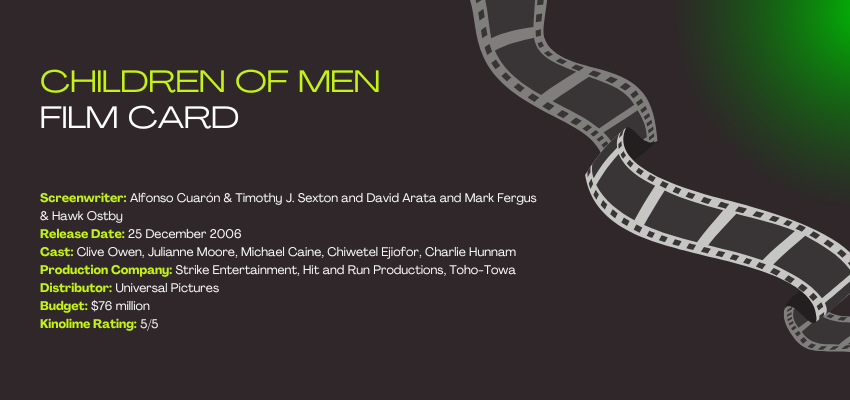
Released in 2006, Children of Men is one of the most special sci-fi movies ever made. Set in the future world of 2027, where all women have become infertile, the film follows Theo, a former activist who is tasked with bringing the first pregnant woman in 18 years to safety.
In many ways, the real main character of the story is the world it is set in. In both the screenplay and the film, the camera constantly pans away from Theo to take in the world around him: Britain as a totalitarian police state; refugees imprisoned and executed; and the people—terrified, wounded, hopelessly staying alive.
Twenty years after it first came out and one year before the film’s story is set to take place, Children of Men takes on a whole new meaning when its audience considers the shape that the world is in today. Its story and message have become, if possible, even more resonant. Today, I’m going to analyze Children of Men’s masterful writing, and the way it subverts expectations to create a sense of constant uncertainty and terror, thus immersing the audience with the fear towards what the world might become.
Opening Image

The film begins with the news announcement of the death of Baby Diego, the youngest person on the planet. Later in the scene, the audience learns that “Baby” Diego is actually 18 years old.
While everyone else in the coffee shop watches in stunned grief, Theo enters, making his way through the people just to get a coffee. This shows how Theo no longer cares about what happens in the world, just getting through his own life.
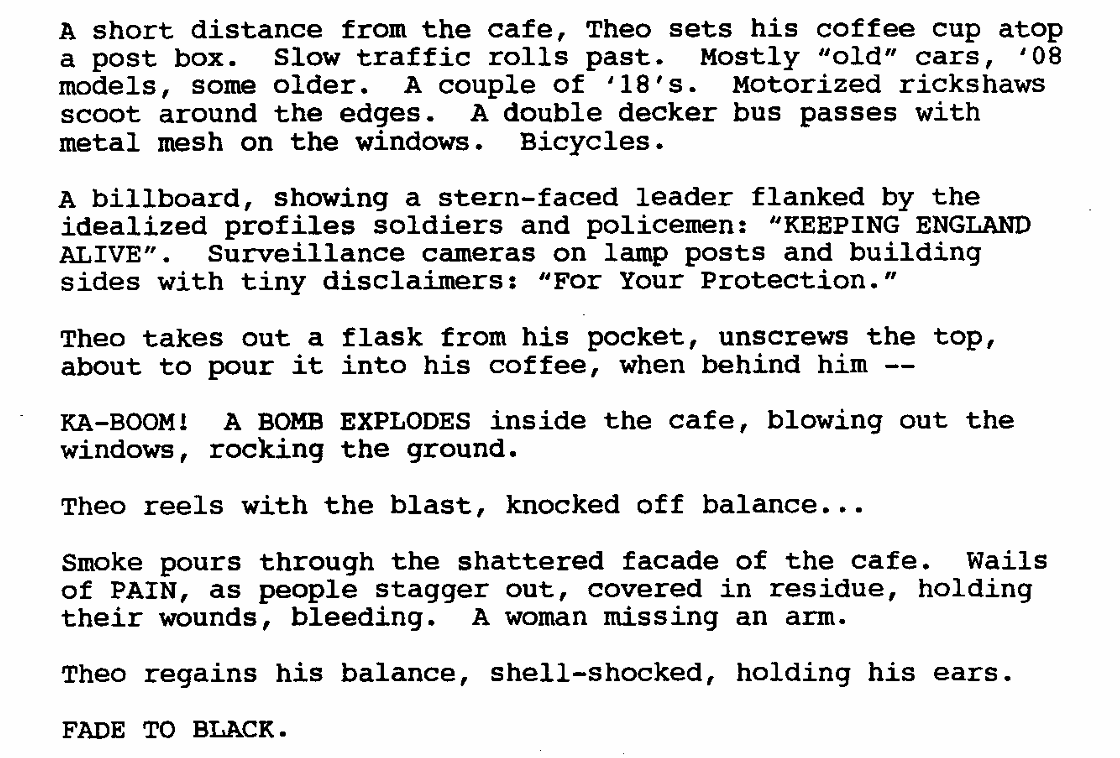
The super tells us it is London, 16th November 2027. The opening sequence ends with a bomb blowing apart the café that Theo just left, leaving a ringing in his ear that continues as the film cuts to the title.
Set Up
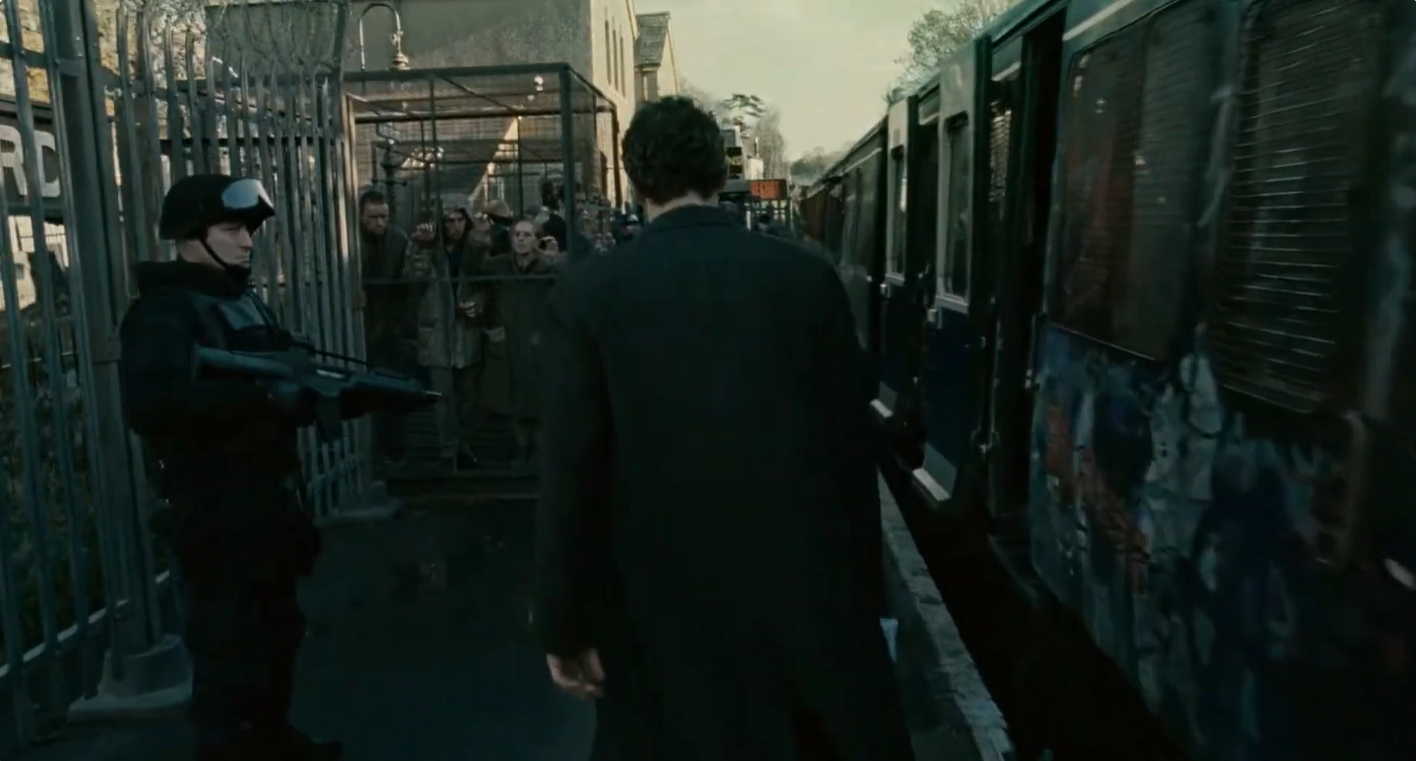
After calling off work early, Theo travels out of London on an iron-netted bus. As he gets off, he passes refugees locked up in cages, guarded by heavily armed police.
Theo meets up with his friend Jasper, the coolest 75-year-old on the planet and a former political cartoonist, and his catatonic wife Janice, a former journalist who was tortured by the government.
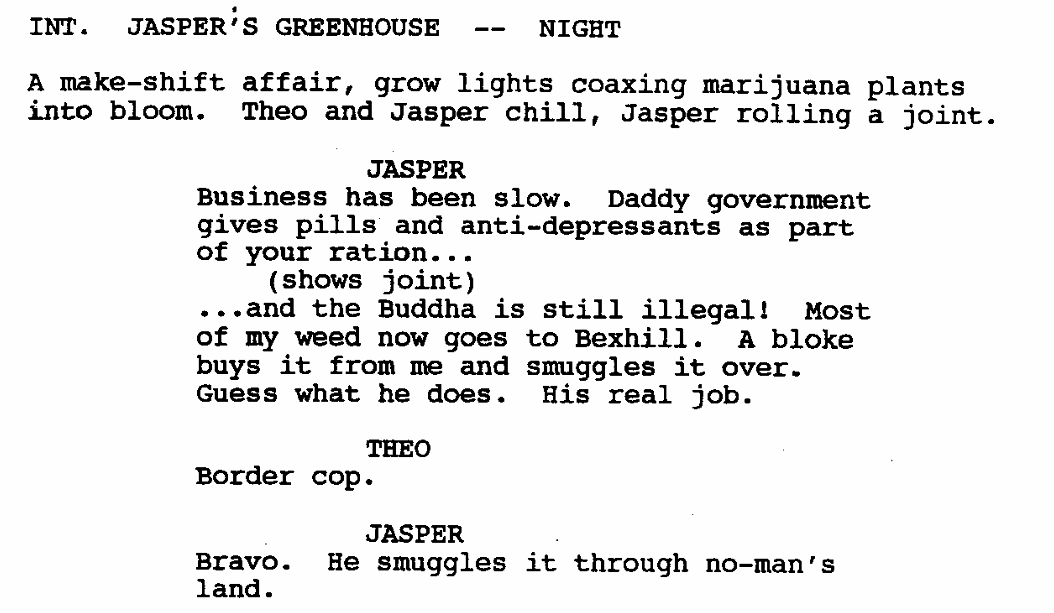
Theo and Jasper discuss the Human Project, scientists in a secret location working on a cure for infertility, which Theo believes doesn’t exist and wouldn’t make a difference to the world if it does. We also learn that Jasper is growing and selling weed through an immigration cop.
Inciting Incident
The next morning, on his way to work, Theo gets kidnapped by an activist group called the Fishes and brought to meet their leader and Theo’s estranged wife, Julian.
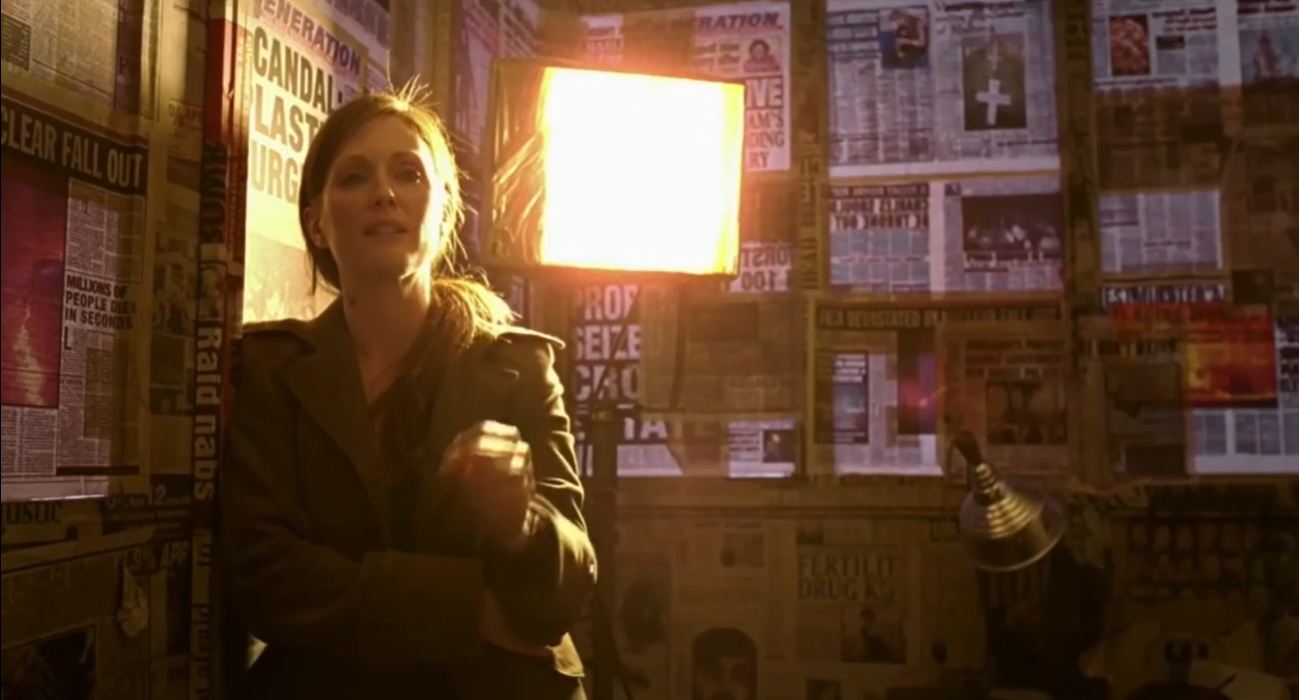
Julian asks for Theo’s help to get transit papers for a refugee. Theo visits his cousin Nigel (known as “Teddy” in the screenplay), a government minister. At Nigel’s home, we see the upper-class side of this totalitarian world. Nigel and Theo wine and dine in a penthouse way above the city, surrounded by an art collection of some of the world’s greatest works.

Theo convinces Nigel to give him transit papers, but only manages to get joint ones, which means he has to travel with the refugee.
Debate
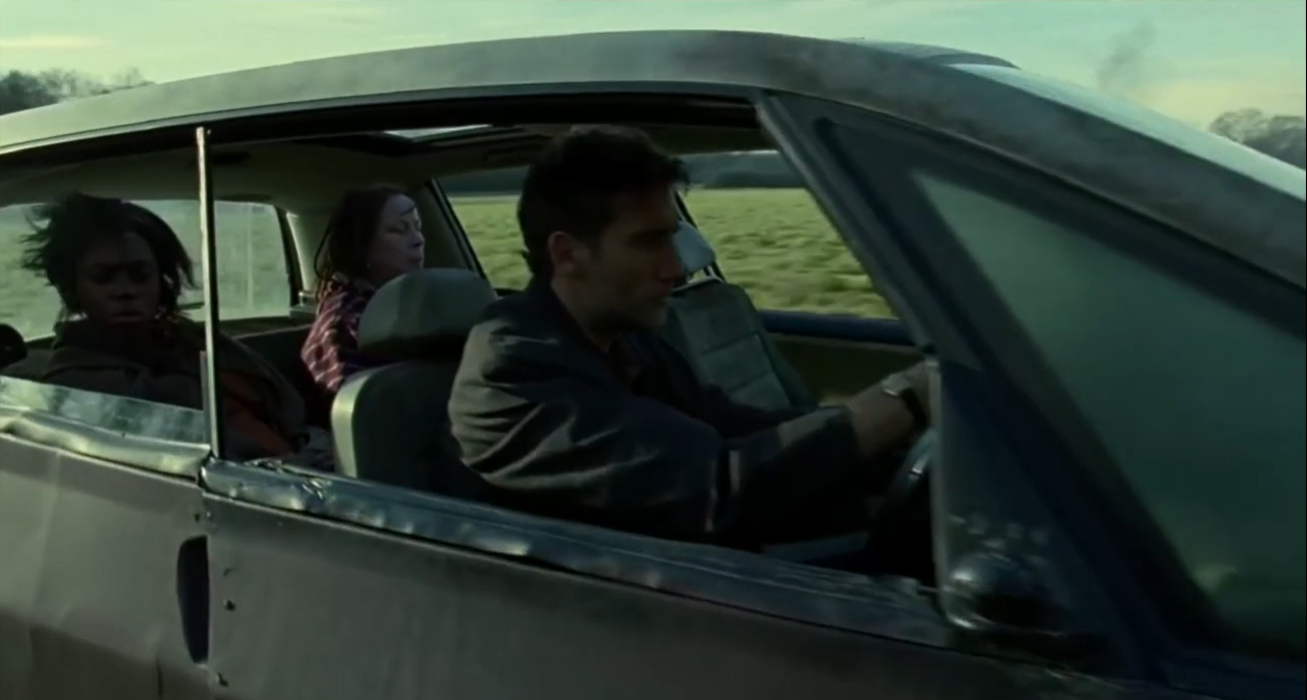
Theo gets in a car with Julian, the refugee Kee (a young black woman), an older woman Miriam, and Fishes member Luke. Theo and Julian begin to warm up towards each other again, and the travelers share a moment, until it gets broken by the arrival of an armed gang that kills Julian.
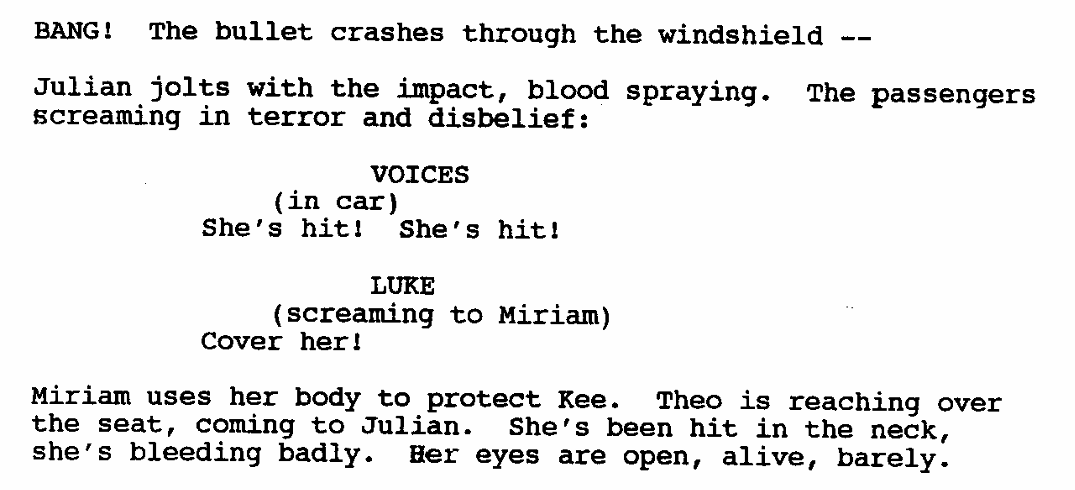
This is the moment that sets the tone for the rest of the movie. Julian is not someone the audience would expect to get killed this early in the film. An “important character” like her is usually not at the risk of dying until the third act. However, Julian’s death is sudden, violent, and in the middle of the group making their escape, which leaves Theo and the audience with no time to mourn her. This makes her death feel small, insignificant, which is in stark contrast with her position in Theo’s life, showing how human lives become worthless in a time like this. It also tells the audience that the main characters of this story are just as at risk of an abrupt, brutal death as anyone else, which raises the stakes and installs a sense of fear.
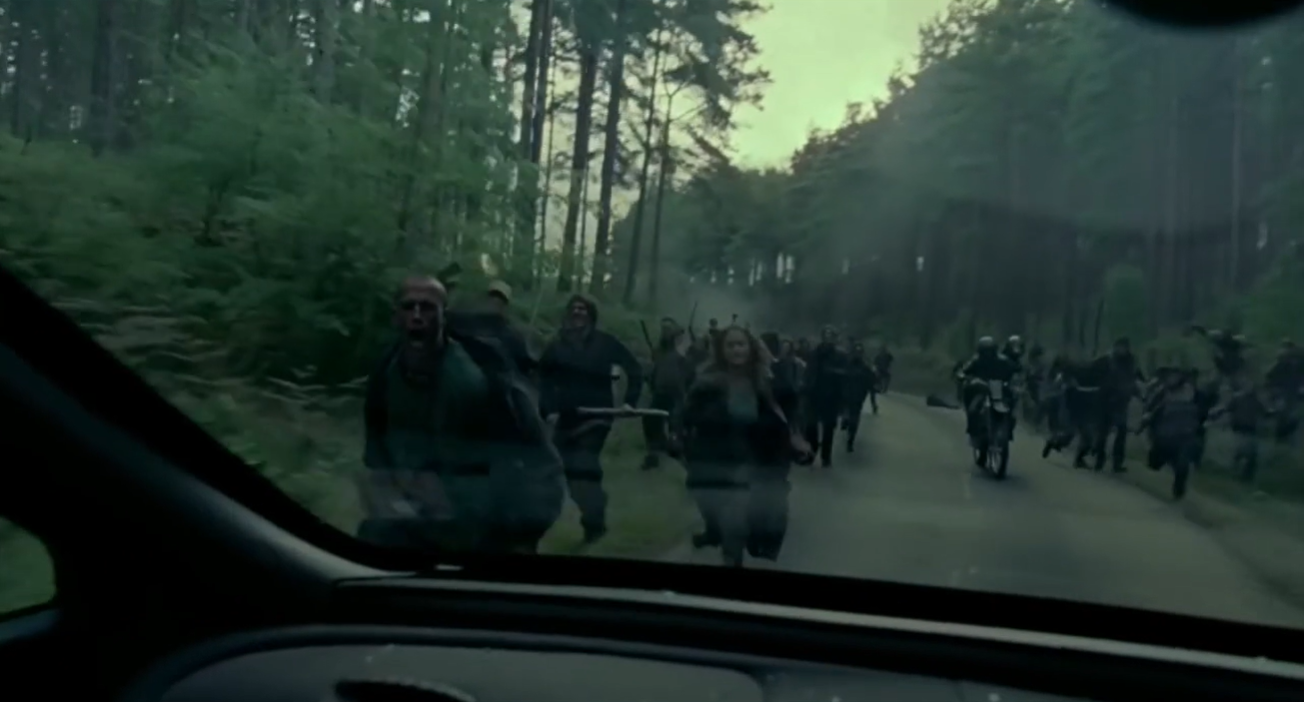
Police cars catch up with them. Luke shoots two police officers dead and brings the group to a Fishes safe house.
Break Into Two
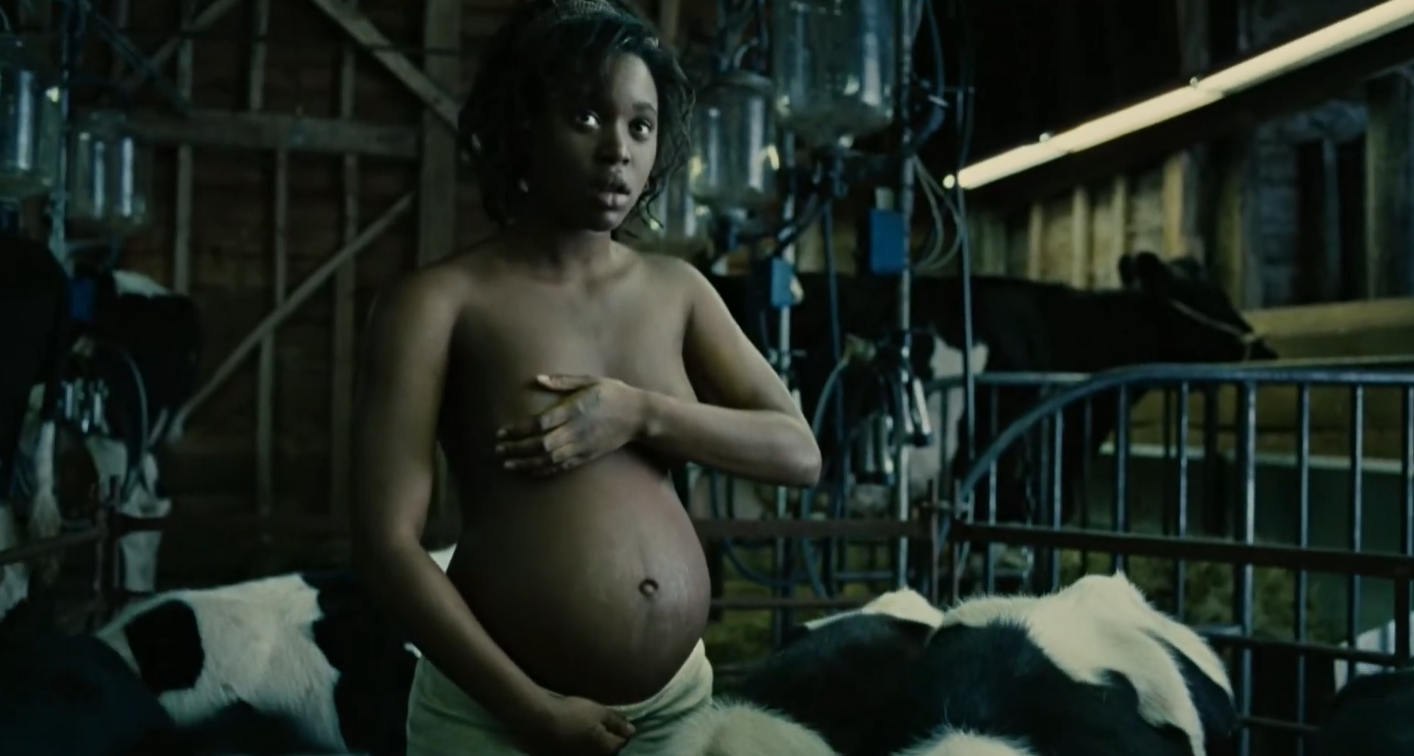
Kee asks to speak with Theo alone in the cow barn, where she reveals that Julian told Kee to trust him and no one else. Then she shows Theo that she is pregnant.
Theo joins a Fishes meeting. They discover that the police are now looking for the people who killed the officers, which makes it no longer safe for Kee to travel to the coast. Theo suggests making Kee’s pregnant public, so Kee can receive proper care from a doctor. The Fishes believe that the government will take the baby and use it for propaganda, and want to keep the baby for their own political movements. Eventually, Kee agrees to have the baby at the Fishes safe house.
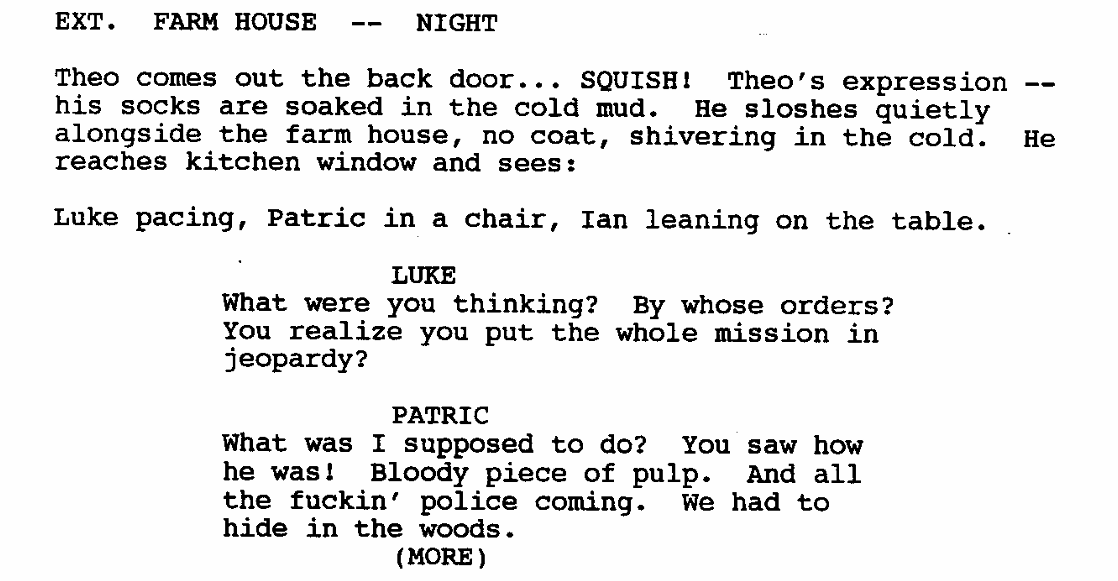
Near dawn, Theo finds one of the people who shot Julian arriving at the safe house, and discovers that Luke has ordered the attack to get rid of Julian. He wakes Kee and Miriam and they make their escape.
An important motif makes its first appearance here: that of Theo’s constant lack of proper shoes. He makes his escape wearing only his socks. This adds to Theo’s vulnerability and subverts the trope of an action-thriller hero.
Fun and Games
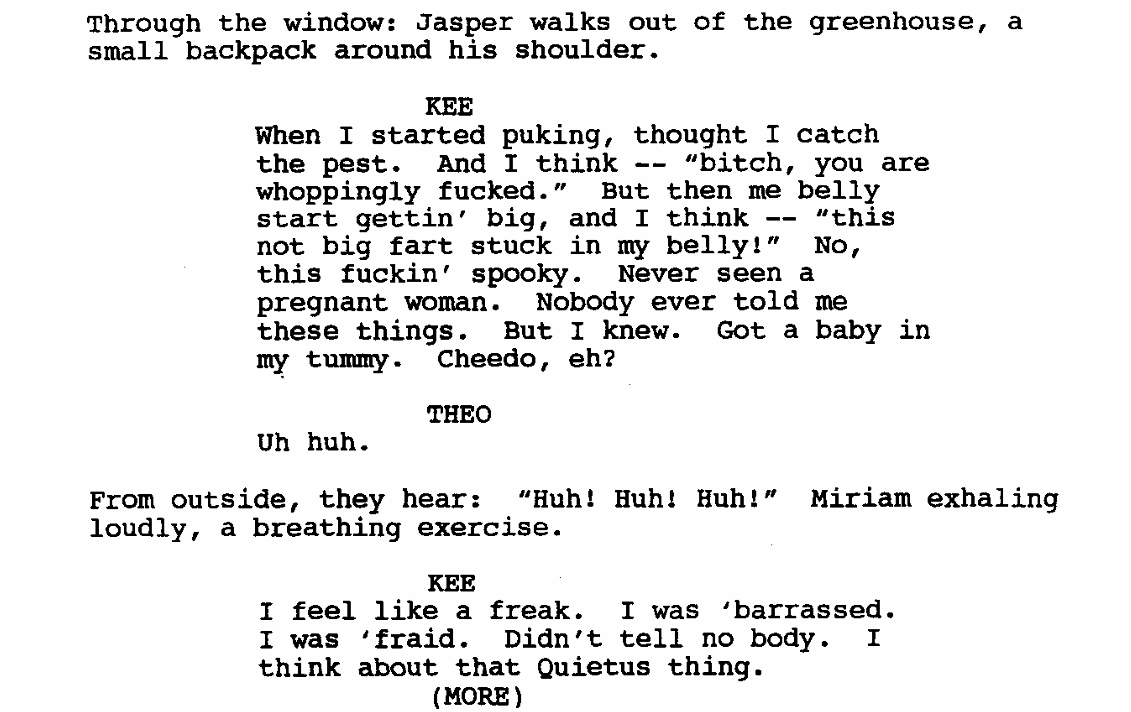
Theo brings Kee and Miriam to Jasper’s house. Theo is unable to fit into any of Jasper’s shoes, so he ends up wearing a pair of flip-flops. The group is able to take a breath and connect, and Theo learns about how Kee got pregnant.
Jasper suggests that Theo, Kee, and Miriam go to the port in Bexhill, which is a refugee camp, where they can then reach the Human Project on boat. The border cop that buys weed from Jasper will be able to smuggle them inside.
At night, Theo listens to Jasper telling Kee and Miriam about his past with Julian: how they had a baby boy, Dylan, who died of the flu pandemic in 2008.
Midpoint
The next morning, Theo, Kee, and Miriam are made to leave in a rush as the Fishes catch up with them. Jasper stays behind, uses government-issued suicide pills to put Janice to rest, before confronting the Fishes himself, eventually getting killed.
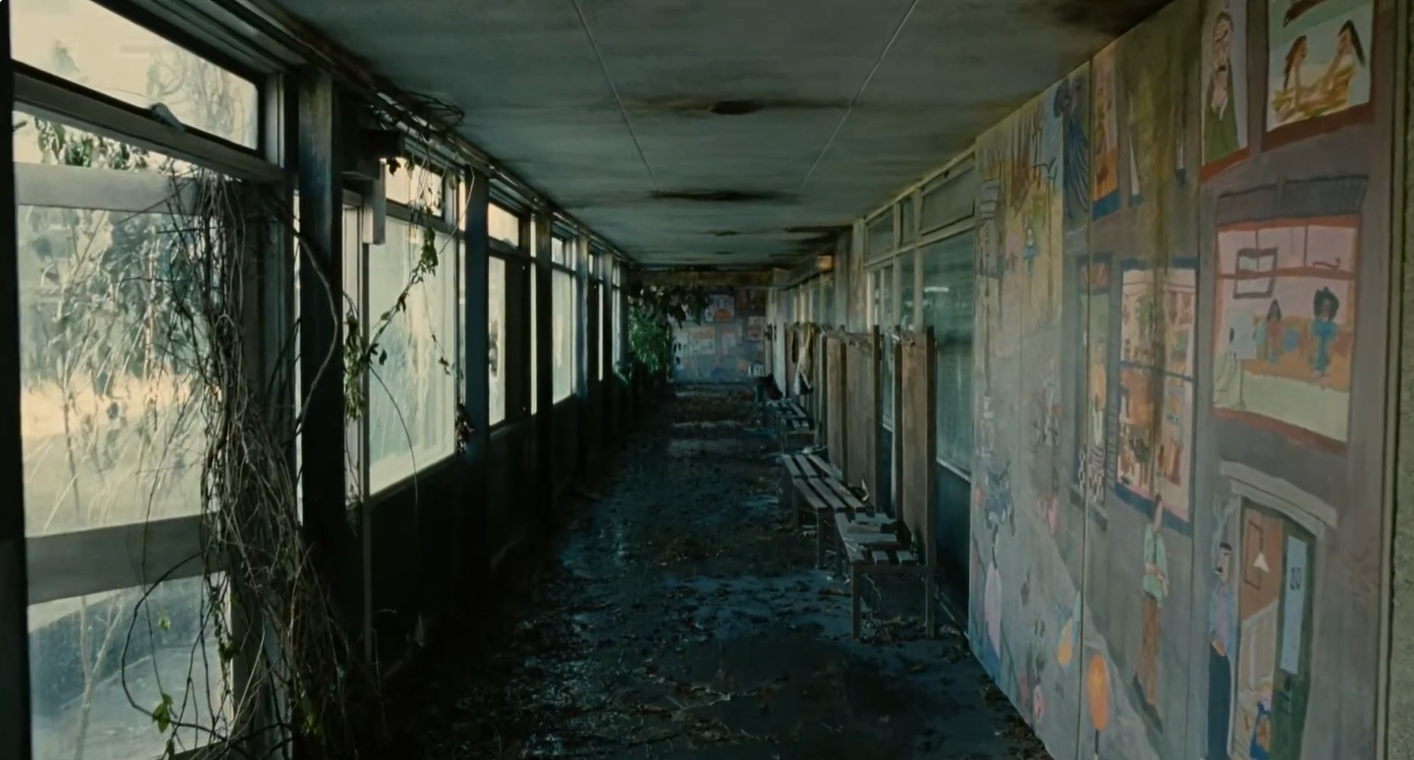
The group winds up at an abandoned school. Miriam, who is a midwife, tells Theo about her experience when everything went down, saying “I was there at the end.” Theo replies “Now you’re gonna be there at the beginning.”
They meet up with Syd, the border cop, a man who “loves his mother but would sell her for the right price.” He brings them to Bexhill.

Bad To Worse
Pretending to be refugees, Theo, Kee, and Miriam travel on a bus that will bring them to the refugee detention area. At this moment, Kee’s water breaks. Confronted by border cops, Miriam sacrifices herself for Theo and Kee to continue their journey (in the screenplay, which is an earlier draft, Miriam does not die until later in the story).
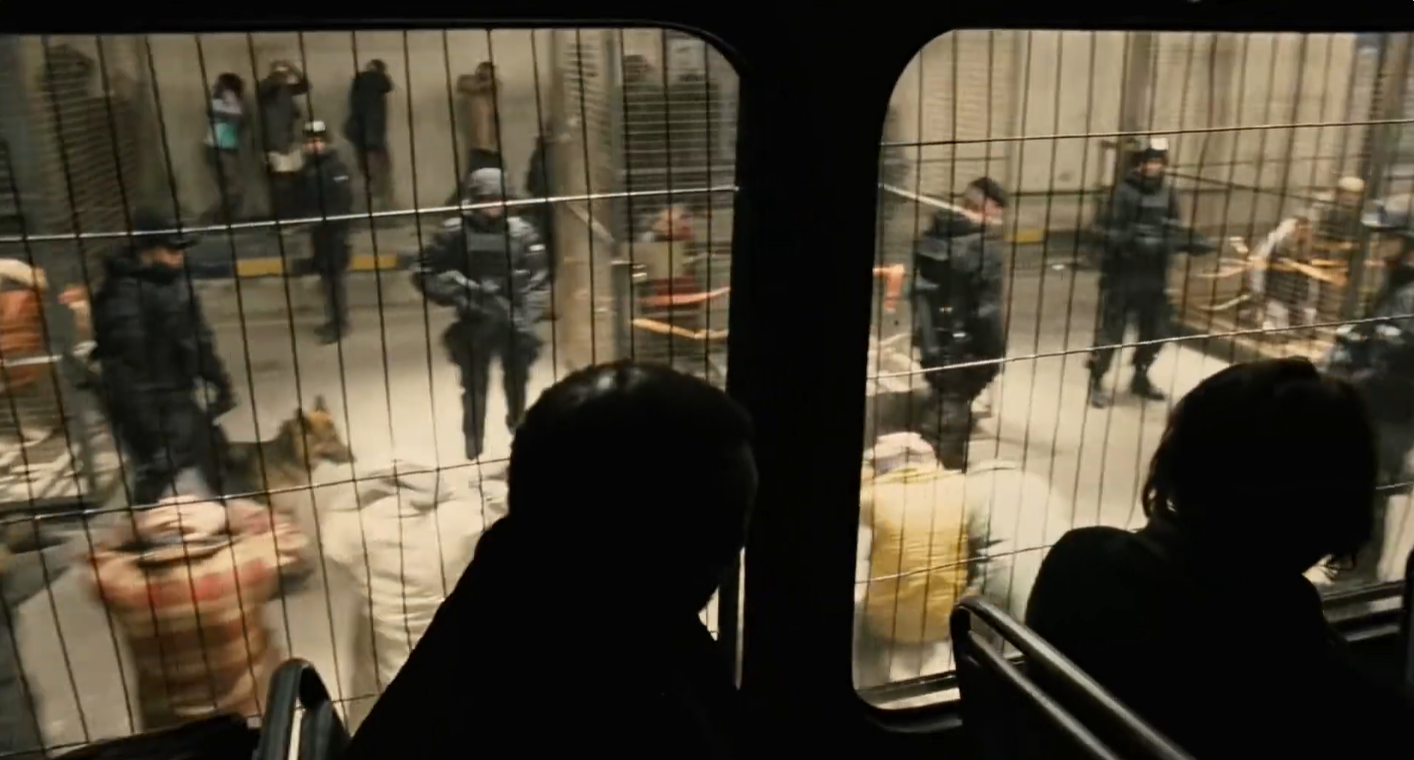
Losing the midwife just when Kee is about to give birth makes everything even more uncertain and terrifying.
At Bexhill, Marichka, a Romani woman with a small dog, provides Theo and Kee a room. Marichka barely speaks any English, and their primary helper being someone who they cannot communicate to adds to the fear of the situation.
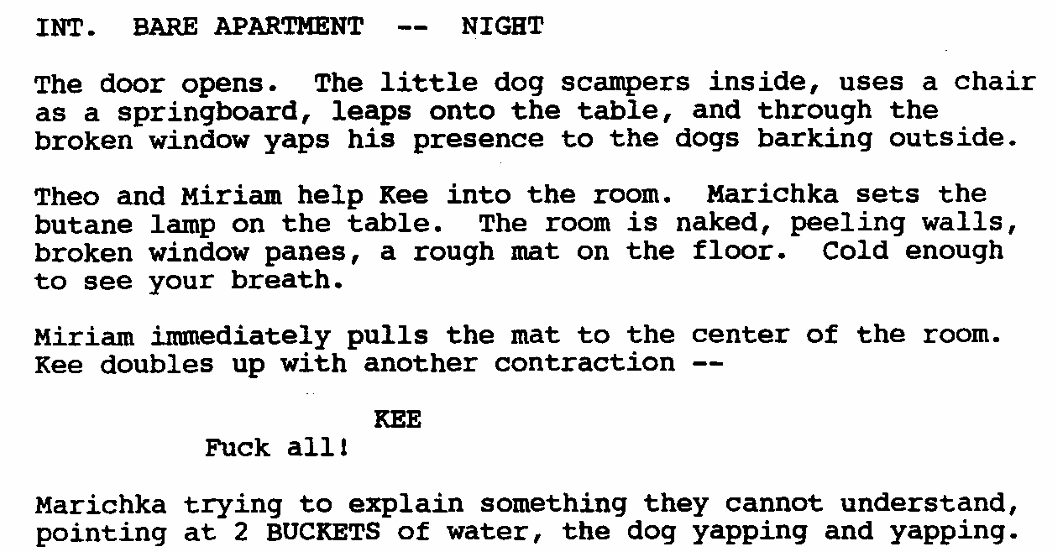
In this naked apartment, Theo helps Kee deliver her baby. It is a girl. This is another incredible detail: everybody, including Kee herself, has expected the baby to be a boy, and referred to it as “he” throughout the first half of the film. Kee being a black woman and the baby being a girl are both the reversal of, and a commentary on, the traditional “chosen one” “messiah” narratives.
Break Into Three
The next morning, Syd arrives with the news that the Fishes have gotten into Bexhill and are starting a revolution. He and Marichka discover Kee’s baby. Syd attempts to capture Theo, Kee, and the baby and to exchange them for bounties. Marichka and Theo subdue Syd to escape, and Theo kills Syd with a block off the floor.
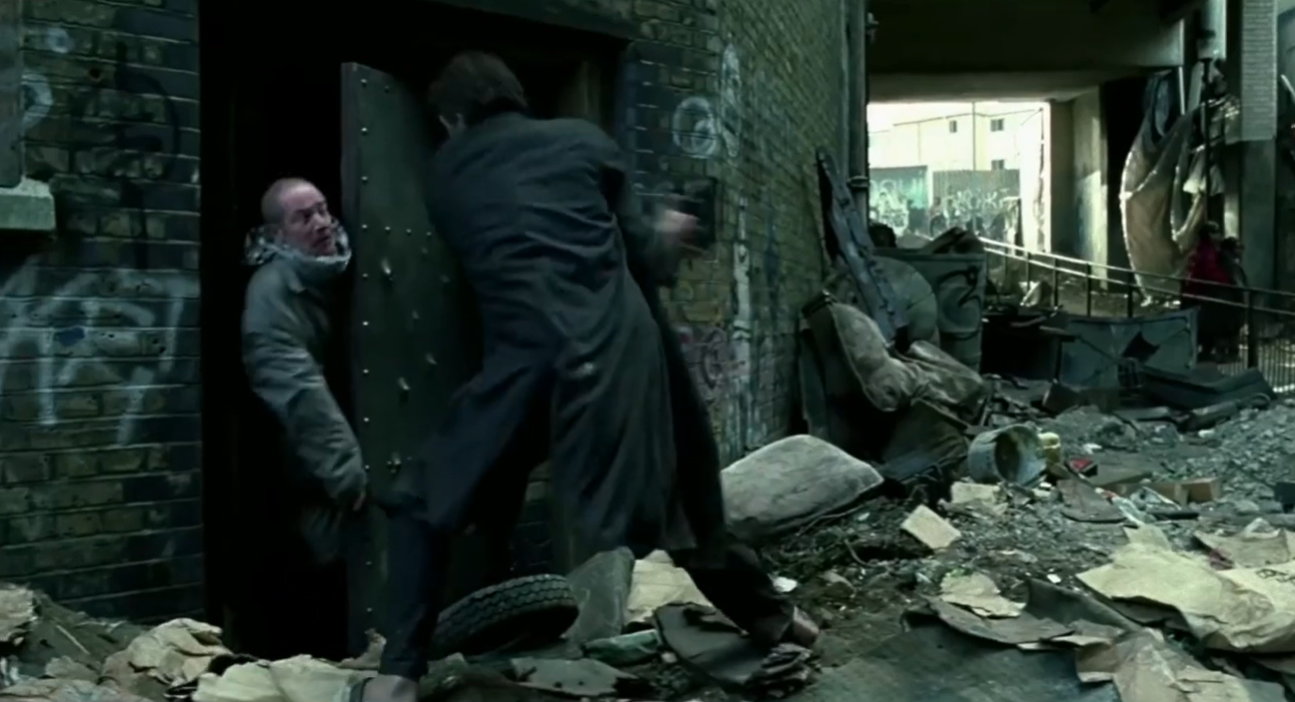
Like all deaths in this film, Theo is only given a small moment to process what he has done, before having to run after Kee and Marichka. He slashes his exposed feet on the way and has to limp through the rest of the film.
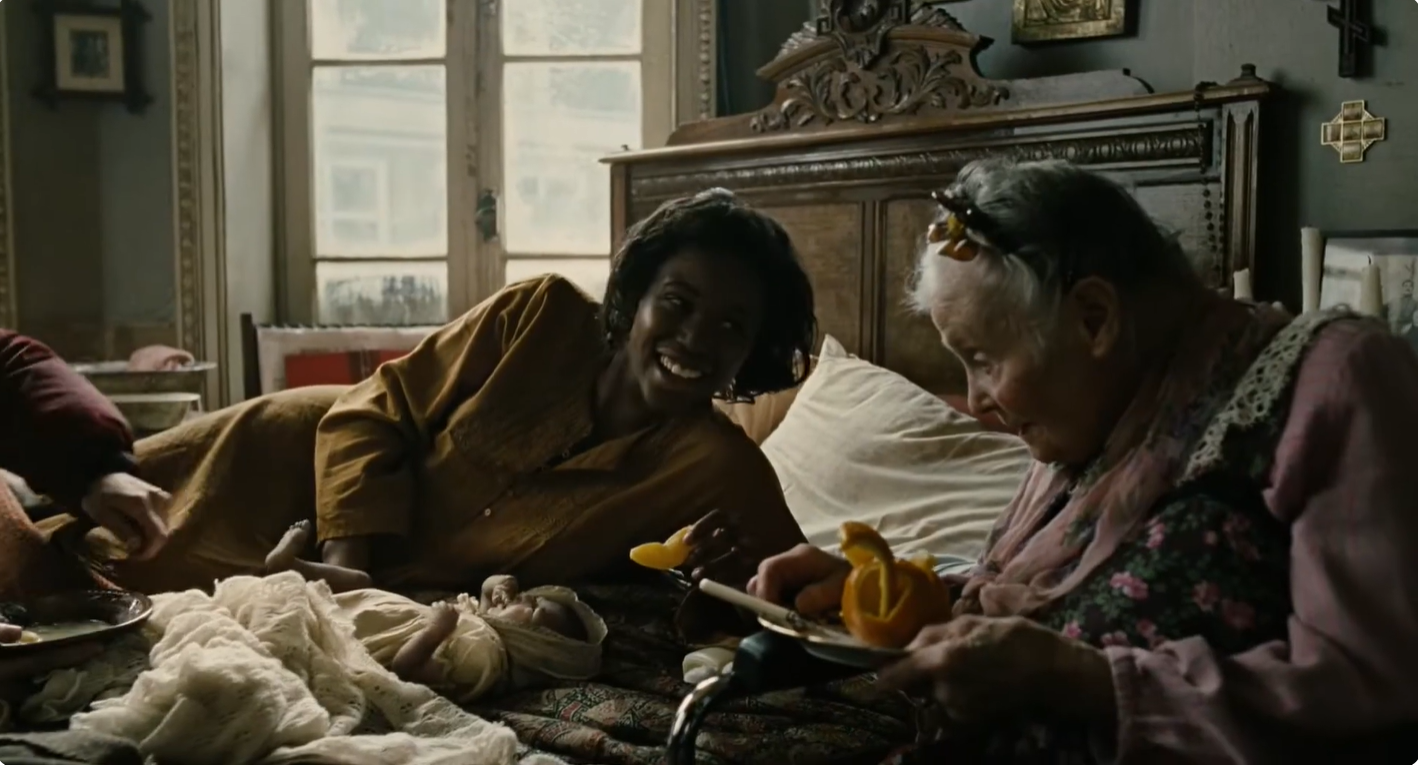
Theo, Kee, and Marichka briefly take shelter with Marichka’s friends, who help them find a boat to reach the Human Project with. Theo also finally receives a pair of shoes. On their way to the boat, they are ambushed by the Fishes. Luke takes away Kee and the baby, while leaving Theo and Marichka to be shot.
Finale
The British troops attack at that moment, giving Theo and Marichka a chance to escape. Theo tracks the Fishes into an apartment building, which is blowing up under heavy fire.
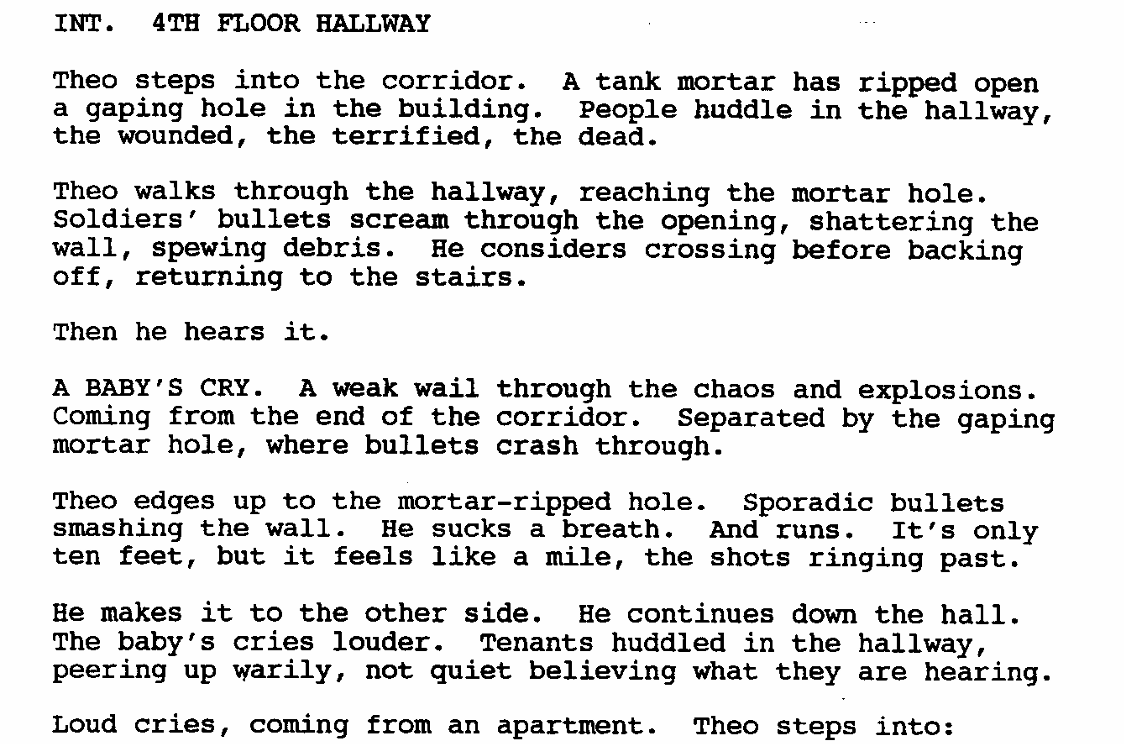
Following the sound of the baby’s cries, Theo finds Kee and Luke, who is now injured and still firing at the British troops. Theo and Kee leave with the baby. As they walk down the stairs, civilians gather around them, summoned by the child’s cries. They touch the baby’s hand, and whisper their prayer.
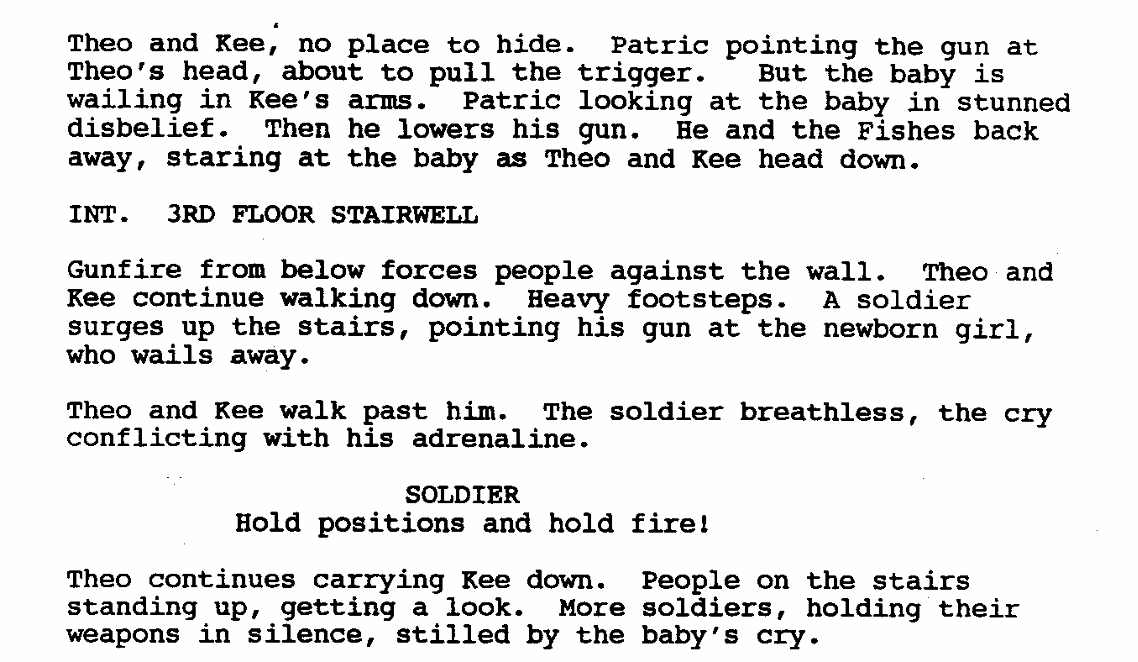
The British troops and the Fishes cease fire at the sight of the baby. They leave a pathway for Theo and Kee to pass, some getting to their knees.
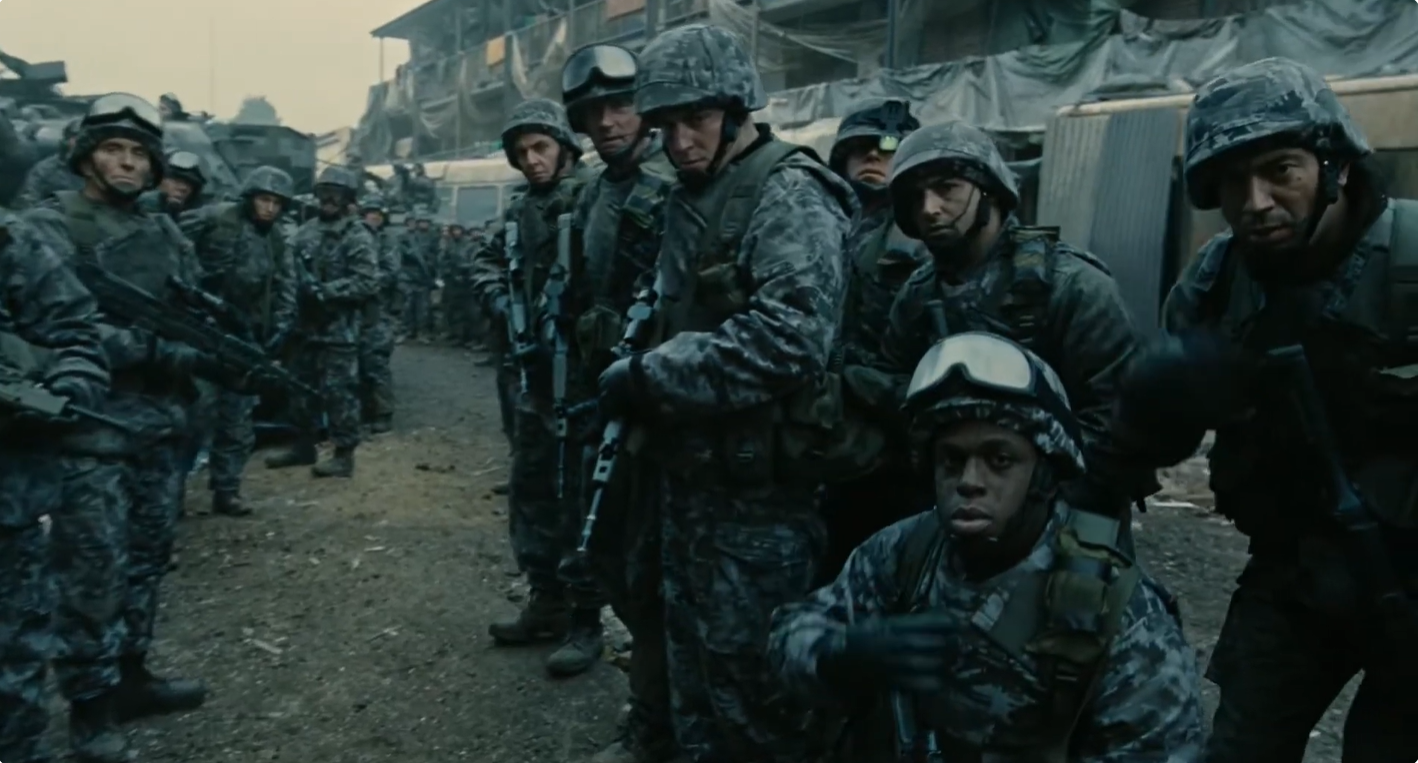
The moment Theo and Kee are out of range, the army and the Fishes begin their attack once more. Theo and Kee meet up with Marichka, who leads them to the boat, but stays behind herself.
Theo and Kee reach the open waters. This is when Kee discovers that Theo has been shot. Kee tells Theo that she’s going to name her baby Dylan, after Theo’s child.
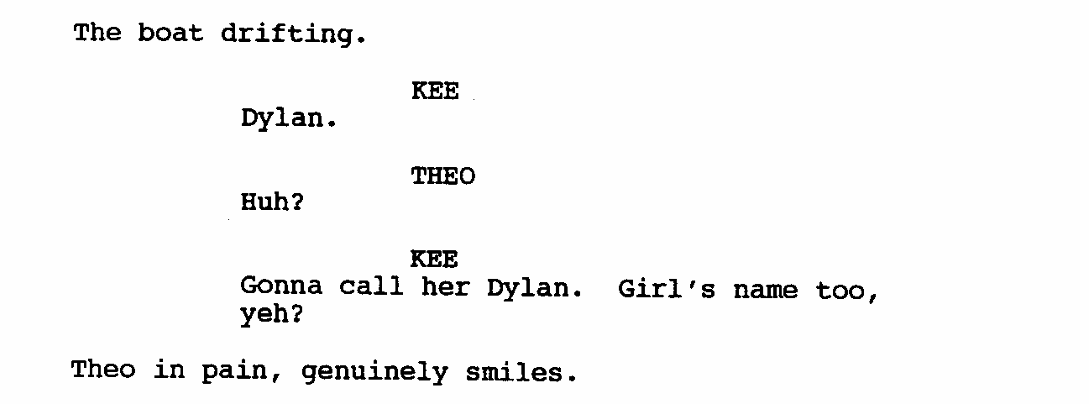
Theo dies. Moments later, a boat sent by the Human Project arrives for Kee and Dylan – a boat named “The Tomorrow.”
Throughout the film, Theo and Kee continuously receive help from complete strangers, and then lose them along the way. Anyone can join their journey, lend them a hand, and depart at the most unexpected moment. We’re terrified of falling in love with the characters, because they might leave us in the most violent, sudden ways, but we can’t help but feeling connected to them anyway, and to pray for their survival against all odds.
And such is the genius of Children of Men’s storytelling. By subverting every expectation, the writing makes us feel exactly the same way the characters do: uncertain, scared, helpless. It makes us think of all the people in the world who are living similar lives as the characters in the film, and suddenly we understand what it’s like to be them.