
Why Project Hail Mary Became Sci-Fi’s Most Human Blockbuster

Project Hail Mary is one of the biggest hits of the year. Adapted from the 2021 novel by Andy Weir, it tells the story of a middle school science teacher Grace (Ryan Gosling) who wakes up on an interstellar spaceship with no memory of getting there. While Grace searches for his lost memories, he meets and befriends an alien, and somehow manages to save earth from a dying sun. Funny, heartwarming, and (despite being in space) down-to-earth in its tonality, Project Hail Mary is distinctly different from space epics like Dune or 2001: A Space Odyssey, making it unique in the world of sci-fi movies.
However, this comedic, slightly messy, yet very human tone wasn’t entirely what the script was going for at first. The only available version of Project Hail Mary’s screenplay is an early draft, and while it already contains incredible storytelling, comparing it to the film shows how much rewrites can make a good story even better. Today, I am going to compare this screenplay to the final project, and talk about how Project Hail Mary plays to its strengths, thus transiting from a more traditional Hollywood sci-fi into a funnier and more vulnerable story.
Opening Image
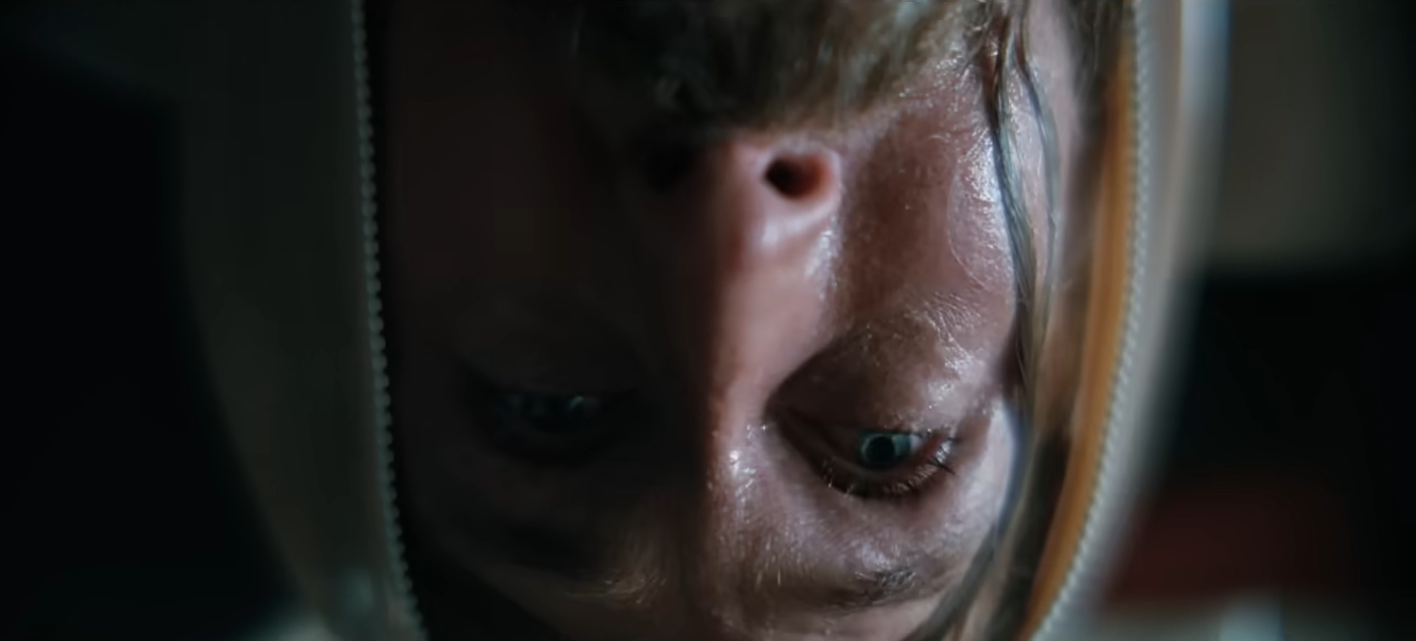
The film begins with the image of Doctor Ryland Grace’s eyes opening. We see him upside down first, before the camera rotates – a movement that will repeat itself throughout the film, signifying Grace’s disorientation. He is in a medical bay and, when he stumbles to a viewing window, he discovers that he is in space.
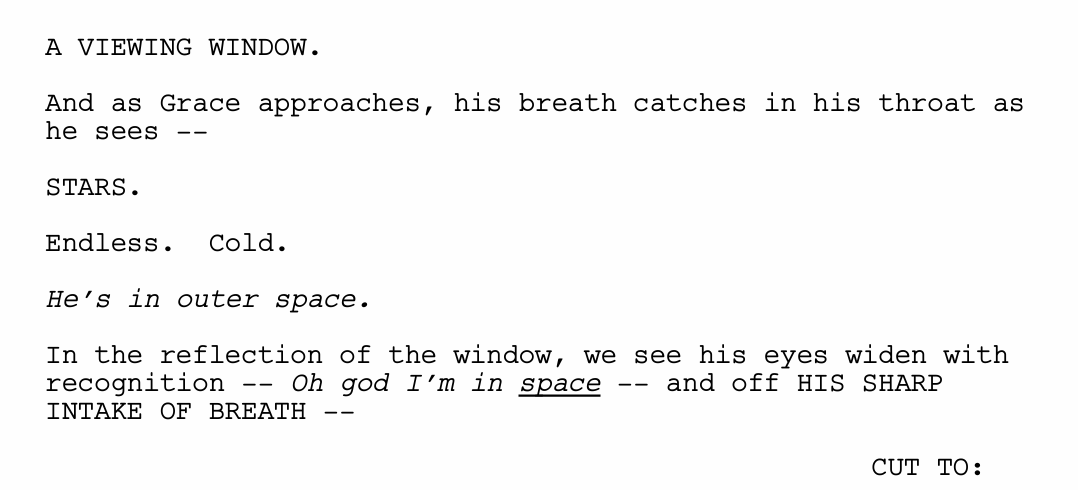
Set Up
In the screenplay, we cut to a flashback scene where Grace discovers the news that the sun is dying from a TV in a bar. In the film, this scene is replaced by a short news program on a phone. As the first scene on earth, the bar scene would establish a strong sense of fear, uncertainty, and foreboding. Instead, in the film, we cut to:
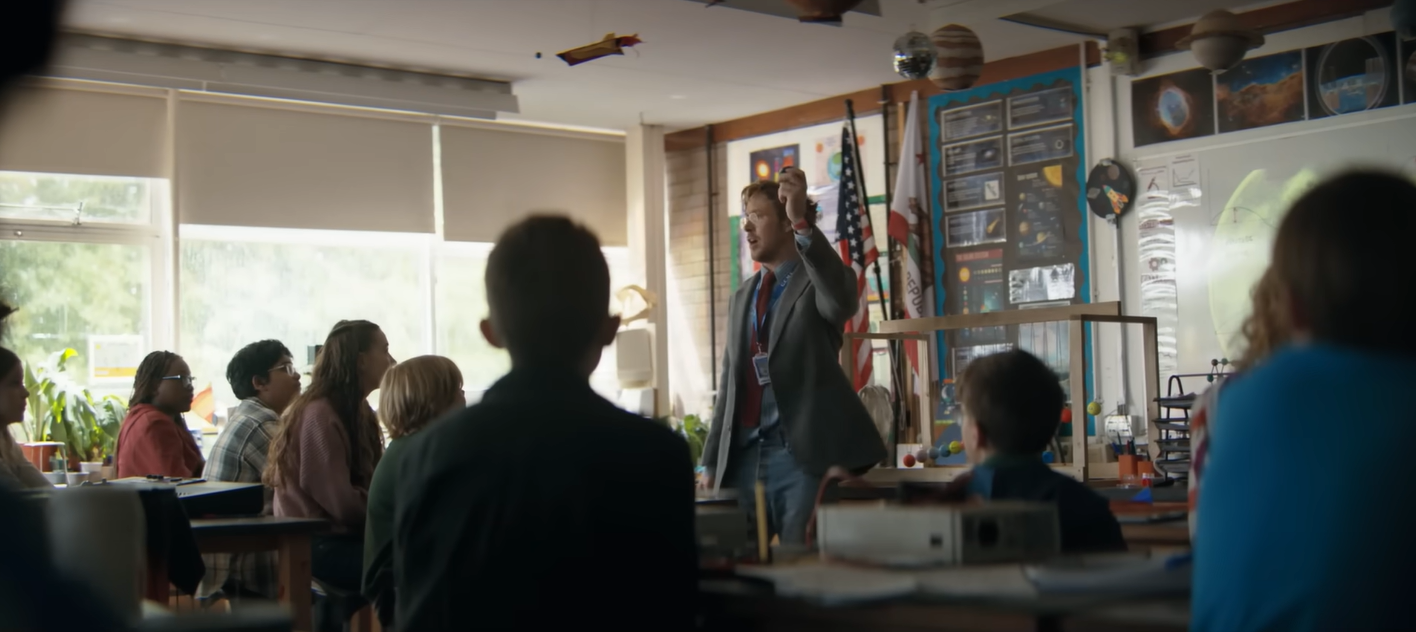
Grace as a middle school science teacher. Through the back-and-forth between him and his students, we learn the crucial exposition for the film: something called the Petrova Line is “eating the sun” and will cause earth to drop 10-15 degrees in the next thirty years, leading to a global catastrophe. In this scene, we also learn the kind of man Grace is: funny, a little scruffy, and good with kids.
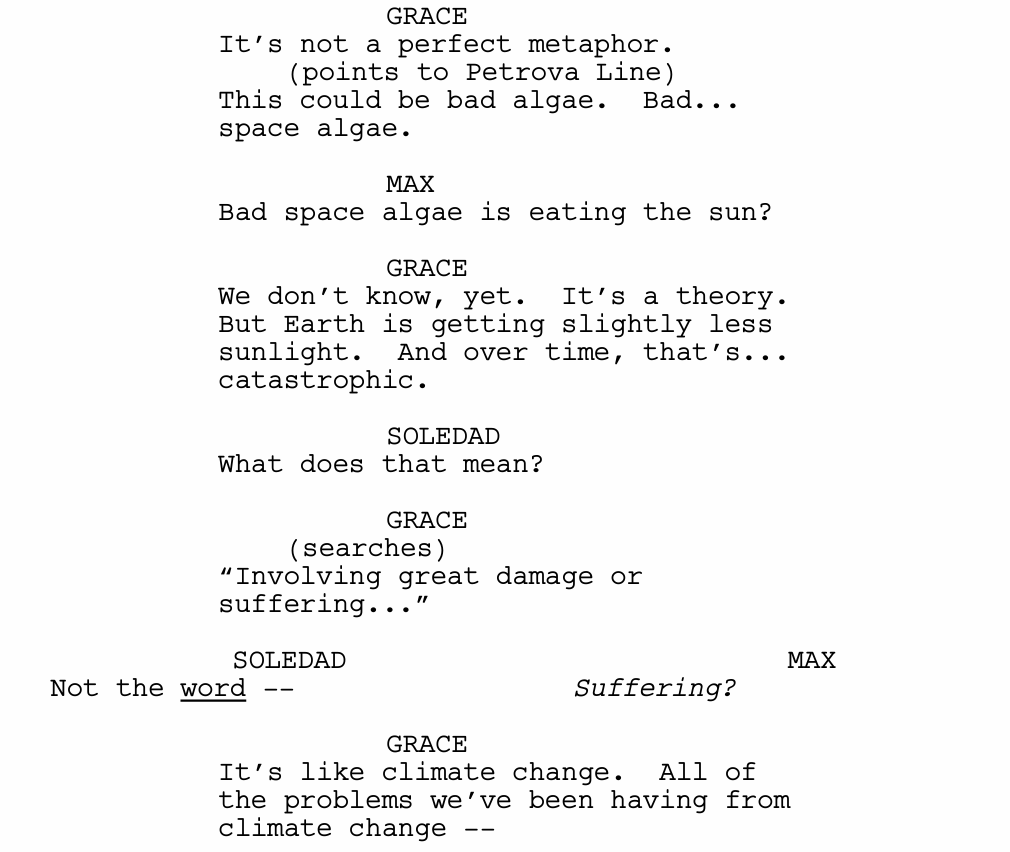
Grace’s role as a middle school teacher is central to the storytelling. It gives the writing the opportunity to explain complex scientific idea in simple terms and fun metaphors like “space algae.” It allows the practical aspect – like breeding Astrophage or Rocky’s use of xenonite – to sometimes feel like middle school experiments or handicrafts. The science of this sci-fi proves to be very down-to-earth.
In the present, Grace finally makes it to the cockpit. A repeated joke in the film “pilot detected,” isn’t in the script yet. Also in this scene, Grace realizes that he is not in the solar system anymore, but very, very far away from home.
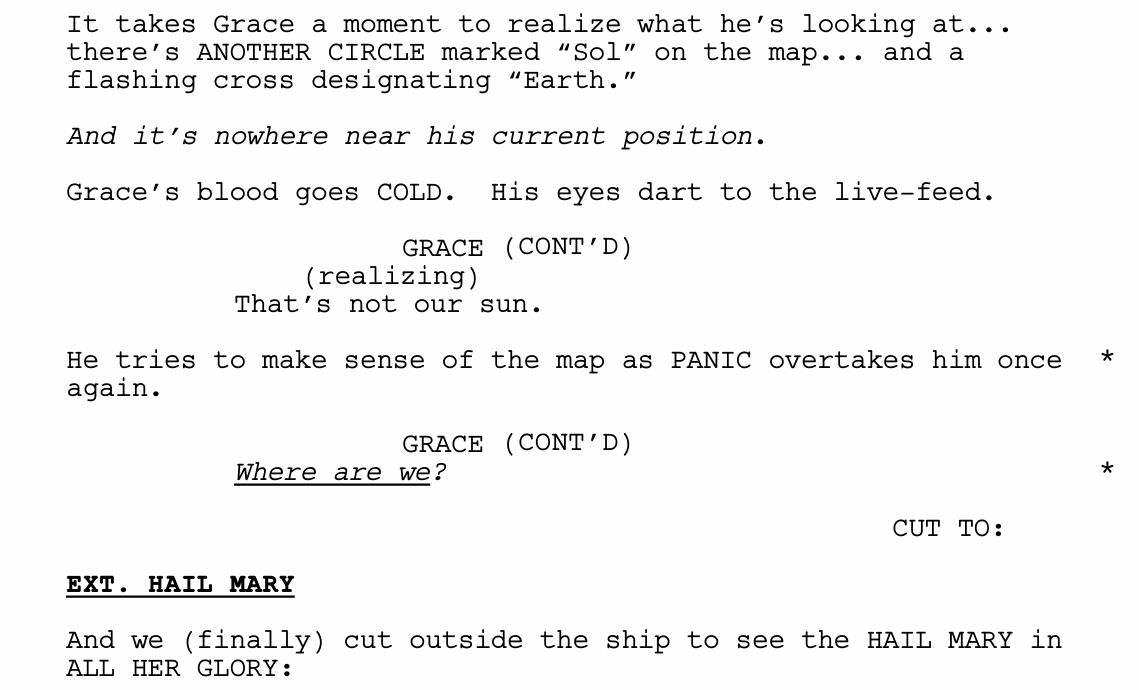
Grace struggles with the meaning of his life. He gets drunk from his dead crew member Ilyukhina’s vodka supply.
Inciting Incident
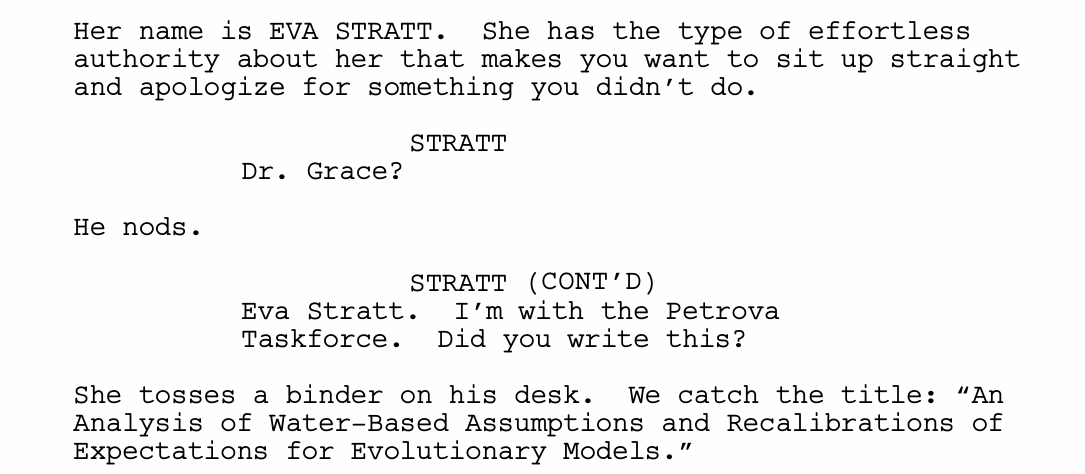
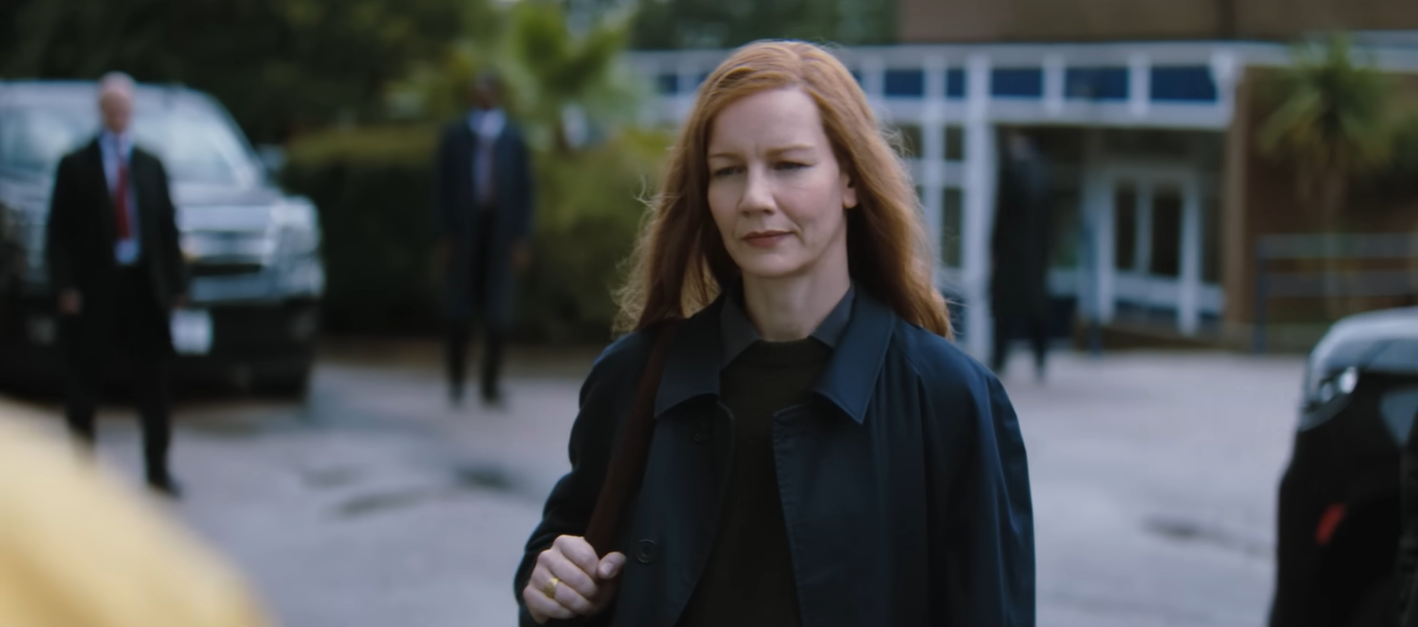
Back on earth, Eva Stratt, the head of the international task force behind Project Hail Mary, finds Grace at his school. She reveals that Grace is actually a molecular biologist who wrote an essay against water-based lifeforms. She recruits Grace to examine the samples of the Petrova line.
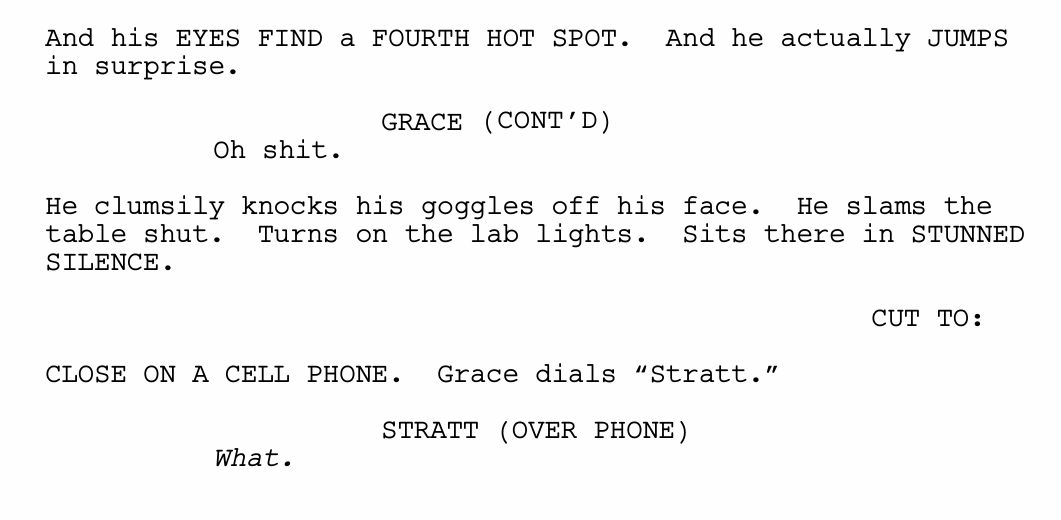
Grace discovers that the Petrova line contains dots that are alive and emit light when they move. Unfortunately, they are water-based life forms, disputing Grace’s ideas. However, Grace volunteers to continue to examine these dots, now coined “Astrophage.”
Debate
Grace befriends Officer Carl, a member of the task force. With Carl’s help and happy accidents, Grace manages to reproduce Astrophage.
This section in the screenplay is much shorter than in the film. The accident of losing the Astrophage and the fun activity of creating a dark room with Home Depot products are not in the script, and neither is Officer Carl. This change heightens the lightheartedness and allows for more action in Act 1.
Stratt brings Grace onto an aircraft carrier where she discloses to him Project Hail Mary. While every sun in the galaxy is affected by Astrophage, there is one (Tau Ceti) that is not dying. Earth scientists cannot figure out why, so they decide to send a starship there to find out. Astrophage is going to be used as the fuel, which is why Grace’s discovery is so important.
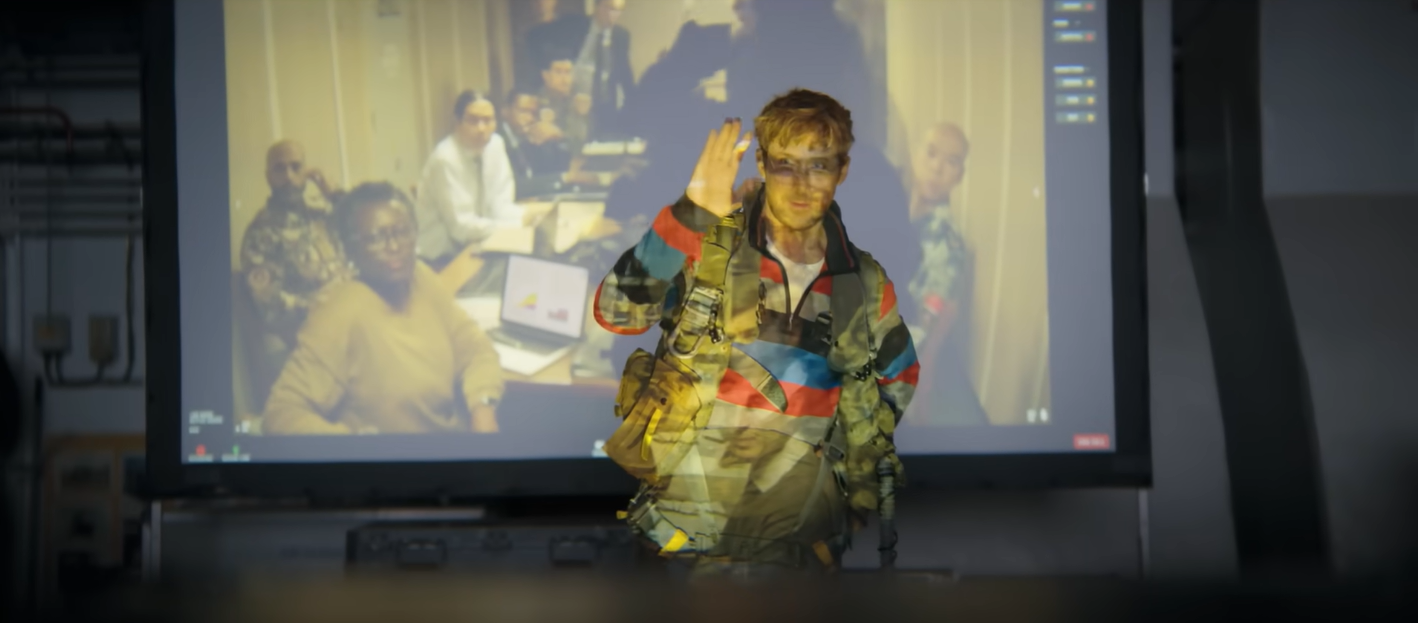
Several beloved jokes in the film are missing from the screenplay here: the cut to the “What Is Project Hail Mary” presentation; the scientists collectively saying “we don’t know;” Grace asking the room if there are other plans.
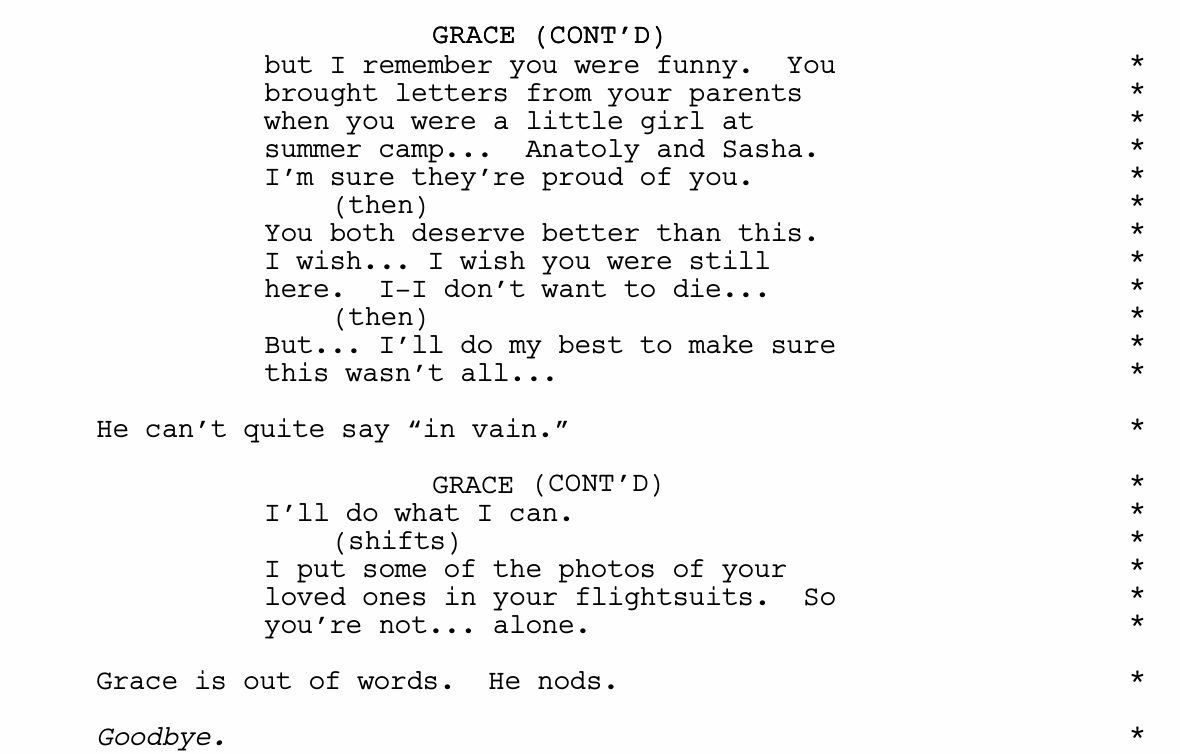
On the spaceship, Grace hosts a funeral for his two deceased crew members, Yao and Ilyukhina. He also discovers that Tau Ceti also has a Petrova line, which means that there is Astrophage present on Tau Ceti too – why, then, is it not dying?
Break Into Two
Grace receives a “foreign object alert,” which turns out to be another, much larger spaceship. Later drafts of the screenplay will add comedic relief to this intense moment: Grace tries to drive Hail Mary away from the ship, but the ship follows him tightly; the ship tries to throw an object at Grace, but Grace is unable to catch it at their first attempt.
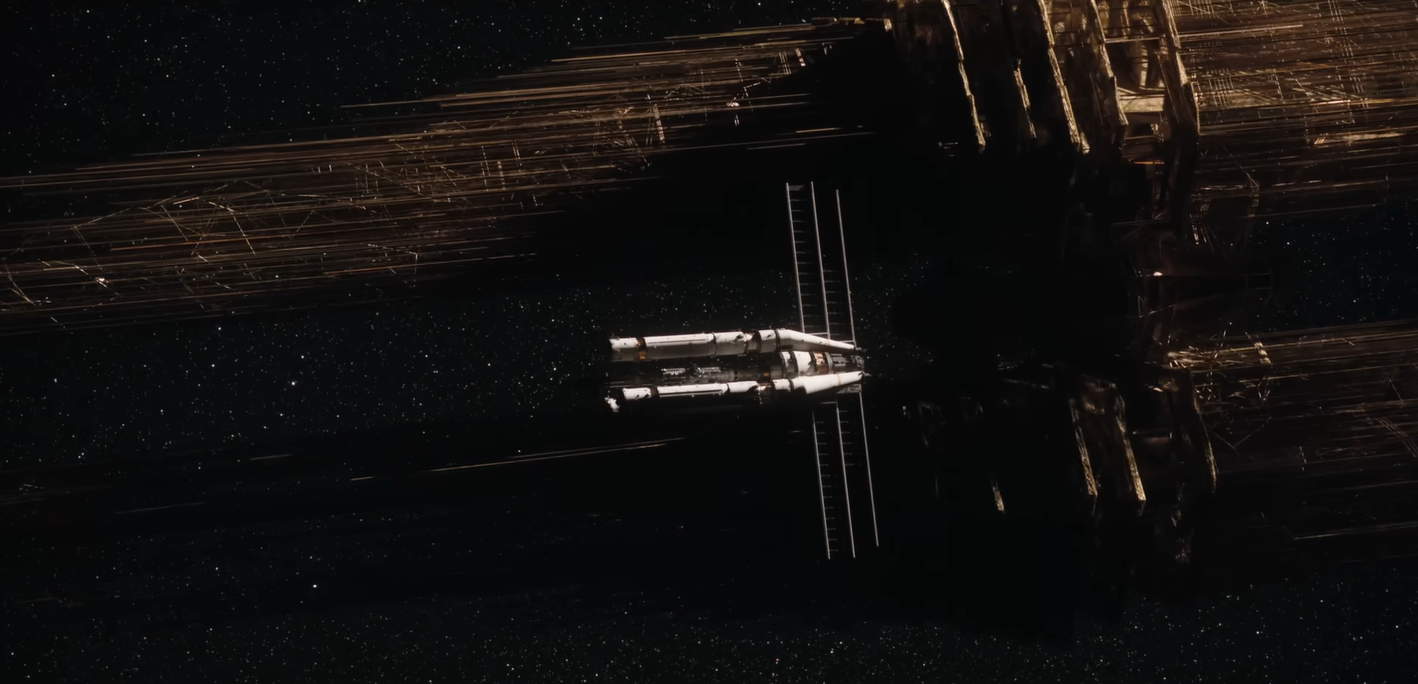
The object – a cylinder – that Grace manages to catch turns out to be a container bearing a model of the stars system, showing Grace the larger spaceship’s home: 40 Eridani. Grace marks the position of earth on the model and returns canister.
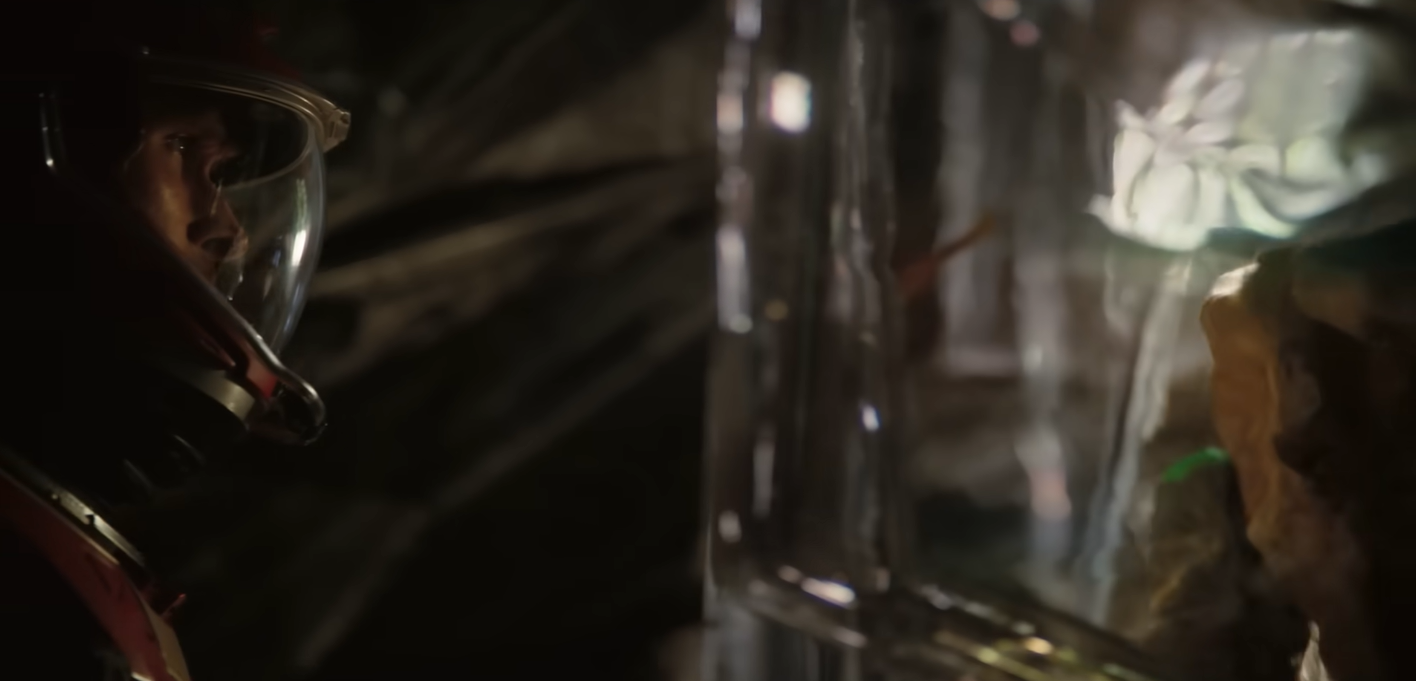
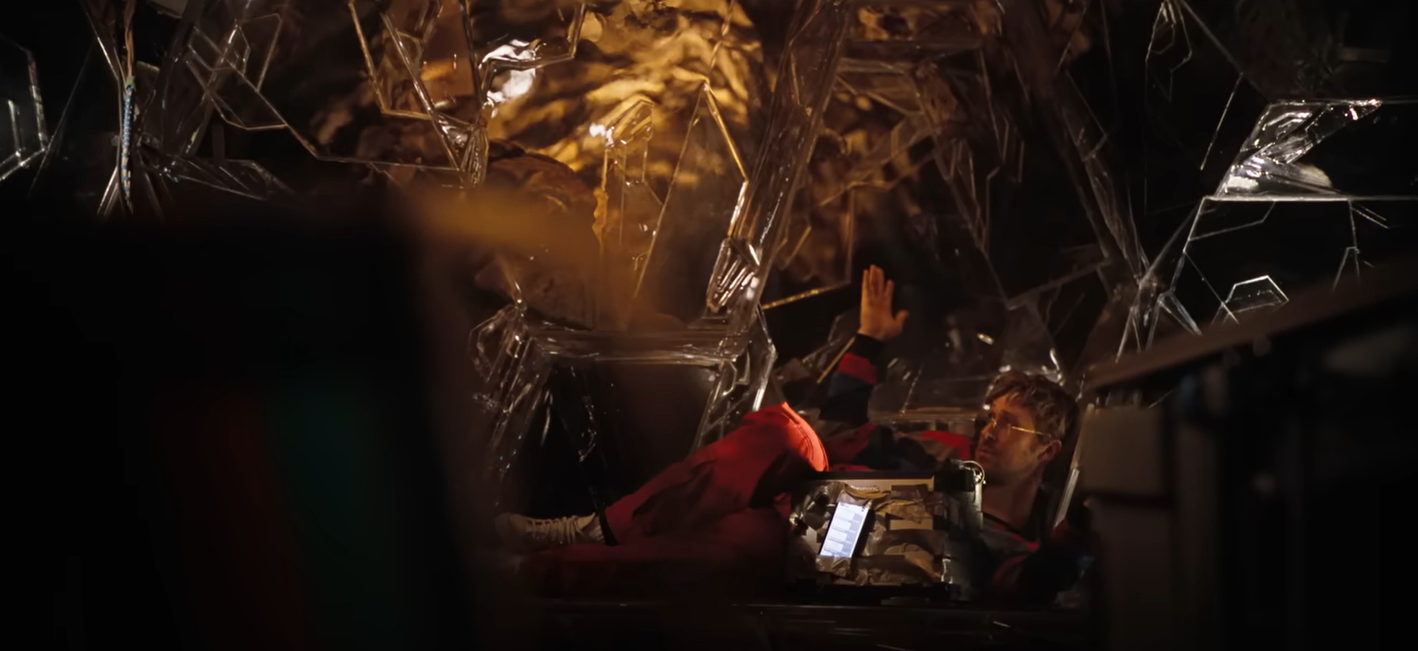
The other ship creates a tunnel between the two ships, with a wall in the middle. There, Grace meets an alien for the first time: a rock-like, crab-like, five-legged creature.
Fun and Games
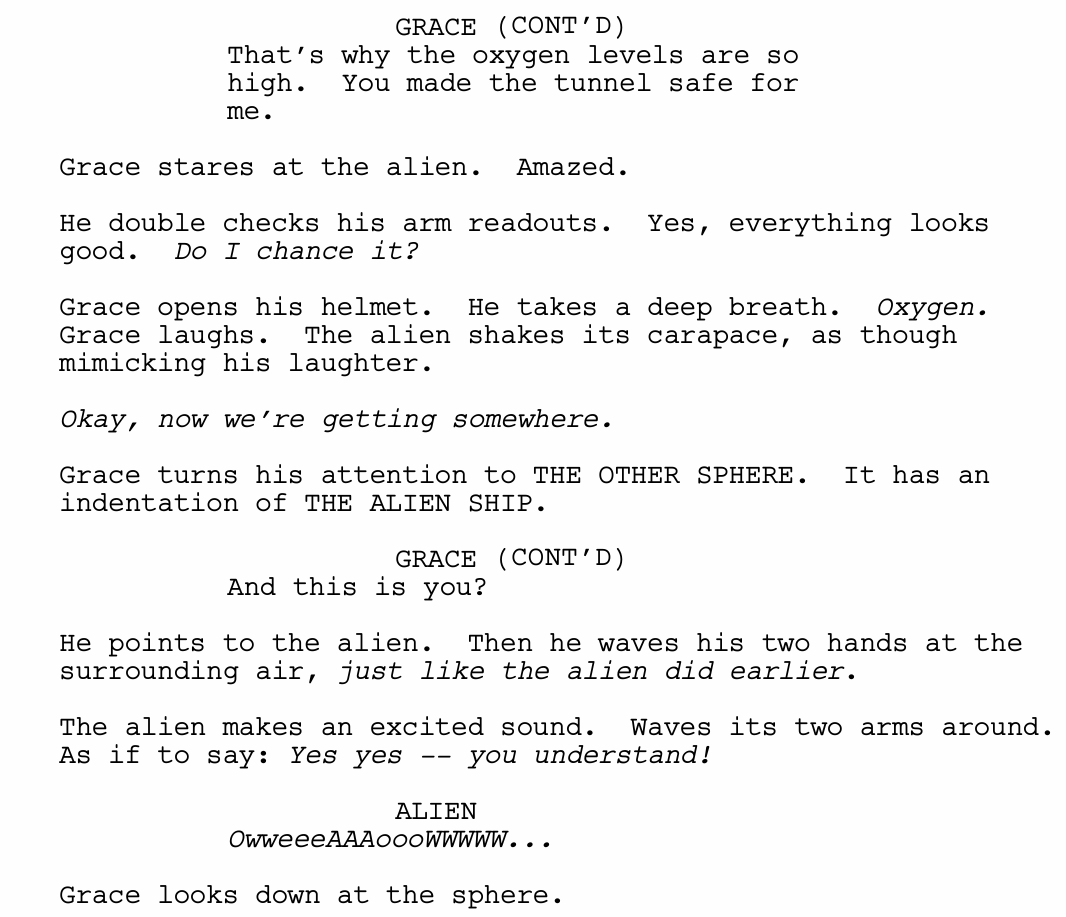
The alien delivers a small model of Grace as a gift and makes the air breathable for him. Grace realizes that the alien cannot see, but differentiates shapes through sound waves. The writing of this section is not only fun and games, but intimate and beautiful: two creatures with good hearts sharing moments together and giving each other reasons to trust one another.
Grace decides to call the alien “Rocky,” and learns that Rocky is a mechanical engineer who creates objects with a metal called xenonite. Grace begins recording his experience interacting with Rocky by talking to a camera.
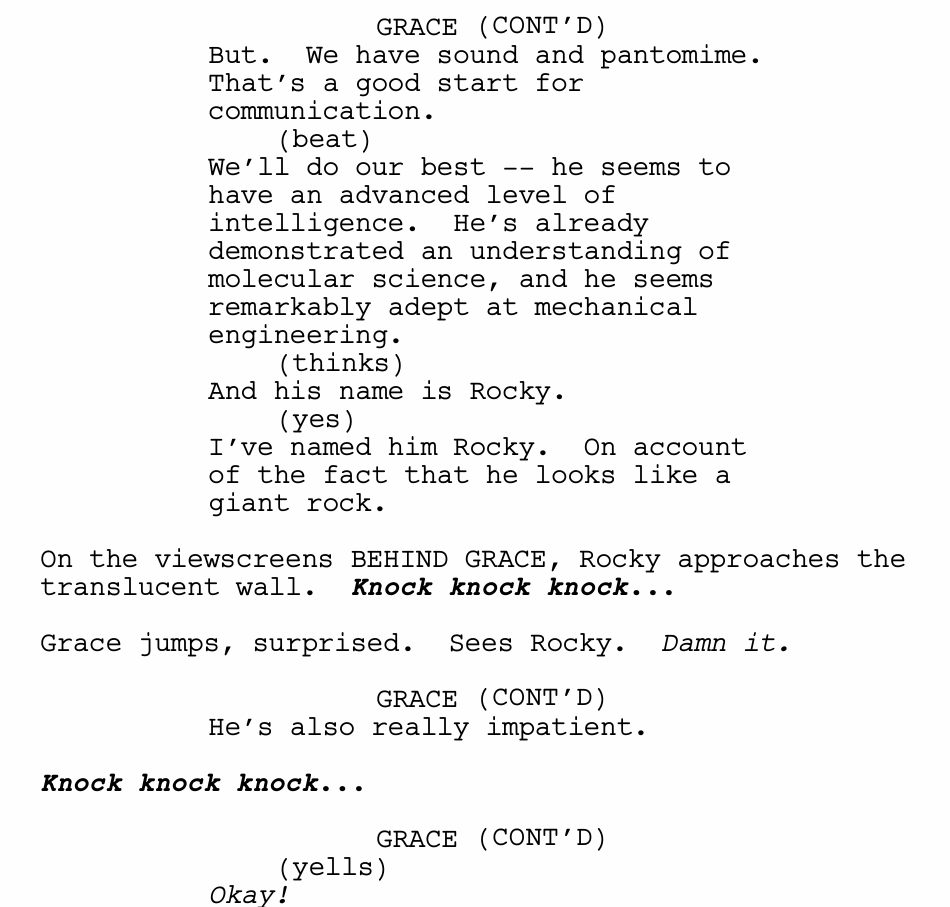
Grace then develops a machine translation system to understand Rocky’s language. He makes the computer read the translation aloud to him, finding Rocky a voice, thus allowing them to talk to each other. They realize that they are there for the same reason: their home suns are dying and they want to find out why Tau Ceti isn’t.
Back on earth, Grace meets the six potential crew members for Hail Mary for the first time, including Yao and Ilyukhina, who we saw him burying earlier in the script.
Midpoint
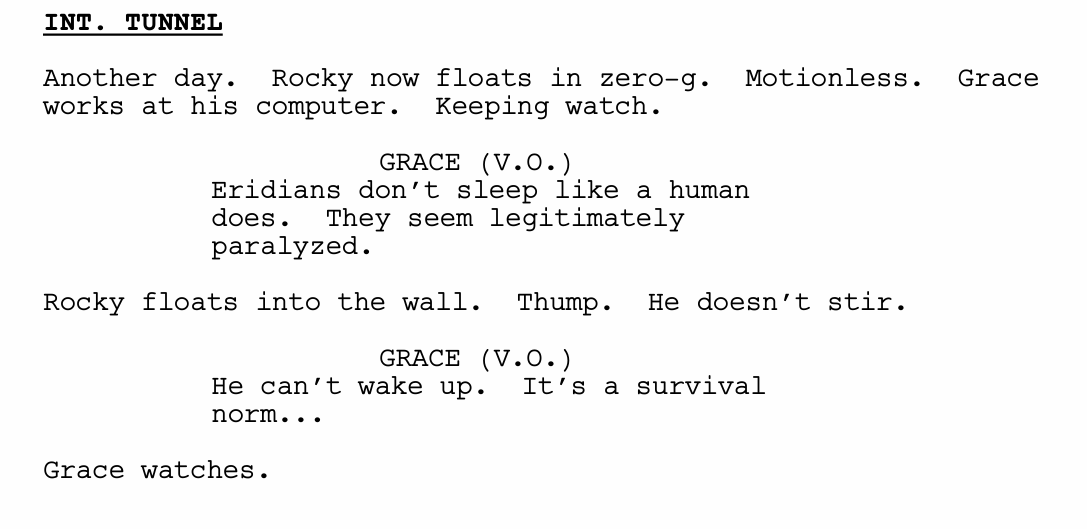
When Grace is about to go to sleep, Rocky becomes frantic, and tells Grace that Rocky’s crew members went to sleep and never woke up. Eventually, Grace agrees to Rocky watching him sleep, learning that, when Eridians sleep, they become paralyzed, thus needing to watch over one another.
Rocky assembles his own version of an EVA suit: a sphere, containing his air and gravity – or, as the script calls it, his extraterrestrial hamster ball. This allows him to move freely in Grace’s atmosphere, and he boards Grace’s ship, which is extremely messy.
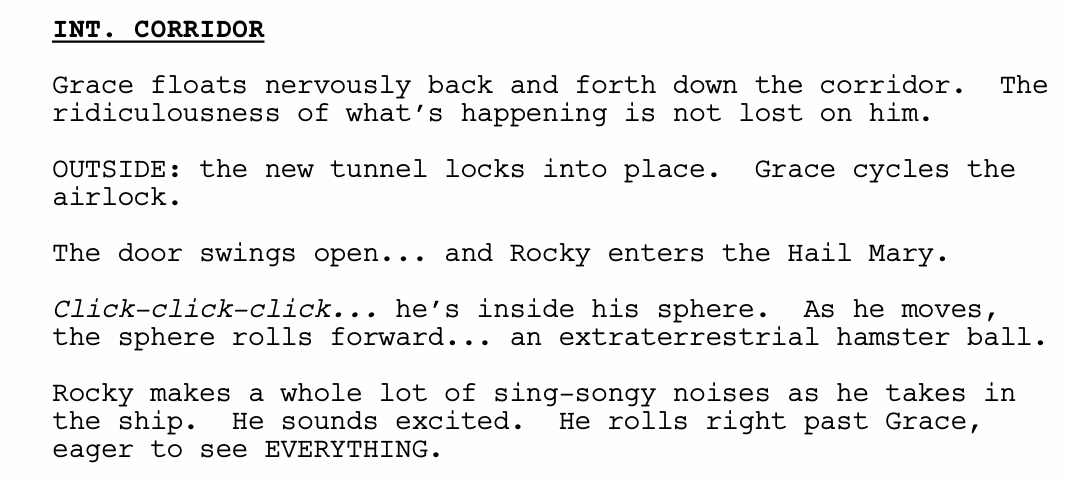
In the screenplay, Rocky asks Grace to arrange his first visit, while in the film he just shows up. This change enhances the humor, and the man-living-alone, unprepared-for-friend’s-visit situation that Grace finds himself in makes the moment more relatable as well.
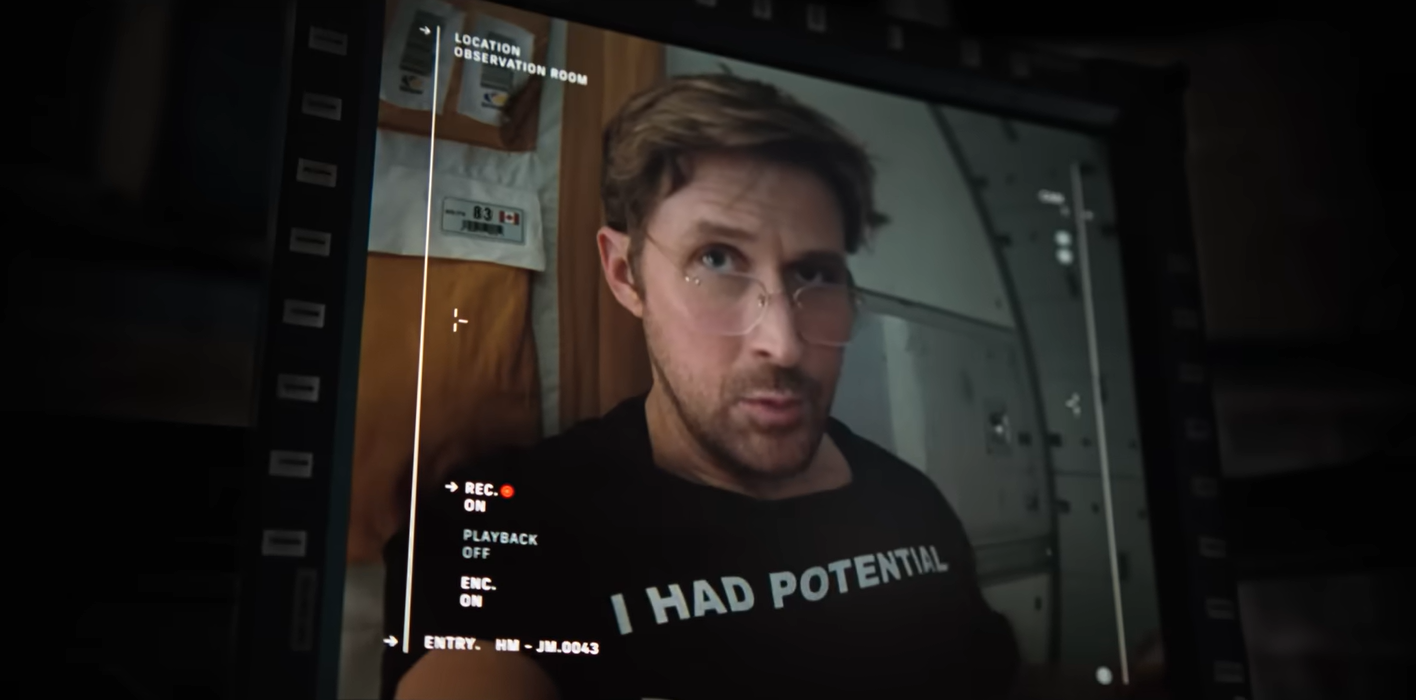
Soon, Rocky decides to move into Grace’s ship. Grace, totally unprepared, has much to complain about his new roommate: Rocky is bossy; Rocky can see through walls; Rocky can hear every sound that Grace makes, including his quiet complaints to the camera.
However, they make it work, and Grace shares with Rocky the large viewscreen which shows images of earth, especially that of the beach. Grace also learns that Rocky has a partner back home on Erid.
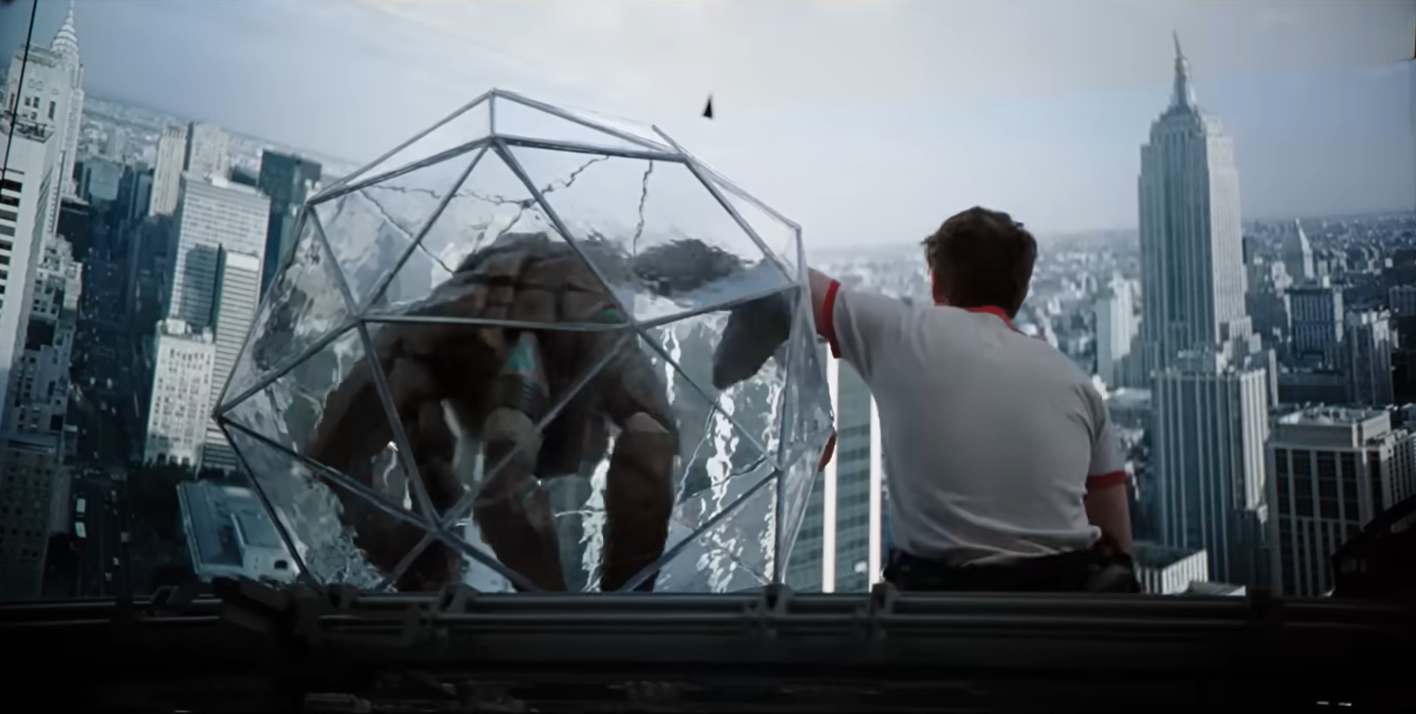
On earth, Grace and Stratt share a moment during a pre-launch party, and Stratt sings “Sign of the Times” at its karaoke.

This is another big change from the early draft of the script to the film: the karaoke scene, which many fans claim to be their favorite scene in the film, was not present in the screenplay either. This exploration of the tender side of Stratt, the toughest figure in the story, allows the film to feel gentle and filled with a human understanding for one another.
Bad To Worse
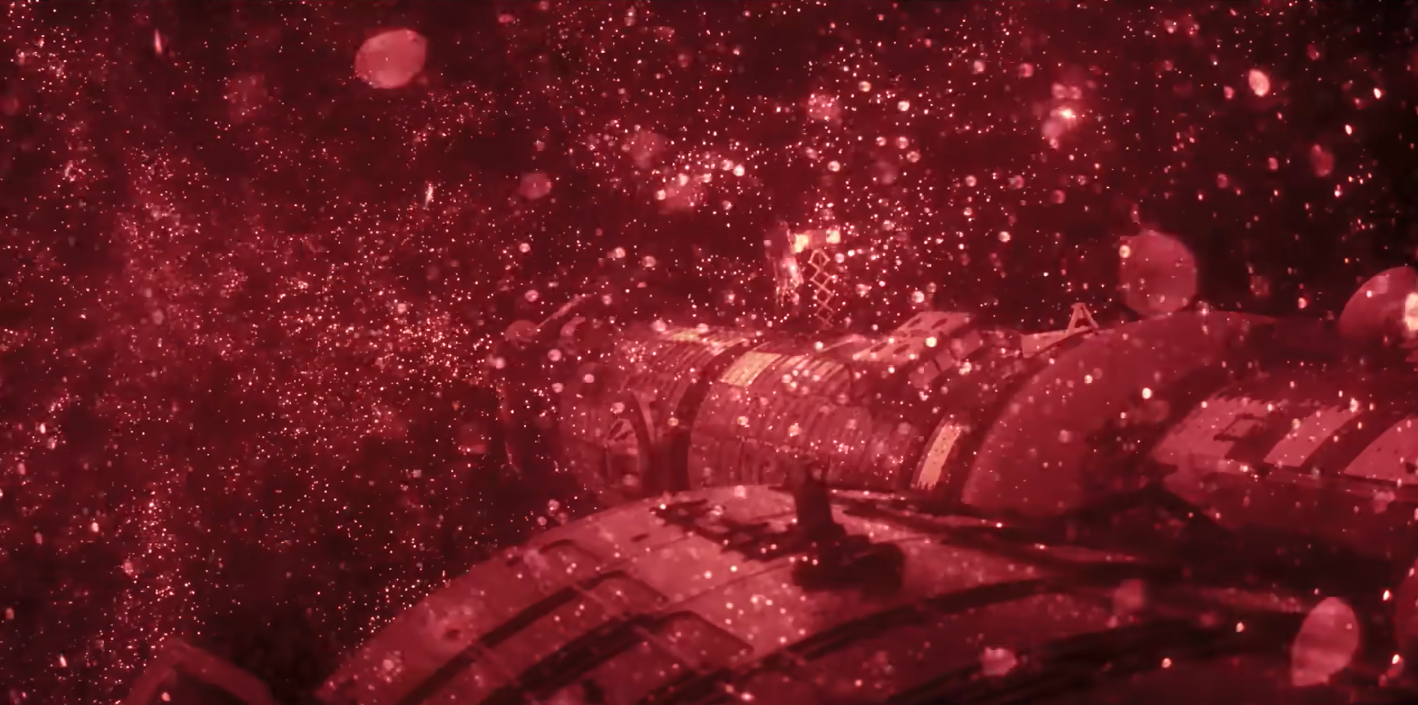
Grace and Rocky discover that the planet Tau Ceti E, which Grace names “Adrian” after Rocky’s mate, is a life-harboring planet. Rocky suggests that there is probably a predator for Astrophage living on Adrian. Therefore, they plan to retrieve a sample from Adrian’s atmosphere to find out. However, driving Hail Mary too close to Adrian can be extremely dangerous. Grace trains his piloting skills.
Rocky learns that Grace does not have enough Astrophage for a return trip to earth. Despite Grace claiming that he’s made peace with it, Rocky offers to give Grace Astrophage from his ship so Grace can make it home, at the expense of Rocky returning home six years late.
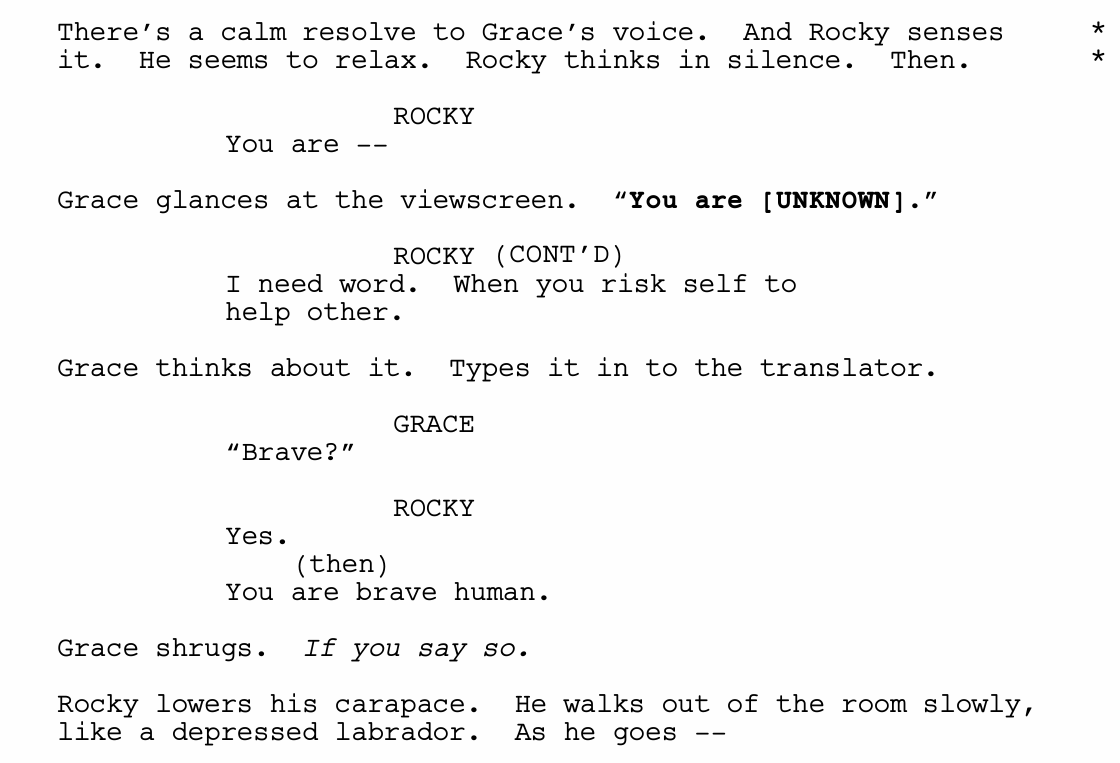
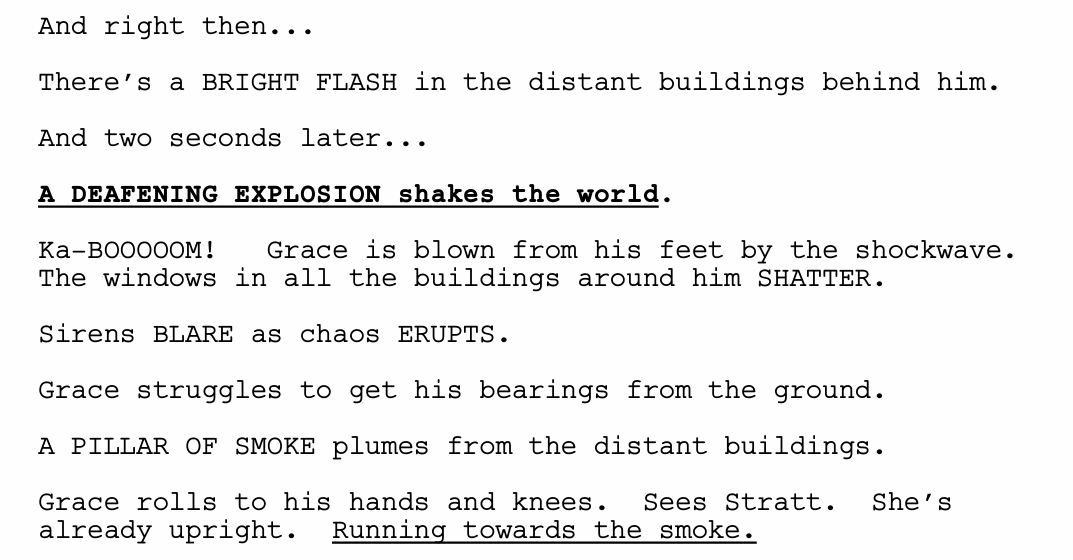
Back on earth, just when Grace has trained all six crew members for the trip, an accident happens, resulting in the two scientists’ death.
On the ship, Grace and Rocky carry out their plan on Adrian. They release a large sphere attached to a xenonite chain into the atmosphere. Grace calls it “go fishing.”
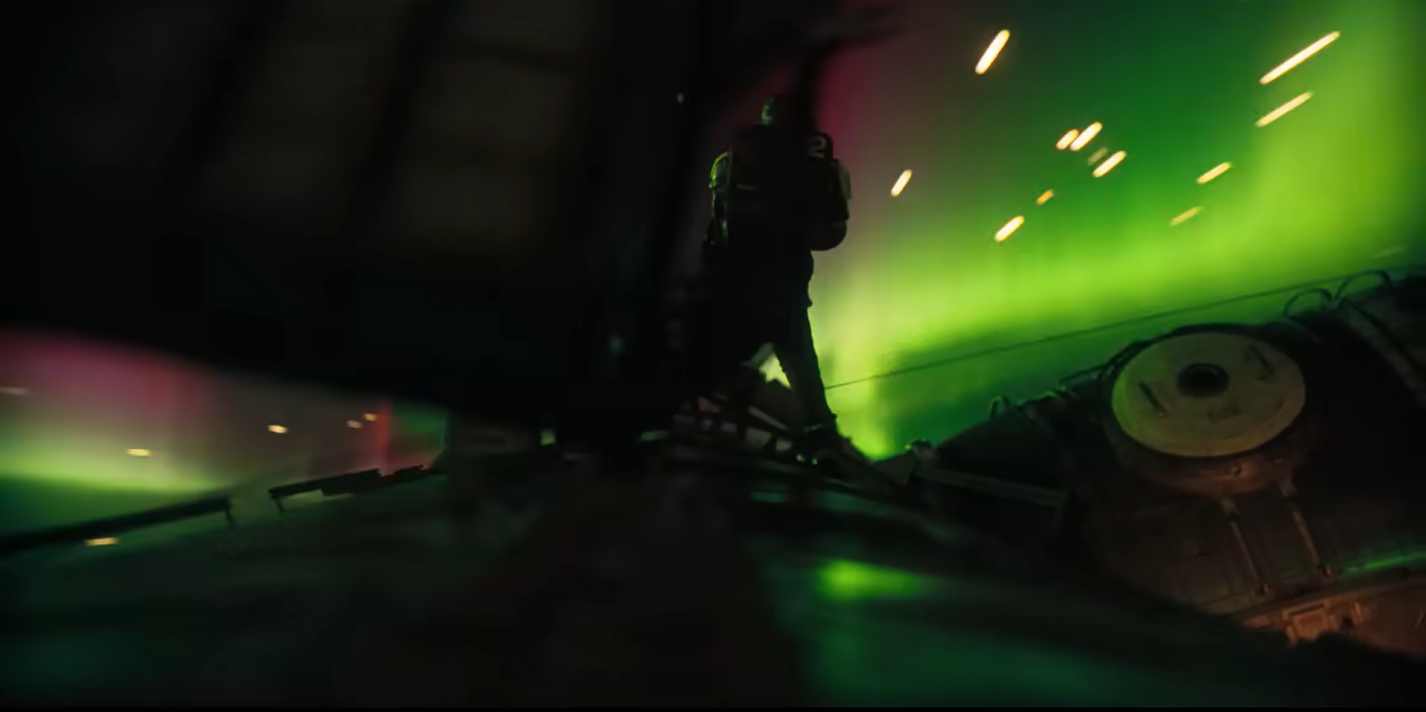
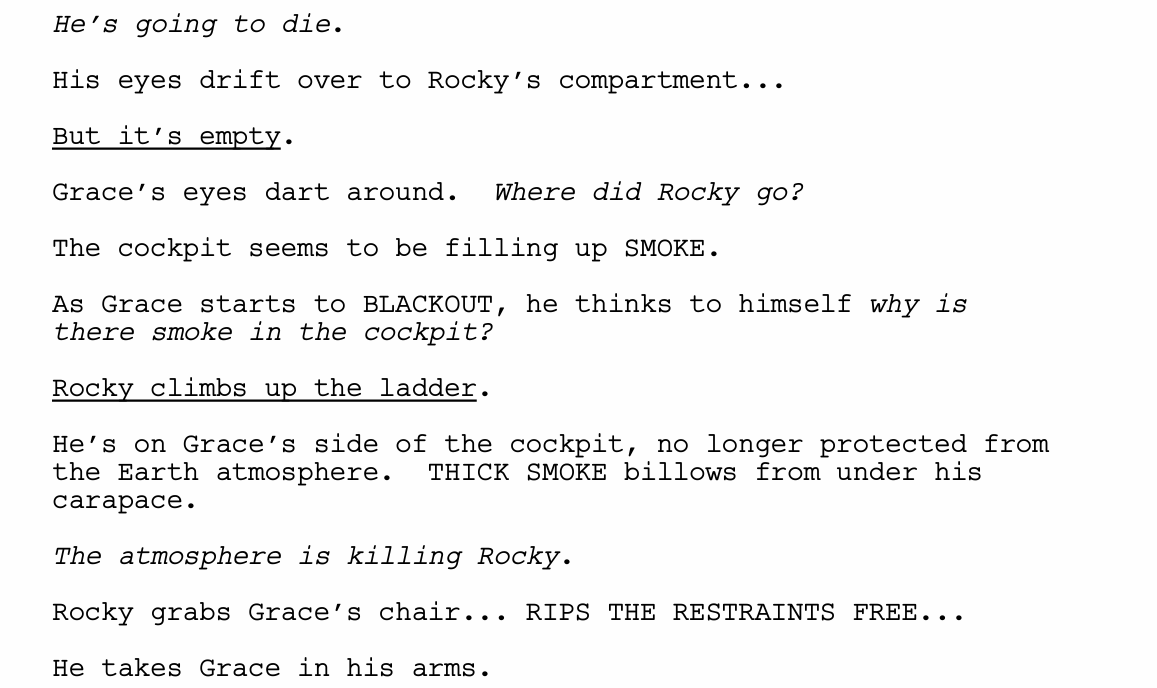
After considerable danger, including almost crashing Hail Mary into Adrian, Grace is able to retrieve the sphere. However, they realize that there is a fuel leak in the tank – the Astrophage is migrating to Adrian! This causes a spin which crashes Grace into the screens, rendering him unconscious. Rocky leaves his compartment to save Grace, ending up severely injured himself.
Break Into Three
Back on earth, Stratt and the remaining crew members break to Grace the unfortunate news: because both scientists have died in the explosion, Grace is the only option as the replacement astronaut.

In the screenplay, Grace, on the spaceship, wakes up to find Rocky severely injured but still working on the sampler. In the film, however, Rocky merely shares a tender moment with Grace before passing out.
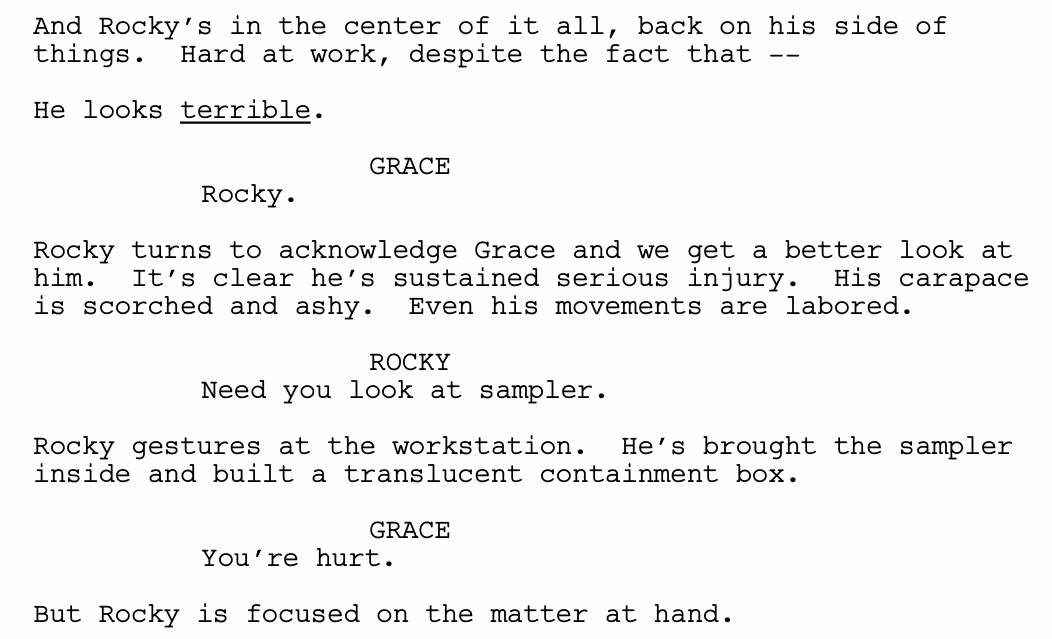
This change makes Rocky more vulnerable. In the early draft, he's almost Stratt-like, focusing on the task at hand. The vulnerability makes us care about Rocky more, and gives more heart into his self-sacrifice. It also prepares us to support Grace's decision more when Grace returns to save him later in the story.
Grace individually breeds the organism, which he names Taumoeba, to survive Venus’s atmosphere, while Rocky hibernates. This is the reversal of Rocky watching Grace sleep earlier in the film, where now Grace stands guard over Rocky.
Finale
Back on earth, Grace refuses the assignment to become an astronaut. Stratt drugs Grace and sends him into space.
Rocky wakes up. The pair of friends party, and Rocky shows Grace his spaceship. They say their last goodbyes, and each departs for home.
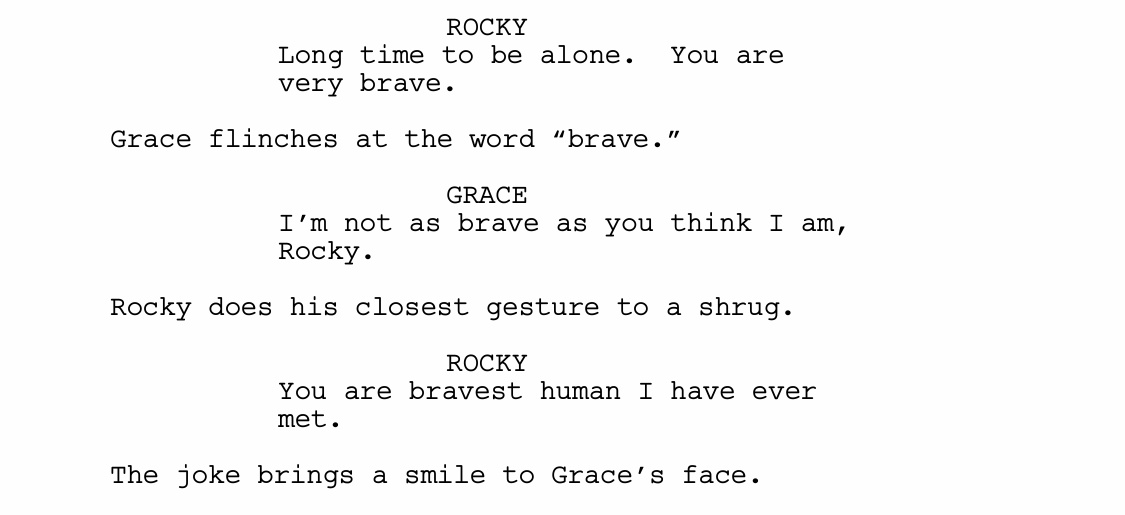
However, Grace is woken by an alarm halfway back. He realizes that Taumoeba has evolved to pass their xenonite containers, and the Taumoeba are eating the Astrophage from the fuel tank. He repairs the problem on Hail Mary, but realizes that Rocky’s ship is made entirely of xenonite, which means that all his fuel will be eaten.
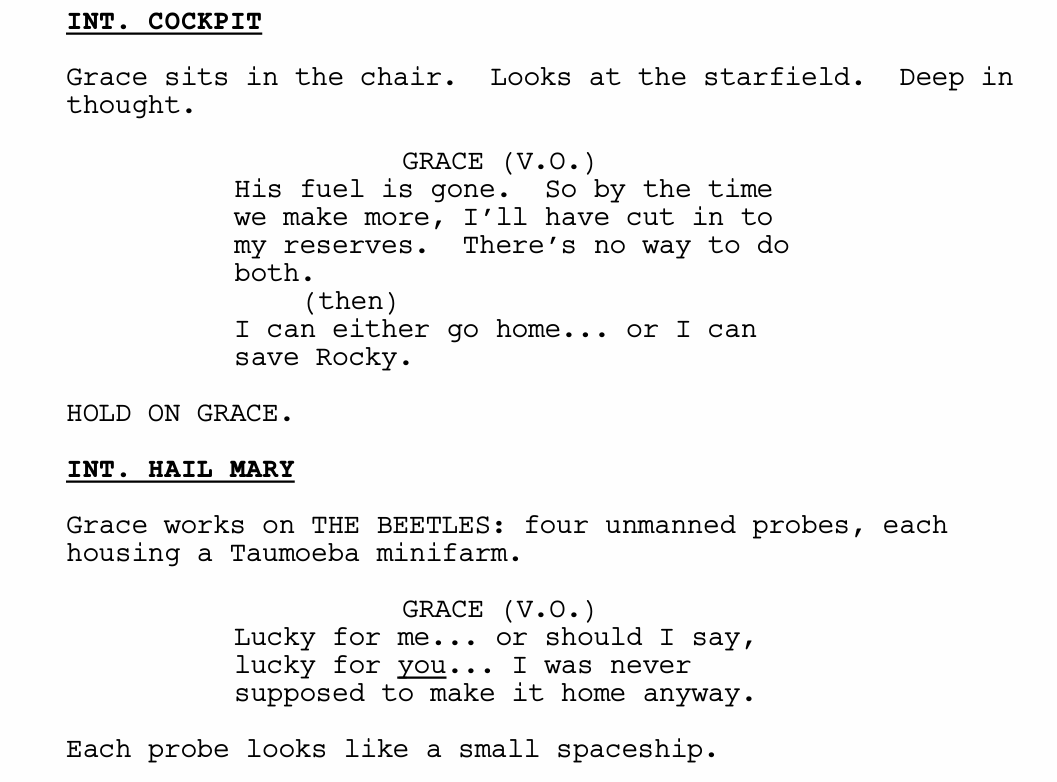
Grace decides to save Rocky. He sends the videos he’s recorded and the Taumoeba samples on probes back to earth, and turns his ship around.
Stratt receives the probe, along with the xenonite human figure that Rocky made for Grace in the beginning. She begins the process of breeding Taumoeba and saving the earth.
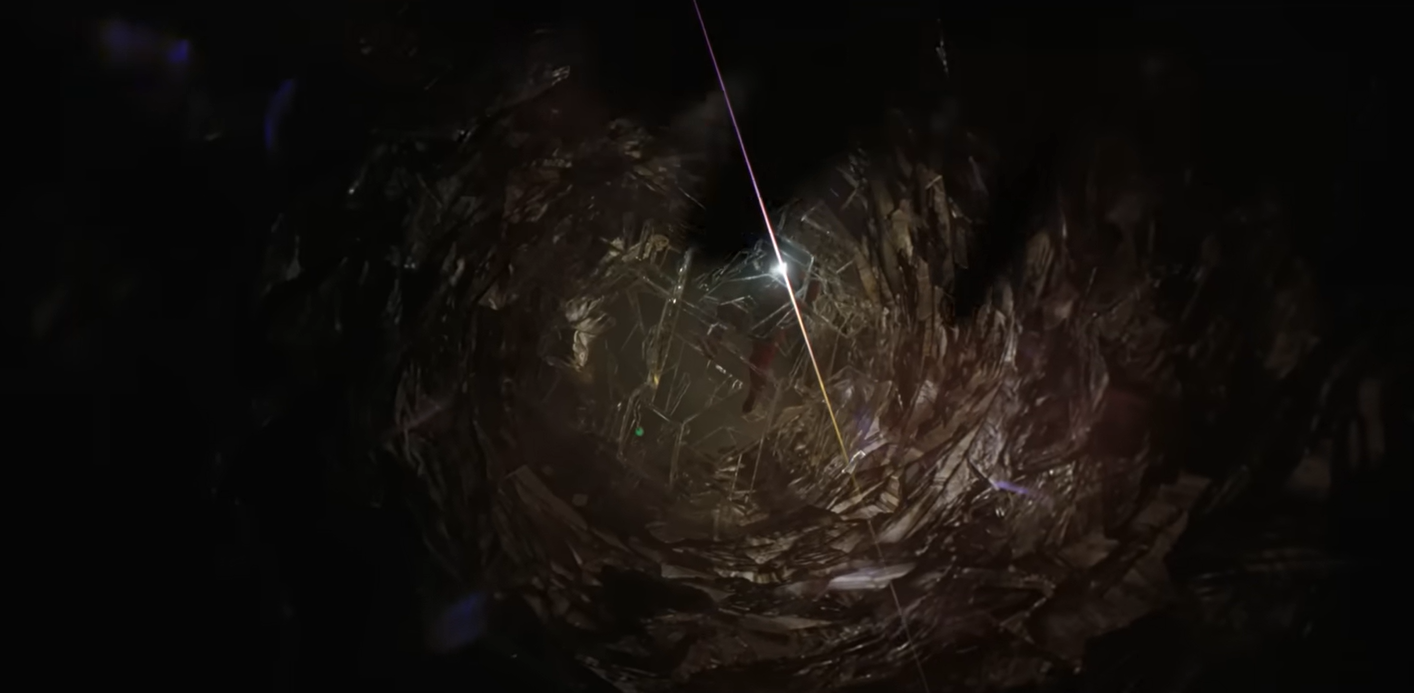
Grace rescues Rocky. He goes to live on Rocky’s planet, where Eridian scientists build him an artificial biodome in which they recreate a beach. Eridian scientists prepare Hail Mary for a return trip, but Grace considers whether to go home. Meanwhile, he begins another day as a science teacher for Eridian children.