Netflix vs.Paramount: Who Really holds the Future of Movies? [Podcast]
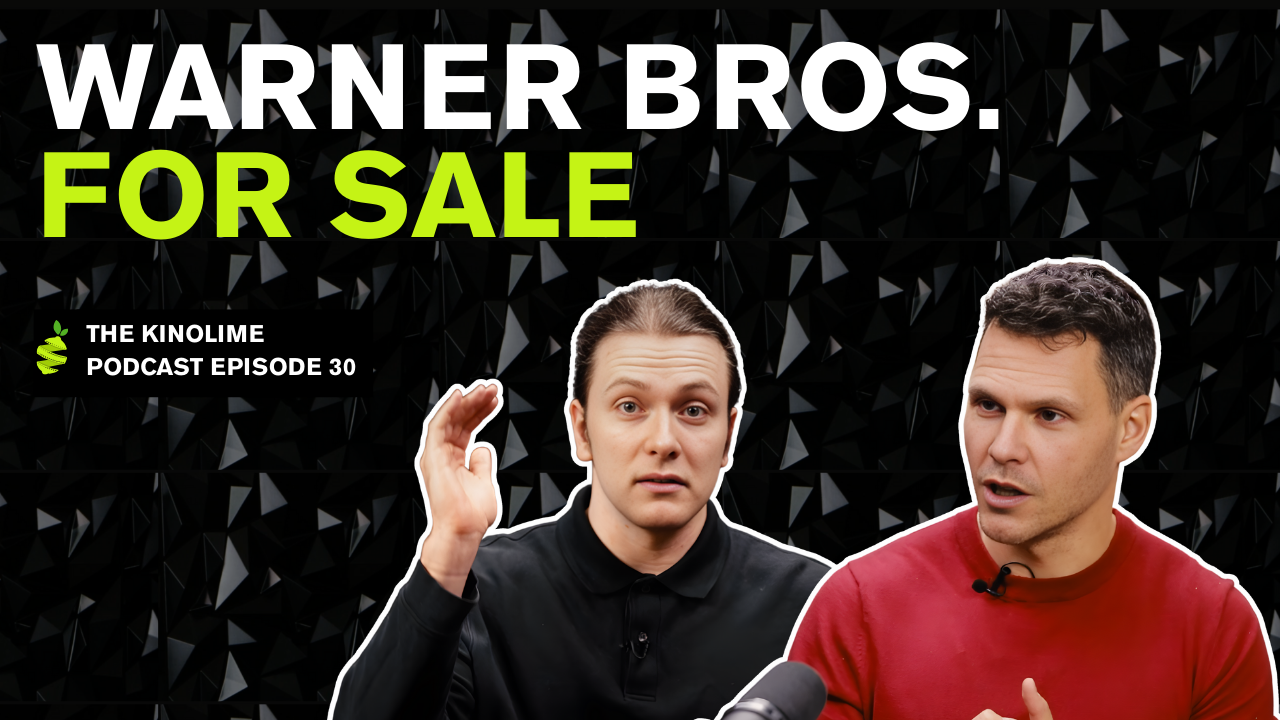
As Warner Bros. becomes the center of a high-stakes bidding war involving Netflix and Paramount, the future of filmmaking feels more uncertain than it has in decades. Beneath the headlines are questions every filmmaker is asking: who controls distribution, what happens to theatrical releases, and where does that leave independent creators?
In this episode of the Kinolime Podcast, John and Danny unpack the realities of media consolidation, shrinking theatrical windows, and the growing risk of monopolized distribution. They explore what these mergers really mean for creative freedom, why “synergy” often translates to layoffs, and how the industry may be approaching a dangerous tipping point.
Full Transcript: Kinolime Podcast Episode 30: Netflix vs.Paramount: Who Really holds the Future of Movies?
Participants
John Schramm - Head of Development, Kinolime
Danny Murray - Creative Executive, Kinolime
John: In a perfect world, no matter who ends up acquiring Warner, I’d love to see a model where independent filmmakers can actually make money, maybe even make a living, through something as simple as paid ads. A system where your movie can earn without getting gouged.
Welcome
John: Welcome, everyone, to the Kinolime Podcast. Sorry, Danny was just huffing like a dog. Were you centering your breath?
Danny: It’s better than Band-Aid mouth.
John: I don’t remember dating such a man. But your hair is tied back today.
Danny: Yeah, it is.
John: Last week you had the chin strap. And the Band-Aids. And I had that rash on my neck. Brutal.
John: Anyway, we’ve got a lot to unpack. Unless you’ve had your head in the sand, Hollywood is in the middle of what feels like a hostile takeover era, Ellison, Paramount, Warner Bros., Netflix, everyone fighting it out.
John: Honestly, I’m hoping a third party jumps in just to make it crazier. Like… who else could come in? The Saudis?
Danny: They already are. Saudi money is a key investor in Paramount, Saudi private equity plus Larry Ellison. It’s the worst blunt rotation imaginable.
John: What we’ve got is Warner Bros. basically up for sale. Everyone wants to buy an established brand of filmmaking excellence.
John: I usually ignore this stuff, but Danny’s here, our resident expert in politics and “what the hell is going on.”
Danny: Oh God. Am I?
John: That’s who I go to. So buckle up, pencils sharpened. Danny, give us the quick update.
Media Consolidation & “Synergy”
Danny: We’re deep into a phase of massive media consolidation. Everyone’s trying to charm the FTC right now.
Danny: Paramount is saying they’ll run it like a theatrical business and release a lot of movies.
Danny: The scary part is they’re already talking about six billion dollars in “synergy,” which is corporate-speak for layoffs.
John: It’s such a wild word because “synergy” sounds positive, like teamwork. Meanwhile, it really means we’ll all work together… on the unemployment line.
Danny: Same energy as a “performance improvement plan.”
John: Do you think they sit around a table figuring out nicer words for terrible things?
Danny: Yeah. They outsource it. Usually to McKinsey.
John: Of course.
Why This Merger Is Dangerous
John: The WGA put out a statement. Everyone’s trying to stop this. Why is it so bad?
Danny: Because every major media merger means less output, less investment, less creative risk, and fewer jobs.
If Netflix Wins - Shrinking Windows & Monopoly Risk
Danny: If Netflix wins the bid, they’re already talking about shortening theatrical windows and pushing films faster to streaming.
John: Three-week windows. That’s insane.
John: Some films grow slowly through word of mouth. Three weeks is a blitz, if audiences don’t jump immediately, it’s straight to streaming.
Danny: Netflix’s argument will be that most box office revenue happens early anyway and that pushing films to the biggest streamer increases engagement.
Danny: But if they acquire Warner, reduce theatrical output, and shorten windows, they could push theaters past a tipping point.
Danny: At that point, theatrical stops being a viable business. And if everything goes to streaming, and you own Netflix, HBO, and the IP, you essentially control distribution.
John: That’s terrifying.
Why Warner Is Being Bid Up
John: Here’s what I’m hearing from Wall Street sources:
Netflix may be driving up Paramount’s price on purpose.
Warner’s bid price is higher than its current valuation.
A big reason is real estate—the Warner studio lot is premium and scarce.
HBO also has one of the largest libraries of unused IP, which could be unfrozen and endlessly recycled.
John: Creatively, that’s scary.
Scenario One - Netflix Wins
John: If Netflix wins, what’s the upside?
Danny: Short term, probably fewer layoffs. Netflix doesn’t have the same theatrical infrastructure, so they’d need to build rather than gut operations.
Danny: They also allow more creative freedom than what Paramount has publicly outlined.
Scenario Two - Paramount / Ellison Wins
John: If Paramount wins, what’s the upside?
Danny: They’re promising 30 theatrical releases a year but whether that’s true is another question.
John: And what kind of films?
Danny: Exactly. Still, in the short term, it’s probably better for theatrical than Netflix winning.
Dark Horses & the Long Game
John: Is there a dark horse bidder?
Danny: Probably not. If the Ellisons want this, they can spend whatever it takes, Larry Ellison, Saudi money, and RedBird private equity.
Danny: They can sustain the infrastructure and then move on to the next play, TikTok.
Danny: The scary part is a massive media conglomerate with distribution power and ideological alignment slipping past regulators.
What Filmmakers Do Next - Self-Distribution
John: So let’s roleplay. They merge. Theatrical shrinks. You’re a filmmaker. What now?
Danny: Self-distribution.
Danny: Domestic distribution in the U.S. is going to change fast. If someone cracks the code, it’s a gold mine.
John: People are going to keep making movies. Good films still rise through word of mouth.
John: There are fewer great films relative to volume now, so when something is good, it cuts through.
John: This feels like the start of a pushback. Like the ’70s. Like ’90s indie cinema.
Danny: It reminds me of the old studio system before the Paramount Decree, when studios controlled everything.
Danny: Eventually, it collapsed. And it might again.
Danny: Even with massive franchises, if the content isn’t good, people won’t show up.
Danny: Streaming or theaters, it doesn’t matter. You still need a good screenplay.
Kinolime & Looking Ahead
John: And that’s why we’re here at Kinolime.
John: In the new year, we’ve got our Script Competition 3.0 coming up. Get your screenplays ready.
John: 2026 is going to be a big year, not just for Kinolime, but for cinema.
John: We’ve got winners going into production, new films being co-produced, and real momentum.
John: You can help change cinema. Write the script. Submit it to Kinolime. If it gets voted on, we’ll make your movie.
John: And by the time it’s done, we’ll sell it to the one distributor left.
Closing
John: Danny, as always, great conversation. You bring light to a topic I usually hate.
Danny: You don’t like media consolidation?
John: I just wish there was a dark horse bidder.
Danny: Guggenheim.
John: If Guggenheim wins, I get Dodgers and Lakers for free. We’re ending on that.
John: Thanks for tuning in. If you’ve got a dark horse we missed, send it in. We’d love to hear your take.
John: Thanks again, Danny.
Danny: Thanks, John. See you soon.