
The Vertical Drama Cliffhanger: Writing a Hook Every 90 Seconds

Vertical dramas are becoming more and more prevalent in today’s age of social media, and they’re completely changing the rules of traditional screenwriting. We all understand the difference between writing for TV versus film: how the pacing is different, how you have to utilize hooks at different times, and how you have to decide what arcs to focus on (and when). But what the Hell are you supposed to do when every episode is only 90 seconds long? And how are you possibly expected to keep an audience engaged with such little time? As we mentioned in our previous article on the “Page-1 hook”, a feature film needs to deliver the reader a jolt that makes them say “God, I need to know what happens next”. But with a vertical drama, the writer needs to achieve this every episode for upwards of 100 episodes. It seems like a daunting task, but fear not, because this article is here to help. This is…the art of the vertical drama cliffhanger.

The Unit of Storytelling is the Tap, Not the Episode

In order to be successful at writing vertical dramas, you have to be able to rewire your brain a little bit. The goal is not necessarily to satisfy, but to tease the potential for satisfaction if you keep watching. Obviously, the concept of the cliffhanger is nothing new. Victorian-era publishers figured out that they could make more money if they sliced up a book into smaller installments and sold them as serials. Nickelodeon movie theaters utilized the same technique to keep their seats packed on a regular basis. And of course, once television programming came around, they too realized that the cliffhanger was a sure-fire way to keep their audience coming back for more every single week. But with the micro-dramas of today, things are a little different. The writers not only have to compete with regular television, but they have to compete with social media as a whole, which means there’s not nearly enough time to develop characters and stories the same way as you would in TV or film. So, how do you keep people interested? Believe it not, the answer is to actually focus less on resolution than you normally would. Instead, constantly propose new questions, add twists where you can, and never satisfy your audience too quickly. And if you do, make sure an entirely new question is proposed in the process. The situation is everything; the resolution is not. Social media habits revolve around quick, instinctual decisions: swipe up, swipe down, skip, block, mute. It all happens almost without any conscious thought. But if you’re able to grab your audience in that very first episode and end on a point that draws even more curiosity, you can make it so that their instinct isn’t to keep scrolling; it’s to keep watching your show.
A Working Taxonomy of Cliffhanger Types
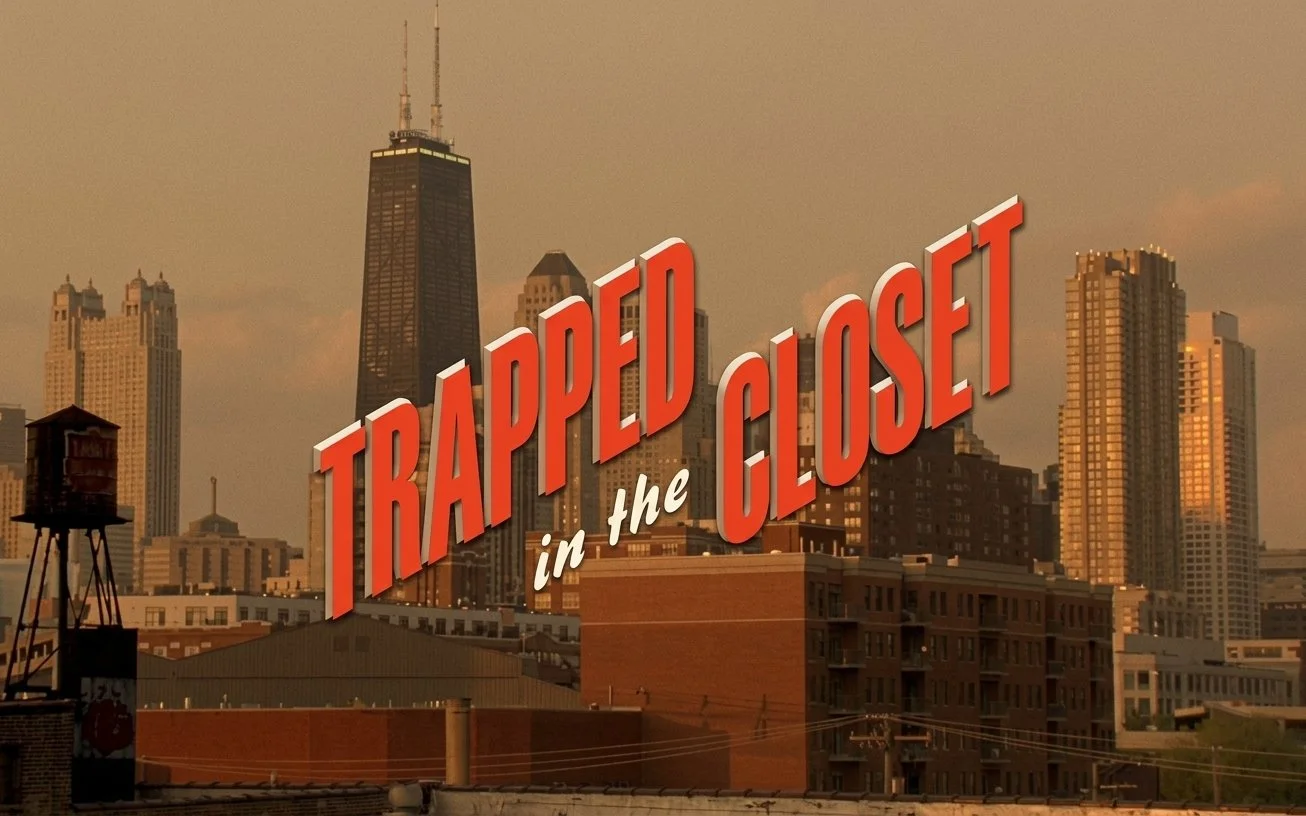
There are a multitude of cliffhanger types you can use when writing a vertical drama, and due to the high volume of episodes you’ll have to concoct, the chances are you’ll have to use them all. For this section of the blog, I’m going to be referring to a series that was years ahead of its time: R. Kelly’s “Trapped in the Closet” series. Obviously, the man isn’t a top-notch role model, but this short-form “hip-hopera” series is the perfect predecessor to the micro-drama. Each episode was roughly about 4 minutes long and ended on a different cliffhanger type, and there’s something to be learned about why they worked so well (also, I think it’s really funny that I get to reference this series in an actually productive context).
The Nuke
As its name suggests, the “Nuke” refers to a major truth in the story that is bound to explode and teased repeatedly to build suspense before actually going off. When will it be dropped? How will this bomb affect the characters? How many near-misses is the audience willing to withstand before finally giving up? And please note that last question is especially important when utilizing this cliffhanger type, because the last thing you want to do is frustrate your audience. They have to be curious, but not angry. Because if you do too many bait-and-switches, they’ll eventually just stop watching altogether.
In “Trapped in the Closet”, the first episode opens with R. Kelly in a woman’s bed, cheating on his wife, when suddenly the woman’s husband comes home angry and drunk. R. Kelly hides in the closet and peeks through the blinds as the husband confronts his wife about cheating, almost opening the closet several times throughout the process. The suspense builds until finally, he opens the closet, and the episode ends. The Nuke has been dropped, and now we gotta watch the next episode to find out what’s about to go down.
The Arrival (One Type of Reveal)
As you probably know, the “reveal” is a very common cliffhanger technique where new information is suddenly introduced into the story. But with that definition being a little too broad to take away anything significant, I thought I’d focus on a couple of subcategories within the “reveal” genre, one of which being the “arrival”. The arrival cliffhanger is when the sudden introduction of a new character completely alters the trajectory of the plot, usually occurring just before a high-impact moment in the story.
In the second episode of “Trapped in the Closet”, shortly after the husband discovers R. Kelly in the closet, he angrily calls someone on his phone and says to meet him upstairs. Are they a murderer? A lover of his own? Who Knows? The suspense builds over two very long minutes until finally, just before R. Kelly is about to shoot everyone in the room with his Beretta, the mystery person arrives at the door. They open it to reveal none other than the husband’s secret boyfriend, revealing that not only has he also been cheating, but that he’s gay. Boom. Perfect arrival cliffhanger.
The Reversal (Another Type of Reveal)
Another type of reveal cliffhanger, the “reversal” is a sudden, unexpected revelation that flips everything around back onto the protagonist, changing the way they think about everything that has already happened thus far. And when dropped right before the end of an episode, the audience is hit with an intense curiosity as to how this will change the story they thought they knew.
In the third episode of “Trapped in the Closet”, R. Kelly finally snaps and decides he’s had enough of this couple’s affairs. Desperately, he calls his own wife as he prepares to leave the home. But when the phone is answered, another man is on the other end of the line, revealing that his wife had also been cheating on him. We’re only a few minutes into this series, and all the sins our protagonist has committed have already been flipped back onto him. An excellent example of the “reversal”, indeed.
The Interruption
The “interruption” cliffhanger is when a chapter of a story ends abruptly right after a moment of intense action, usually leaving the audience unsure about which characters are alive or dead.
Episodes 4-6 of “Trapped in the Closet” find R. Kelly racing home in an attempt to catch his wife’s secret lover in the act, when he’s suddenly pulled over by a cop just before reaching his neighborhood. Seeing his desperation, the cop taunts R. Kelly menacingly before finally letting him go home. R. Kelly proceeds to aggressively interrogate his wife before her lover bursts through the door - and guess what? It’s the police officer who just pulled him over. The cop pulls out a gun, they wrestle over it, and then just as the trigger gets pulled, we cut to black.
Reaction Beats: The Most Important Moment Nobody Plans For

In such a short format, the cliffhanger only works if you sell it, and the best way to do that is with the reaction beat. Unlike a feature film or TV episode, you usually won’t have the time to include reactions in the form of dialogue. But character reactions are a great way to emphasize whatever note you’re trying to end on, especially since the viewer is going to be focused on the actors’ faces more than usual due to watching it on their phone. And make sure to include these beats in your script so whoever’s reading gets a clear image of the last thing they’ll see before the episode ends.
If a secret evil cousin makes their presence known at the end of your episode, don’t end the script with the cousin entering; end it with an action line focusing on the character who would be the most surprised. Something like “Jamie’s jaw drops in shock as she stares her cousin in the eyes” would work perfectly. Tease the emotional grab, because that’s what’s going to keep your audience coming back.
A Practical Drill to Get You Started
A great exercise to try when attempting to make the shift to vertical dramas is to take an already existing pilot or feature you’ve written and try to rewrite the ending as a 90-second episode. It may sound silly, but this will force you to try to establish some form of context for your characters quickly, because that’s what you’ll have to do in this format anyway. Then try your best to make the ending into a cliffhanger of some sort. And after that, go ahead and brainstorm an additional 3-5 endings for future episodes. Ask yourself, “What doors does my original ending open? And how can I get there as quickly as possible?” Additionally, try to make each of these endings a different type of cliffhanger if you can. No back-to-back “arrivals”; always keep it fresh. The idea with vertical dramas is that you have a rapid succession of conclusions rather than one big one, so your story is always evolving past the point you may have expected it to. Once you’ve done this a couple of times, you’ll start to get the rhythm for the format and can begin writing one fresh from the top.