
A.I. Wrote Your Coverage - Should You Trust It?
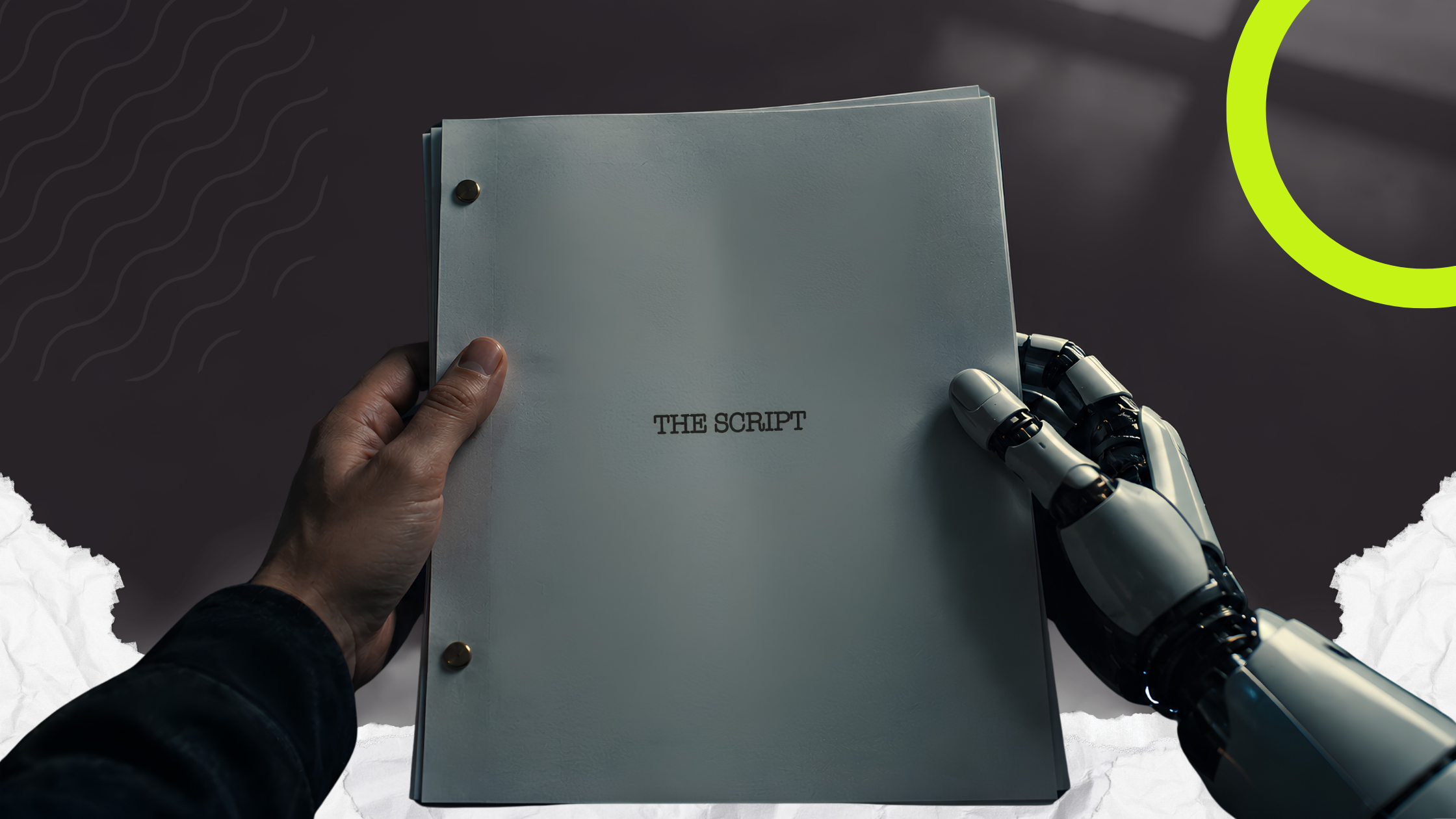
Getting a professional to read your script and provide useful coverage is a tremendous tool for up-and-coming screenwriters, but nowadays it can be pricey, take weeks to hear back from anyone, and there’s a risk of simply getting a biased reader who doesn’t like the kind of movie you wrote. As a result, an entirely new coverage process has been on the rise: the AI reader. And I can see why. It’s cheaper, it gives you feedback in 90 seconds (not 90 days), and is incapable of having any conflicts of taste. But the question still remains: is it actually any good? Well, today, I finally put it to the test. Right now, I have two sets of script feedback in front of me: one from a living human being, and one from an AI service (which shall not be named). And we’re going to see what’s legitimately helpful, what’s absolute nonsense, and whether or not an AI reader is even worth considering at all.
Good Coverage
First of all, we have to establish what exactly I mean when I say “good coverage” (and if you’d like to dive into this topic in more detail, check out our other blog on how coverage can help your next draft). Good coverage takes every script as an individual product, separating actual structural problems from personal taste. And this may seem easy, but it’s actually incredibly difficult for most readers to achieve, even if they’re “professionals” (the unconscious tends to weigh heavily whenever it comes to art). Additionally, all good coverage HAS to be organized in some way. Reactionary notes may be beneficial when given by friends or family who’ve read your latest script, as this is how most audiences will eventually treat the film, but it can be incredibly unhelpful when you’re trying to improve. The notes need to be structured, organized, and provide a clear framework for where you should make changes (and especially why). Lastly, and possibly the most important, is that in the event of a necessary change, the coverage provider MUST reflect that they understood your goal and give a legitimate reason as to why your goal was not achieved. They cannot simply say “this was bad” or “this didn’t work”. You put time into your script, and your choices were made consciously. So nothing should be disregarded, only disagreed with.
Where AI Genuinely Delivers
To be honest, I was genuinely surprised by the quality of my A.I. feedback. And trust me, I wanted to hate on it more than anyone, but it admittedly caught me off guard more times than once. Obviously, it ended up being great at everything “technical”, such as finding typos, formatting errors, and various issues with continuity. That much was expected. But its approach to dialogue, character building, and other, more subtle screenwriting elements was much better than expected.
First of all, it was able to recognize the nuances in the dialogue. Like when a character says something they didn’t quite mean, or the internal conflicts that snuck out in conversations but were never blatantly stated. I thought stuff like this would be impossible for A.I. to notice, but it did. And not only did it recognize it, it told me where I was being too on-the-nose, where I was maybe being a little too subtle, and even suggested a few routes I could go in to fix all of these mistakes. I’m not necessarily planning on taking them, but it did help me identify the flaws in these areas.
Additionally, it was really good at dissecting my act structure and pacing. And not just in a “these are the screenplay rules I found online, and you’re breaking them here, here, and here” sort of thing, but in an actually critical and subjective manner. For example, it very clearly recognized my intentions for each act and showed me where the intentions were working and where they weren’t. And it does this without bias. To elaborate, in my script there’s about a 20 page sequence of events that I was very proud of. It was fun, entertaining, and every human reader praised it more than anything else in the script. But the A.I. recognized that while it may be the best part of the movie, it did distract from another plotline I was building to simultaneously. I didn’t realize this, no humans had pointed it out to me, and it seemed like all of us were distracted because that chunk of script was really solid on its own. But the robot did not flinch when it told me to kill my darling, and it was absolutely right.
Where A.I. Coverage Reliably Breaks Down
With all of those nice things being said, the A.I. was FAR from perfect. A lot of the time, its critiques of my script tended to opt for more “traditional” avenues that I was intentionally trying to avoid. The big one being tropes. A.I. absolutely loves tropes for some reason. I guess it’s because its algorithm is taking in so many movie plots, and a majority of the popular ones use certain repetitive storytelling techniques or something. I don’t know really know for sure, but over and over it kept trying to get me to change things to fit the “classic Hollywood” style of storytelling (cowardly characters suddenly becoming brave, all loose ends tying up positively so the audience will be happy, things like that). And I get that this may be what mass audiences want to see, but sometimes a writer has to go against the grain to achieve their true goals (which I covered in more detail in my blog on vague endings). And if A.I. is arguing against this sort of thing, we’re going to miss out on a lot of interesting films.
Also, and I really don’t mean to sound like that guy, but A.I. is really, really woke. And I don’t mean that it was performing the Bechdel Test or anything, but it absolutely refused to accept that morality is a spectrum. If I had someone who wasn’t the antagonist do or say something “bad”, the A.I. made a note and recommended I change it. Everything was very black-and-white in its eyes (or better yet, binary), to the point of basically recommending I make all of my characters flat for moral clarity. For example, at some point one of my characters refers to another as “white trash”, and the A.I. program flagged that as a troublesome label and suggested I remove it to avoid being problematic. But the thing is, I am white trash, and I grew up with white trash, and I wrote this white trash character to reflect such backgrounds. A human reader might be able to take this context into consideration, but A.I. simply can not.
Lastly, the A.I. has a difficult time with the concept of a “voice”. It would ask why I phrased things a certain, not understand certain jokes or why something’s funny, and it got very confused whenever my action lines weren’t especially literal (if you wrote “Jamie floated downstairs to the kitchen”, it would ask why Jamie could now suddenly fly). And I think this is possibly the most concerning part of this technology entering the entertainment industry: the voice is everything. The little details that make you YOU. They may not be necessary; they may take up a little extra space on the page, but they’re yours! And so many great scripts characterize themselves in this way. Refer back to our script analysis of 500 Days of Summer. That first page where the writer talks shit to an ex-girlfriend is charming, fun, and sets the tone for the rest of the script. Wes Anderson famously provides backgrounds on some of the most minor side characters in his scripts, even if they only have one line. All of these things make a writer unique, and if A.I. had its way; none of them would make it to the final draft. Overall, it seems to prefer when things are well structured, not interesting. And that’s a major red flag.
Conclusion
At the end of the day, this technology is actually pretty useful when it comes to providing some coverage, but you shouldn’t rely on it for everything. If I had to give advice, I’d say to only use it for the technical side of things: pacing, act structure, spelling, formatting, continuity–all that sort of stuff. But remember, it has horrible artistic taste (a strictly human quality), and that’s the most important thing at the end of the day. So if you need some quick tips to help you solve those initial technical hurdles, A.I. can be great. But don’t ever let it be the final set of eyes on your project. Art is made by humans and for humans, so prioritize human coverage whenever feasible.