
Are We Entering a New Golden Age of Filmmaking? [Podcast]
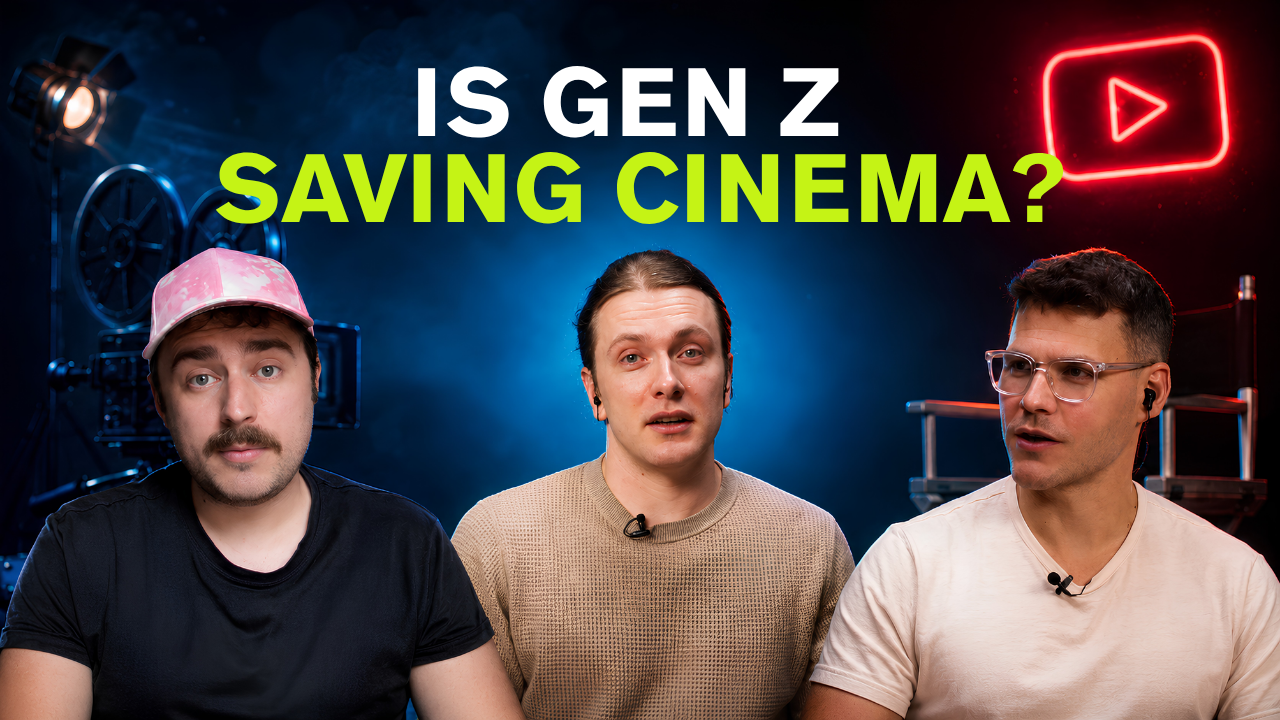
Horror just did something nobody saw coming: two ultra-low-budget films, built almost entirely on original voices and internet-born ideas, are outdrawing legacy franchises at the box office. In this episode, John hands the hosting reins to Danny, with creative executive Meara calling in remotely, to dig into what Obsession and Back Rooms actually mean for the industry.
Is this the start of a new golden age for young, independent filmmakers — a 90s Sundance moment two decades in the making? Or is Hollywood about to completely misread the lesson and throw money at anyone with a YouTube channel? The team breaks down why horror is the genre cracking the code, what separates a genuine original voice from a rushed cash-grab, and why "story" is still the only thing that has ever reliably worked. They also get into the resurgence of 90s aesthetics, the risk of chasing IP instead of substance, and what it will actually take for this moment to turn into a lasting shift — rather than a one-off.
Whether you're a working screenwriter or just starting your first script, this is a conversation about what actually gets a film made, and made well.
Full Transcript: Kinolime Podcast Episode 55: Are We Entering a New Golden Age of Filmmaking?
Participants
John Schramm - Head of Development, Kinolime
Danny Murray - Creative Executive, Kinolime
Meara Owen-Griffiths - Creative Executive, Kinolime
John: Hey, everybody, welcome to the Kinolime Podcast. I am John Schramm, with...
Danny: Danny Murray.
John: And also..
Meara: Meara, calling in from the back rooms. I don't know how I got connection down here, but it's working. It's working, God bless.
John: They have internet in 1990 that goes through walls.
John: We have a really amazing show today. So we're going to talk — I mean, everyone's buzzing about Obsession, Back Rooms, movies are back. They've been back. Also, Gen Z filmmaking, front and center of all the discussion today. So we're going to change it up a little bit. I'm going to take the reins of host, and I'm going to give it to a Gen Z employee here — Danny Murray's going to take it. Take the imaginary Gen Z camera.
Danny: Oh my God, thank you so much, it's beautiful.
John: So Danny's going to run the podcast today. You're going to ask him questions.
Danny: The future is now.
John: The future is now, let's go.
Danny: This is the era of iPad babies.
John: This is it. This is super exciting for any filmmaker out there. This has to be probably the best news you've heard in the last 10-plus years. I mean, honestly, I'm super stoked about this. We've got a lot of theories we're going to talk through: is this the renaissance of indie filmmaking? Is this the new '70s golden age? Is this the indie boom from the '90s?
Is This a New Golden Age of Filmmaking?
Danny: That's my first question, John, Meara. Do you guys think this is the auteur era? The kind of '90s Sundance era, where you blink — people are complaining about movies, nothing's original — and then you blink again and you have 15 legendary filmmakers born in a year or two. What is it?
John: I'm going to have a long answer on this, so I'll go first, since it's going to put people to sleep. No — I think this is a really interesting time. Look at the '70s, for example: Scorsese, Stone, Spielberg, the Ridley Scotts, everybody coming out of that era. That was an interesting time politically. There was a lot to say, a lot going on with the evolution of technology in filmmaking, but these were also tried-and-true filmmakers in the trenches — the Coppolas. They weren't overnight successes; these were people we still talk about today because they built their careers from the ground up.
I think it's a little early to say the same with these first-time filmmakers getting their first films — which is amazing, a great first step. Same thing with the '90s: we had that boom of the Kevin Smiths, Eddie Burns, Tarantino, Rodriguez. They were able to replicate that success going forward in their careers. Eddie Burns, not so much, but the rest did — and Tarantino's obviously still here today.
They had a lot to say, too. They were using the technology of the time, but it was also a different moment in cinema — they were making dramas, different styles of film. I think this is an interesting place to start, but — and I'll pose this to everyone at home — is it just because it's horror? I've been chewing on this, because I think it mostly is. I don't know if this could have the same success as a drama. The whole thing right now is nobody knows where this is going. But Meara, what do you think?
Meara: I think you make a lot of really good points. I'd say I don't want to get too excited about this being a new generation of A-tier filmmakers, because it's early days — we've got a couple of good films under the belt. Let's be positive about it, but let's not count the chickens before they hatch.
On that '90s generation point — I do think it kind of needs to be horror, like you say. I don't think this works for drama, and probably not for anything to the same degree, other than maybe comedy. I think that's because horror is probably the most accessible genre for young people — or anybody — to make. It has the most tropes, and the most room to do something new by inverting those tropes rather than doing something completely different. You've got a very specific set of parameters and expectations for horror, and you can play with them much more easily — remove the component parts, put them back together, create something entirely new, and people will love it. That might make it sound too easy, but young people have grown up with decades and decades of horror, and you can really follow the trends. Each decade has its own flavor.
Horror, the Internet, and the New Wave of Filmmakers
Meara: We kind of ping-pong back and forth — I've talked about this before on the podcast — between folklore horror and urban legend horror, and it seems like almost every decade we go from one to the other. But now it really seems like we're coming into this new creepypasta, online-space kind of focus in horror. And there's so much fantastic stuff out there that's open source — anonymous accounts, 4chan, Reddit, specific creepy forums. There's a goldmine of material to adapt into film, and I think this is the beginning of that hitting the big screen.
John: Because — to that point — this isn't the first time a generation has grown up with an internet phenomenon. Take Slender Man, the 2018 film. I'd argue that was probably bigger than Back Rooms in terms of virality — it was genuinely creepy.
It only made $50 million worldwide in 2018 — pre-COVID, so no box office issues at the time — on a $10 million budget, in 2,400-plus theaters. It was shown to the world, and people didn't really bite. It's got something like a three out of ten on IMDb, which to me means the film just wasn't good. I only saw parts of it — couldn't get through it.
So is it that it's just internet phenomena working for younger audiences, or — and this is my thesis — is it simply that these are two really good filmmakers who know how to make a good movie? I always believe original voices and good films will overcome any box office issues. If we can just focus on making better movies, age doesn't matter as much. I'd put it as a pie chart: one slice is the internet phenomenon driving IP awareness at the box office. Another slice is the cultural moment — young people finally having movies made for them by their own peers, which is a big deal. But the largest slice is that it's just a genuinely good movie.
Look at Obsession — Meara, I know you didn't love it as much, I haven't seen it yet, but it's sitting in the eights on IMDb, which is super high for a film. Back Rooms is a bit lower, in the low sevens, but that's still solid — anything above a seven on IMDb, aggregated with Metacritic, and I think your film is pretty good. Compare that to something like Bodies Bodies Bodies, which they were branding as a Gen Z film back in 2022 — COVID was still messing with theaters, but it also just didn't catch fire critically. So I think these are simply two really good movies.
Danny: To sum up both your points — horror is getting these breakout hits largely because studios only really take original risks at low budgets in horror. I'd love to see that expanded further.
Has Hollywood Cracked the Code?
Danny: If Obsession is basically proof of your thesis, John.
John: Say it again.
It's not about cast dependency. It's not about budget. It's about a great story, a great young filmmaker, and an original voice.
John: That's all you need.
Danny: I do wonder, though — with these two successes, and almost a clear roadmap now for what excites young people enough to get to the theater, do you think Hollywood has in some way cracked the code that everyone's been chasing since COVID — how to actually save the box office? Meara, want to go first?
Meara: I think so. First, I think we're going to see more studios investing in five-to-ten-million-dollar movies rather than the big $150 million tentpoles. If you look at A24 — with Back Rooms — they've actually stepped up production into fewer, but bigger-budget films recently, in that $40–50 million range. Look at Civil War, or the other Alex Garland film — they're clearly expanding their tentpole range even as their mid-budget output grows. And by the way, this is already the highest-grossing A24 film ever, after just one week.
Danny: It's almost funny that Back Rooms eclipsed Marty Supreme's worldwide gross — a film with months of P&A behind it — within a single weekend.
John: But again, I think the whole point is horror. If you want to get people in the theater, make a horror movie — it's a communal experience. Nothing else replicates that. I still haven't watched 28 Years Later — I keep trying, I'm on my rowing machine at home, but I wish I'd seen it in a theater, because I want that communal, freaked-out experience.
I want to be a pragmatist here, though, so we don't make the mistake of just throwing money at "youth" as a category. My fear is that Hollywood — "smart Hollywood" being something of an oxymoron — is going to throw huge amounts of money at YouTubers and hope something sticks. At the end of the day, I think we just got lucky that two well-made horror movies opened back to back, right around May — the precursor to the summer box office. College is out, kids are shifting into second gear, and young people want to spend money and go to the theater with their friends.
Danny: But you're not going to get them out for their dad's favorite movie from when he was fifteen.
John: Or dramas that just aren't speaking to them. I think this is lightning in a bottle, and it shows that the Gen Z crowd — and I hate talking about "crowds," we're all just humans — but you do have to look at age groups. We're different from them.
Danny: You'll never be like us — like Meara and me.
Meara: Hey, Danny, you're speaking for both of you, but I'm technically a millennial.
Danny: Oh, sorry — I forgot. You need to be thrown in a closet with the millennials, Meara.
Meara: Wait, I'm grouped in with John instead of Danny?
John: I'm a millennial, my man — '83.
Meara: Wow, I didn't know that.
John: That's why we're kindred spirits.
No, but the point is — just make a good movie and people will come. It's also helpful to have filmmakers who actually get the nuances of what it's like to be a teenager right now, falling for someone, all of it. Only Oliver Stone could have made Platoon the way he did — he knew that world, and it was a huge box office success. Who wants to see a war movie? But it touched a nerve, for whatever reason.
Danny: So on that note — the slate plan you've been instrumental in developing is built around original IP, original stories, original voices, largely in that one-to-fifteen-million-dollar budget range. It seems like the world is catching on to that. I'm fascinated — how do you two think Hollywood is going to completely misinterpret and botch this moment?
John: I think they're going to throw a ton of money at young filmmakers and hope something sticks. Honestly, I think this was luck — two good films happening to release at the same time. That doesn't take anything away from the filmmakers themselves. In isolation, I think Obsession would have done its numbers regardless. Back Rooms might be getting a bit of a bump from Obsession — people are already in "horror mode," so they catch Back Rooms because Obsession was sold out.
Speaking only to Back Rooms — that's a tight story. I disagree with parts of the second half, but overall it was a big swing.
Danny: My assumption is that the big five studios are going to look at what Curry Baker and Kane Parsons pulled off — these are genuinely savant filmmakers who just didn't have a distribution network and were posting on YouTube. They're not front-of-camera personalities who got lucky; even though Curry Baker has a TikTok presence, these are serious filmmakers on the ground making stuff constantly. I think studios are going to start handing movies to front-facing YouTubers instead.
We've already kind of seen that — it worked a bit with Markiplier.
I don't think it will translate the same way.
John: He also didn't have a major studio behind him the way these two films did.
Meara: I think we'll see two things. First, producers are going to look at YouTubers — anyone with a pitch — and think, "let's take a gamble, let's do five gambles and hope one pays off." That may or may not work. Generally these creators are genuinely passionate about filmmaking, sitting on ideas they care about — not everyone chasing this wave will have that same passion. From the production side, it's a gamble; a lot will fail, and if a couple hit, that's a win. At least we'll be seeing new things from new people. Whether it pays off for Hollywood long-term, who knows — but short-term, I think there'll be a rush, and everyone will have a niece or nephew with 240 Instagram followers getting handed the reins.
The Risk of Misreading the Moment
Meara: What I'm more concerned about — thinking about our own writers and anyone coming through the Kinolime program — is that people are going to flood Reddit and creepypasta sites trying to find stories to adapt. I want to implore people: always come back to theme. If you look at Slender Man, which was the biggest thing on the internet around 2016, they clearly rushed that film out — the cutscenes in the actual Slender Man game were more interesting than the movie. They pushed it out because it was hot IP, not because they had something to say with it.
If you look at Obsession — and I'm not the movie's biggest fan — or Back Rooms, they're tackling real ideas about people, humanity, how we interact with each other, issues that are prevalent in our society. They're coming at it from a place of genuine story. So you're going to see a wave of people who read one scary story and think, "there's no Disney or big publisher owning the rights to this, it's a free-for-all," and expect the same success without doing the work. We should implore people: know what you're trying to say before you try to say it.
John: That's a real problem, because Hollywood is so reactionary — they'll throw money at it, we'll get a few bombs, and then original films get shelved again in favor of the same big-budget IP. It's an easier, more predictable ROI to make one tentpole and pack it with stars to hedge the risk, instead of taking a chance knowing that Obsession only cost $750,000. That's nothing to a studio. Take the risk — out of ten films made for under a million dollars each, maybe one hits, but that one hit moves the needle.
IP, Valuation, and What Back Rooms Really Represents
Danny: When you talk about mitigating risk — if you look at the numbers, Back Rooms beat out Star Wars at the box office, which wasn't saying much lately, but it still matters, because these big five studios are valued off their IP. What these two films really show is an IP evolution. Obsession is just a great original film with young voices and a young cast. But Back Rooms is genuinely an original Gen Z property — not repurposed, not pandering. It's a property by young people, for young people. And it's one of the first times we've really seen a great viral small-screen YouTube series successfully scaled into something that feels like a theatrical event.
John: It'll be interesting, because we've had the ability to make these kinds of films for a while — we just hadn't seen it actually happen this way. The question is whether it repeats itself.
The genre helps, but I'll push back a bit — nobody wanted this new Mandalorian film. It feels five years too late. Favreau feels like a tired director at this point.
I haven't seen it, so it's hard to judge, but nothing in that trailer spoke to me. I think the Ryan Gosling Star Wars film will make real money, and I don't think we'd be having this same conversation if that had premiered the same weekend.
That's a great point — why do we keep handing these franchises to older filmmakers on autopilot, copy-paste-repeat? I'm not trying to be ageist — Favreau's in his late fifties — but his last truly great, personal film was probably Chef.
Danny:Chef's awesome.
John: A personal film. Right. It's not necessarily about age, it's about energy. Meara pointed out that these two young filmmakers were working from plot, from story. It always comes back to story. If you've got a genuinely good screenplay and you direct it well, you've got a far better shot at success than something that just looks glossy. Bodies Bodies Bodies is a perfect example — it looked awesome, great posters, great color scheme and vibe, but there was nothing underneath it. Pretty on the surface.
Meara: That ties into why I think it's horror specifically, and not the Star Wars of it all. I've heard Kane Parsons talk about this — it's like a "lore loop." You introduce information, whether it's a YouTube series or something like Star Wars, and then people start theorizing, threads pop up, Instagram posts follow, and it becomes about appeasing that audience — the nods, the winks, making people feel special for catching a reference, even though most viewers catch it too. That's maybe why it's harder for young people to break into legacy franchises — there's so much homework required now. You need twenty-five years of Marvel, decades of Star Wars lore, just to get the references.
With horror, what people are actually frightened of shifts over time. You've probably seen people say online that home invasion stories don't scare young people the same way — they're not worried about their own house being invaded, their own family being terrorized. But things like being trapped in unwanted attention from someone in your friend group, unable to say you're not interested without blowing up the group dynamic — those are real horror dynamics young people are actually dealing with. That's why these filmmakers have their finger on the pulse in a way a twenty-year-old handed the next Star Wars movie wouldn't.
John: And that wasn't what I was suggesting with the Star Wars comment — it's more about energy. Look at Scorsese, still bringing real energy and passion into his eighties. These young filmmakers are bringing their own perspective in a genuinely cinematic way. Unpopular opinion, maybe, but I don't think they're trying to pander or preach. I haven't seen Obsession, so I'll just speak to Back Rooms — I think it's simply a well-made movie. Compare it to something like Men, directed by Alex Garland, which bombed. I'm not saying "alienate men and your movie fails" — that's not the point — but there's something to be said for just having fun with a great premise: you're in love with someone, you want them to love you back. There's agency and autonomy themes buried in there too, but it felt backwards compared to what Back Rooms pulled off.
Meara and I actually argued about the Back Rooms logline — "a mysterious door appears in the basement of a furniture store." I loved it. He hated it.
I loved it, because it makes you start asking questions — what kind of door is that? It's simple. I know the movie gets more complex later, but that first half is as good a horror setup as you can get — found footage, creepy basement, unexplainable events, things escalating, and you don't know what's going on. Phenomenal.
The lesson is: be honest with yourself and tell a genuinely good story. Even something as simple as "I want someone to like me" or "I don't want to upset my friend group" — that really speaks to what kids and young adults are going through.
What Should Come Next
Danny: What I really hope comes out of the success of these two films — two big things. One, in the macro sense: more low-budget slate funding relative to massive tentpoles. You can make over 150 Obsessions, even accounting for P&A, for the price of one Mandalorian and Grogu. Two — a lot of people are asking whether every future filmmaker is going to come from YouTube now. Is this the death of film school? The death of the festival circuit? What I think these movies actually show is that even twenty years ago, if you wanted to make something like Clerks, you still needed thousands of dollars in celluloid just to shoot it. I think it's finally dawning on development executives and studio heads that there are genuinely ten times more filmmakers out there than anyone realized. I think it actually makes festivals and film school more important, not less, because it comes back to slate funding — we have more voices than we ever gave credit for. I just hope this leads to more discovery, more bold original ideas.
John: That's all you can hope for: that this is the way in to a real renaissance, or revolution, or reemergence — whatever you want to call it. I think we can finally say the COVID effect on theaters is over.
Even Michael — completely unrelated to Gen Z — most people don't know much about him personally beyond the scandals, but people, including young people, went out and drove to see that movie, because at the end of the day it was just a fun film. Not that everything has to be fun, but make something that speaks to you, and I think people will show up. It always comes back to story, story, story.
Danny: So what John's really saying is: build it and they will come.
John: I don't know if that even works today, honestly.
Meara: I think Danny's going to make John a hundred million dollars off that one line alone.
John: It'll be interesting to see where the summer box office goes from here. We should do a whole episode on predictions — I think Disclosure Day is going to bomb, and I'm genuinely fearful of that, because the narrative will become "even an original movie from the greatest auteur filmmaker bombs," and the purse strings close again. There's a great book everyone should read called The Big Picture — I forget exactly when it was written, fifteen or twenty years ago — but it really explains the current IP-driven market. It's still safer for a studio to put $200 million into a film they expect to make $300 million on than to take a bunch of small swings that eat up distribution slate and only bring in a million or five million each. Studios have enormous overhead and big salaries to cover — that math doesn't work for them the same way.
Meara: First question for you, John — have you read Heat 2 yet, or are you waiting for the movie?
John: I've reserved it — I'm one of those people who won't read the book first. I'll watch the film, then read the book after.
Meara: Interesting — I've got it downloaded as an audiobook, not sure if I'll actually listen to it or just wait for the movie too. I don't think it's going to make a ton of money. I think it'll break even, but I don't think it's going to be huge.
The 90s Aesthetic and What's Next
Meara: I wanted to ask you both something about Hollywood potentially misreading this moment — is this really the next exciting generation? I look at the '90s as a genuinely exciting time for horror, partly because the advent of digital cinema made things so much more accessible in the late '90s and early 2000s. You got that boom of Japanese horror showing up on digital, The Blair Witch Project, Ginger Snaps — a lot of what we're seeing now echoes the '90s, even coming from young people who never lived through it. Back Rooms is set in the '90s; Obsession isn't. Did either of you ever read the Goosebumps books by R.L. Stine? Back Rooms feels like one of those.
I'm pretty sure I read that exact one — it had a clown on the cover at some point in my life.
Even something like the Michael Jackson movie — technically pre-90s — we're getting filmmakers focusing on eras from before they were even born, or at least before they were conscious enough to absorb it directly; they're observing it retroactively, through osmosis. Do you think there's an angle where the '80s are done, Stranger Things wraps up, and we move fully into the '90s for the near future — everything set there?
Danny: I mean, you're talking to a guy directing his own coming-of-age '90s movie this year, so I think you already know my answer.
John: I've been saying for a while that we should be focusing on the '90s as a setting — I find it genuinely interesting. I actually think we're starting to push past the '90s and into the early 2000s. I still think the '90s has a runway for another year or two, though, because we haven't had the great '90s film yet. Look at Dazed and Confused — that really encapsulated the '70s. We haven't had that equivalent for the '90s yet. We're going to make it, at Kinolime, don't worry.
Would Back Rooms be as stylistically interesting if it were set in the modern day? The found-footage look, the graininess — that had a huge effect on the horror for me. But honestly, we don't know. Who was the screenwriter who said "nobody knows anything"?
Meara: Goldman?
John: Yes — William Goldman.
Thank you, Meara — I haven't eaten lunch yet, forgive the brain fog. William Goldman said — I'm paraphrasing — nobody knows anything. And that's the truth.
Closing Thoughts
John: We don't know what's going to happen next. All we know is — if this is a love letter and a plea to Hollywood, it's this: please be smart with this opportunity. The audience is here, Gen Z wants to watch movies, so give them what they want. Give young filmmakers — and older filmmakers too — the tools and the ability to make their passion projects, original films that actually say something. Don't just chase a trend or a political moment; nobody cares about that. Make good, personal movies. I don't know if drama will ever be as commercially successful as horror in this space, but will a Gen Z filmmaker make a drama that truly transcends and becomes a hit? I don't know —
Danny: That's when we'll know we're in a real new era: when there's a true Gen Z drama that blows everyone away.
John: TBD, we'll see. But to all the young filmmakers out there — this has to be the best news you've had in your young careers. Now's the time. Go make your movies. Go out there and shoot something with your friends, edit it, whatever it takes. Go make a film — I want to be talking about your movie a year from now, when it's out and shattering drama records for a young filmmaker. D, this was a great topic, thanks for doing it, Meara.
Hopefully you get out — I'd love to know what your Back Rooms doppelganger monster would look like.
Meara: Probably just me, but thinner.
Danny: Yeah, it's just the same Meara — but with an Irish accent.
John: Meara, be safe. Danny, good work.
Danny: You too. This has been Meara, Danny, and John — go watch some movies, there's great stuff out there. When's the last time we could say that? Have a blast, go get a large popcorn, and soak everything up.
We're in a genuine cultural moment where movies are fully back and cool again. Go do what you've got to do — go see movies in theaters, get off your iPad. I know you're all babies who love Back Rooms — take out your binky, go watch the movies, you're going to have a blast.
John: If you got something out of today's podcast, please share it with your filmmaking and screenwriting community, and hit subscribe. It genuinely helps us keep making these — we need it. We'll see you in the next one.