When You’re Allowed to Break the Rules: A Crash Script Analysis
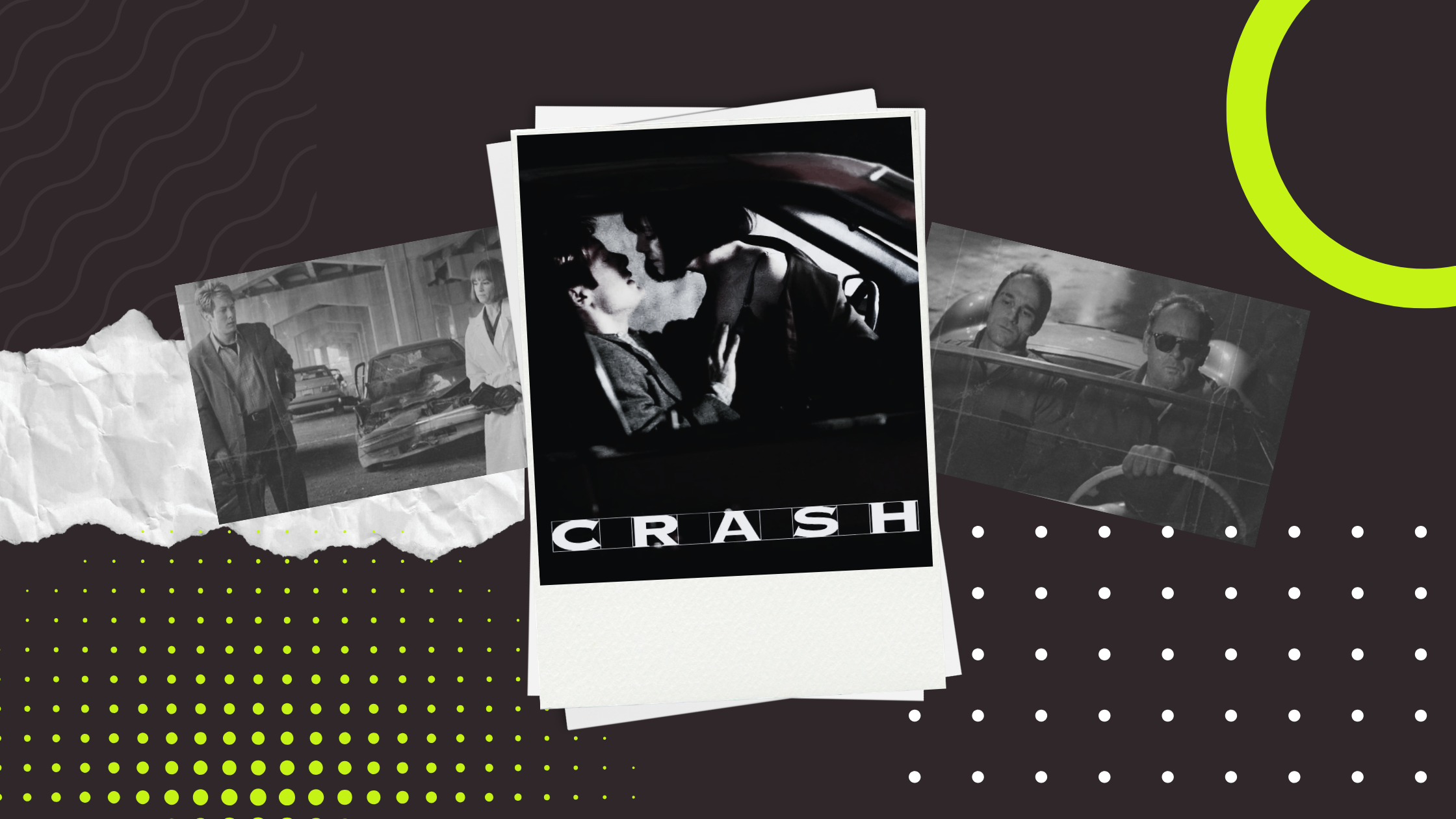
Screenwriting is typically guided by a set of unbreakable rules; industry standards that exist to keep scripts shorter, prevent the writer from stepping on anyone’s toes, and, of course, separate the amateurs from the pros. But what if you don’t care about the length of your script? What if you’re the one directing the movie and know exactly what you want the final product to be? What if you’re already established in Hollywood and can literally do whatever you want because nobody’s going to tell you otherwise? Well, in the case of David Cronenberg’s 1996 film Crash, this was the case. If you haven’t watched this movie before, you’re in for a very strange treat. I never know quite how to describe its plot other than “a group of freaks get turned on by car crashes”, which honestly kind of nails it. And yes, it’s as weird as it sounds. A sexually provocative psychological drama, Crash relies heavily on slow-moving shots and patient scenes to achieve the dark, provocative tone that Cronenberg set out for. As a result, the nearly 100-minute film somehow only has a 53-page screenplay. Additionally, and almost contradictorily, it’s also littered with hyperspecific camera direction and “novelistic” scene descriptions that typically would be cardinal sins in the screenwriting community. So, in this script analysis, we’re going to take a look at this rare, unorthodox screenplay and see just how Cronenberg managed to pull off such a well-paced, interesting film while ignoring all the rules.
OPENING IMAGE
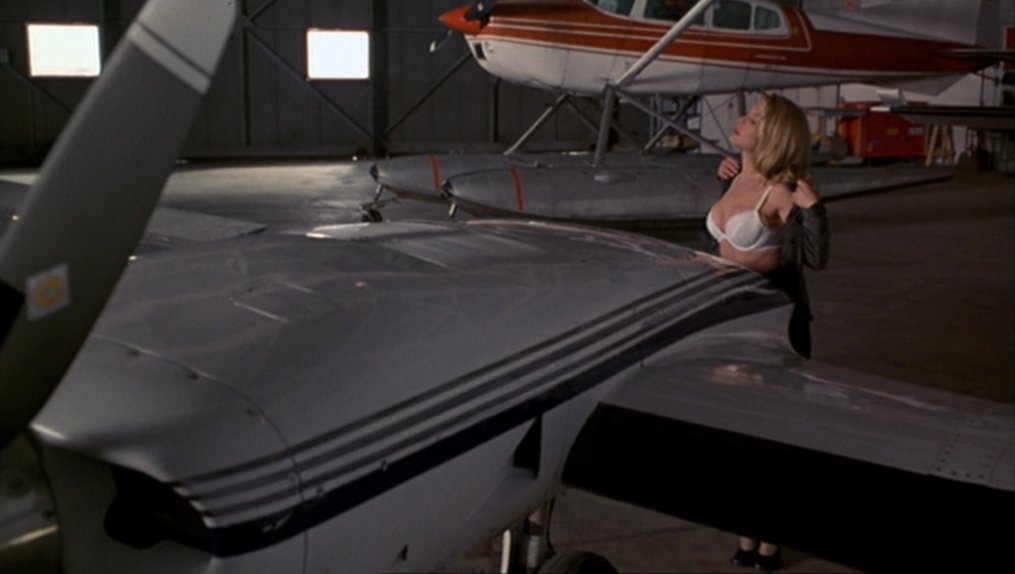
We open in an airplane hangar, where a woman (Catherine) is in the middle of having sex with a mysterious man while bent over the front of an airplane. Right away, Cronenberg introduces the idea of modern technology influencing the way humans interact sexually.
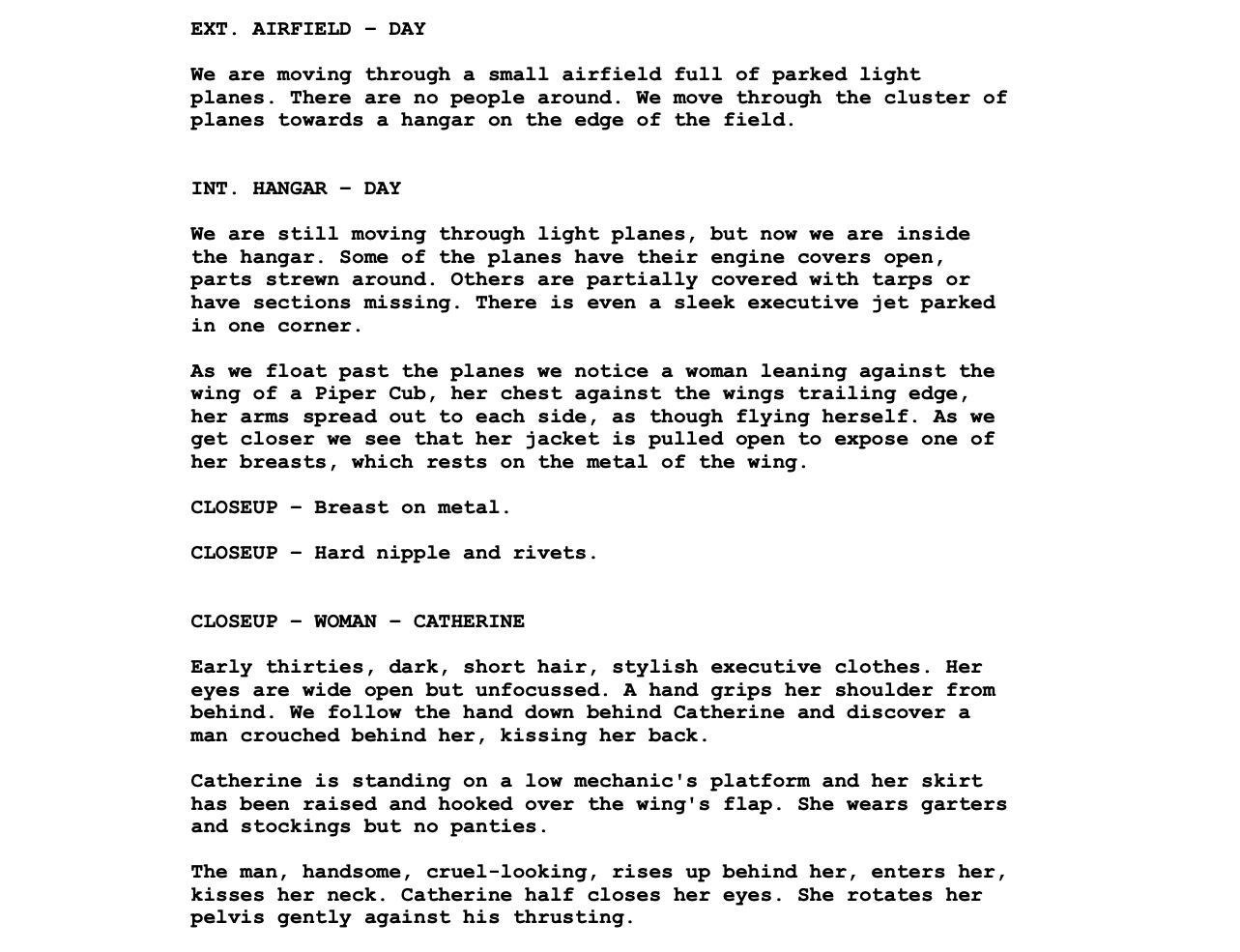
Now, the interesting part about this opening page is that everything described only takes up about 10-15 seconds of screentime. At this pace, you’d expect the film to be far longer than the script, but that’s obviously not the case. As we continue, I’ll try to point out where Cronenberg makes up the difference.
SET UP
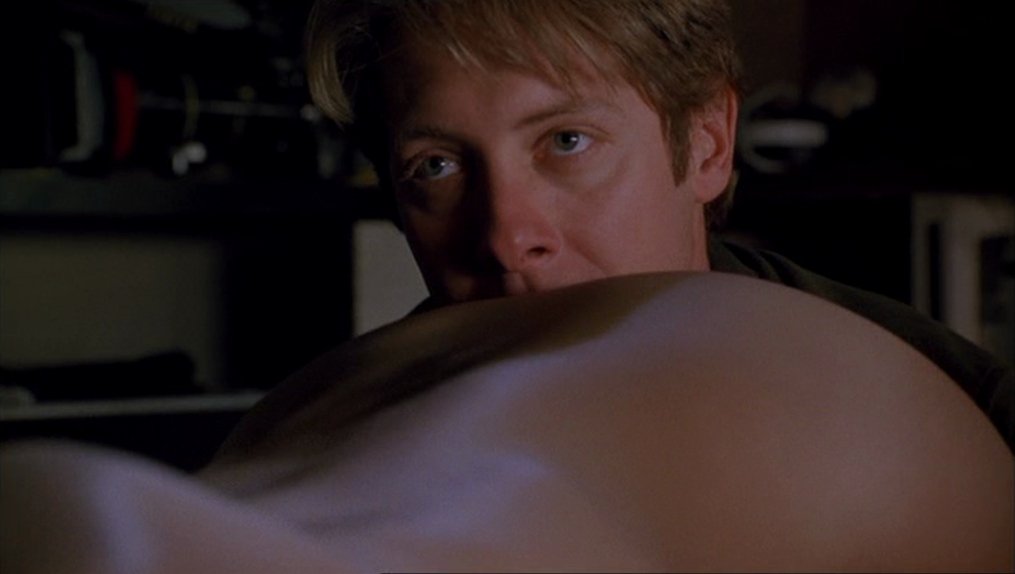
We jump over to a film studio as an unnamed Assistant Director desperately searches the set for their producer, James, who’s in the middle of performing fellatio on one of the camera assistants.
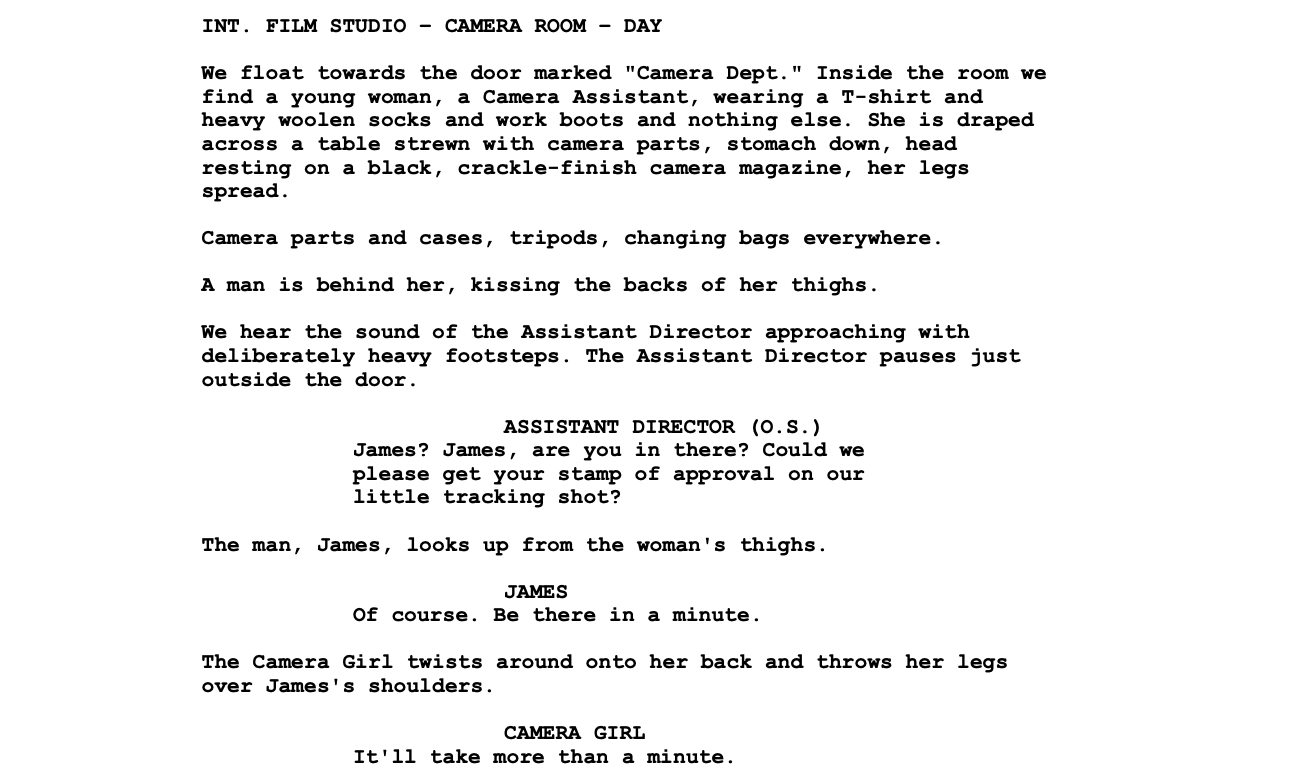
We cut to James’s apartment balcony as he has passionless sex with Catherine, revealing that the two are, in fact, married. They begin to have a conversation about each other’s sexual activity during the day, revealing to the audience that they’re in some sort of open relationship.
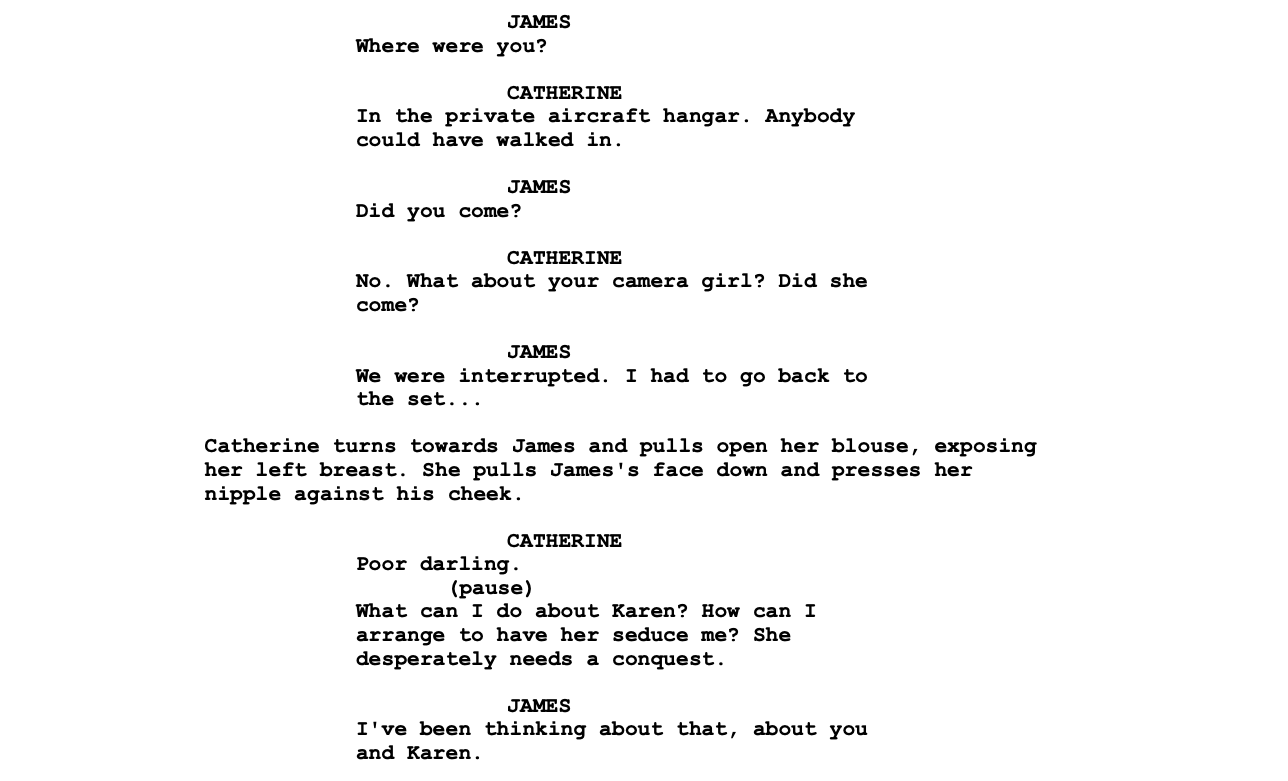
Not only are multiple sexual partners allowed in this marriage, but they’re very obviously encouraged, as the mundaneness of normal sex between James and Catherine has seemingly lost its edge.
INCITING INCIDENT
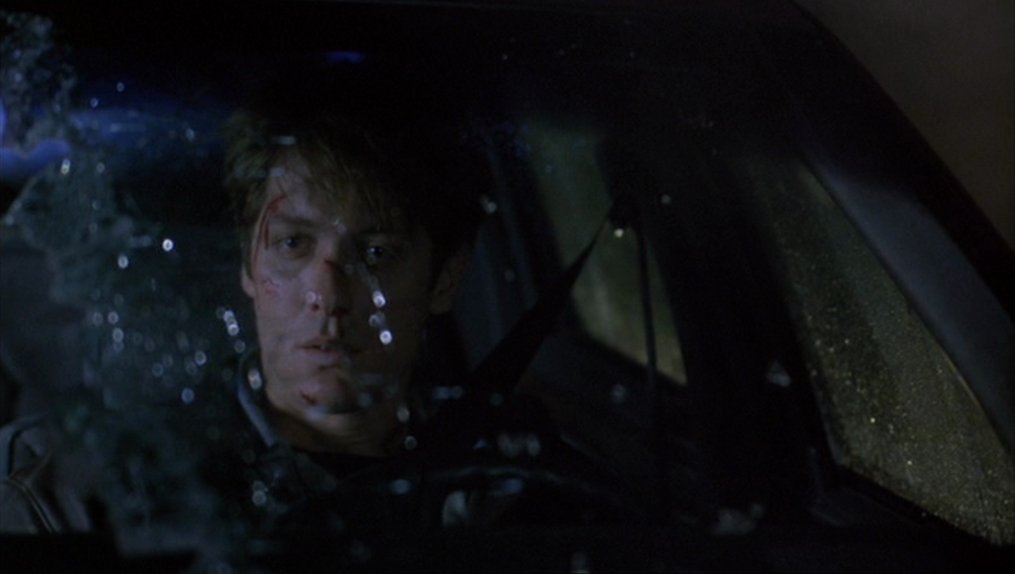
One rainy night, while driving home from the studio, James loses control of his car and flies into oncoming traffic.
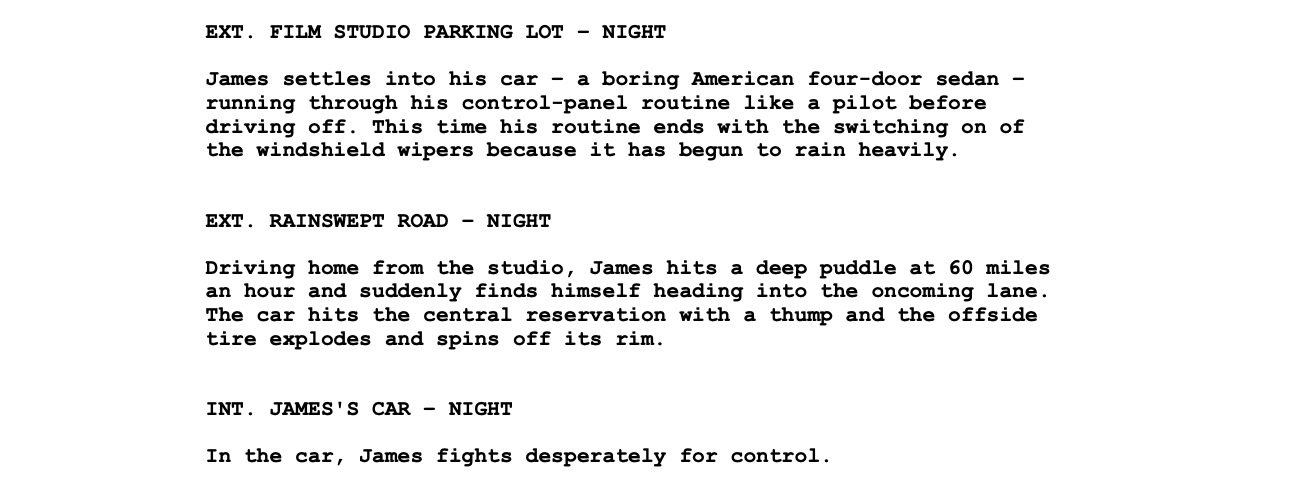
He collides with one of the oncoming cars, leading to a violent crash and killing the male driver. As the two cars sit facing each other, James glances over at the passenger seat and makes eye contact with a woman, most likely the driver’s wife. She sees James looking at her and quickly flashes one of her breasts at him.

DEBATE
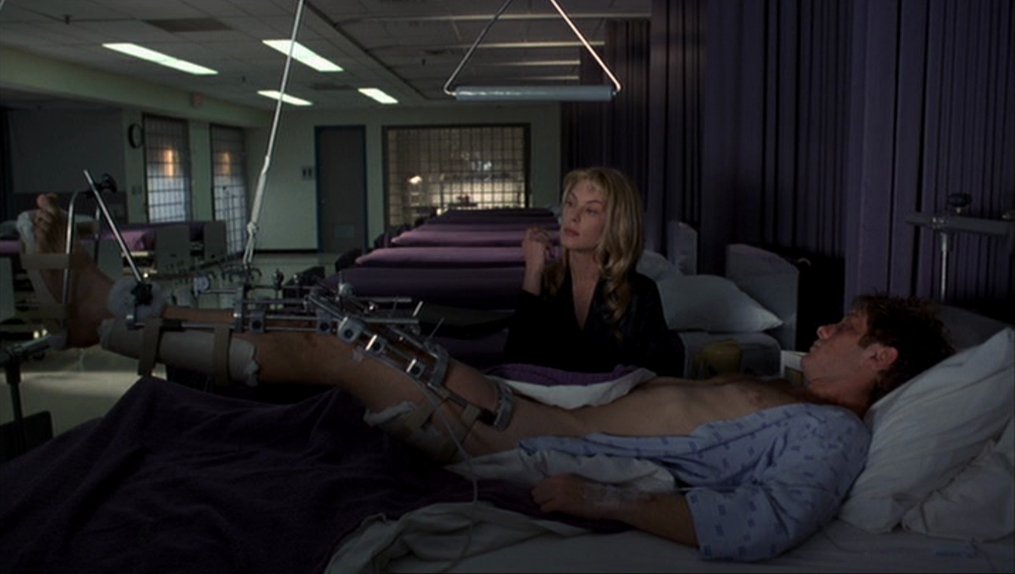
We cut to the next day, where we find James in the hospital with significant leg injuries. Catherine visits him and tells him about the woman in the other car.
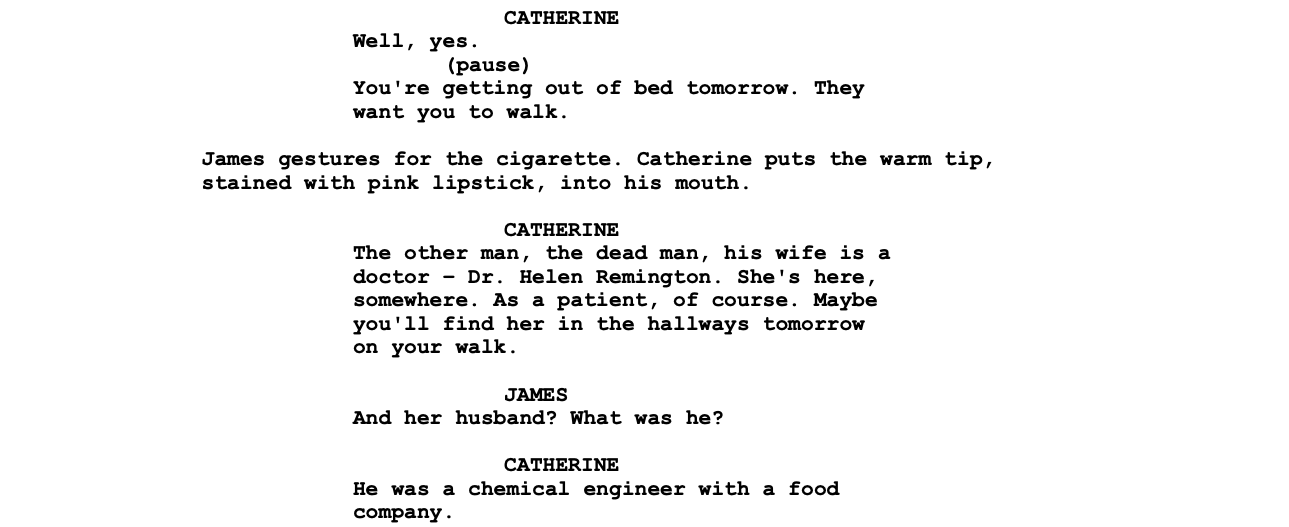
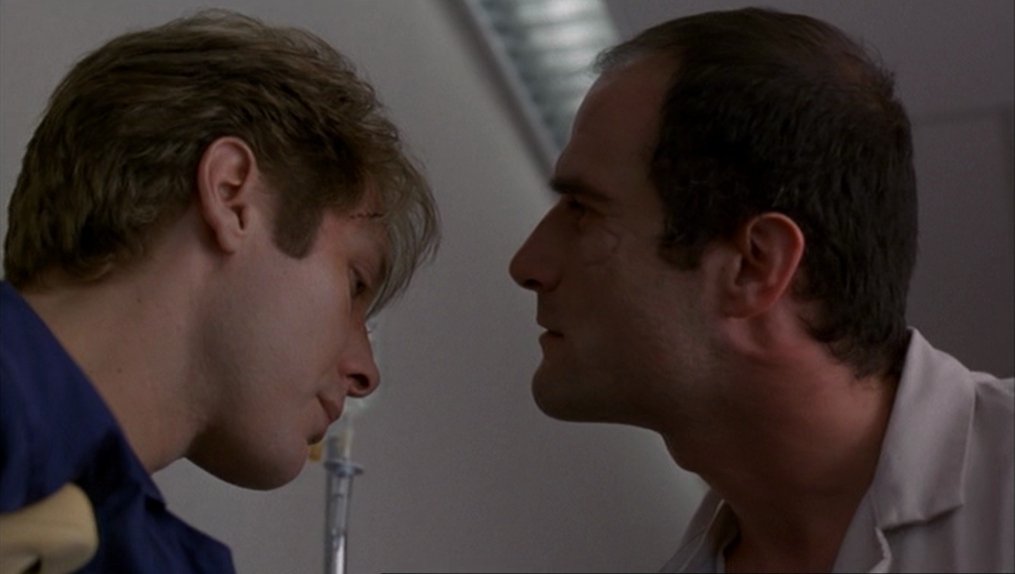
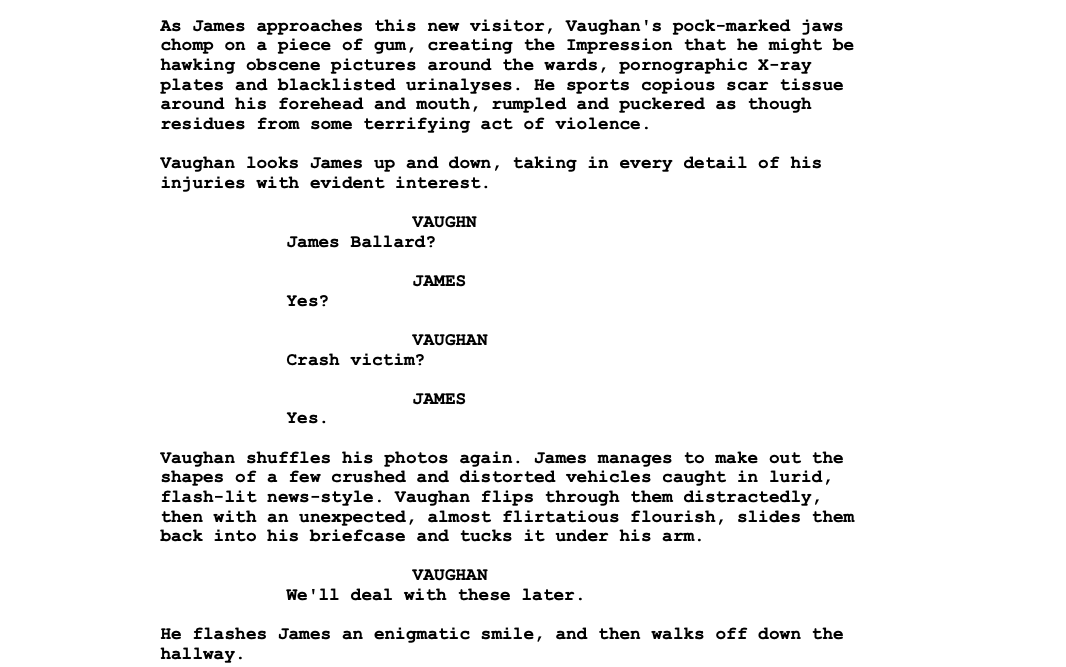
Later in his walk, James bumps into Helen, but she says nothing to him and keeps moving. Before he can think about this strange behavior, he’s confronted by Vaughan, a doctor at the hospital (or so we think), who seems very interested in James’s injuries…
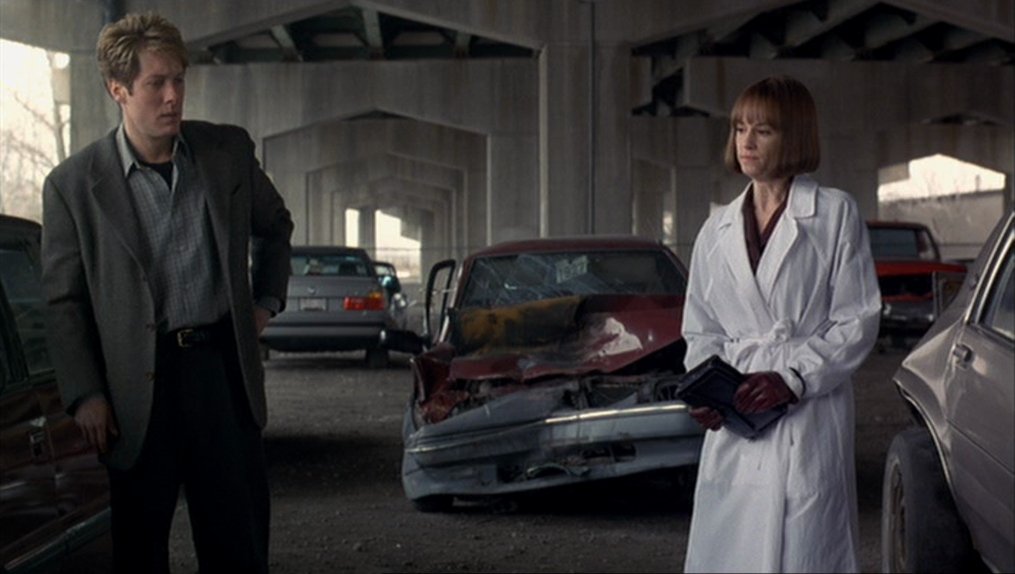
We jump forward in time to when James is almost healed. He goes to the police station to inspect his totaled car, which is being held in their impound lot. While there, he once again runs into Helen, who seems to be doing the same thing. They talk for a moment before James finally offers to drive her home.

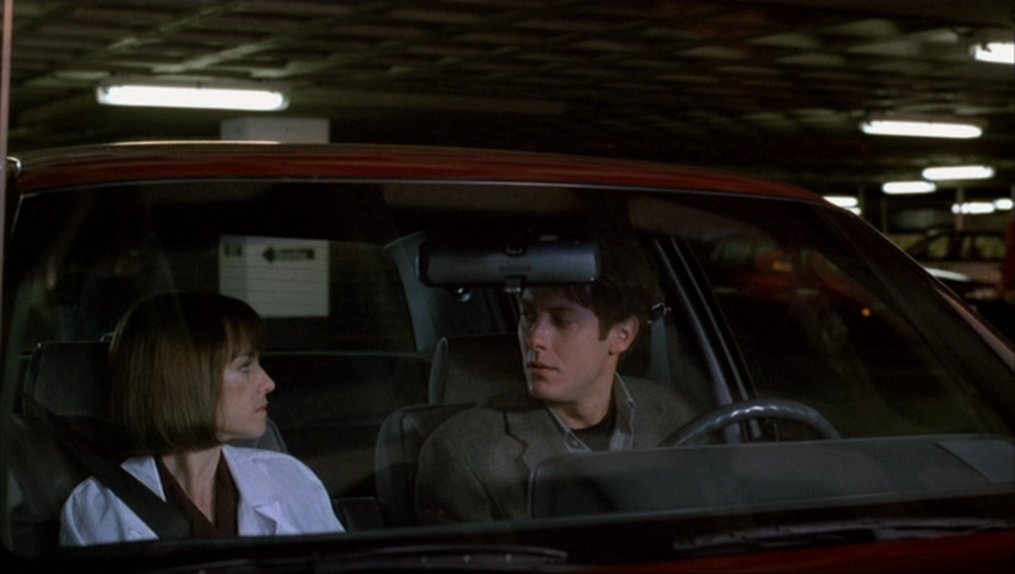
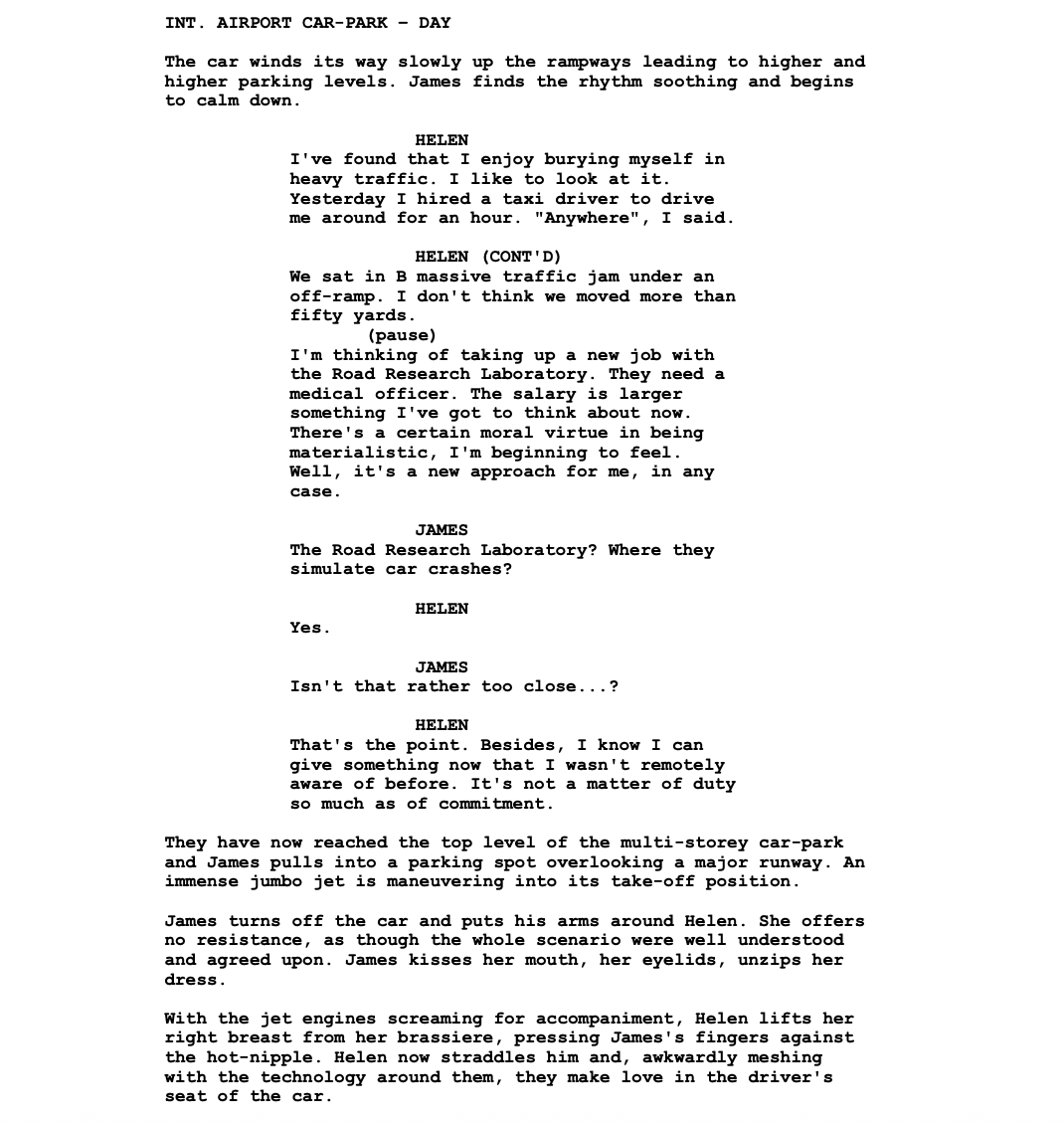
Helen directs James to the airport, where she claims she works. During their entire drive, there’s a strange sense of fear and sexual energy in the air; something that both of them instantly recognize. They drive to the top of one of the airport parking structures, park, and eventually have sex.
BREAK INTO TWO
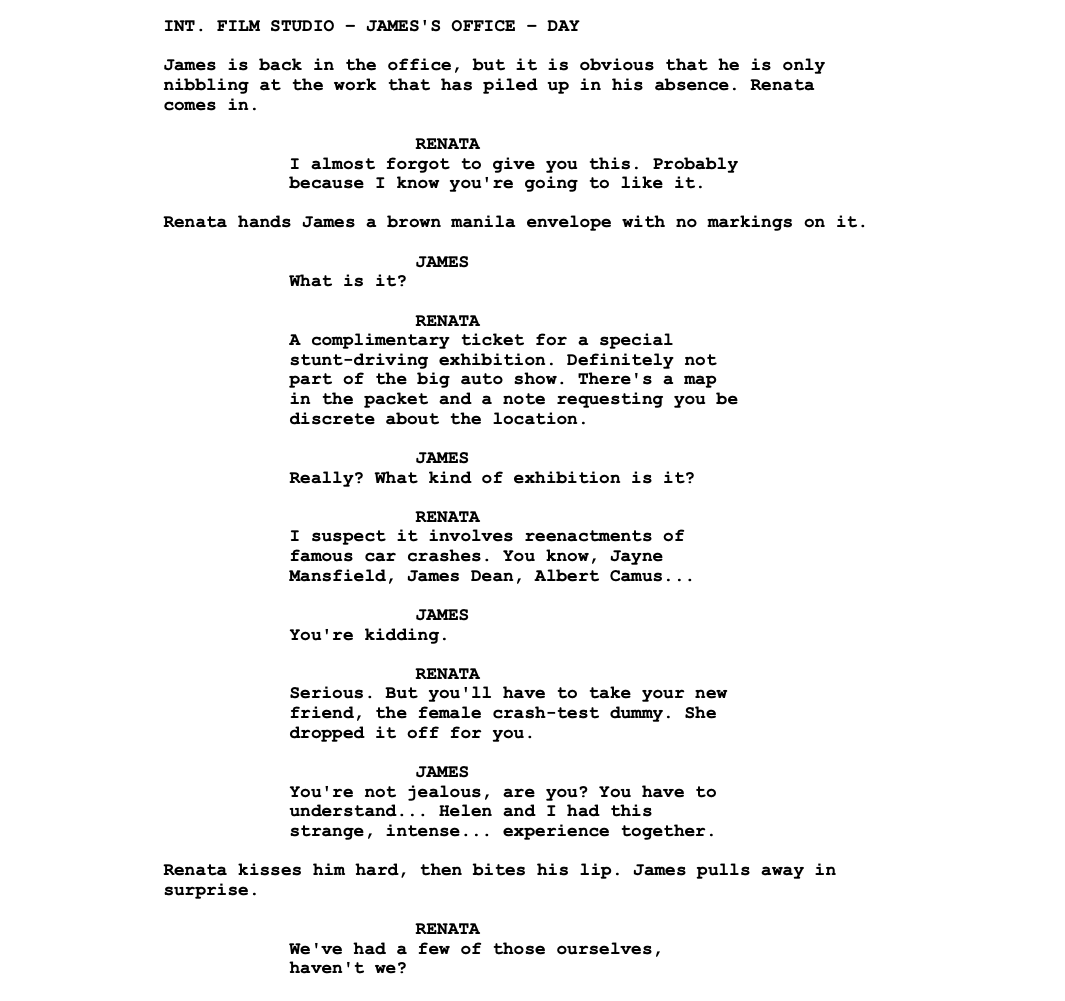
Days, maybe even weeks, later, James is back at the office, where he discovers that Helen has invited him to a very unique event: an exhibition of famous car crashes. By Renata’s words, it seems that James and Helen have begun to form a fairly serious relationship, built upon the traumatic experience they shared on the night of the crash.
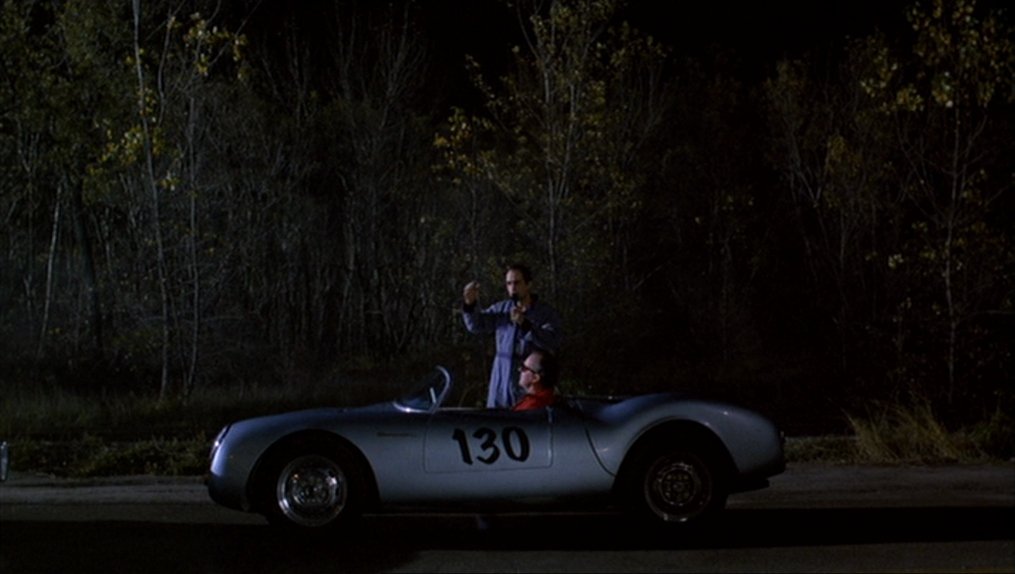
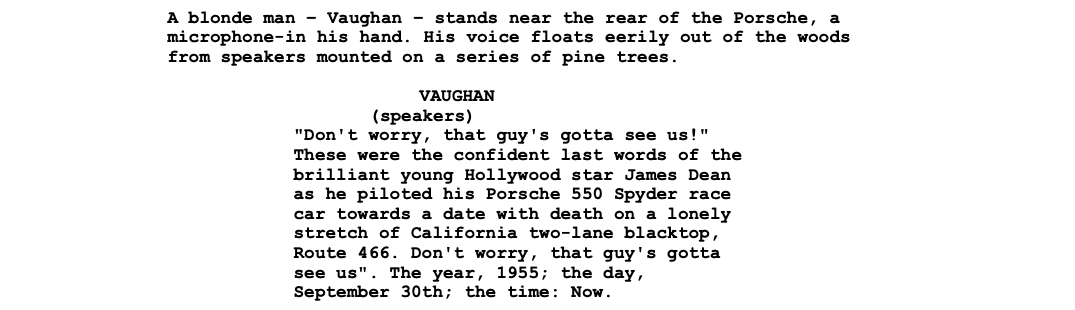
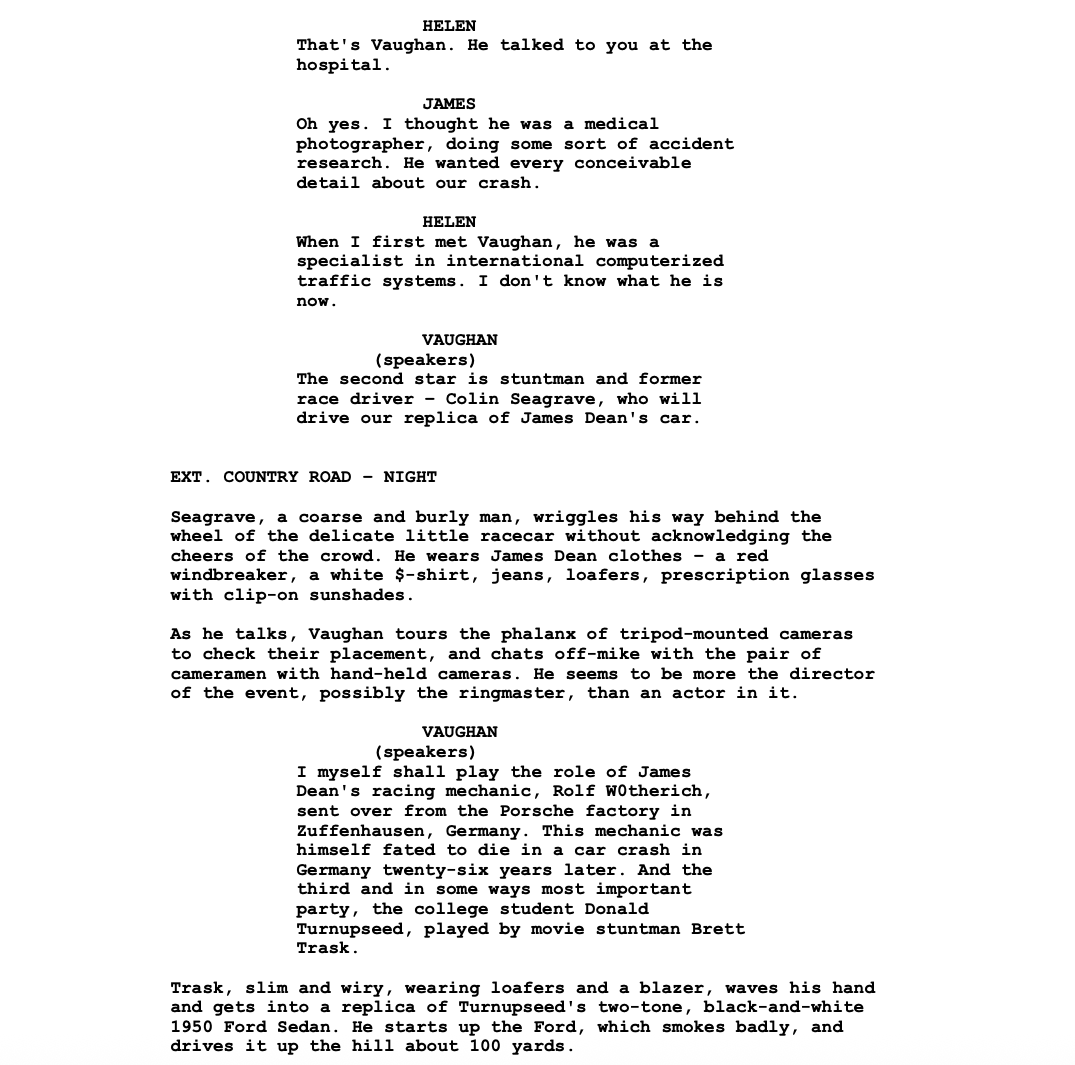
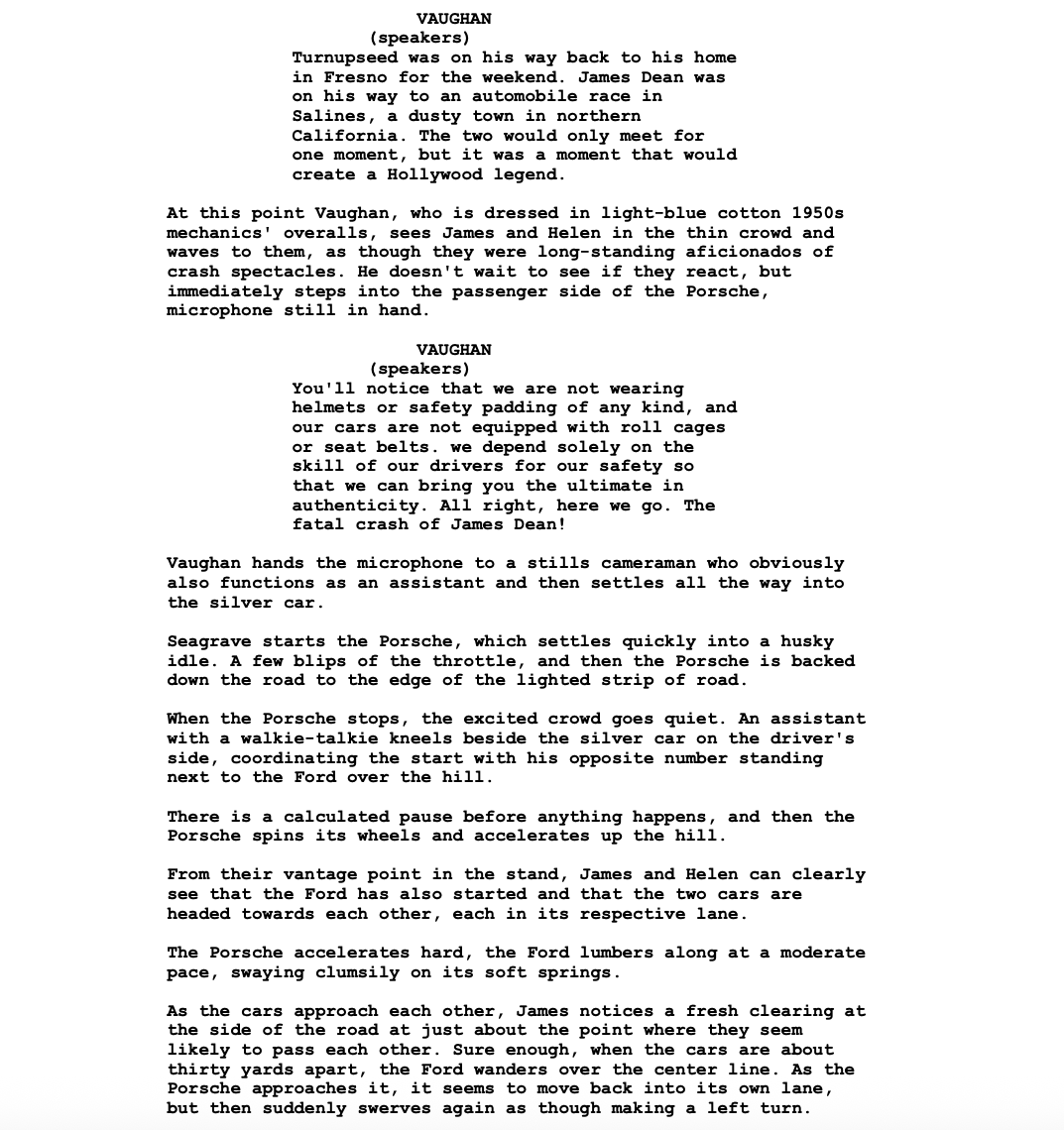
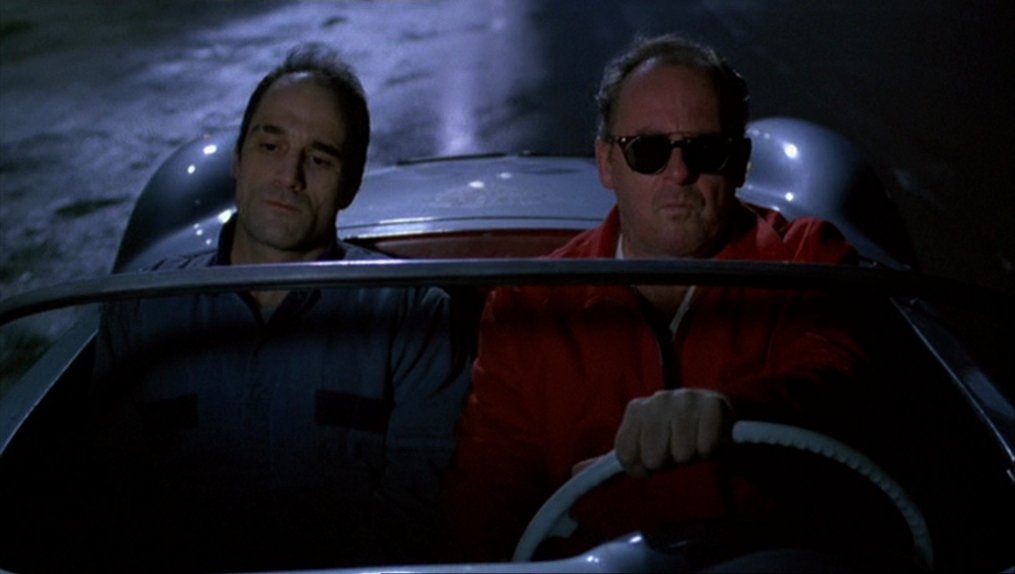
We jump to the exhibition, which is taking place out on a country road. Vaughan, the strange man from earlier pretending to be a doctor, stands in front of a Porsche as he gives a speech to a small audience sitting in the stands nearby. It seems to be some kind of performance.
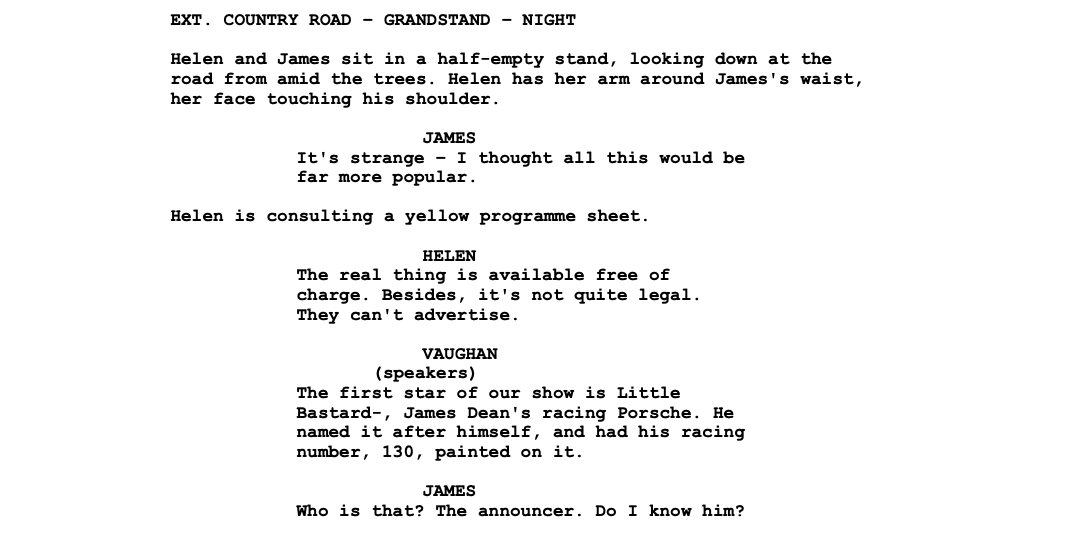
James and Helen watch from the stands.
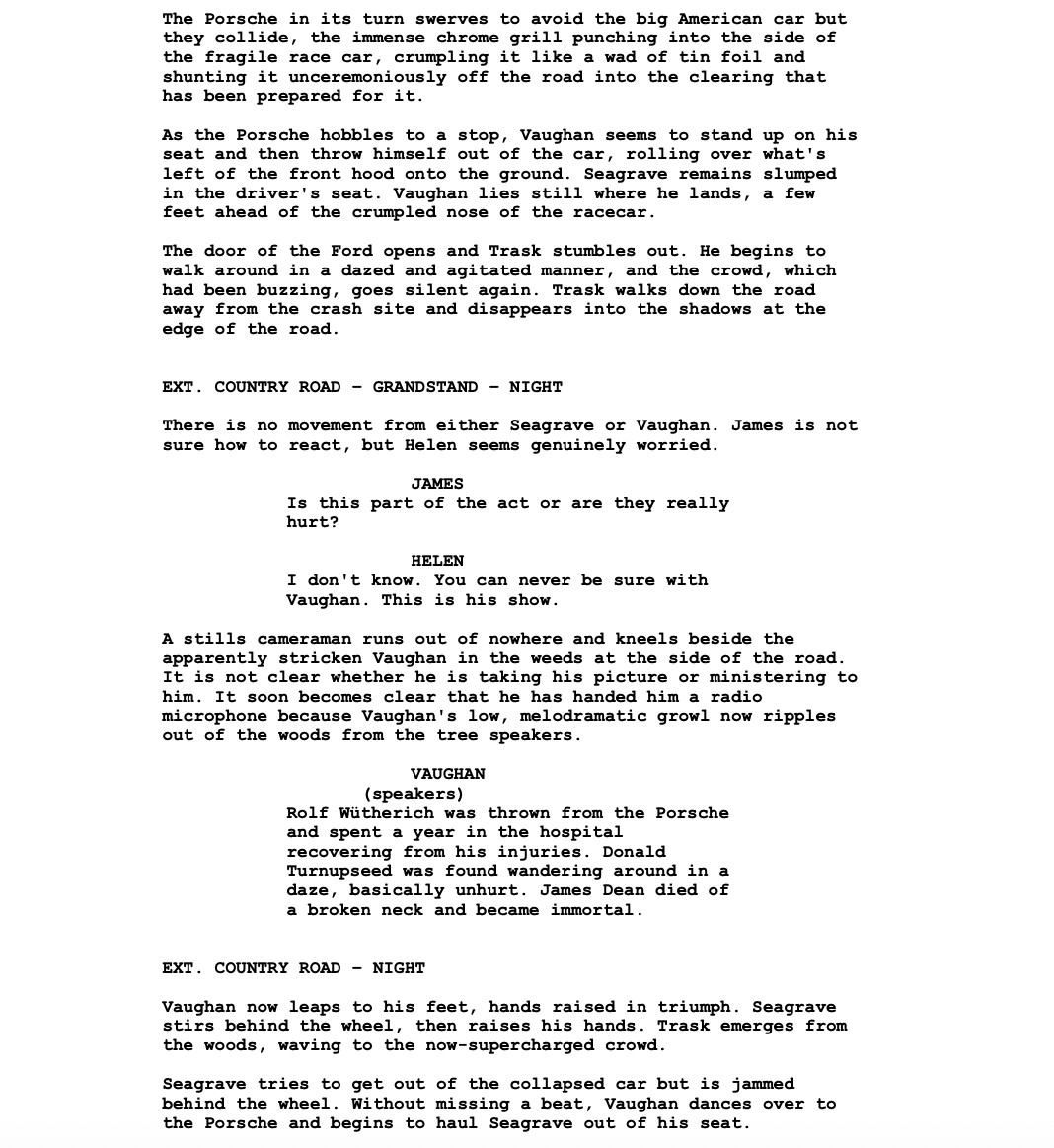
Worried that Seagrave is actually hurt, Helen and James run down to talk to him and Vaughan. Just as Vaughan tries to help Seagrave to his feet, the police arrive and break up the event. The four of them take off through the woods, making way for Vaughan’s apartment…
MIDPOINT
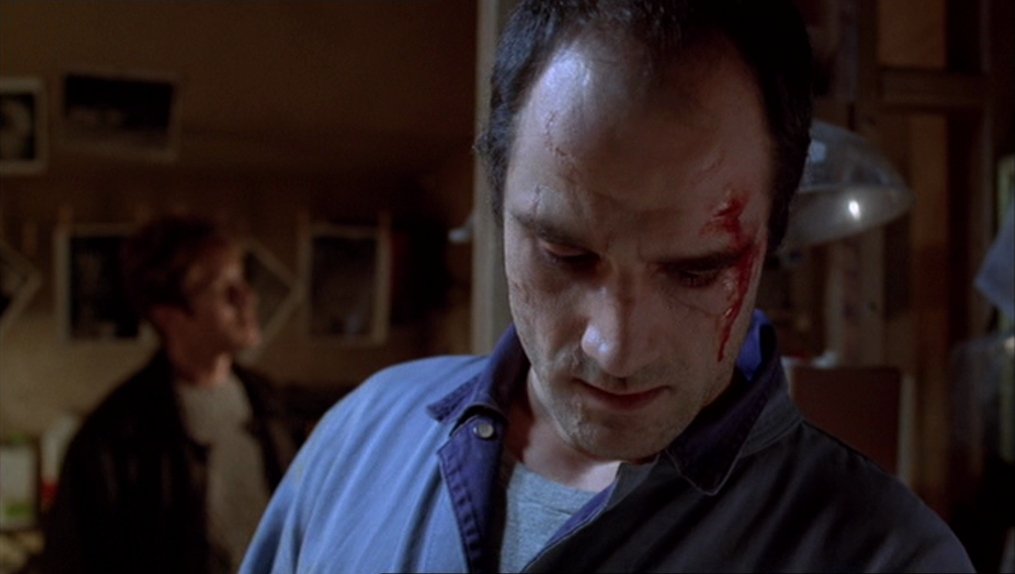
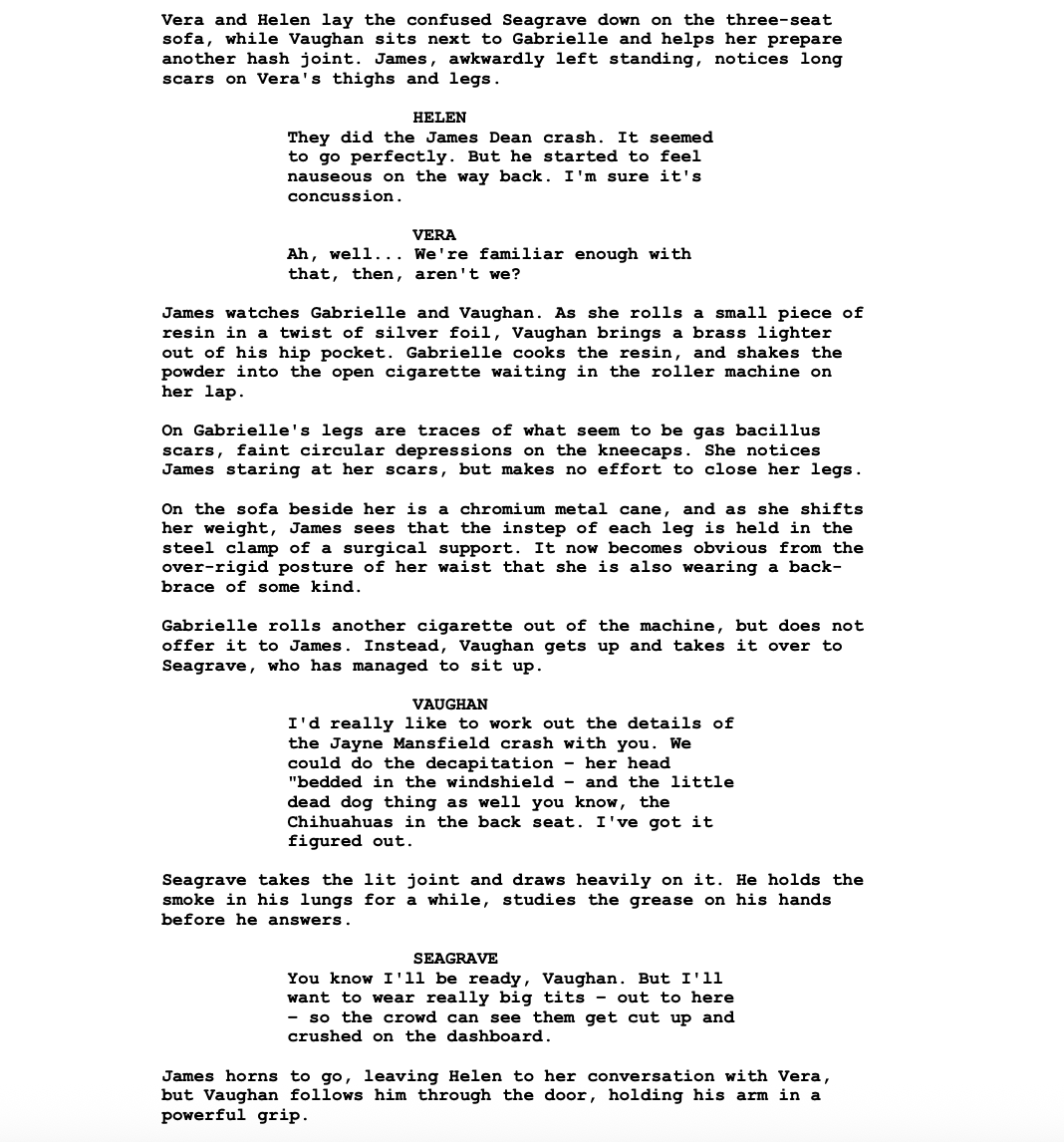
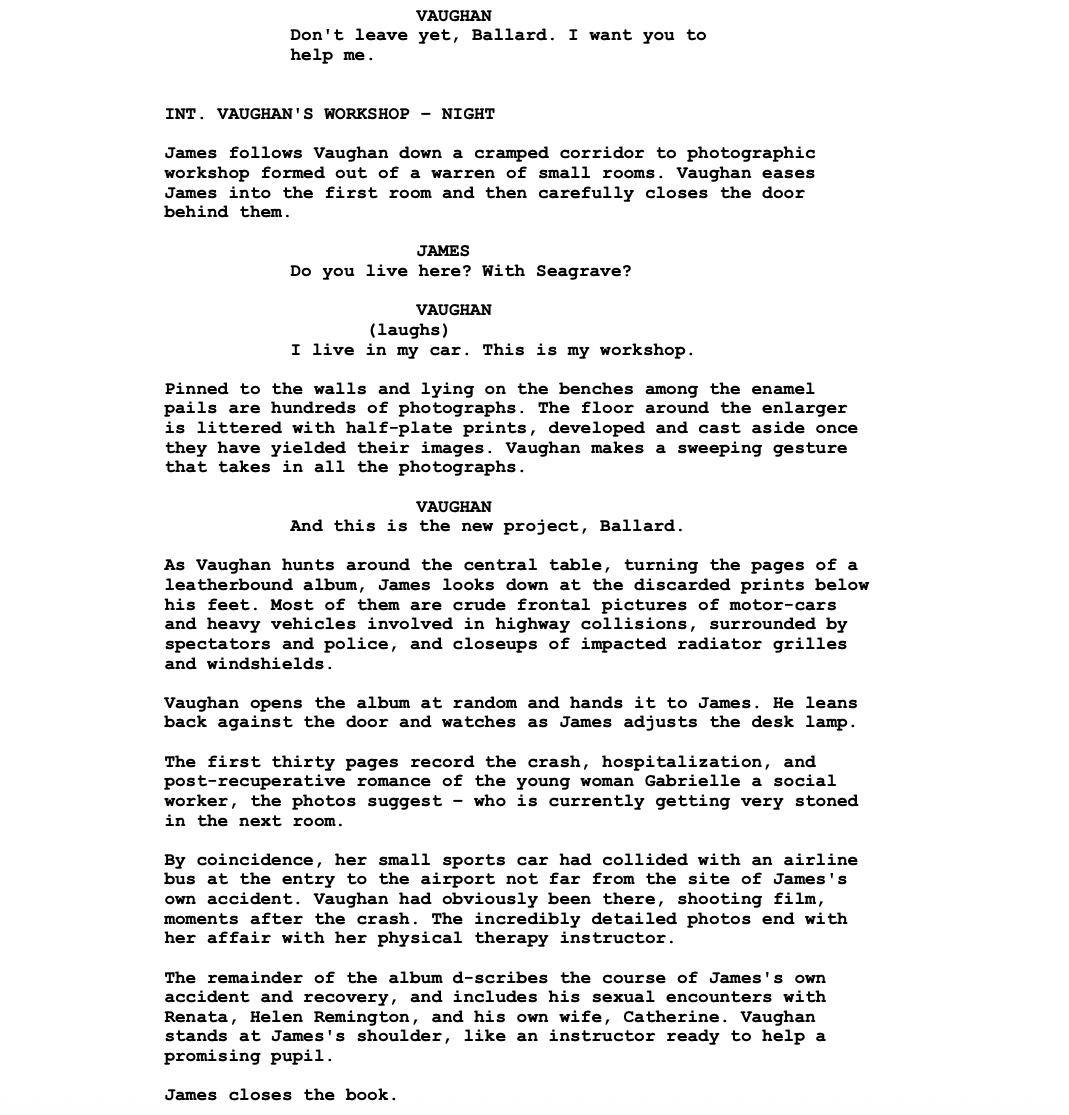
The midpoint of the script finds James being formally introduced to this strange, sexually driven car crash culture that has been hinted at throughout the first half of the script. Also, I’m sure you’ve noticed by now how uniquely Cronenberg’s voice affects the pacing of every scene. Some grand events, such as the initial car crash between Helen and James, are briefly stated; right to the point. But then in other instances, such as the James Dean crash, he writes with excessive detail, painting as clear and magnificent a picture as he possibly can. Clearly, he cares about certain moments more than others, and it’s this that affects the page count of any particular scene in the script more than anything to do with time.
Anyways, back to the screenplay.
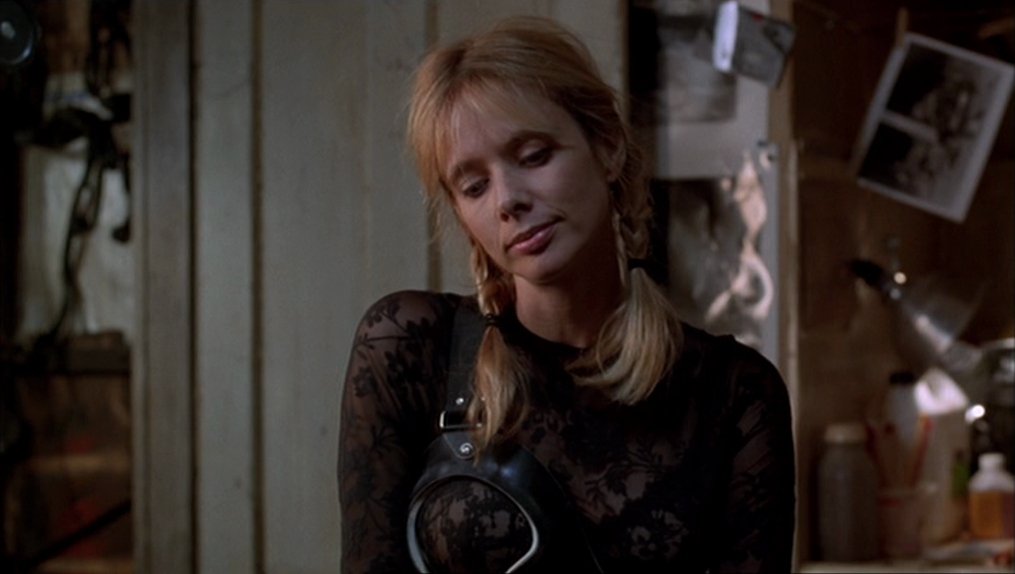
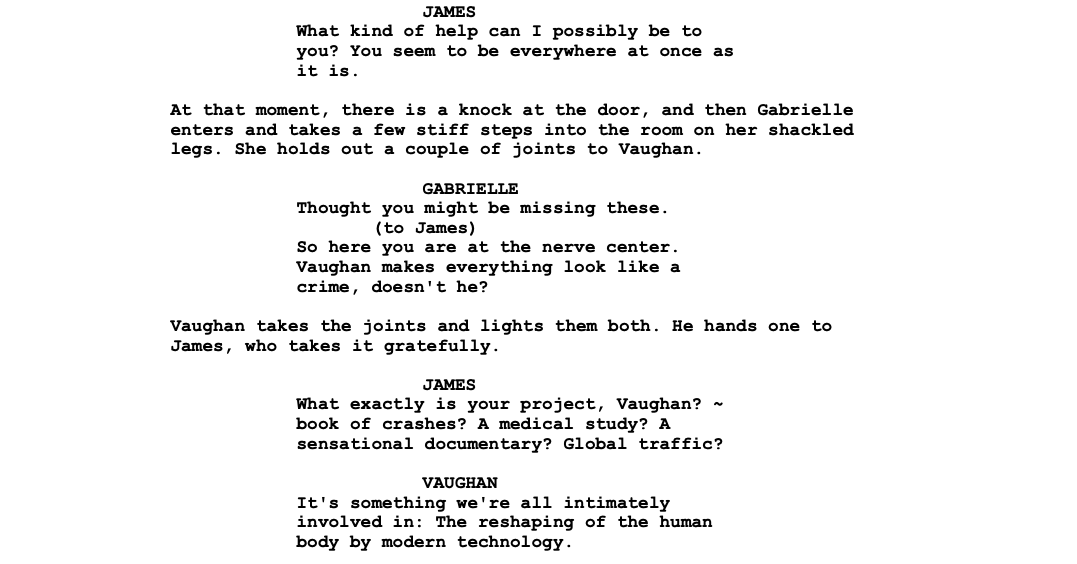
The group returns to Vaughan’s apartment, where Seagrave’s wife, Vera, and her friend, Gabrielle, sit on the couch.
BAD TO WORSE
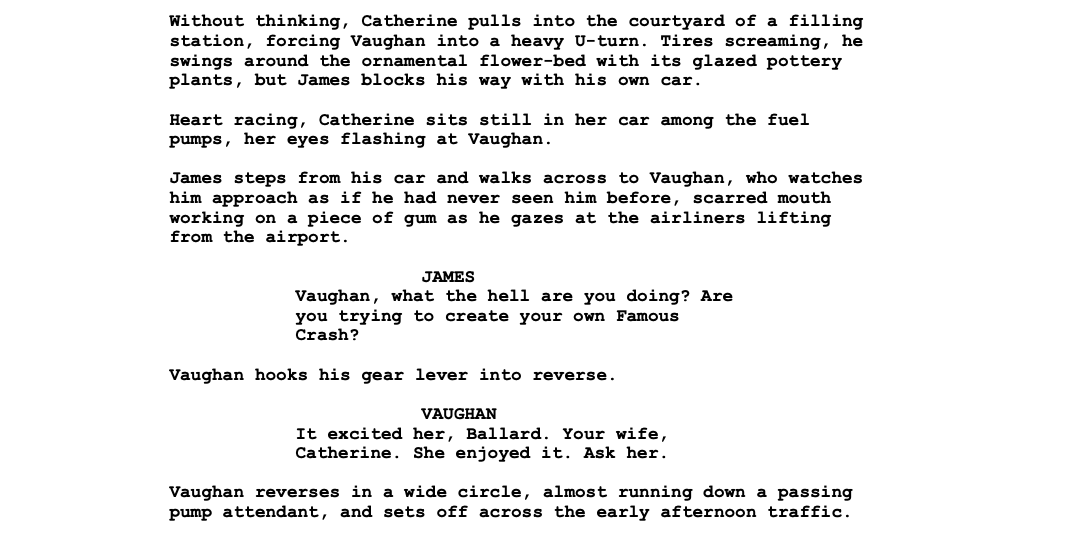
One day, after Catherine had just visited James at work, the two drive home separately, staying close to each other on the road as they do. Out of nowhere, James sees Vaughan’s car fly onto the road, almost harassing Catherine as they drive. She pulls over fearfully, unsure of what his motives were.
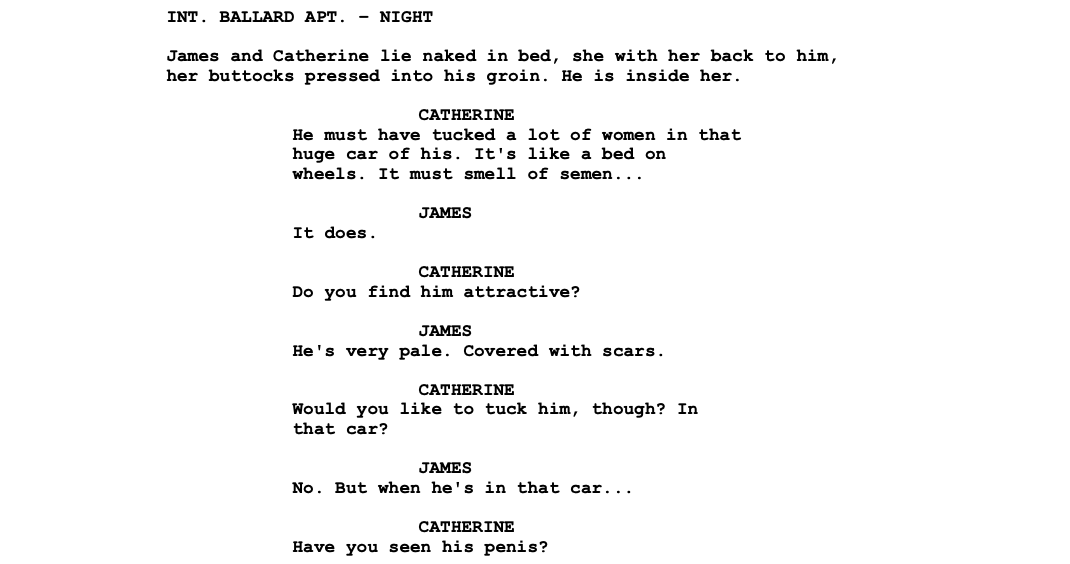
Later in bed, James discovers that Vaughan was right.
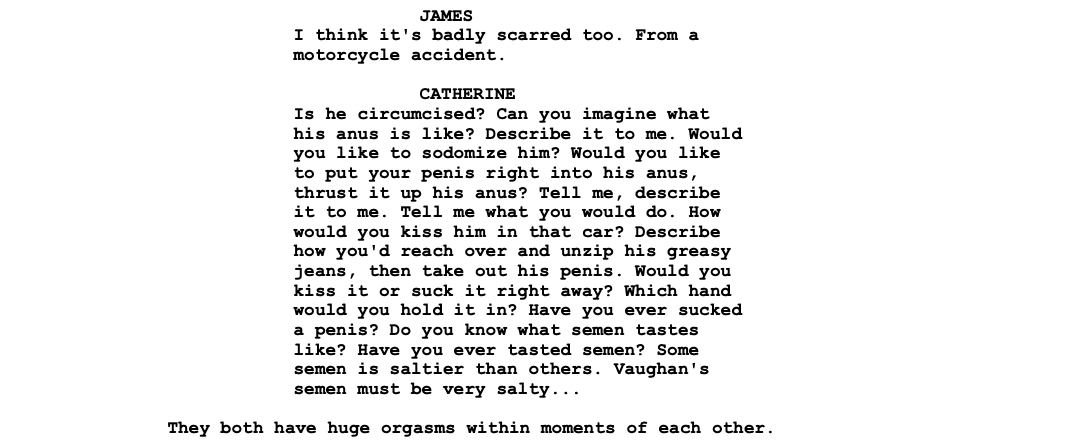
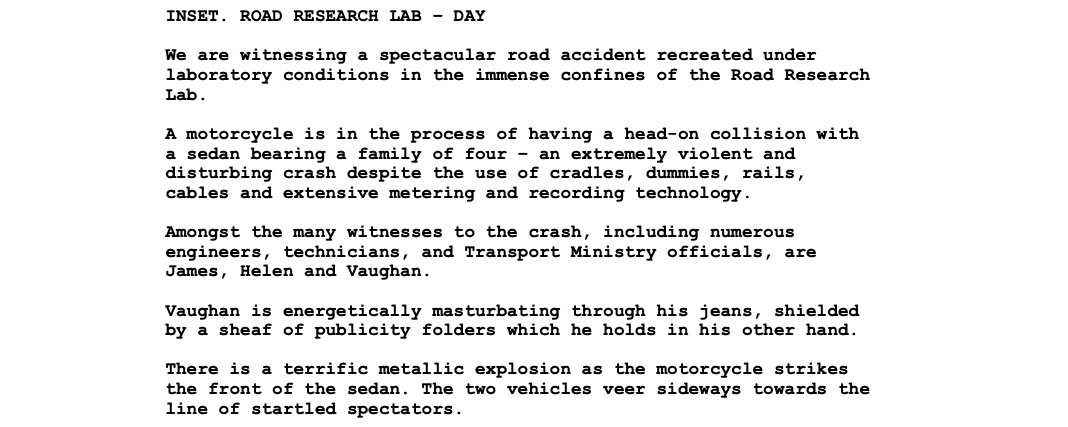
As the film goes on, we see that the sexual debauchery of everyone in this group becomes more and more disturbed.
BREAK INTO THREE
Later, during a drive with Vaughan, James learns the purpose behind his “big project” is beginning to lose focus, becoming something much more depraved.
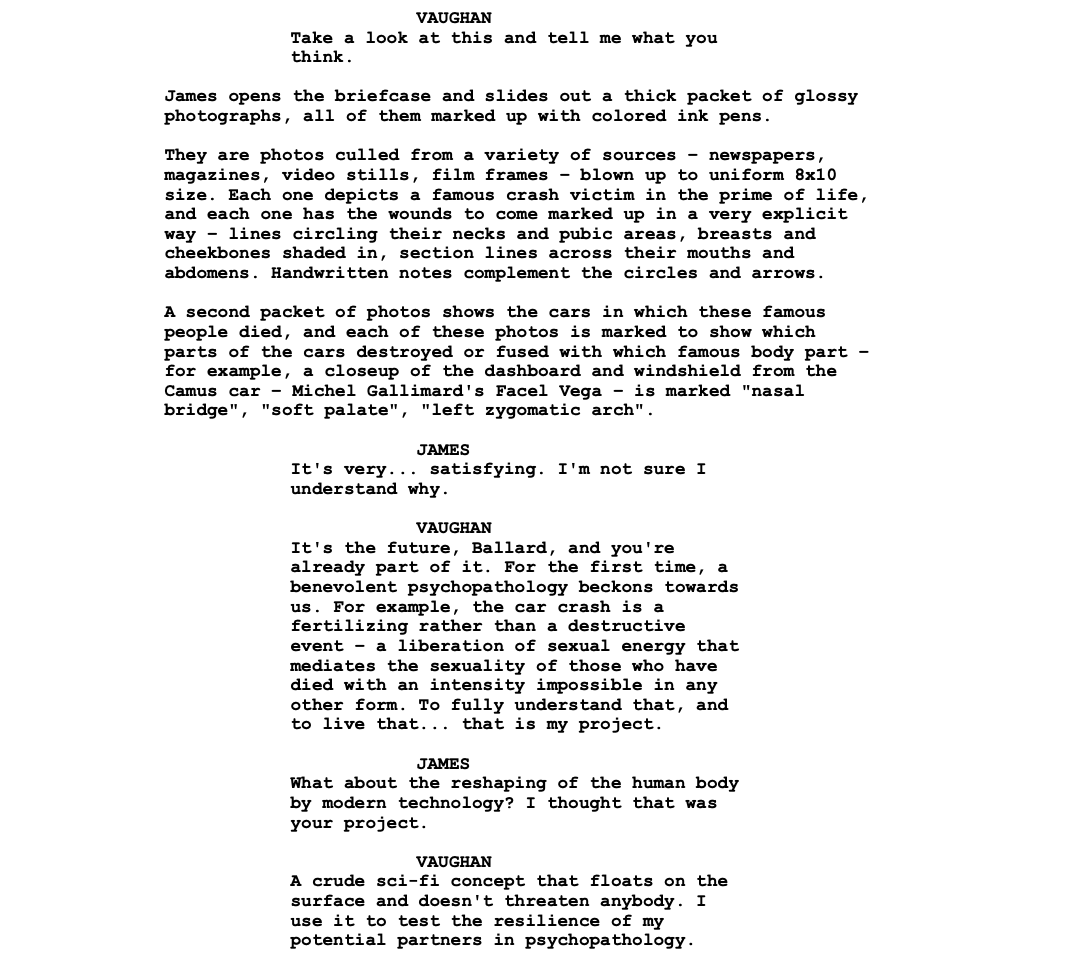
No longer based on the cohesive concept of understanding how technology reshapes humanity, it now focuses purely on the maximum sexual pleasure one can achieve from fatal car accidents. Suffice it to say, things are starting to get out of hand.
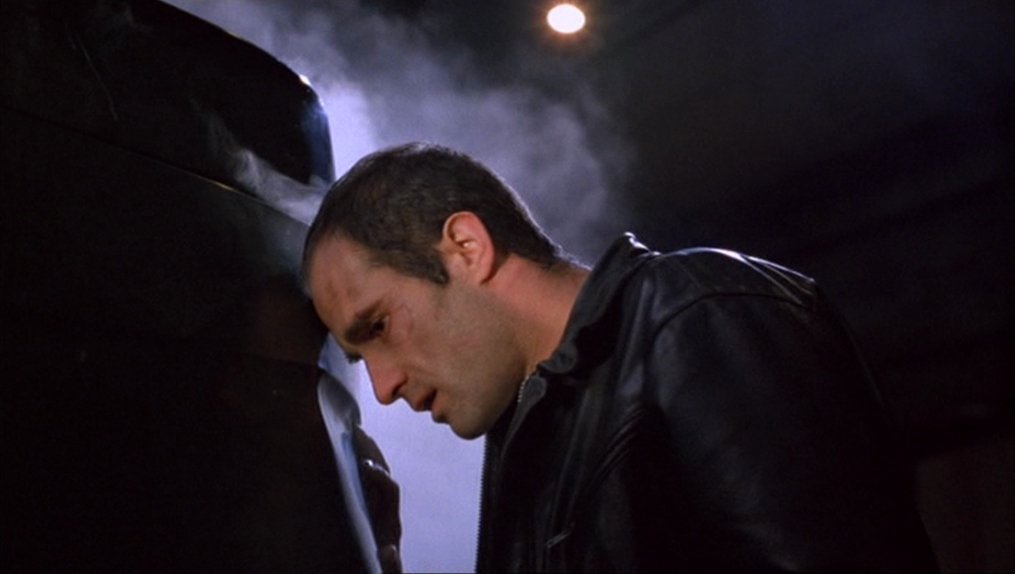
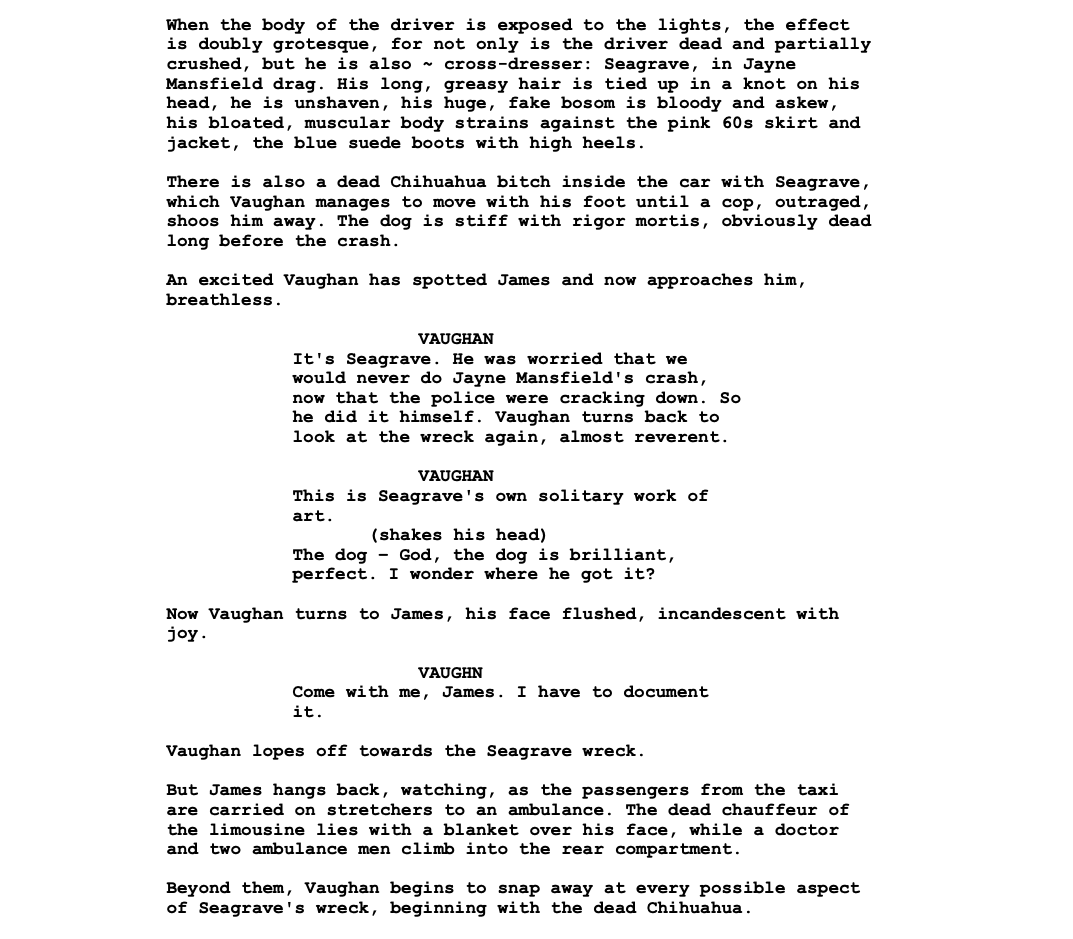
This point becomes emphasized one night when Vaughan, James, and Catherine are driving down the highway (it seems that Catherine has somewhat become involved in all of this now, by the way). They pass a horrible car accident involving a limousine, which at first seems pretty ordinary, but as they move, they realize something’s strange about it. Vaughan jumps out of the car and approaches the scene, Catherine following closely behind him like a well-disciplined puppy. This is his world, and she wants to be invited in.
When they get to the accident, they realize that the dead passenger in the limousine is Seagrave, dressed in drag.
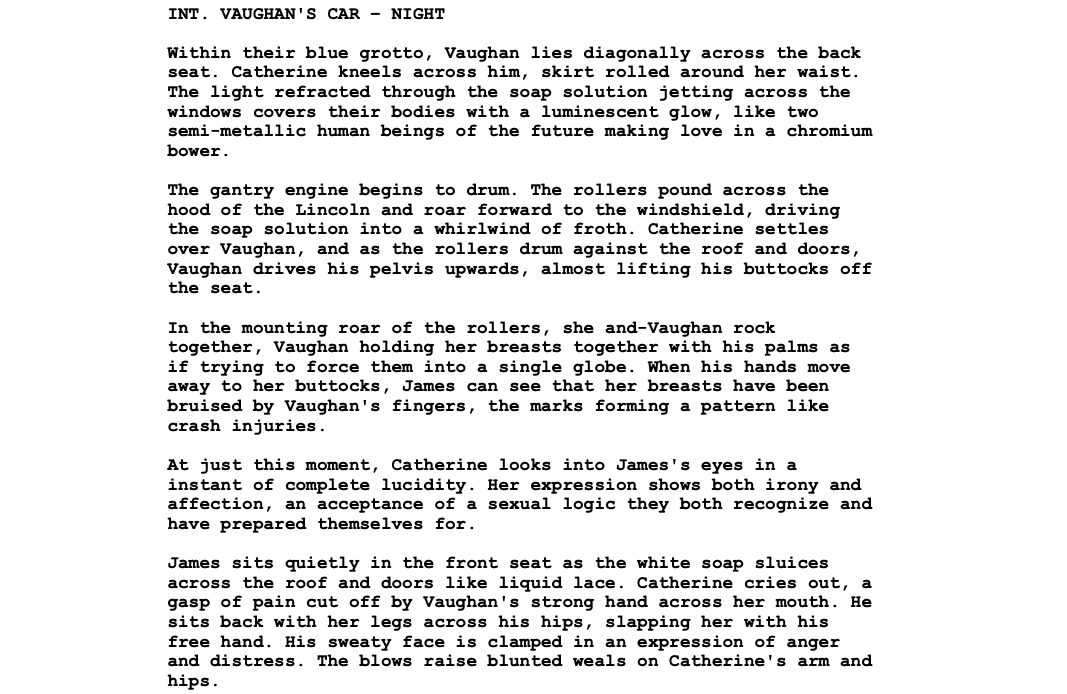
They get back to their car, which has now become smothered in blood from their inspection of the accident. James drives the car through a local car wash as Catherine and Vaughan begin to have sex in the backseat. He watches them through the rear-view mirror.
Later, we see James having sex with the handicapped Gabrielle in the front seat of her car, carefully navigating her various braces and scars.
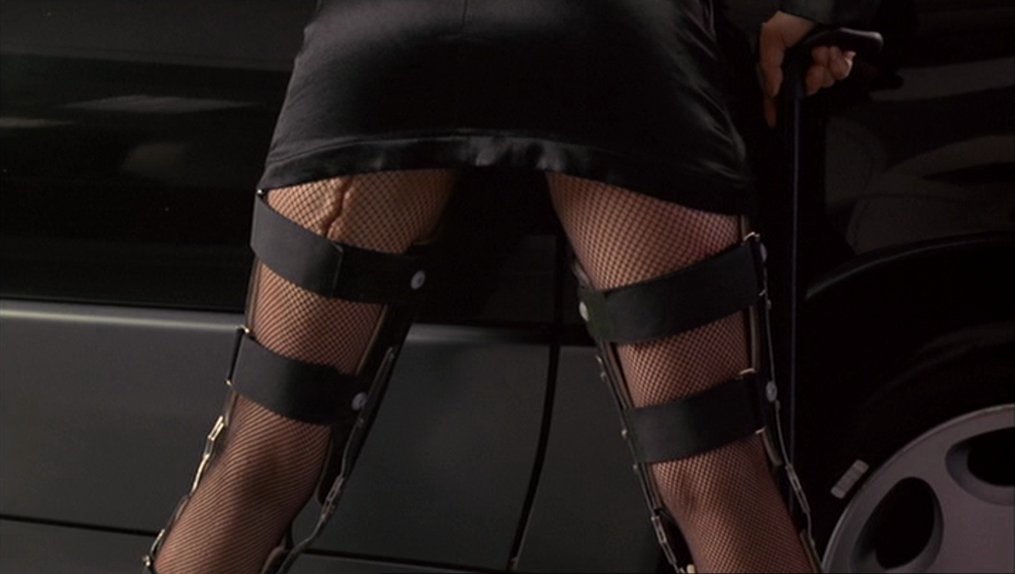
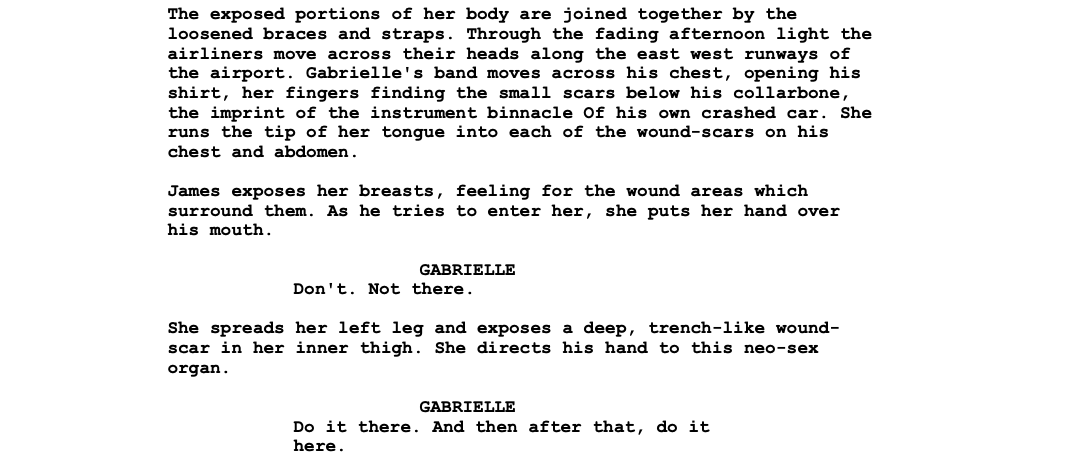
He proceeds to have sex with her wound, clearly entering a dark, depraved point of no return.
Later, James receives a call from Vaughan, who tells him to meet at a tattoo studio. When James gets there, Vaughan is in the middle of getting a cartoonishly drawn wound etched onto his body. He directs James to do the same.
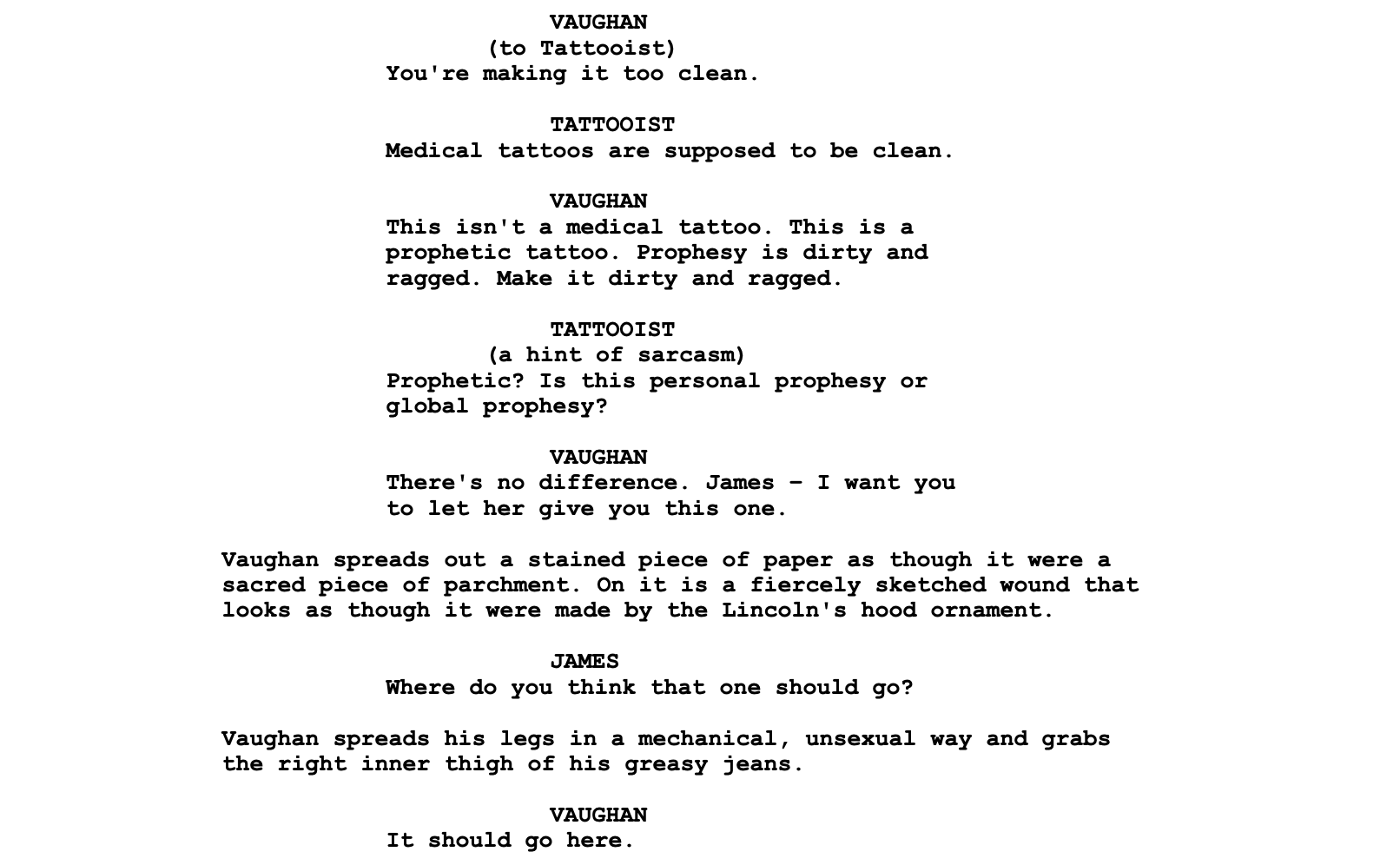
James abides by Vaughan’s direction with practically no pushback, much like a follower of a cult. Now, his dedication to this underground, automobile accident sex group is permanent. And he doesn’t seem to have any problems with it.
Also, this is probably a good place to note another element of Cronenberg’s writing style that makes this script so short: he practically allows no room for debate. Everything’s decisive with the reasoning being implicit. When James decides to follow Helen into this seedy new world, there’s never a scene where the concept is questioned whatsoever. James just does it. As things begin to escalate, there’s no scene of the characters arguing whether or not they’re going too far. They simply go too far. This script is more or less a presentation of unique characters in a unique situation, and since they’re all on the same page, the audience can simply enjoy watching them go crazy together. Quick, painless, straightforward. Anything else you want to gain from this film has to be deductive; Cronenberg refuses to waste any time walking you through it.
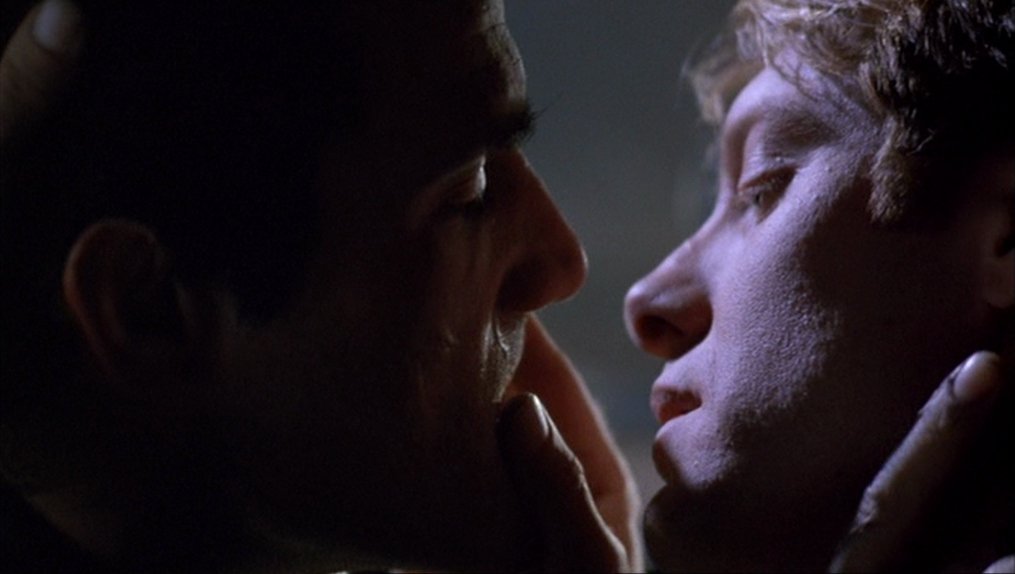
Anyways, after James and Vaughan finish getting their matching tattoos, they begin to gently kiss each other inside of Vaughan’s car; carefully caressing each other's various scars as they do so. We cut to moments later, as James exits the vehicle; Vaughan romantically reaching out for him as he leaves.
James walks aimlessly, eventually reaching a junkyard filled with cars. As he attempts to take a second to himself in this lonely lot, he hears the sound of a vehicle accelerating right towards him…it’s Vaughan’s Lincoln.
Vaughan drives right at James, narrowly missing and hitting an abandoned car inside the junkyard, giving James enough time to escape safely.
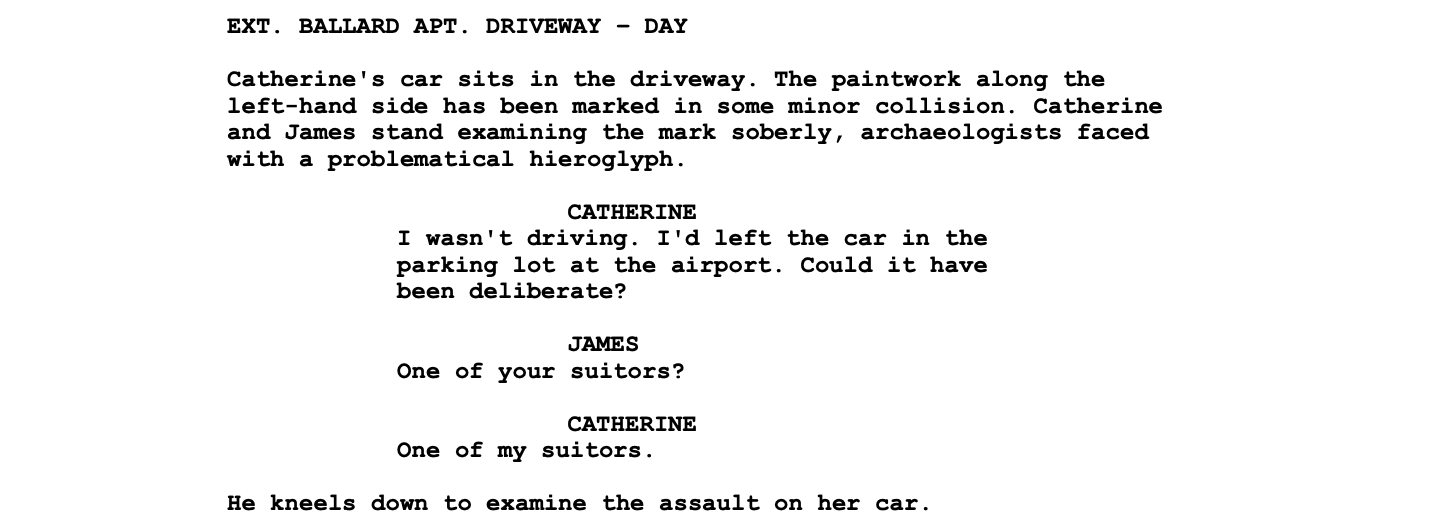
When he returns to his apartment, Catherine tells him that something strange has also happened to her car.

FINALE
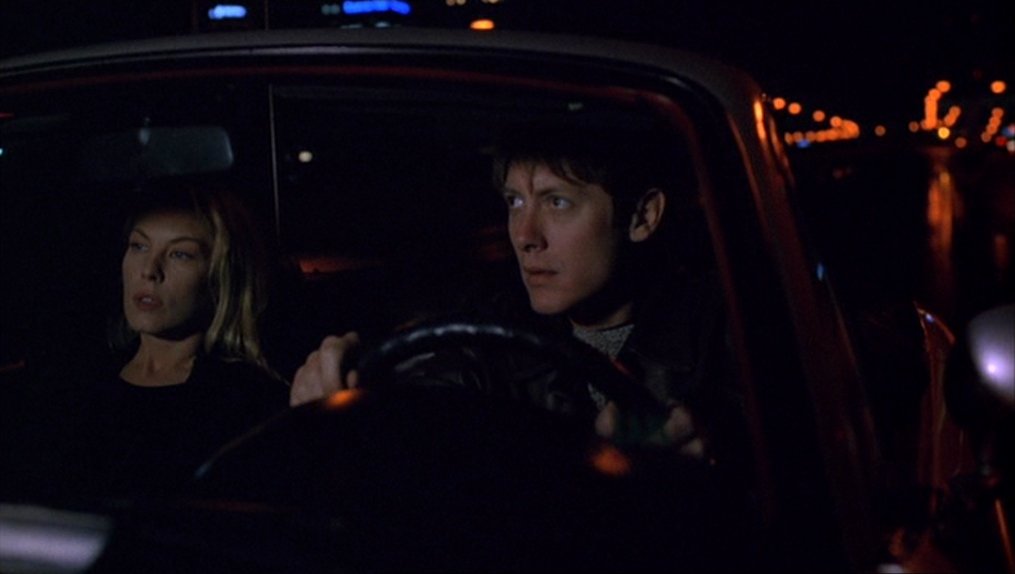
The couple gets in Catherine’s car and speeds down the highway, searching for Vaughan. Instead, to their surprise, they run into Vera, who proves what James already knew: Vaughan has gone off the deep end.
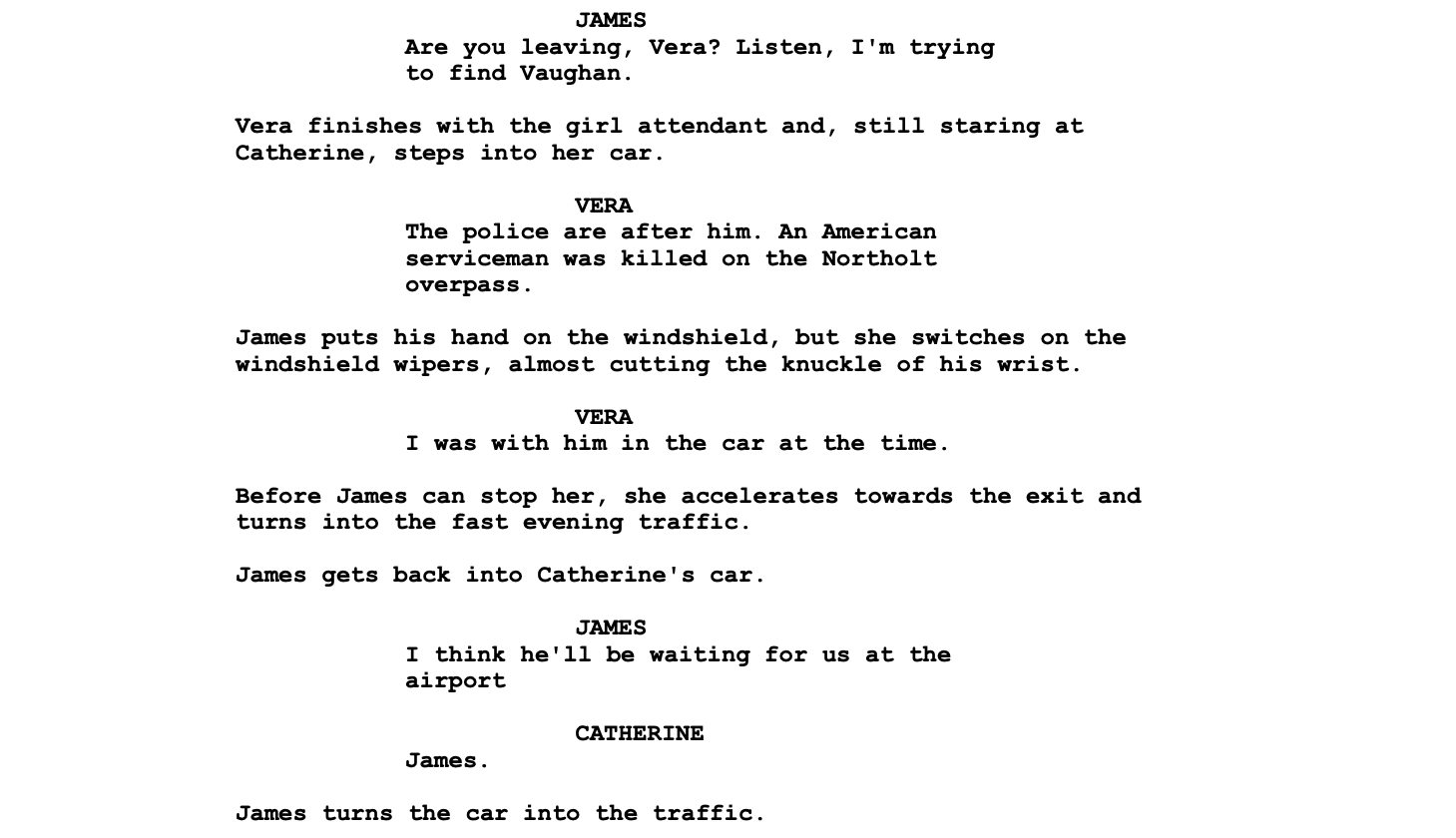
They see Vaughan waiting for them at a stoplight. Then, the light turns green, and the chase is on.
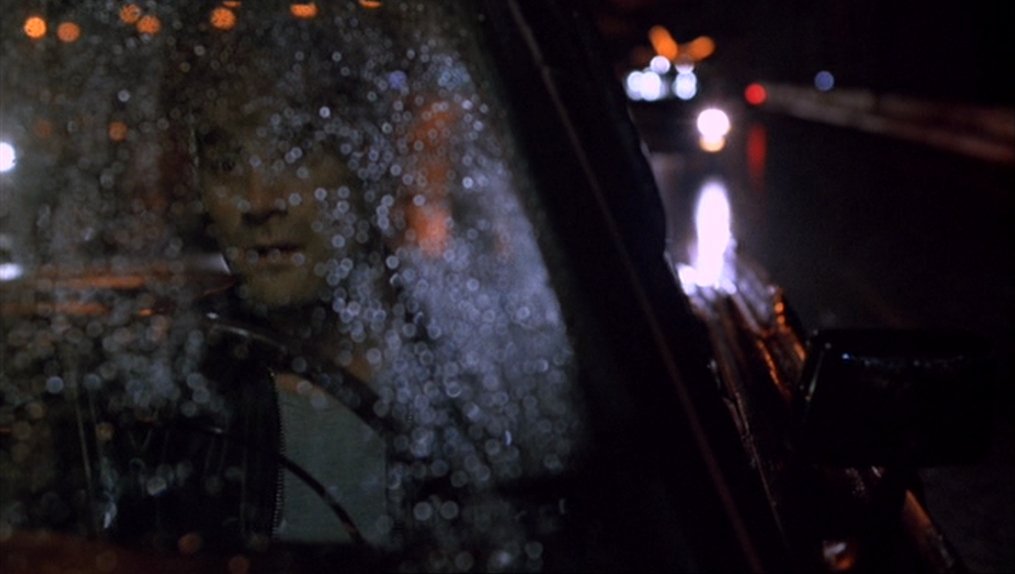
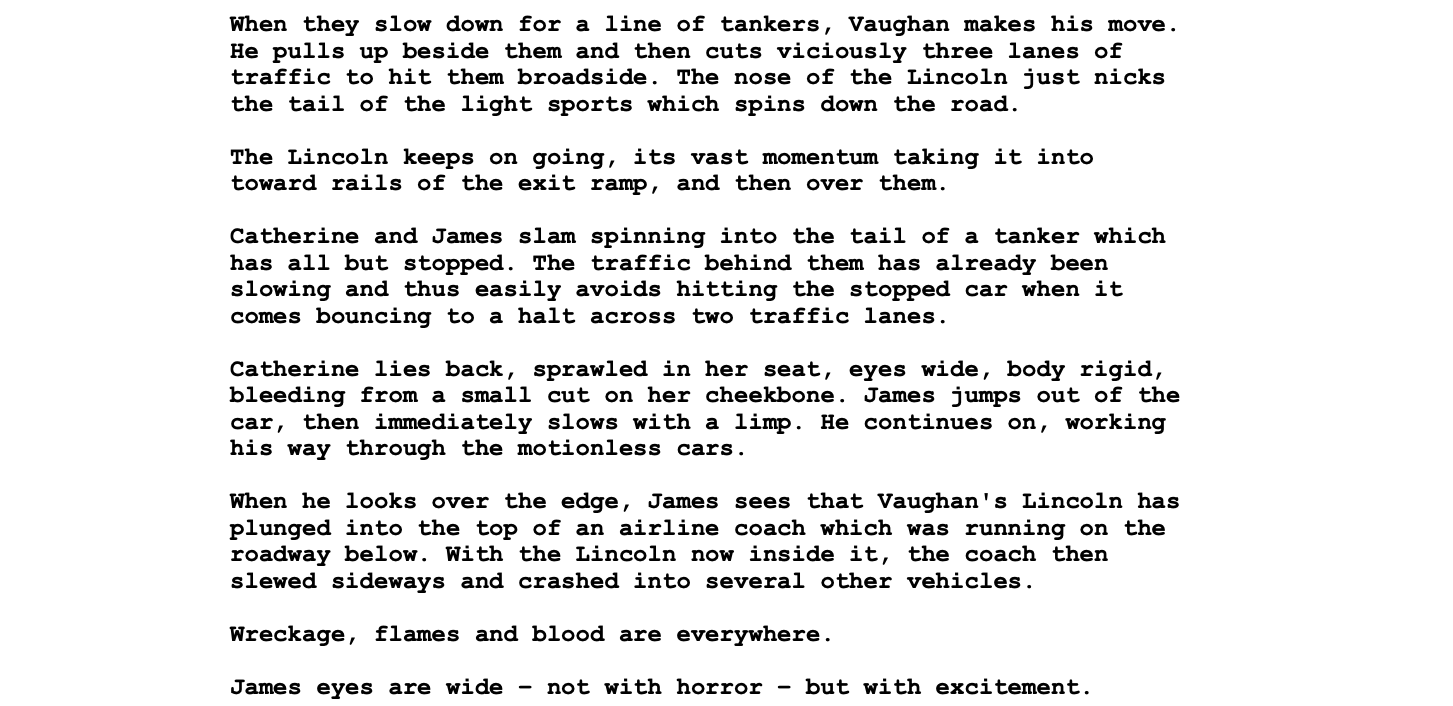
And just like that, the man behind it all is dead.
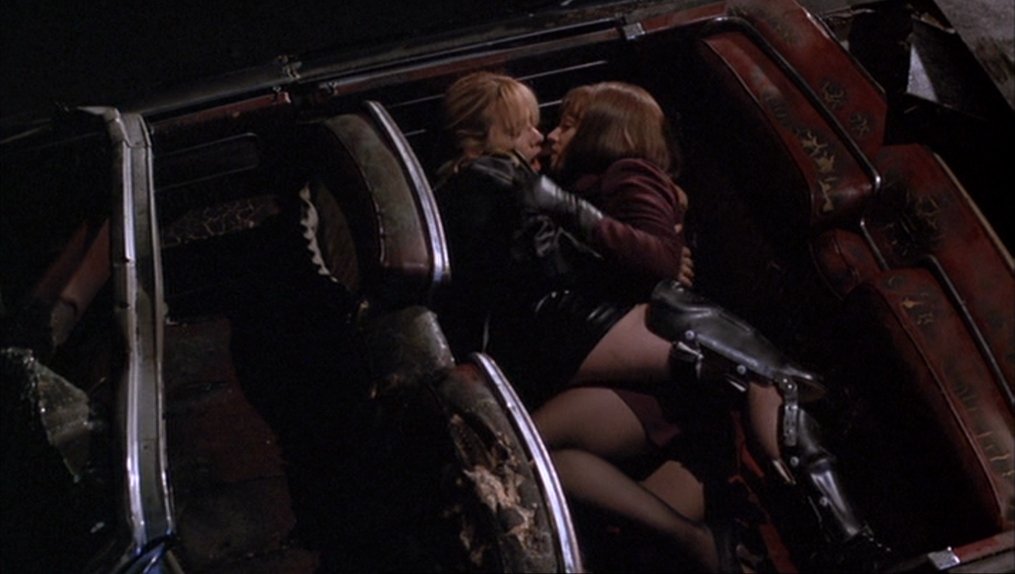
Later, James and Catherine visit Vaughan’s wrecked Lincoln at the police impound lot. They immediately crawl inside and begin to have sex, paying a sort of homage to their recently deceased leader. They finish and exit the car, only to discover that Helen and Gabrielle have arrived on the scene as well. Without saying a word, James and Catherine walk away, leaving Helen and Gabrielle to get inside the Lincoln themselves. Just like James and Catherine did moments earlier, the two women begin to have sex in Vaughan’s front seat. Like a church, the followers get in line to make their offering.
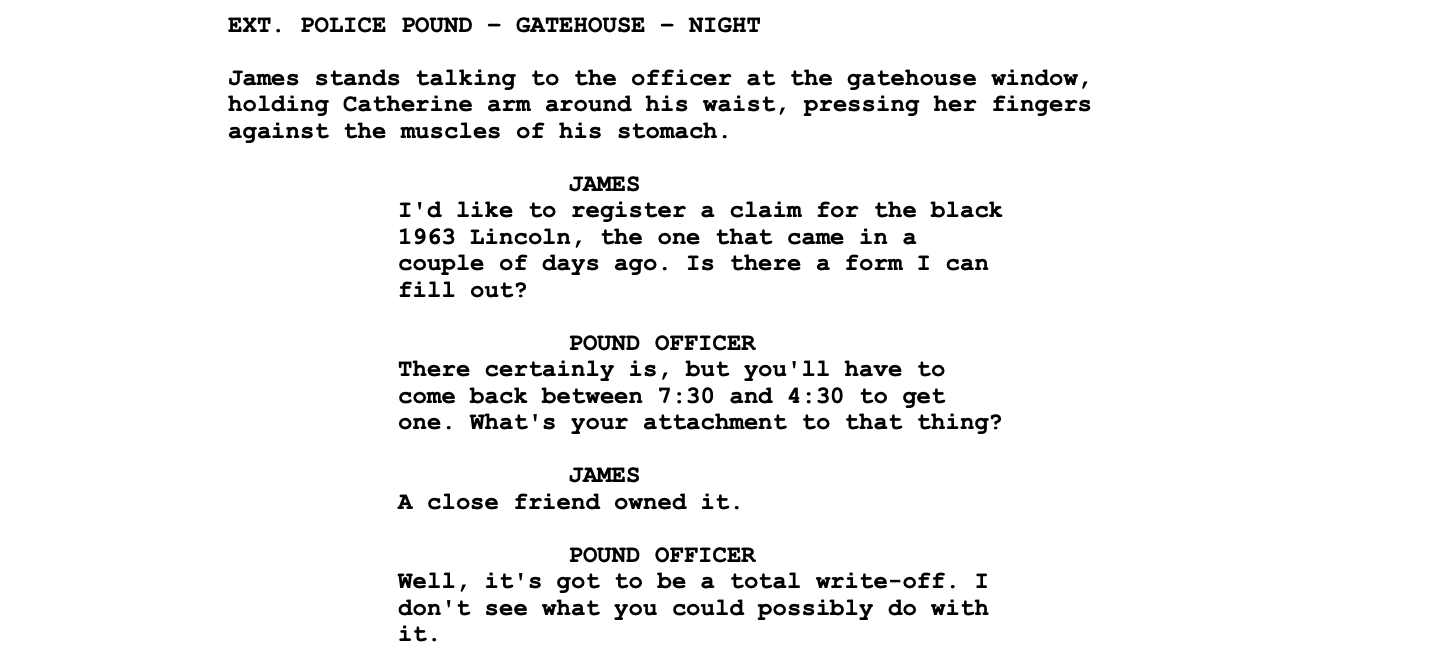
James returns to the officer working at the impound lot and requests to claim Vaughan’s car.
CLOSING IMAGE
Months later, we see James driving Vaughan’s Lincoln, which has been fully restored and brought back to life. He begins to speed down the highway, looking for something. Then, out of the corner of his eye, he spots it: Catherine’s car, winding through the traffic. Just like Vaughan had done once before, he begins to court her.
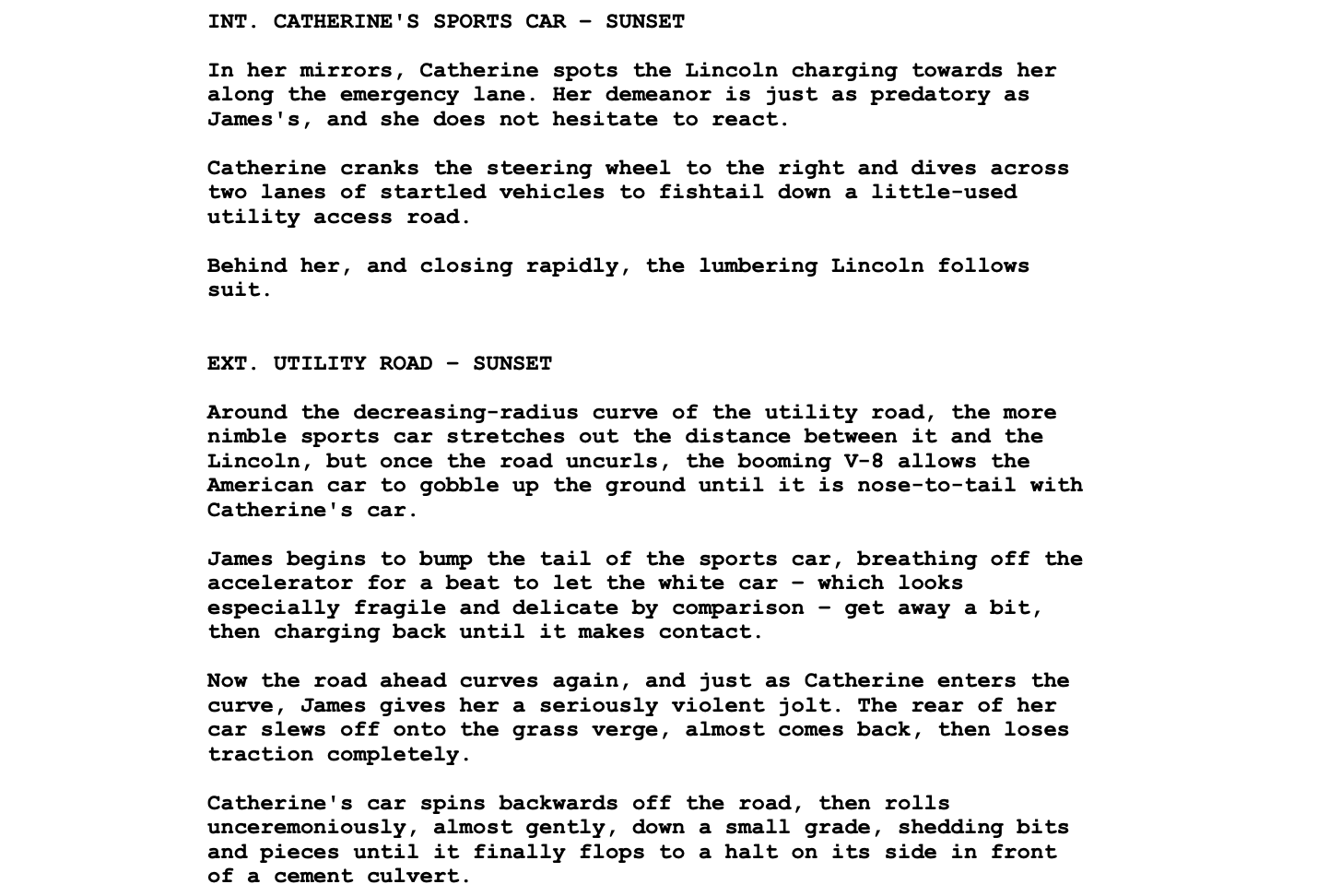
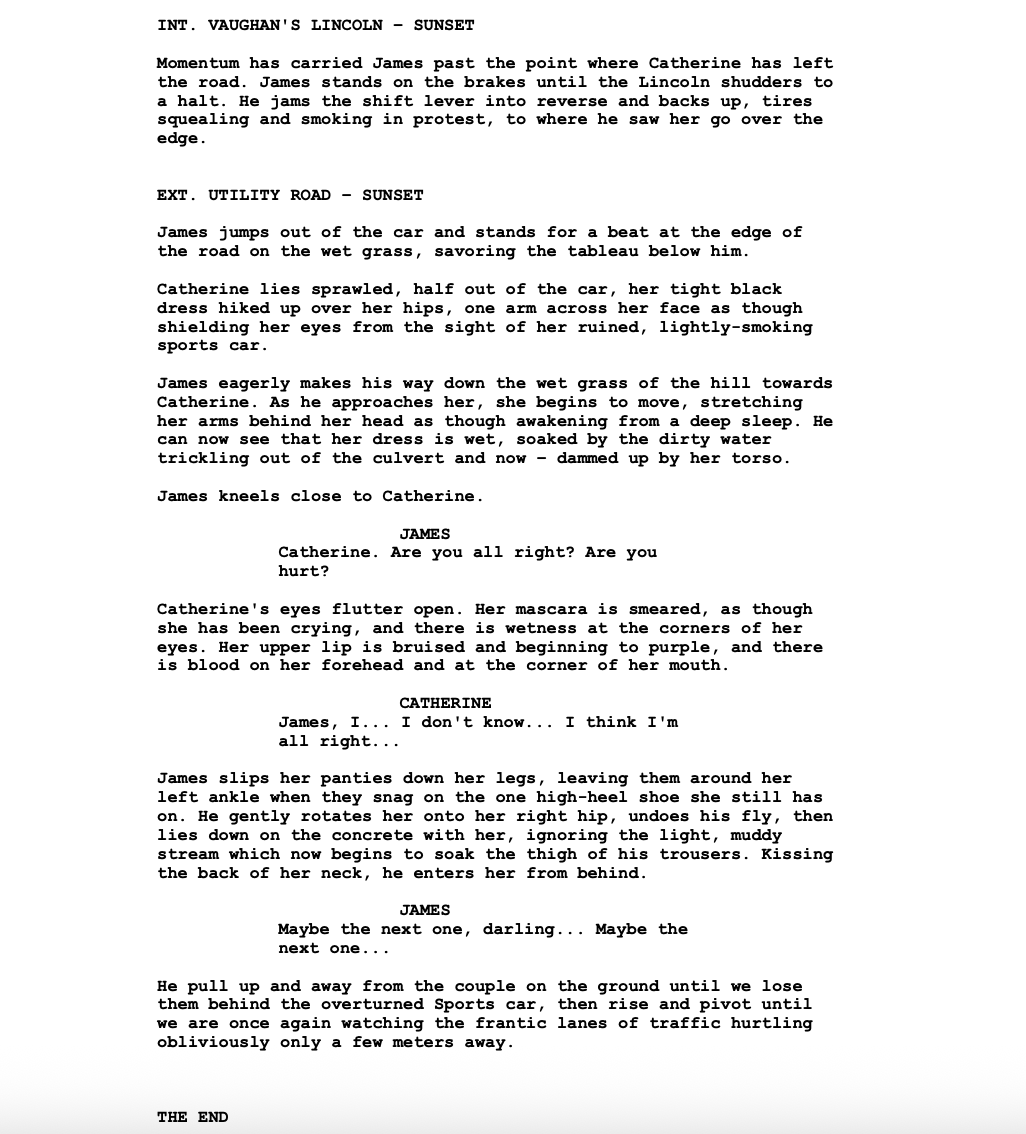
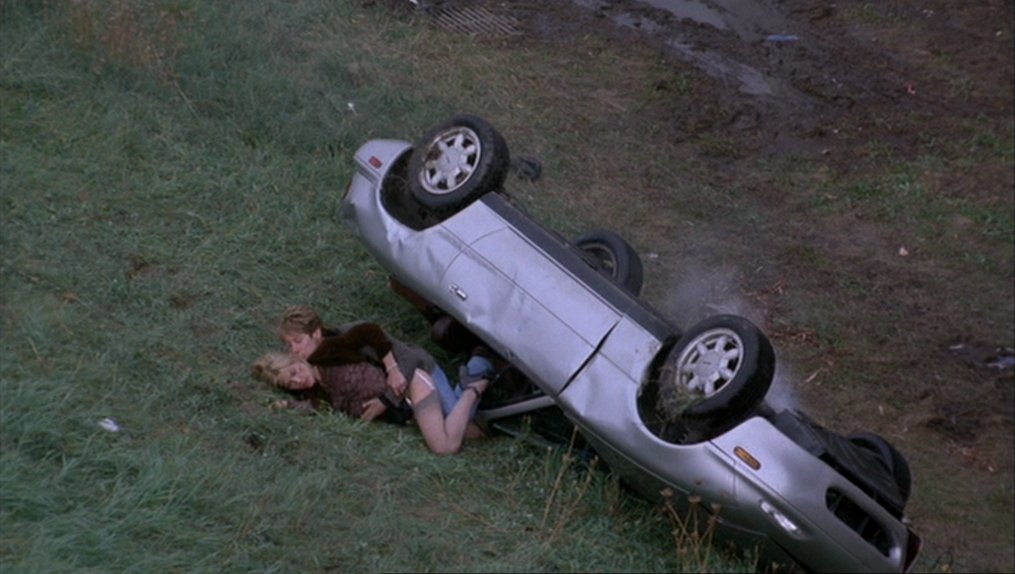
And just like that, we leave our protagonists; injured, sexually aroused, and never quite satisfied until they’re dead. The way Vaughan always intended it.
WHY IT’S GREAT
Many people are quick to criticize this film because it is so over the top and unorthodox, but to me, that’s why it’s so great. I’ve just never read a script quite like it. It brushes over certain details while emphasizing other ones for pages at a time. It moves quickly from scene to scene, barely giving the audience any time to breathe as our characters are undergoing ridiculous personality changes. And to top it off, the thing is only 53 pages long. I’ve been fascinated by Cronenberg for as long as I’ve loved movies, but it was after watching this film and reading this screenplay that I became a superfan. I mean, it’s the closest thing to rock’n’roll that we’ll ever see on film. Sure, it breaks all of the rules and pays little or no respect to the taboos of the screenwriting community, but he pulled it off, so none of that matters. And I’m not saying that all of the screenplay rules are made to be broken–that’s setting you up for failure and will just make your script readers think you’re an amateur. But what I am saying is that if you do decide to rebel against the status quo, then you’d better make sure your final product is something as awesome as Crash.