He Broke Into Film Using Social Media [Podcast]
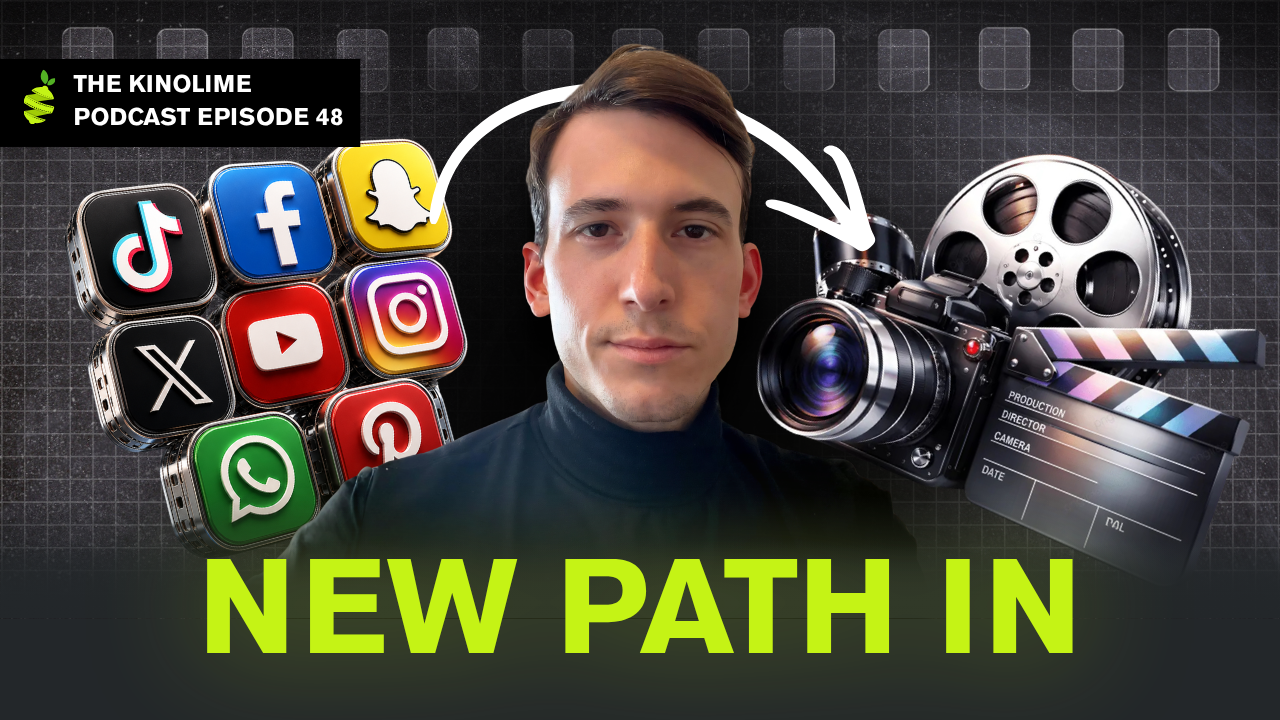
In this episode, John and Danny sit down with the voice behind one of the most influential screenwriting communities online: Kole Lyndon Lee, creator of Screenwriting in LA. What begins as a conversation about social media and cinema quickly becomes something far more personal - an honest discussion about creativity, depression, artistic identity, and what it really takes to keep pursuing storytelling in a city that can easily wear people down.
Kole opens up about moving to Los Angeles from a small town in Texas with no connections, living with eleven strangers off Craigslist, struggling to make rent, and eventually losing touch with the creativity that brought him to LA in the first place. He shares how building Screenwriting in LA became both a creative outlet and a lifeline, a way to reconnect with cinema, community, and himself.
The conversation dives into filmmaking, screenwriting, David Lynch, Tarantino interviews, building an audience online, the power of authenticity, and why real connection matters more than pretending to be an expert. They also discuss Kole’s own Lynch-inspired short screenplay that impressed the KinoLime readers so much they nearly selected it for the competition before realizing it was written by one of their own.
More than anything, this episode is about the people behind the stories, the dreamers, outsiders, and creatives trying to build something meaningful one step at a time.
Full Transcript: Kinolime Podcast Episode 47: He Broke Into Film Using Social Media
Participants
John Schramm - Head of Development, Kinolime
Danny Murray - Creative Executive, Kinolime
Kole Lyndon Lee - Social Media Manager, Kinolime
Kole Lyndon Lee and Screenwriting in LA
John: He’s one of the biggest influencers in screenwriting out there. But he’s not just another content creator. This is someone who has that thing you want to watch and learn from.
Today we have Kole Lyndon Lee, our head of Kinolime social and a dear, dear friend of mine. Kole, I’m so happy to have you on the show. How are you doing, buddy?
Kole: I’m glad to be here. This is awesome. I’ve been making clips from the podcast for so long.
John: We have to do the origin story of how Kole came into the Kinolime family. We’re going to learn all about Kole, the Instagram star. I heard you speaking to somebody through my office door earlier, and I was like, “He’s one of the biggest influencers in screenwriting out there.”
Danny: It’s the story we always hope for: a guy who just loved the craft and moved to LA from the middle of Texas with a dream.
Discovering Kole’s Page
John: If anyone hasn’t been to Kole’s Instagram page, it’s Screenwriting in LA. Go check it out.
What I loved, and how I found Kole, was that he came up in my algorithm. I followed him, but then I started watching his stories and paying attention to who this guy was.
Besides giving great screenwriting advice, what stood out was how passionate he was. I loved that he was dropping F-bombs in his posts because he just loved screenwriting so much.
You also got very personal in some posts, which we’ll talk about later. But Kole, take us through your love of cinema as a kid, growing up in Texas, and how that evolved into who you are today.
Growing Up in Texas and Moving to LA
Kole: I grew up in Texas, in a small town, and I’ve loved movies since I was a kid. But it was really in my twenties - actually around 18 or 19 - that I started getting into cinema as more than just casually enjoying movies.
I moved to LA when I was 20, like Danny said, with nothing really. I drove out here in my little truck. I lived in a house on Hollywood Boulevard that I found on Craigslist, with eleven other people.
I don’t know if they still do that anymore, but back then you could find these houses they called “artist housing” for young people or college students.
Initially, I wanted to get into acting. I did a lot of background work as an extra in movies, which was actually so much fun. I look back on that and think I’d still do it today if I had the time, because I love being on movie sets.
But after six or seven months, I couldn’t make rent. I realized, “Okay, I need to get a real job.”
That’s when I started working at the kitchen, the family business we’ve talked about before with Margo. I got really sucked into that for years. I stepped away from acting and anything creative, aside from watching movies, and went through a dark period where I was just unmotivated creatively.
Starting Screenwriting in LA
Kole: Then I started listening to Gary Vaynerchuk. I’m sure you’ve both heard of Gary V. I started listening to his content because I was trying to get into a better place mentally.
Back then, he talked a lot about social media. He’d say you can build a business on social, you can build a community on social. He kept asking, “What is something you love? What is something you care about? What are you passionate about?”
That’s when it clicked.
I loved cinema. I was dabbling in screenwriting as a hobby. So I thought, “Let me just start an Instagram page.”
That was after years of working at the kitchen and not doing anything creative. So I started Screenwriting in LA. I thought it was a cool name, and it just went from there.
At first, I posted really crappy graphics and quote graphics. Then it evolved. The page got me way more into screenwriting because I was learning about the craft, watching interviews, finding clips, tips, motivation, and insights.
It grew from there. I started at zero, then hit 10,000, 15,000 followers. At that point, I realized it wasn’t just that I loved screenwriting and cinema. I also had a knack for social media, building community, and that’s probably the thing I’m most passionate about now.
That’s the short story of how it all started. Gary V, oddly enough, had nothing to do with cinema, but he planted the seed.
Documenting the Journey
John: I love that you didn’t really know screenwriting yet. You were just passionate about it. You were like, “I’m going to start Screenwriting in LA.”
I interpreted it as you documenting your journey and helping people along the way with what you found out. Is that accurate?
Kole: Yeah, that’s exactly how I thought about it.
Even now, I never say, “Let me teach you.” What do I have to offer other than what I’m learning myself?
It was always about documenting. I love watching interviews with the greats, the top, cream-of-the-crop people, and finding those little moments you don’t always see. Those one-minute or two-minute insights that can actually do a lot for you. They can give you a kick in the ass.
That’s what I got passionate about: learning about the craft and sharing what I was learning.
Obviously, the page has evolved. Screenwriting in LA is more of a cinema page now. It’s not just screenwriting anymore. But it started with me documenting what I was learning.
That made me get more into screenwriting. I started writing scripts myself. But it was always about the process and trying to make it easier to learn.
If I watch a two-hour Tarantino interview, I want to condense it down and find the moments where you can really take away something valuable. That’s what it turned into, and I guess that’s still what it is now.
Authenticity and Vulnerability
John: That’s what I was attracted to on your page. A lot of other pages are just info-dumping. But you were authentic and passionate.
You weren’t saying, “I know everything,” or “This is the right way.” I hate when experts act like, “You’ve got to do it this way.” You were more like, “Here’s some information for y’all. What do you think?”
Your authenticity really shines. You’re also genuinely nice.
But what struck me early on was a post where you were talking about being depressed. I think you were in your car, and you said something like, “Man, I don’t know. I’m depressed, and I’m sharing this with y’all.”
That’s what sold it for me. I thought, “This is not just another content creator. This is someone who has that thing you want to watch and learn from.”
Kole: I’ve been through a lot of periods like that.
When I first started, I never thought of myself as an influencer. I still don’t even like the word. I don’t know what it means. I guess technically, when you’re making content and conveying things you’re learning, you are an influencer. But I never thought of myself that way.
That’s also what I like when I watch content. In this industry, especially in Hollywood, there are a lot of materialistic people. You think you have a friend, but at the end of the day, they’re really not your friend.
So when I started putting myself on camera, I decided I was going to be completely real about what it was like living in LA. Moving here with nothing, grinding, trying to make something happen, trying to pay my bills.
That’s what I tried to convey.
I think that’s probably the spark that made the page grow into more than just a little page. I started it in 2019, and it’s still going. That’s crazy to me.
But I think people want someone they can connect with. For anyone watching, I can probably help more with social media tips or building your own page or community, because that’s what I love watching. I think most people like watching someone who is honest and authentic about what they’re going through, the reality of grinding and trying to build something.
That has always been the foundation of any community I’ve built.
The First Posts That Took Off
John: We’ll get into your SWILA community in a little bit, SWILA being Screenwriting in LA. But what was the first post that really got things going?
When you start something, you get a few likes here and there, maybe some followers. But was there a post or a moment where you got 5,000 followers in a weekend or something that catapulted you?
Kole: I can’t remember one thing in particular, but I think it was when I started posting clips, not just graphics.
When I first started, it was just graphics. A lot of people did that back then. You saw it everywhere.
But when I started taking initiative, watching an interview myself, studying it, thinking about the most valuable things in it, that’s when things changed.
We’re talking about passion now, and I would look for those moments. I keep using Tarantino as a reference, and honestly, it probably was a Tarantino video that popped off.
John: It was probably Tarantino.
Kole: It probably was.
That’s when things started popping off more. I started putting my own spin on it. Instead of just posting quotes, I found moments that were motivational, or moments where something really interesting was said about craft, or some behind-the-scenes story about a movie.
Like, how did Tarantino come up with the title Reservoir Dogs? It was probably something like that.
It started growing when I made it my own thing instead of doing what everyone else was already doing.
Reclaiming Creativity
Danny: I’m fascinated by the impulse to start the page in the first place. You had been coming out of this five- or six-year dry spell of creativity. Was there a specific moment where you thought, “I need to seize creative control of my life again”?
Kole: The business I worked at was a family business. I started there washing dishes and produce. Over a couple of years, I became the operations manager of the whole facility.
It was a good job. I was getting paid well. It was a career that could have gone somewhere if I had stuck with it, until COVID hit. But that’s a different story.
There was a moment where I thought, “Okay, I’m making money. I made it in LA, technically. I moved here with nothing. I have my own place. I’m paying my bills. I’m taking care of my family and my daughter.”
But I was so depressed because I wasn’t doing anything creative. I wasn’t exploring what I originally came to LA for.
I don’t remember the exact day, but I remember the feeling: it didn’t matter that I was making money and paying my bills. I couldn’t keep living like that, not doing anything creative.
Of course, I wanted to write a screenplay and get into cinema, but it felt completely impossible. I was a nobody. I didn’t know anyone. I had no connections.
So I thought, “Let me do what Gary Vee is saying. I have passion. I feel like I’m talented. Let me put myself out there and take action.”
Instead of depending on other people or waiting for some lucky connection, I decided to build something myself.
I had no idea where it would go or that it would lead to an opportunity with Kinolime. Every opportunity I’ve gotten has come from social media, oddly enough.
I started it because I wanted to explore my creativity, motivate myself again, maybe motivate other people, and document what I was going through. Who knows where it can lead if you build a real community with real people who connect with you?
That’s what pushed me to do it. It came from being depressed and not seeing how I could live that way for another six years.
The Black Shirt
John: I love that you found the remedy, which was creativity. You had that itch, and you had to scratch it. You wanted a career in a creative field, so you went out and built something.
Then slowly it was 10,000 followers, 15,000, 30,000, 50,000, 100,000. Now you’re up to 280,000, which is crazy.
That’s a testament to how passionate you are about stories. Even when we have vicious debates over screenplays or directors, you’re still on top of it. You’re like a kid in a candy store.
You love Spider-Man, you love Marvel, you’re really into it, and that’s palpable.
But I have to know: when did the black shirt become part of your repertoire? That’s your staple. You’re always in the black shirt.
Kole: Was there a moment with the turtleneck?
John: That’s right. It was a turtleneck early on.
Kole: That was like Bob Dylan.
John: Very Greenwich Village poet. Coffee shop style. I loved that vibe.
Kole: It just looks good. I think turtlenecks look good on camera.
But the black shirts are easy. I literally have a closet full of them. I have about thirty black shirts from Target, from the underwear section. They’re cheap, and it’s easy. I don’t have to think about laundry or what to wear. I just grab a new shirt every morning.
It’s consistent.
Even in terms of social media and content, I didn’t think about it this way at first, but there is something about how quickly someone can recognize you when you pop up in their feed.
It’s almost like a uniform. Like a superhero uniform, except obviously I’m not a superhero.
It’s recognizable. Like you said, it’s my staple. It even gets you into character a little bit.
Now I feel like I have to wear it.
Being Recognized in LA
John: You used to wear the turtleneck and point at the camera like, “Fuck this movie.” I just remember the passion.
Speaking of being recognized, as the premier screenwriting Instagram star of the world, have you ever been recognized out and about in LA? Has anyone ever come up and said, “Hey, you’re the Screenwriting in LA guy”?
Kole: Yeah, that’s happened maybe ten times.
The first time was kind of weird. It was in Glendale, where I used to live. There was a John’s Market right across the street from me. I would go downstairs, walk across the street, and it was right there.
Someone in the parking lot came up to me and said, “Are you the Screenwriting in LA Instagram account?”
It was awesome, but also weird. I was like, “Do you live right next to me or something?”
It’s happened at malls too, like the Glendale Galleria. One time I was eating breakfast and someone came up to my table. It freaks you out for a second, but you get used to it.
It hasn’t happened that many times, but it’s bound to happen. LA is a big town, but it’s also a small town, especially in film circles. Screenwriters and filmmakers see your page, and eventually you’re going to run into someone.
Starstruck Moments
John: Being in LA, the hub of Hollywood and the movie-making capital of the world, have you met or seen anyone who made you starstruck?
Kole: I saw the guy who played Jack Bauer in 24. I forget his name.
John: Kiefer Sutherland.
Kole: Yeah. I saw him getting a haircut in some barbershop. My brother was a big fan of 24, so I sent him a picture.
But weirdly, I haven’t run into that many people yet.
Danny: I actually ran into Kiefer outside my apartment about a month ago.
John: Your old apartment?
Danny: Rest in peace, as of a couple weeks ago.
Kole’s Short Script and Kinolime
Danny: I’m fascinated by something that happened a couple months ago when we were running the shorts competition.
We received thousands of shorts, and there was a consensus top two or three script that we all adored. We kept saying, “This has to be in. This is a top contender for the grant.”
Then finally I looked at the name of the writer, because we try to avoid names until we reach a consensus. We don’t want any outside influence.
John: We don’t want to look at names because we don’t want it to affect the read. If someone famous submits, we don’t want to know.
Danny: Exactly. We looked at the name, and it was you. It was so funny.
I’m fascinated by how that short came about, and also how your Instagram page influences your own creativity and screenwriting.
Kole: First off, it’s so unfair that I can’t qualify for these competitions. I would submit to every single one.
John: Yeah, you can’t, bro. That’s one of the unfortunate perks.
Kole: No, it makes perfect sense.
That short came from a lot of what we’re talking about now. For a while, I hadn’t been writing. I was focused on family, paying bills, other hobbies, and obviously Screenwriting in LA, which is a big passion of mine and always will be.
But I had stepped away from writing for a while.
Then the shorts competition came around, and I didn’t know I couldn’t submit. It motivated me. I thought, “Maybe if I submit, who knows what could happen?”
It came out of feeling disconnected from my creativity and wanting to try something completely different in terms of my style.
It was very Lynchian-inspired. I’m not saying it’s like Lynch, but David Lynch is my favorite filmmaker. Every time I watch his movies, it makes me fall back in love with the craft all over again.
I wanted to try his process. Not necessarily mimicking him, but I love what he talks about when it comes to craft. His idea that it’s all about the idea. You go fishing for an idea. You live with that idea. You make it real in your mind.
How does it feel? What are the feelings behind it?
Not necessarily plot, plot points, or beats. But what is the feeling? How can you manifest that feeling so other people can feel it when they read the script or watch the movie?
That’s what I wanted to try.
So that script was written in maybe two sittings, over a few hours, purely based on one idea. I explored the idea on the page in real time. I didn’t outline. I didn’t write character documents. I didn’t do any of the work you would typically do before outlining something.
I just sat down and wrote based on what I was feeling and how I could convey that feeling immediately on the page.
Screenwriting in LA constantly creates this circle where it motivates me, and hopefully motivates other people at the same time. I think it was the Lynch MasterClass that inspired me. I watched the whole thing and found so many amazing moments. I posted clips from it, obviously, and then it inspired me to sit down and write that short.
Honestly, it’s my favorite thing I’ve ever written.
And even though I couldn’t qualify for the competition, hearing your good words about it motivated me to keep moving with that script. Maybe I’ll shoot it myself, maybe turn it into a feature somehow. I’m letting it simmer right now.
John: It was great. I remember Meara and the reader group chat saying, “I came across this great Lynchian script.” Then we read it, and eventually figured out it was you.
Kudos to you, because we didn’t know it was you. I think Meara gave it a nine out of ten.
Danny: Which is rare. In a competition, you might only get one or two of those.
John: You were up there, Kole. We were really proud that you kept going.
Discovering Kinolime
John: Let’s talk about when you first came across Kinolime and what drew you into the opportunity of working with us.
Kole: I do want to say that you were the seed, because you’re a great guy.
I got a DM from you, and I get DMs like that a lot. A lot of them are spam or they don’t really mean anything. But yours was different.
When we chatted, you were exactly what we’ve been talking about: very authentic, very honest. You actually listened to me and let me tell my story.
That planted the seed. I thought, “Okay, what is Kinolime? What is this thing?”
Then when I really started learning about it, what drew me in was that Kinolime is doing something so different.
Even outside of being a studio or a business making films, I had worked in the screenwriting competition space before, and Kinolime was doing something no other competition I knew of had done.
It seemed kind of like a crazy idea, because it was truly community-driven. And like I said, community is something I’m very passionate about.
What drew me in was that you were creating an opportunity for someone who is a nobody, who has no connections, who doesn’t live in LA, and maybe doesn’t know anyone.
You’re opening up an opportunity for someone like that to have a real shot. Not just to win a laurel. Not just to get a cash prize. But to actually option a screenplay and potentially get a film made from their script, purely based on their talent and their ability to tell stories.
That’s such an amazing thing.
How can you not want to be part of something like that?
It’s more than just a studio that makes awesome films. It’s about creating opportunities for people who don’t know anyone and don’t know how to break in.
Because when you’re out here, especially when you come from somewhere else, it feels impossible. After a couple years, it’s so easy to give up.
Kinolime is doing something different. It’s actually creating opportunities. That’s what it’s all about for me.
Closing
John: And you are a huge part of that, Kole. Without your passion and what you put in day in and day out on our Instagram and all our social media outlets, our success would not be the same. You’re a big part of it.
Everybody here loves you. Thank you so much for all the hard work.
For anyone watching or listening who hasn’t gone to his screenwriting page, please go to Screenwriting in LA on Instagram. We’ll put the links below. Please go check out his work. I hate using the word “content,” but it’s so educational.
Every morning, I love going to Screenwriting in LA and seeing what you’re posting.
You do great work, Kole. You’re an amazing human being, a great father, a great friend, and a dear friend.
Thanks, man. Thanks for being part of the KinoLime team. I love you all.
John: Screenwriting in LA. Check it out. Kole, you’re the best, bro. Thank you.