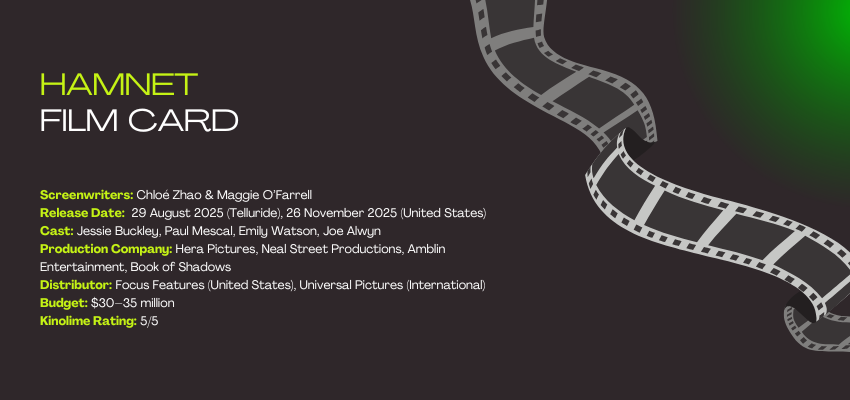
Hamnet: The Screenplay That Turns Grief Into Cinema
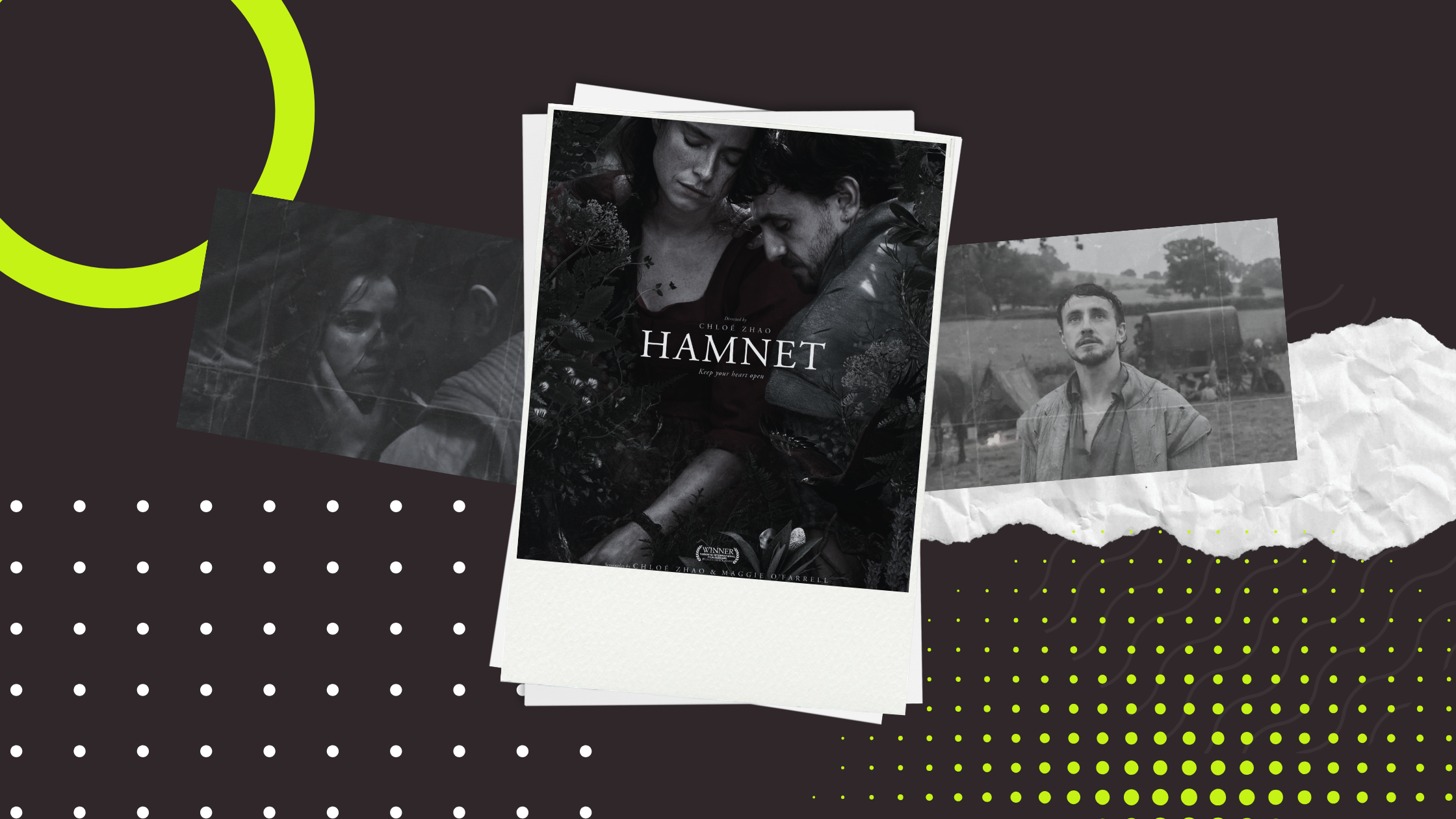
I was pleasantly surprised when I saw Hamnet for the first time. The film centers the life of William Shakespeare and his wife Agnes Hathaway, as they cope with the passing of their 11-year-old son Hamnet. It breaks the expectations of genres, blending historical narratives with an intimate family story and elements of fantasy. The film provides a profoundly moving take on grief, love, and the cycles of life and nature.
However, no matter how surprised I was by Hamnet’s film, it cannot compare to my astonishment when I began reading Hamnet’s screenplay. Adapted from Maggie O’Farrell’s novel and co-written by director Chloé Zhao and O’Farrell, the screenplay does not focus much less on action, imagery, or sound than most screenplays do. Instead, the writing deploys symbolisms and motifs, and describes thoughts and emotions, which together convey a wide range of feelings – feelings experienced by the characters, and feelings experienced by the audience.
Hamnet premiered at the 52nd Telluride Film Festival, where it received tremendous critical acclaim, and was then released in the US in November 2025. It has now been nominated in eight categories of the 98th Academy Awards, including Best Picture and Best Adapted Screenplay. Today, I’m going to dive into how Hamnet’s screenplay depicts the deepest, most universal human experiences, and how it gets translated to the screen.
Opening Image
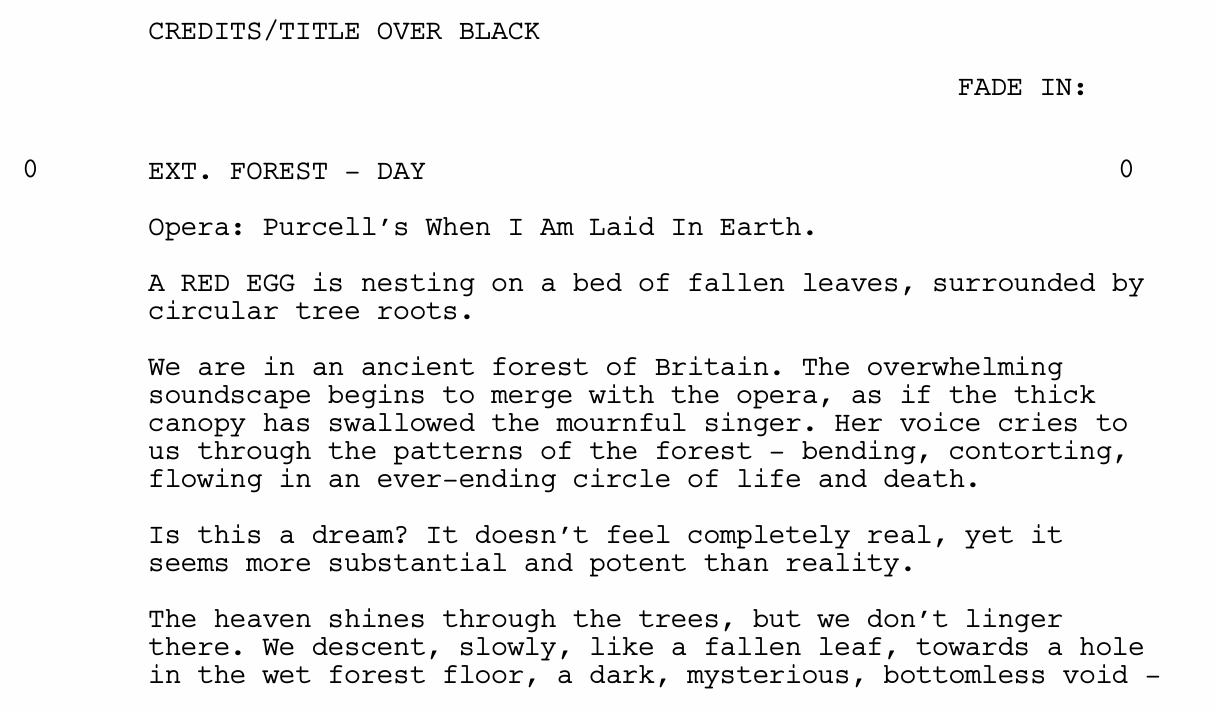
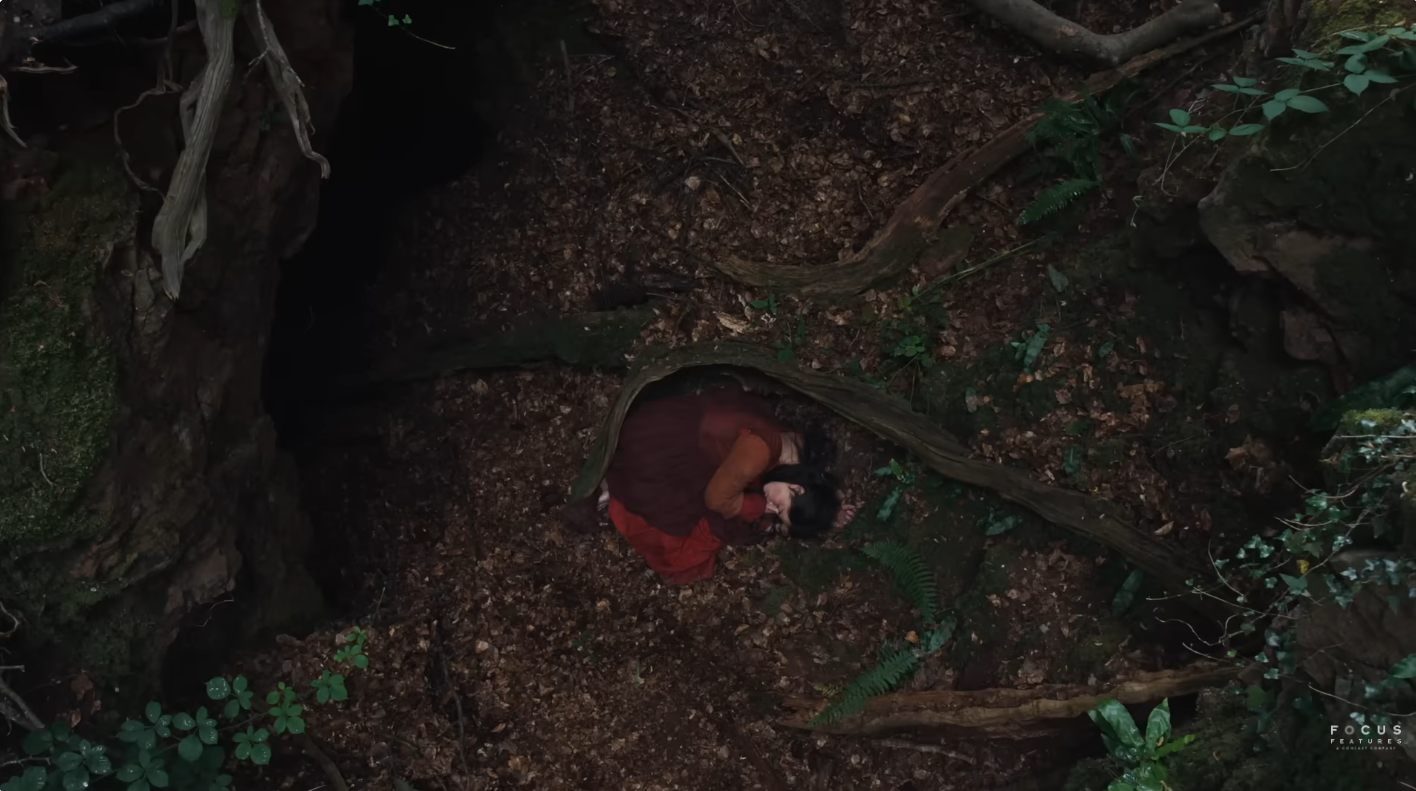
The film opens with the image of a red egg nested on a bed of fallen leaves, surrounded by circular tree roots, which hints at its theme: the cycle of life and death. The red egg, which will return at the end of the film, is a symbol of yet-to-be-born life; the fallen leaves signify lives already departed; while the circular tree roots are the lives that are lived in the current moment, and the circular shape also suggests the ever-turning cycle of nature.
The action lines then ask the question: Is this a dream? It doesn’t feel completely real, yet it seems more substantial and potent than reality. The script does not clarify who is pondering on these questions – the characters, the trees, or the audience. We then move downwards with the camera, like a fallen leaf, descending into a dark, mysterious, bottomless void – the motif of death that will return many times throughout the script. In a few lines, the writers make the audience a part of the forest, a part of Hamnet’s world.
Set Up
We are introduced to Agnes and Will. Agnes is in the forest, letting her hawk land on her arm without wearing her glove. Here, the script highlights its focus on feelings, writing in all caps: SHE WANTS TO FEEL EVERYTHING. Meanwhile, Will works as a Latin tutor for Agnes’s brothers, to pay off his father’s debts. He is agitated, trapped, angry. He rushes to the door, needing air.
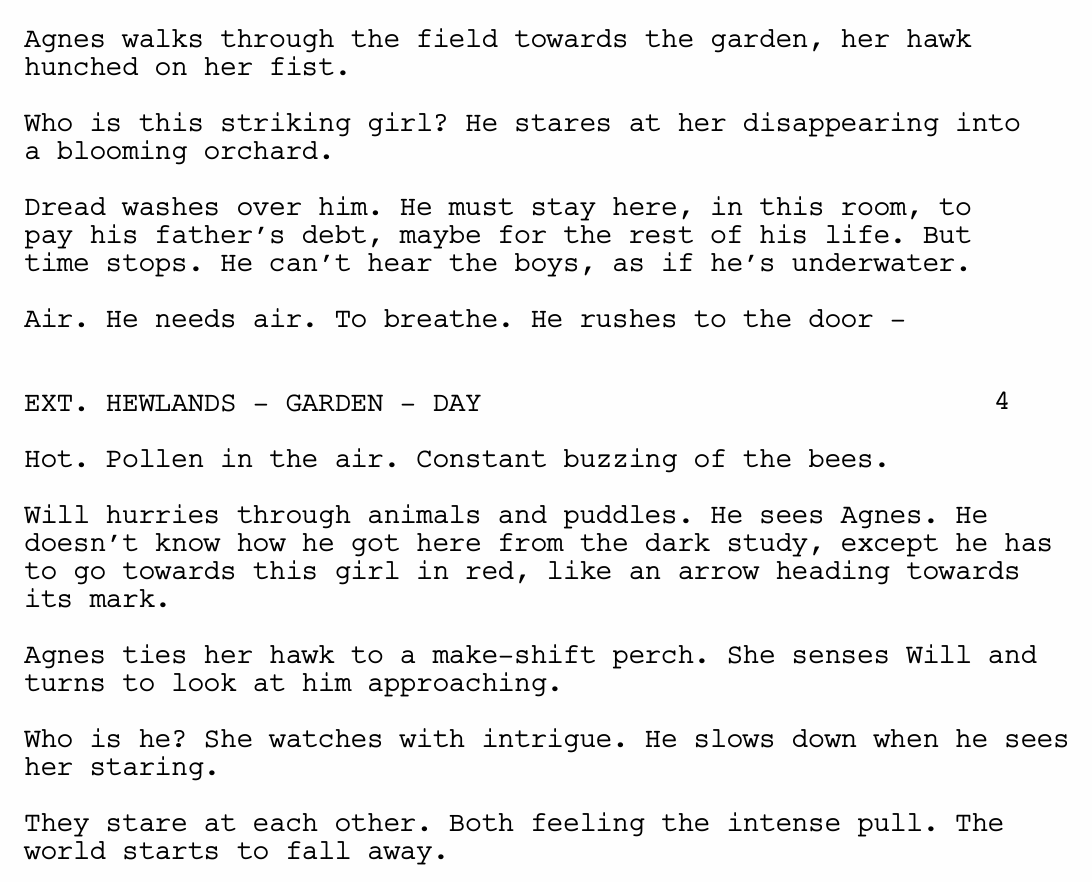
Here, the writers introduce “air” as a central motif to Hamnet. This is almost unimaginable for filmmaking, since it is nearly impossible to represent air visually or audibly. Yet, the writers of Hamnet are unafraid to introduce motifs that are difficult to film. They aim to create a feeling with their text – the same feeling that the characters experience, and the same feeling that will rise in the audience.
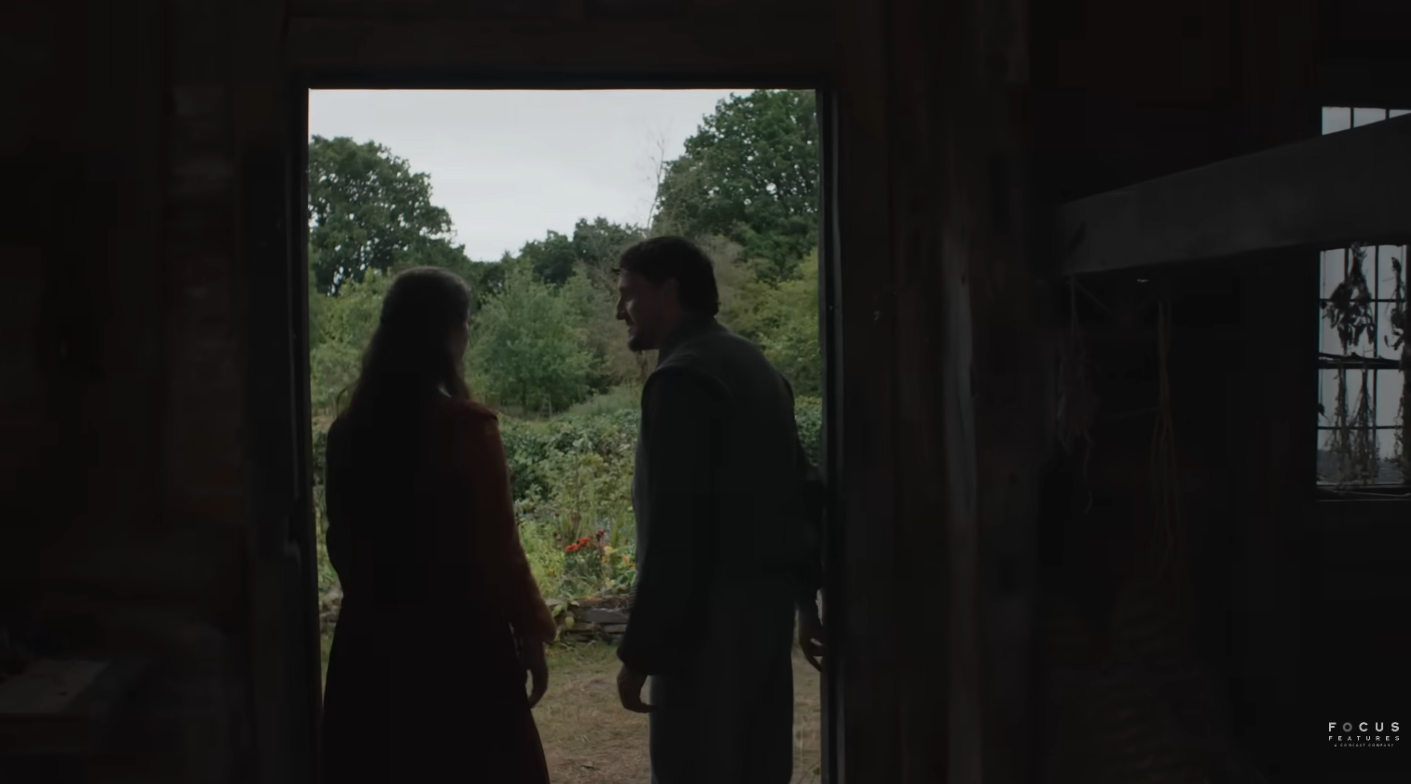
When Will meets Agnes, pollen is in the air. A symbol of fertility, life, and the interconnection of nature, the pollen hints at the romance that will take place. Agnes and Will kiss and tell each other their names. The pull between them is so strong that Agnes finds herself about to explode.
Inciting Incident
At dinner, Will’s mother, Mary, tells Will the rumors that Agnes’s mother was a forest witch, and that Agnes is capable of foreseeing someone’s fortune by merely touching their hands.
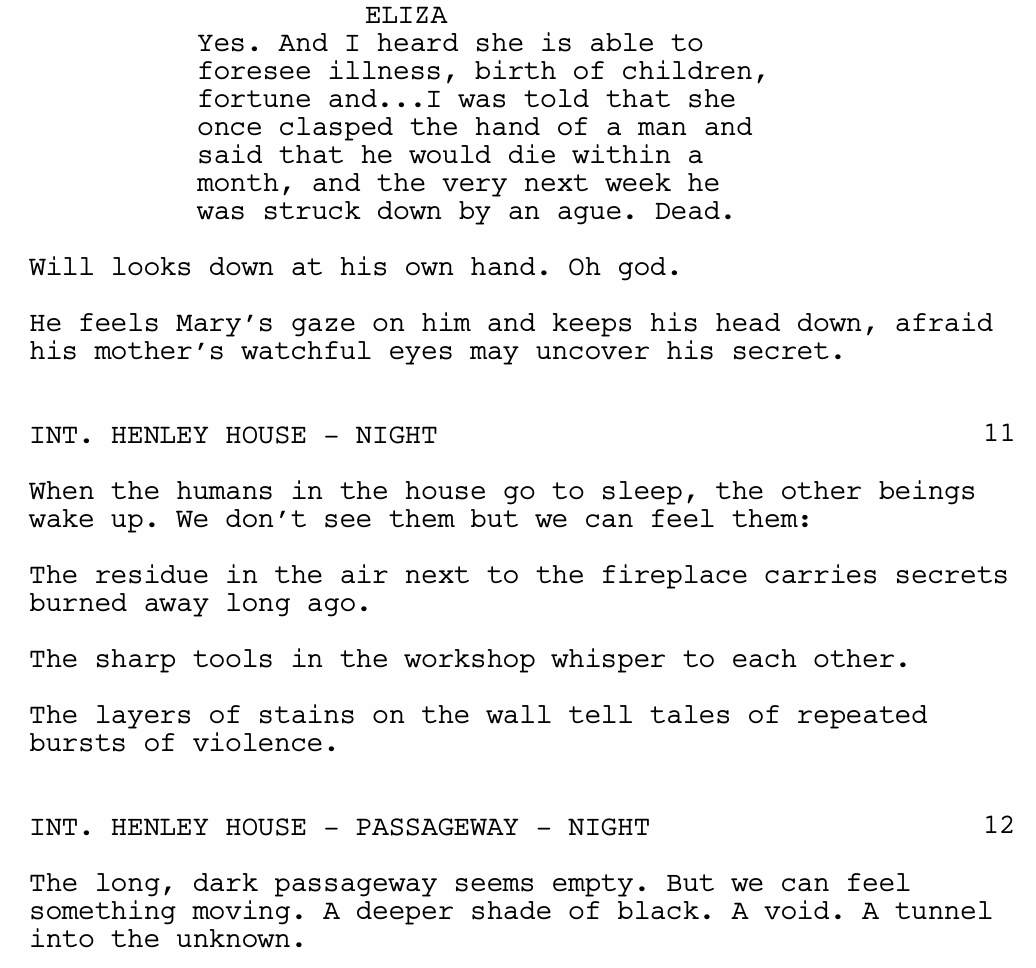
In Hamnet, the environment is always just as alive as the humans who live in them. And Will’s home, Henley House, is the same way. Again, the writers remind us that we don’t see its life, we feel it. Here, secrets, whispers, and violence live inside residues in the air, the tools, and stains on the walls; and most importantly, in the house’s dark, long passageway, where a black void is moving – a tunnel into the unknown.
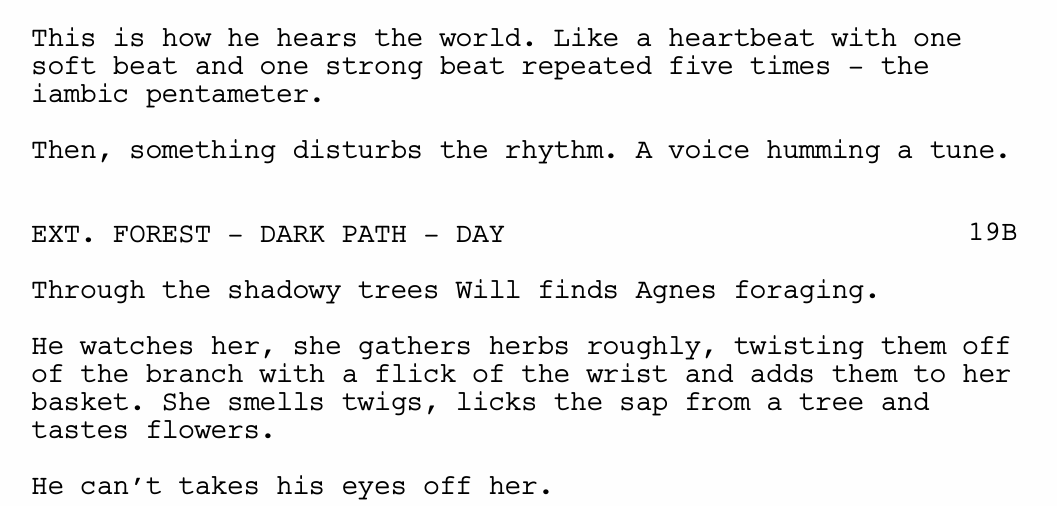
When Will reenters the forest, we hear everything from his perspective. Here, another motif is introduced: heartbeat, the rhythm of nature, as well as the rhythm of Shakespeare’s writing, of iambic pentameter. Will is a part of nature, and he channels it into his work.
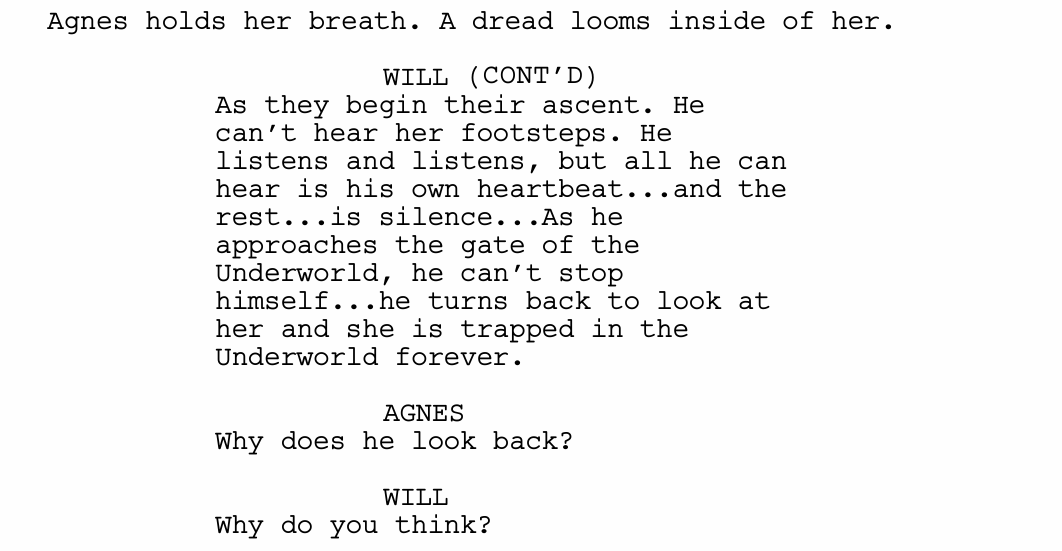
Will finds Agnes, who challenges him to tell her a story. He tells her the tale of Orpheus and Eurydice, of how Orpheus turns back to look at Eurydice, just before he is able to bring her out of the Underworld. And when Agnes asks “Why does he look back?” Will doesn’t give her an answer. This is a question that will only be answered at the end of the film.
Will lets Agnes touch his hand, and Agnes sees the many worlds that live inside Will, the stories waiting to be written. She tells him about her desire to feel, to live a life that is her own, in her ways. Now they see and feel each other deeply.
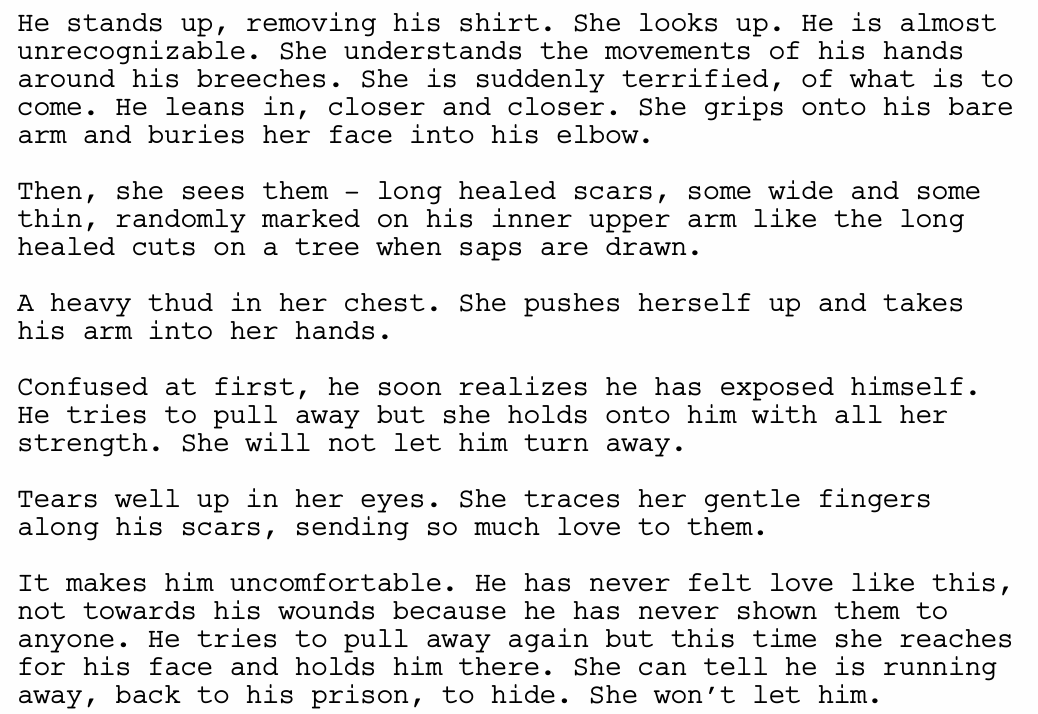
Will and Agnes handfast and make love. Here, nature is again used as a metaphor. To Agnes, the wounds on Will’s body are like the long healed cuts on a tree when saps are drawn.
Debate
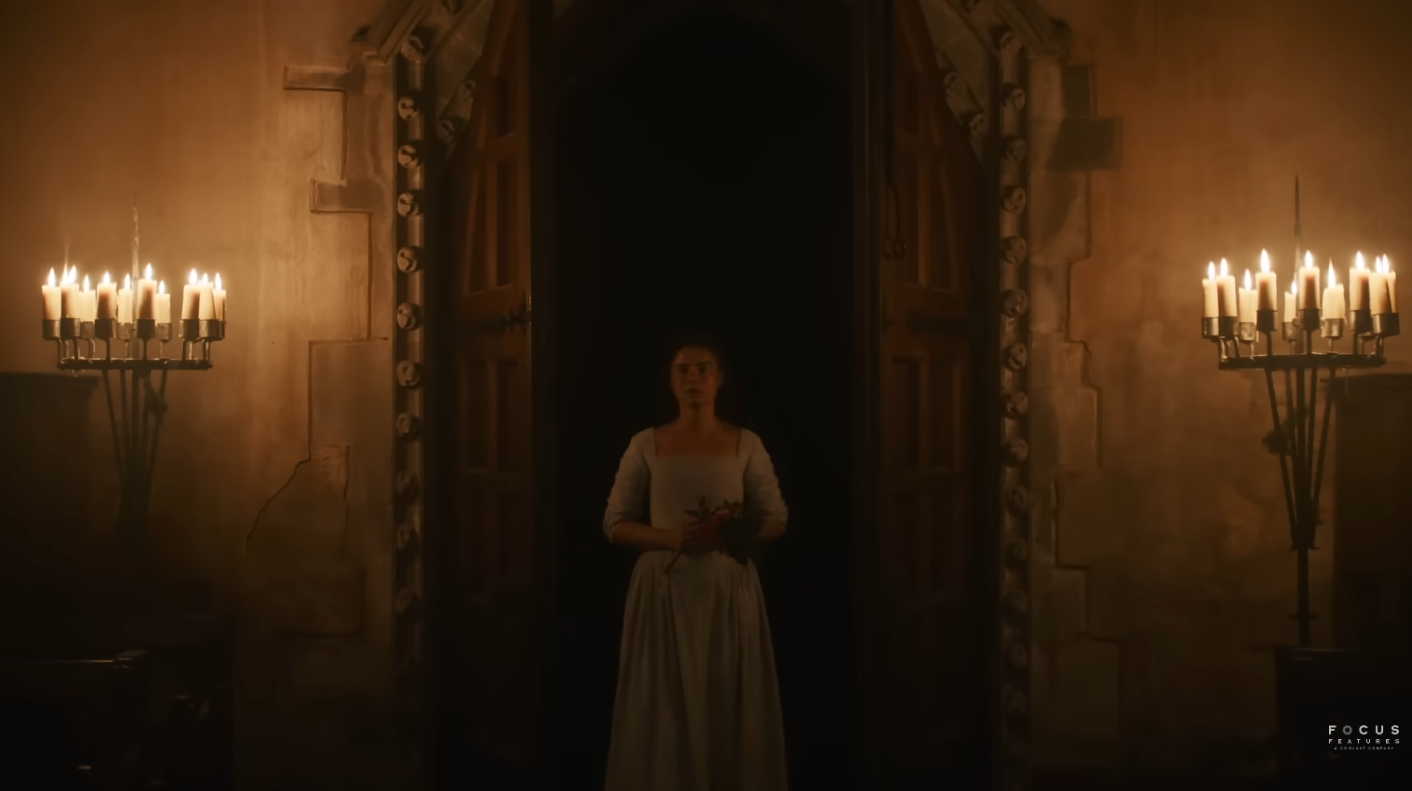
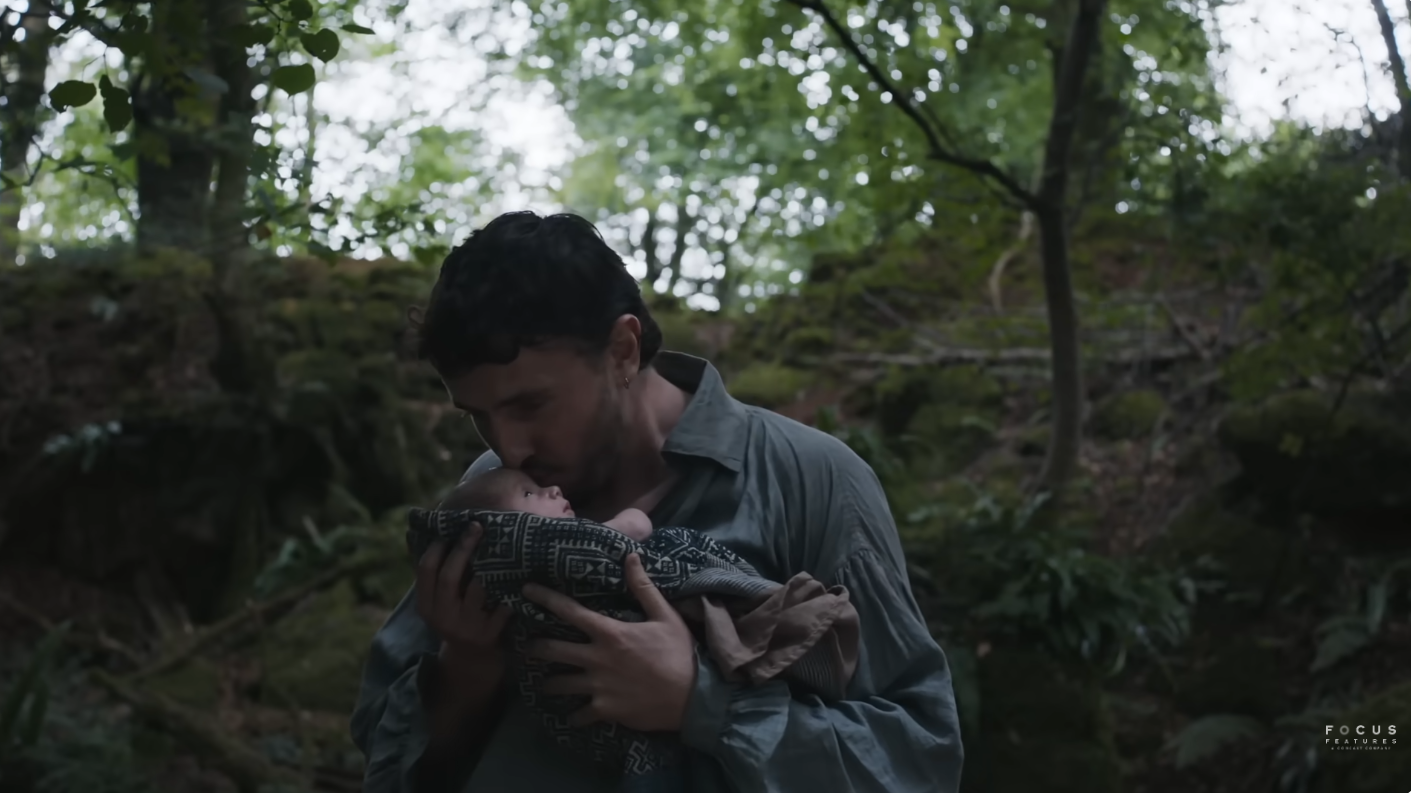
Agnes is pregnant, and the families have no choice but to let Agnes and Will marry. Months later, Agnes goes to the forest, where she gives birth to their first daughter, Susanna.
Yet Will remains tired and agitated. Working in John’s glove shop turns him angrier by each day. Agnes decides to let Will go to London, where he can try to realize the worlds that exist within him.
Break Into Two
Everything begins to go wrong at the birth of Agnes’s second child. Agnes wishes to go to the forest to give birth, but a flood restricts her from venturing outside her home. Will, too, is away in London.
Agnes almost dies in childbirth. In her pain, she remembers the day that her mother died. She wasn’t allowed to see her mother’s body, and was pulled back into a dark passageway. The passageway, separating life and death, now separates her from her mother.
Agnes give birth to twins. The second twin, Judith, doesn’t cry when she comes out, and only breathes after Agnes takes her into her arms.
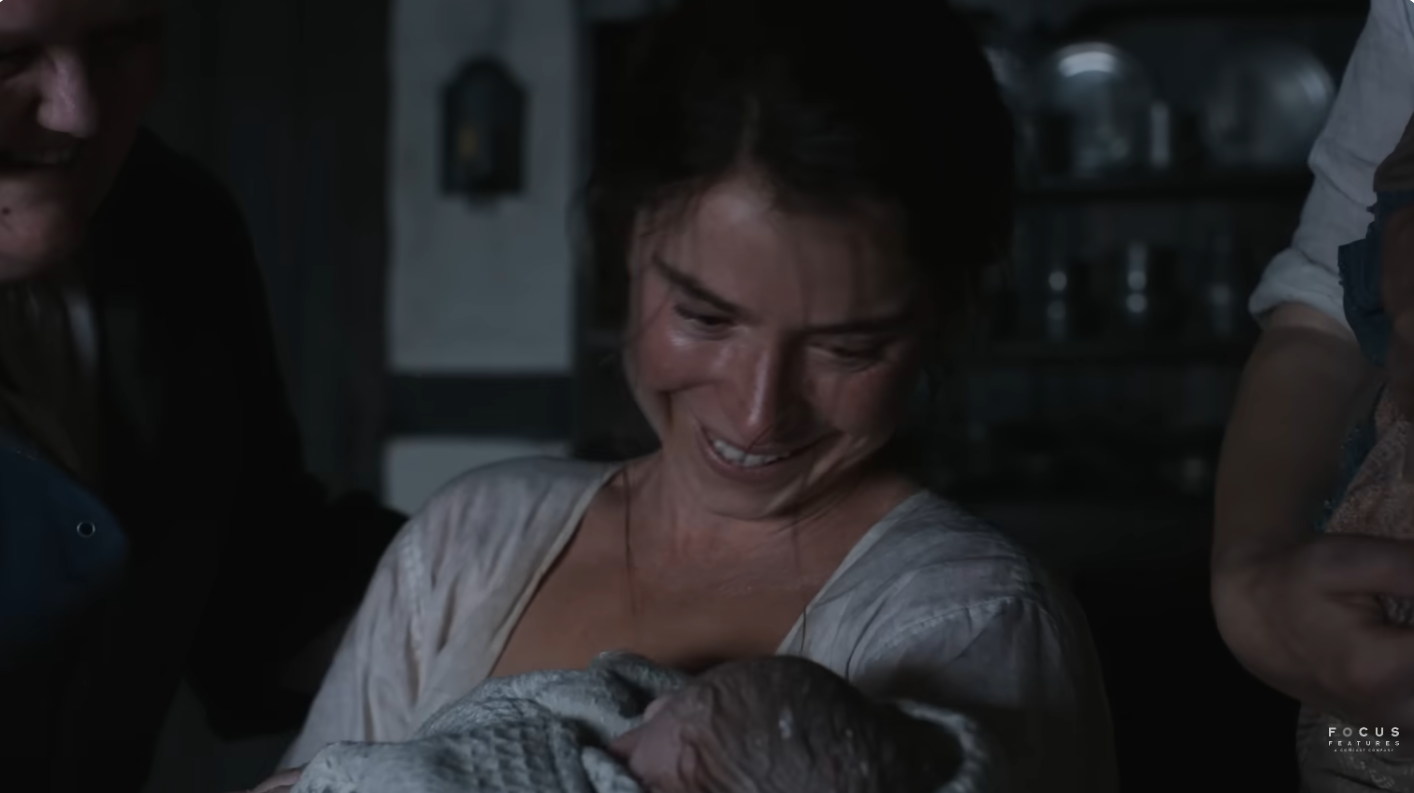
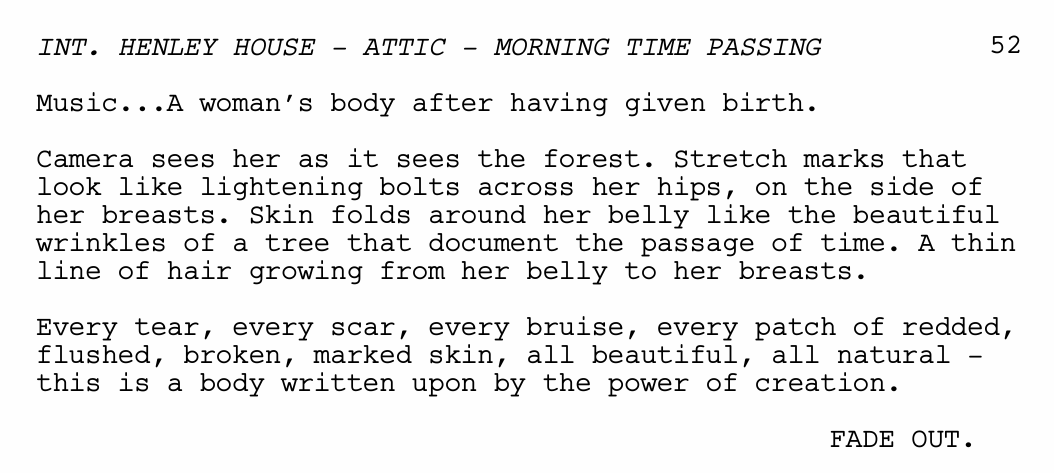
The writers compare Agnes’s body after giving birth to nature: lightning bolts, wrinkles of trees… Agnes’s body, or indeed, the human body, is a force of nature.
Fun and Games
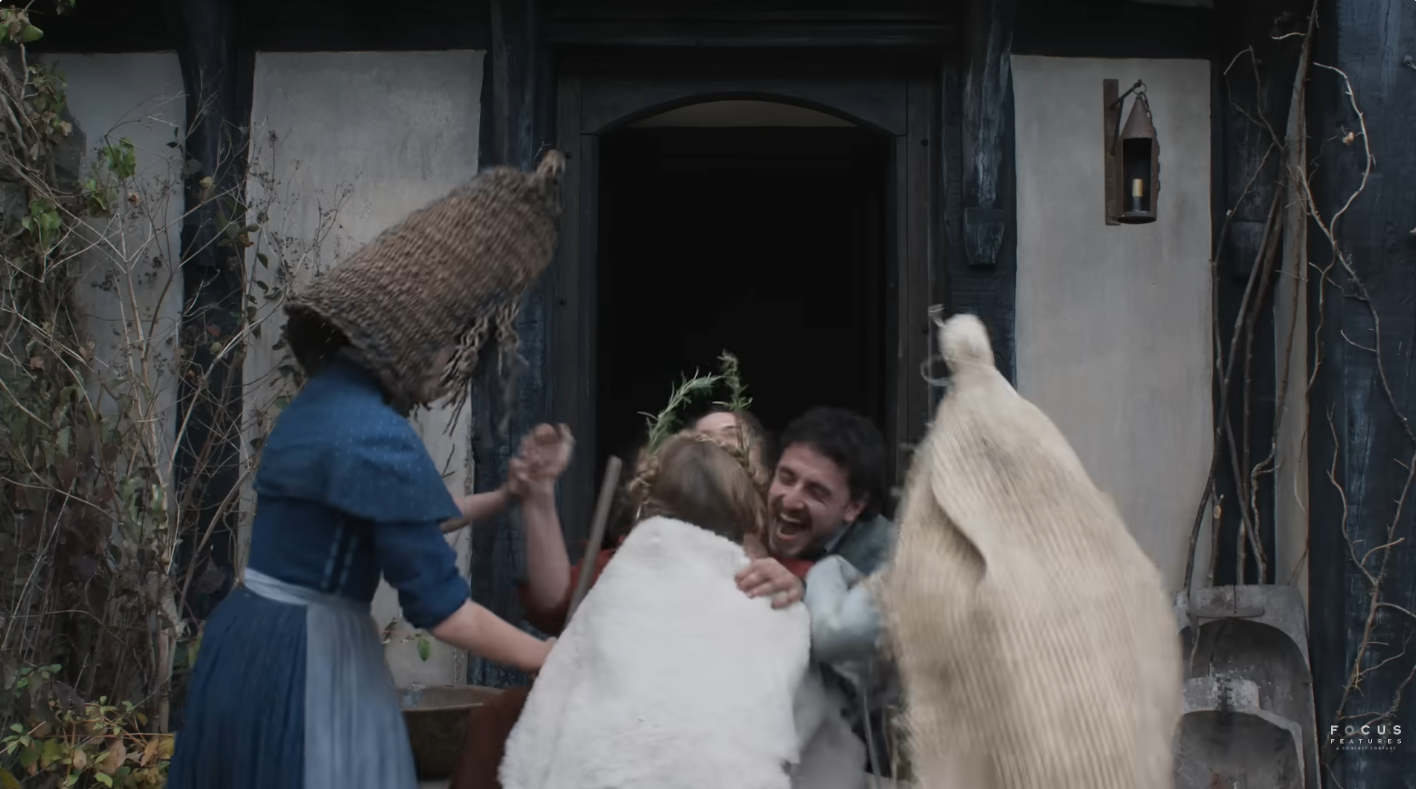
Time turns to 11 years later. The twins, Judith and Hamnet, dress in each other’s clothes, trying to trick their father into believing that they are each other. Will, upon his return from London, pretends to fall for it. The family takes walks in the forest together, sing songs, and the children put on Will’s new idea for a play. This is the image of a happy family.
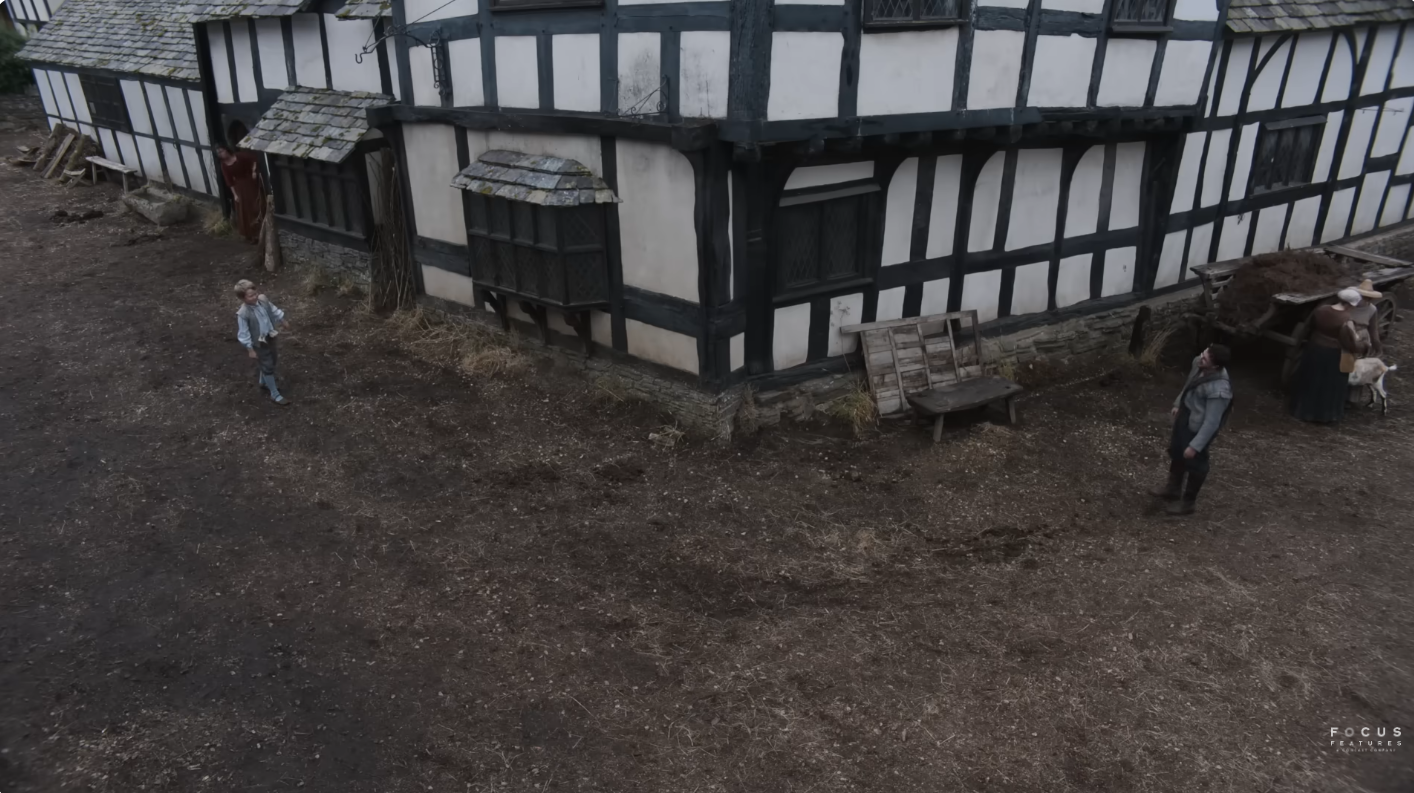
When Will departs again for London, Hamnet sees him off. Will asks Hamnet to be brave, to look after his mother and sisters. Here, the film delivers one of its most iconic shots: father and son, walking towards different corners, until they disappear from each other’s view.
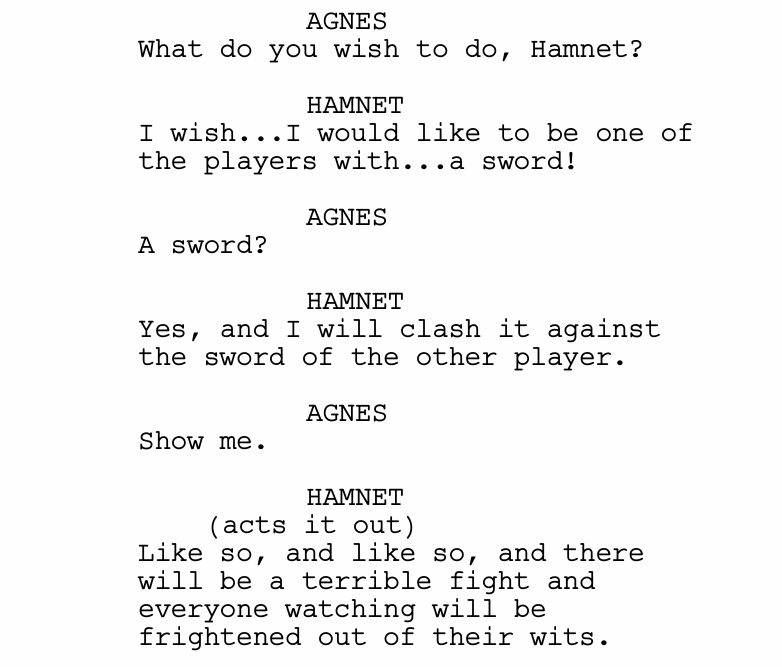
Hamnet feels sad and alone after Will leaves. Agnes looks at Hamnet’s hand, telling him that he will grow up to work with Will at the playhouse. Hamnet goes off imaging himself as a player with a sword, much cheered up.
Midpoint
A plague begins spreading across England. Judith falls ill. Agnes tries everything in her power to cure her, yet nothing works.
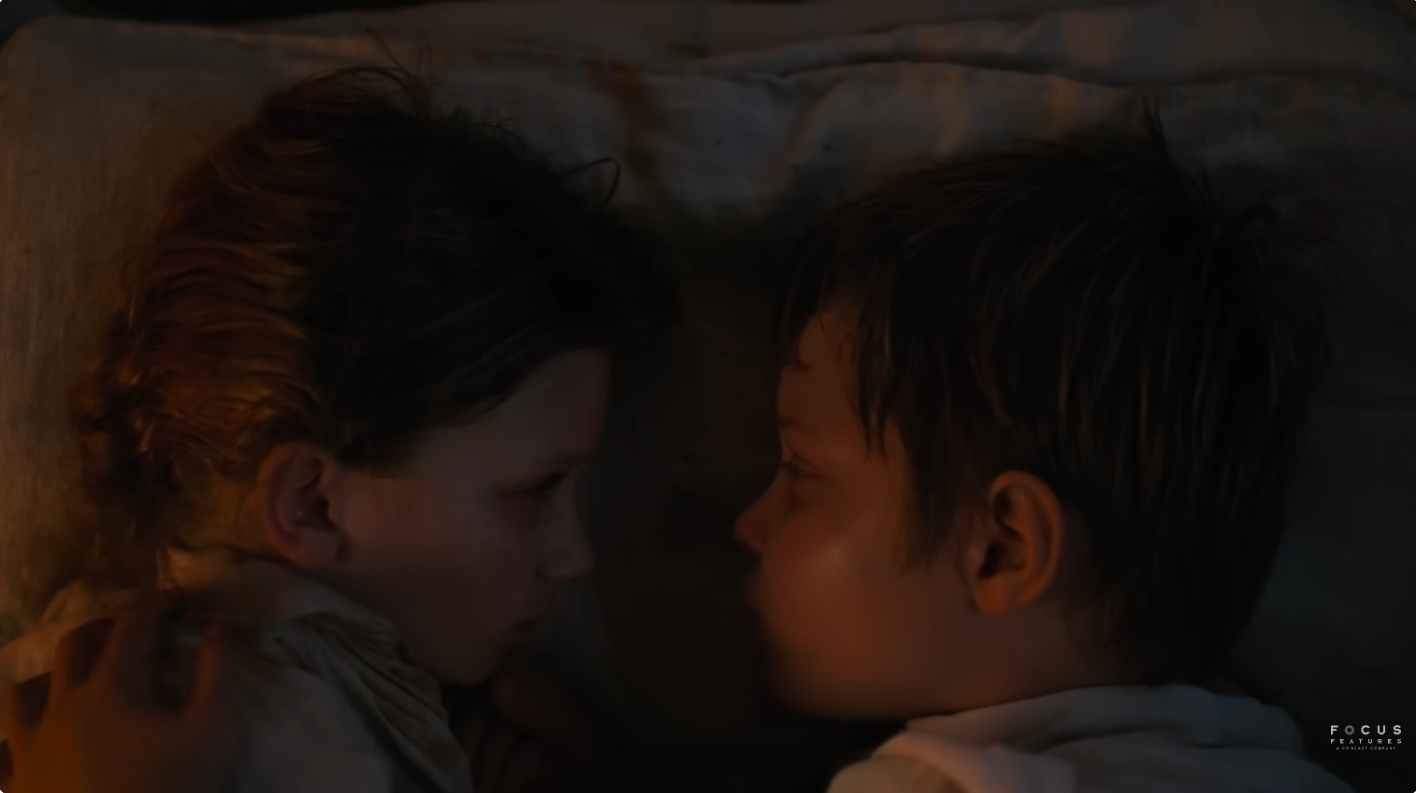
The night that Judith is about to pass away, Hamnet lies down at her side. He switches places with Judith, and whispers that, since they are so alike, Death won’t be able to tell them apart when it comes, and he will go in Judith’s place.
Upon his death, Hamnet is transported to the Globe Theatre. The time of this scene is written as “Forever Dawn,” a metaphor for both how Hamnet’s life stands still at his childhood, and how his life may one day give birth to Hamlet, a story that will exist forever in history.
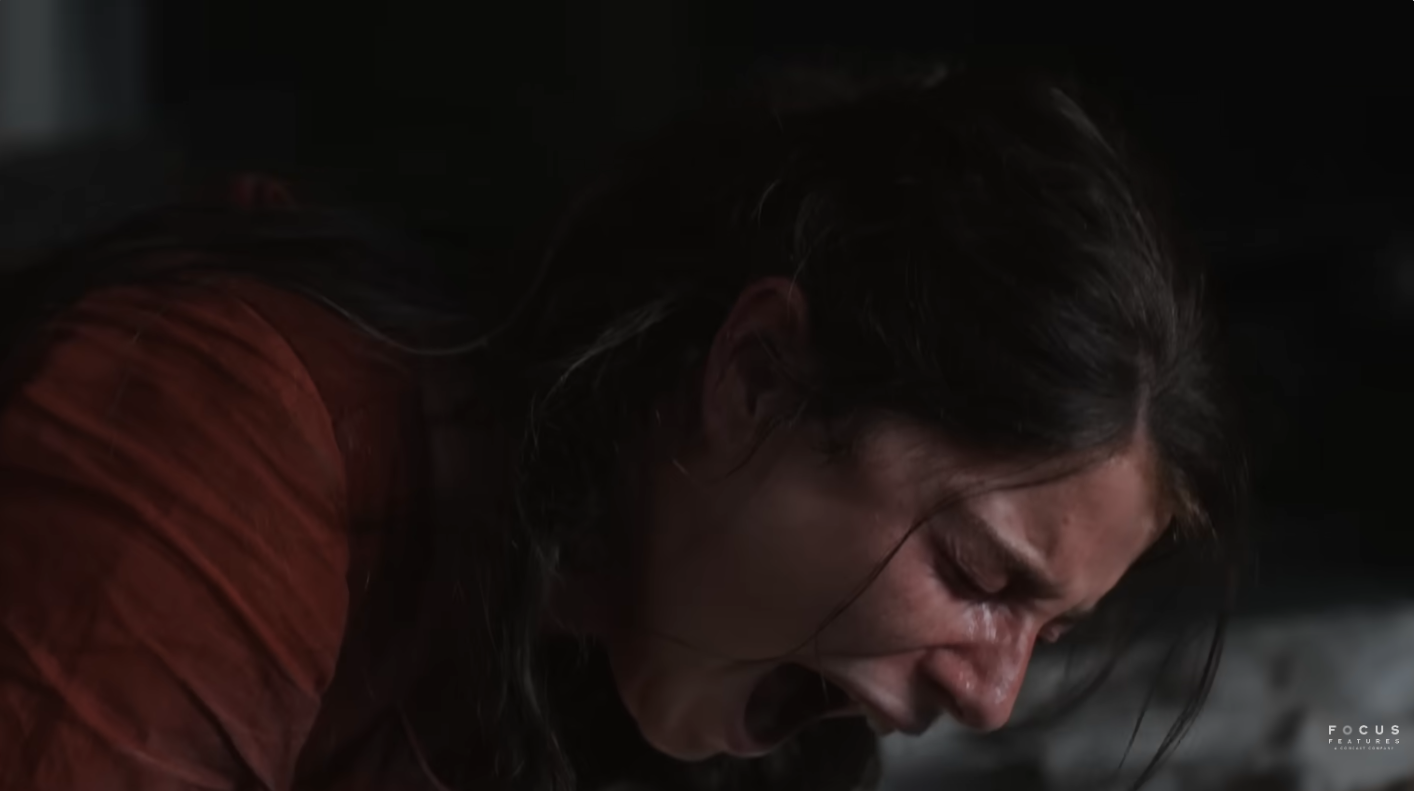
The second morning, Agnes wakes up to find Judith recovered, yet Hamnet gone. She will not let people move Hamnet’s body, until Will arrives home, too late.
“The animal” is another metaphor that repeats throughout the screenplay. It describes both Will and Agnes, the part of them that is wild, unrestrained by the rules of society. Yet here, it is also a symbol for the anger buried inside them, snarling at themselves for having done nothing to prevent what happened to Hamnet, as they break under their grief.
Bad To Worse
Agnes blames Will for his absence, and blames herself for not seeing Hamnet’s death coming. Will escapes his grief by returning to London and devoting himself to the playhouse. He writes and rehearses Hamlet, and gets infuriated when the actors cannot convey the emotions behind his writing.
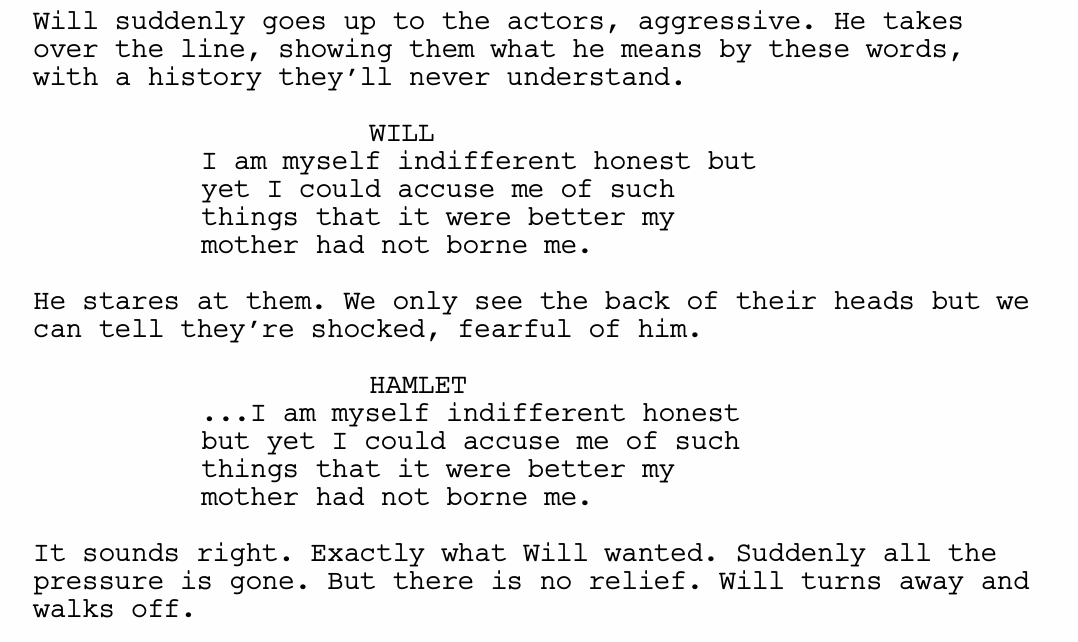
Will goes to the bank of River Thames. For a moment, it is as if the grief is about to consume him. In the stillness of air, he is about to give in to the void, to throw himself into the water. And then the wind picks up.
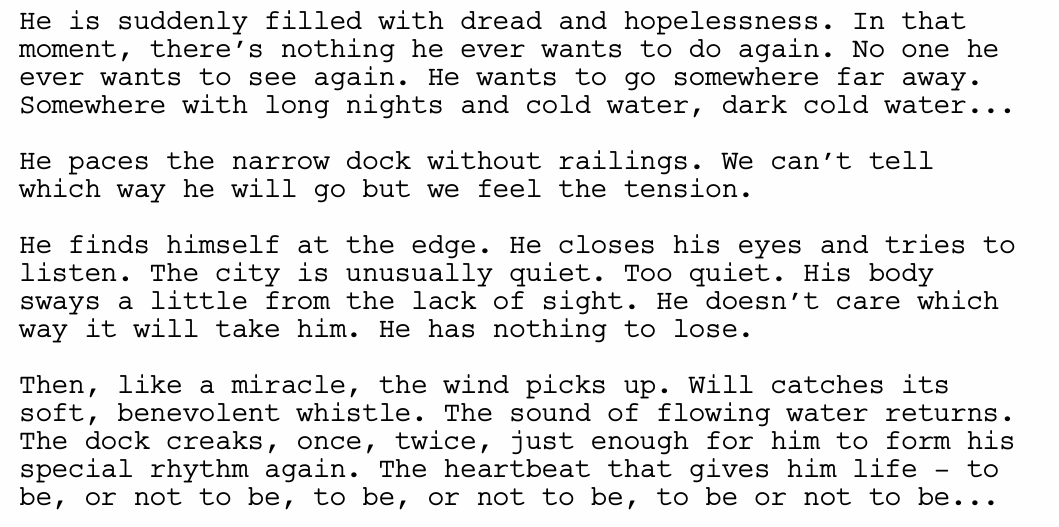
A sign of life. Will hears, in the wind, in the force of nature, the heartbeat that he heard when he was in the forest. The rhythm of nature, of his life, of his writing, of the line that will be repeated for hundreds of years – “to be or not to be.”
When Will returns home, however, his relationship with Agnes worsens. Will acts joyful when he is with the rest of the family, while Agnes keeps looking for Hamnet, feeling like he would turn up somewhere. Finally, when Agnes looks at Will’s hand, she can no longer see anything. The pull between them is lost to their grief.
Break Into Three
Agnes learns that Will’s new play, Hamlet, will be performing at the Globe Theatre. She and her brother Batholomew decide to see the play in London.
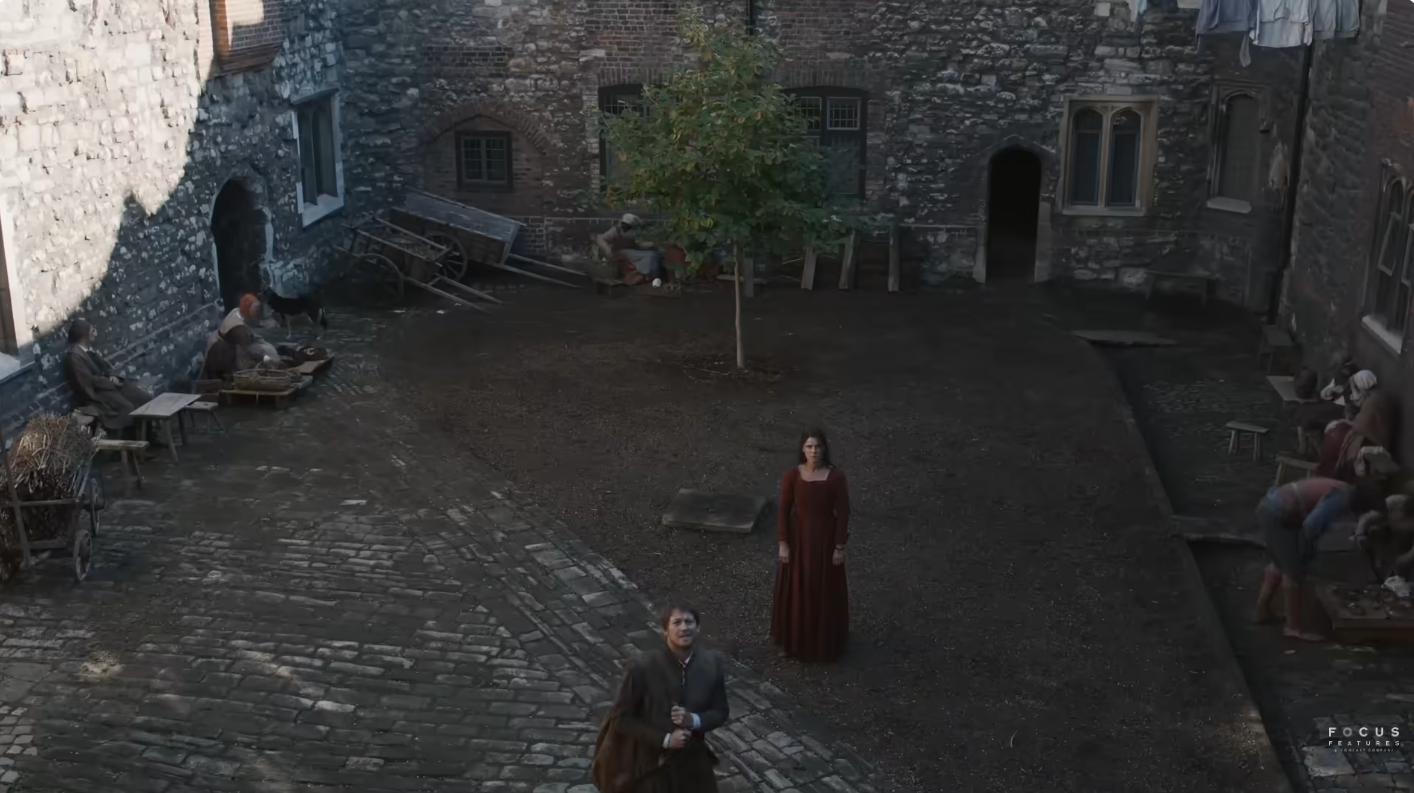
It is here, when they are asking for Will’s whereabouts, that Will’s full name “William Shakespeare” is mentioned for the first and only time in the entire film. The writers make it clear that this is not just Will’s story, but Agnes’s; not just the story of the greatest writer of all time, but of a mother and her grief in losing her son.
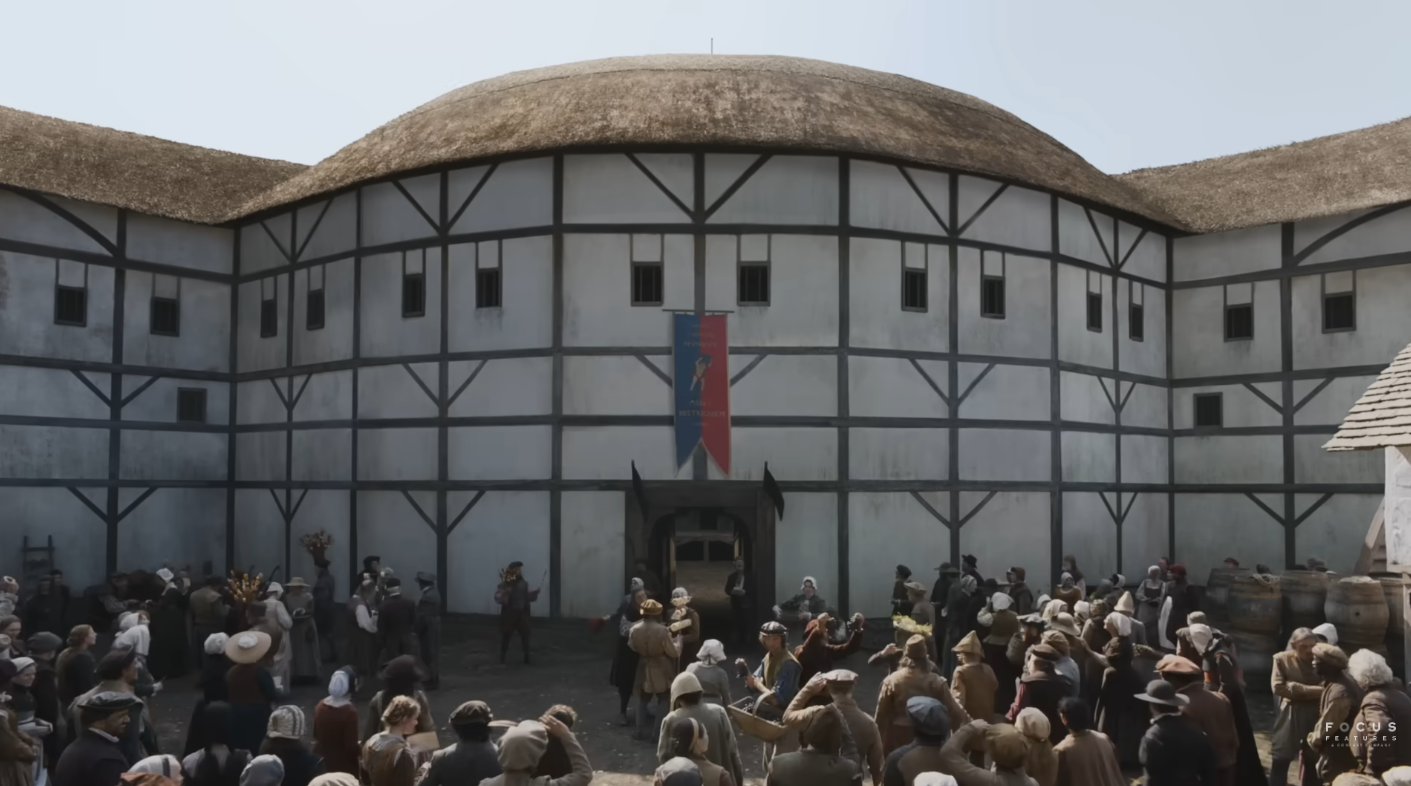
At the Globe Theatre, Agnes is at first confused by Hamlet. She doesn’t see how it has anything to do with her son. Then Will appears, dressed as the Ghost of Hamlet’s father – in his play, the father is the one that is gone, while the son lives.
Then Hamlet ascends the stage. Suddenly, Agnes feels like she is looking at her son alive and grown. Just like how Hamnet always wanted, being a player in his father’s playhouse.
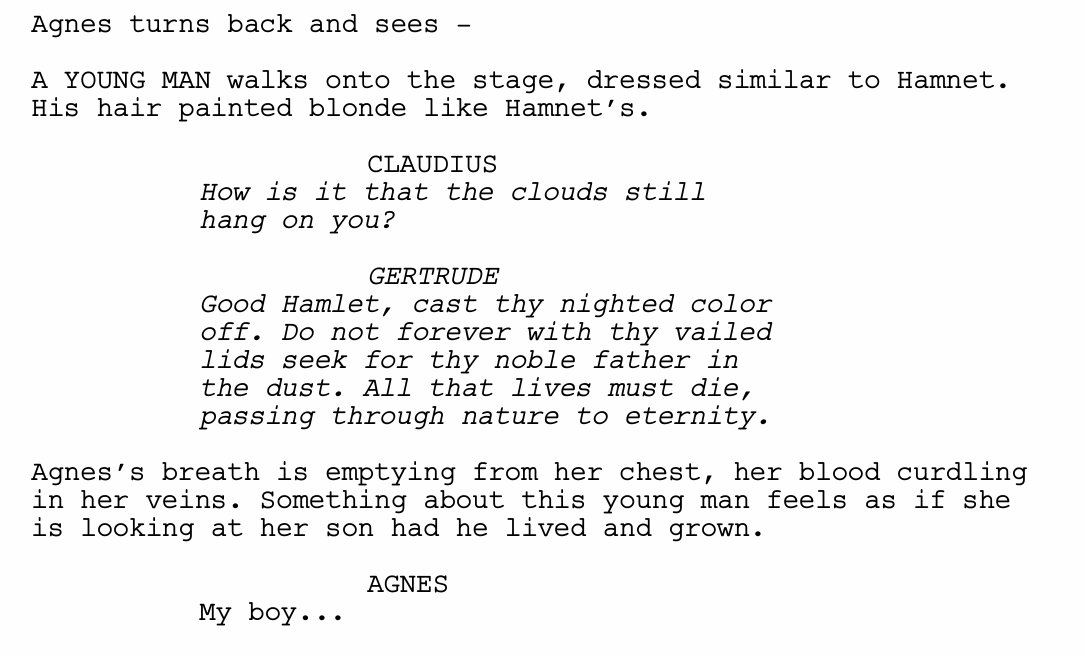
After an exchange between Hamlet and the Ghost, Will is about to exit. Agnes whispers for Will to look at her. And he does, as if he heard her.
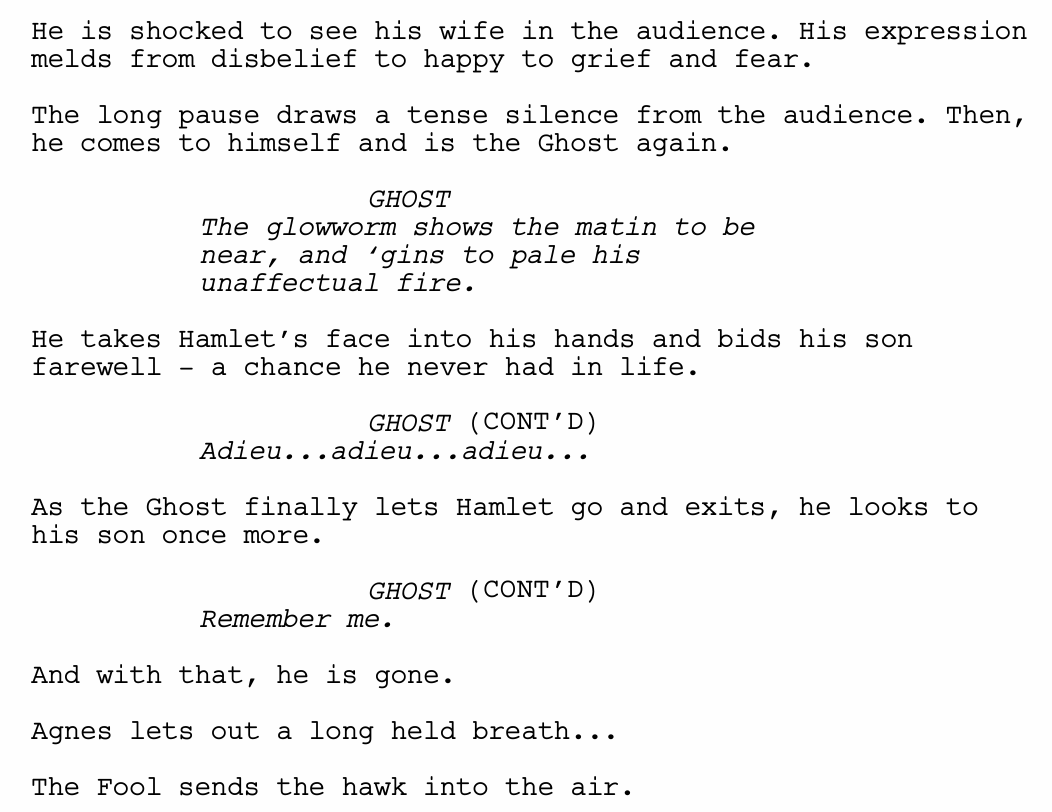
As the Ghost, Will bids Hamlet farewell. This time, he gets the time to say goodbye to his son.
Finale
The play proceeds. Agnes watches, and recognizes all the moments where Will has drawn his inspiration from his life with her – the shared family song, the swordfight.
In the last moments before Hamlet’s death in the play, Agnes reaches out to him. And we suddenly find ourselves on the stage with Hamnet in the last moments before he died.
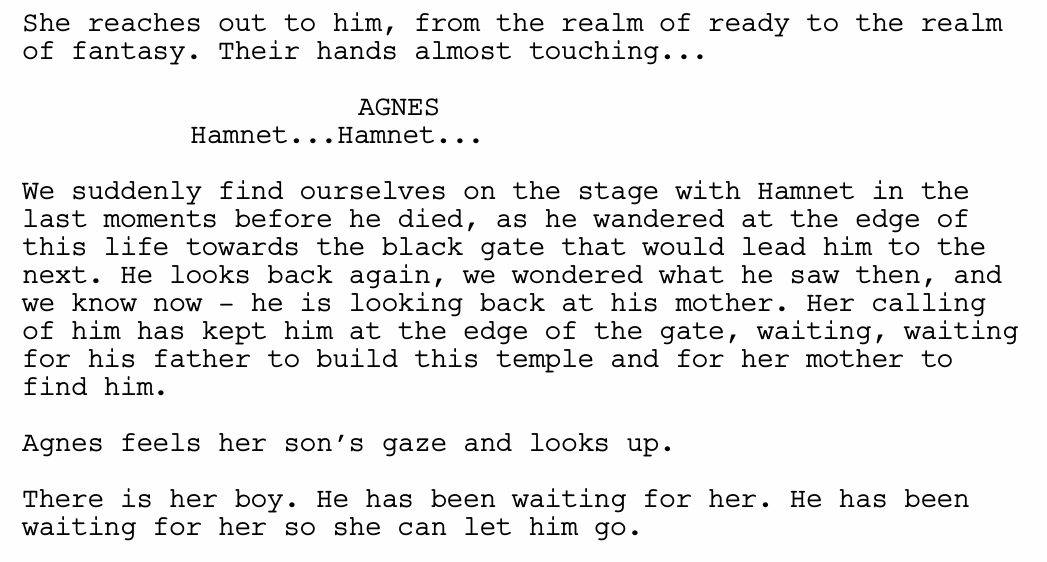
Somehow, Hamnet was transported into this moment, onto the stage of Hamlet, right before he died. Like Orpheus in his father’s story, Hamnet looks back. At the gate to the better world, he turns to meet his mother’s eyes, and smiles at her, so she can let him go.
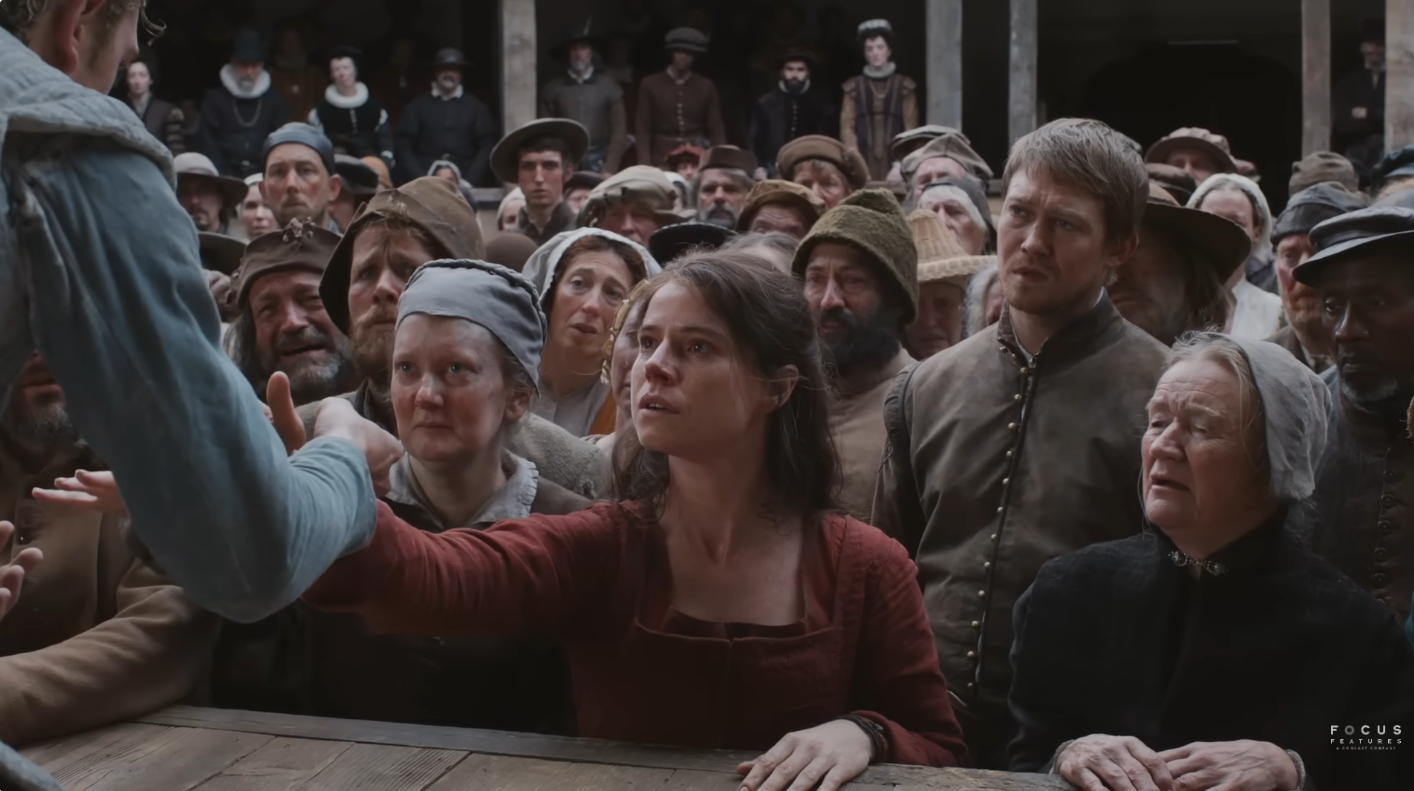
As tears of heartbreak and acceptance fall down Agnes’s face, we turn to the ever-present void, then end the film on the red egg: A crack on its hard shell. A sign of rebirth.
Hamnet’s screenplay is one of the most special that I have ever read. It is unafraid to write about air, about the animals busting inside us all, about the whispers of the heart, about everything that camerawork and sound cannot directly convey. Yet, through its symbols and motifs, through the hawk, the red egg, and the heartbeats, the script captures exactly the feelings that the audience experience when they see the film.
Every line in the script brings us further into Hamnet’s world. It let us see the world through Agnes’s eyes, and hear the world through Will’s rhythm. Eventually, the film guides us to understand the world, through the cycle of life and death, the exchange between “to be” and “not to be,” and the breath of nature.