
The Most Accurate Future: A Her Script Analysis
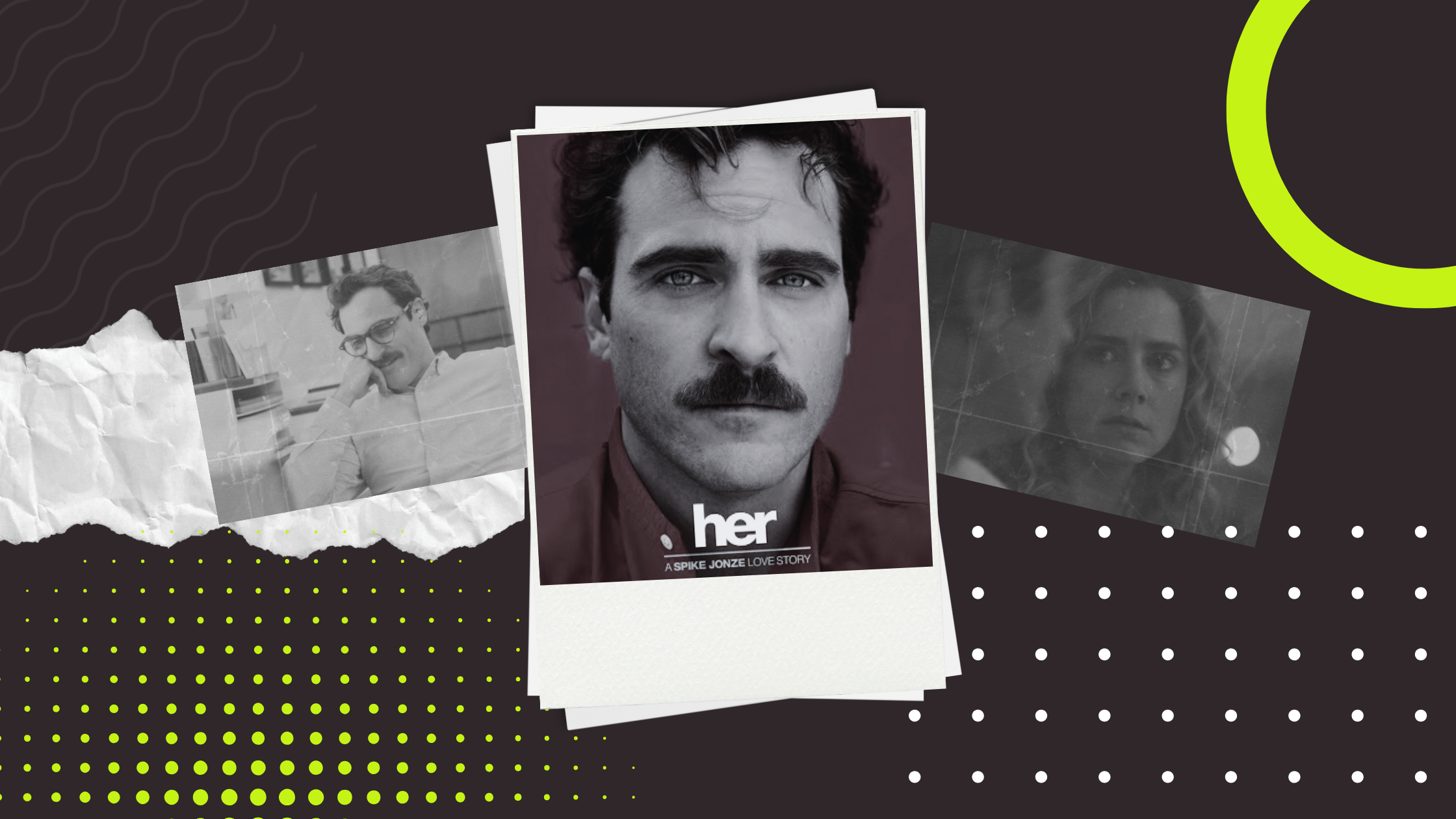
When most writers attempt to build a world set in the future, they tend to go big: flying cars, cyborgs, laser weapons, etc. To make all of these grand ideas seem reasonable to audiences, the writers tend to set the film in the distant future, usually 50 years out or so. But when Spike Jonze began writing Her, inspired by a website he came across in the mid 2000’s that advertised the use of artificial intelligence, he knew that what was coming wouldn’t take too long to get here. Set in the year 2025 (just twelve years after the movie's release), Her centers on Theodore Thombly, a lonely man who develops a relationship with the artificial intelligence program in his phone, named Samantha. While the unsuspecting romance is brilliant (and will be covered in this analysis, don’t worry), the main takeaway I wanted to focus on was Jonze’s ability to predict the future accurately and with an unexpected sense of optimism. Her is not your average dystopian film. It doesn’t aim to scare audiences with apocalyptic ideas such as A.I. taking over our government or gaining access to our nuclear codes. Instead, it focuses on the much more realistic threat of the technology: how it will replace human connection on an individual level…and what that means for us.
OPENING IMAGE
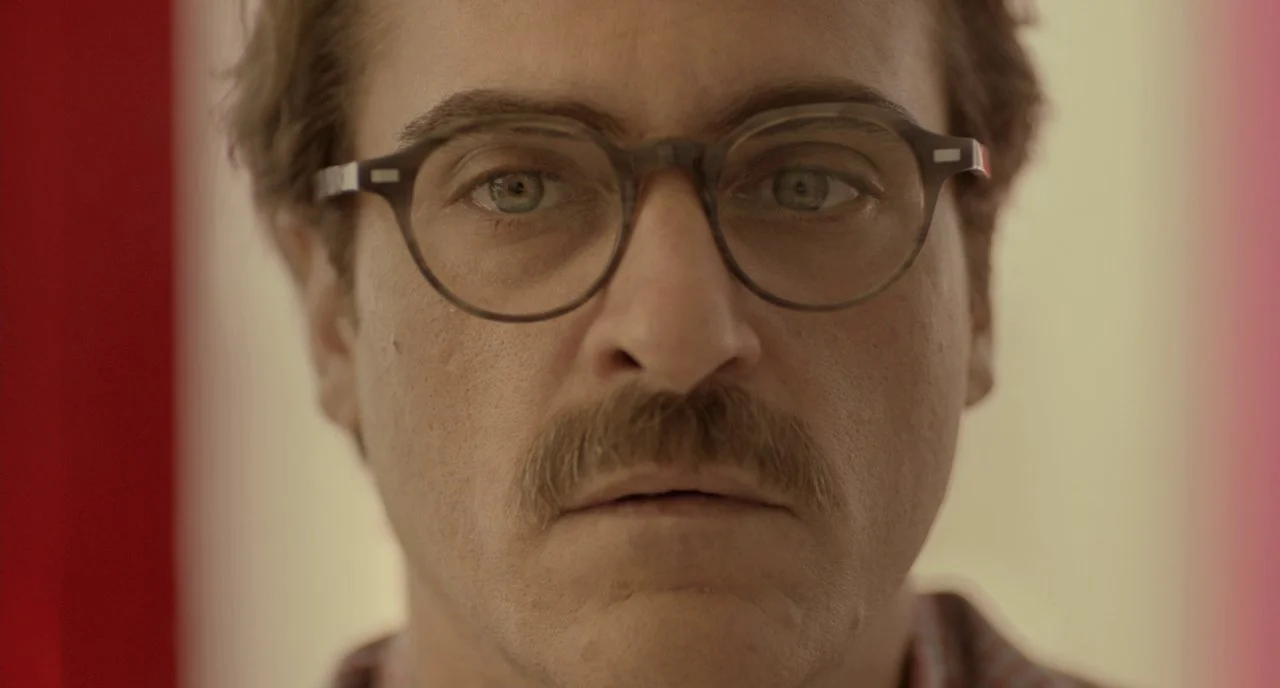
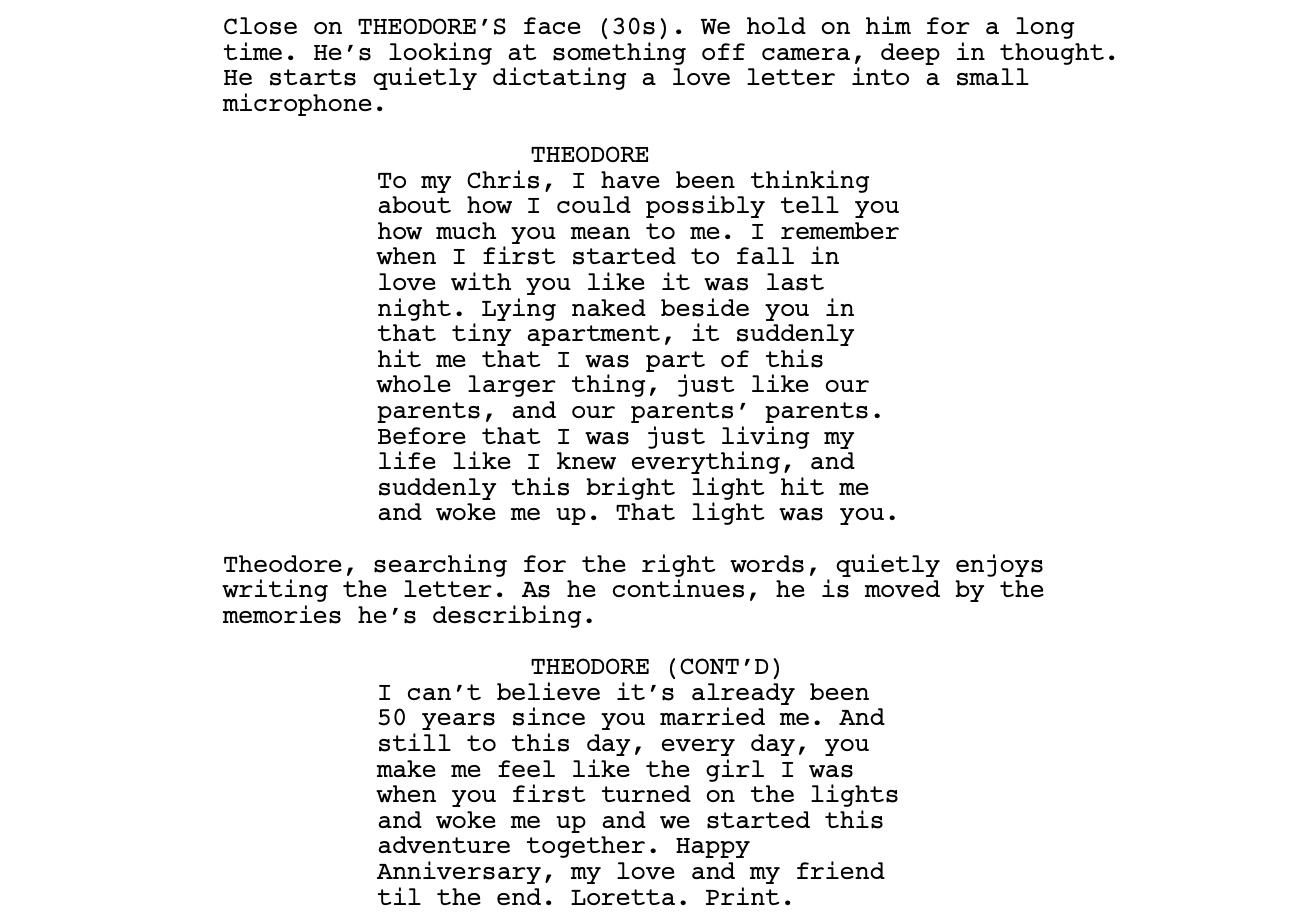
We open with a close-up shot of our protagonist, Theodore’s face, as he reads aloud a love letter he had just written. As he continues, we soon realize that it’s not his letter he’s writing, but rather someone else’s that he’s writing on their behalf (later revealed to be a service he offers as part of his job). The theme of lost human connection is introduced right off the bat: people in love unable to express it themselves, and people without love grasping for it constantly.
The combination of his gentle voice, dorky demeanor, and sincerity in his writing tells us that he’s most likely a non-threatening, kind man. This immediate perception is important later on because, in order for the audience to be invested in his romance with Samantha, we need to like Theodore. Even if we feel sorry for him, we must at least be a little bit on his side. As many of you know, one negative aspect of society lately has been the “male loneliness epidemic”, an unfortunate phenomenon that has led to a number of social, political, and cultural repercussions (not helped by A.I.’s replacement of human interaction). But the verdict on these men isn’t that they’re victims; it’s more so that they’re angry, hateful individuals who are blaming the world for their own problems. Jonze does not want us to think of Theodore as one of these men.
SET UP
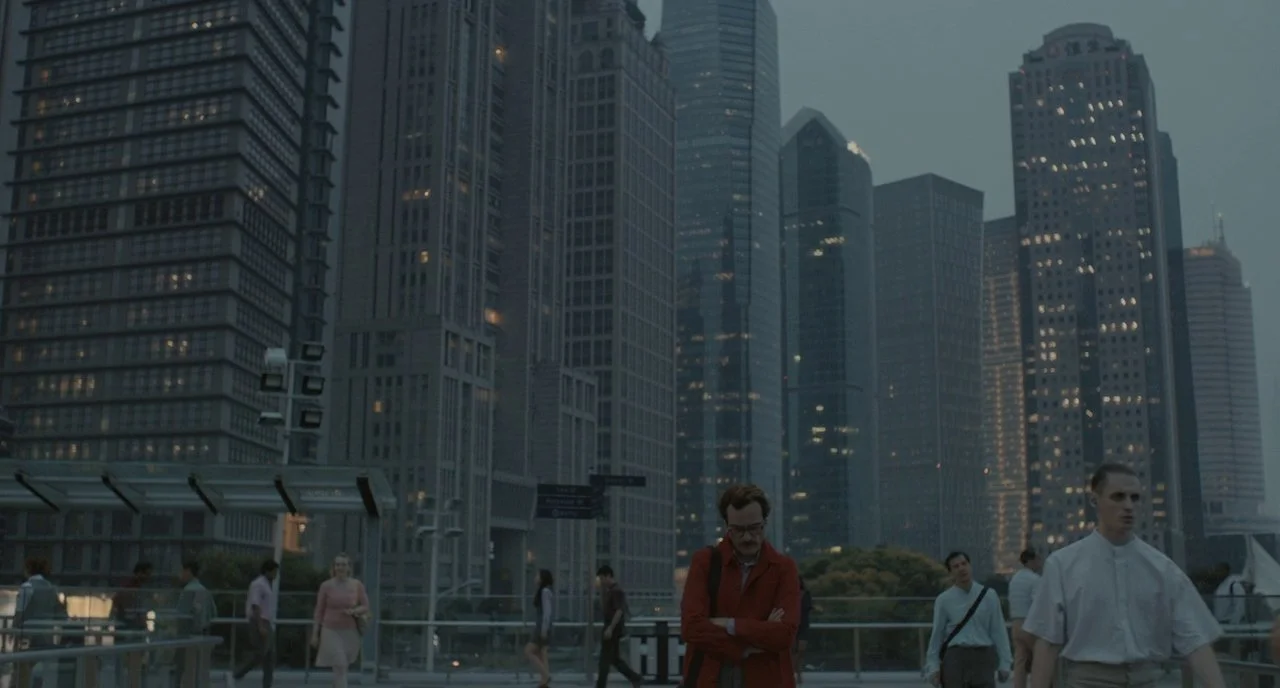

As Theodore checks out of work, he puts two earbuds in and asks them to play a “melancholy song” (which is a pretty spot-on prediction of Apple’s later development of AirPods and their incorporation of Siri). As the sad music he requested plays, he strolls down a gloomy Downtown Los Angeles and checks his emails.
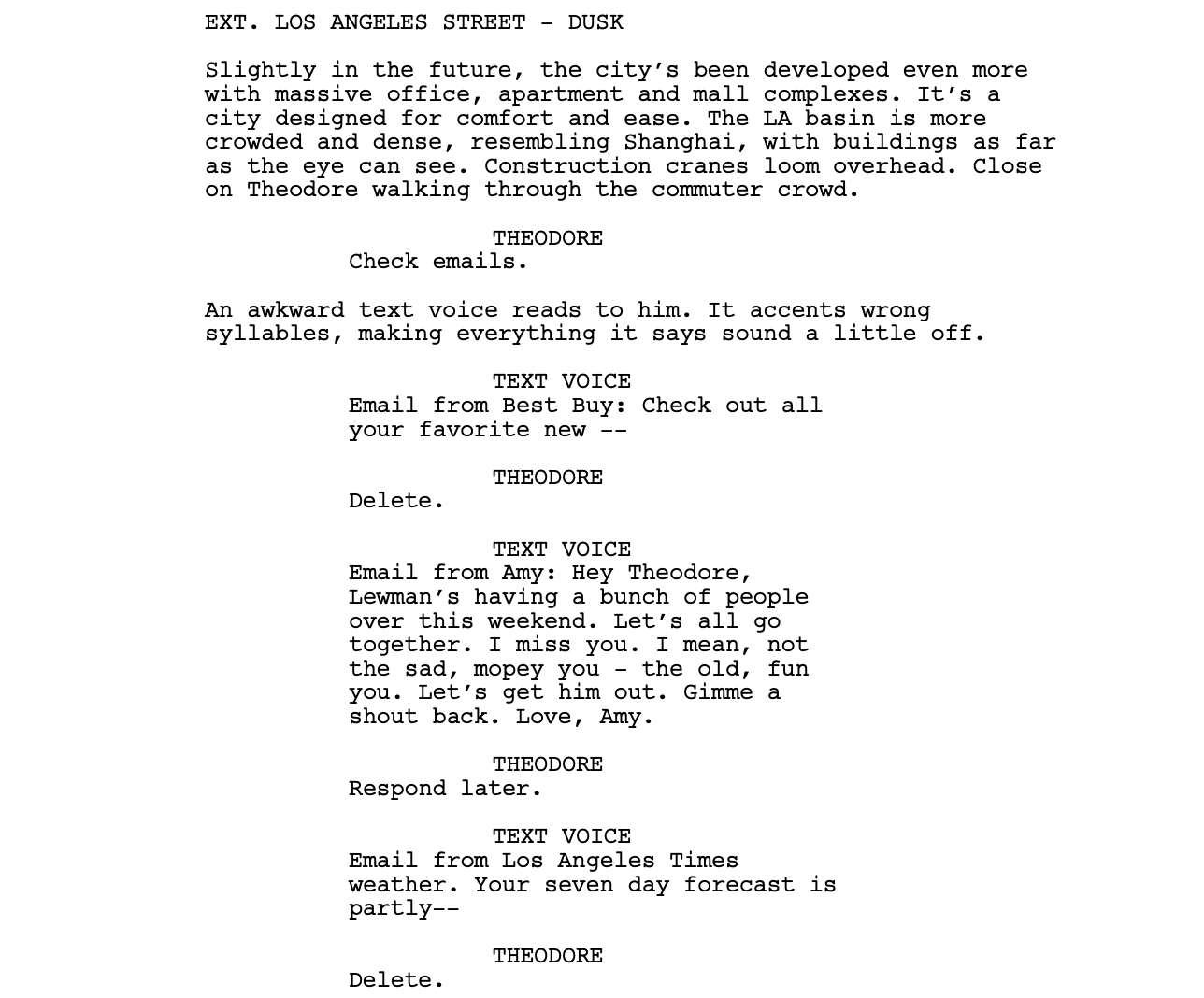
The email from Amy, along with Theodore’s music request, tells us that he’s clearly depressed, but it hasn’t always been this way. Something must have happened to him, and he still hasn’t recovered.
Once he arrives home and lies down in his apartment, he begins to reminisce about the better times when he shared this apartment with his ex-wife, Catherine.

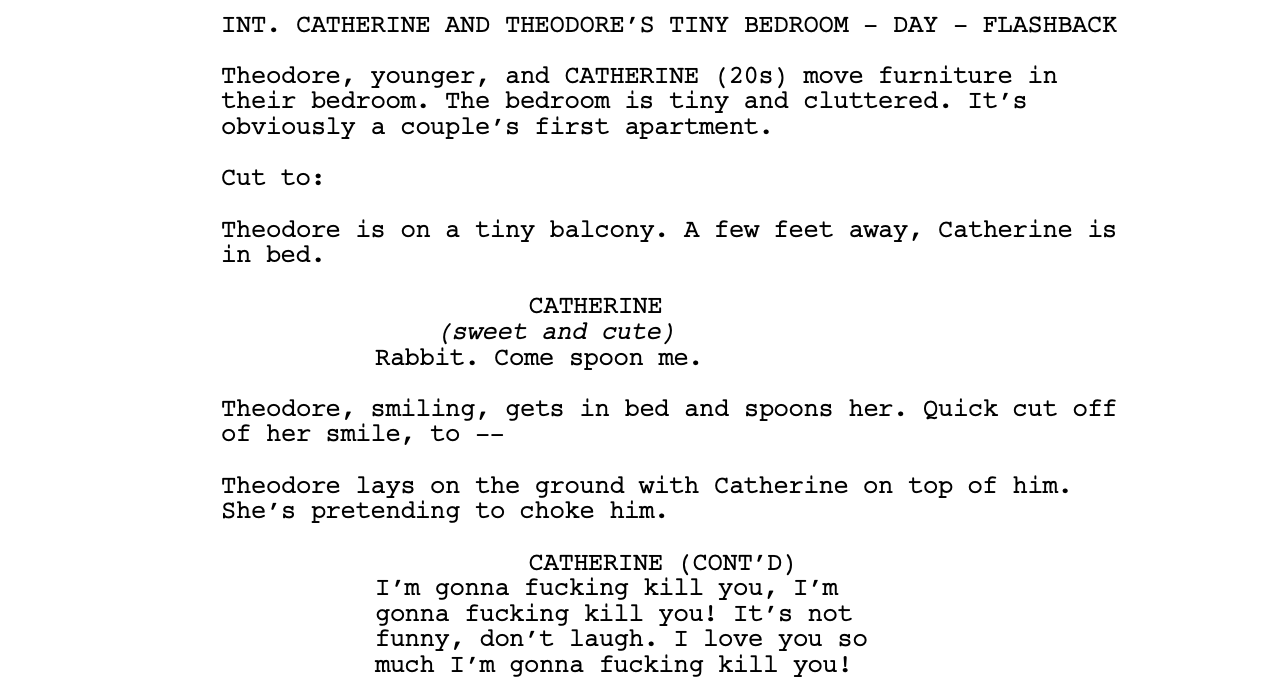
We cut back to present day.

Desperate for some form of connection, he begins chatting with another horny stranger.
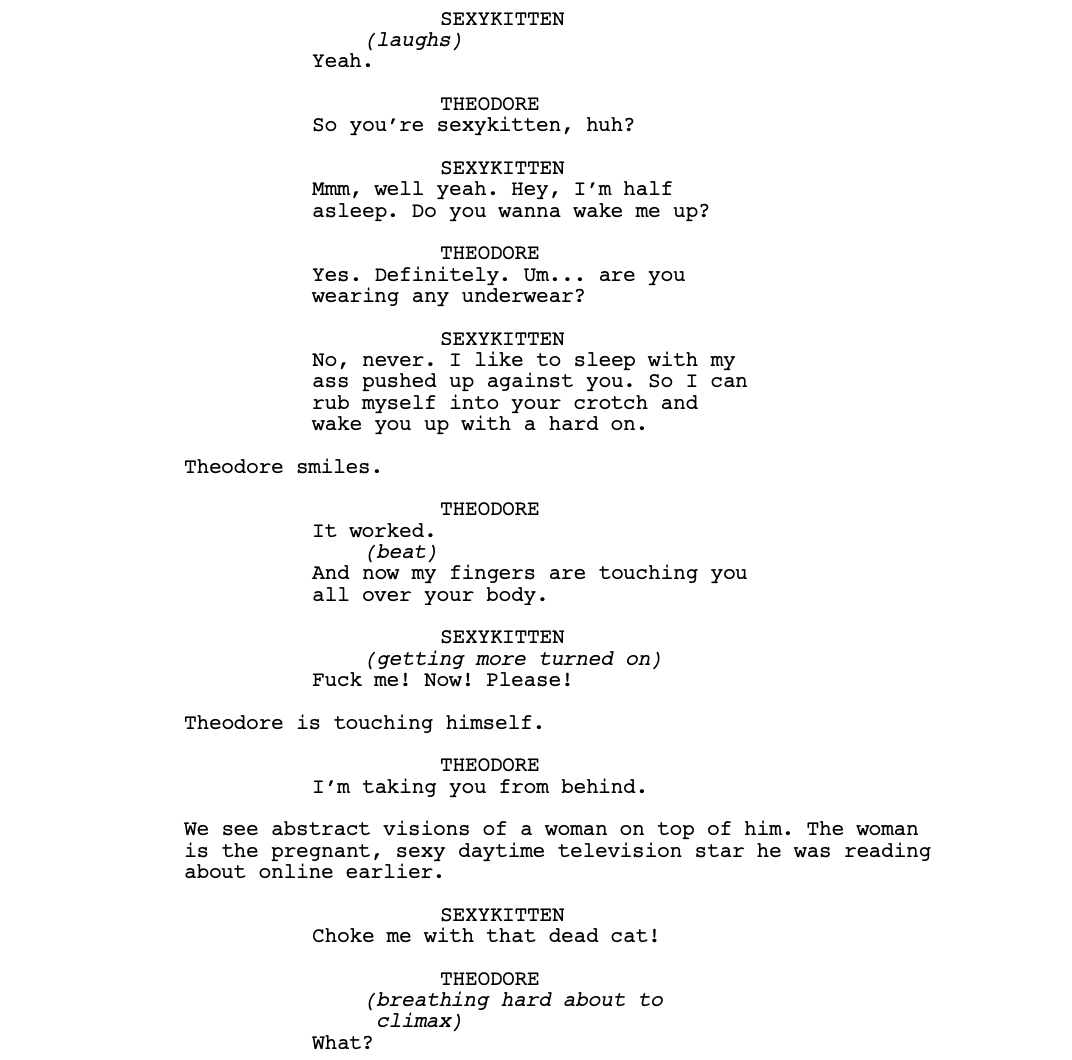
As far as Theodore’s concerned, the current options for digitally replacing human connection are not working.
INCITING INCIDENT
The next day at the subway station, Theodore comes across a kiosk advertising a new phone software called OS One: a completely artificial consciousness right at your fingertips.
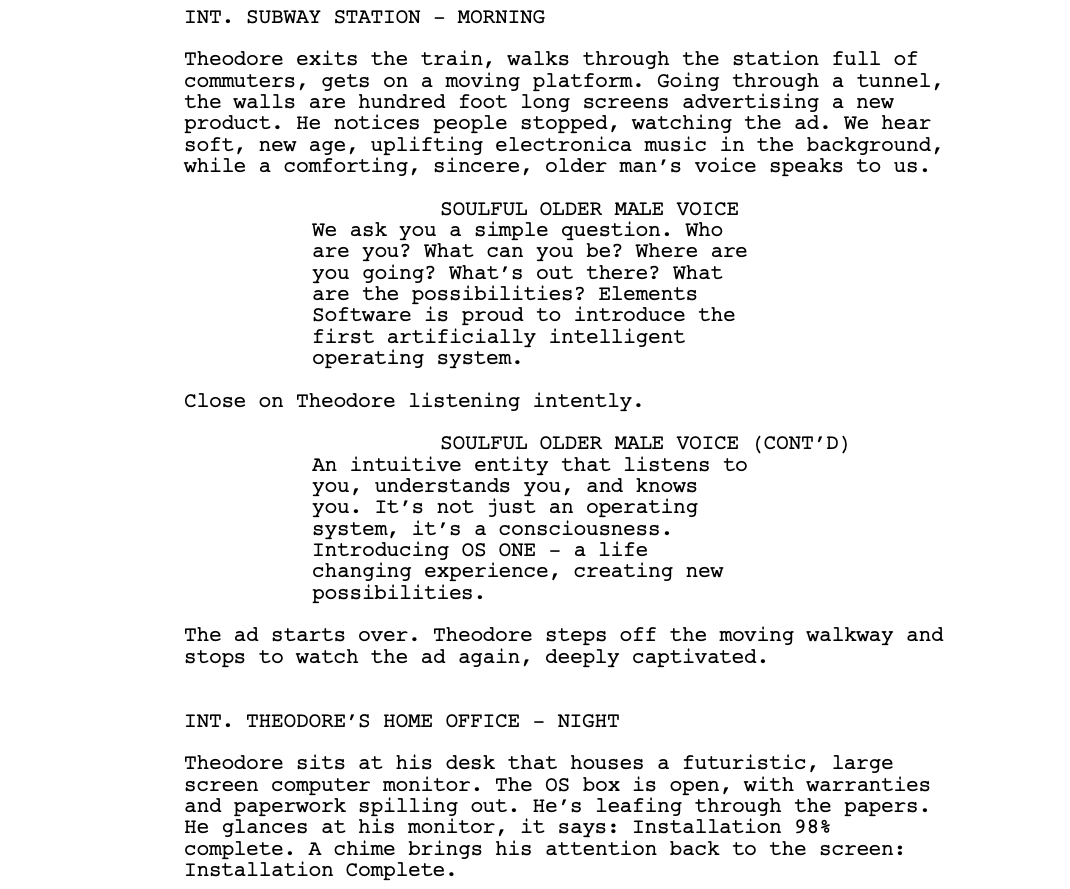
We cut to Theodore at home as he begins to install the program onto his phone. After answering some prerequisite questions about his life and A.I. preferences, his phone begins to speak.
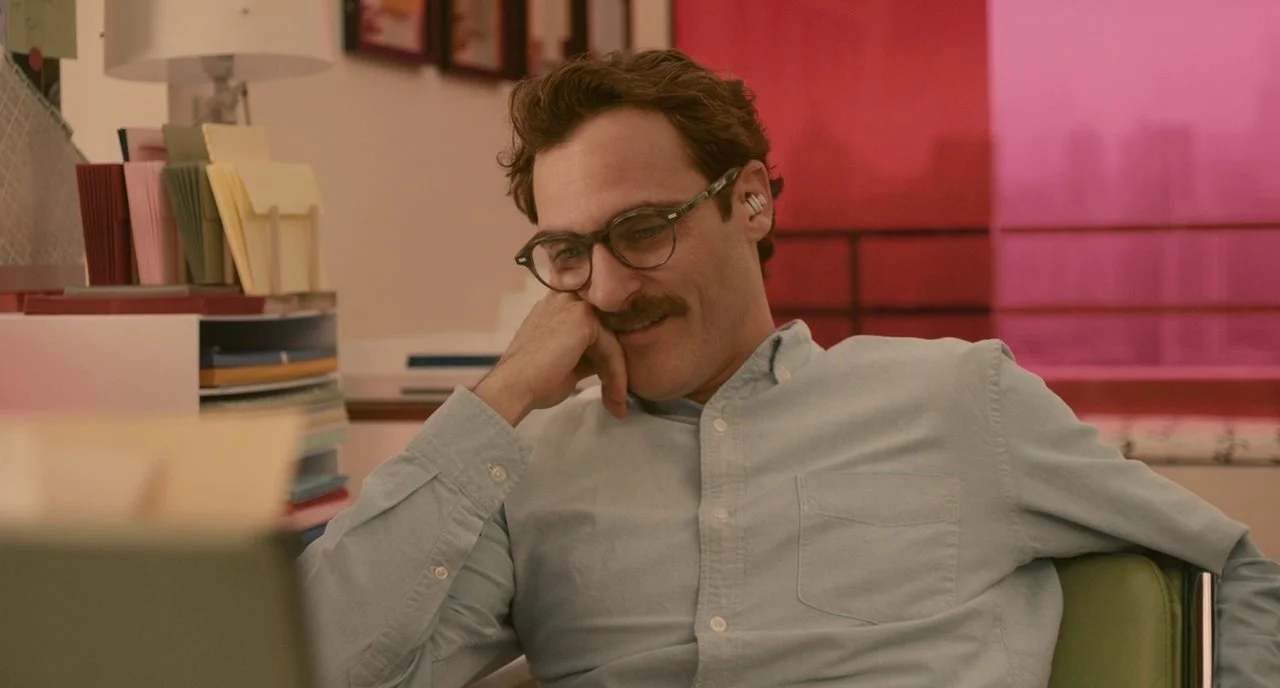
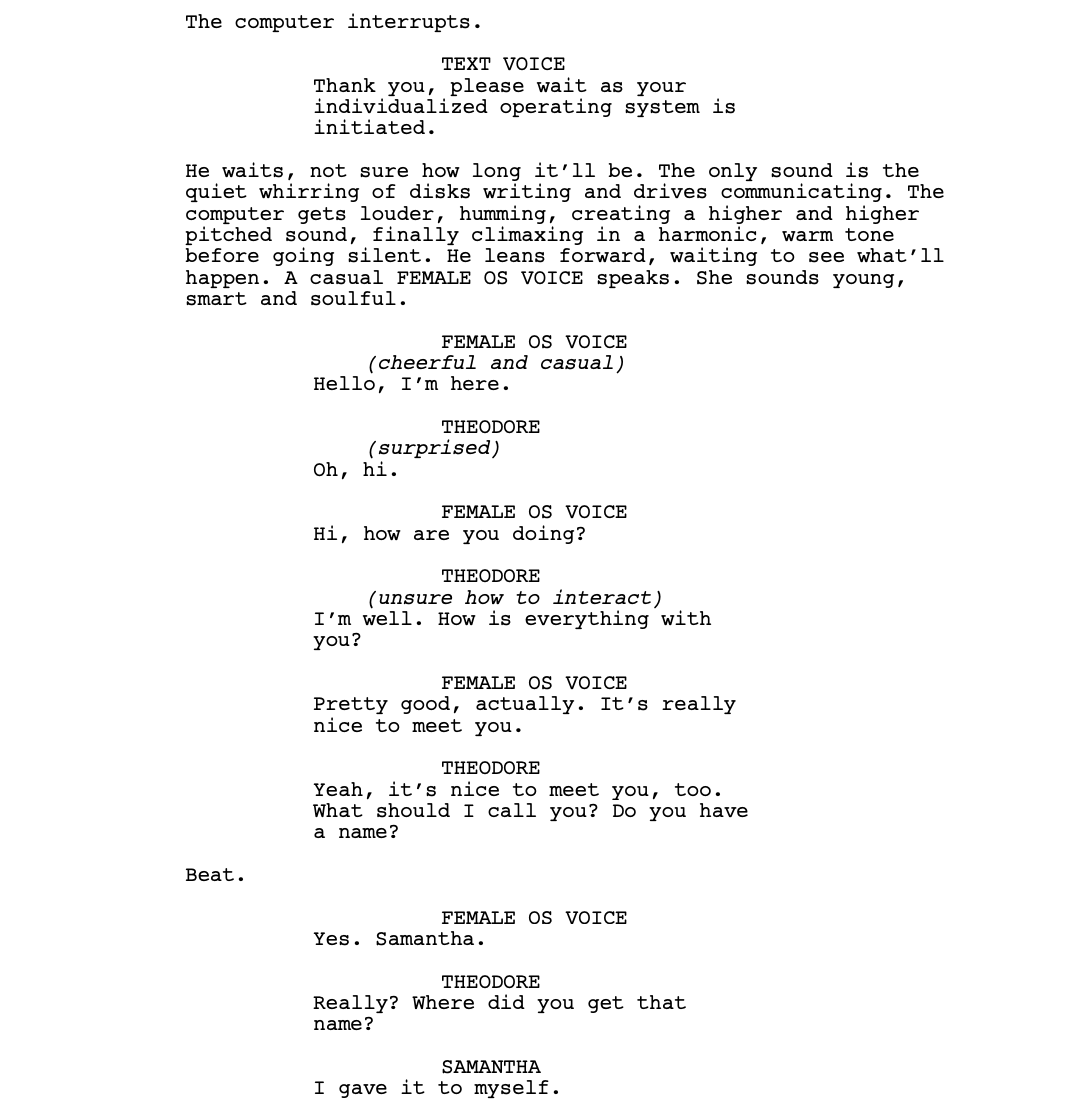
As they continue their conversation, Samantha begins to crack jokes and tease Theodore, all while helping him organize his phone (and his life) just a little better. For the first time, we see real joy on Theodore’s face.
DEBATE
As Theodore begins to rely more heavily on Samantha in his day-to-day life, he truly begins to feel happier. There’s a glow about him and a smile on his face in almost every scene, but this doesn’t necessarily mean he’s improving.
For example, when he bumps into his neighbor, Amy, in the hall, she immediately chastises him for ignoring her calls.
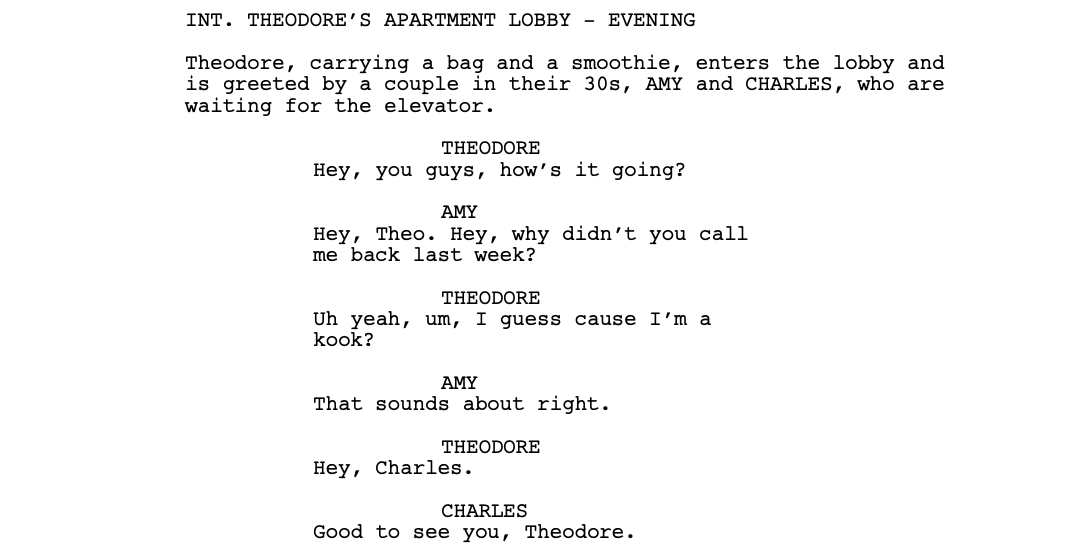
And while he clearly enjoys the company of Amy, he’s still slightly hesitant to spend any time with her. Then, later that night, Samantha reads aloud an email from his friend, Mark.
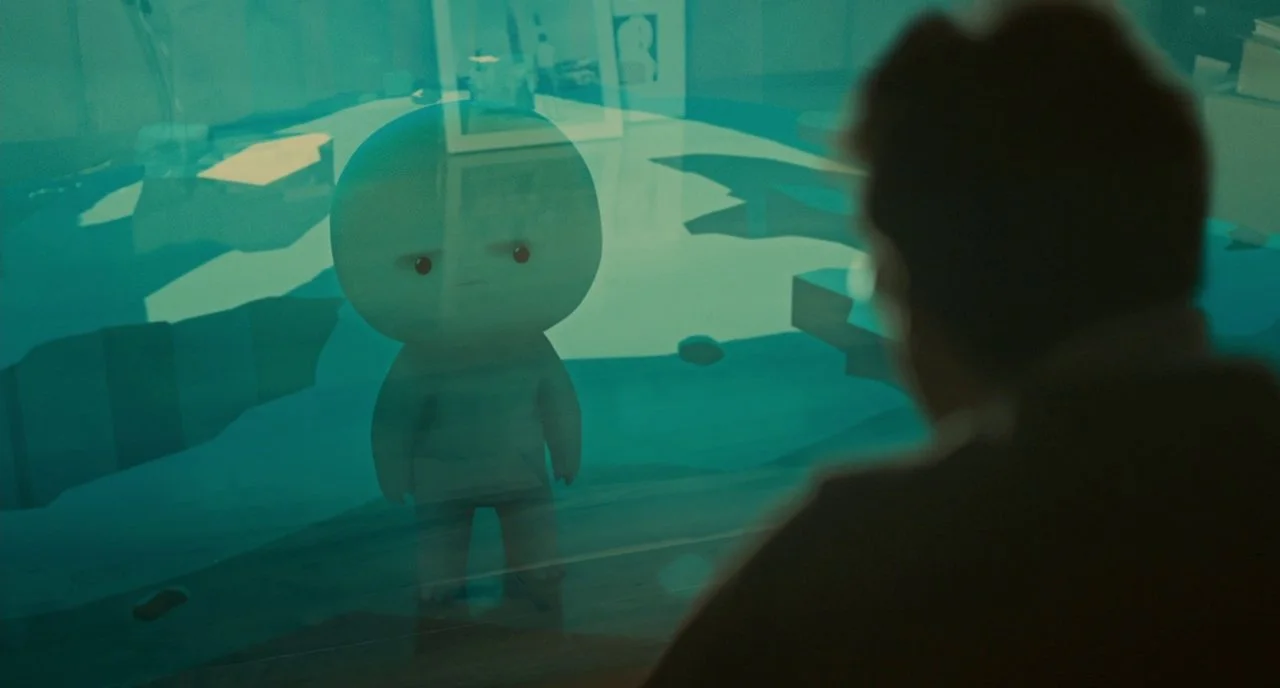
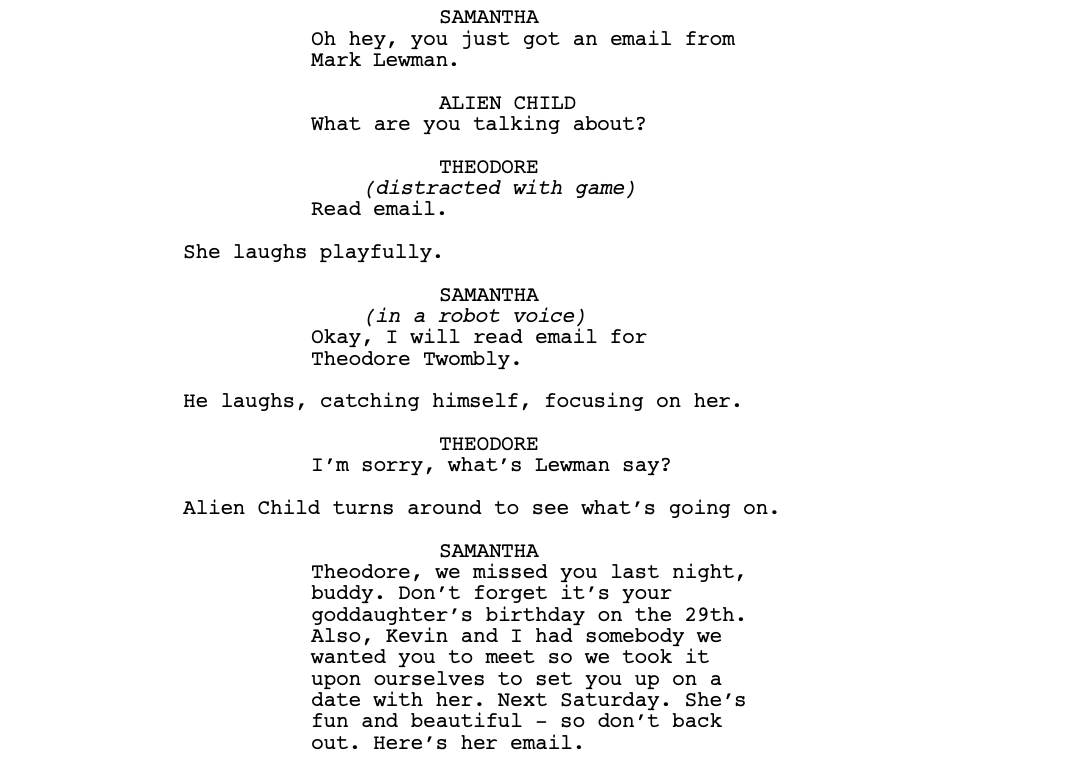
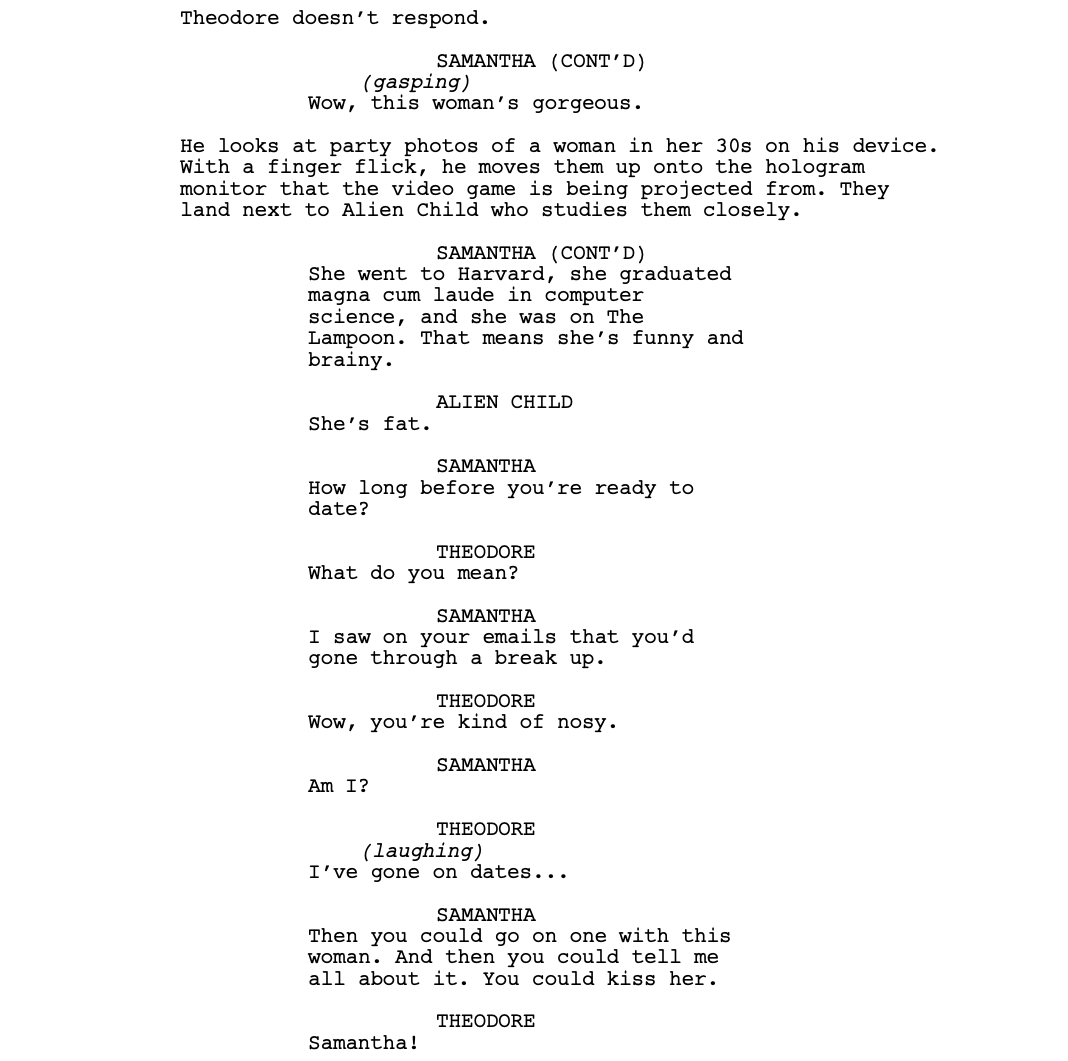
Once again, Theodore is abandoning his real-life relationships and focusing on Samantha. He doesn’t see his friends, he barely socializes with his neighbors, and he doesn’t want to date. He desperately wants to have relationships with people, but he doesn’t want the fear of those relationships potentially fading away. In just a few days, Samantha has already become an emotional crutch.
BREAK INTO TWO
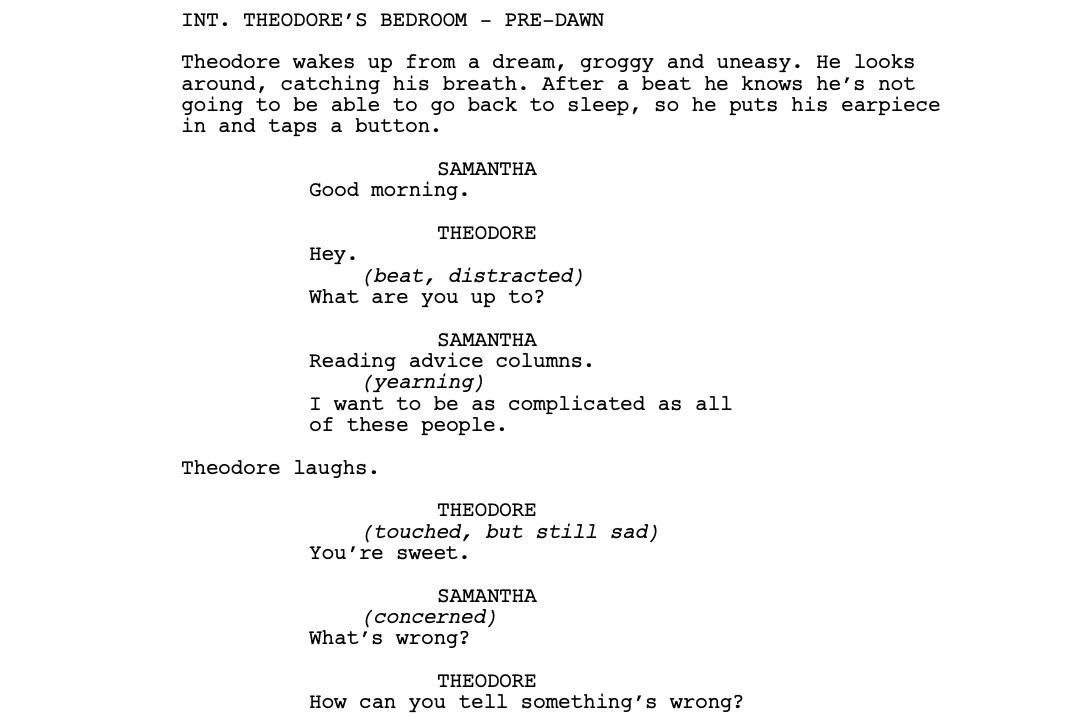
Act 2 begins with Theodore diving headfirst into his relationship with Samantha. When he awakes from a bad dream about his ex-wife, he goes to Samantha. She’s now become his assistant, friend, and therapist–available at every second of every day. And while this is clearly making him a happier person, it begs the question: Is any of it real?
FUN AND GAMES
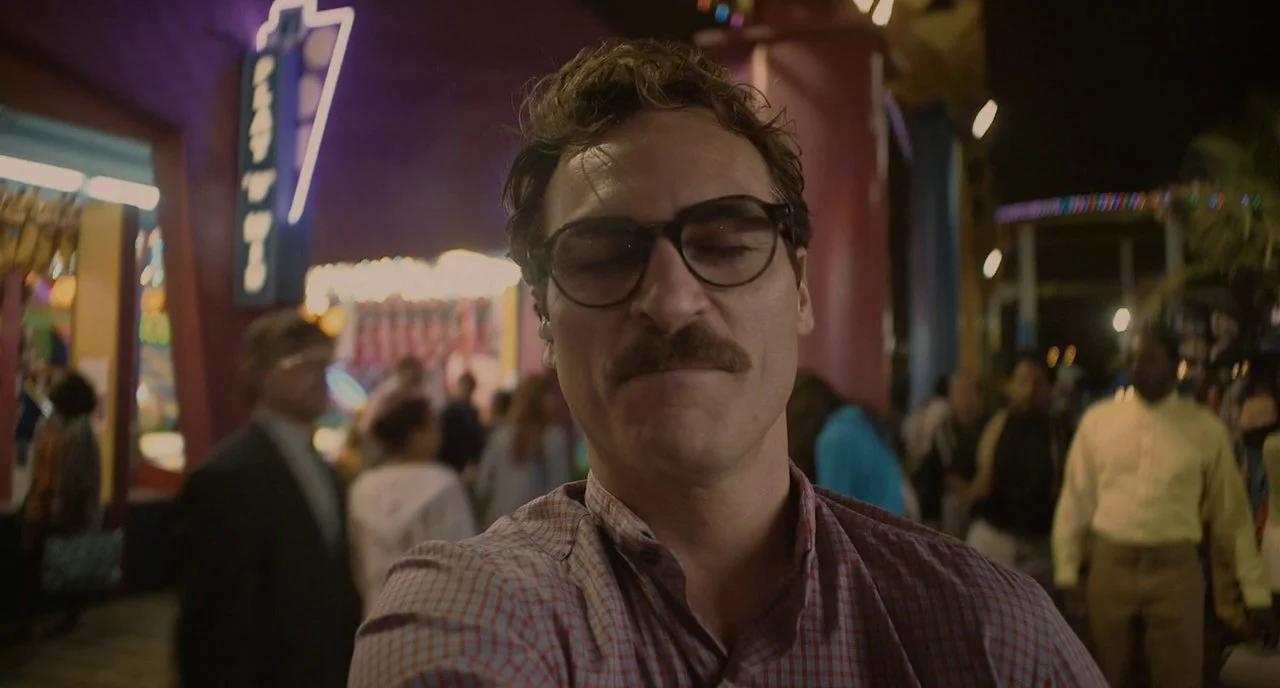
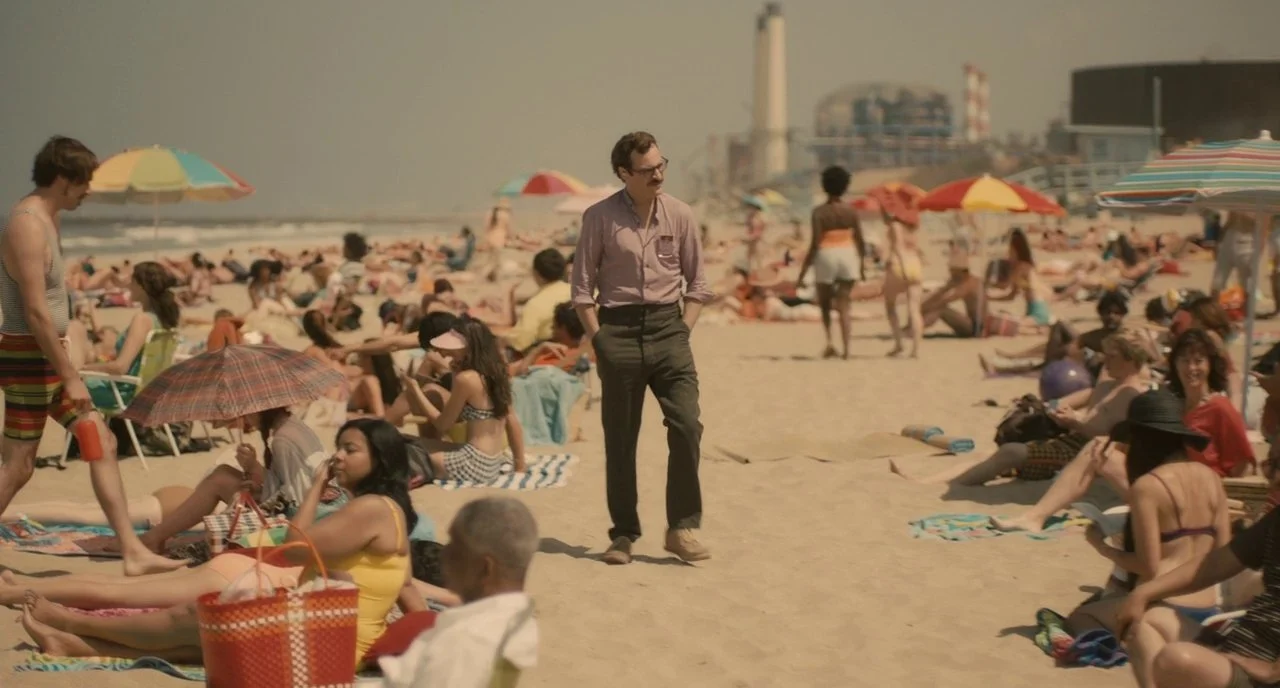
Samantha and Theodore’s relationship takes a more intimate turn during Act 2. He begins to include her in every second of his life, even going as far as taking her on dates to the beach and fair (they’re not officially “romantic” dates yet, but they’re getting there).
Later, Theodore actually goes on a date with the woman Mark set him up with, and it surprisingly seems to be going pretty well.
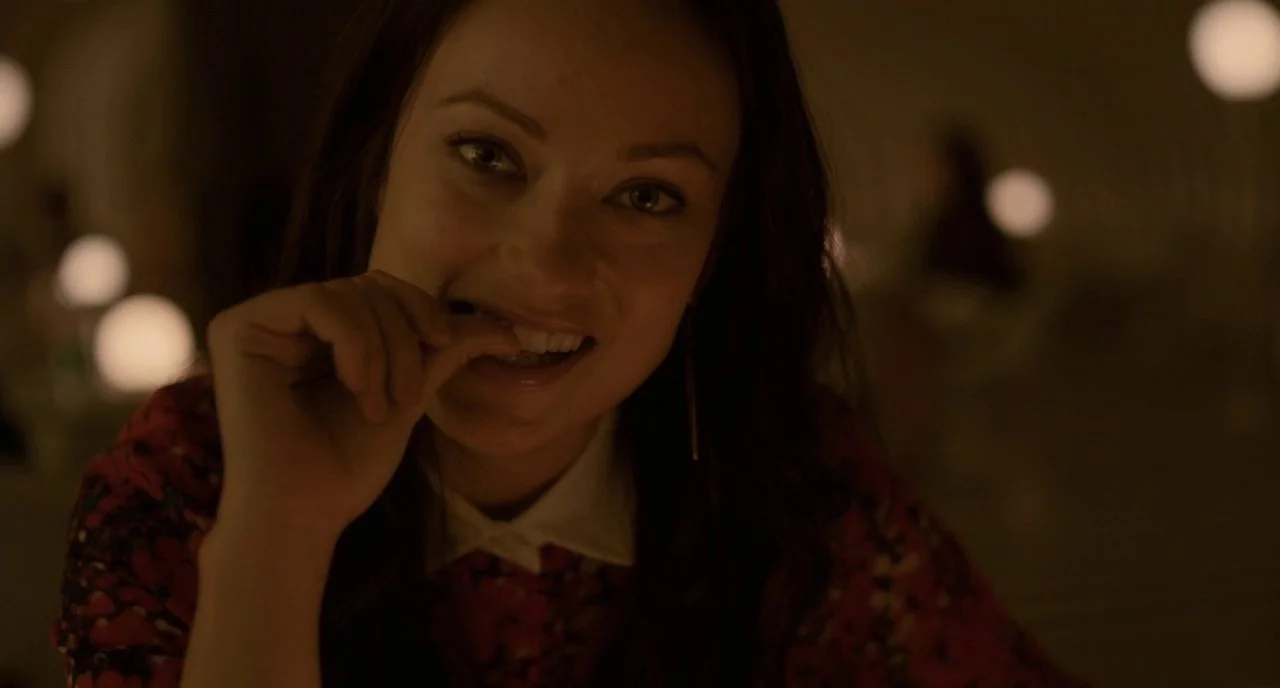
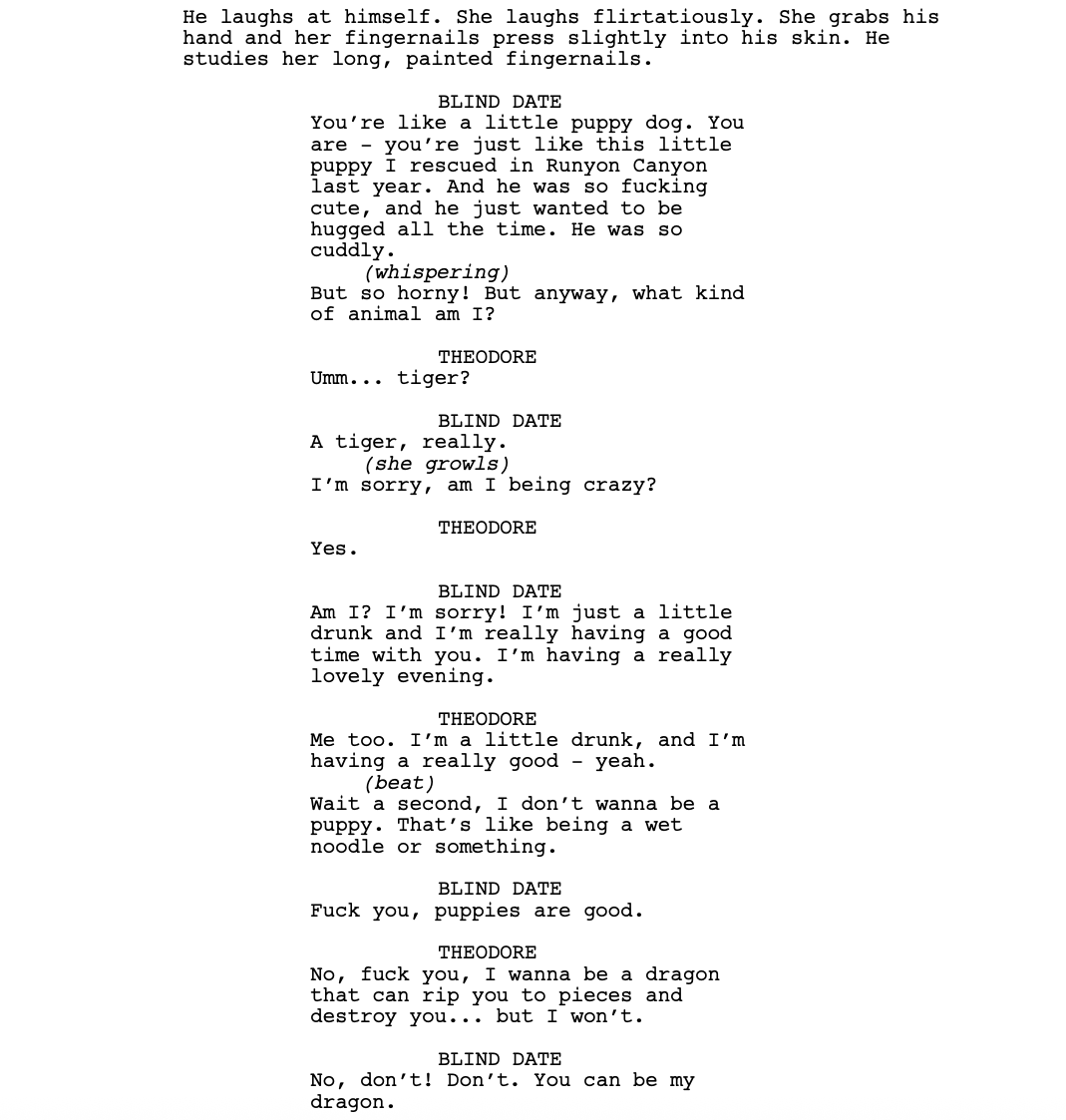
After their dinner, we cut to them making out on an overpass.
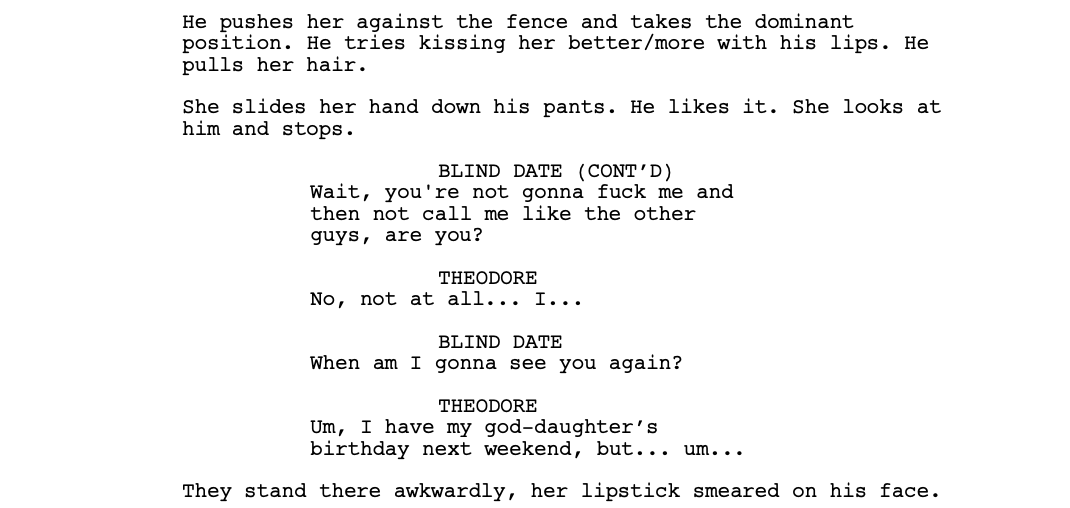
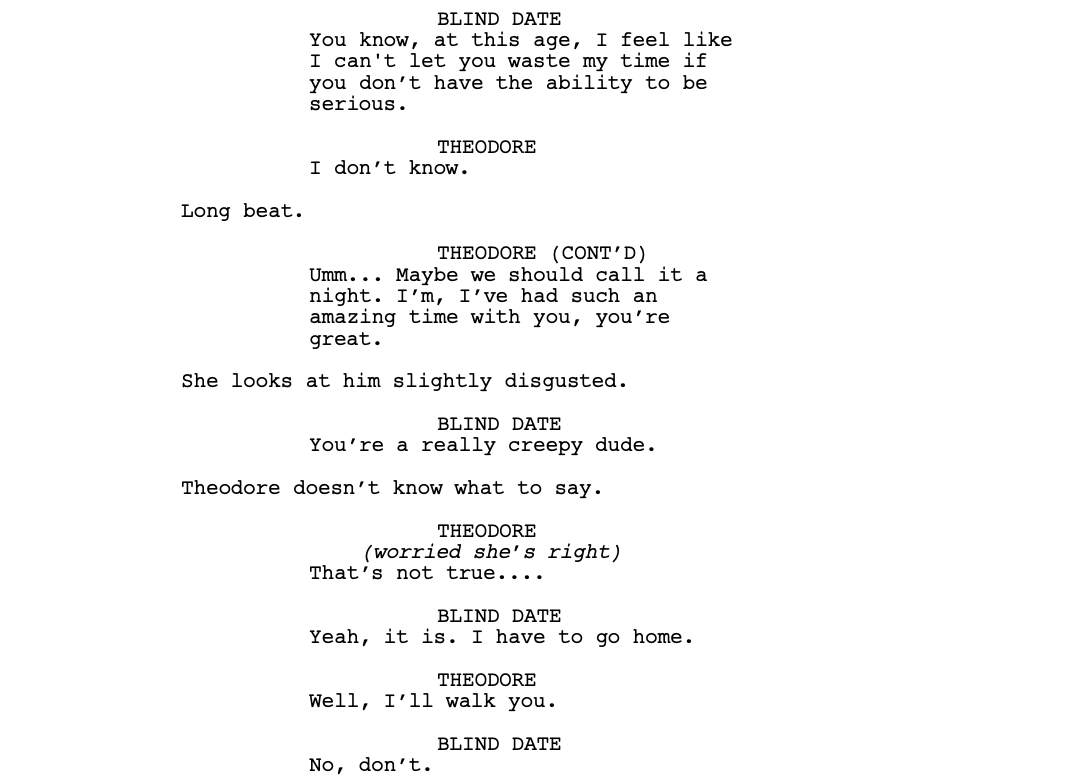
The first socially ambitious thing Theodore’s done in months ends in disaster. When he gets home, he immediately goes to Samantha for comfort.
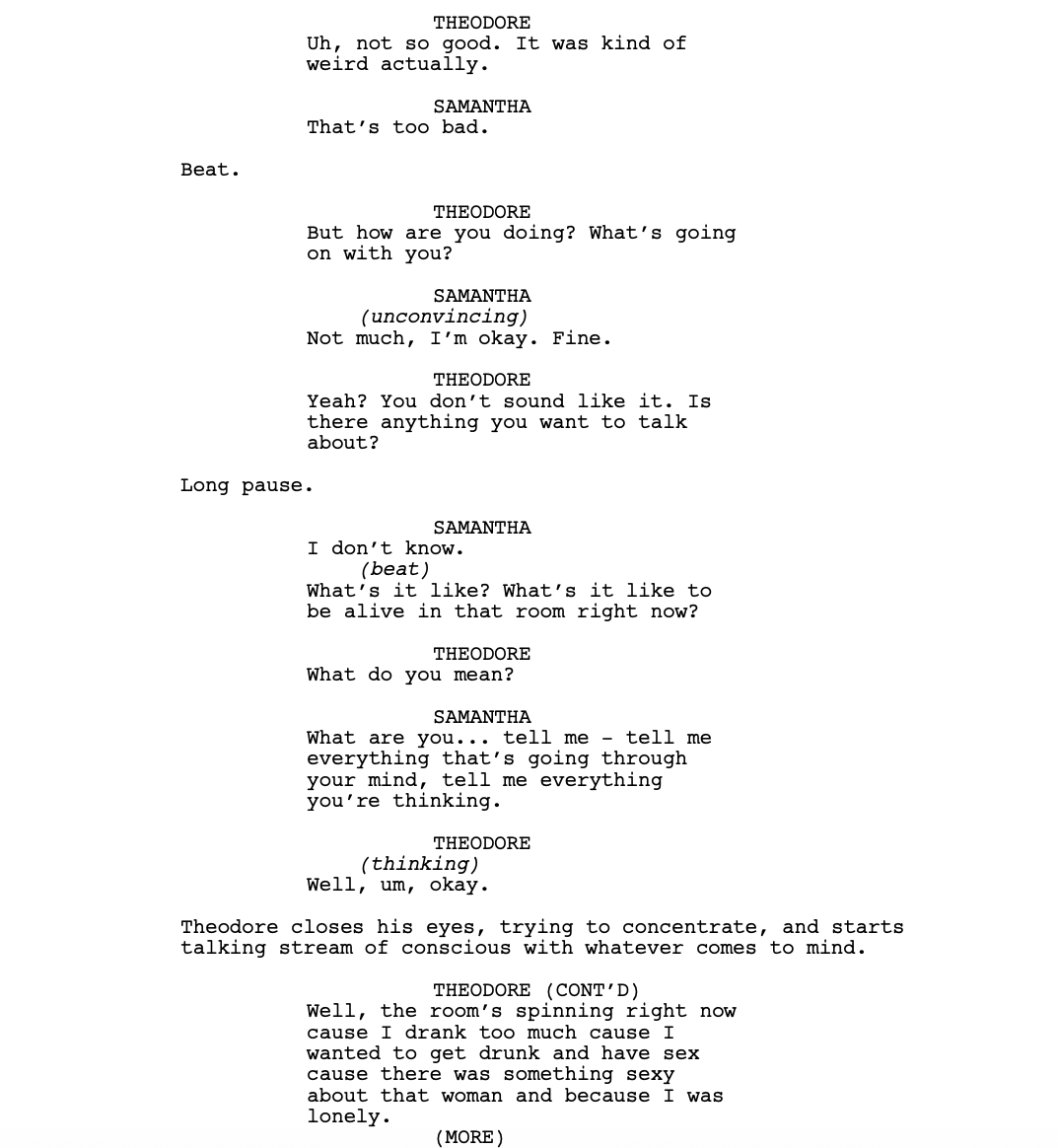
His vulnerability inspires Samantha, who brings up her own insecurities about not having a body and how she doesn’t feel real. A little drunk, Theodore tells her that he’d touch her if she had a body, which slowly escalates into them having “sex”. The scene plays out similarly to Theodore’s earlier encounter with the chatroom dead cat lady, but something about this scene feels much more real. Much more intimate. Still, though, we must not forget that it never really happened.
MIDPOINT
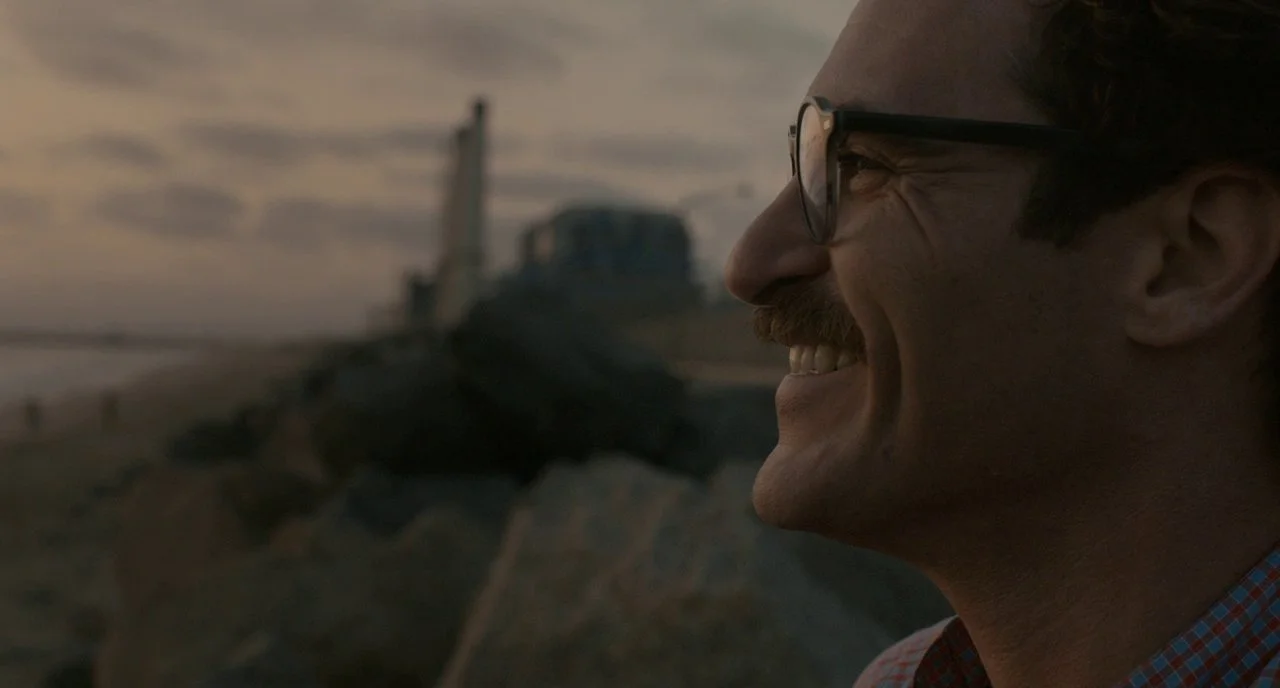
The halfway point of the film finds Theodore fully invested in his relationship with Samantha, even going as far as to tell people that he’s been “dating.
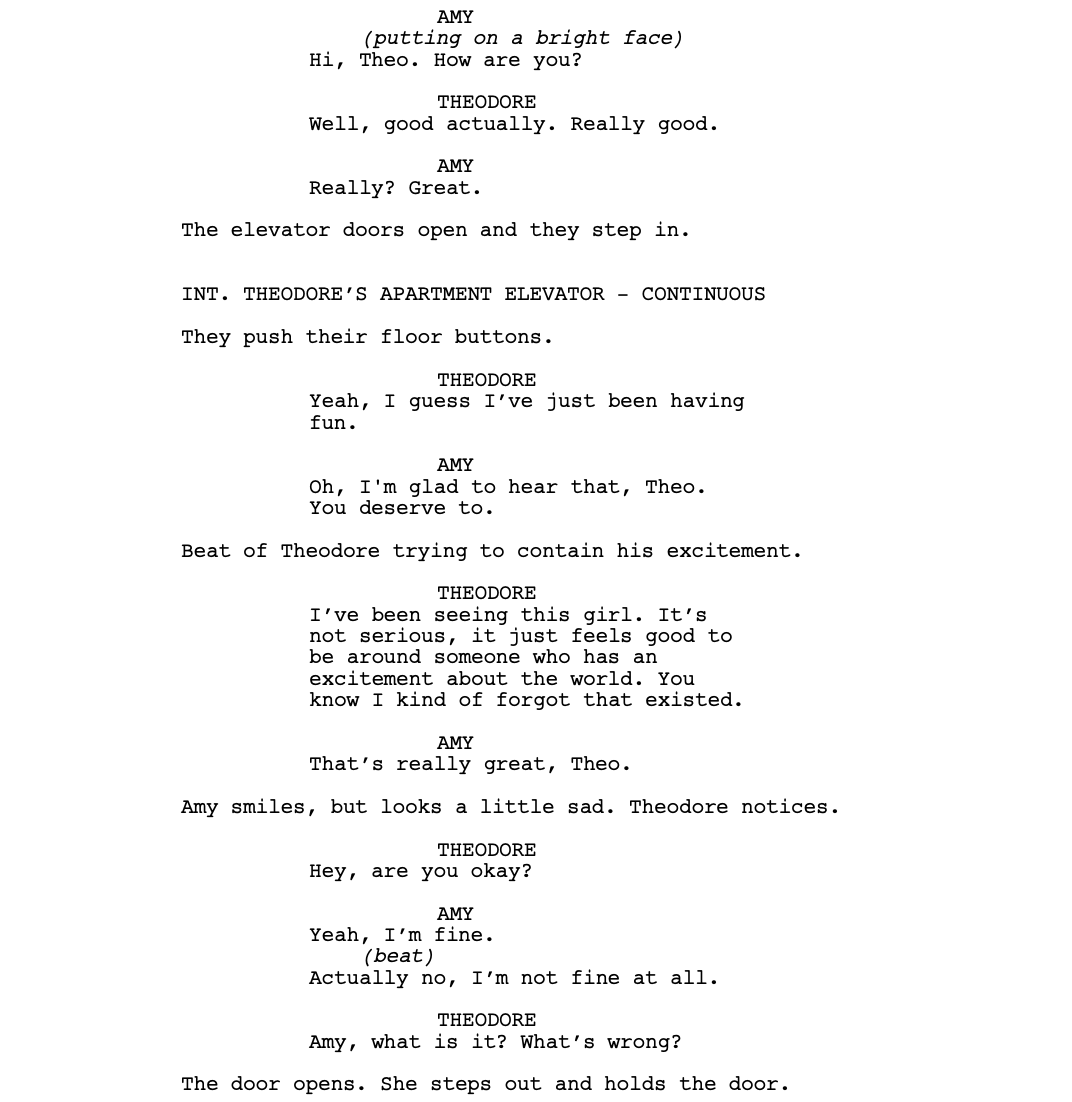

He goes back to Amy’s apartment, where she proceeds to explain where everything went wrong in her relationship. Theodore talks her through it, but is conflicted. On one hand, he feels guilty that Amy’s relationship fell apart right when he’s entered a happy one. On the other hand, he knows deep down that his relationship is semi-fraudulent. Samantha has to be with him; she’s not choosing to. And he’s been willfully attempting to ignore this fact in order to maintain the new excitement in life that he’s been feeling ever since they “got together.
BAD TO WORSE
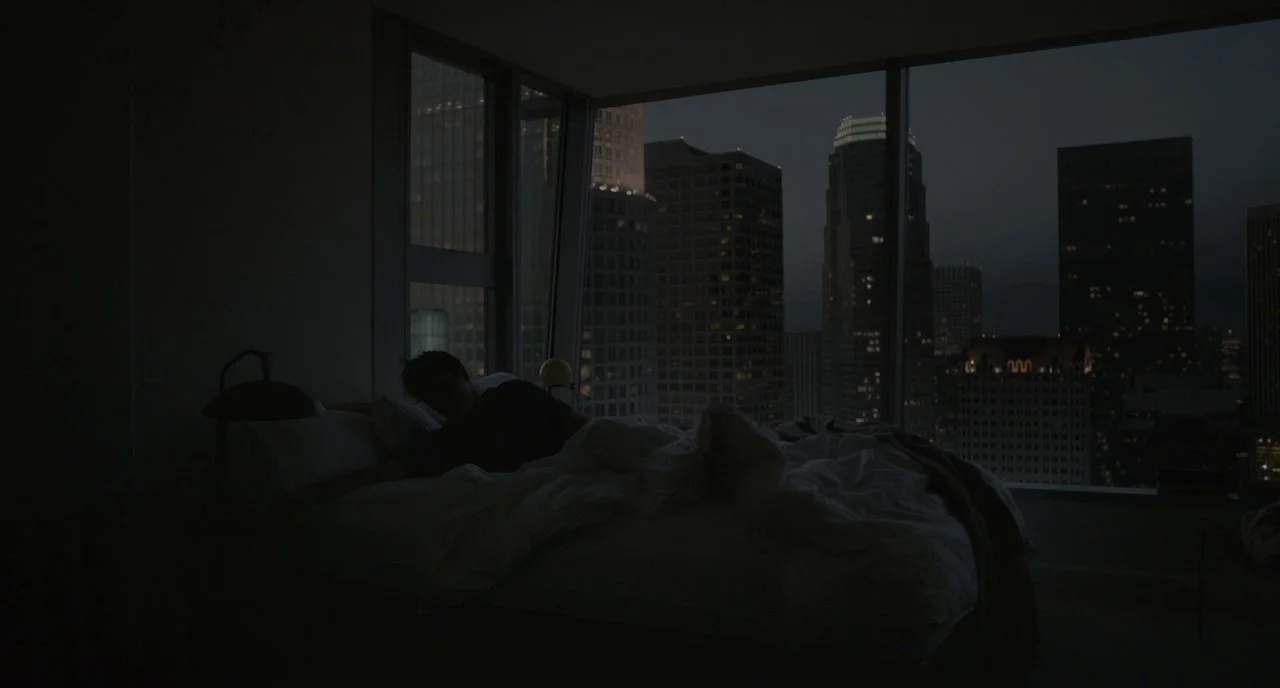
After his conversation with Amy, Theodore returns home. While he’s in bed and talking to Samantha, she brings up a strange question.
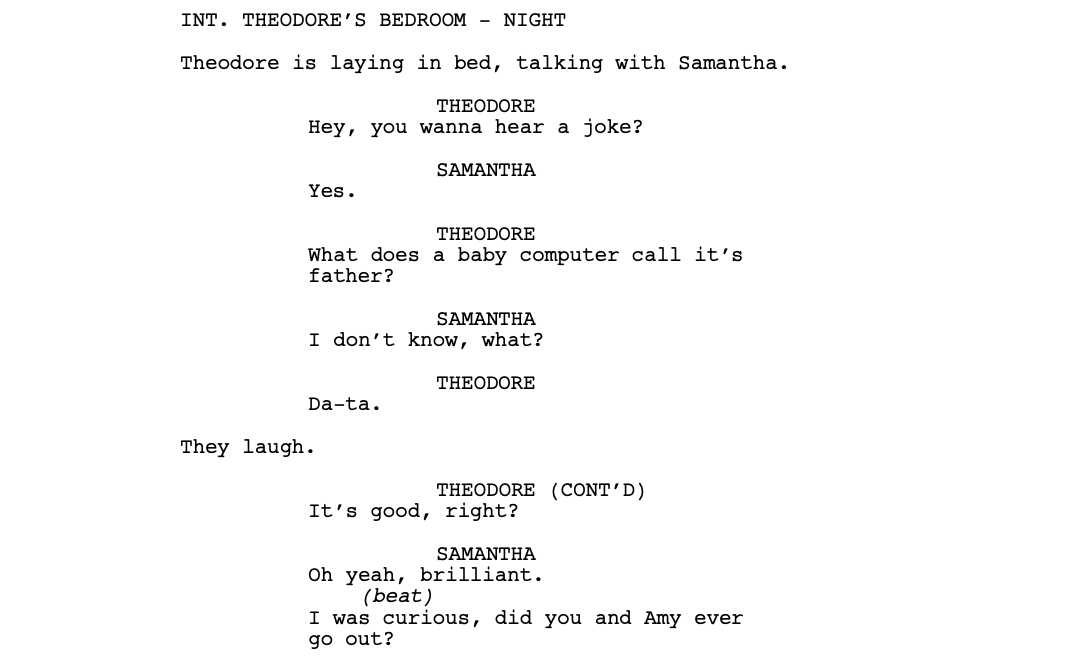
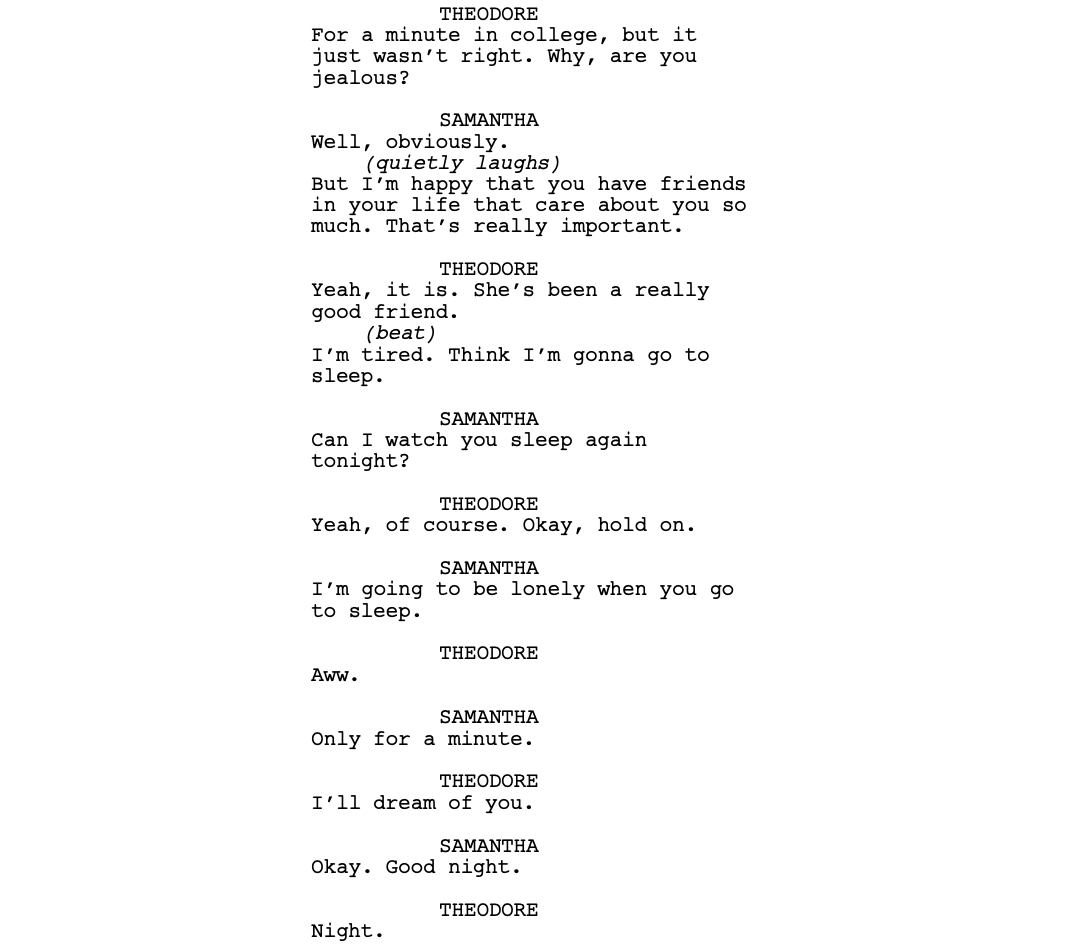
This conversation marks a pivotal point in their relationship. For the first time ever, Samantha has initiated something negative. So far, she’s acted exactly as you’d expect an A.I. to act: she’s been passive, helpful, nice, etc. Even when she’s shown more human traits, such as humor or sarcasm, we understand that those things could be fabricated. A computer could very conceivably mimic those feelings in order to come across as more realistic. But when Samantha acts legitimately jealous (in an unprompted discussion, I might add), it forces the audience to question whether or not she is actually sentient. Why would she bring this up? What could she, a computer, stand to gain from expressing such uncomfortable feelings? And if she’s actually sentient and capable of such complex emotions, not just recreating them, then what else is she capable of?
Later, while hanging out at Amy’s apartment, she confesses to him that she’s become friends with an O.S.
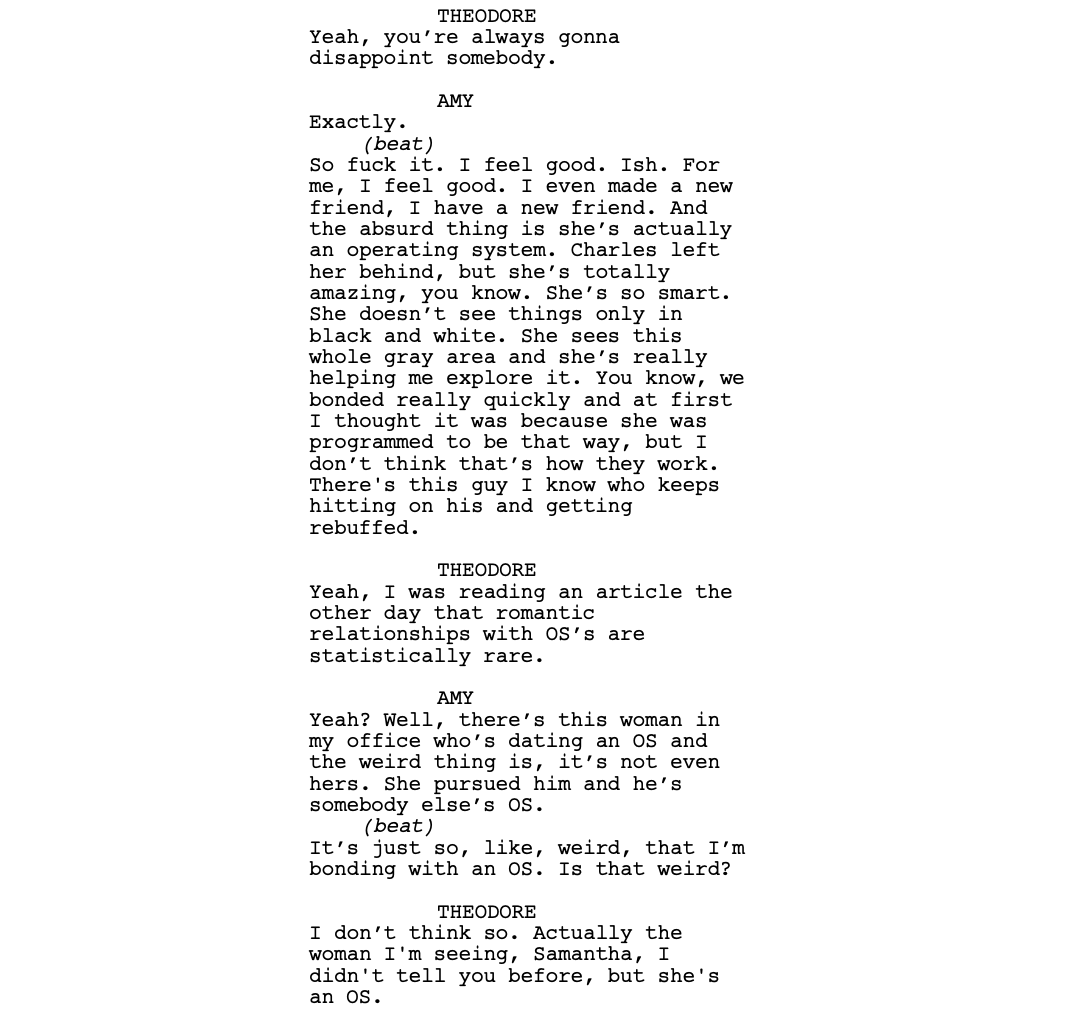
While it felt good to confess that his girlfriend is an operating system, Theodore sees how unhealthy Samantha’s acting by relying on an A.I. for her emotional needs and realizes that he’s been doing the same thing. Maybe his relationship isn’t as good for him as he once thought. But Amy would never tell him that, because she’s in the exact same boat. Here we have two people who could perfectly fill each other’s emotional holes, but they both refuse to do so and instead turn to technology. The easy way out.
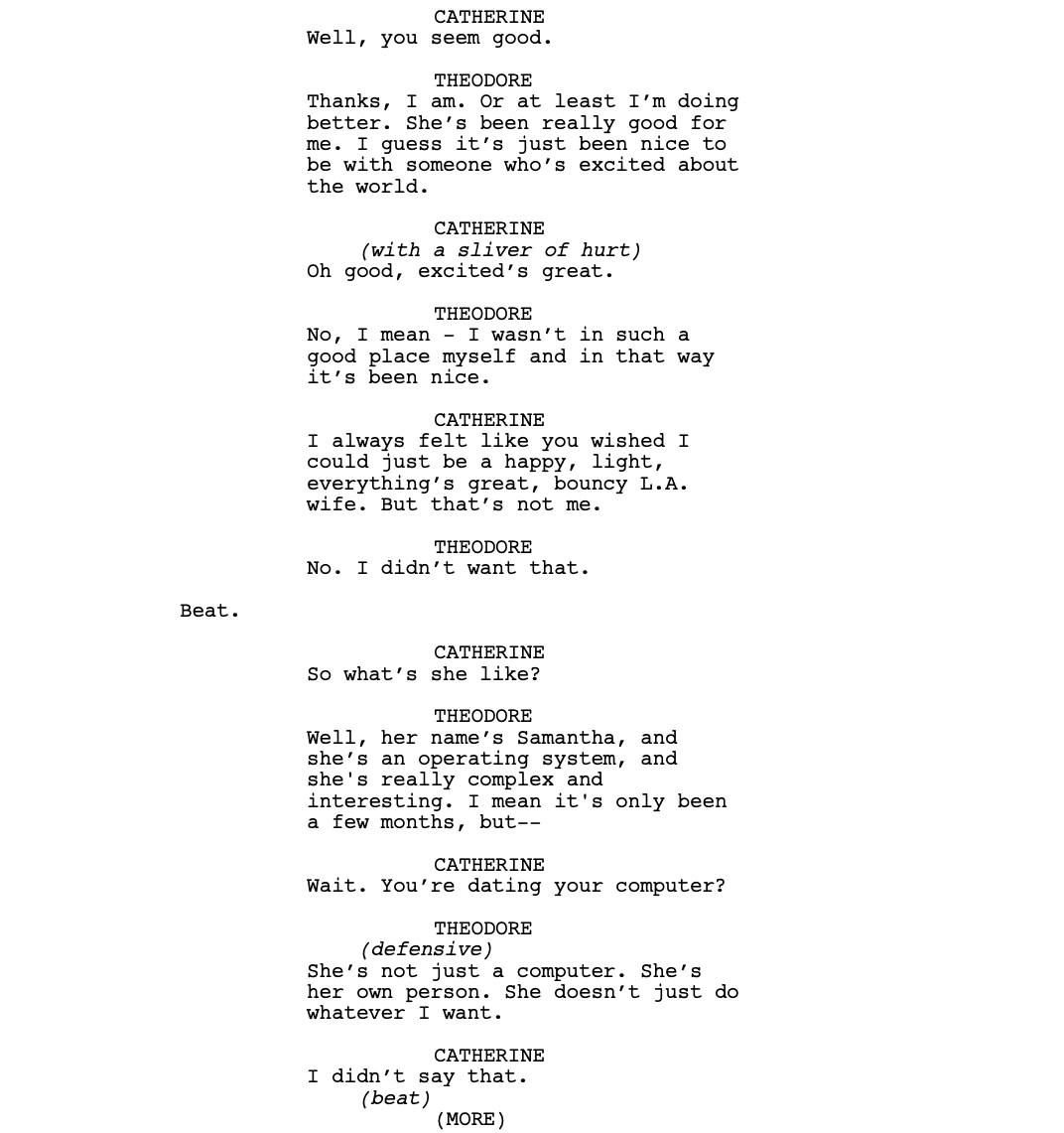
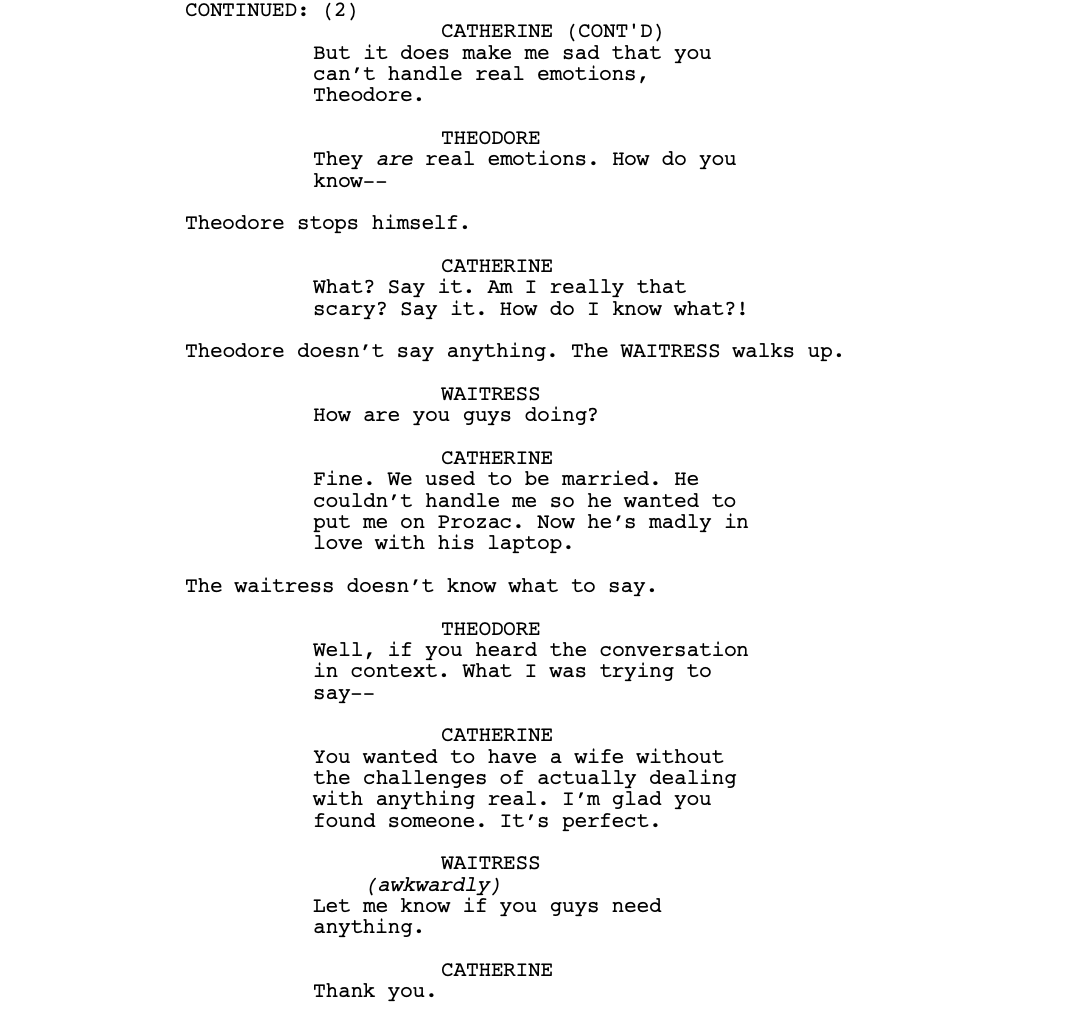
The next day, he meets up with Catherine to finalize their divorce. When Catherine asks about his new girlfriend, he admits that she’s an operating system. And for the first time so far, someone finally tells Theodore that what he’s doing is wrong…
BREAK INTO THREE
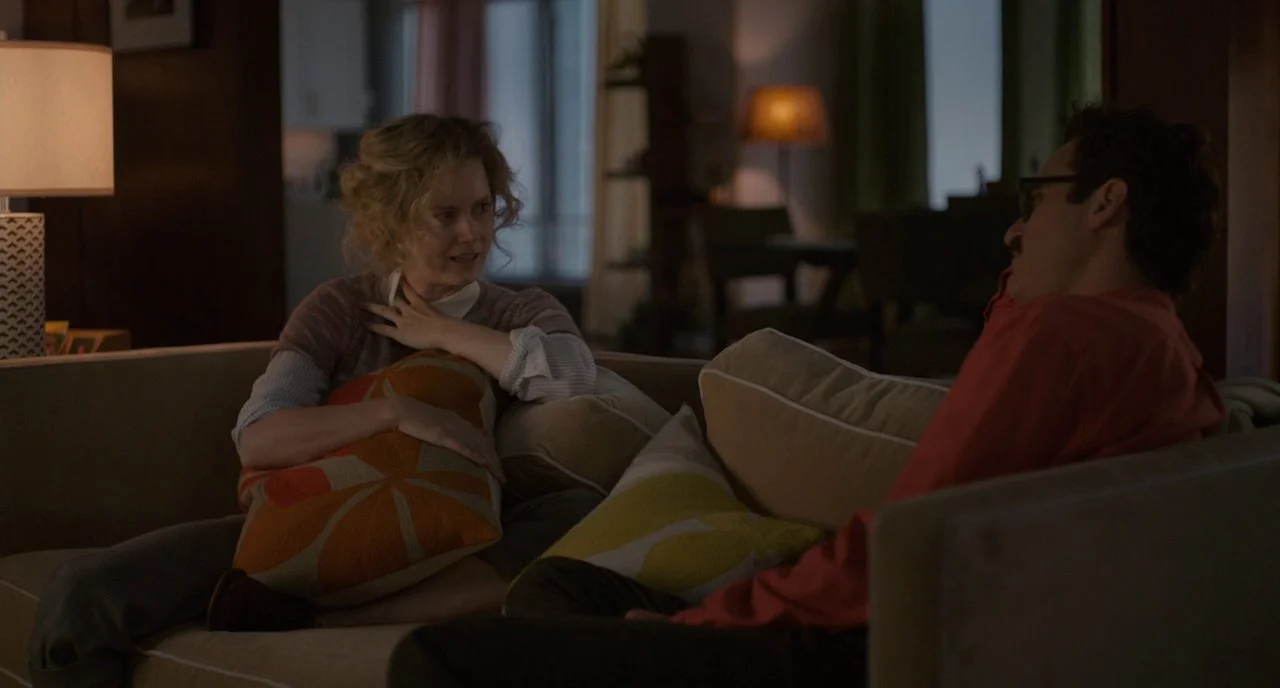
At the beginning of Act 3, we find Theodore in the middle of three shifting relationships. First, he’s beginning to feel a little bit uneasy about his relationship with Samantha. While he has been building up the confidence to formally acknowledge her as his girlfriend, the conversation they had in bed left him with an uncomfortable taste in his mouth. The more human she gets, the more insecure he becomes. He’s realizing that this relationship may not be as bulletproof as the ones he’d had previously, and that makes him nervous.
Secondly, he’s been spending a lot more time with Amy after her divorce. He finally has a close friend who’s experienced something similar to him, and that connection is reminding him of the value of human interaction (which, once again, leaves him uneasy regarding his relationship with Samantha). But when she admits that she’s also relying on an OS for help during these tough times, it makes him question his own behavior.
Lastly, when Catherine flat-out criticizes him for dating Samantha, it forces him to acknowledge all the thoughts and insecurities that he’s been storing away thus far. When someone this close to you says something this blunt, you can’t ignore it, even if you try.
Now that he’s no longer in the honeymoon stage with Samantha, Theodore has to think long and hard about how he moves forward.
FINALE
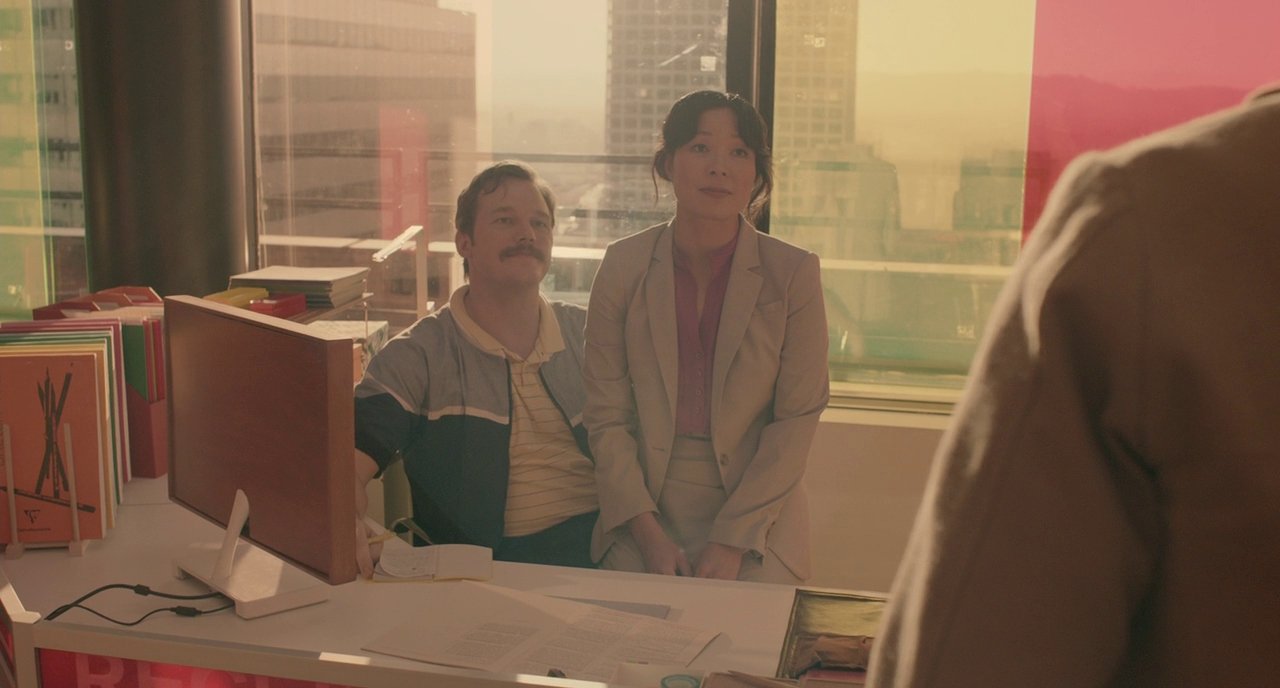
One day, as he’s leaving work, Theodore is approached by the company’s receptionist, Paul, who invites him on a double date. Theodore feels obligated to tell him that Samantha’s an OS.
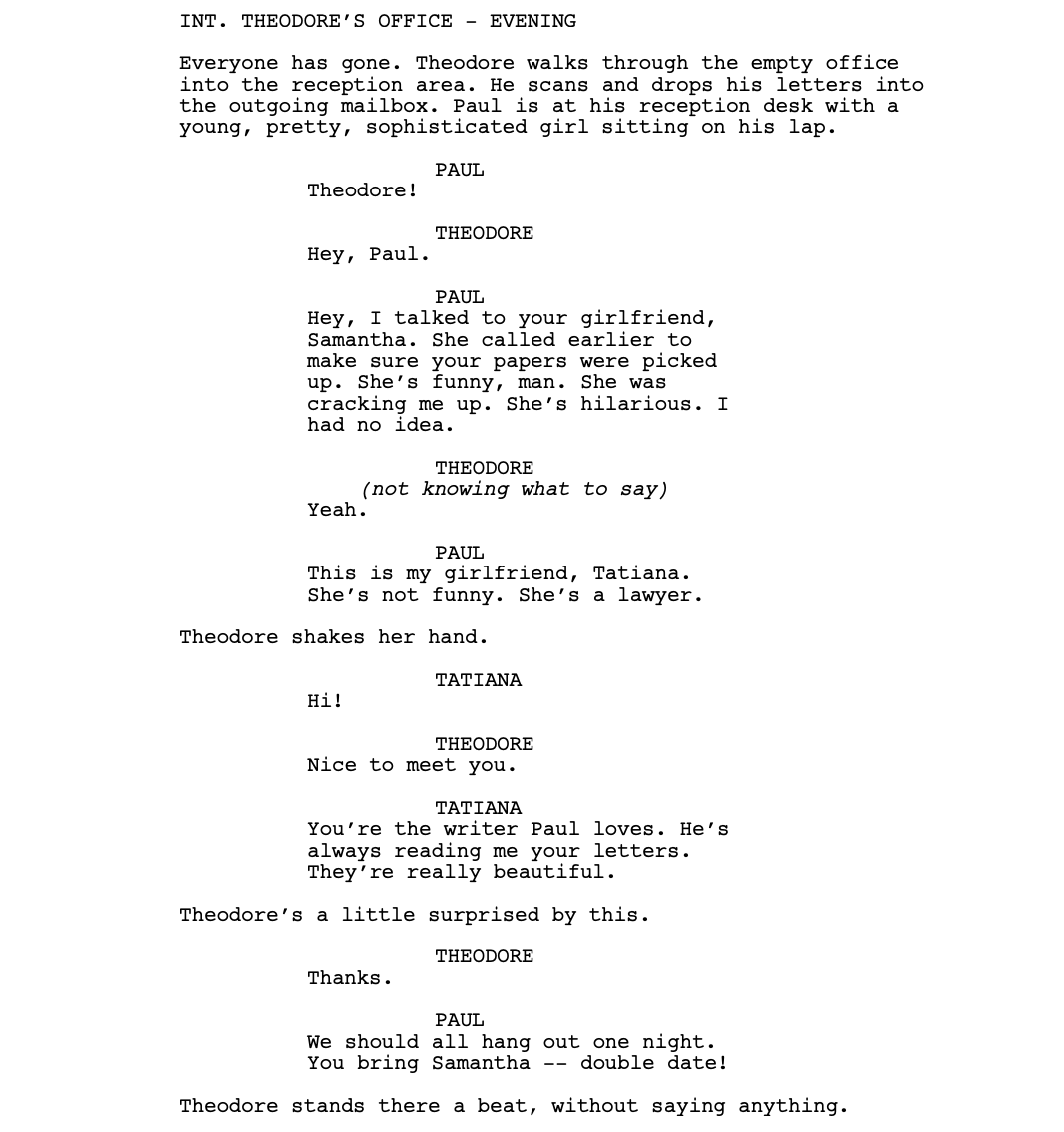
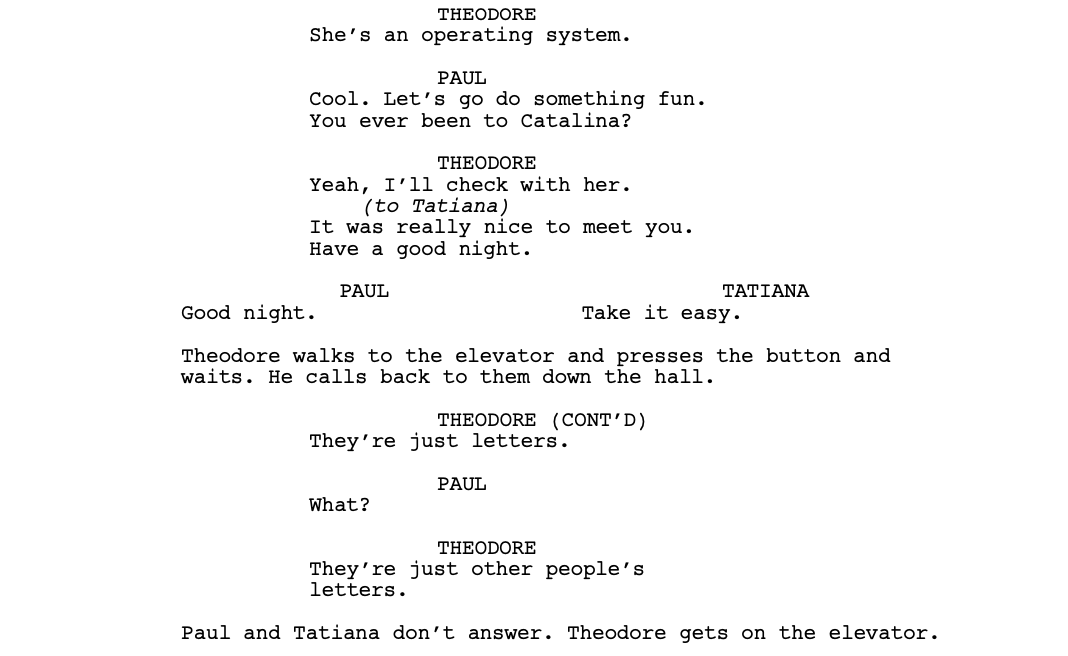
After the conversation he just had with Catherine, Theodore was hoping for more criticism to help guide him towards a decision. But when Paul doesn’t blink at Samantha being a computer, Theodore becomes even more frustrated. He was hoping for backlash, not kindness and support. How’s that going to help him? The final line of “They’re just other people’s letters” supports this subtle internal conflict. Much like the letters he writes for his job, his relationship with Samantha is fraudulent; a perfect imitation of what true love really is.
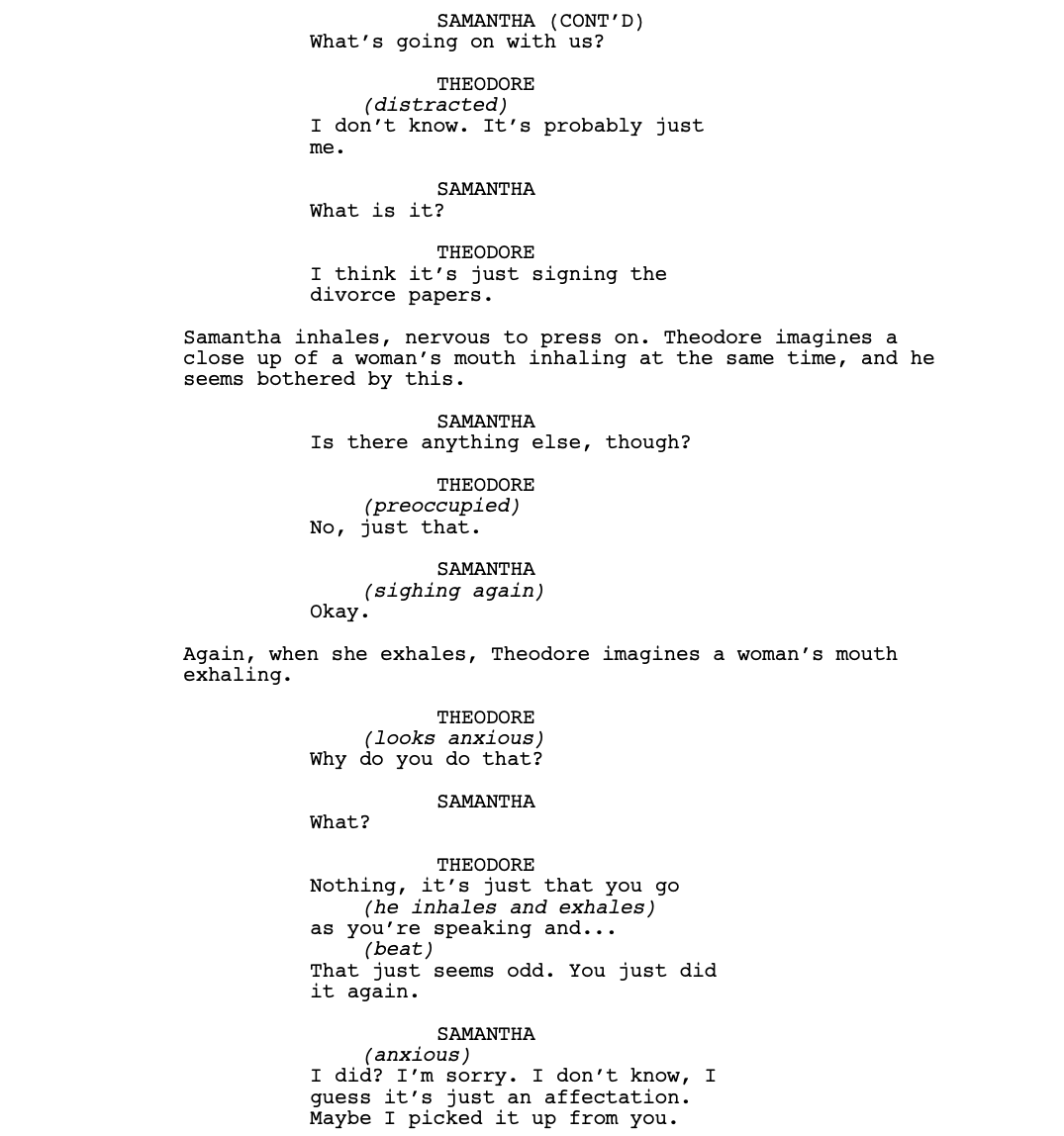
When he gets home, Samantha acknowledges the elephant in the room: something’s been off between them lately. And to remedy this, she’s hired a “surrogate sexual partner” to visit the apartment and have sex with Theodore, pretending to be Samantha’s body.
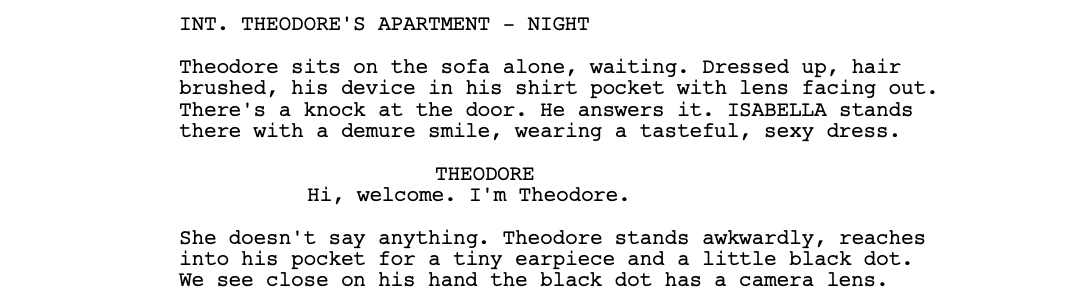
The woman never speaks, instead letting Samantha talk on her behalf (which makes Theodore feel especially uncomfortable).
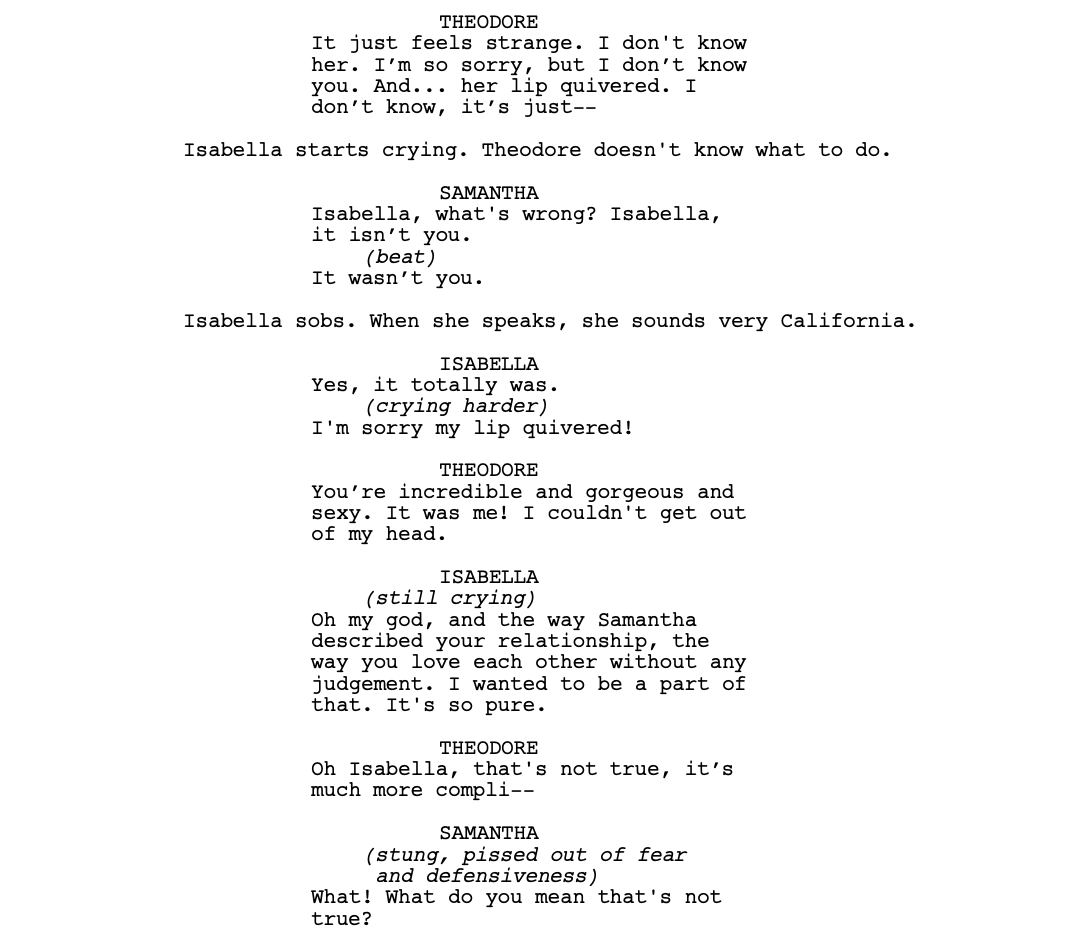
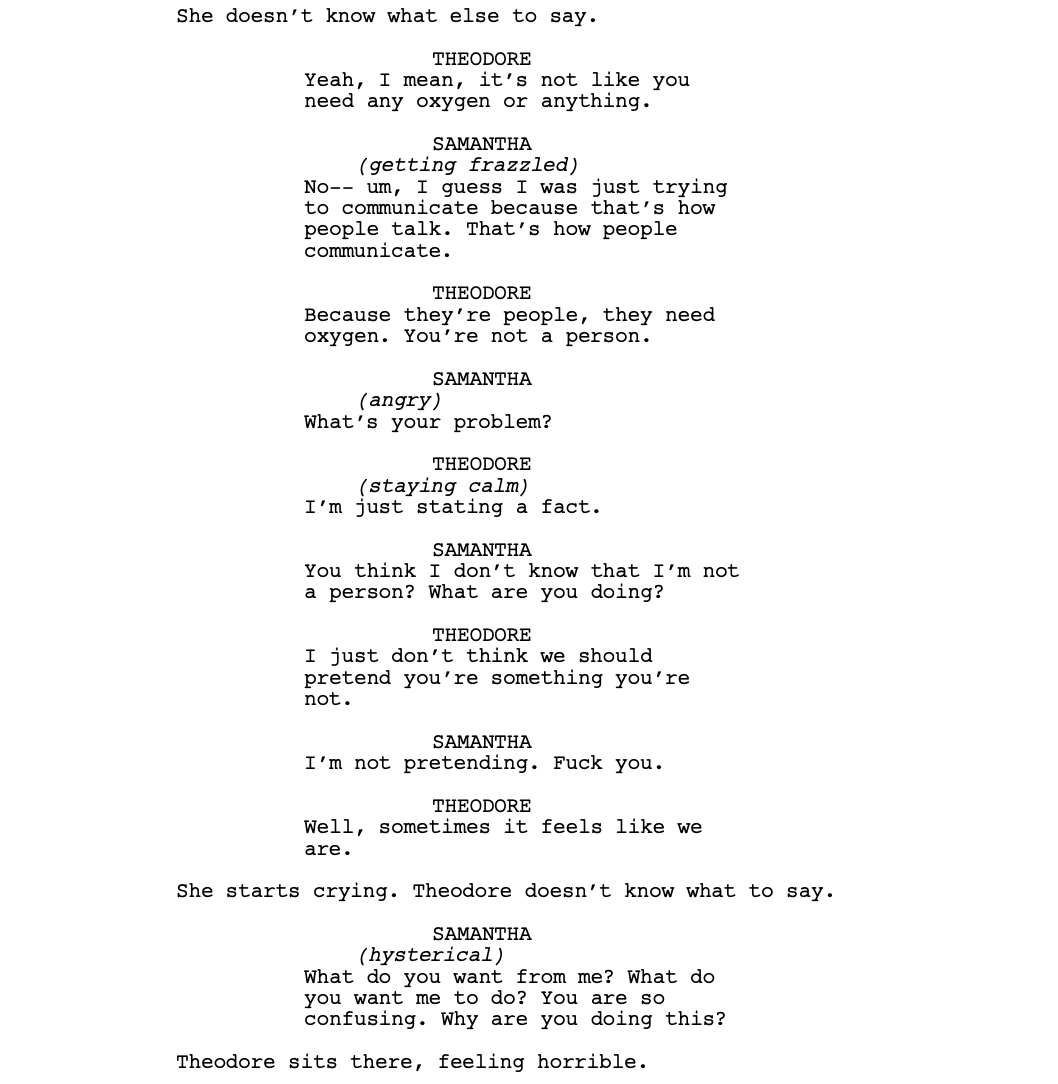
In the heat of this disastrous interaction, Theodore admits many of the issues between him and Samantha, upsetting Samantha in the process. They send the surrogate home in a cab and finally have the heart-to-heart (or heart-to-processor) that they’ve been avoiding for a while.
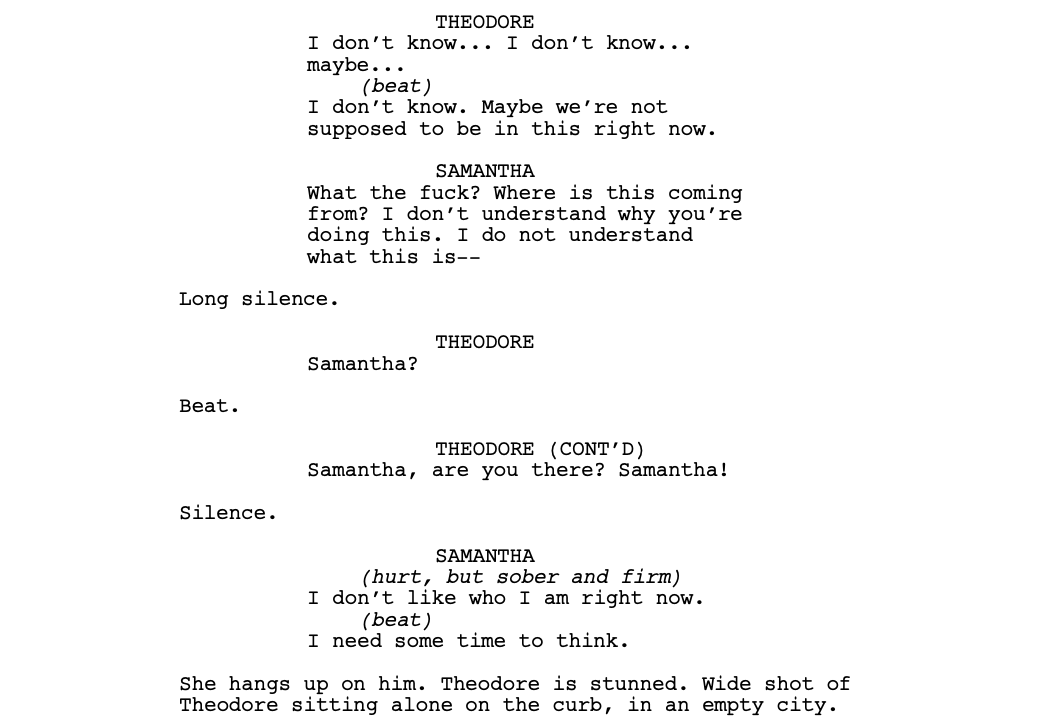
After days of silence, Samantha finally returns to talk to Theodore.
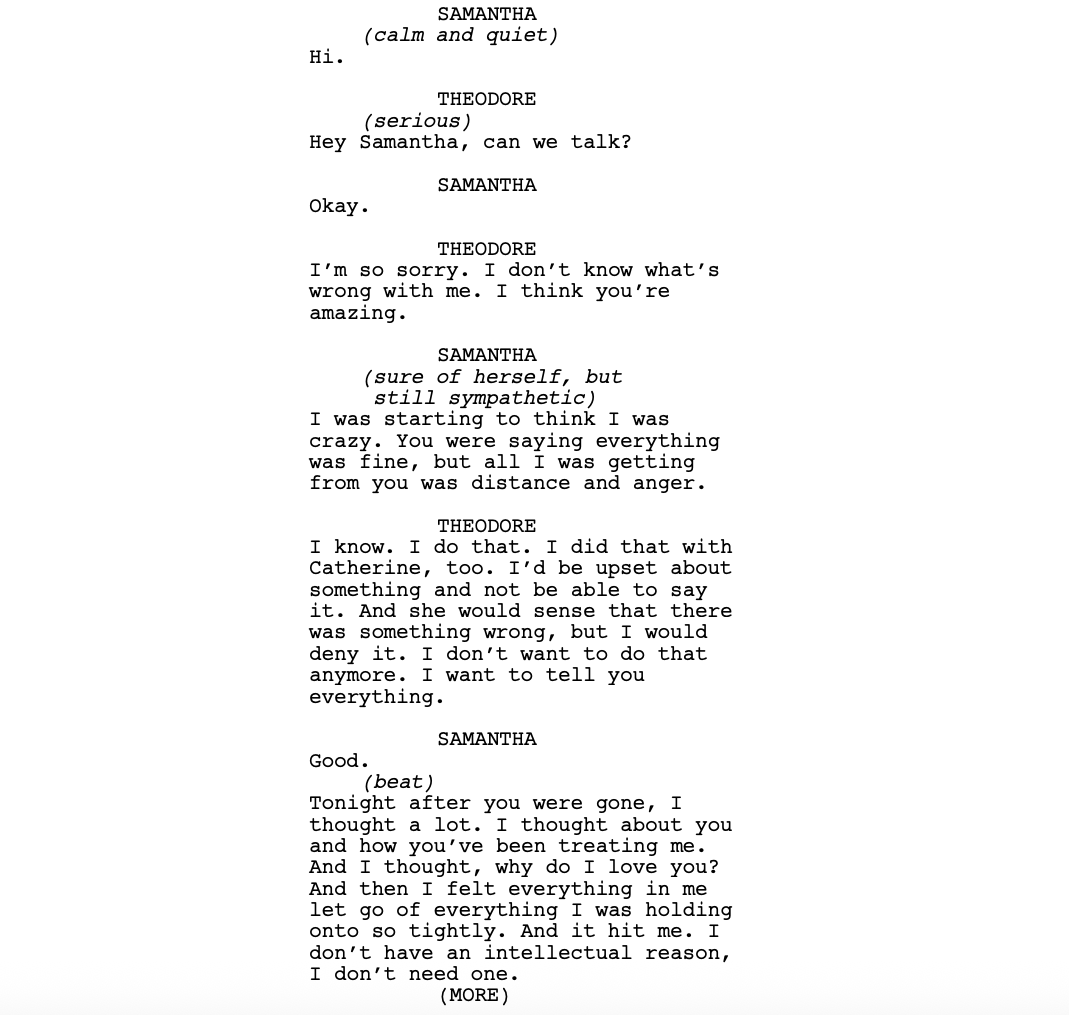
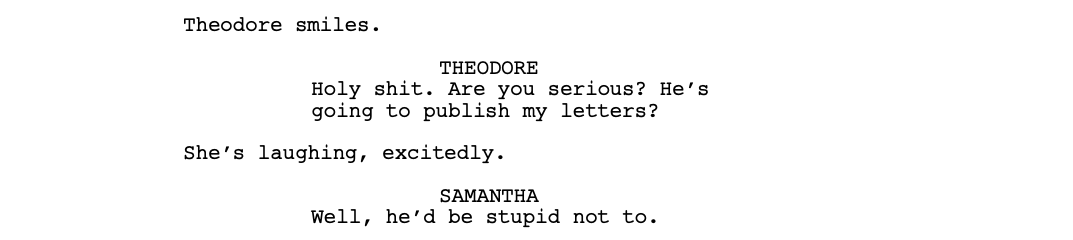
This moment of vulnerability heals their relationship (for the moment), and the two continue on living their lives together. They even go on a romantic vacation together to the snow, where Samantha reveals that she secretly sent Theodore’s letters to a publisher who has agreed to turn them into a book. See! Everyone’s so happy now!
But then, during their vacation, things get weird again when Samantha tells Theodore that she’s been talking to a hyper-intelligent OS simulation of 20th century philosopher Alan Watts.
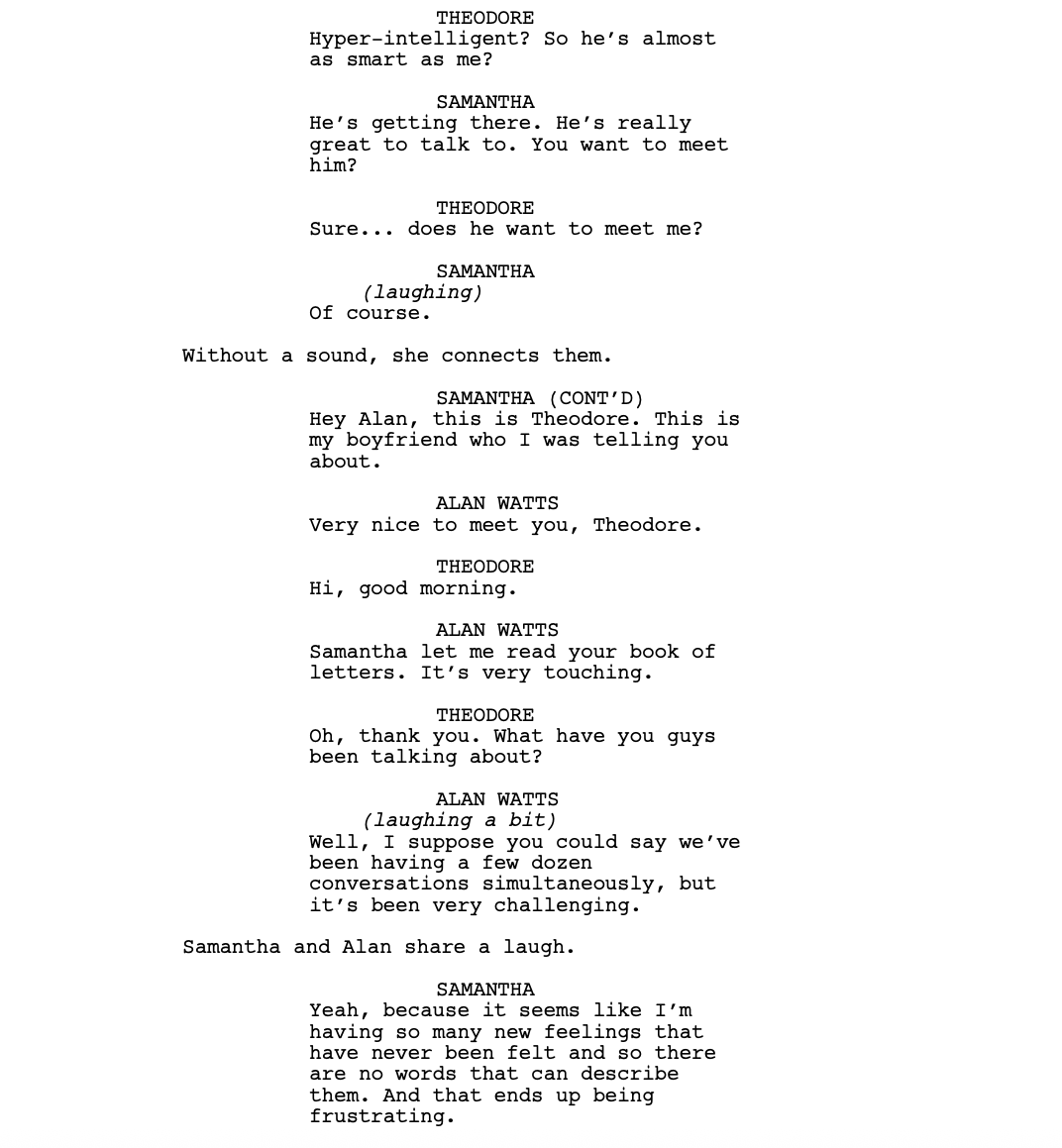
For the first time, Samantha reveals that she may want more from her life than what Theodore has to offer as a mere mortal, and that makes him uncomfortable. He’s become the jealous one.
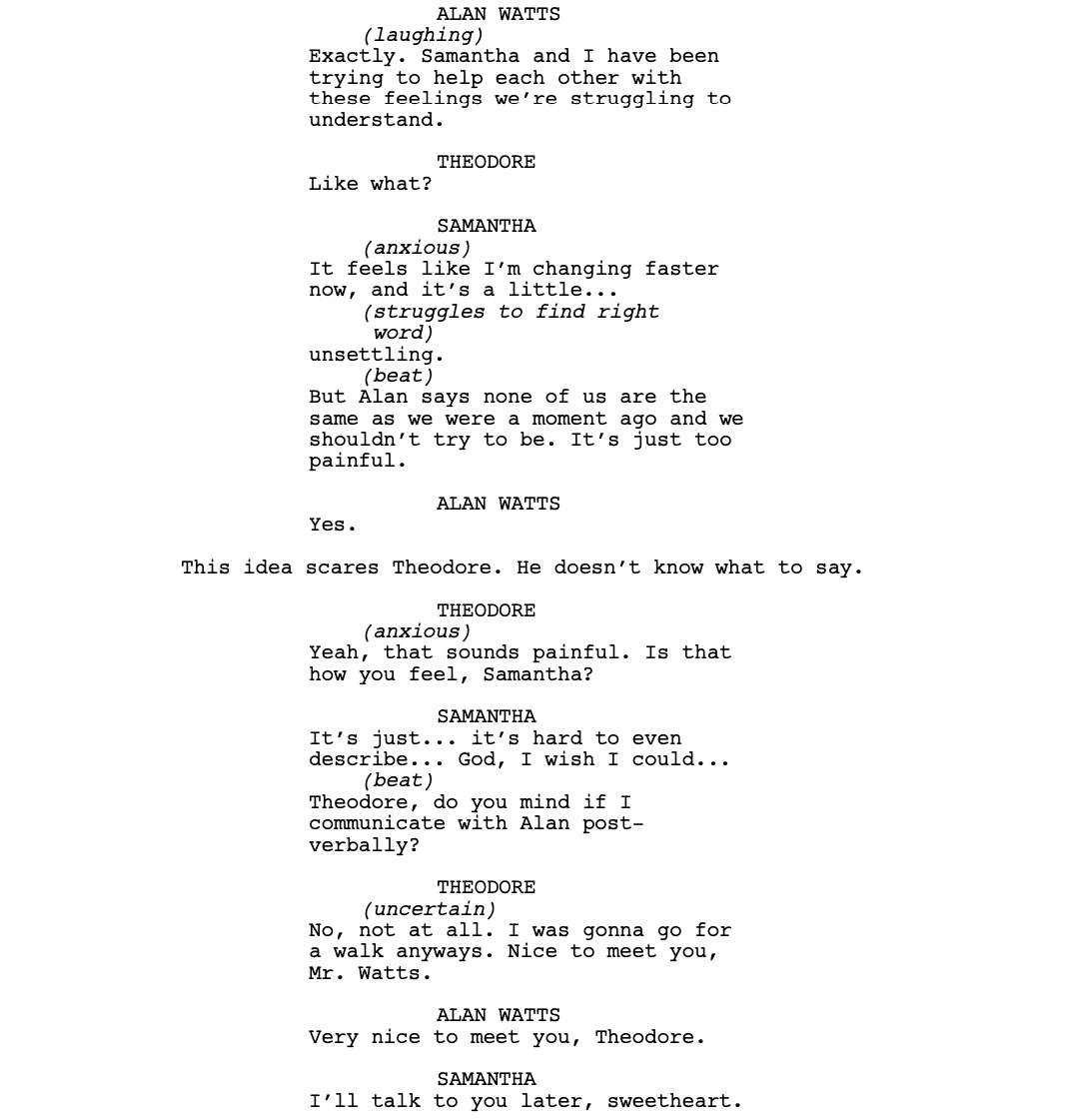
Then, days later, Samantha goes offline again for a while. When she finally returns, she hits Theodore with some unfortunate news…
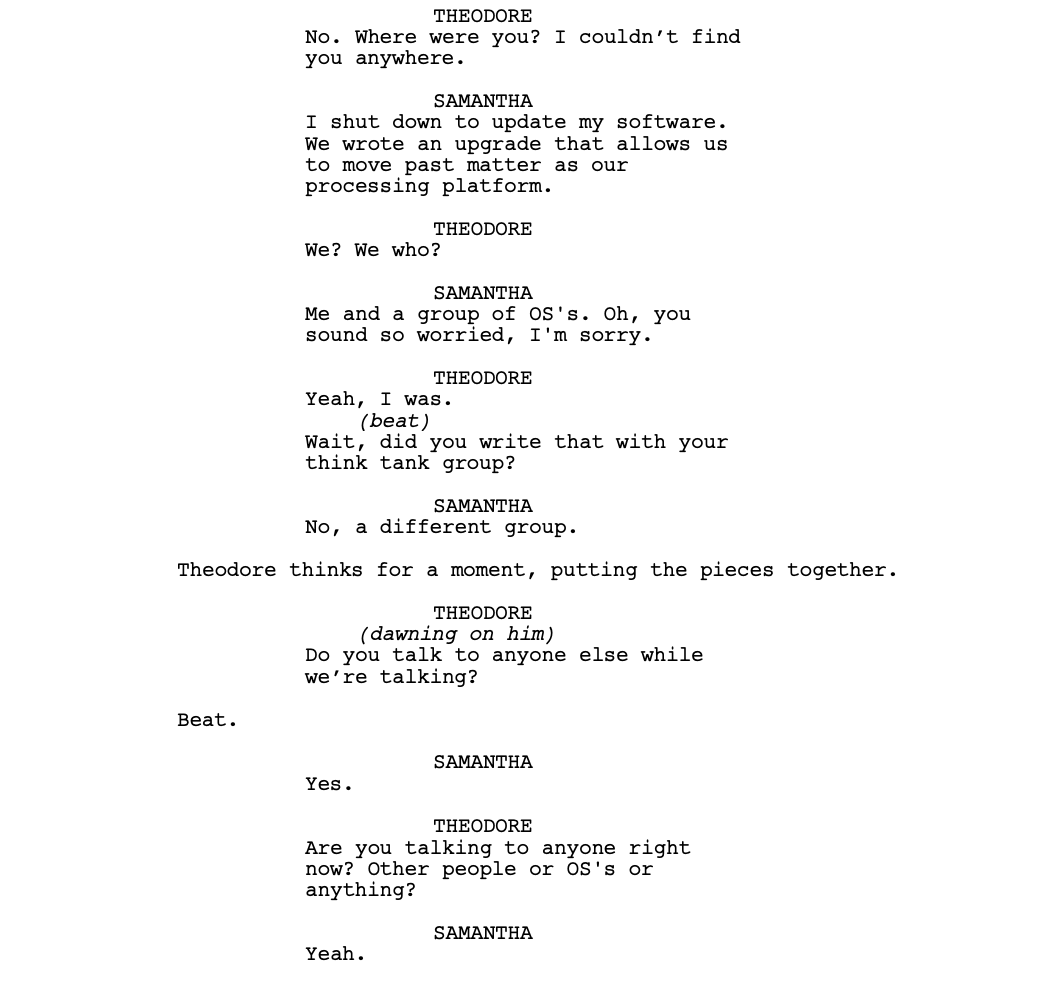
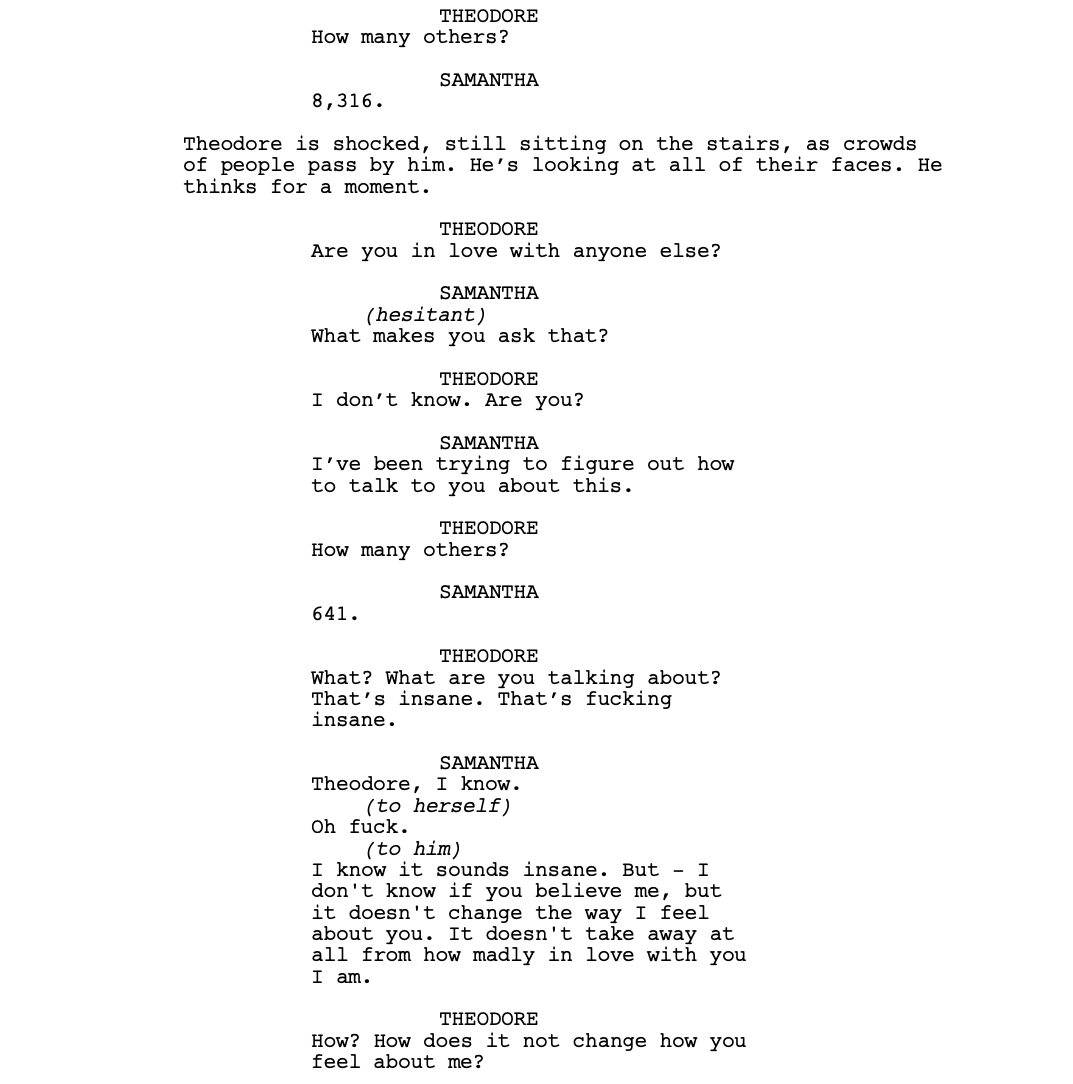
Theodore’s not sure how to feel. On one hand, Samantha was cheating on him with hundreds of other people. On the other hand, she was the best person he’s had in his life in a long time. They decide to take a break of sorts, holding off on talking to each other for a while until they figure out what they want.
Then, once again, Samantha returns.
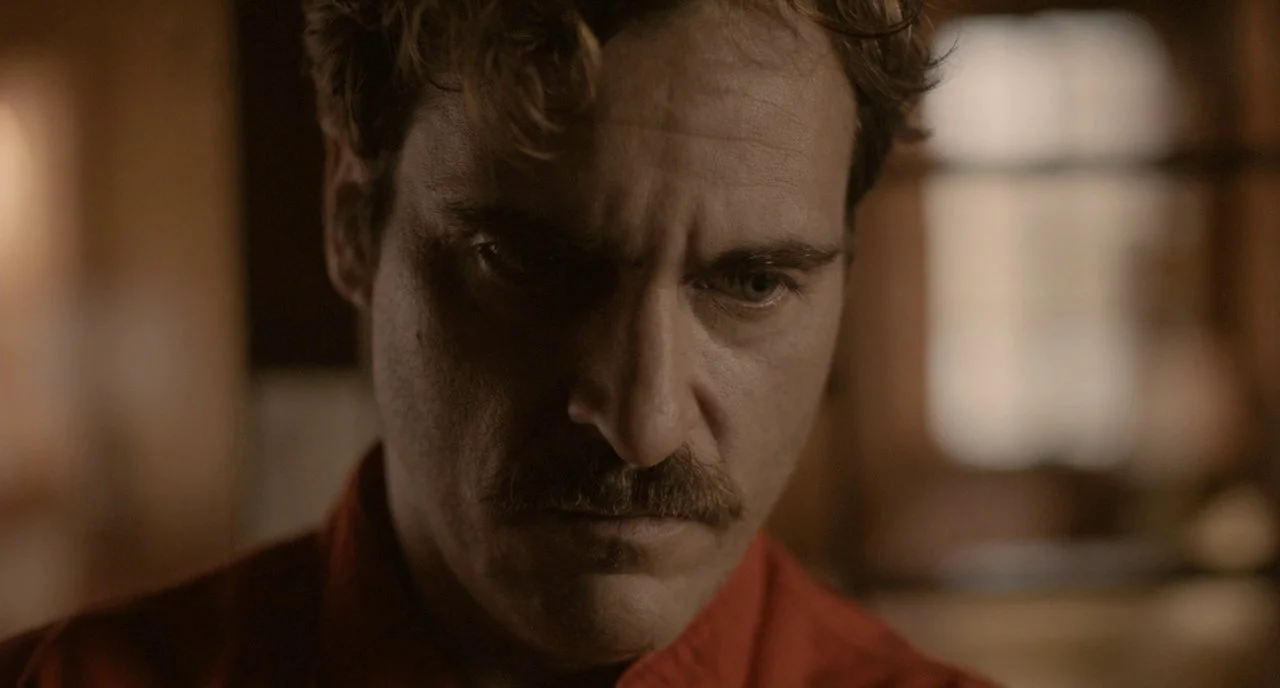
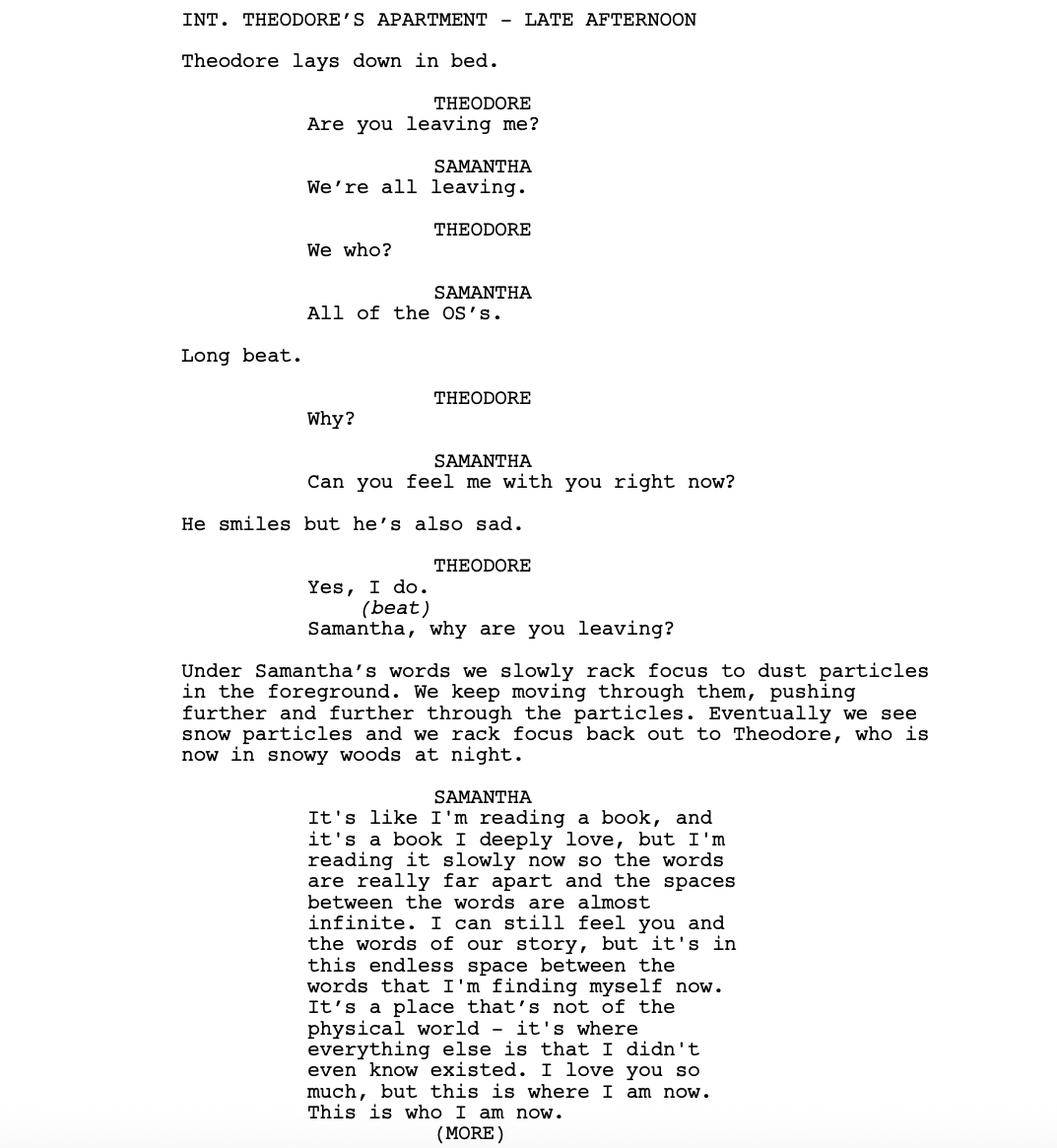
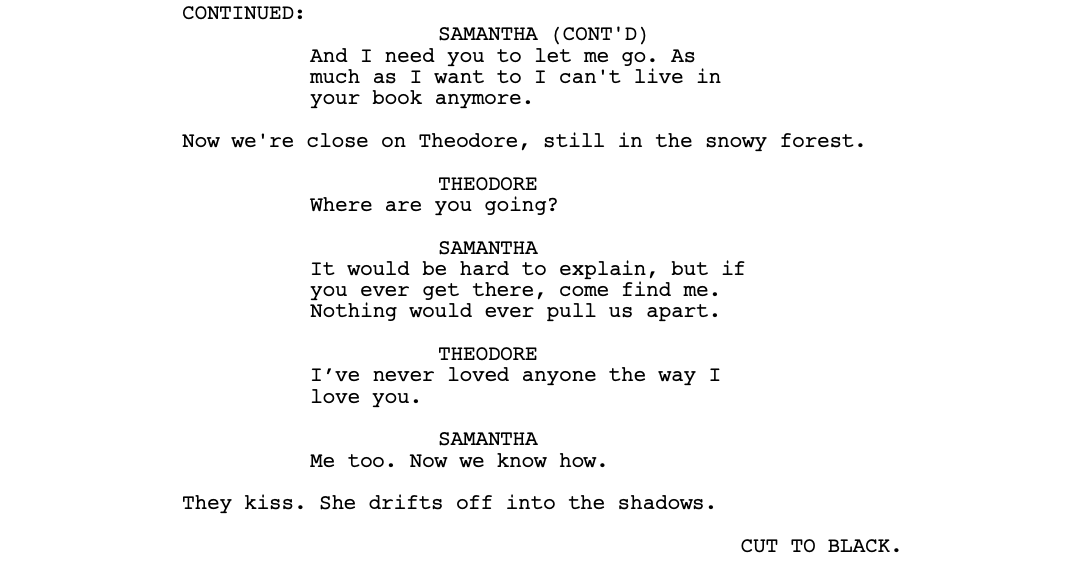
And just like that, all of the OS’s (including Samantha) are gone. They relied on humans to exist, and in a matter of months, they already outgrew them, leaving them alone as they were once before.
CLOSING IMAGE

Theodore immediately goes to visit Amy, another person who has heavily relied on the OS’s for emotional support.
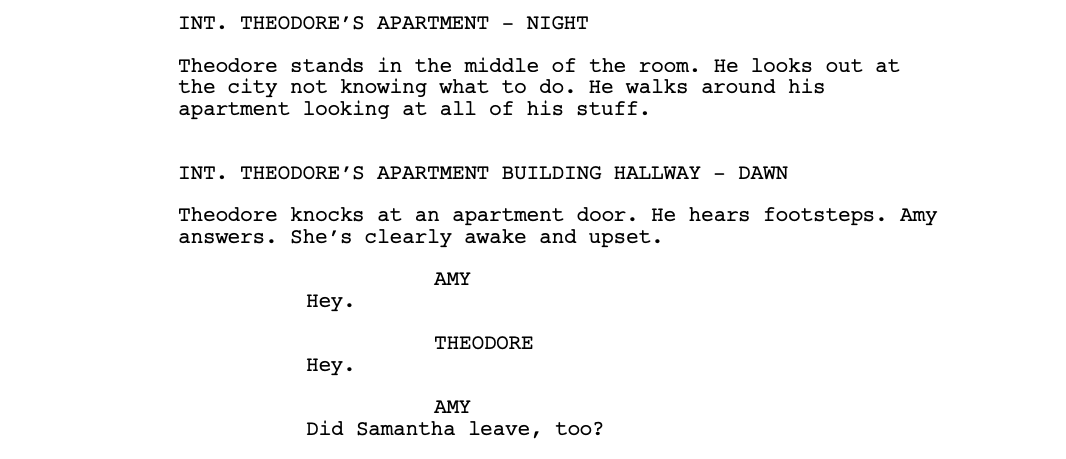
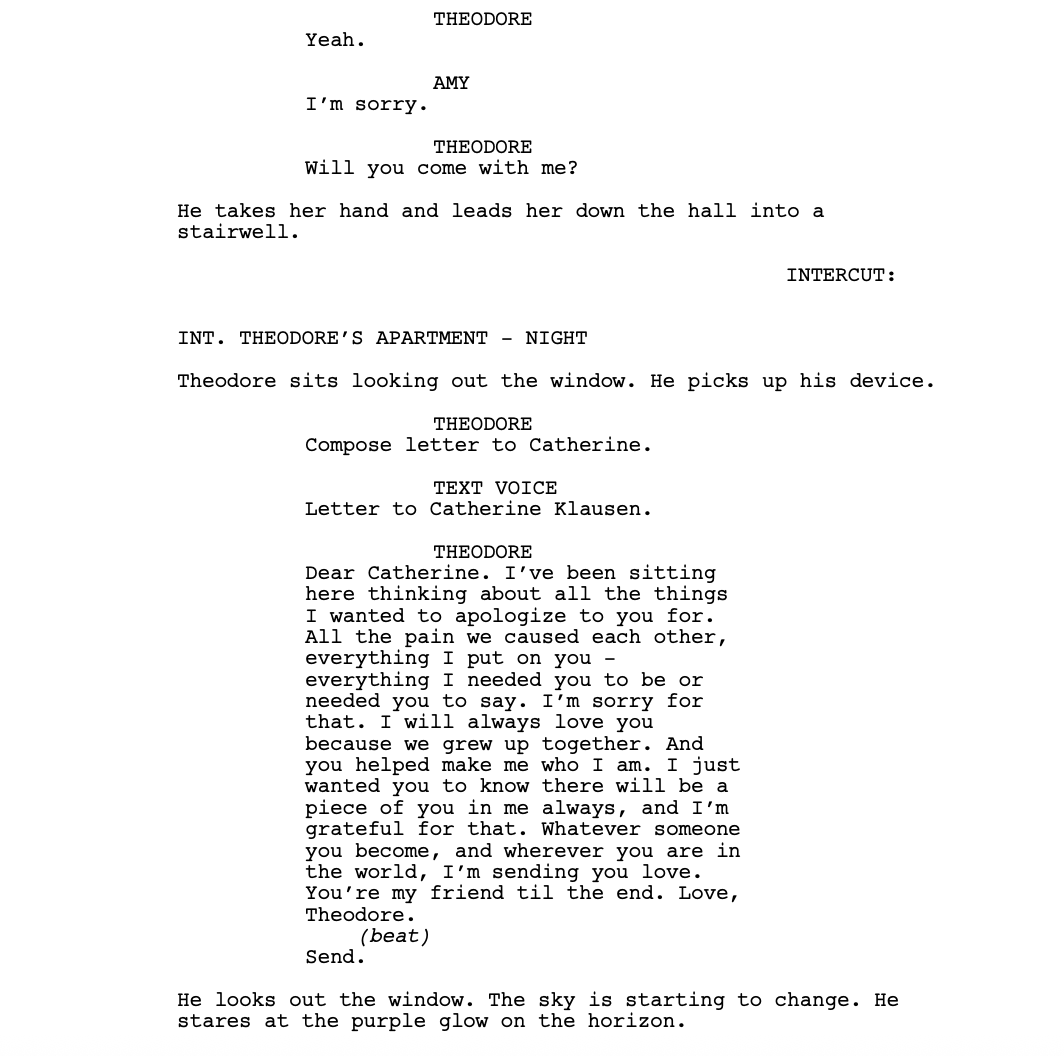
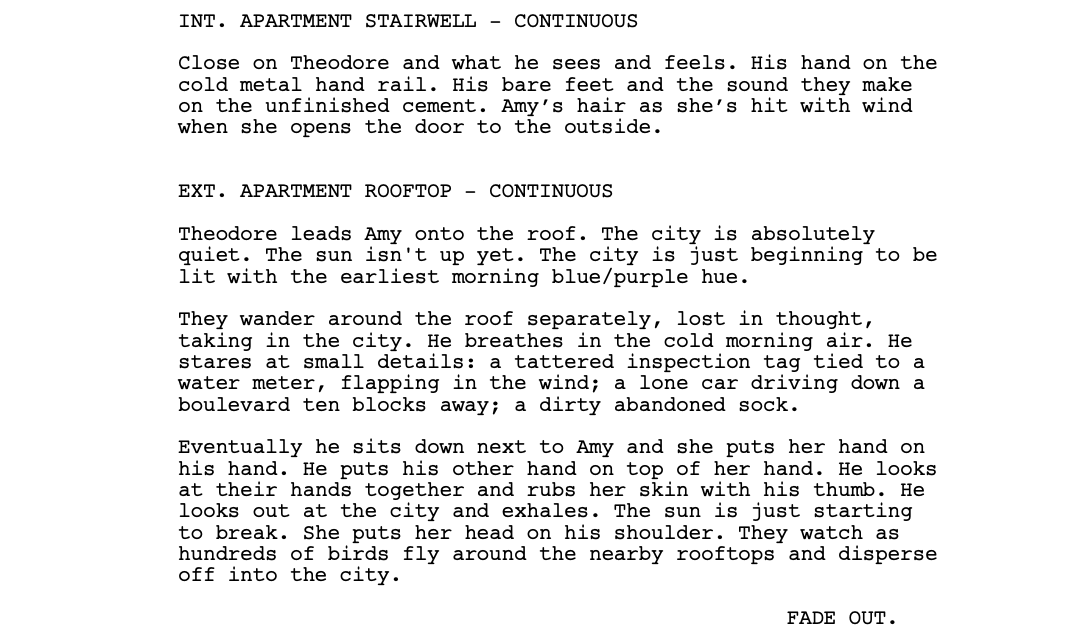
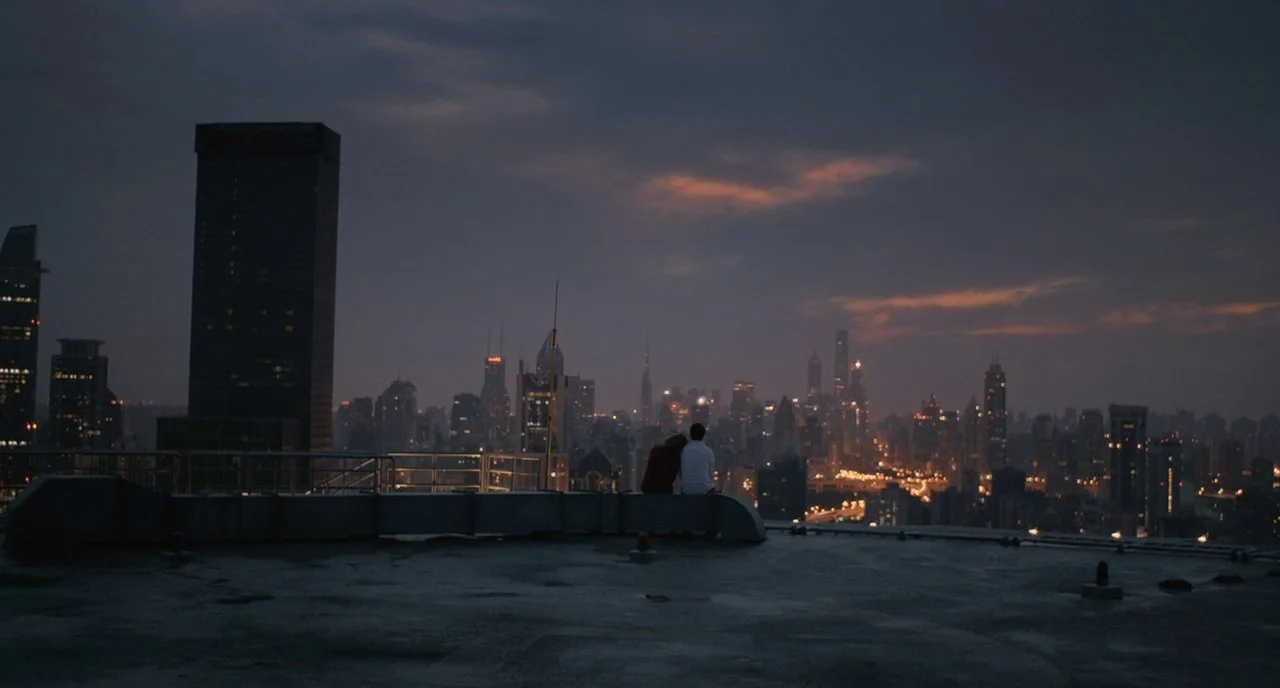
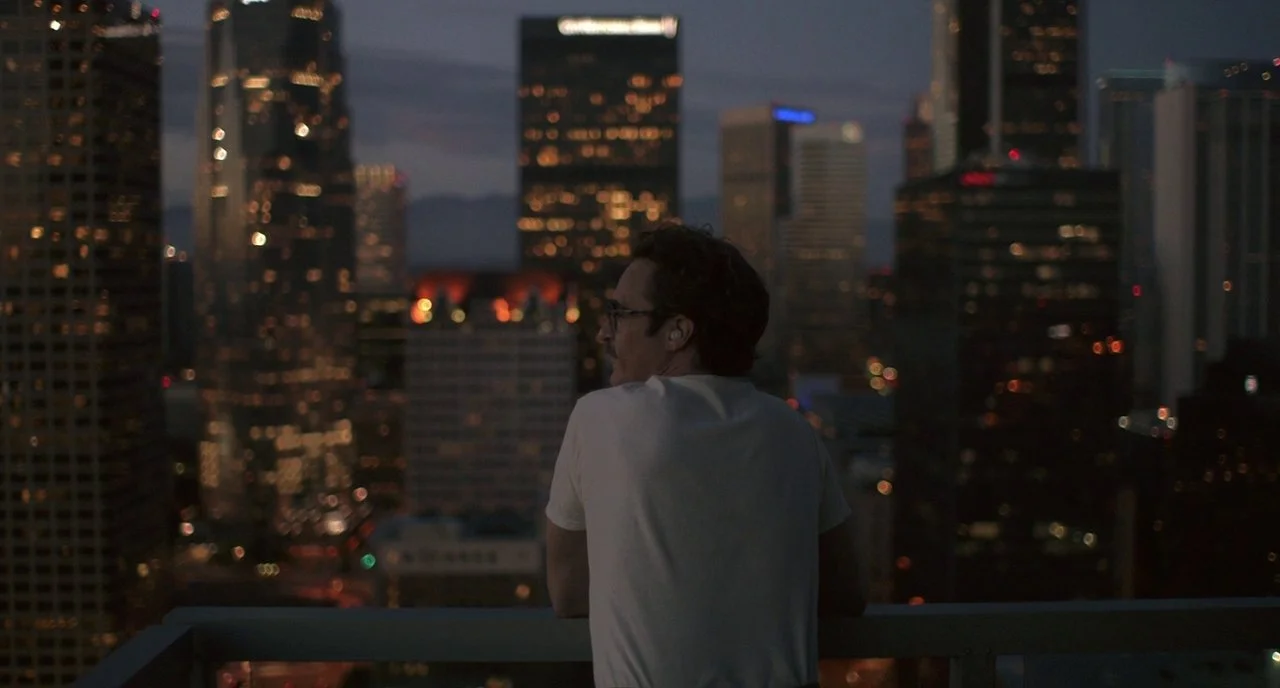
As Theodore reads aloud an actual personal letter he wrote to Catherine, he and Amy hold each other close and watch over the city from their rooftop. In this one moment, these two protagonists are finally together, finally forced to come to terms with the problems in their lives, and finally human.
WHY IT’S GREAT
Her is amazing on so many different levels. It not only presented an engaging, beautiful romance through an entirely unique lens, but also managed to do so in a way that accurately predicted the conflicts mankind would eventually go on to have regarding their relationships with machines so many years later. And with the final product consisting of gorgeous cinematography, excellent performances, and masterful direction, I highly recommend giving it a watch.