

Writers today have what seems like endless options for software and apps to assist in their writing endeavors. Everything is digital in files and spreadsheets. But when trying to grasp something as elusive as a story-to-be, a tactile method can help define and organize the structure that has heretofore been gestating in your brain. There is plenty of ongoing research about the benefits of how writing by hand is better for memory and learning because it is engaging multiple as well as different parts of the brain than typing does. Having analog information interacts differently with your brain than digital information does–think pictures laid out on a table or a pitch deck versus media compiled in a bin on an editing software. Of these tactile methods, index cards have a surprising amount of utility in building your story and visualizing its structure.
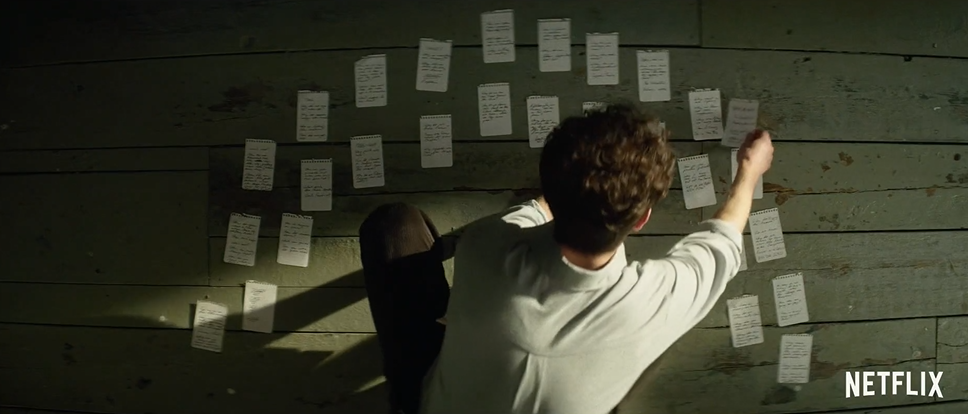
Index cards are cheap, simple to reference, have a low physical footprint, and are portable. They can be color coded and easily reorganized to look at the story structure in various ways. They are great for taking notes and jotting down ideas. You can use index cards before the story idea is even a thought in your head. Collect snippets of ideas, themes, facts, and quotes from your everyday living and media consumption–if you like it, write it down. Perhaps it’ll synthesize into a story idea you have 9 months in the future
If you askDavid Lynch how to use index cards for screenwriting, he keeps it nice and simple. Write down a scene on an index card, do it 70 times, and you come out with 70 scenes. When you have 70 scenes, you have a movie. It’s as simple as that. End of article/
But if you’re not David Lynch and you need a bit more than that, we can expound a bit about utilizing index cards into your workflow.
How to Use and Create Index Cards
As the most common size of an index card is 3-by-5 inches, the size necessitates brevity and forces big concepts to be succinct. Think of each card as an individual unit of the story or a building block. Using the same principles that loglines use to squish the entire story down into a bite-sized 1-2 sentence blurb, writing a scene on an index card is squishing the story beat or plot point down to its essence. Cards can have a single line or even just a single idea on them, there’s no minimum threshold for what can be on a card.
Even if the cards force brevity, you can still stuff them to the brim if you want–just like a student squeezing every last bit of real estate out of the one index card the professor has allowed the students to use as reference on an exam. There are no hard or fast rules. Play with them and see what works for you.
Another way to create scene cards is write out all the core components of the scene you intend to convey:
Action:
Character’s Goal:
Conflict:
Resolution:
Theme:
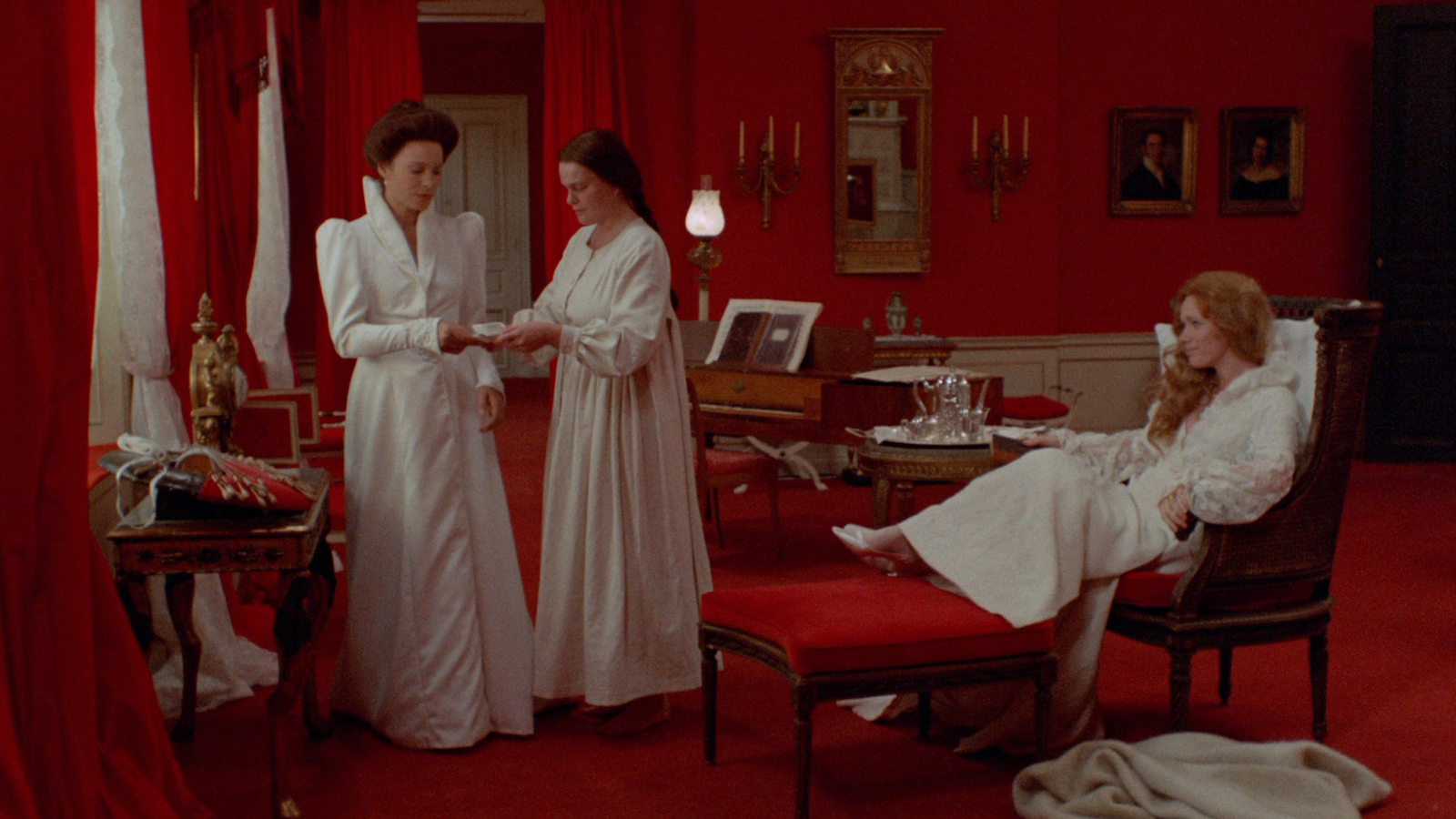
Many story inception’s start with a singular image. Ingmar Bergman’s Cries and Whispers started with an image of three sisters dressed in white in a red room. A card can simply be a striking image that has been roiling in your mind or a visual motif you intend to implement. You can also slot in the character motivations, list of characters in the scene, the setting of the scene. Perhaps you want to build a card deck of just one setting in your story to see how the story beats play out there isolated from the rest of the story beats away from that location.
Cards can also be used for characters' story arcs–who are they when the story begins, what is their flaw that coincides with the theme of the story, how do they change from the conflict of the story, and who are they at the end of the story. You can create a card deck for the core beats of your story but also create ancillary cards, which can be questions that arise while thinking about a scene, potential plot holes, or missing character beats.
Card Organization and Reorganization
Once you have created your cards is where the real utility begins. Not only are they a quick and succinct reference material, index cards are perfect for visualizing and reorganizing the structure of the story.
When creating an outline in a word document or on a drafting software, the scenes will lay out linearly. Index cards are not linear; they are modular, singular units of story that can be assembled and reassembled. If you shuffled your index cards and placed them all down on the table all jumbled up and out of order, would you place all the scenes in the order they were before? Perhaps when character beats, actions, and visual images are placed sequentially in ways they never would be in a normal draft, they click in profound and exciting ways. Or not–but don’t discount it.
Pin the cards to a corkboard or lay them all out on a table to visually see the progression and rhythm of the story. How the audience experiences a story changes depending on what they expect. If you show the main character dying in the first scene, and then rewind back to the beginning, the audience is clued in to this being a tragedy or a downfall, whereas that perception doesn’t exist without that opening framing device. How you want the audience to react and perceive your story can depend on what story you’re trying to tell and what themes you’re trying to convey. When you move the scene cards around, new narrative or thematic possibilities can be considered.
Writing is an iterative process, and index cards are perfect for this kind of revision. When your story is 90-120 pages, you can’t see the entire piece at once, but with all the scene cards assorted onto a corkboard, the whole shebang is right there. You can see the flow of the narrative and if there are any hiccups breaking that flow. If a scene originally calls for a character to do x for the plot beat, but now that the story beats are all laid entirely out on the table, it makes more sense if this character chose to do y instead, and explore what that would mean for the plot. When revising, it’s always important to ask why each scene is necessary and how it affects the plot. You can simply remove a scene card from the table and see how the story flows without it.
Example Workflow
Create your cards in a way that feels natural to you. You can buy colored index cards to color code them by story days or flashbacks. You can color them by character beats. You can accessorize them with tags, dots, and stickers, and flags. Or just just simply take a standard card and write one line for designating that scene. Or even a single word or image.
Once you have your cards, you can either lay them out sequentially or jumble them up. You can group cards by character arcs, plotlines, subplots, settings, or themes. Place your A plot line and your subplots in parallel lines, then try to synthesize the lines where the scenes flow and tether to the other. The eventual sequence will be akin to a storyboard. From here, ask yourself if it reads like a story. If the rhythm of the narrative is clunky, start moving some of the cards around. Introduce a character earlier or later in the story. Push a plot beat earlier, when your characters are less prepared for it. What shockwaves does that send through the rest of the narrative? A lot of this reorganization will be tried and discounted pretty quick, but eventually something will click. Either swapping scenes or realizing a new scene is needed to be the connective tissue to bridge two other moments more seamlessly.
Only you’ll know when the revision process of swapping, adding, or subtracting is finished. When the rhythm of the story progression propels right through to the climax, and you can see the entire beast tangibly in front of you.
Index cards can help take the immense task of creating the formless idea out of your head and into a concrete tangible story structure. Just make sure that you’re using the cards to assist in your writing and not as a tool to procrastinate from your writing, just as a fantasy writer will endlessly perform deep dive research for the sake of worldbuilding in lieu of actually getting to work writing. After being so used to typing at the computer all day, it feels great to tangibly hold the building blocks of your story in your hands. After all, it is a morbid curiosity to be a writer who never physically writes anything.