
The Power of Not Knowing: Why May December Keeps You Guessing

May December is a comedy-thriller released in 2023. When Elizabeth, a famous actress, accepts the role to portray a sex offender Gracie, she decides to meet Gracie and the family Gracie has built with her victim Joe, which began when Joe was 13 years old.
This film is in many ways a masterclass of screenwriting. It follows the code of “show don’t tell,” and slowly reveals the life of Gracie’s family and their problems. And when the screenplay does decide to “tell,” it tells the most astonishing information in the precise moment when the audience feel like they finally know who Gracie is, and completely invert her image. Today, we will dive into this Rashomon of the 21st century, and talk about how the withholding and revealing of information can be used to hook the audience, establish complex characters, and transform the narrative into a thrilling mystery.
Opening Image
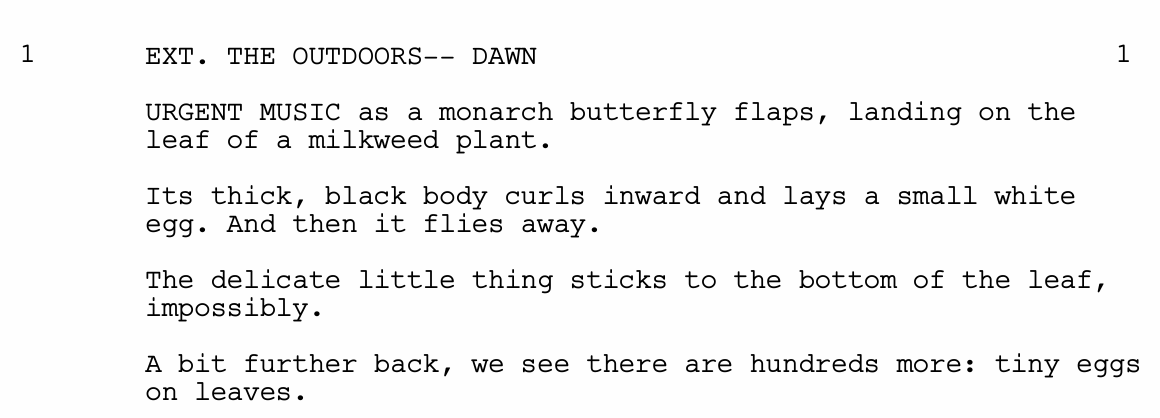
The film opens with the outdoors at dawn. A monarch butterfly lays an egg to the bottom of a leaf, adding to the hundreds of tiny eggs.
The butterfly is a symbol and motif throughout May December. Often associated with beauty and freedom, it works as a parallel to Joe’s experience, as Joe cares for his butterflies as well as his children, to eventually send them to a freedom that he can never have.
Set Up
We meet Elizabeth unpacking in her inn in Savannah and talking to her phone. We only listen to the conversation on Elizabeth’s end: we don’t know who she is talking to, why she is here, or even who she is. From the beginning, the screenplay is withholding information from its audience, and keeping the audience guessing.
Finally, Elizabeth writes the name “Gracie” down on her notebook, giving us the first hint of why Elizabeth is here, and what this film is about.
Meanwhile, in the Atherton-Yoo household on an island community just outside Savannah, Joe, 36, and Gracie, 59, are preparing for a Memorial Day grill. From their conversation with their friends, we learn that Elizabeth is a famous actress.
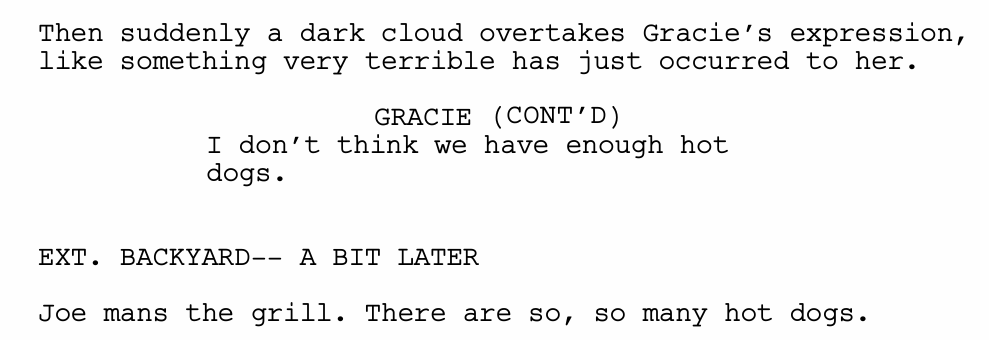
Gracie’s character is quickly established. She says “I don’t think we have enough hot dogs” like that is the worst thing that can possibly happen, the audience are prompted to wonder why: Is she naïvely living in a suburban fantasy? Does that mean she expects a lot of people to come around? Does she want to fit into this community that (we later learn) dejects her?
In a few lines, the central hook of “Why is Gracie this way?” is put into the audience’s minds. At the same time, nothing is mentioned of Gracie and Joe’s age difference in the dialogue, yet the audience begins to catch on and wonder why their children are teenagers and Joe looks so young.
Inciting Incident
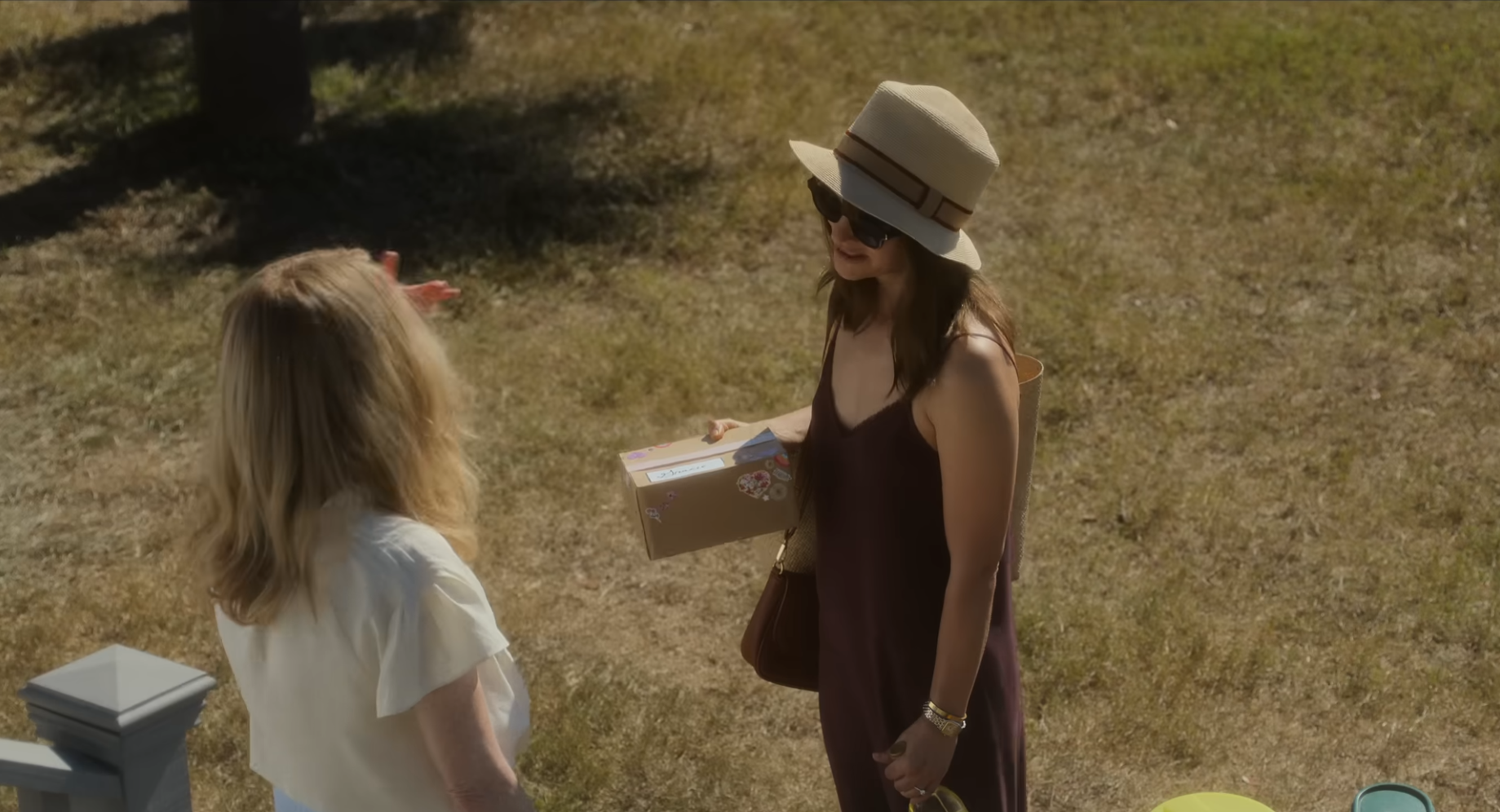
Elizabeth arrives at the Atherton-Yoo house. She finds a brown-paper package sitting at the step, so she brings it around to Gracie and Joe, meeting them for the first time.
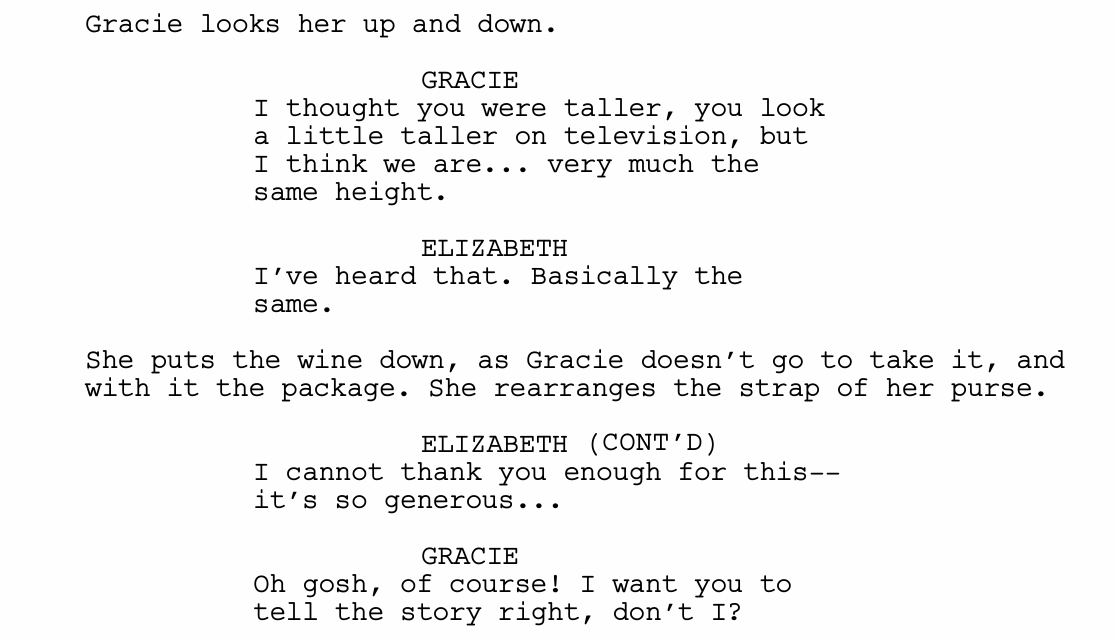
Their conversation remains coded. Gracie comments how Elizabeth and her are “very much the same height,” and that she wants Elizabeth to “tell the story right.” The audience knows neither why her similarity to Elizabeth is the first thing she clocks, nor what the “story” is, let alone how to tell it “right,” but are intrigued to find out.
We soon learn that the box Elizabeth picks up is filled with shit, and that Gracie and Joe receive them as a routine. Gracie is making it sound like it’s just some neighbor being an asshole, but the audience asks if there’s anything more than that.
Debate
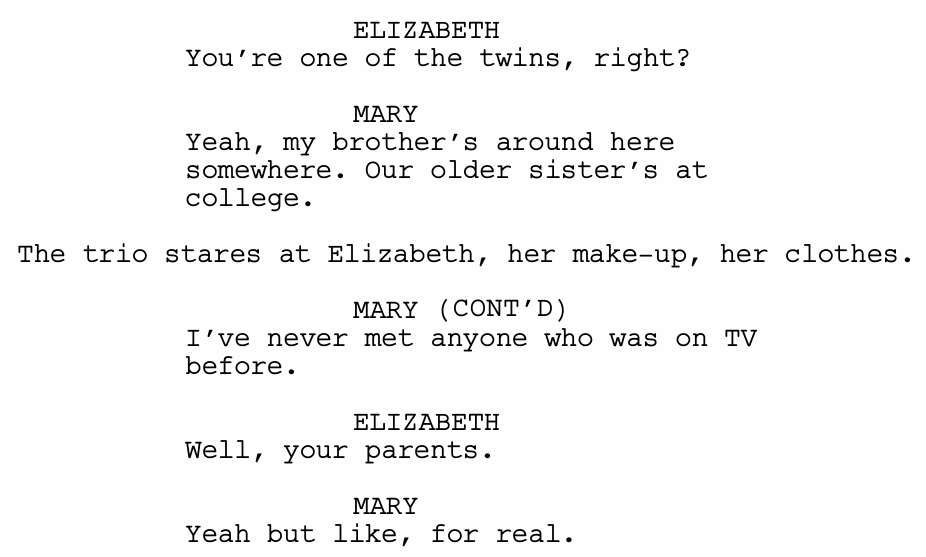
Elizabeth meets Gracie and Joe’s daughter Mary, who is 18, and we learn that Gracie and Joe in fact have a daughter older than Mary and her twin Charlie, who is at college. This deepens the audience’s confusion and suspicion about the characters’ ages.
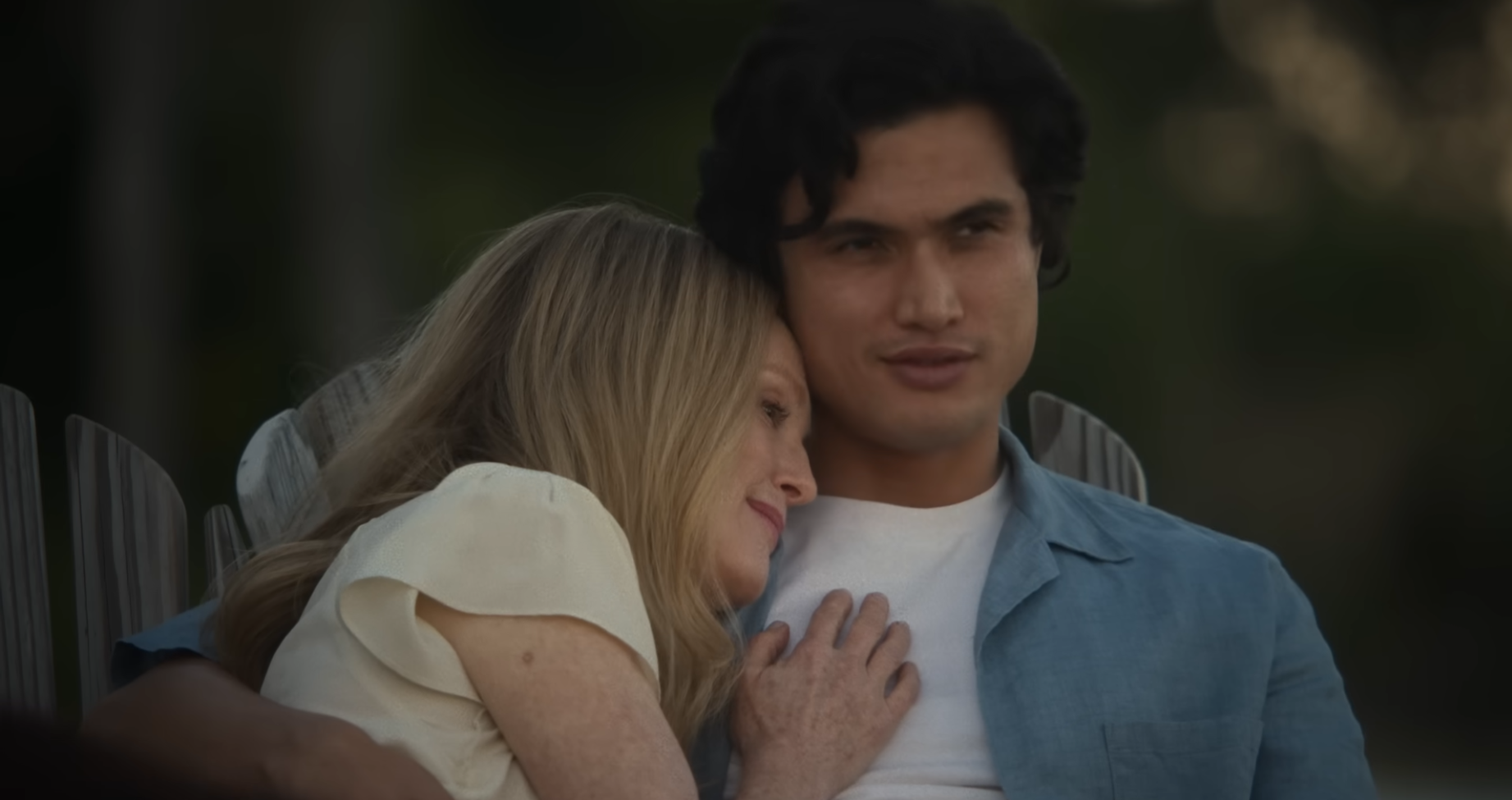
As Gracie and Joe rest from the cookout, Elizabeth meets Gracie’s friend Rhoda, who tells Elizabeth that Gracie and Joe are a beloved part of the community, and that Gracie “always knows what she wants.” This is the first of many perspectives on Gracie we’re going to get throughout the film.
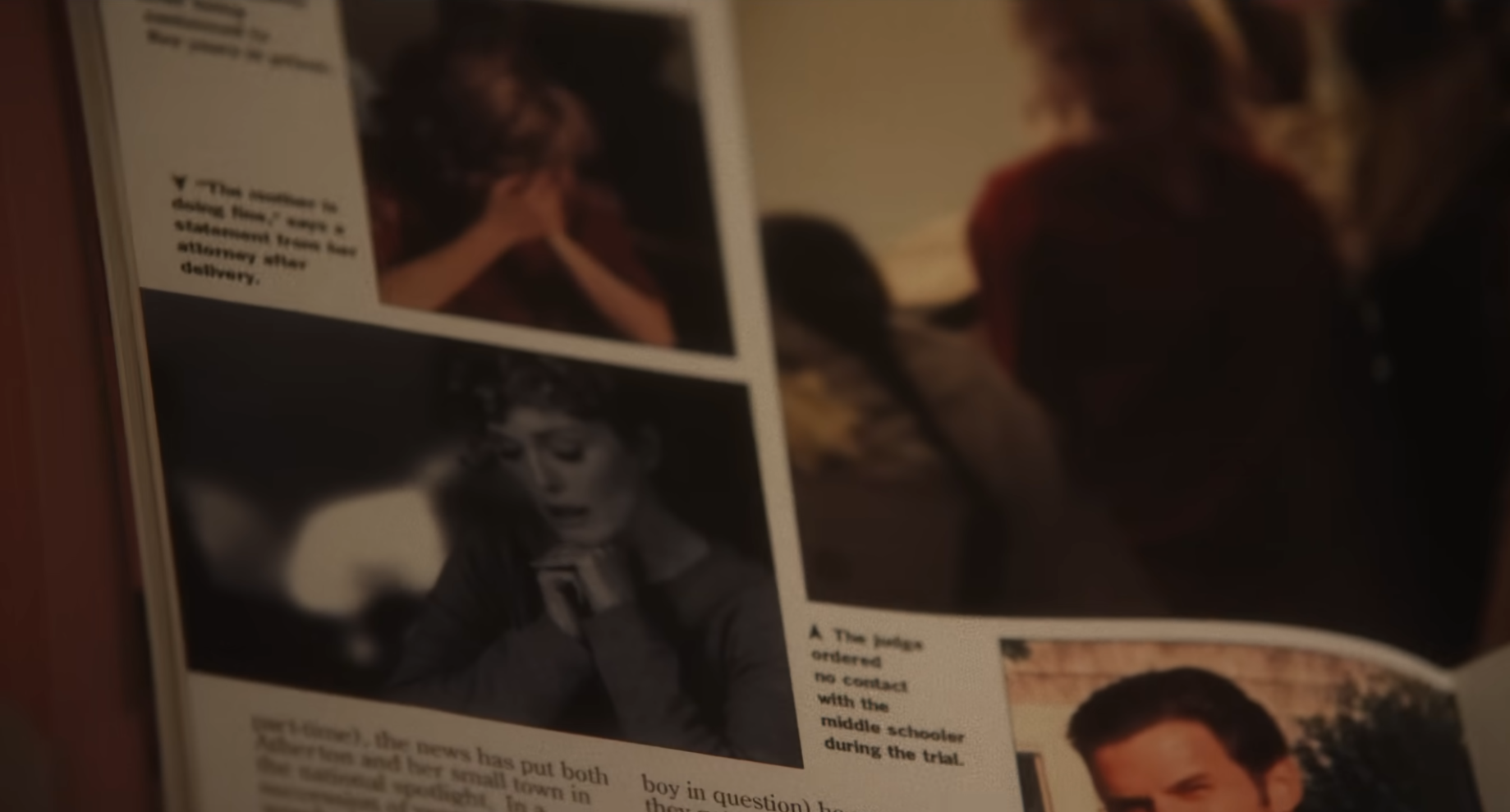
When Elizabethe returns to the inn that night, we finally learn, from the magazines that she studies, what had happened between Gracie and Joe: that Gracie was a sex offender and Joe, back then 13 years old, was her victim. Elizabeth tries to imitate Gracie to the mirror, hinting that Elizabeth is going to play Gracie in a film.
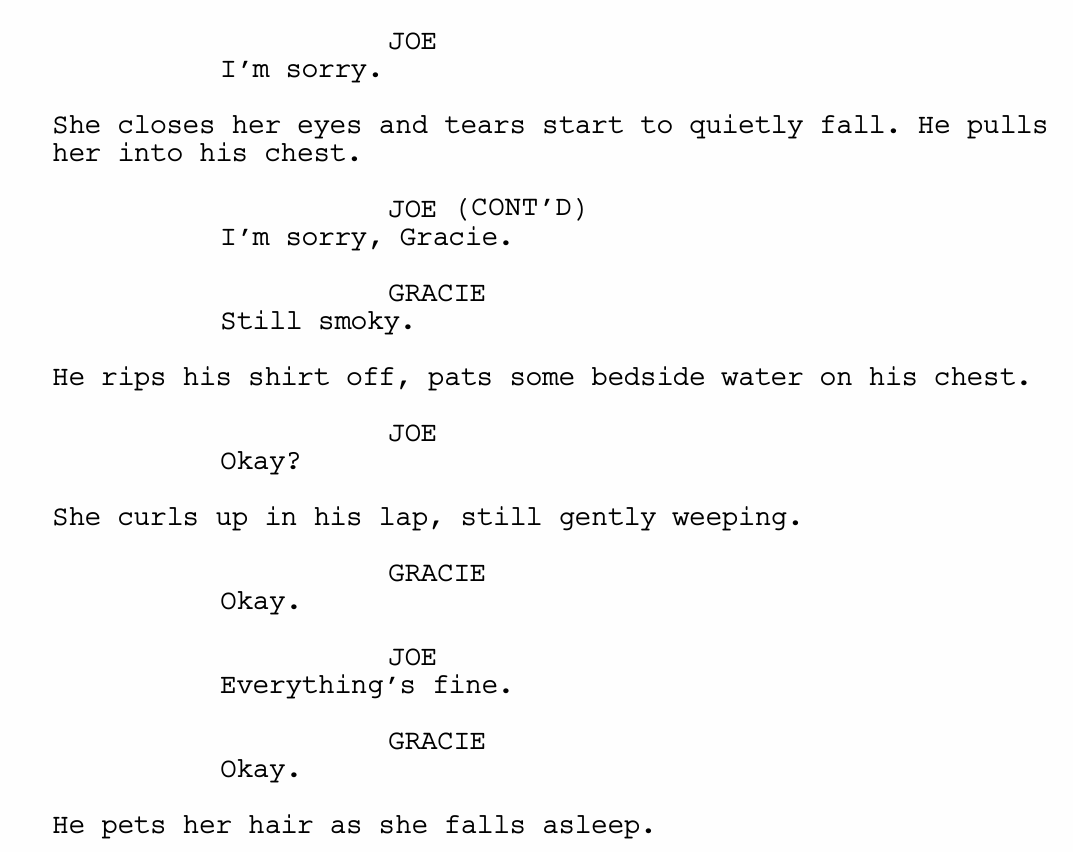
On the other side, Gracie and Joe are going to sleep, but Gracie complains about the smell of smoke on Joe. She cries and Joe comforts her. This scene shows their dynamics, and hints at the way that Gracie manipulates Joe by being vulnerable.
The second morning, Joe tends to the butterfly eggs and texts his friend Michela, who he met through a Facebook group. Their conversation’s vibes land weirdly between flirtatious and childish.
Break Into Two
Elizabeth arrives for dinner at the Atherton-Yoo house. During the meal, Elizabeth learns that Gracie is a hunter and has shot the quail they’re having for dinner.
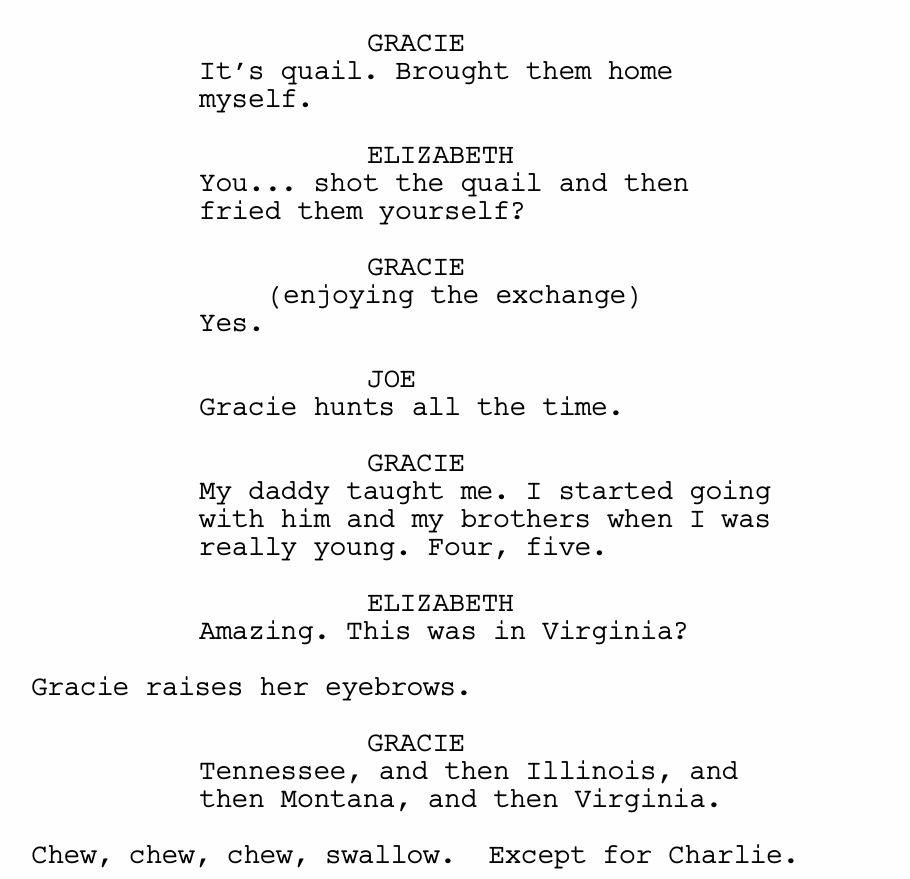
Gracie mentions how she moved around a lot as a child. This plants a seed in the audience’s mind, to wonder whether Gracie’s lack of roots changed her.
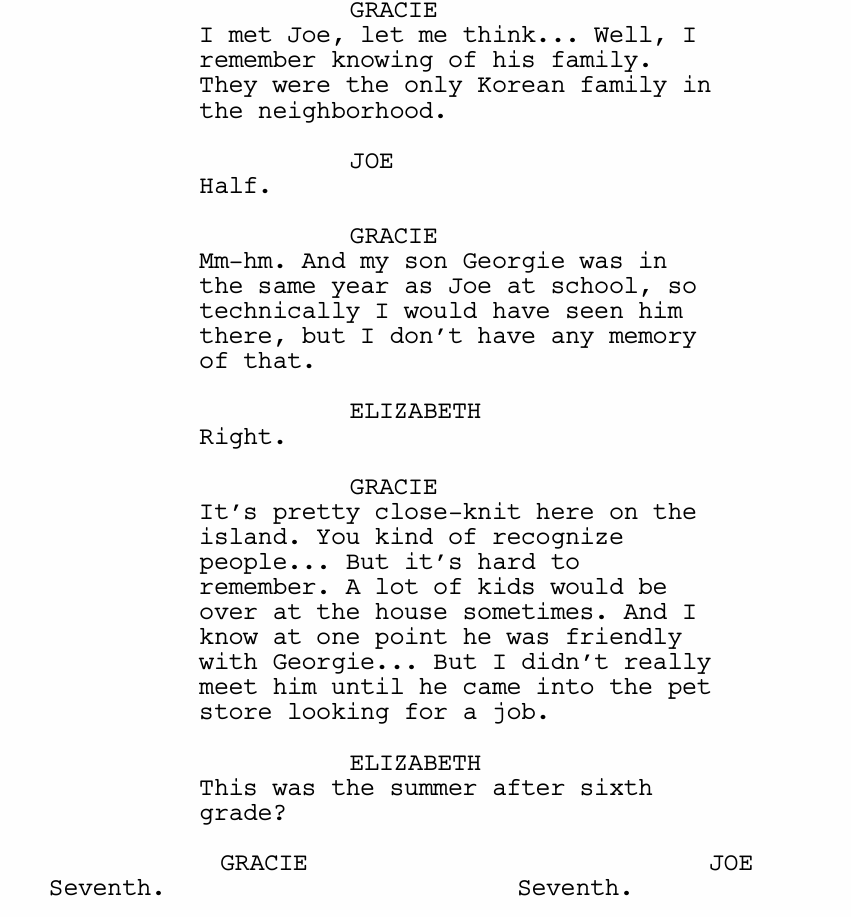
For the first time, Gracie and Joe’s relationship is brought to the surface. As Gracie recounts the story of their first meet, the audience grows more and more uncomfortable.
When both Gracie and Joe correct Elizabeth that the relationship began in the summer before Joe entered seventh grade rather than sixth, the audience wonder: Is it because it’s an important part of their memory? Are they scared by the idea of making Joe sound younger than he already was?
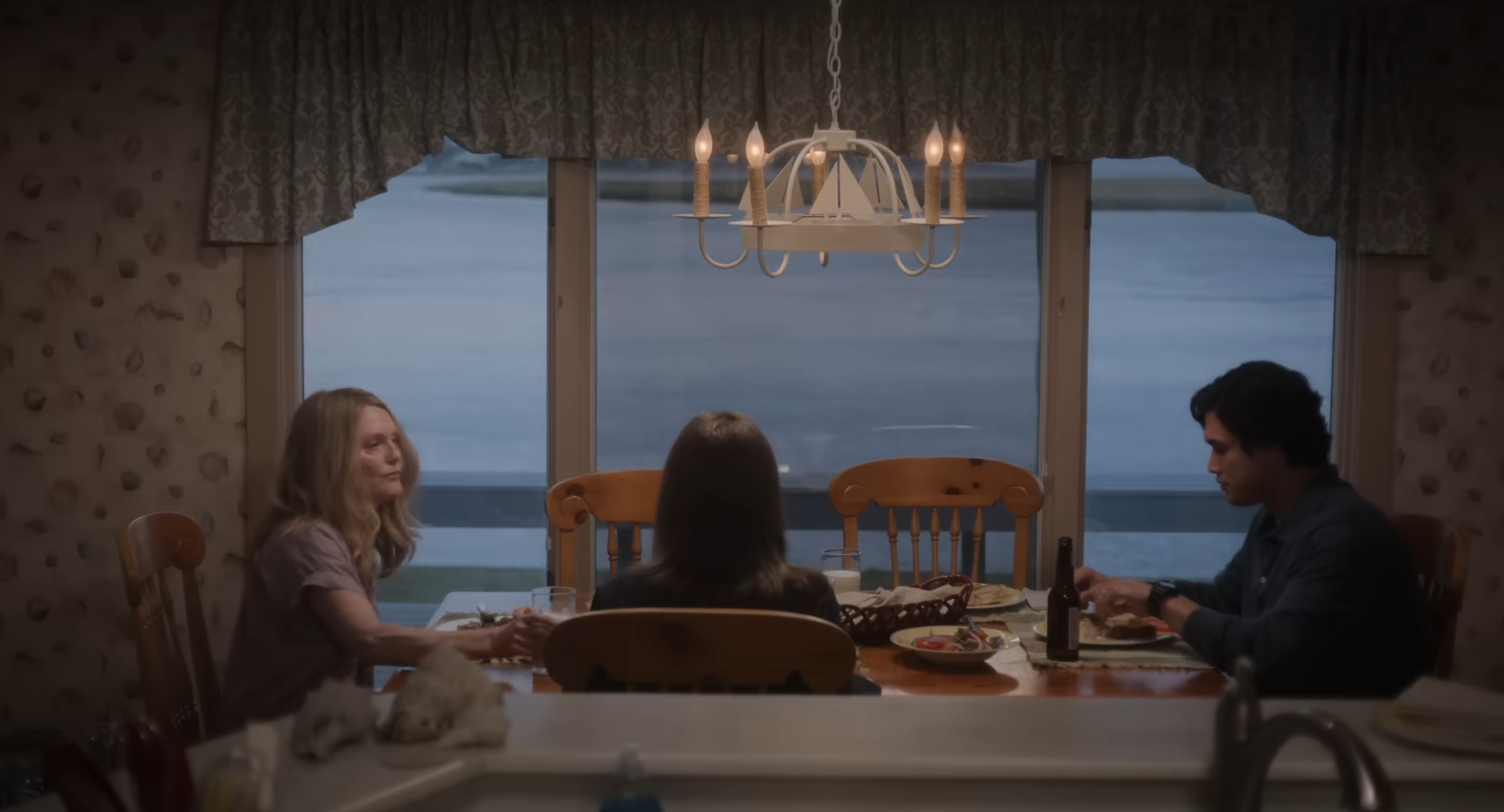
Joe sees Elizabeth out. She asks him to visit him at his job, and he agrees. Elizabeth calls her fiancé Aaron, who suggests that Gracie probably has personality disorder, while Elizabeth begins to almost admire how Gracie isn’t carrying any guilt.
Fun and Games
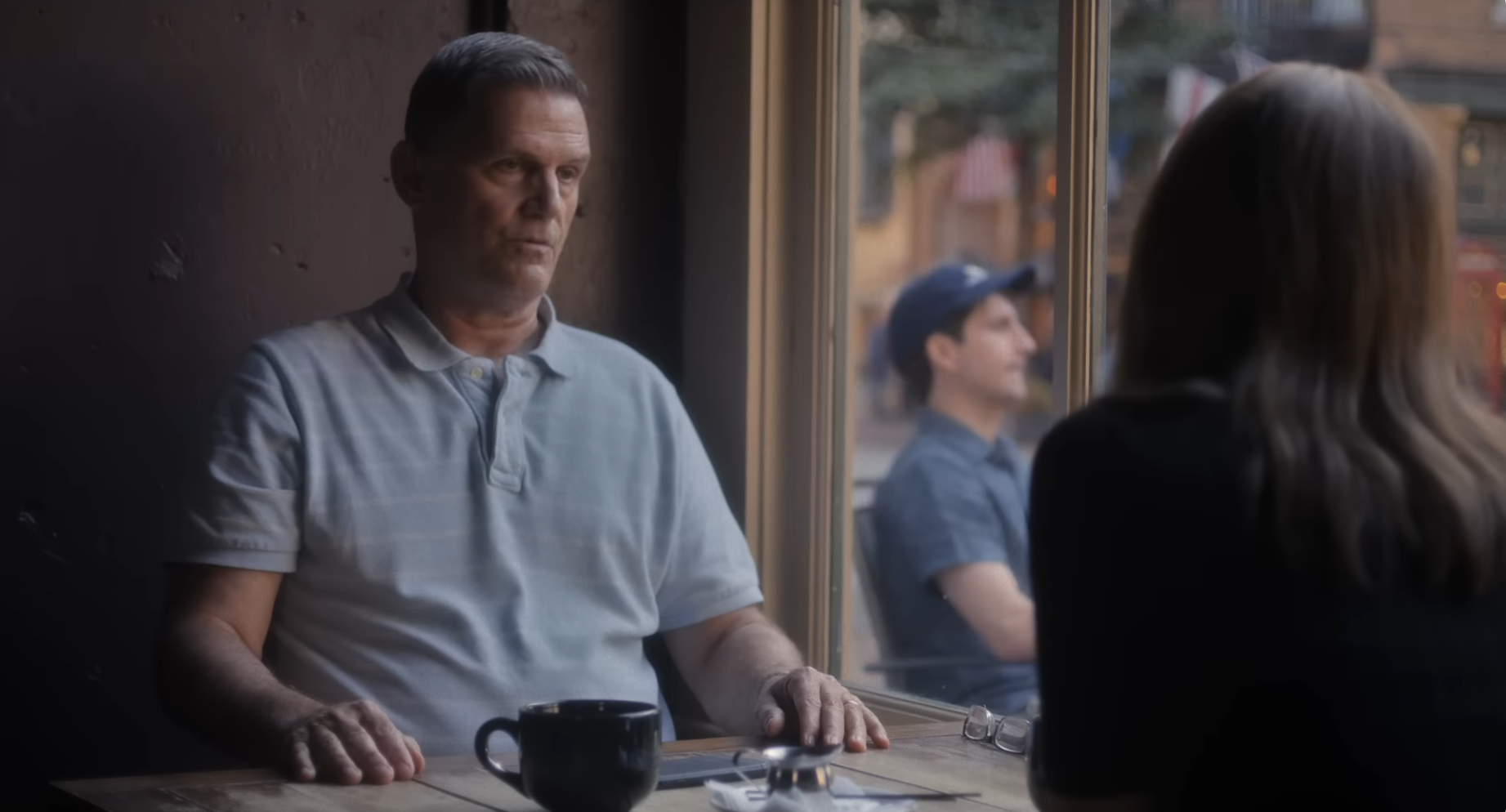
Elizabeth meets with a man named Tom. The writing does not suggest anything of who Tom is when their interview began, only to slowly reveal it through the scene: Tom is Gracie’s ex-husband, who she was married to when she had the affair with Joe.
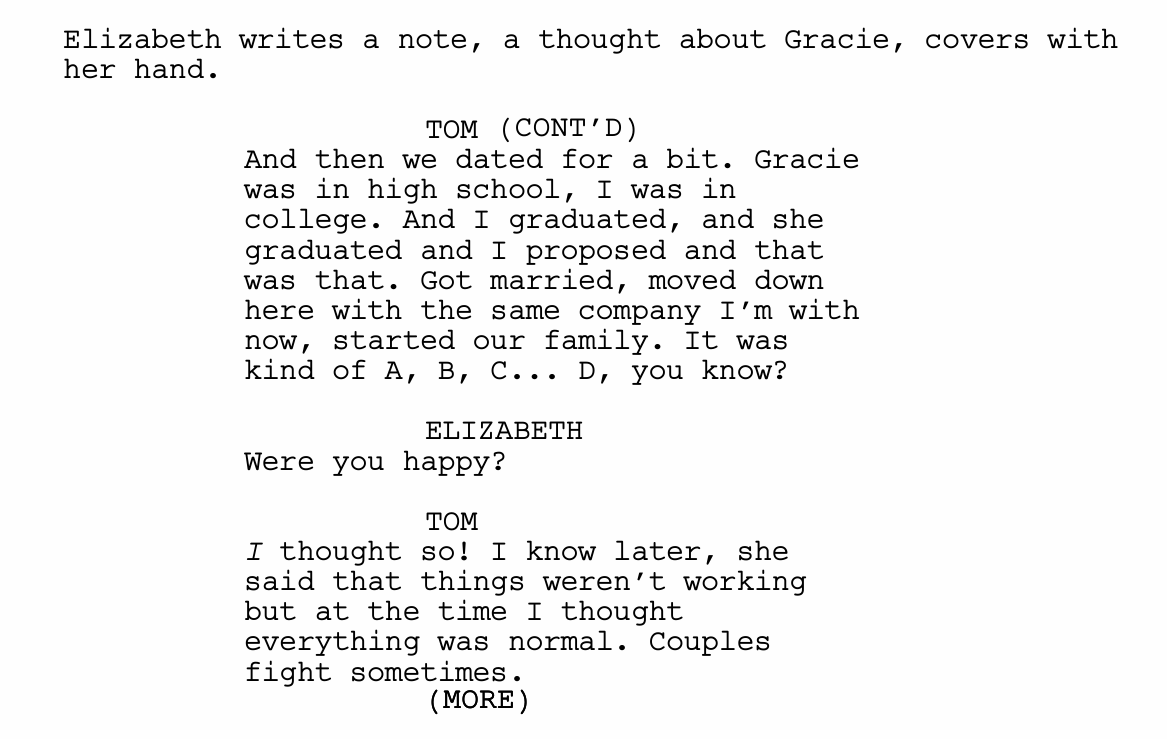
The writing also doesn’t make Tom a particularly likeable character. This allows the audience to listen to his story and opinion with a more objective eye. It also prompts the audience to wonder: did marrying Tom right after high school make Gracie unhappy – or, to use Elizabeth’s word, feel isolated?
Elizabeth helps Gracie pick out Mary’s dress for high school graduation, where Gracie chooses for Mary a modest, almost childish dress.

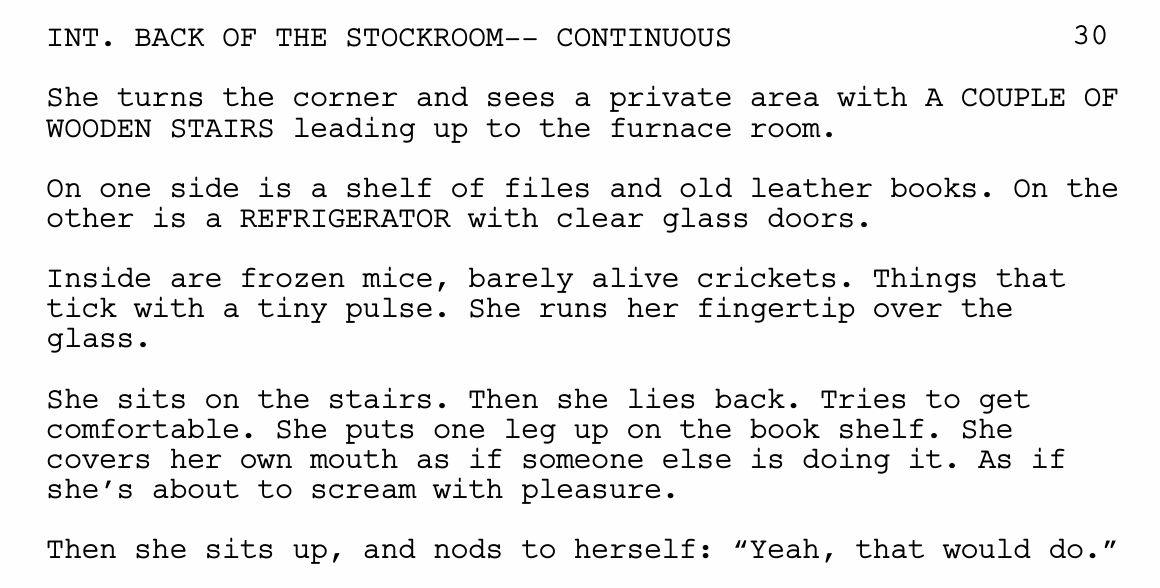
Elizabeth visits the pet store where Gracie and Joe met. She lies down in the stockroom where they had their affair and was caught, and embodies Gracie.
On the other side, Joe’s butterfly eggs have hatched. He texts Michela again, only to be interrupted by Gracie.
Elizabeth receives the audition tapes of potential actors for Joe, but is unsatisfied with all of them. She visits Joe at his job in the X-Ray room, and their conversation becomes slightly flirtatious, Elizabeth saying that she now knows what it feels, to sneak around with Joe. She then meets Morris, Gracie’s defense attorney, at a restaurant.
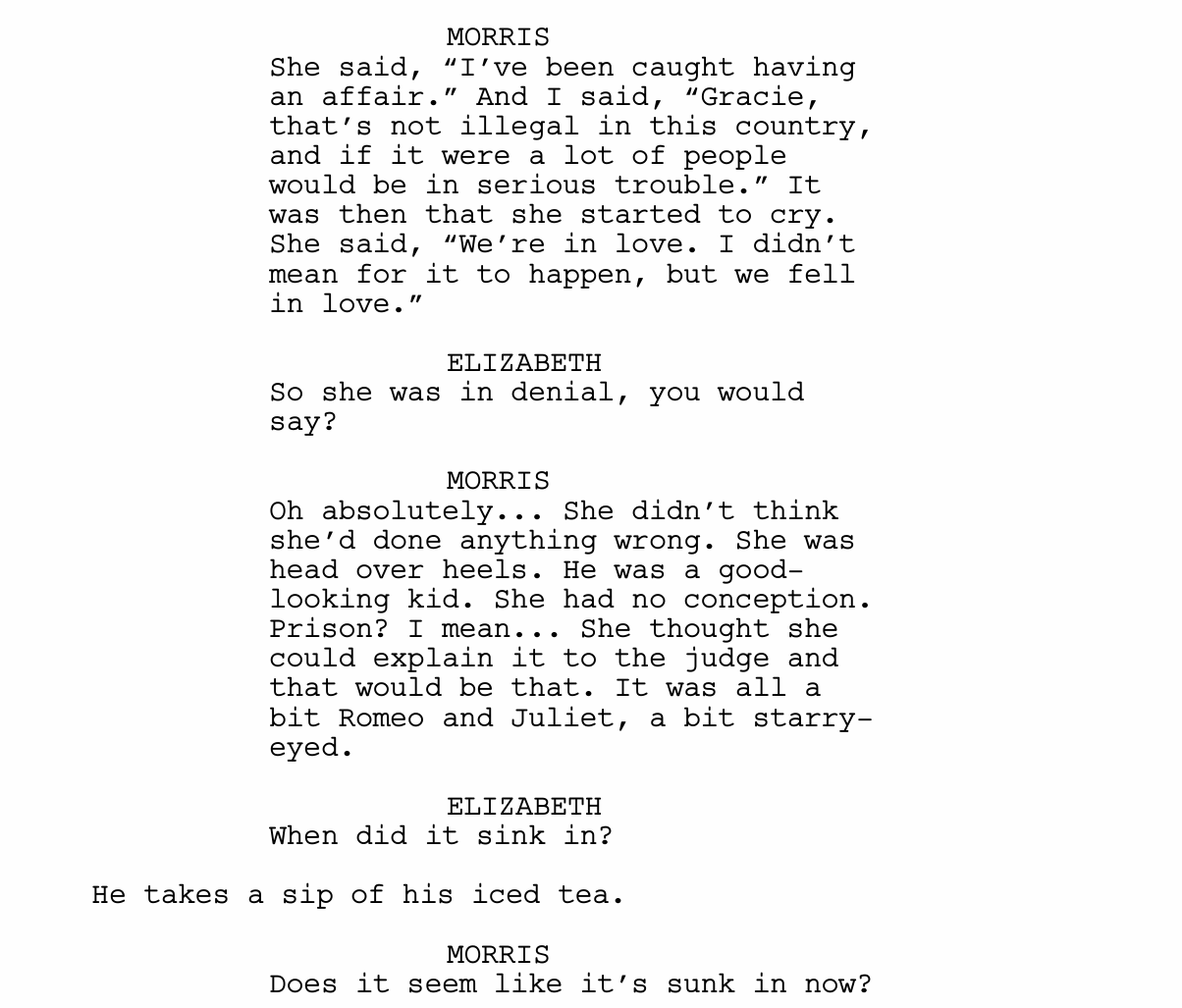
Morris uses the same word that Gracie used, “sensitive,” to describe Gracie’s son Georgie, who was in Joe’s year at school. This makes the audience wonder: Is Morris telling an objective story, or is he helping Gracie steer the narrative?
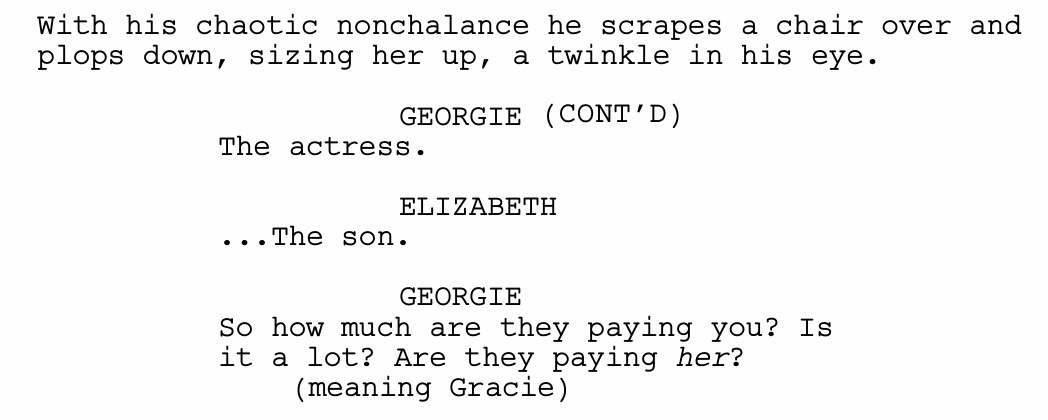
They run into Georgie, who is now a singer drunkenly playing at the restaurant. Morris also tells Elizabeth that Gracie’s bakery business is only supported by a numbered few in the community, who are just ordering things to keep her busy. And the audience are wondering why – do these people actually like Gracie, or are they afraid of what she might do if she doesn’t feel welcomed?
Midpoint
Joe visits his father, inviting him to the twins’ graduation ceremony. On the other side, Elizabeth visits the local high school’s theater class, where Mary is present.

The students ask her experience with sex scenes, as well as how she chooses her roles. Elizabeth describes how it’s sometimes hard to tell whether the passion experienced in a sex scene is real, and that she is interested in exploring the moral gray areas in acting.
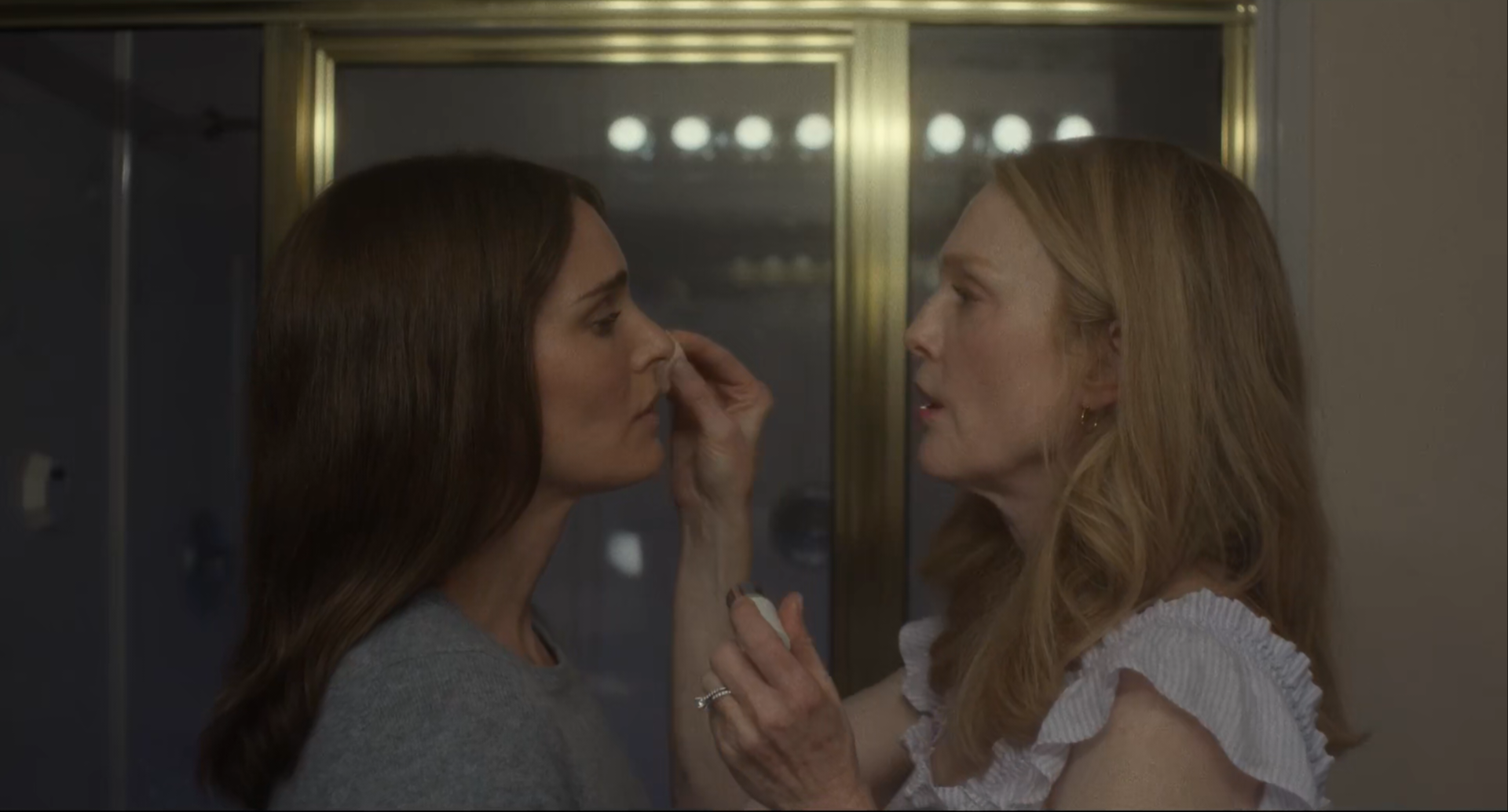
Gracie puts makeup on Elizabeth the way she does it daily, for Elizabeth to experience being her. When she finishes, they look oddly similar.
Joe tells Elizabeth about his fascination with butterflies. When Elizabeth asks him about his relationship with Gracie, Joe insists that he is not the victim, but the hard time he has talking about it suggests otherwise.
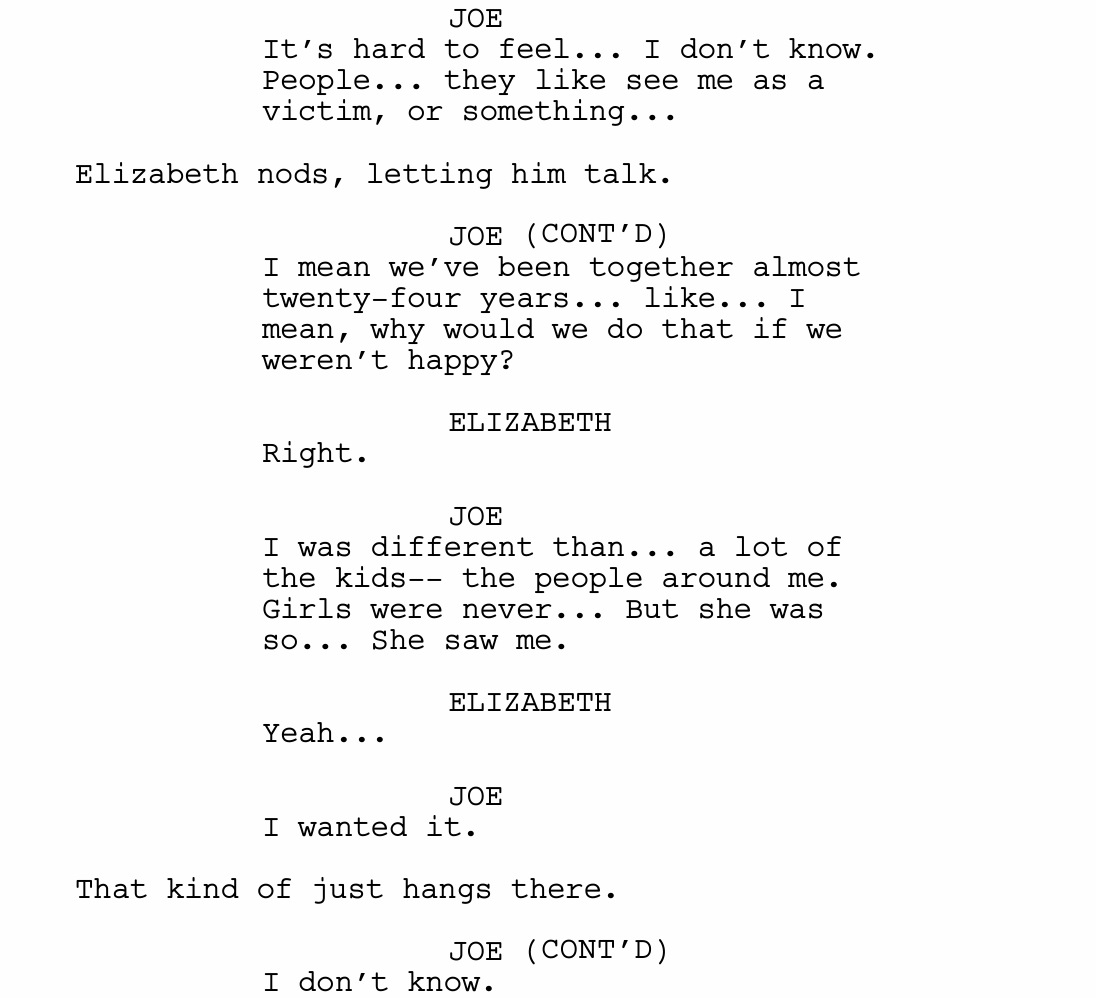
This conversation is also one of the few times in the film that Joe’s race, and how that might have changed his dynamics with Gracie, is hinted at, providing some clues for Joe’s side of “how the hell did their relationship happen?” It also steers the audience’s opinion of Gracie to the image of a predator.
Bad To Worse
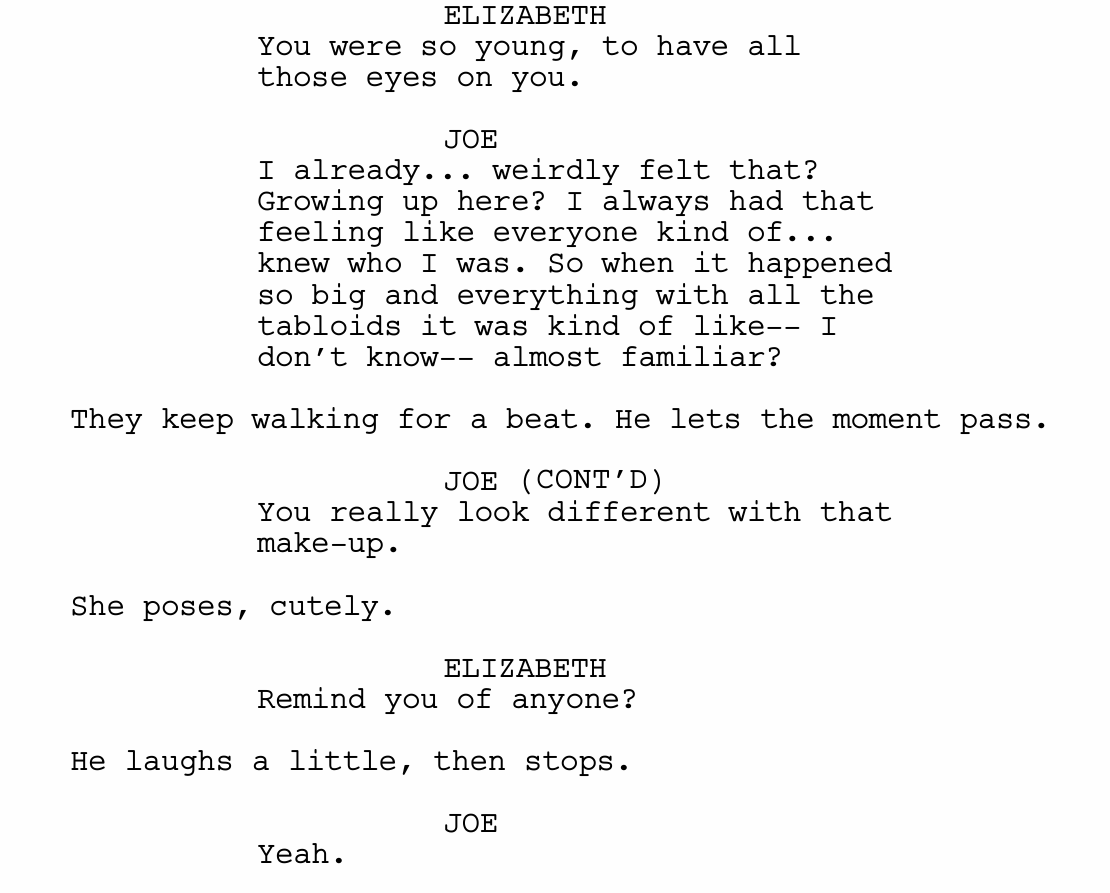
Joe discovers Gracie crying in bed because someone cancelled their cake order. As he comforts her, the audience experience the same dread that Joe does towards Gracie’s emotions.
Elizabeth calls her director Roberto, asking to spend a longer time on her research trip, and mentioning that the kids who auditioned for Joe aren’t sexy enough.
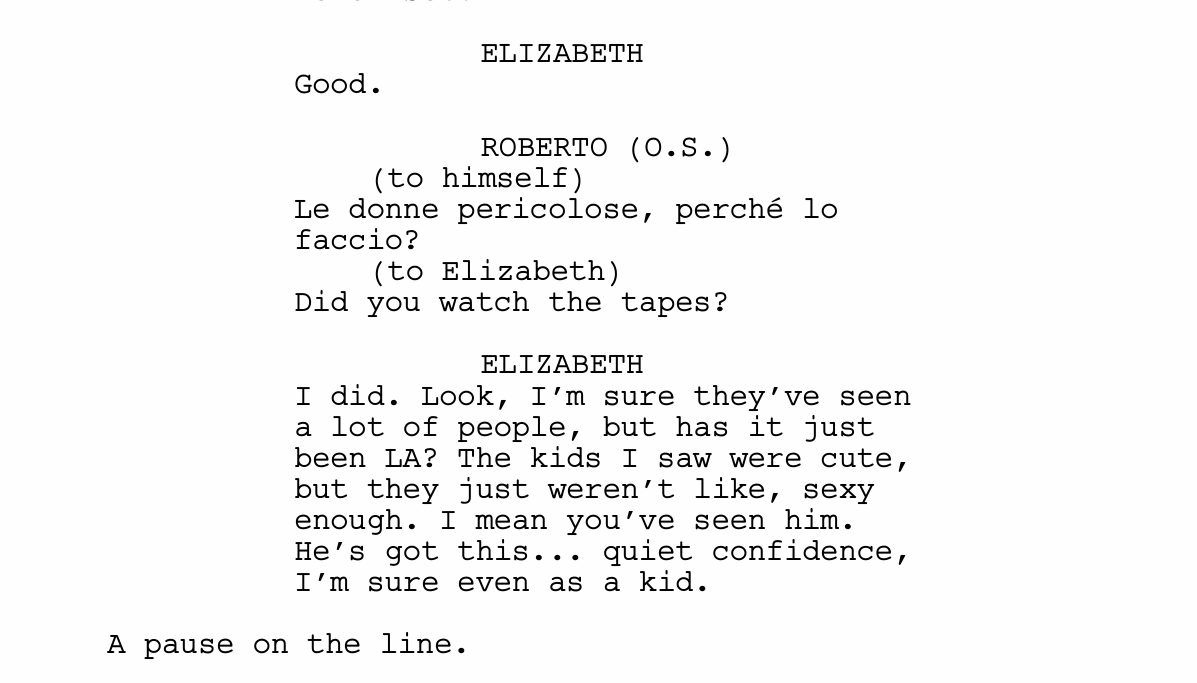
Honor, Gracie and Joe’s first child, comes home from college. Joe invites Michela on a vacation to see butterflies, only for Michela to turn it down because Joe is married. Intercut with this conversation is Elizabeth watching a TV movie version of Gracie and Joe, where “Gracie” is much more composed than her in real life.
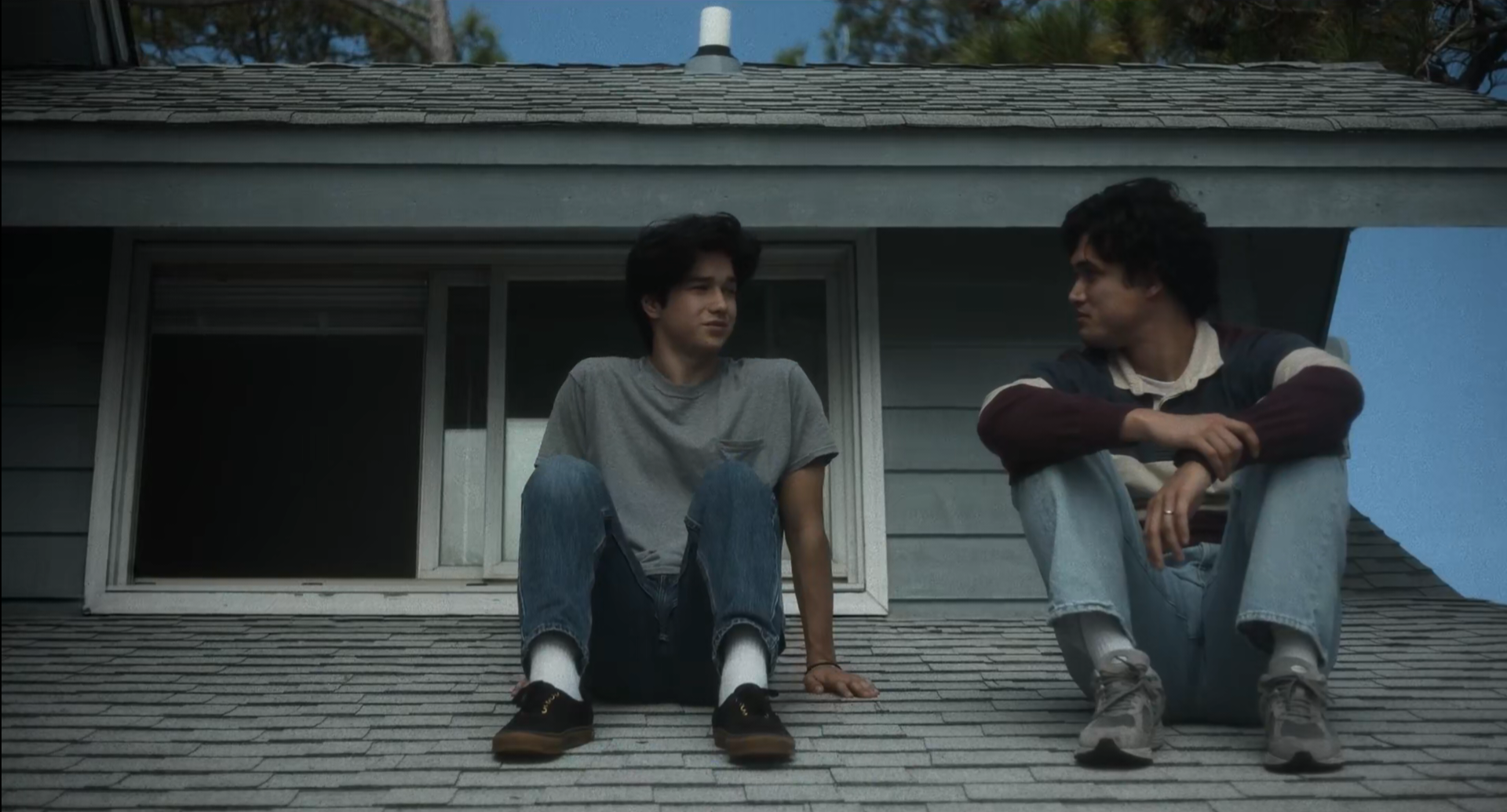
Joe finds Charlie on their house’s rooftop. Charlie smokes a joint, and shares it with Joe, who has never smoked – or experienced any teenager stuff – before. Meanwhile, Elizabeth helps Gracie cook, and Gracie talks about how her brother Bill was very protective of her, making her more “sheltered” than Joe was.
When Gracie calls for Joe, he stands up, overwhelmed, and nearly falls off the roof. In this moment of fright, the audience wonder, secretly, whether a part of Joe has wanted to jump. After Gracie and Elizabeth head back in, Joe breaks down crying in Charlie’s arms.
Break Into Three
The Atherton-Yoo family and Elizabeth gather for dinner to celebrate the twins’ graduation. They run into Gracie’s old family: Tom, Georgie, her two other adult children, their spouses, and Gracie’s grandchildren. Gracie greets them with enthusiasm, although later expressing to Elizabeth her unhappiness in the evening not going as planned.

Elizabeth meets with Georgie again. He theorizes that Gracie is suffering from childhood trauma, that her older brothers used to harass her. Just when the audience feel like they have formed a clear vision of Gracie as the predator, this new information makes her a victim.
Joe drives Elizabeth back to the inn and helps her with her nebulizer. He gives her a love letter from Gracie many years ago.
Elizabeth and Joe make love. Elizabeth tells Joe it’s not too late for him to start over, but Joe cannot see himself in any other life.
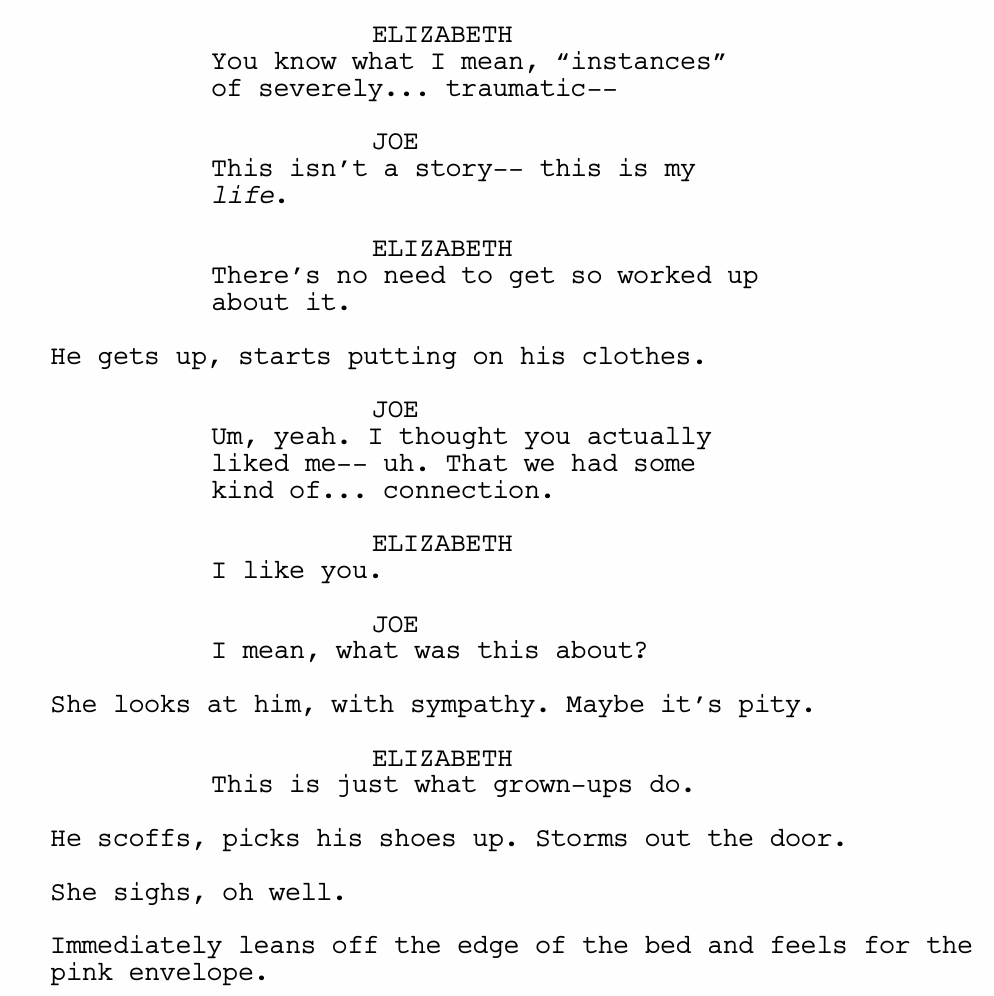
Joe is offended by Elizabeth calling his life a “story,” and his schoolboy-ish reaction to Elizabeth’s betrayal is only met by Elizabeth’s pity.
Finale
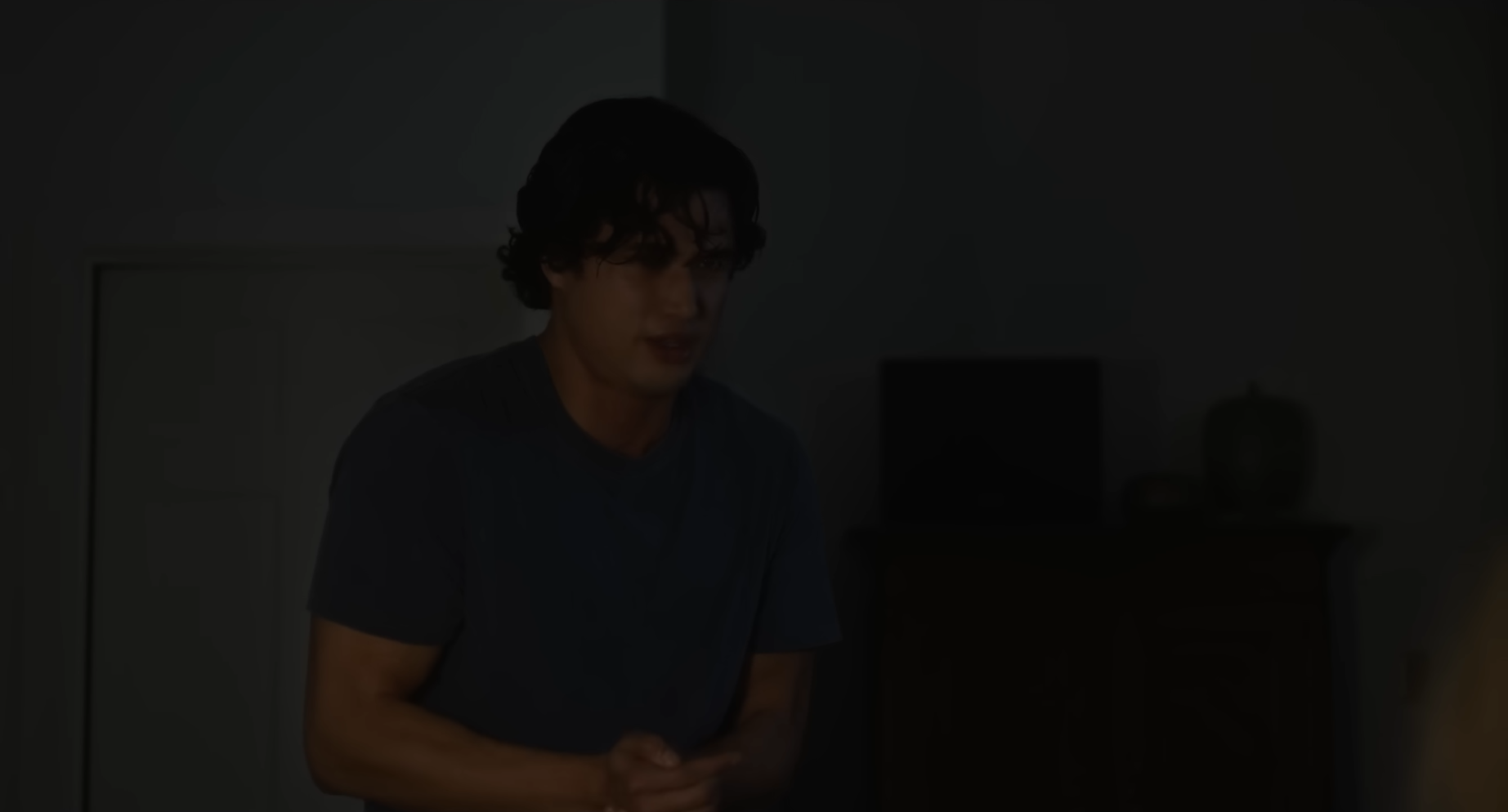
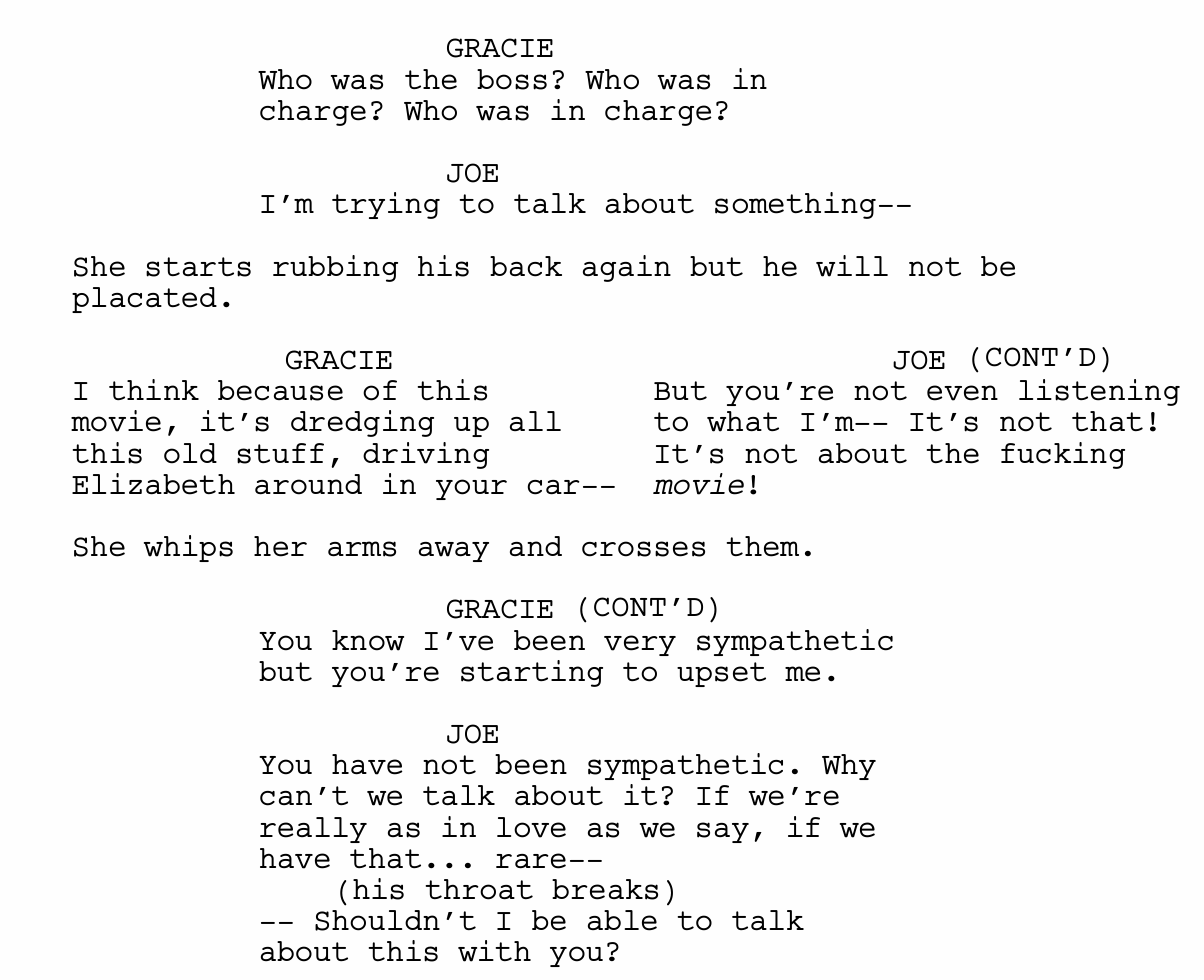
When Joe arrives home, he tries to finally, properly talk to Gracie about what happened between them. Yet Gracie claims that Joe was the one who seduced her, that he was the one in charge. And when Joe bursts “If we’re really as in love as we say,” Gracie becomes upset and refuses to talk anymore.
Elizabeth practices to a mirror, channeling Gracie, reading aloud the letter that Gracie gave Joe: “But now, I think I’ve lost track of where the line is. Who even draws these lines? All I know is that I love you, and you love me.”

The morning breaks. Joe’s caterpillar has changed into a butterfly, now leaving the shell behind. Meanwhile, Gracie, in full hunting gear, heads out into the woods.

Joe brings his children to their graduation ceremony. He stands alone, watching his children and all other graduates walking across the stage – into their new life, while he’s left behind.

Gracie meets Elizabeth, who is about to leave. Gracie tells Elizabeth to not believe what Georgie told her – that everything about her brothers harassing her is a lie. She also reveals that she and Georgie have remained close, and they talk almost every day.
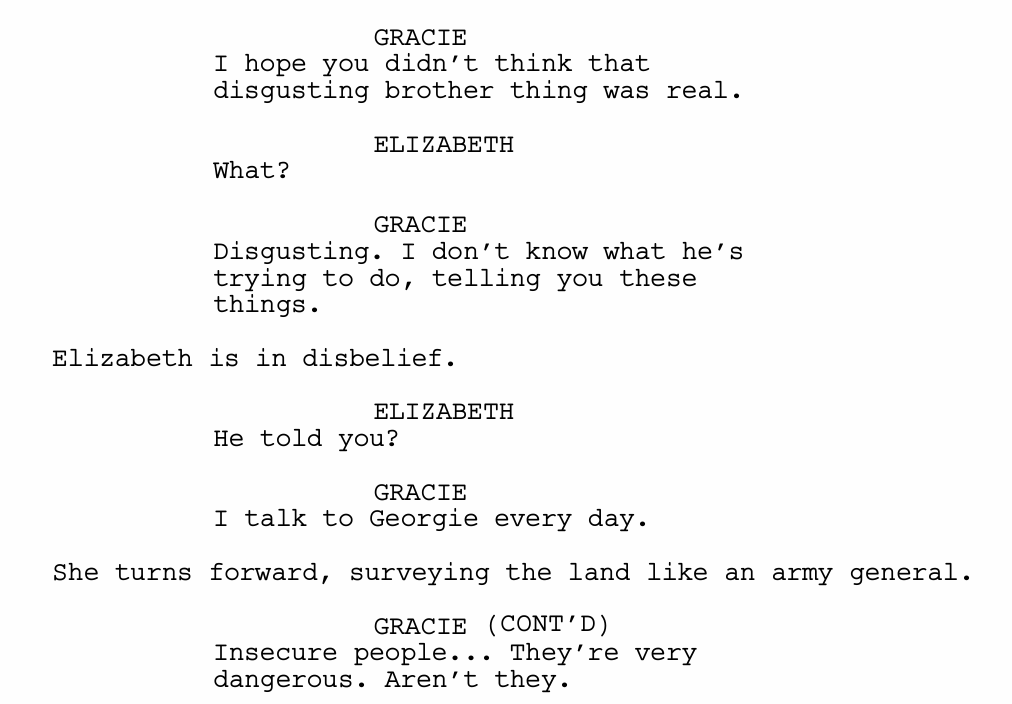
Just when the audience feel almost certain that Gracie is the way she is because of her childhood trauma, this last twist brings everything up in the air again. And the audience realize that they – as well as Elizabeth – know nothing about who Gracie actually is, or why she is the way she is. And that is the point.
The film ends with Elizabeth and a young actor playing Gracie and Joe, in a replication of the pet shop stockroom. After a take, Elizabeth pleads for another one – “We almost have it right.”