One Night Only Review: Purge-Style Dystopia Meets Romantic Comedy
One Night Only is one of the most insane films I’ve ever seen, and I don’t mean that in a good way. Sure, I understand that we’re living in a time where it is progressively harder to get the audience hooked to see a film, so a high-concept logline usually wins the upper hand among all the elevator pitches out there. Yet for One Night Only, the thing that makes it exciting on the first glance – “The Purge but for sex. Also, it’s a rom-com” – becomes the biggest problem in the actual storytelling.
The rom-com part is great. The comedy works well, there is real chemistry between the characters, and the pacing is pleasant. However, the only way for the audience to properly enjoy the rom-com part of the film is by completely ignoring the premise: a near future where premarital sex has been outlawed in the United States except for one night a year, where everyone is implanted with a biosensor for the government to pick up their sexual behaviors.
The script does occasionally acknowledge the fact that the characters all live in a fascist dystopia. But even then, the script is selling this dystopia as lighthearted humor, as if it’s the most normal thing that can happen – and that is, when it’s not overlooking the premise by going “I know, I know, but look how cute they are together!”
Opening Image + Set Up
Images of New York City, overlaid with the text telling us exactly what the premise is, ending with a humorous “It’s been a lot.” Intending to set the comedic tone, the text instead makes me feel incredulous: Wait, are we just going to brush past the setting by a simple “It’s been a lot,” as if the problem is no bigger than long working hours or moving your house?
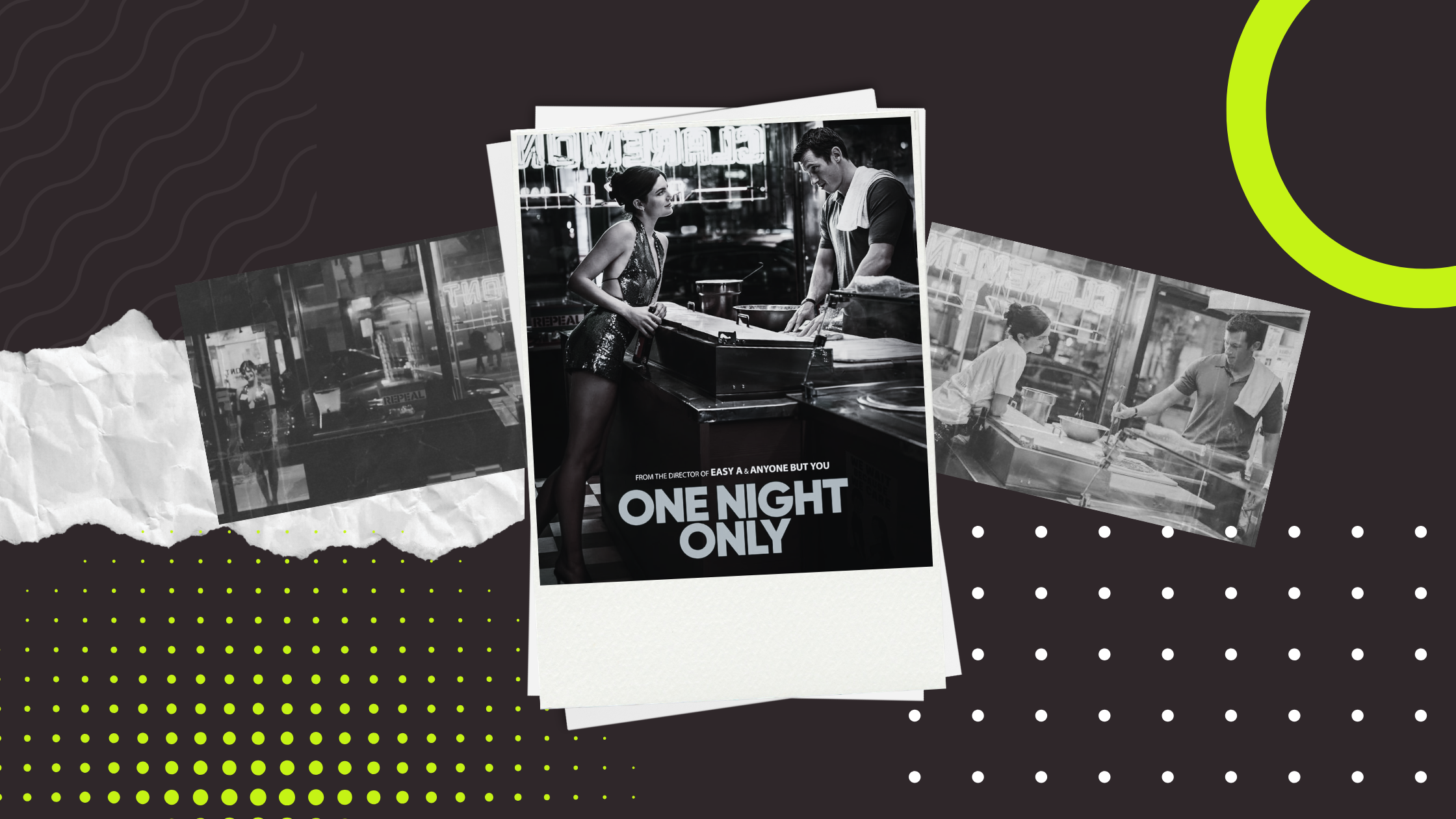
Then we see a montage of Owen (27, boyish) working in his pizza restaurant, intercut with loving couples on the streets. Across the city, everyone is getting ready for the one night where sex is allowed for unmarried people. Everything is bright and beautiful. Apparently, the fascist regime has not made life miserable for anybody. In fact, it seems like it’s made people appreciate romance more than ever before.
Inciting Incident
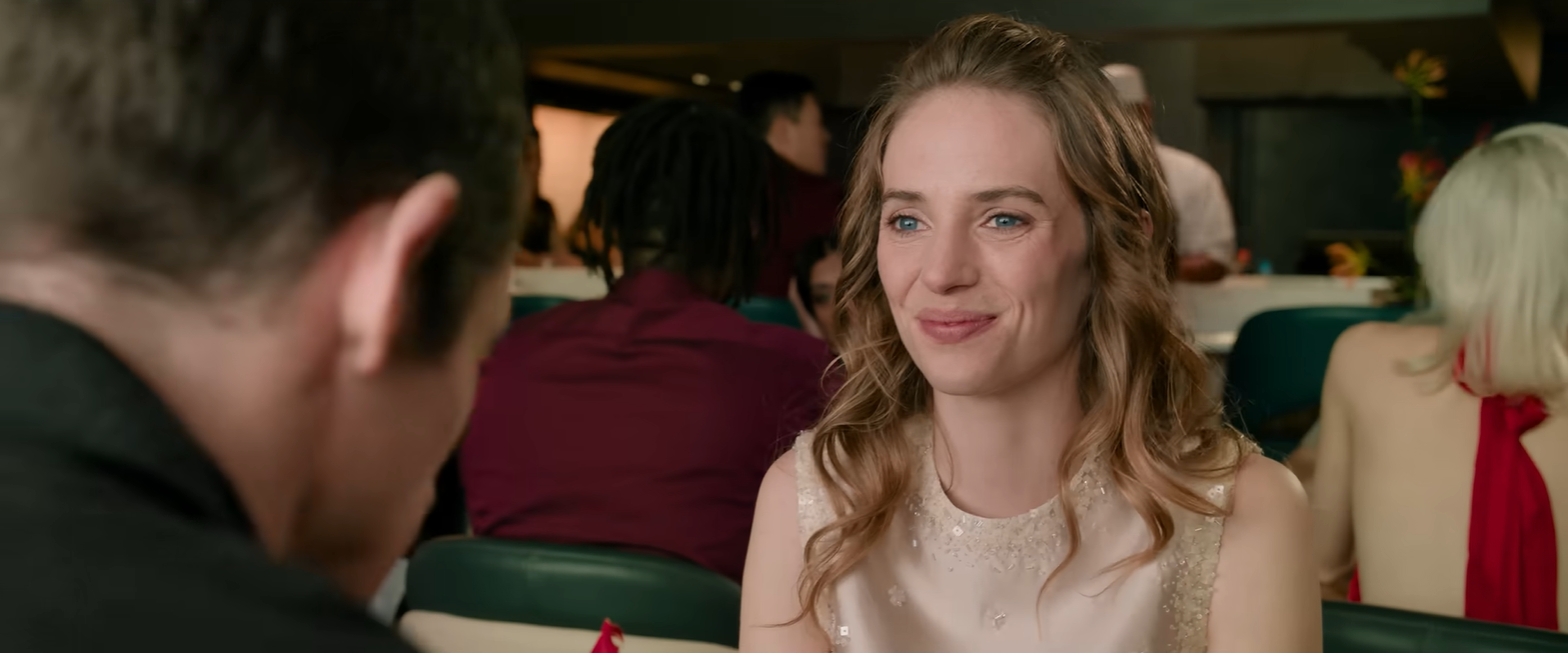
Owen meets with his girlfriend Malika at an omakase restaurant for dinner, planning to propose to her and to spend the night with her after. However, Malika tells Owen that she wants to sleep with someone else tonight, and that she wants to use their apartment to do it.
Meanwhile, Allie (29, retro), a singer for commercials, meets with her friend Jacinta. On her way, she passes a “Fuck the Mandate” graffiti. She walks by without glancing at it, already used to this state of living. This is how acknowledgement of the dystopia tends to pop up throughout the film: mentioned half-heartedly, in the passing, and having no real impact on the characters.
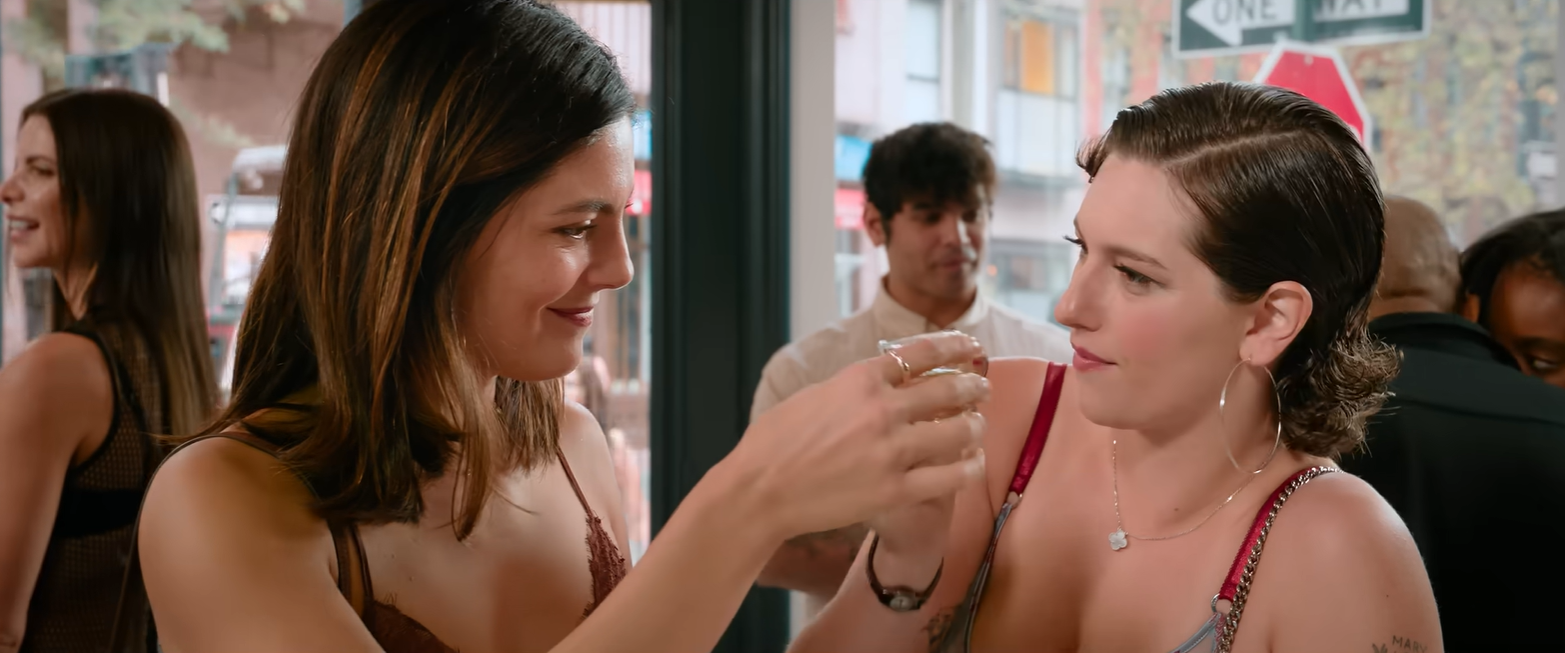
Allie and Jacinta plan to find partners with a meaningful connection tonight, but Jacinta quickly leaves Allie because she meets someone she likes in the bathroom line.
Debate
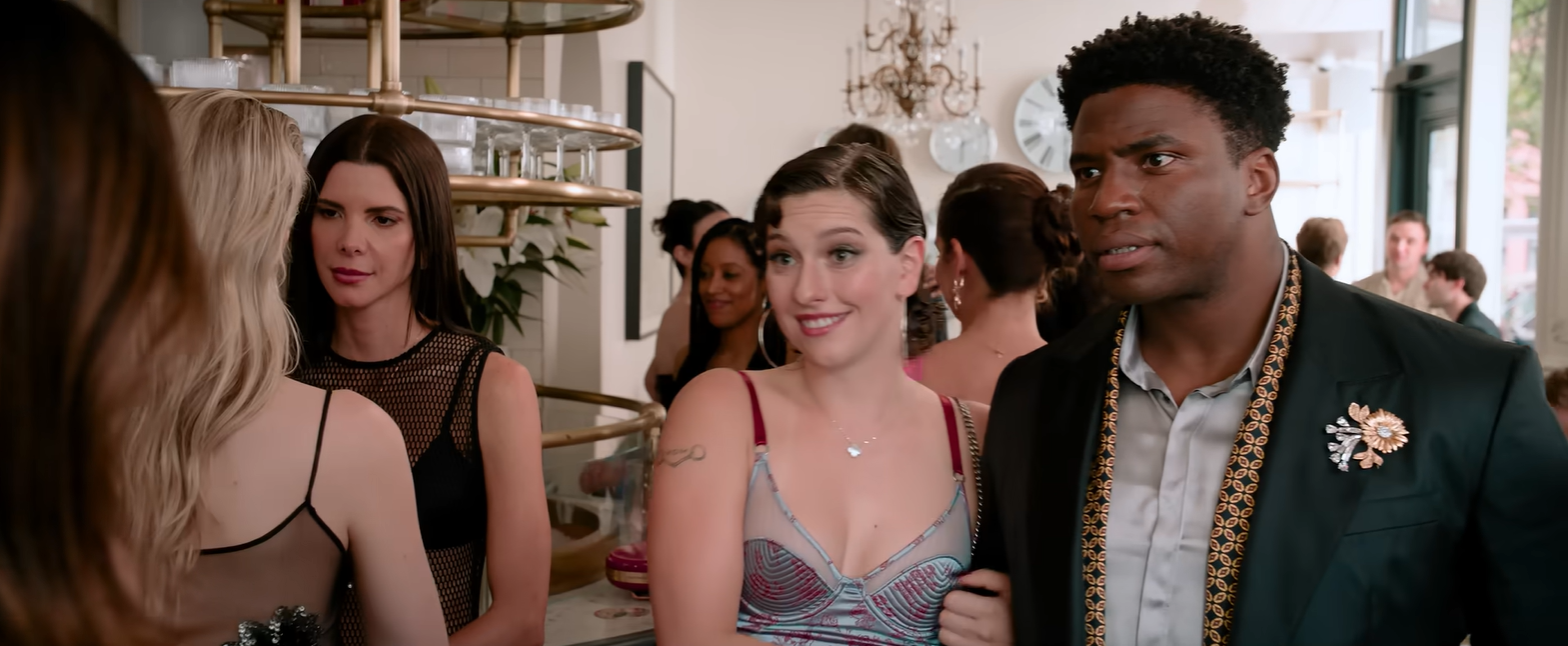
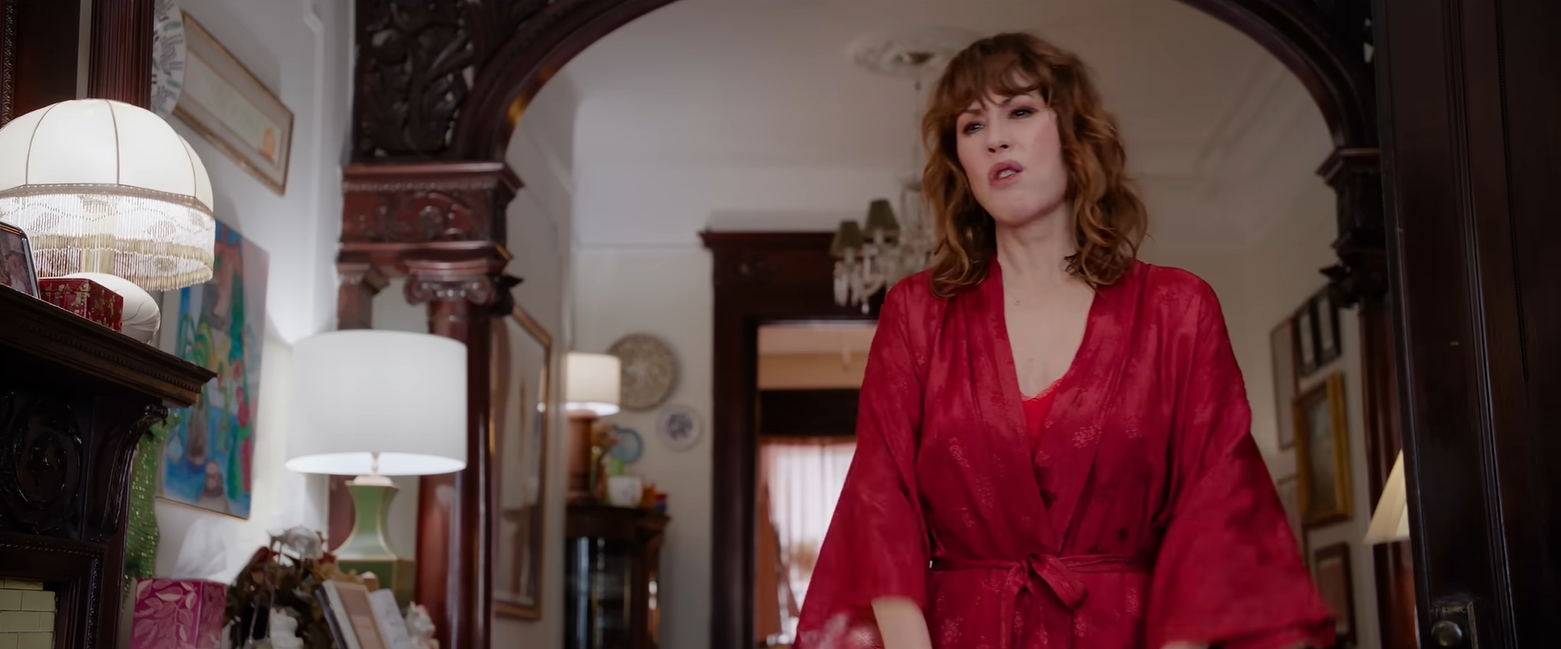
Owen eats up all the omakase and drinks a lot of alcohol. He goes to his mom Linda’s apartment, but is told to leave because Linda needs to use the place for sex with her boyfriend too.
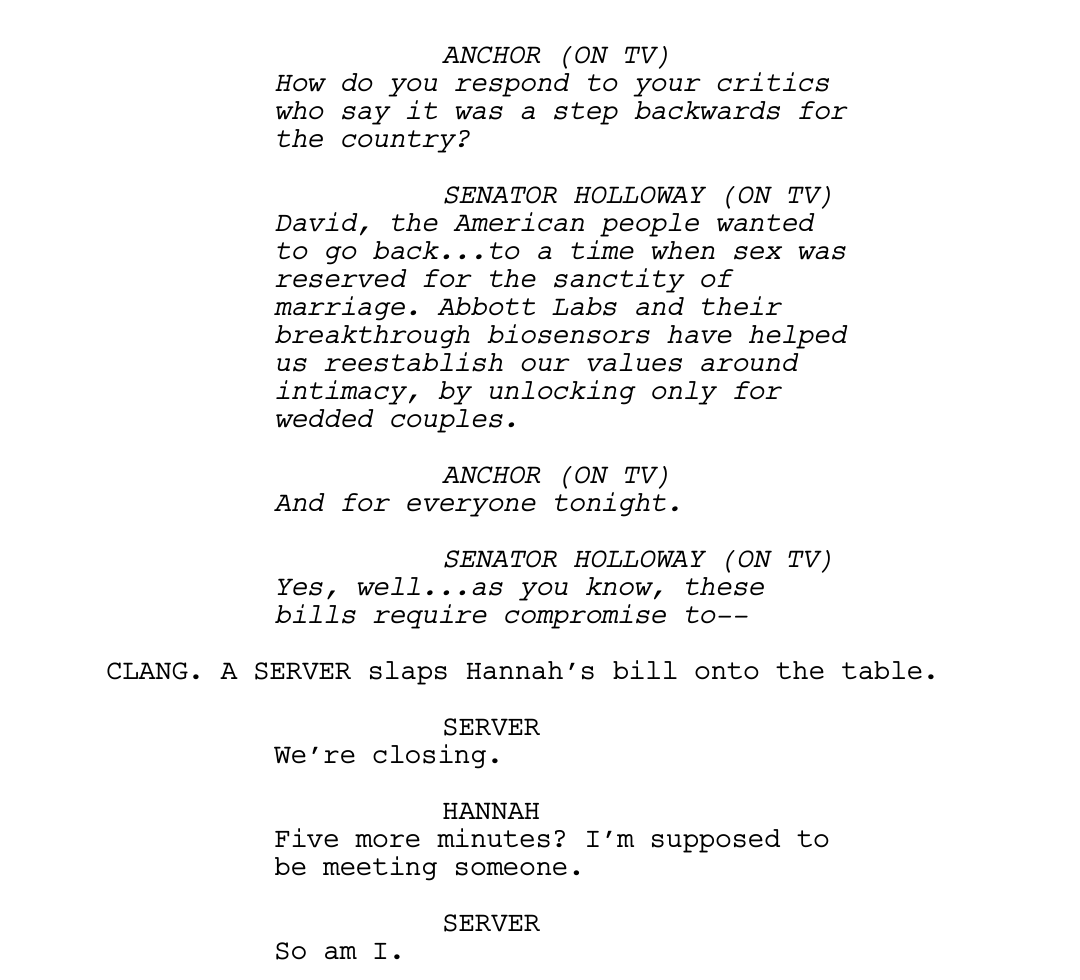
Meanwhile, Allie (named Hannah in the script) eats at a Chinese restaurant, where the TV plays news about the mandate and explains how everybody in America is implanted with a biosensor – green if you are allowed to have sex, red if you are not.
The night has come, and everyone’s biosensor becomes green. The world around Allie immediately bursts into extravagant make-out and sex. She finishes her food and returns to her apartment, where her lesbian roommate Arya is not going out tonight but instead making $5000 to babysit.
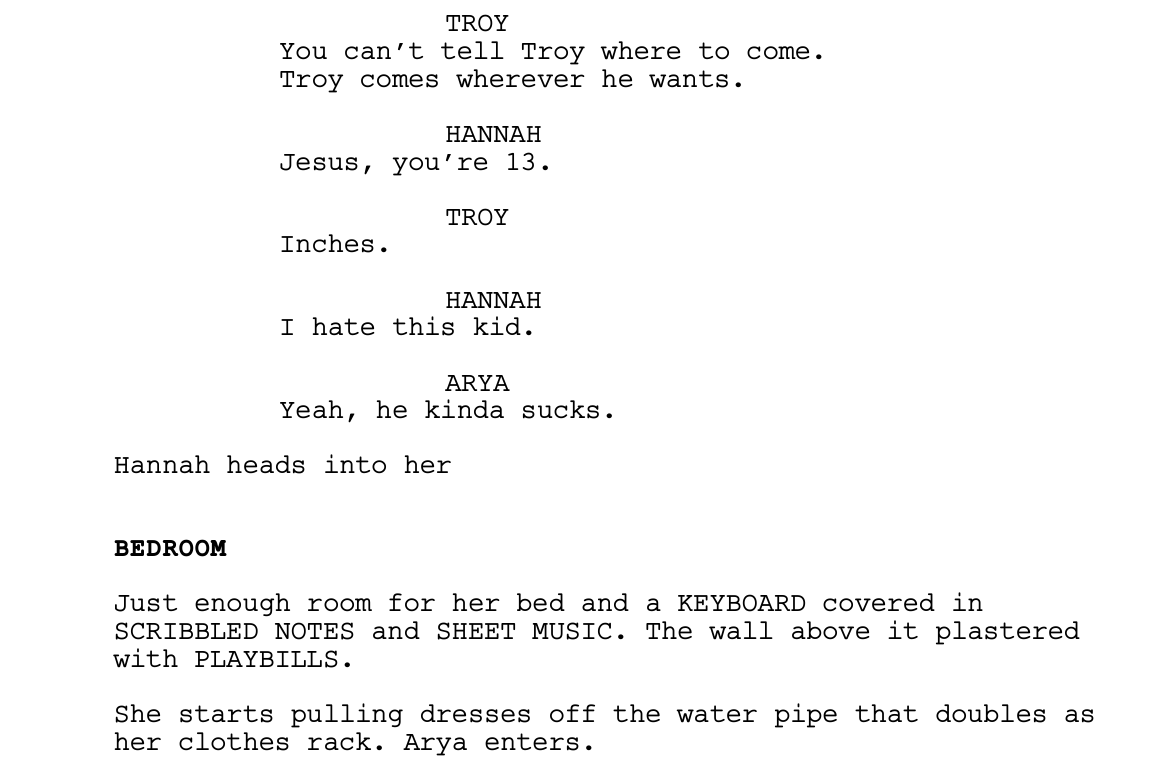
Here, Arya mentions that gay people have always been dancing around the laws, so this one night means less to her. The film never explains how dancing around the laws works since the biosensor picks up hormone surges and should work regardless of sexuality. This is one of the many inconsistencies in the film’s worldbuilding.
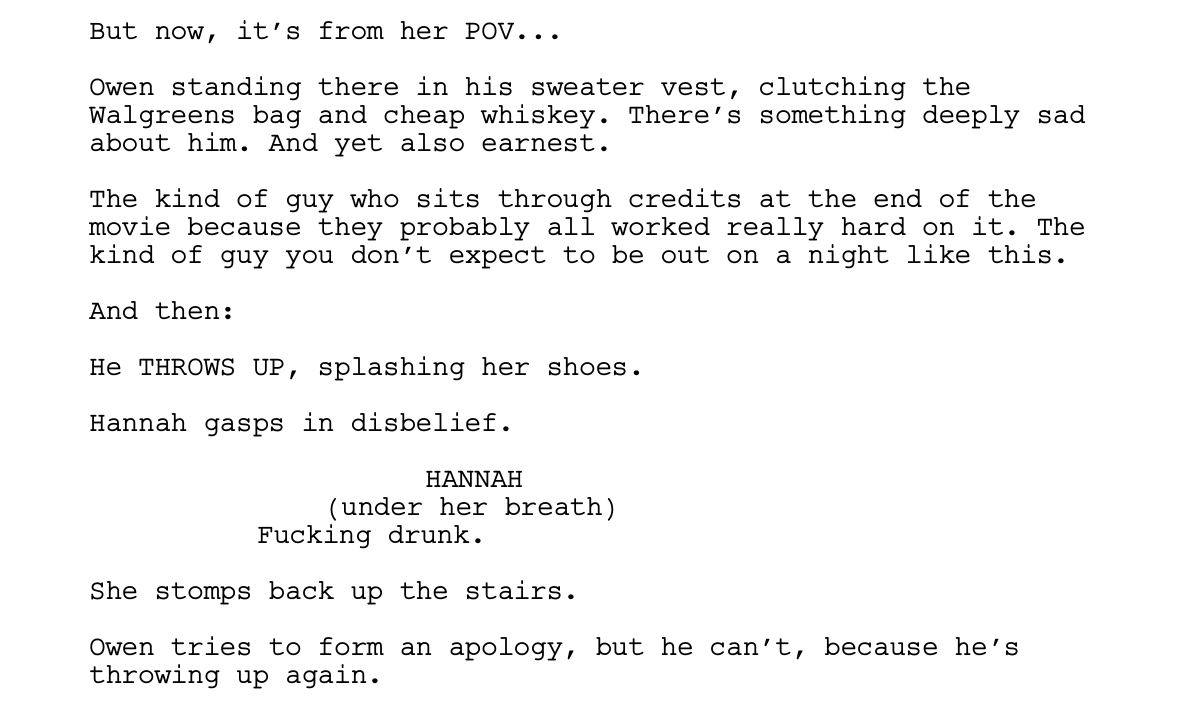
Arya finds Allie a sexy dress. Allie leaves her apartment and immediately bumps into Owen. What should’ve been a romantic first meet ends with him throwing up all his sushi right before her.
Break Into Two
At a bar, Owen chats up the bartender, who agrees to hook up with him after her shift is over in half an hour. Owen dashes away to look for a condom.
Meanwhile, Allie is having trouble with all the guys she meets, who are all different styles of insufferable.
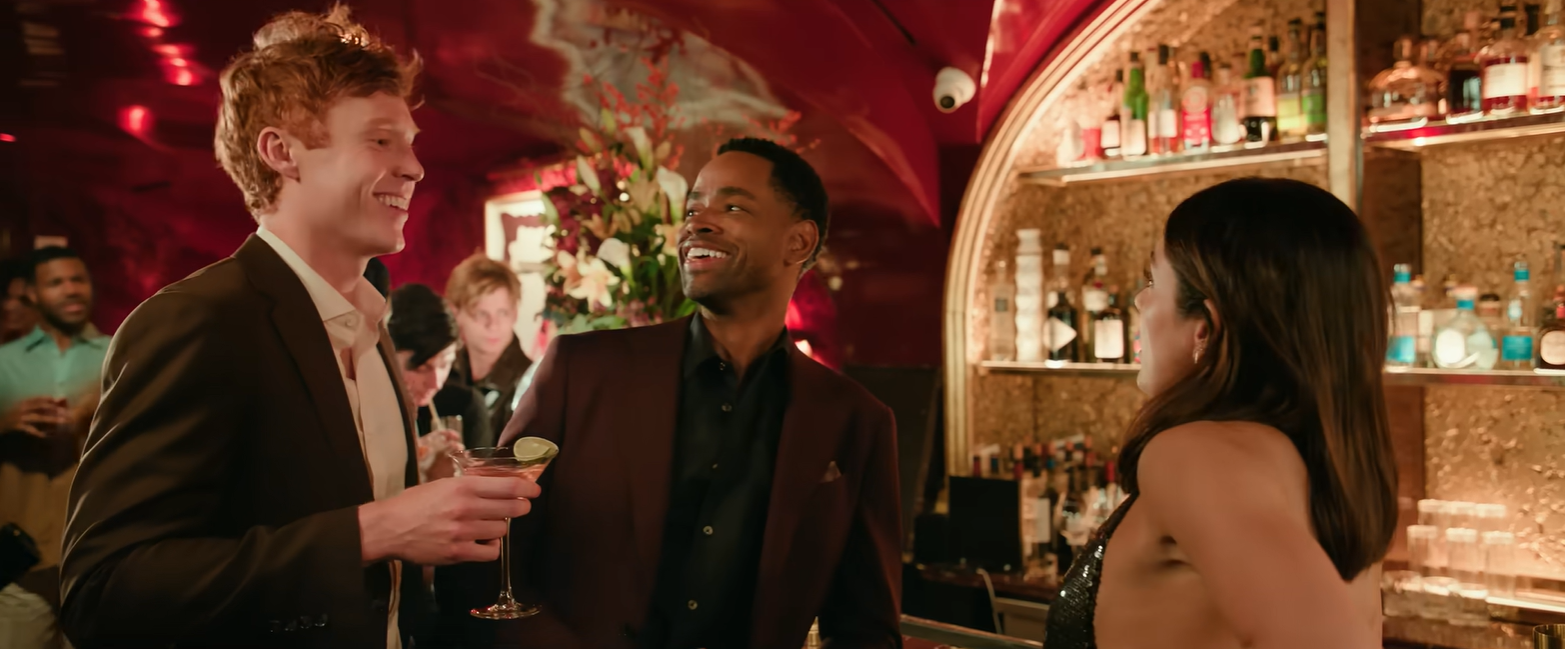
Finally, by playing the piano together, she meets a guy that she connects with, Levi. But when they are about to do it, Allie discovers that her condom has been robbed.
Fun and Games
Both Owen and Allie are now on the run for condoms. However, every shop they go into, the condoms are sold out. Finally, Owen enters a corner store where the last condom is sold for $200 cash. The problem is, Allie is there first.
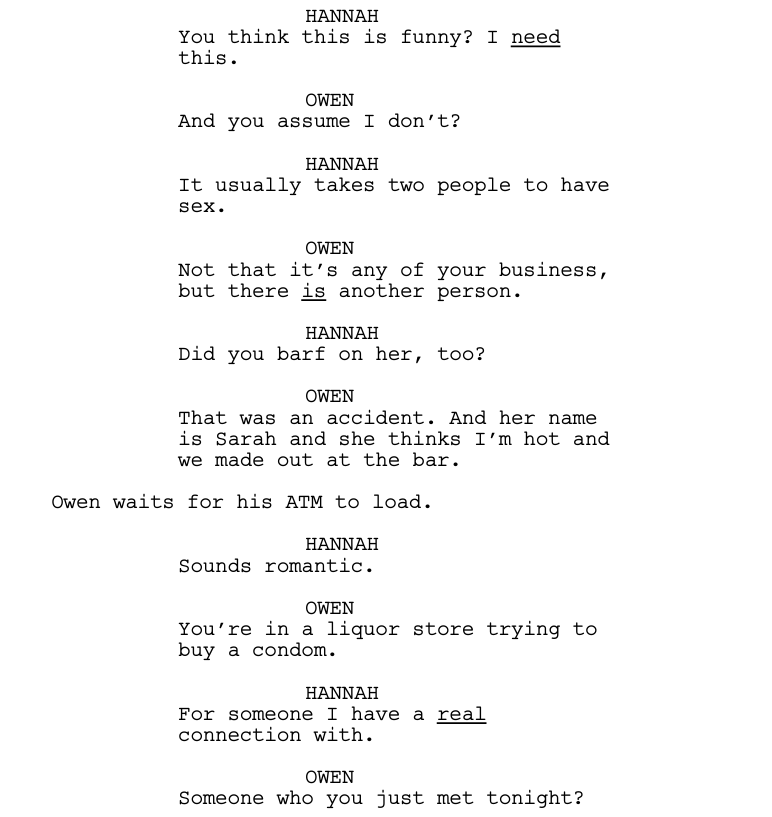
Neither is able to retrieve money from the ATM. Allie doesn’t remember her pin, while Owen has spent all his money on the omakase. When another couple enters and gets very close to buying the condom, they decide to rob the convenience store together for that condom.
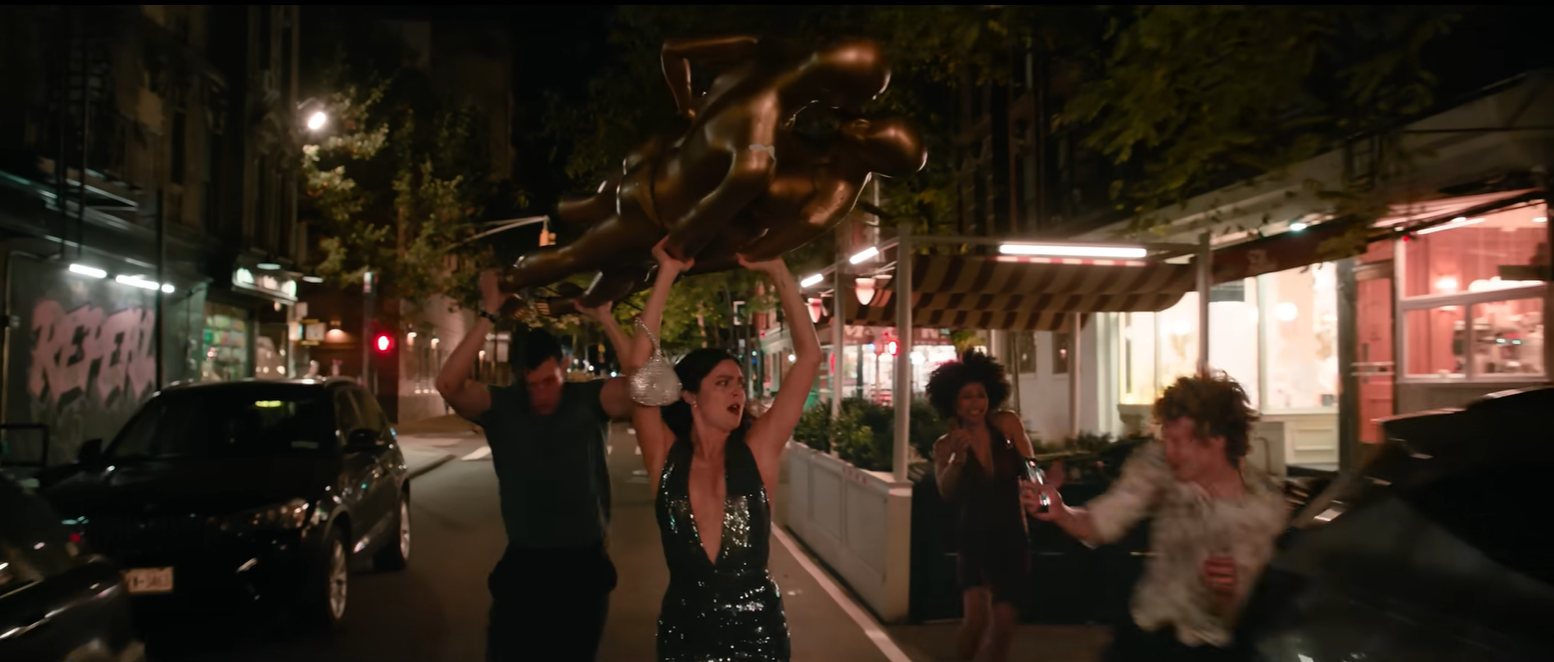
The comedy here works: They are unable to get the condom out of the locked display box, which is poised on a life-size golden statue of two naked people. So they grab the entire statue and run with it. When they finally retrieve the condom and decide to flip for it, the condom drops down a sewer gate.
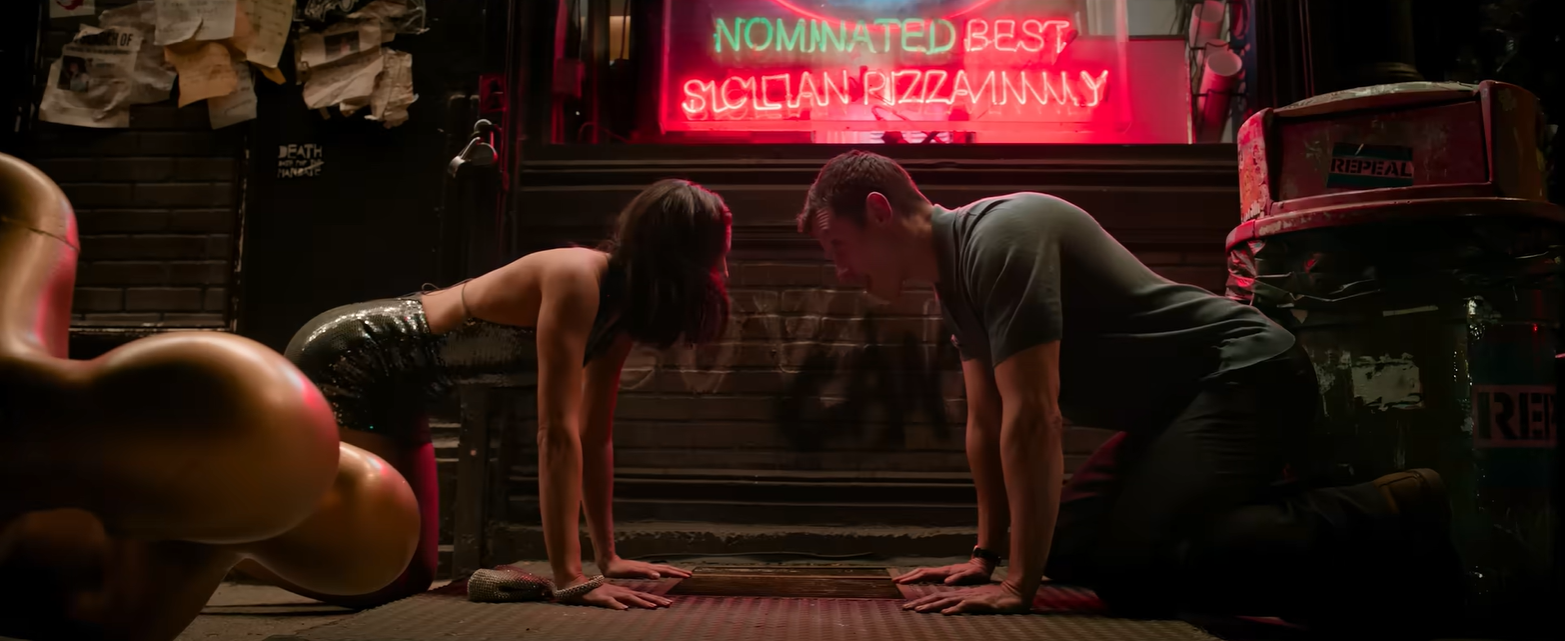
Owen lifts Allie upside down so she can fetch it from the sewer. It comes up the side that Owen bet on, but Allie snatches the condom from him and jumps onto Levi’s motorbike, rushing away.
Levi’s house is beautiful with many famous artworks. When they are just about to do it, the police arrive and arrest Levi for sex outside the exemption period – he also has a record for art theft and other charges.
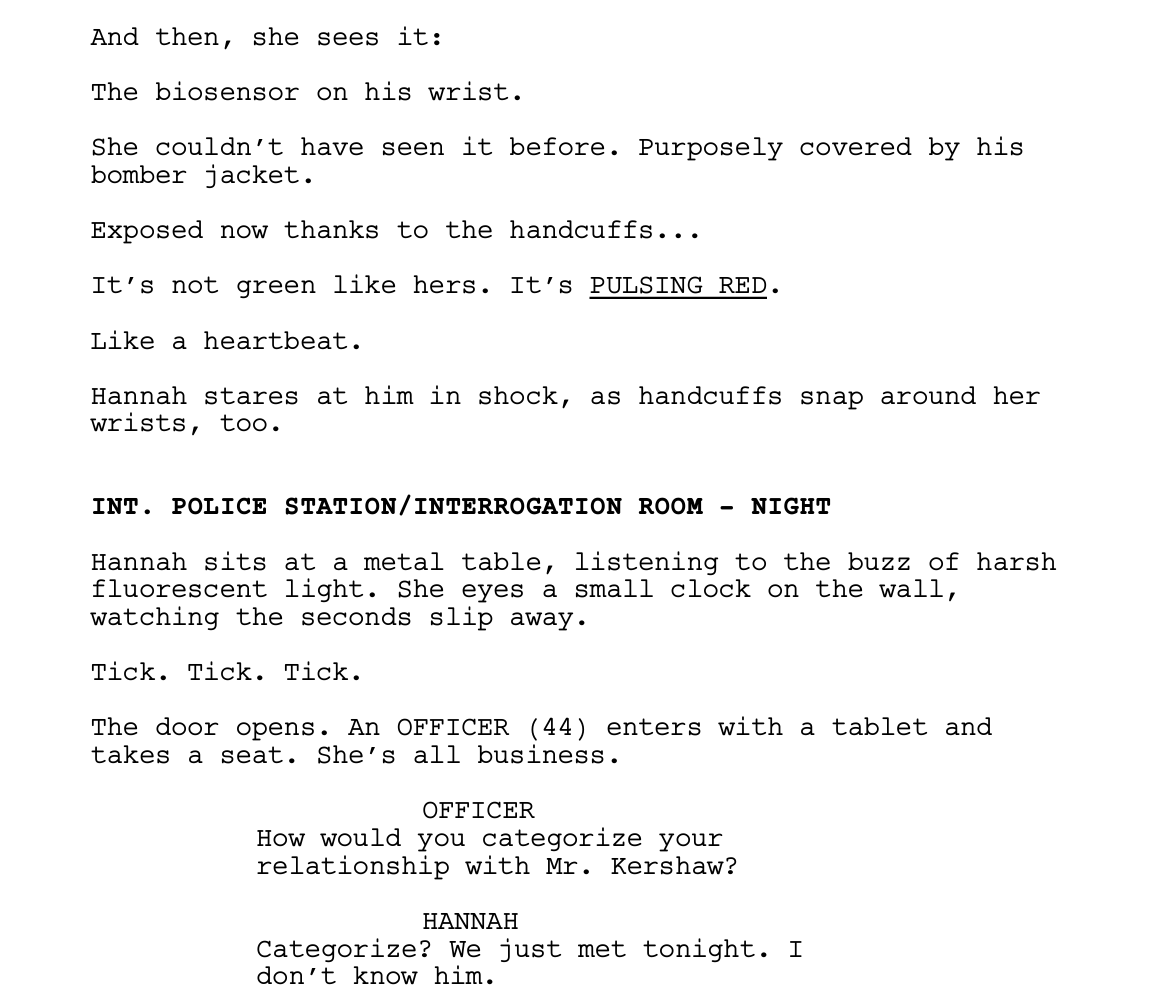
By the time Owen returns to the bar, the bartender is already gone. He uses a dating app to hook up with someone in the park, but she robs him and he is only rescued by the police.
Midpoint
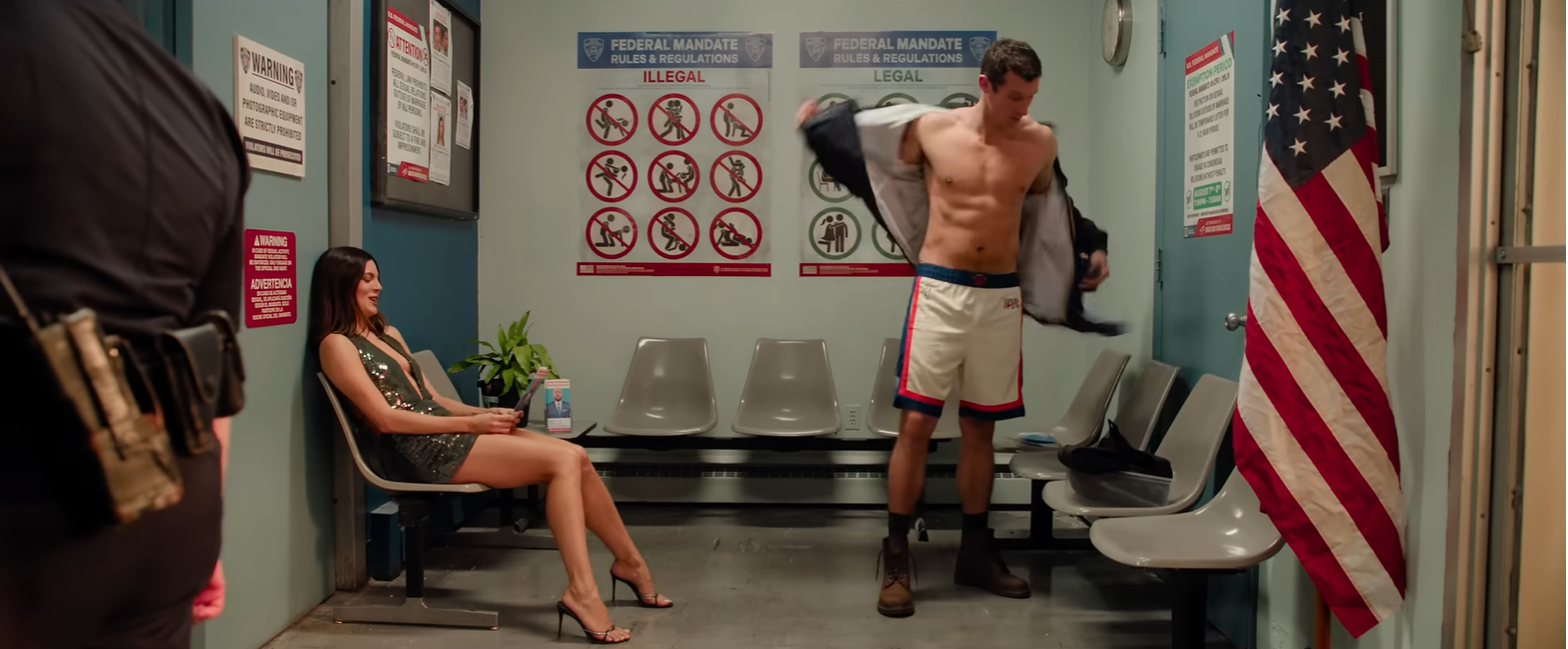
Owen and Allie bump into each other again at the police station. Owen tries to defend his image when the officer lets on what happened with him to Allie.
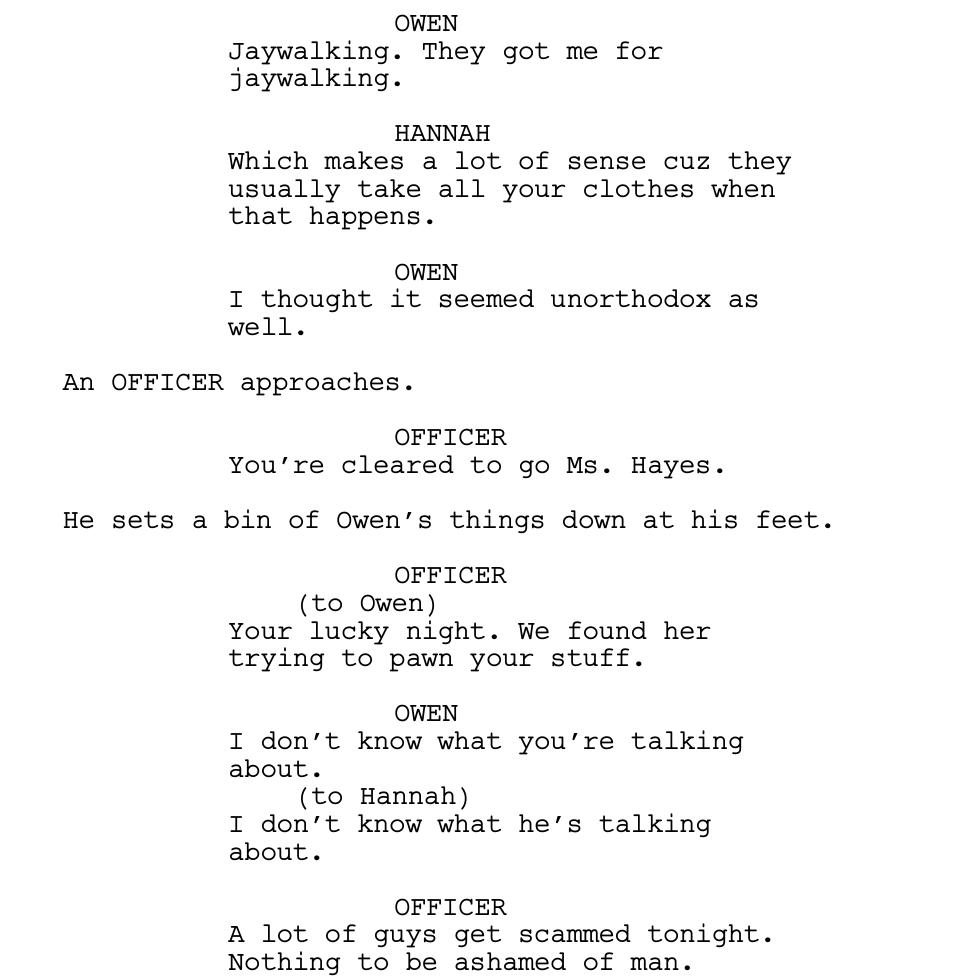
They leave the police station and bicker their way down the street. Owen proposes that they have sex, which Allie turns down nicely. Just when they are about to part again, they overhear a group of well-dressed people talking about going to a party, so they decide to follow.
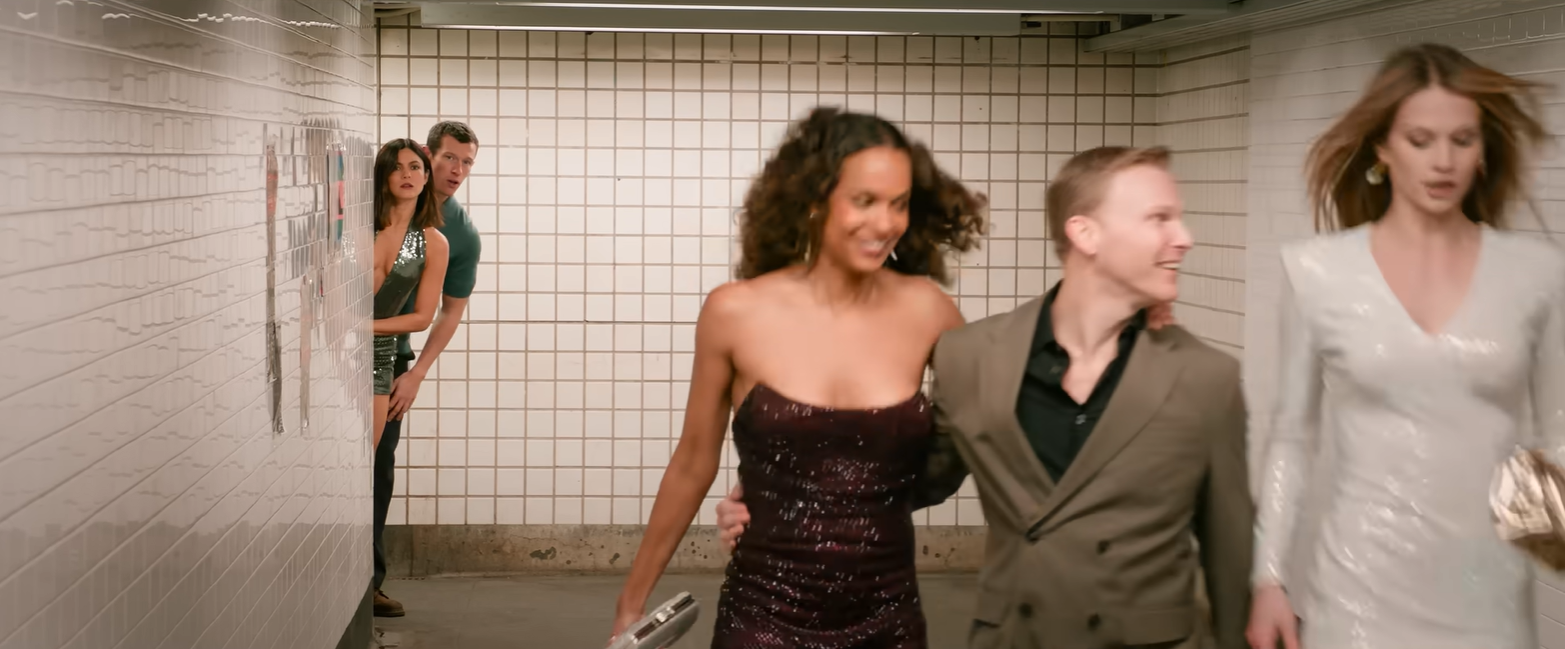
Bad To Worse
On the train ride to the party, Owen tells Allie about his pizza shop, while Allie shares with Owen how she chose the lighthouse shape of her biosensor tattoo. It is based on the story of the Little Red Lighthouse, an actual place in NYC.
This is one of the points in the script that I’m the most upset about: despite occasionally shouting “fuck the mandate” or debating with the police officers about it, Allie talks about choosing the shape for her biosensor like it is just any tattoo, like it is a fun thing to do. In fact, the more positive meaning Allie gives to her tattoo, the more horrorstruck I become.
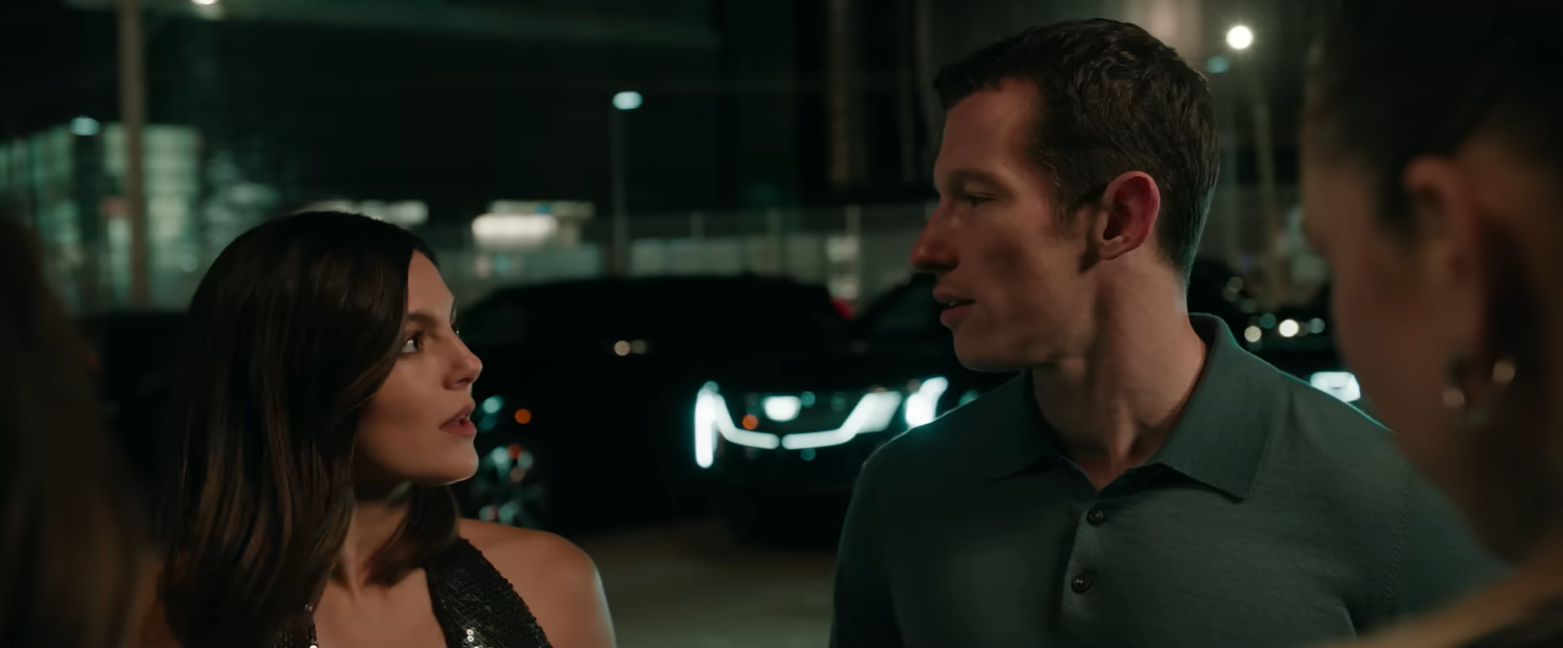
At the door to the party, Owen, underdressed, is not allowed in. Allie abandons him and joins the party inside. Not long after, Owen meets Vivian, a beautiful woman who takes an interest in him and brings him into the party.
Break Into Three
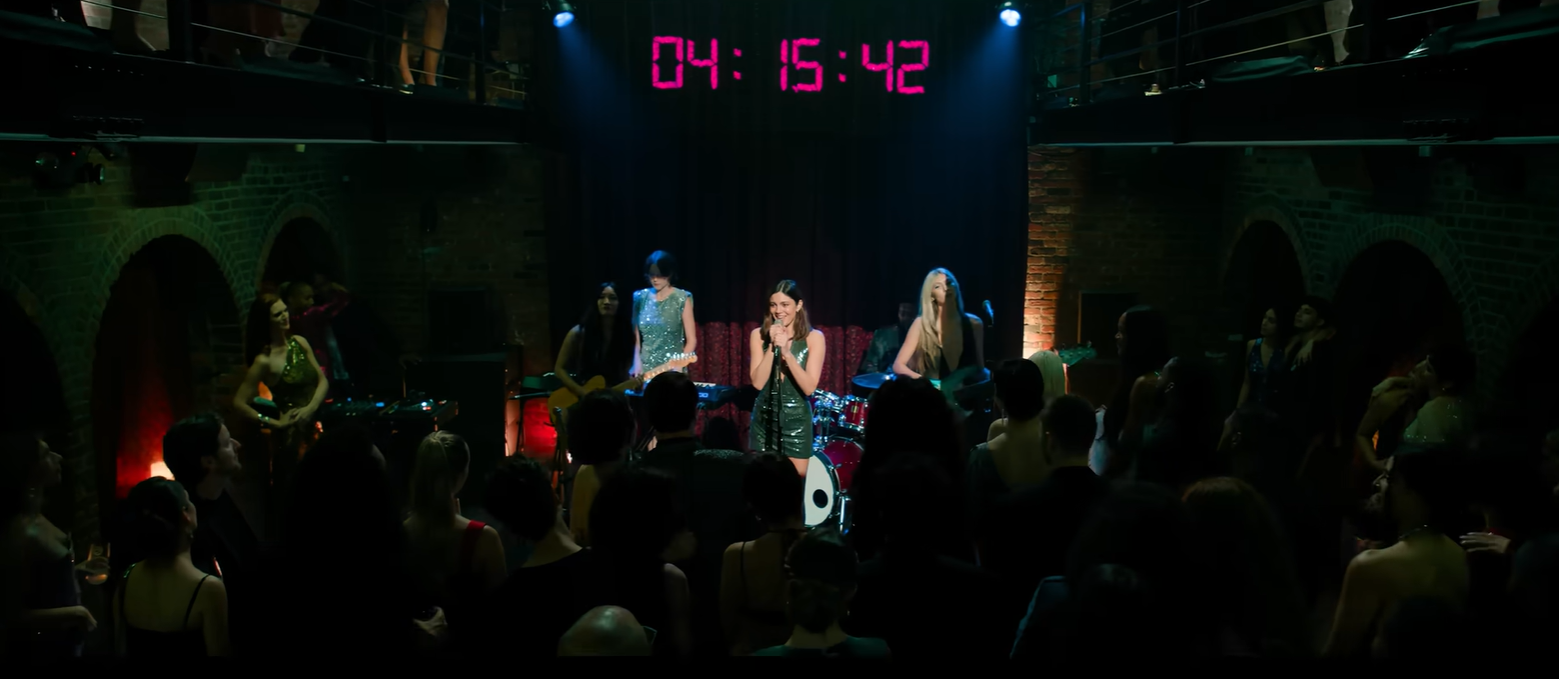
At the party, Allie meets Ezra Strong, a musician she is a fan of, and gets his attention. After they re-meet in the party, Owen convinces Allie to overcome her stage fright and to sing a song. As they gaze across the room at each other, there is a real connection.
Allie goes to Ezra’s apartment, while Owen takes Vivian to his mother’s. By this point, however, both are more interested in each other than their actual dates, and this is evident in Allie’s hesitancy before having sex with Ezra (named Douglas in the script). She gets distracted by the pizza box from Owen’s restaurant in the trash can.
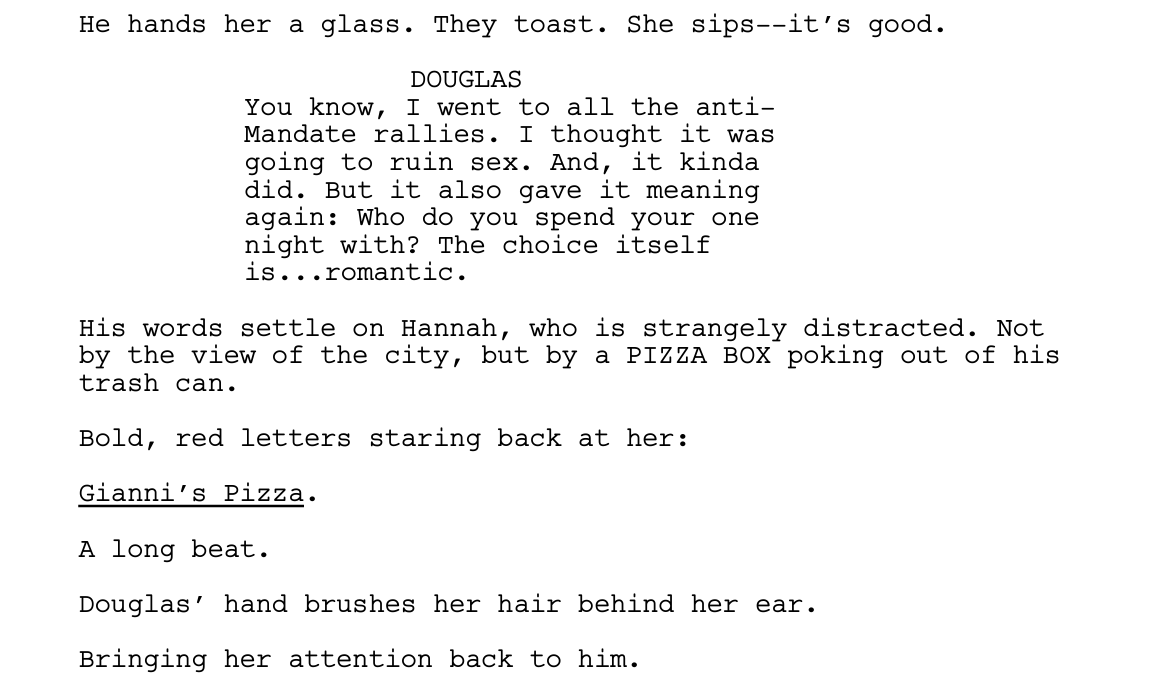
Ezra, here, goes so far as saying “Just maybe the fascists were right about this one,” an idea that gets repeated throughout the film. Allie neither agrees nor disagrees, just watches him with starry eyes.
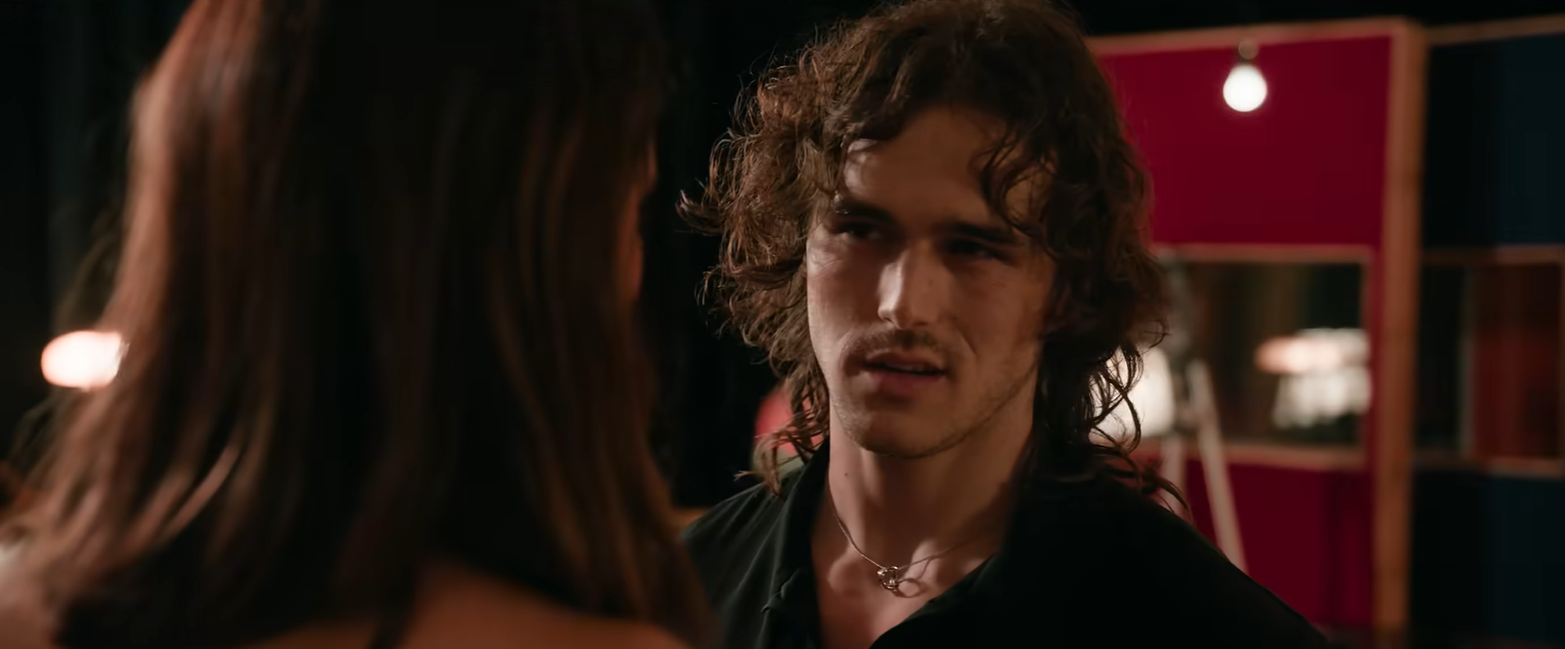
Quite soon, however, Ezra turns out to be off-putting in his behavior, and ends up falling from the top of a piano and hitting his head. Allie rushes him to the hospital.
Meanwhile, Owen and Vivian, making out in Linda’s apartment, get thrown out by Linda and Rick. Vivian storms off, angry, and Owen is left alone, yet again. With nowhere to go, he returns to his pizza restaurant. Soon, Allie shows up too.
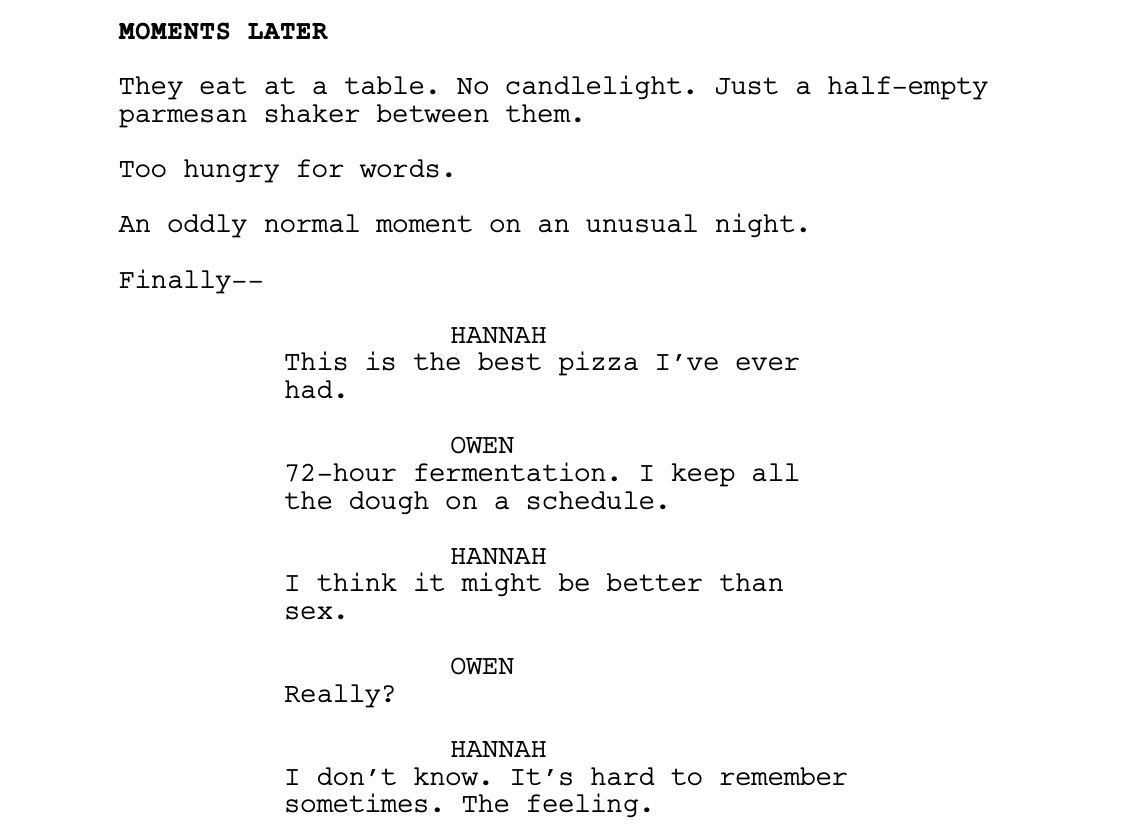
Together, they spend a strangely normal but sweet moment. Then Owen gets a call from Malika (named Clarissa/Claire in the script). He asks Allie “What do I do?” and Allie has every impulse to tell him to hang up, to spend the rest of the night with her.
Finale
The script, here, has an entire page with just one line that goes: “They have sex.” Then two pages of sex scenes, taken place in every single room in the restaurant.
And then the film cuts back to the moment where Owen gets Malika’s call. And everything that just happened was Allie’s imagination. Allie tells Owen that he should answer.
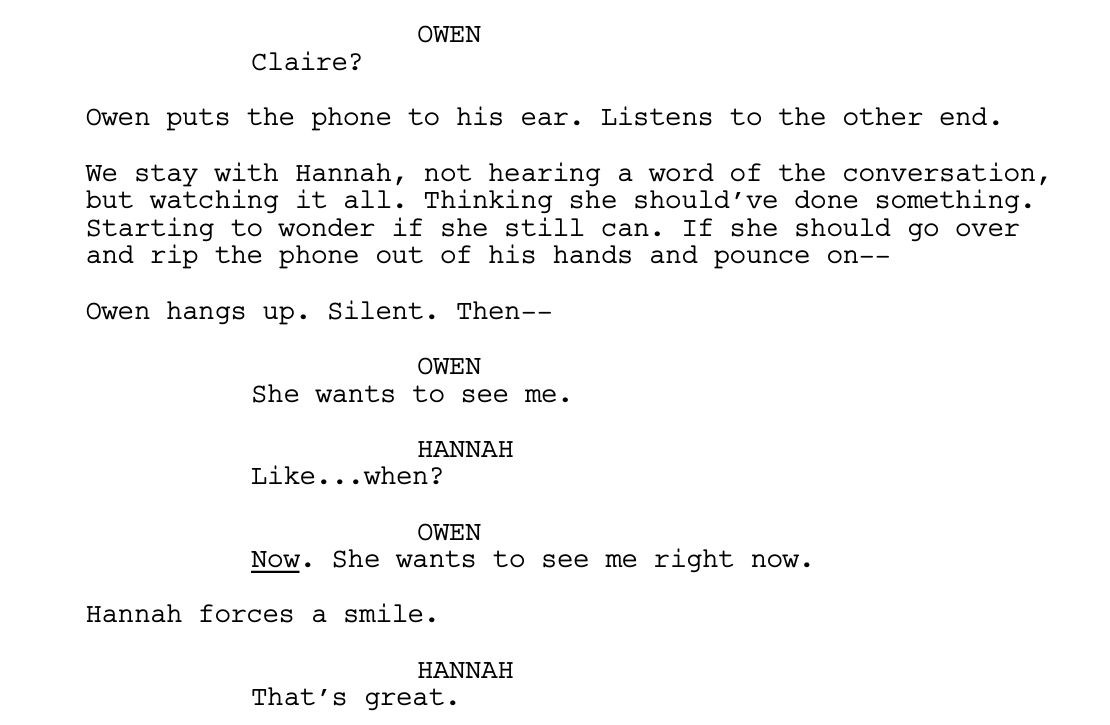
Owen departs to meet with Malika. She cries and tells him that she was wrong, that she wants him. They are very close to having sex but Owen realizes that he’s made a mistake.
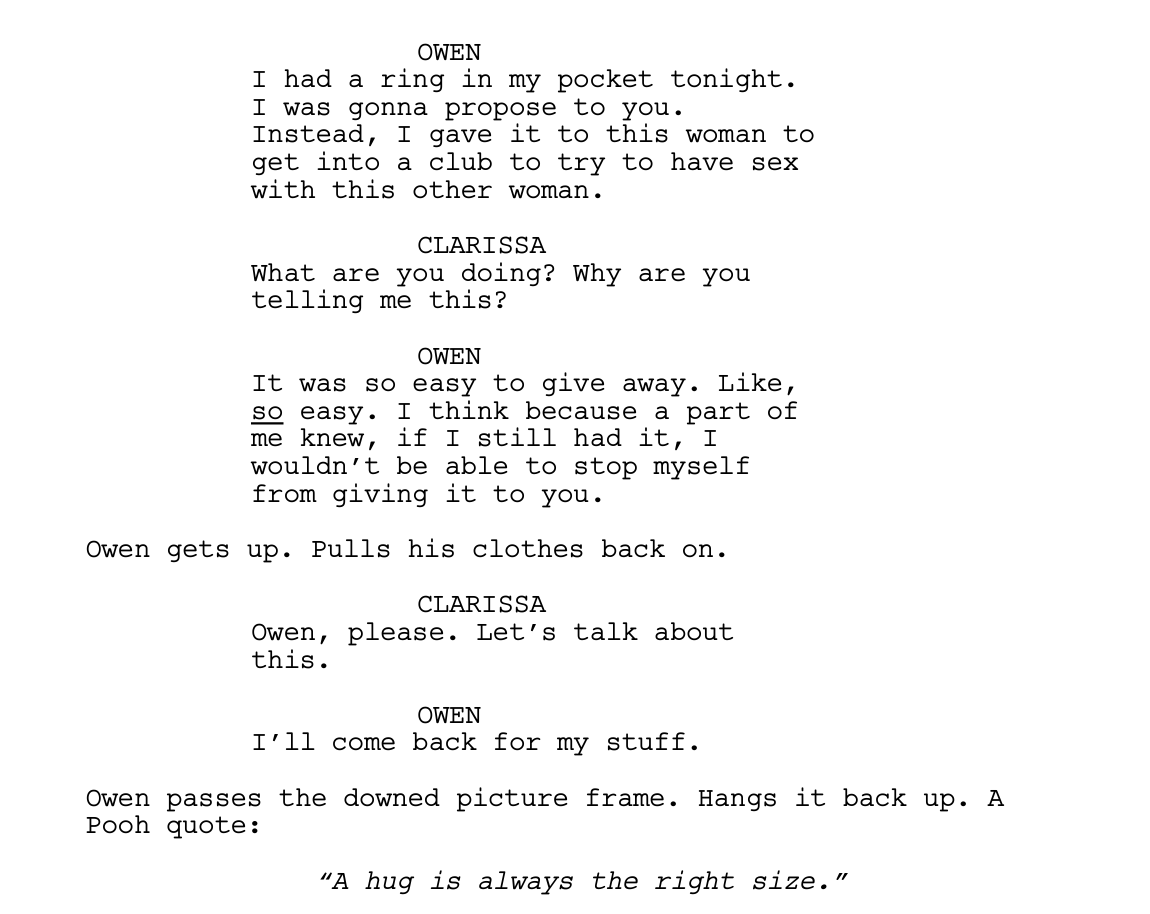
As the sun comes up, Owen goes to Allie’s building but cannot find her. When Allie returns, Owen is already gone. She receives a video message from Jacinta who starts off crying and saying that she needs Allie’s help, but pans out to reveal her enjoying a beautiful sunrise on the Empire State Building with her date.
This is another moment that I find infuriating in the film. The fact that the film takes a serious issue like women getting taken advantage of, even raped, and made fun of it terrifies me.
The 13-year-old that Arya is babysitting tells Allie that Owen came. She runs to the Little Red Lighthouse, hoping that he’d meet with her there.
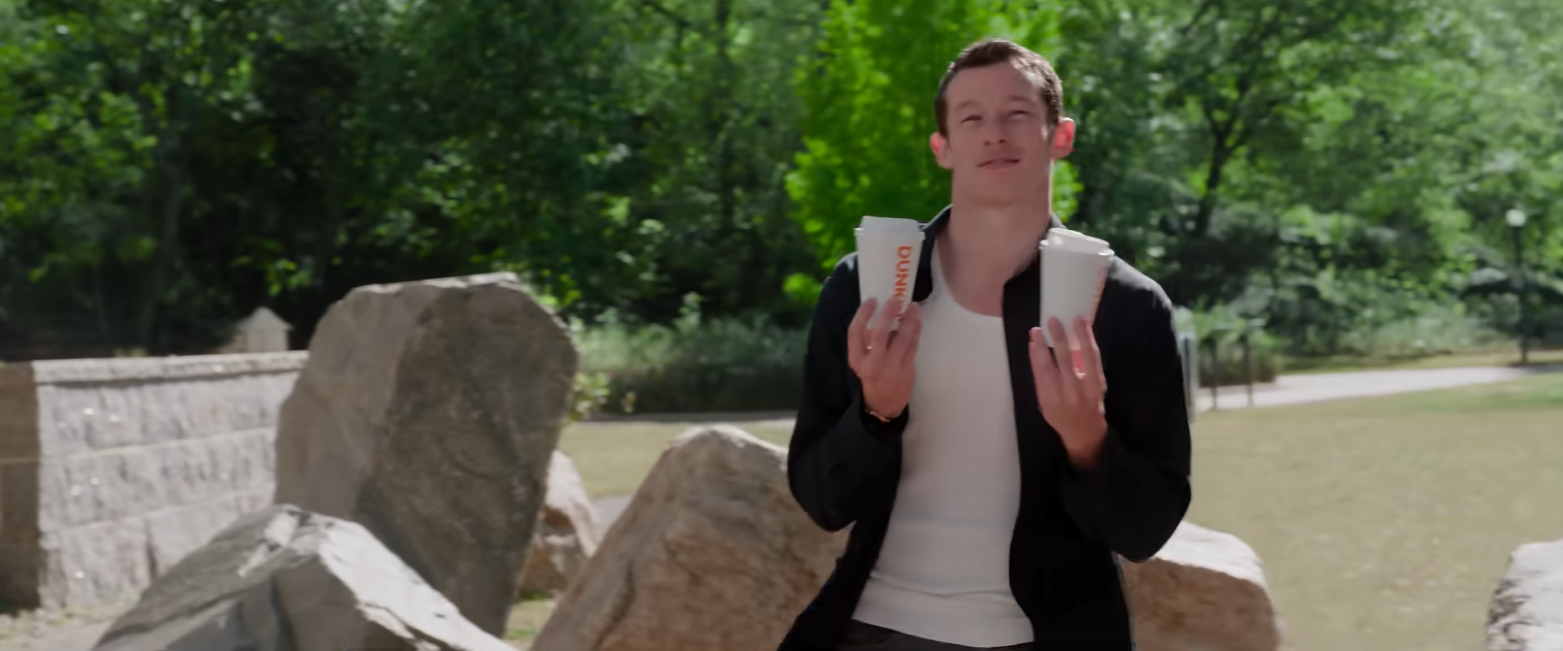
He shows up, with two coffees (he remembers her coffee order) and a smile. They go inside the lighthouse to have sex but decide, eventually, that they want to take it slow with each other and wait until next year.
Cut to next year, the next exemption period. They have sex for the first time. We don’t see it – they just close the door behind.
There are moments in the film where I feel like I understand the message that the story is trying to convey – the importance of us appreciating romance, and that the effort of finding a true connection is always worth it. But what could’ve been a deeply sarcastic spin on the rom-com genre – dark rom-com in an actual dystopia, wouldn’t that have been fun and meaningful at the same time? – turns out to be problematic in both its writing and the message that the audience actually ends up receiving.