
A Forgotten Gem: A Script Analysis of The Disaster Artist
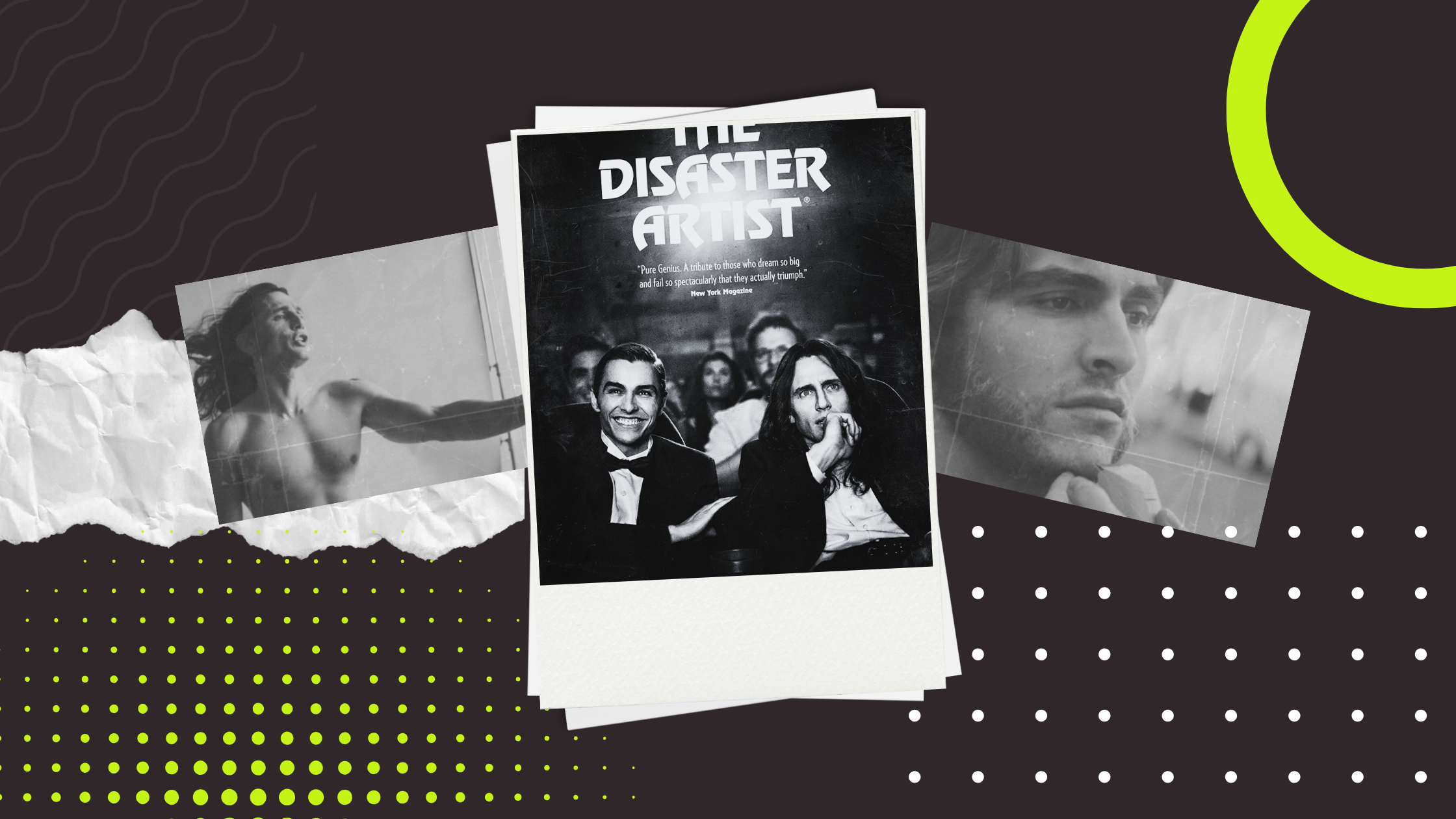
I have always been fascinated by the disasterpiece that is Tommy Wiseau’s The Room. It’s one of those things where the more you learn about it, the more it sucks you in. Like many of you, I went through many different phases of appreciating this film. The first phase is the “hate watch”. I heard how bad it was, saw the famous clips on YouTube, and gave it a watch so I could laugh at its absurdity. This is what made the film such a cult classic. Receiving an almost Rocky Horror treatment, people have spent the past two decades attending screenings of this film dressed as the characters, throwing spoons at the screen, and reciting every ridiculous line of dialogue. It was a fun little cultural spectacle, but then I started hearing the stories about the making of this film, and I had to learn more. Which brings me to the second phase: “the lore”. I had heard some anecdotal stories about what went down on set, how insane Tommy was to the cast and crew, how many takes went into getting a single shot right, and how Tommy seemingly funded the entire $5 million budget out of his own pocket. Every other “fun fact” was crazier than the last. I didn’t really know what happened on that set, but like all Hollywood fairytales, it was fun to recite these things to friends whenever the movie came up. But then I found out about the book that The Room co-star Greg Sestero and Tom Bissell wrote about the actual story behind this film, appropriately titled The Disaster Artist, and I began the final phase of enjoying The Room: “actually learning about what went down.” I went and bought a copy, sat down to read it, and proceeded to ignore everything going on around me for the next several hours while I finished it. I was blown away. It was fascinating, it was heartwarming, and most surprisinging of all, it inspired me. As it turns out, there are endless layers to the man that we know as Tommy Wiseau: his miserable life as a busboy in France where the boss would throw dishes at his head and call him a rat, his eventual migration to America looking for a better life, his purchase of a small piece of land in San Francisco that skyrocketed in value and made him a millionaire, his refusal to tell anybody his real name, age, or birthplace, and his fascinating dream of becoming an iconic Hollywood figure despite having absolutely almost zero applicable qualities…except for one thing: ambition.
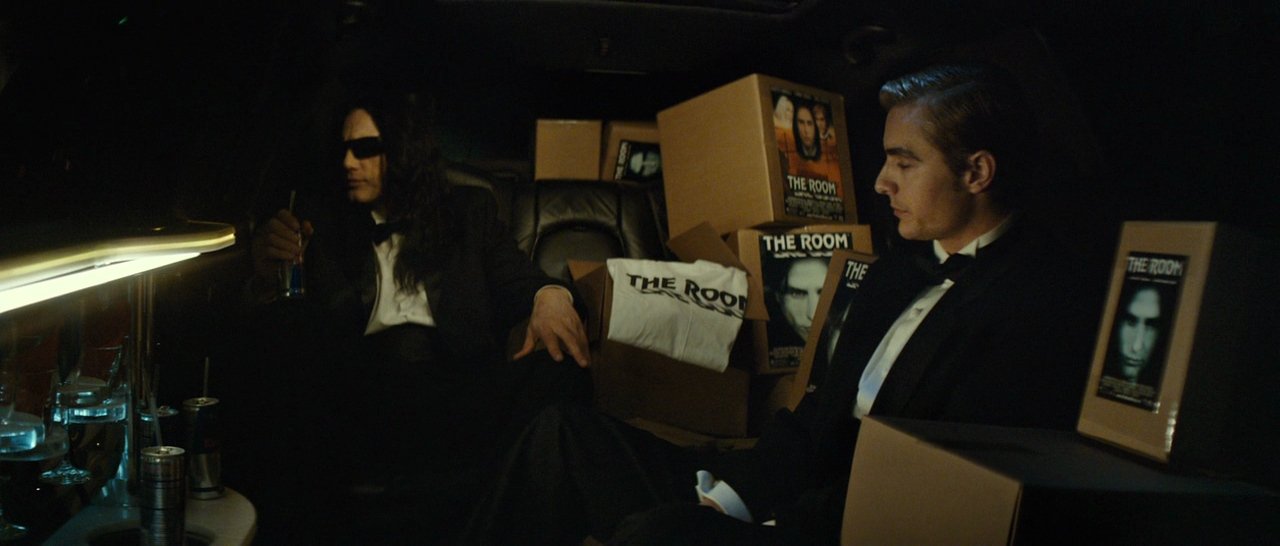
Tommy’s ambition is a key factor in truly appreciating this film. Similar to what happened with Ed Wood (who famously made the other worst movie ever made, Plan 9 From Outer Space), audiences love an underdog story. Despite everything that happened to Tommy in his life and how bad his big dream movie ended up being, he still made it. And that’s more than most people can say. It was this ambition that attracted James Franco to this story, and eventually led him to making this film based on the book. And as someone who loved The Room, Tommy Wiseau, and the novel, I gotta say, the movie is pretty damn good.
I think the main reason this film isn’t talked about more is that it was sort of plagued by controversies from start to finish. Critically, people saw it as a ripoff of Tim Burton’s Ed Wood biopic, but with less heart. Which I don’t think is fair, because it’s an entirely different true story about an entirely different culturally significant awful film. Both things actually happened, so both stories have a right to be told. The first draft of the screenplay was also accused of being written and purchased through unfair tactics, ending in a lawsuit that eventually settled out of court. Another bad look, for sure. And then, of course, there was the flood of sexual misconduct and abuse accusations against James Franco that came out years after the film’s release. Because of all of these controversies, The Disaster Artist has sort of been forgotten as a whole, despite its cultural relevance, impressive screenplay, and general praise from audiences upon its release. Nowadays, people seem to pretend it never existed. To quote Don Draper from Mad Men, “It will shock you how much this never happened”. But I’m here to say that this movie did happen. And its ability to tell a uniquely absurd story about an unexpected man defying the odds to do something he always dreamed of, despite failing in every possible direction, deserves to be talked about more.
OPENING IMAGE
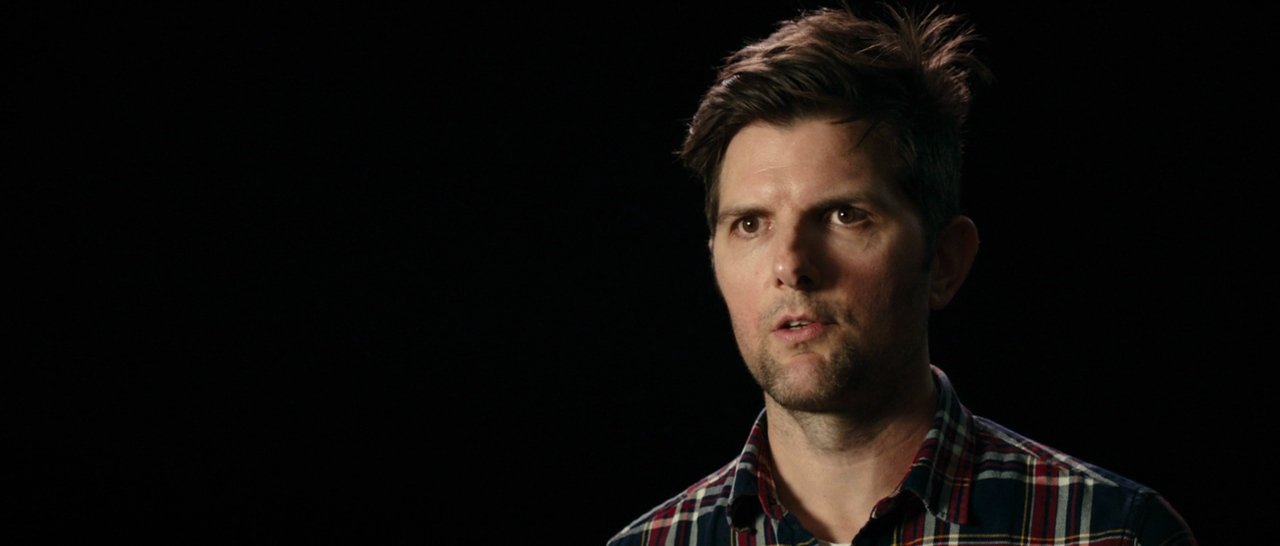
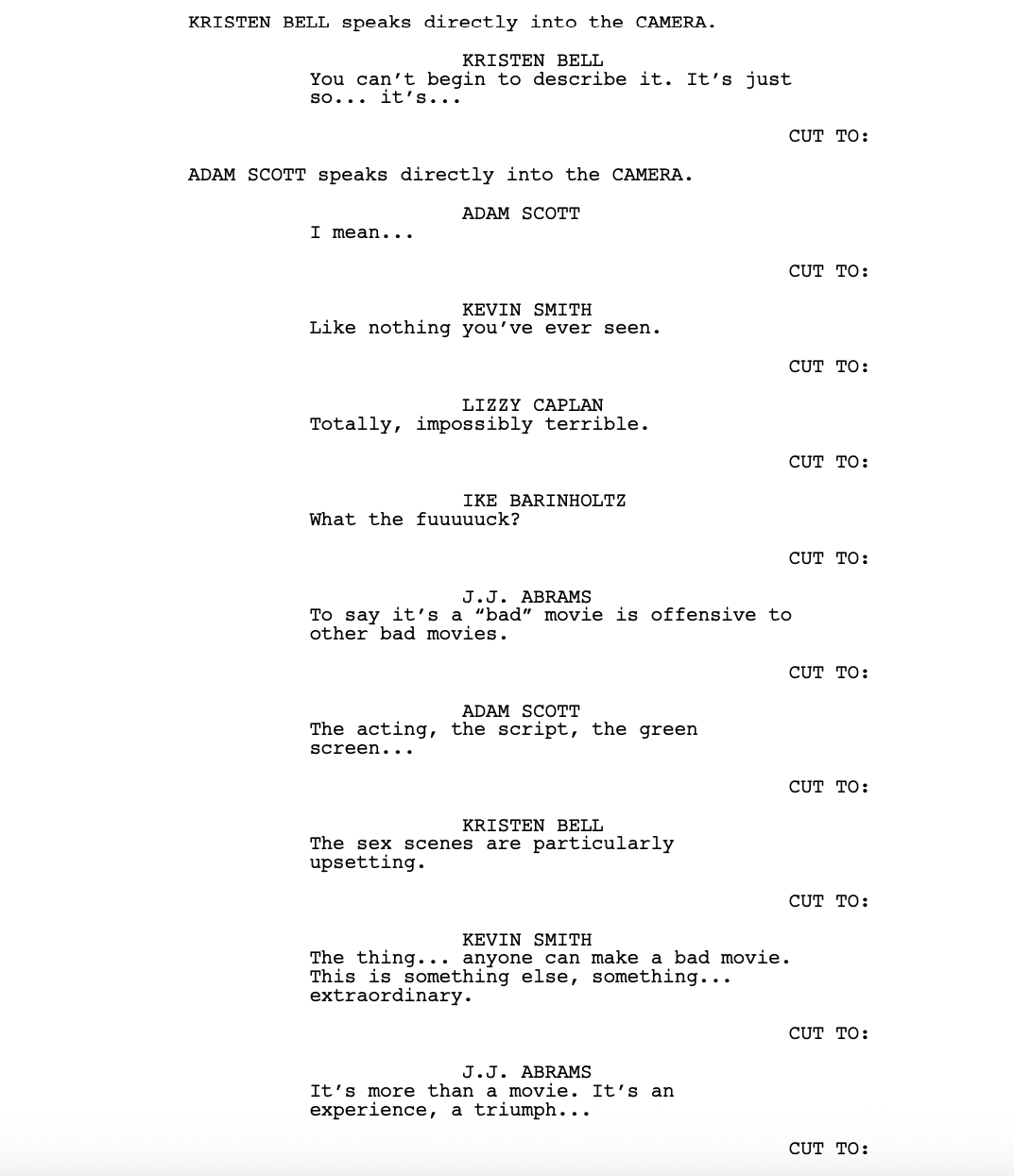
The film opens with several documentary-style interview clips from famous actors and directors discussing how they feel about The Room. And while these clips are entirely manufactured, the seemingly natural, strong opinions from such culturally relevant artists in the entertainment industry tell the audience one thing: The Room, in one way or another, is a significant piece of art.
SET UP/ INCITING INCIDENT #1
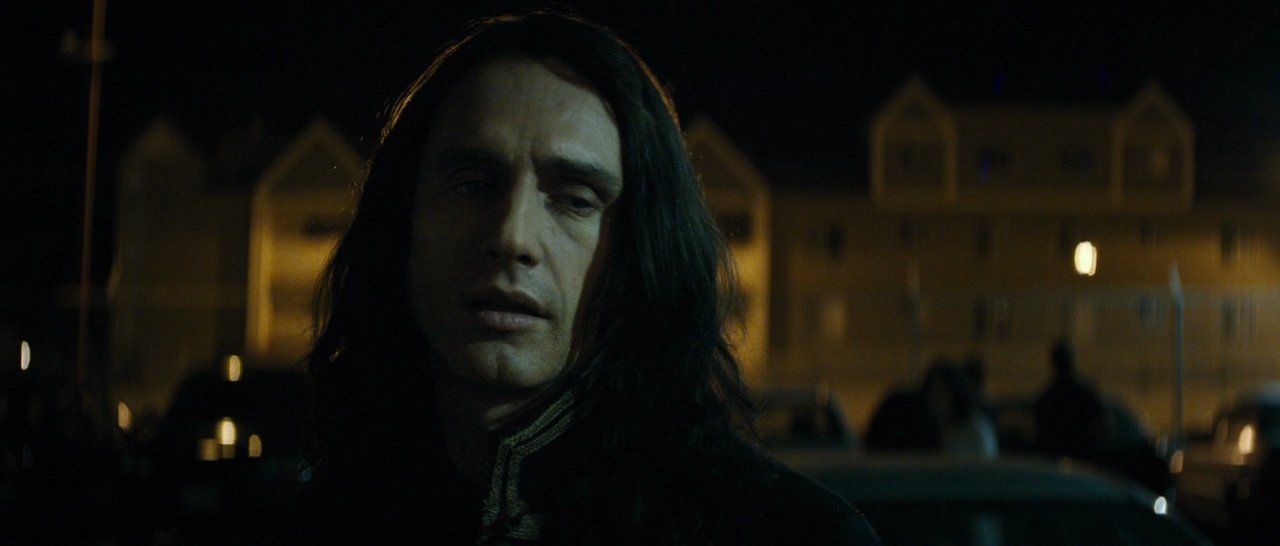
One interesting thing about this screenplay is that there are essentially two inciting incidents that mark the beginning of two distinct chapters in the film. The first, which occurs right at the beginning of the movie, is when our two protagonists meet during an acting class in San Francisco. This is where their relationship starts and kicks off all of the events that follow. The second, which comes much later, is when the two decide to make a movie of their own (which would go on to become The Room). We’ll get to the second a little later. For now, let’s just dive into the initial setup and inciting incident #1.
The actual plot of the film begins with two actors performing on stage during an acting class. One of the actors is Greg Sestero, our protagonist. He’s handsome and motivated, but as the acting coach points out, somewhat unremarkable as an actor.
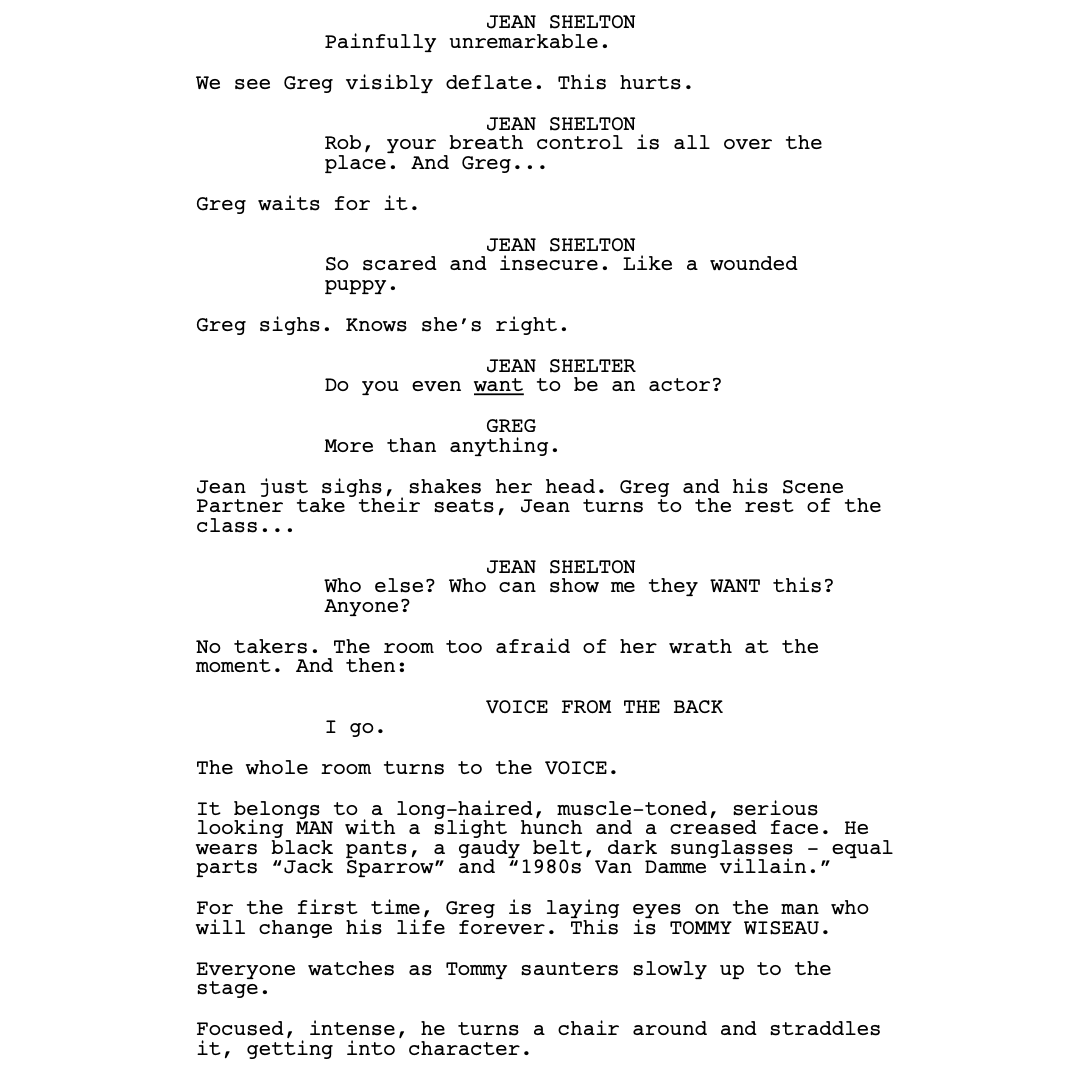
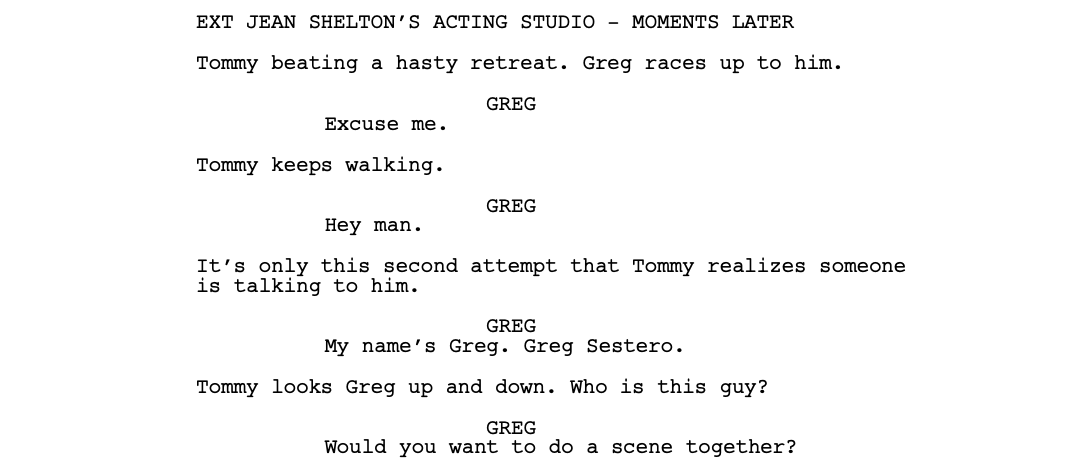
Greg watches in awe as this strange man, who seemingly barely speaks English, proceeds to give a horrible, over-the-top rendition of the “Stella” scene in A Streetcar Named Desire. It is, objectively, an awful performance. But something about this guy captivates Greg. After the class, he chases down the mysterious Tommy Wiseau to talk to him.
The two get lunch together, and Tommy is off-putting right from the jump. He’s defensive, aggressively private, and borderline rude to almost everyone he talks to. Greg doesn’t know what to think, but he has to see this thing through…whatever it may be.
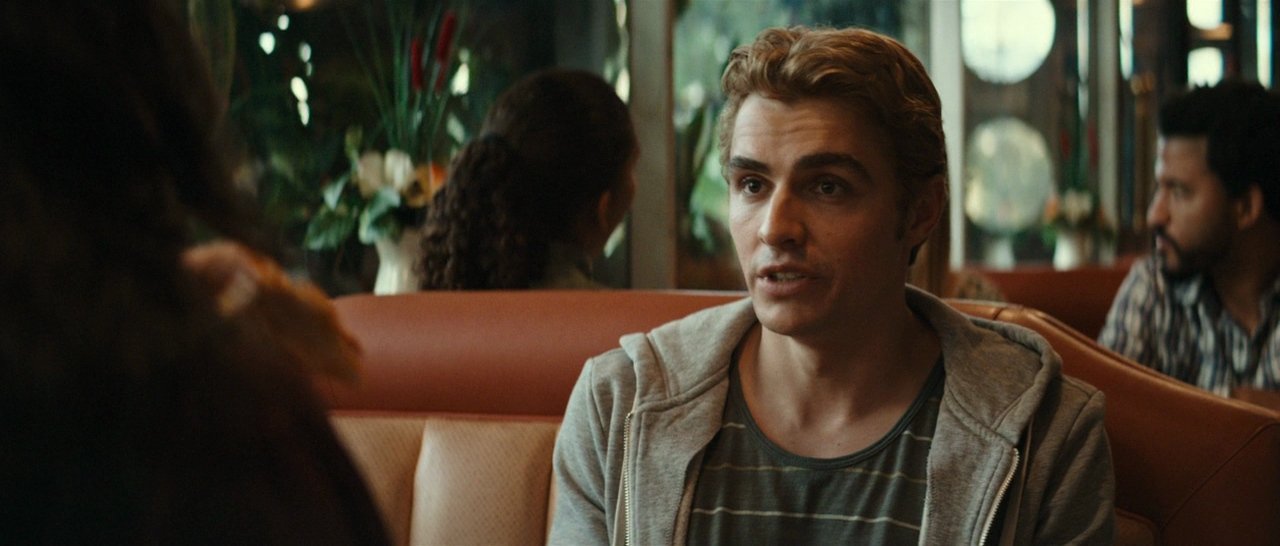
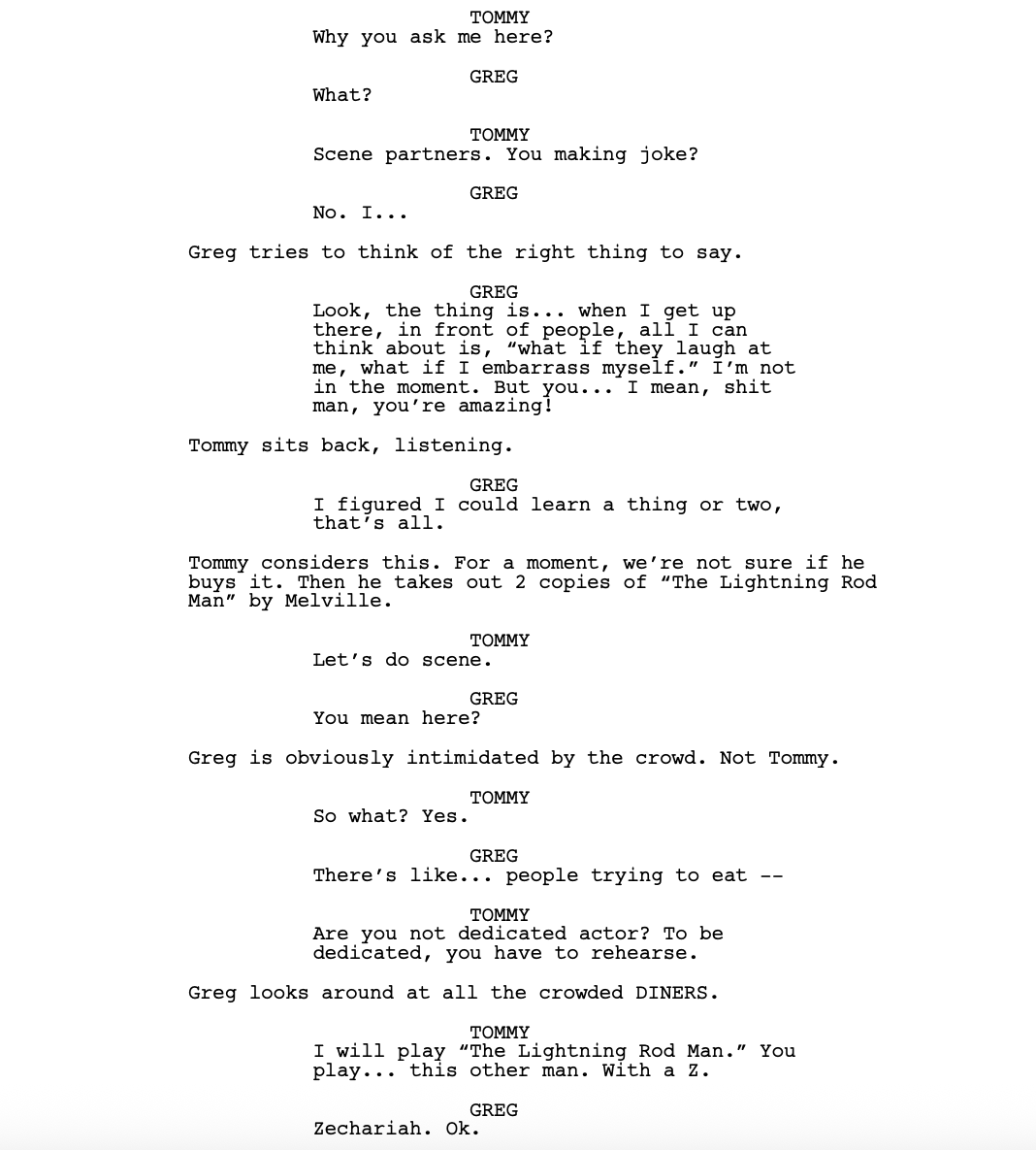
They do the scene, right there in the restaurant. Greg’s shy at first, but Tommy encourages him not to worry about what the surrounding people may think. Just focus on the scene. Be loud and proud with it. By the end, both guys are standing on the table, yelling at each other at the top of their lungs. It’s still not good, but there’s a presence of passion in the room. Something that Greg had desperately been seeking.
After their performance and a meal, Greg and Tommy proceed to spend the rest of the day together. Even though acting in the restaurant felt amazing, Tommy continues to weird Greg out. He once again emphasizes his privacy, telling Greg not to mention him to anyone. At one point, he even implies that he may be a vampire. Odd, to say the least. Regardless, Greg keeps hanging out with him. Why exactly, he doesn’t quite know yet.
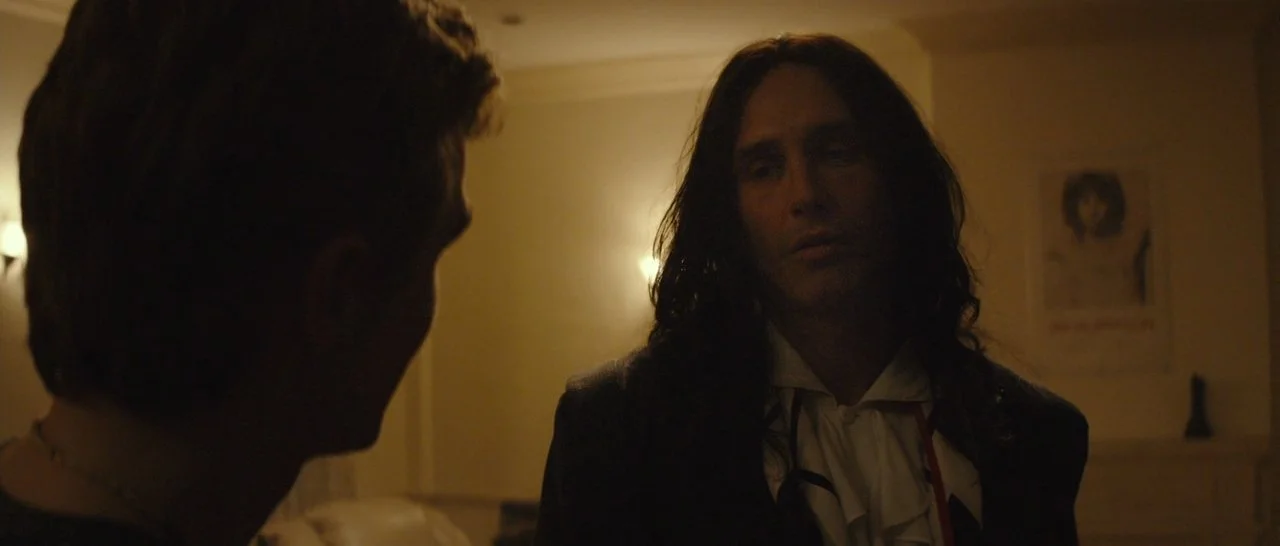
They end up going back to Tommy’s condo, which is just as odd as he is.
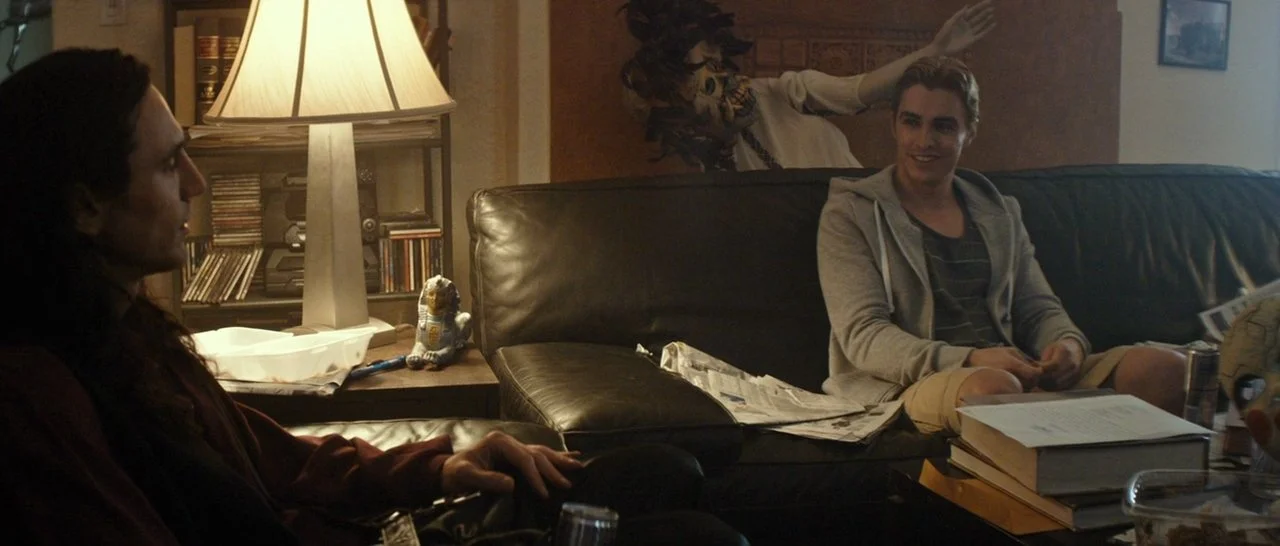
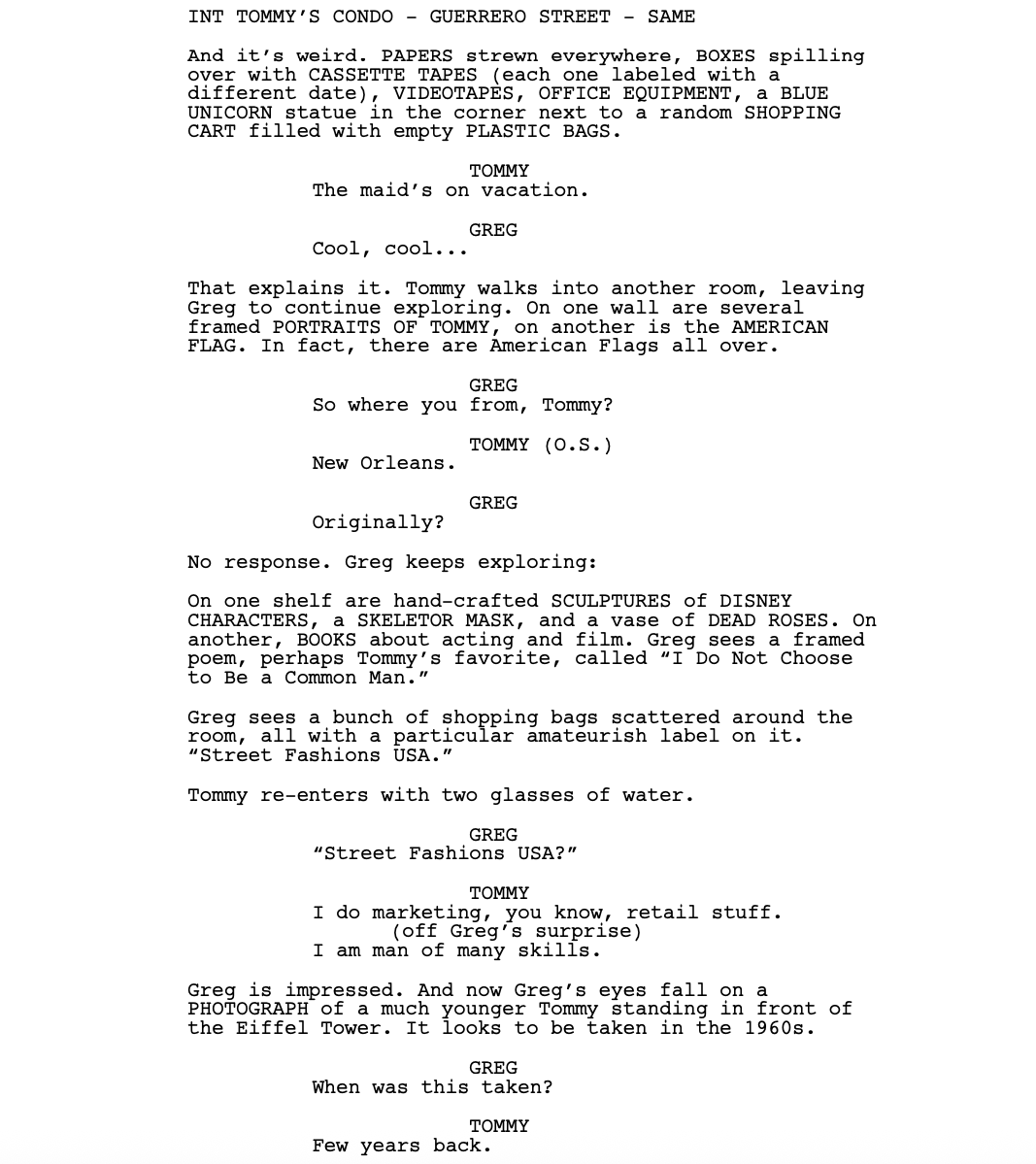
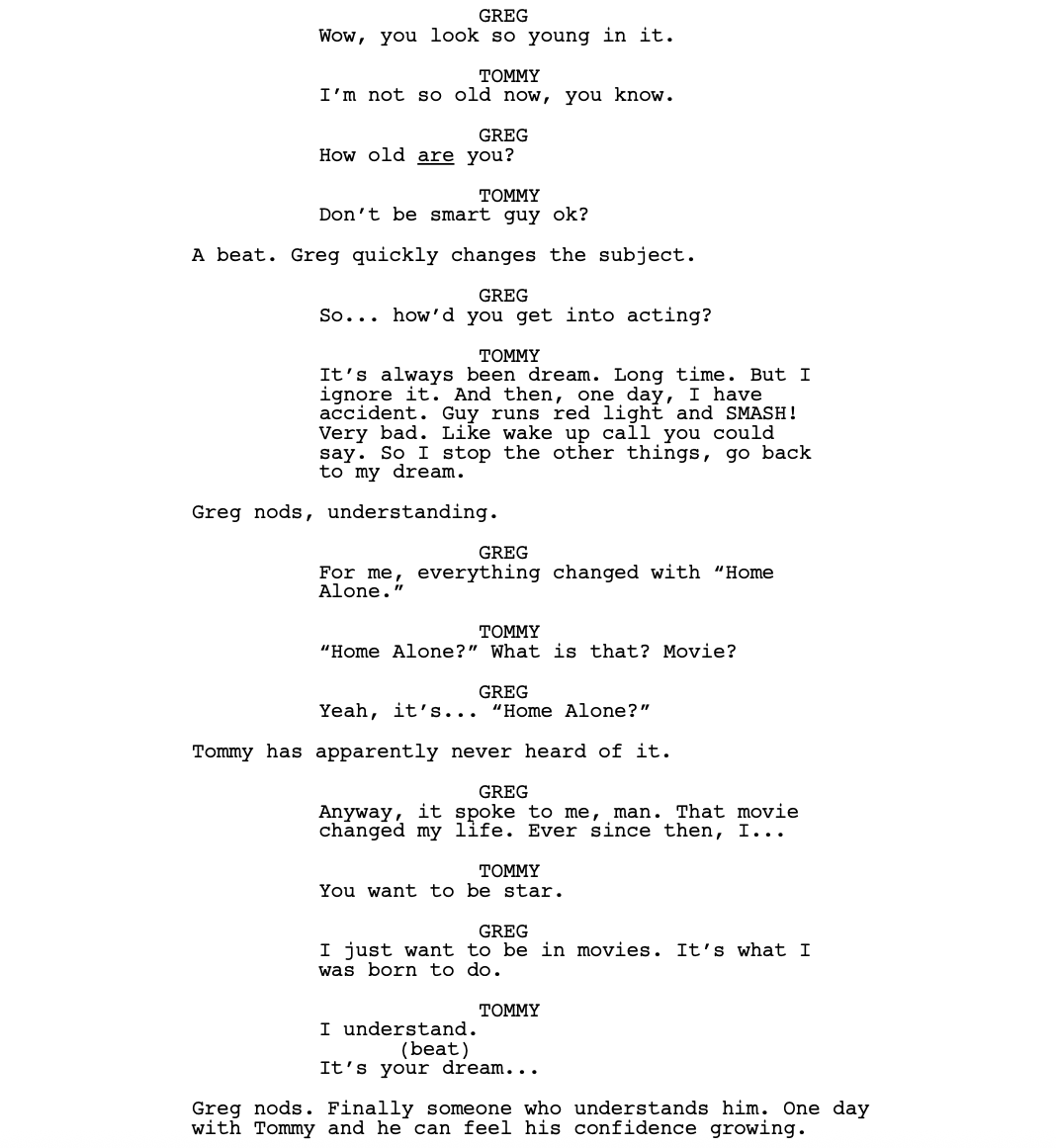
They proceed to watch Rebel Without a Cause together. Greg mentions how he always wanted to visit the crash site where James Dean died, to pay his respects to an astonishing talent who died too soon. Tommy, without so much as blinking, says they should go right now. And just like that, the two men, who barely know each other, hop in a car and start the 300 mile long road trip to the James Dean crash site.
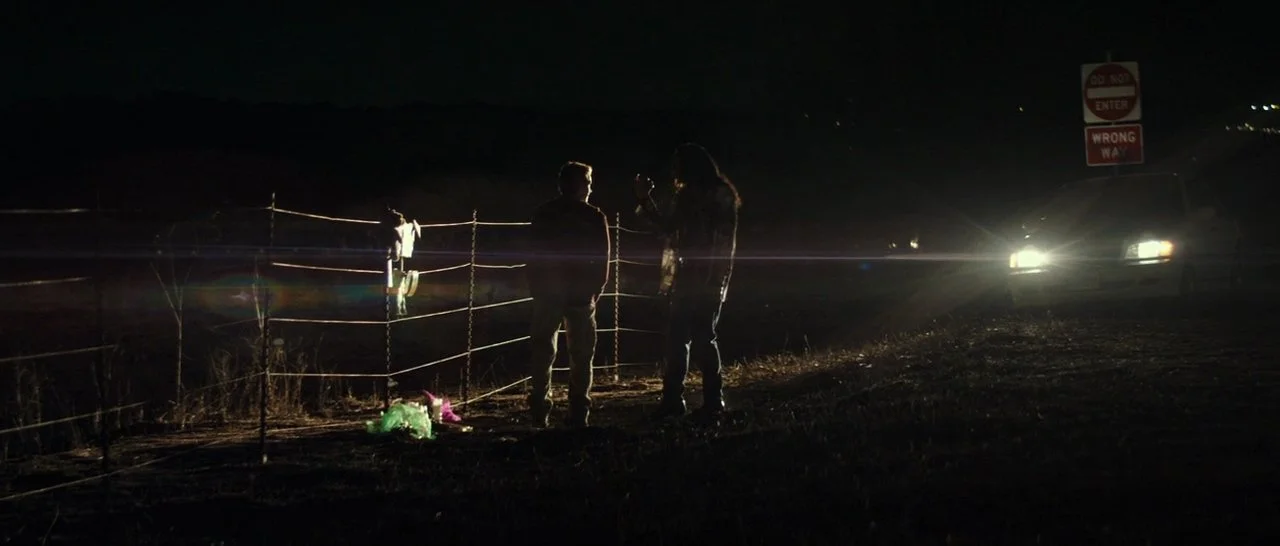
Unbeknownst to Greg, this decision was a small yet accurate peek into who Tommy is. He’s spontaneous, excitable, and acts on instinct, not practicality. Which, as we later find out, turns out to be both a blessing and a curse.
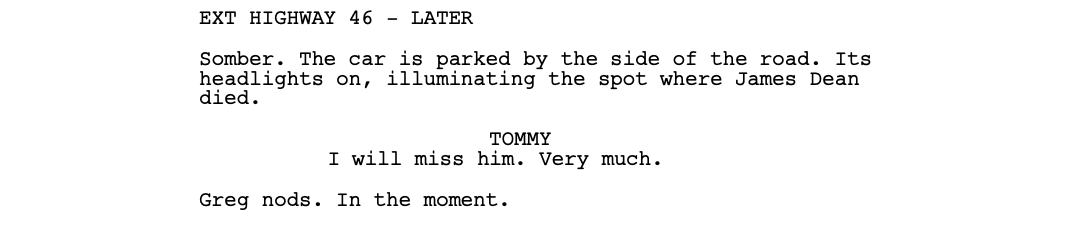
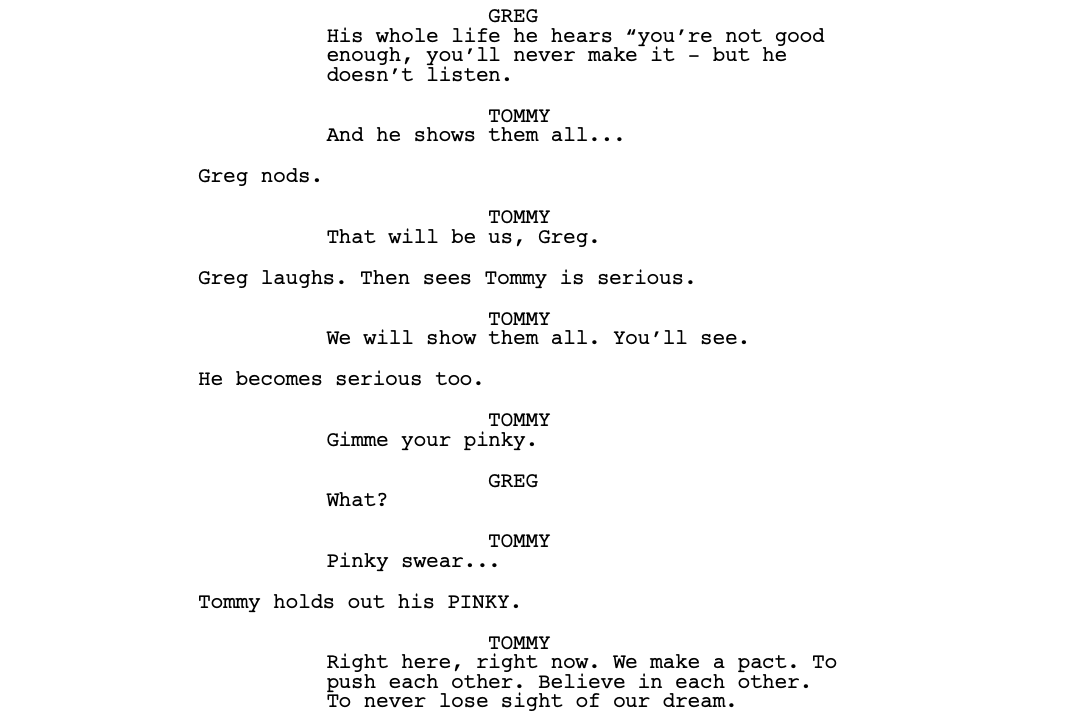
The two then pinky promise each other to pursue their dreams, no matter what it takes.
DEBATE
On the drive back, Tommy casually mentions that he and Greg should move to Los Angeles together, which Greg declines because, obviously, it would cost him too much money. But that’s when Tommy drops the bomb.
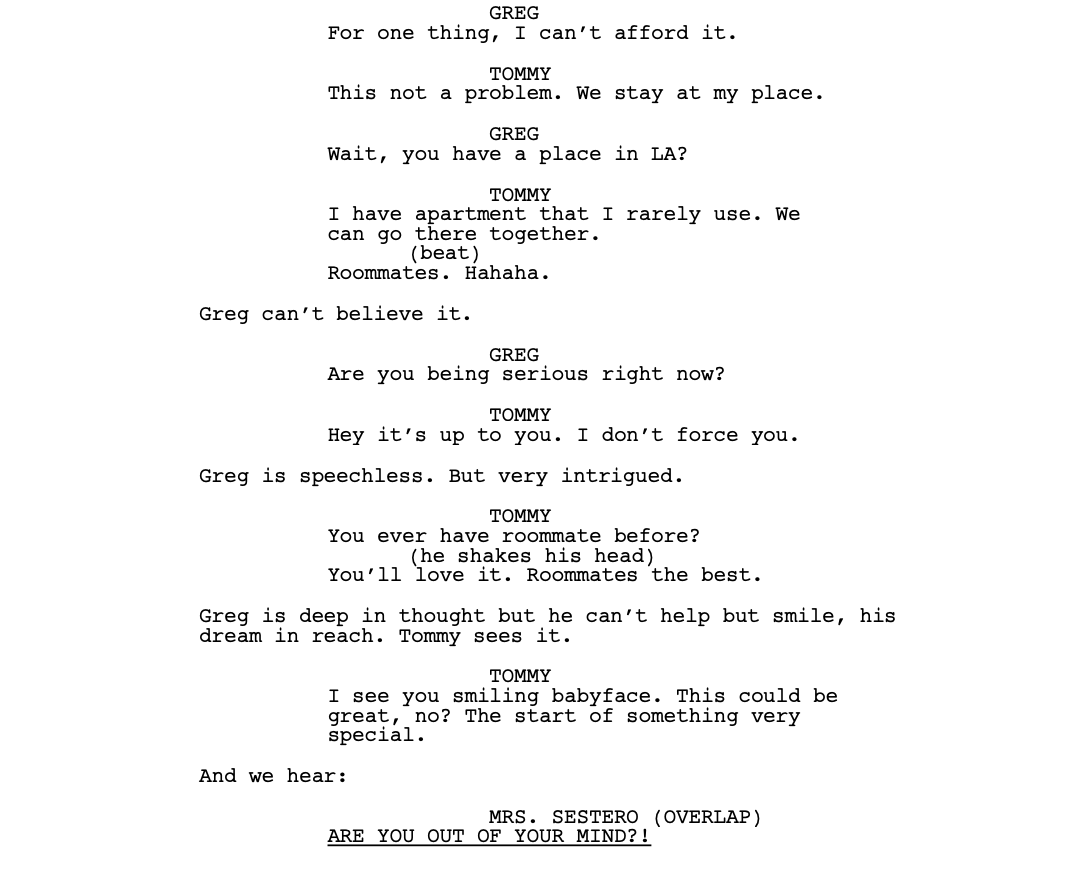
Already having a second apartment in Los Angeles, Tommy easily could have moved there to pursue his acting endeavors whenever he wanted. But he needed somebody to join him, to support him, and to keep him encouraged despite all of the obstacles. That’s where Greg came in.
We cut to Greg, fully committed to moving to L.A. with Tommy, as he finishes packing his things. His mom follows him around the house, attempting to convince him not to go.
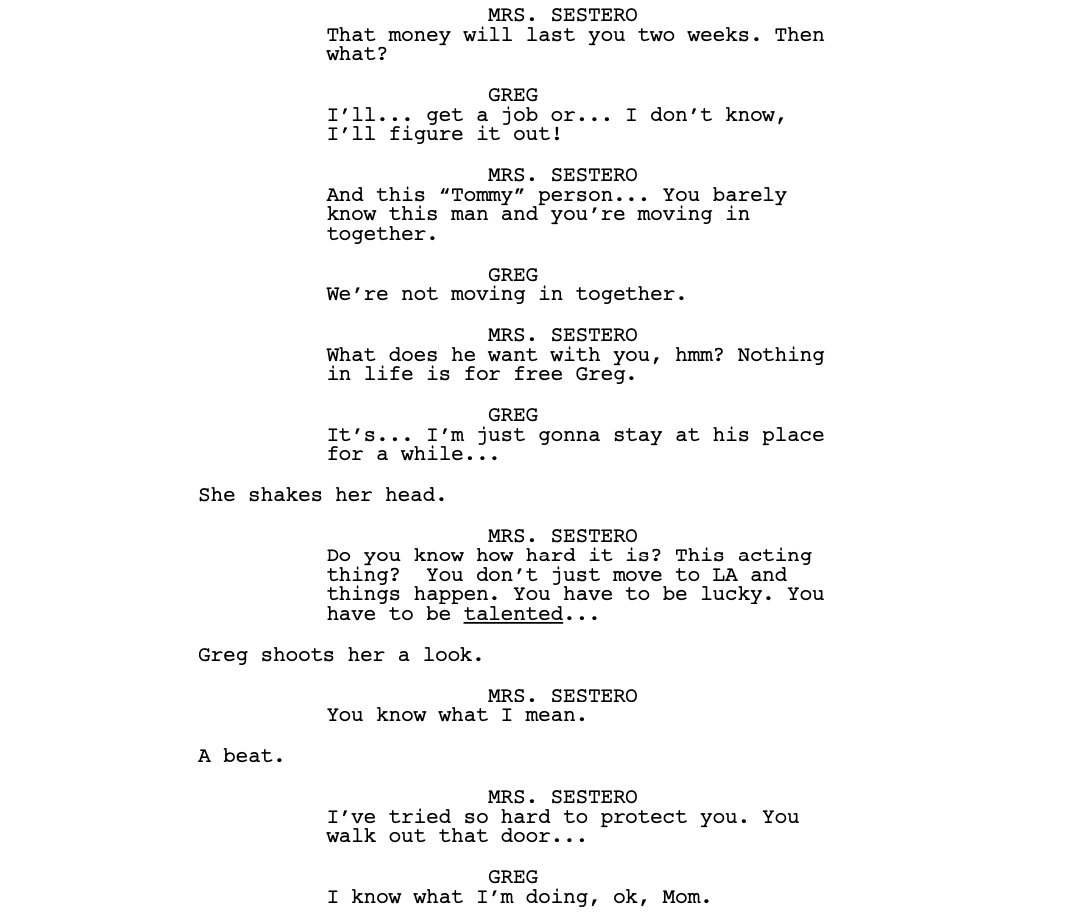
Clearly, Greg’s mom doesn’t believe in him. And as odd as Tommy may be, he does. Greg decides to go.
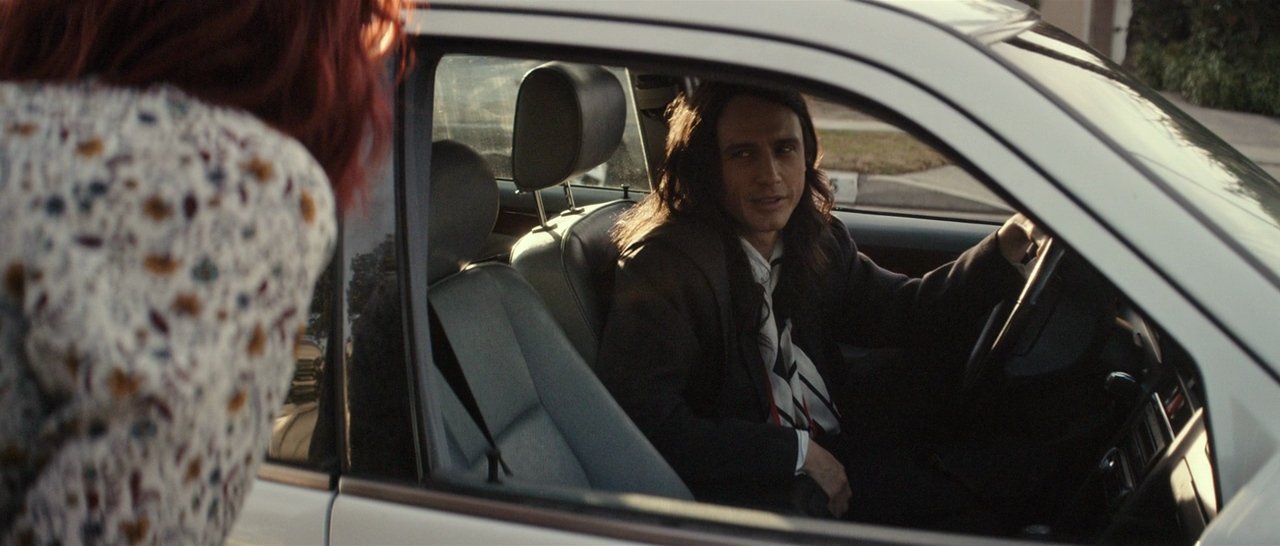
BREAK INTO TWO
Act 2 begins with Greg and Tommy arriving in Hollywood.
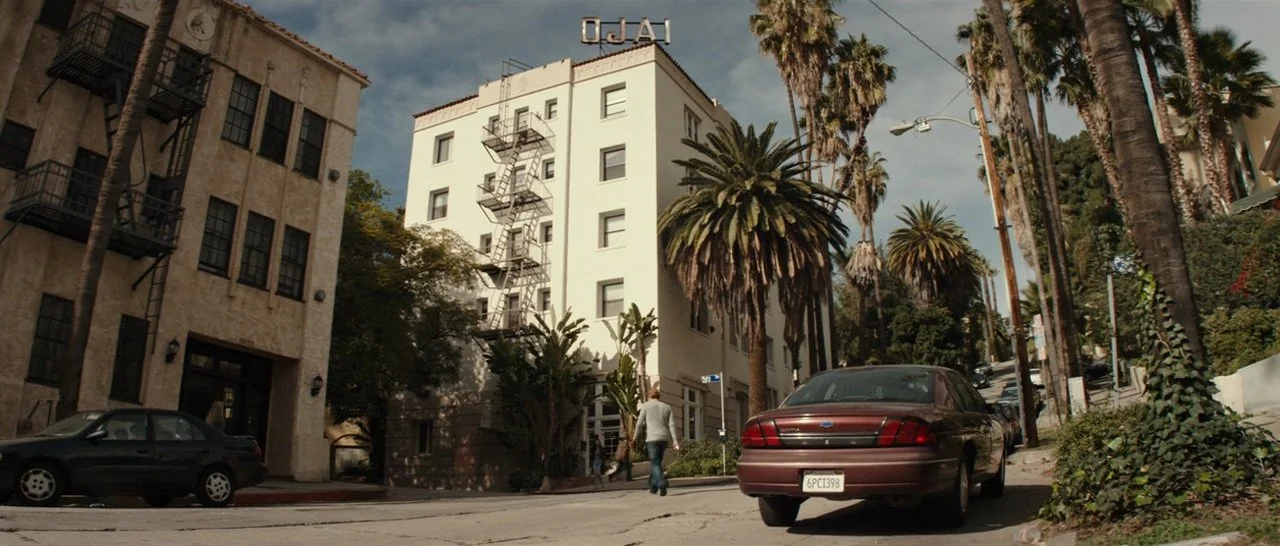
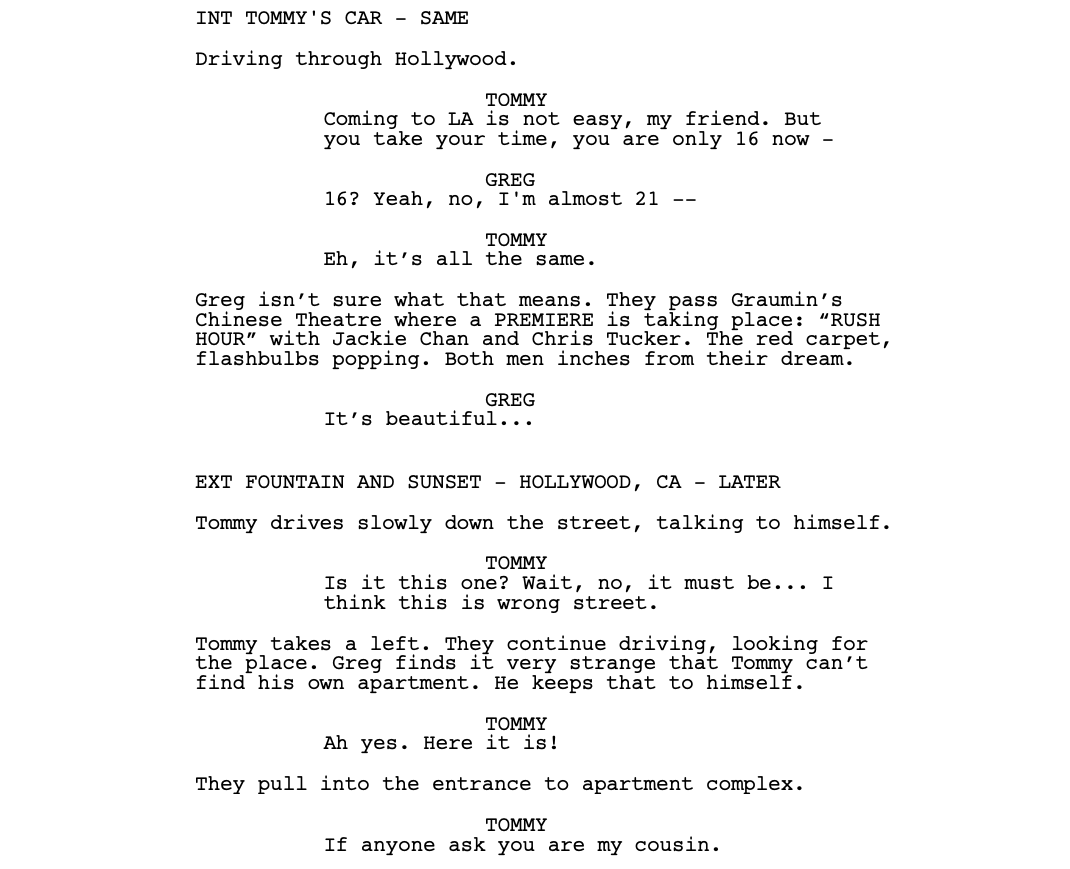
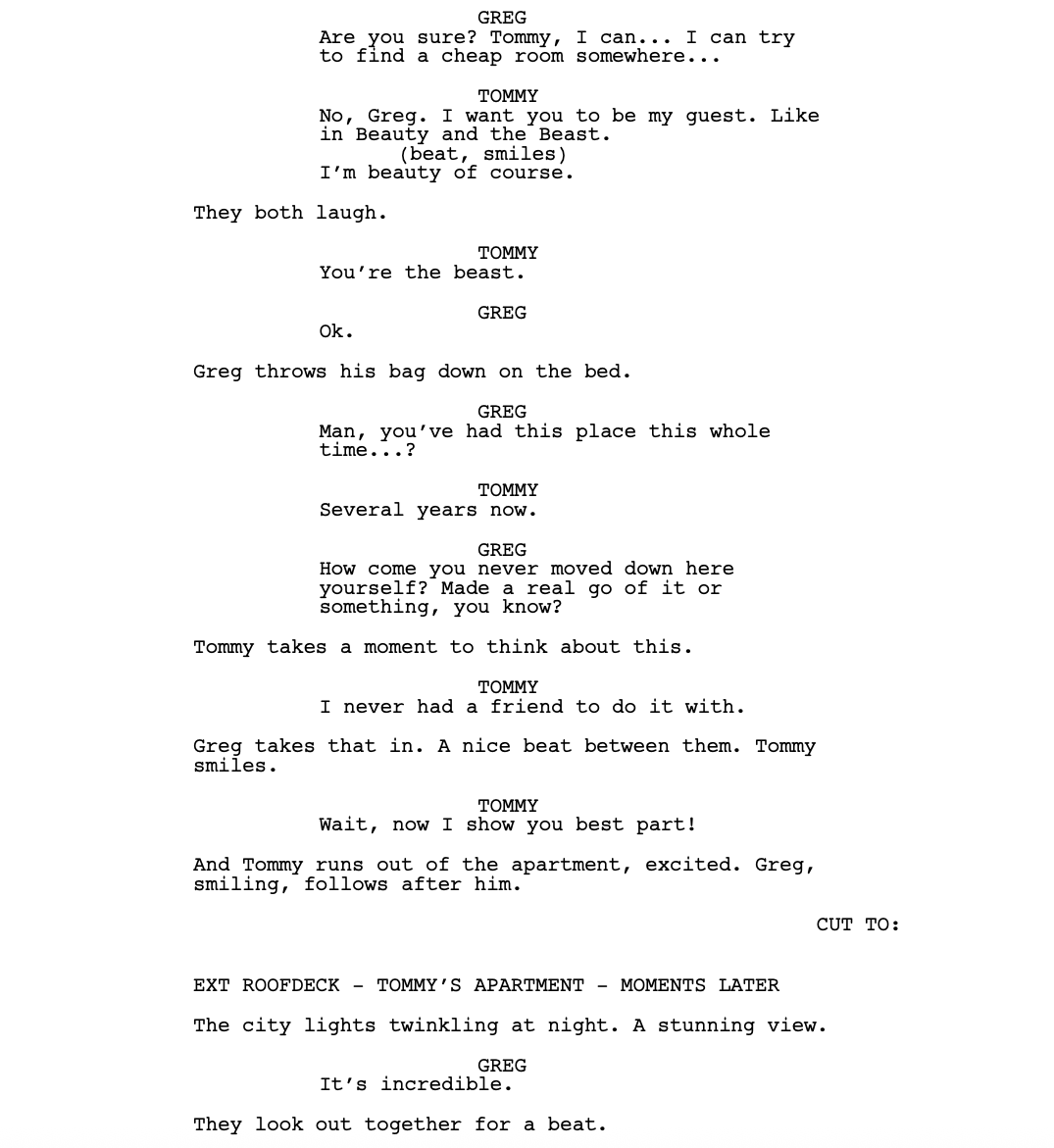
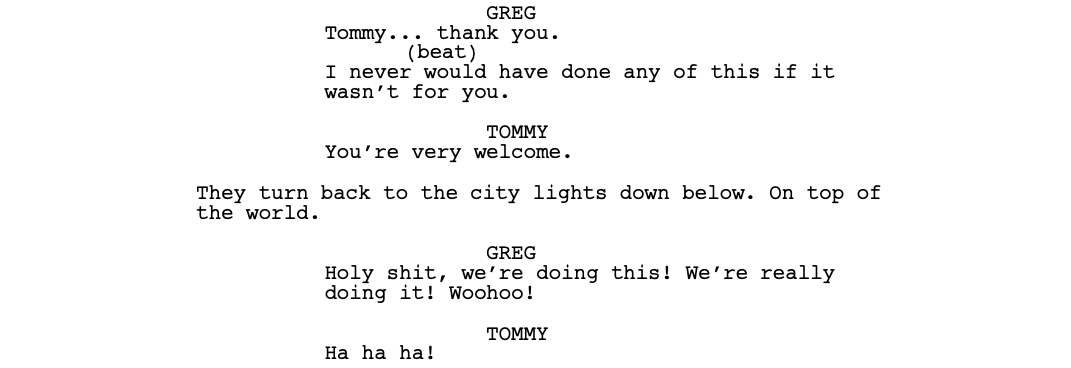
They arrive at Tommy’s apartment, which is surprisingly nice, despite being a one-bedroom. Holy shit, this might actually work out. Greg can’t believe it.
FUN AND GAMES

We proceed to cut to a montage of their first days in Los Angeles: Tommy getting headshots taken, Greg killing some auditions, Tommy getting ridiculed for his accent, Greg getting signed by an agency, and, of course, Tommy being strange to women. So far, it seems that Greg actually has potential and is making some pretty significant moves. While Tommy, despite being the person to make all of this a reality, is only experiencing more hardship. And clearly, it’s leading to some frustration.
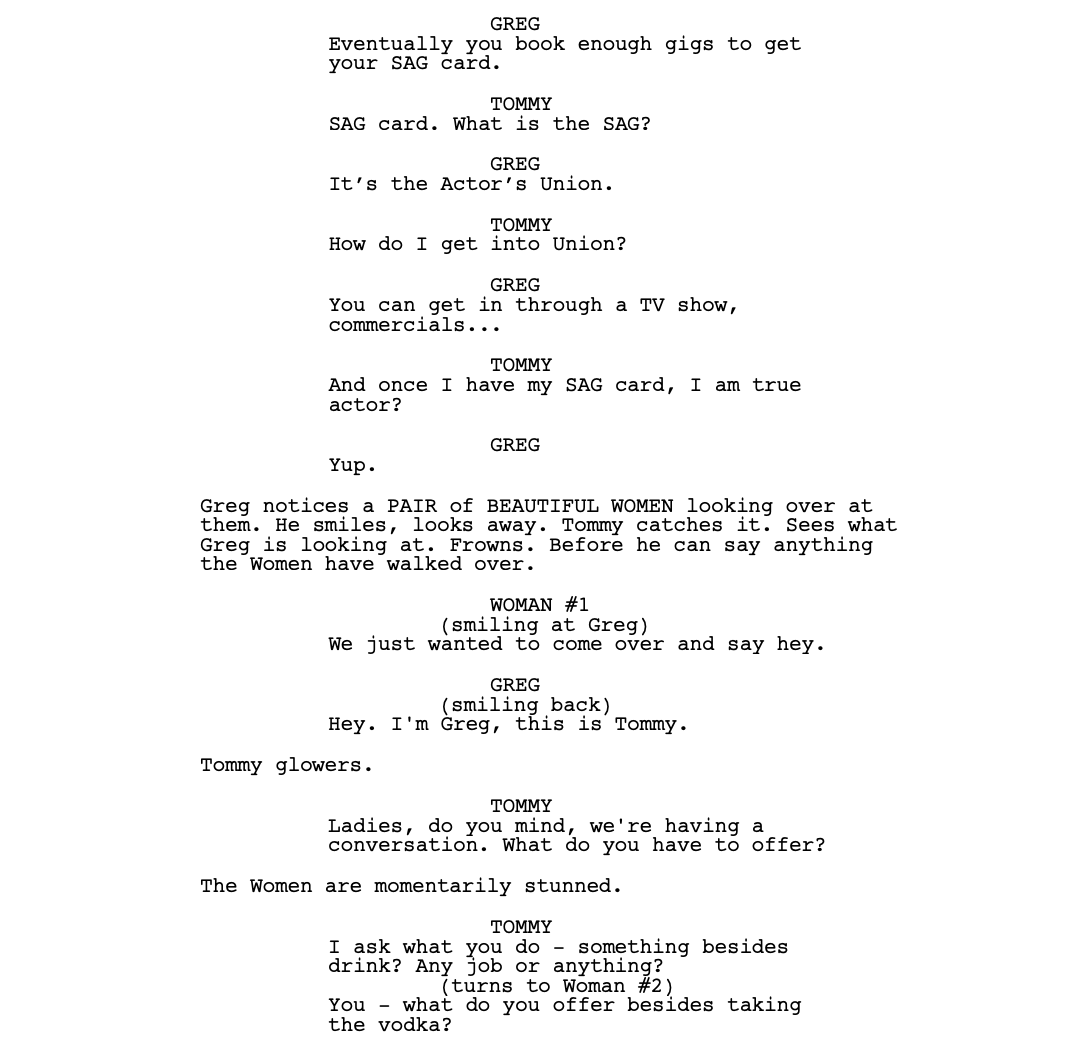
One night at a club, while Tommy dances embarrassingly on the floor, Greg is approached by a cute waitress named Amber.
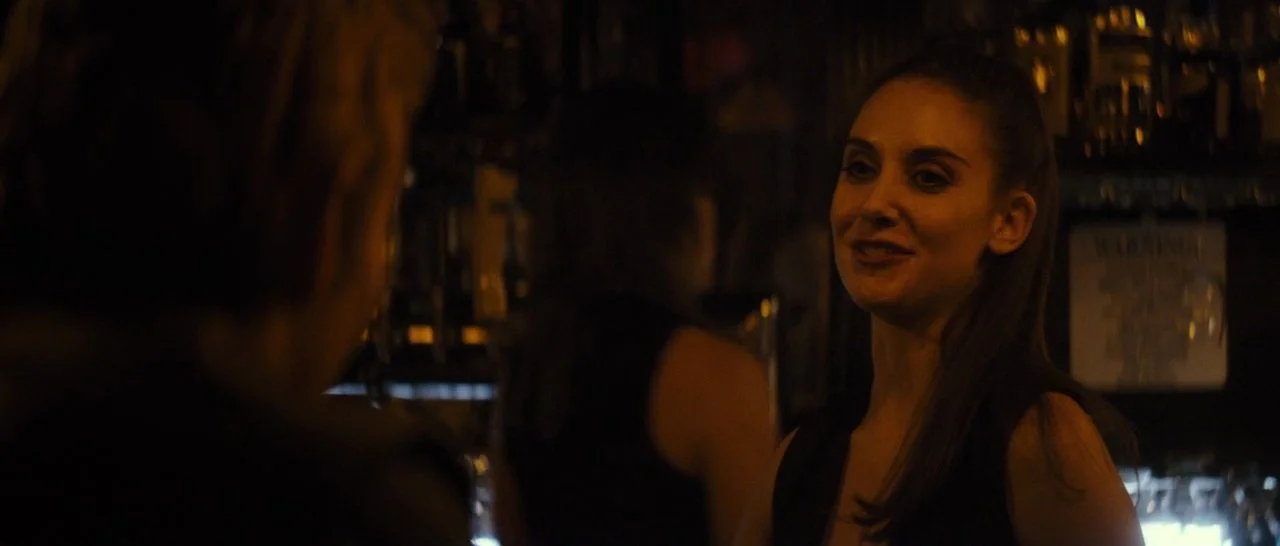
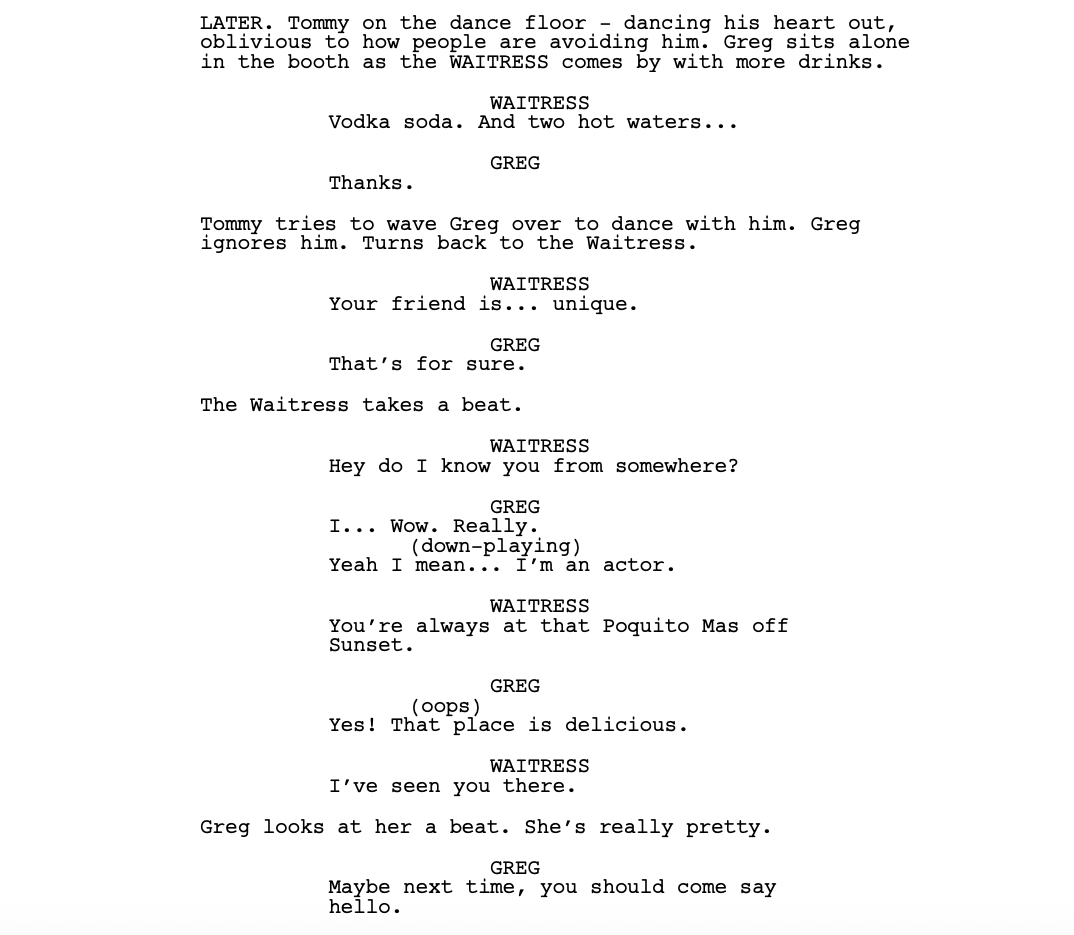
We jump forward a bit in time. Greg and Amber are now dating, which is a pleasant addition to his life as he faces an uphill battle pursuing his dreams. And unfortunately, his acting career has taken a bit of a fall. His agent won’t get back to him, and he’s not getting many parts. Tommy is equally frustrated, but aggressively trying to prove that he’s doing just fine.
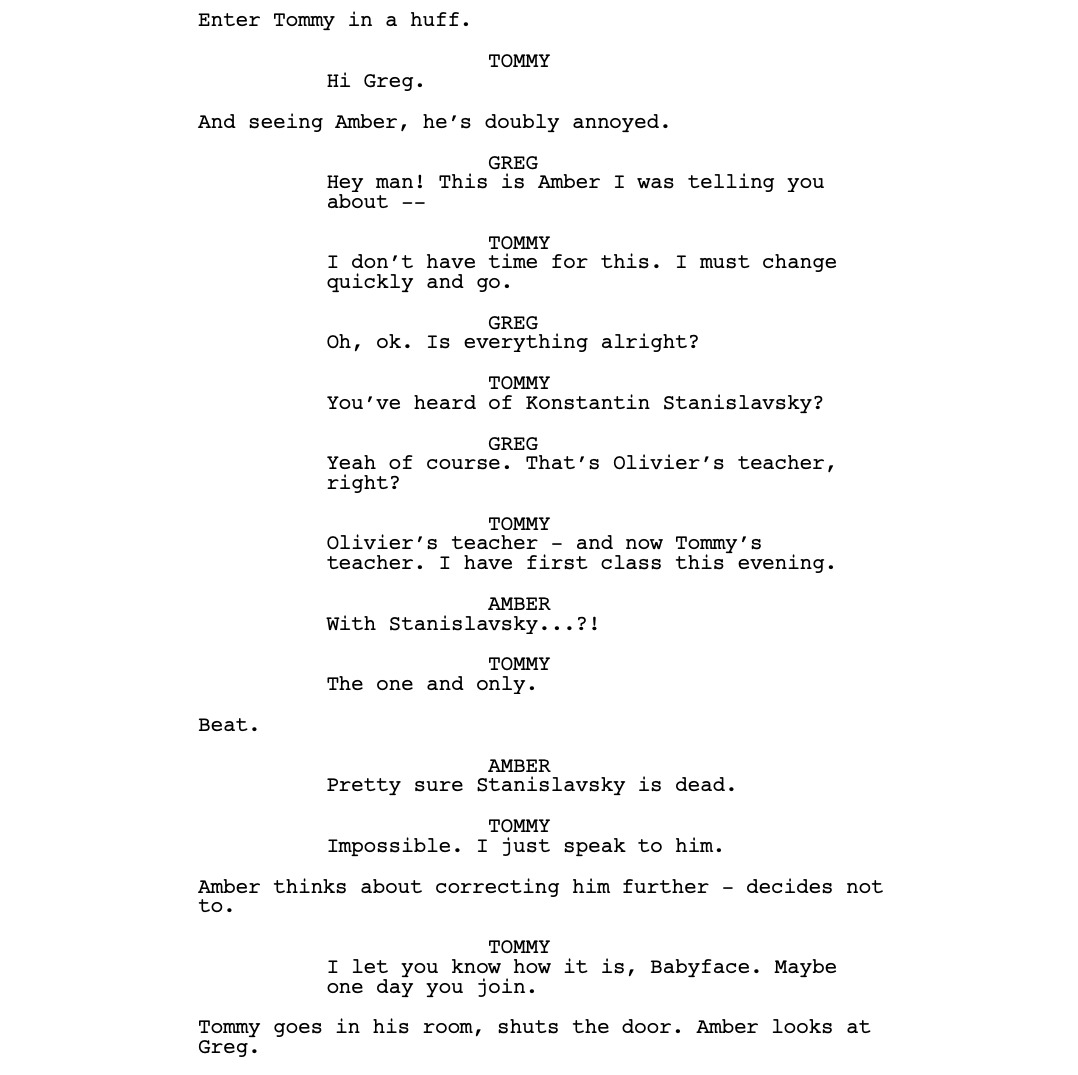
At Tommy’s acting class, the teacher stops his scene to give Tommy a bit of advice.
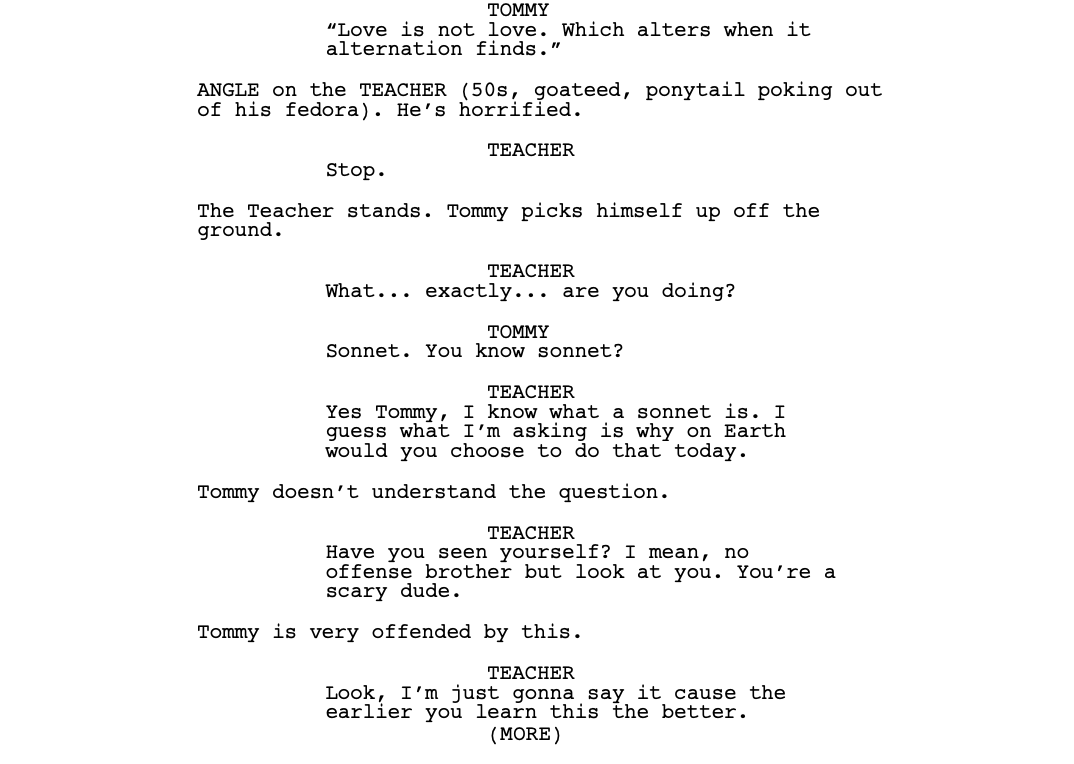
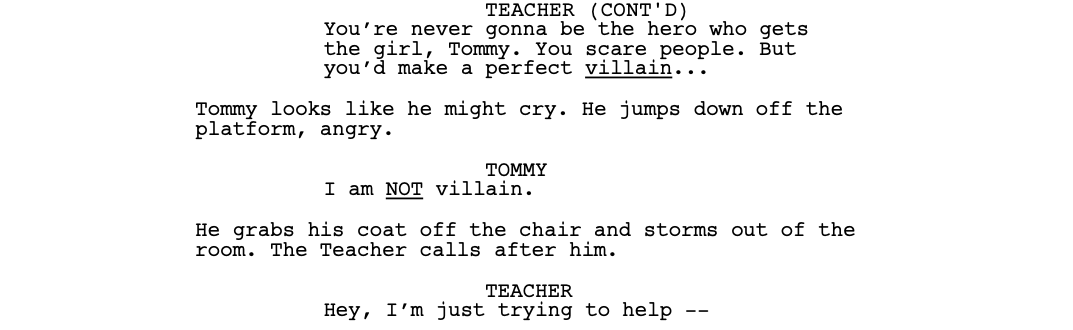
Hollywood is just treating Tommy the way he’s always been treated: as a loser, as an outcast, as a villain. He flat-out refuses to accept such offensive labels. In his mind, he knows exactly who he is supposed to be.
One day, Greg returns home to find Tommy on the rooftop. He climbs up to talk to him, knowing something must be wrong.
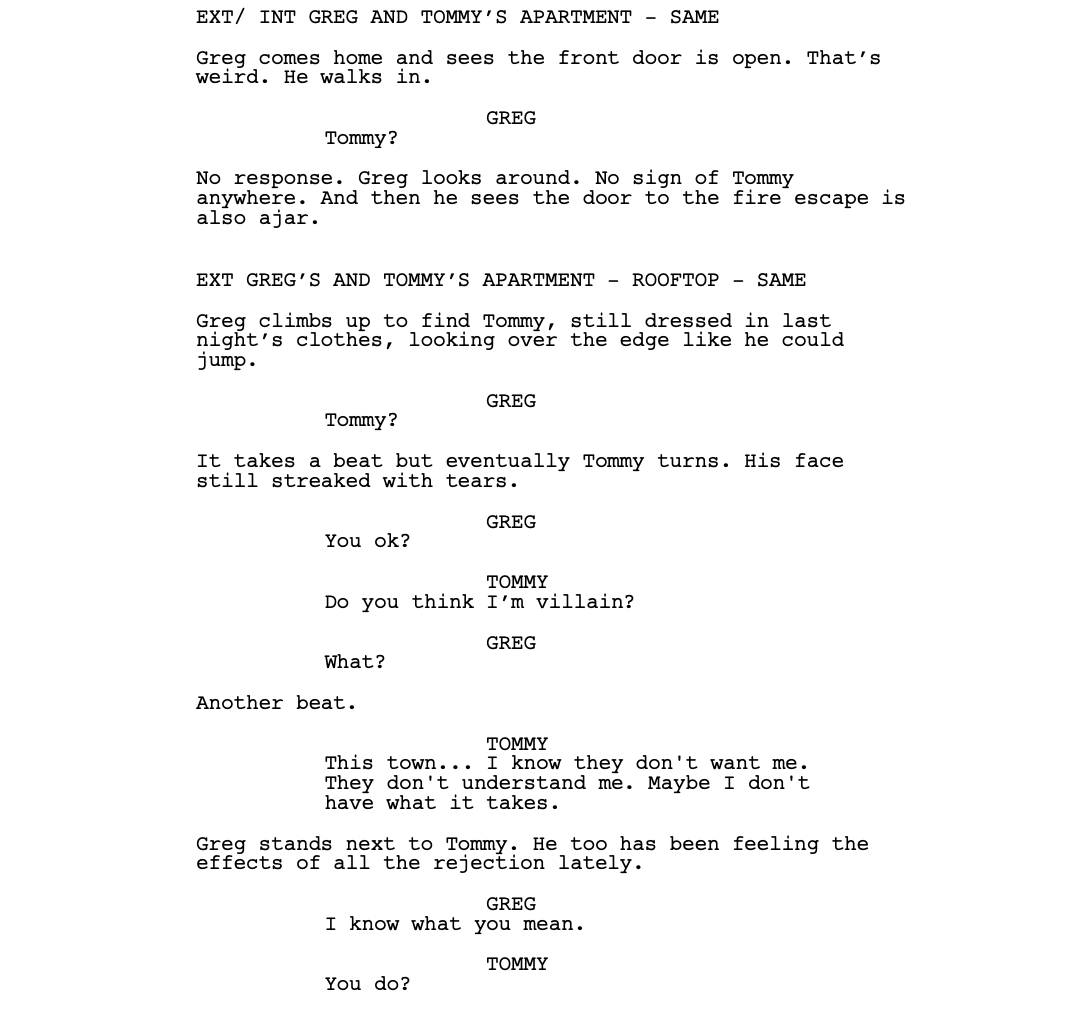
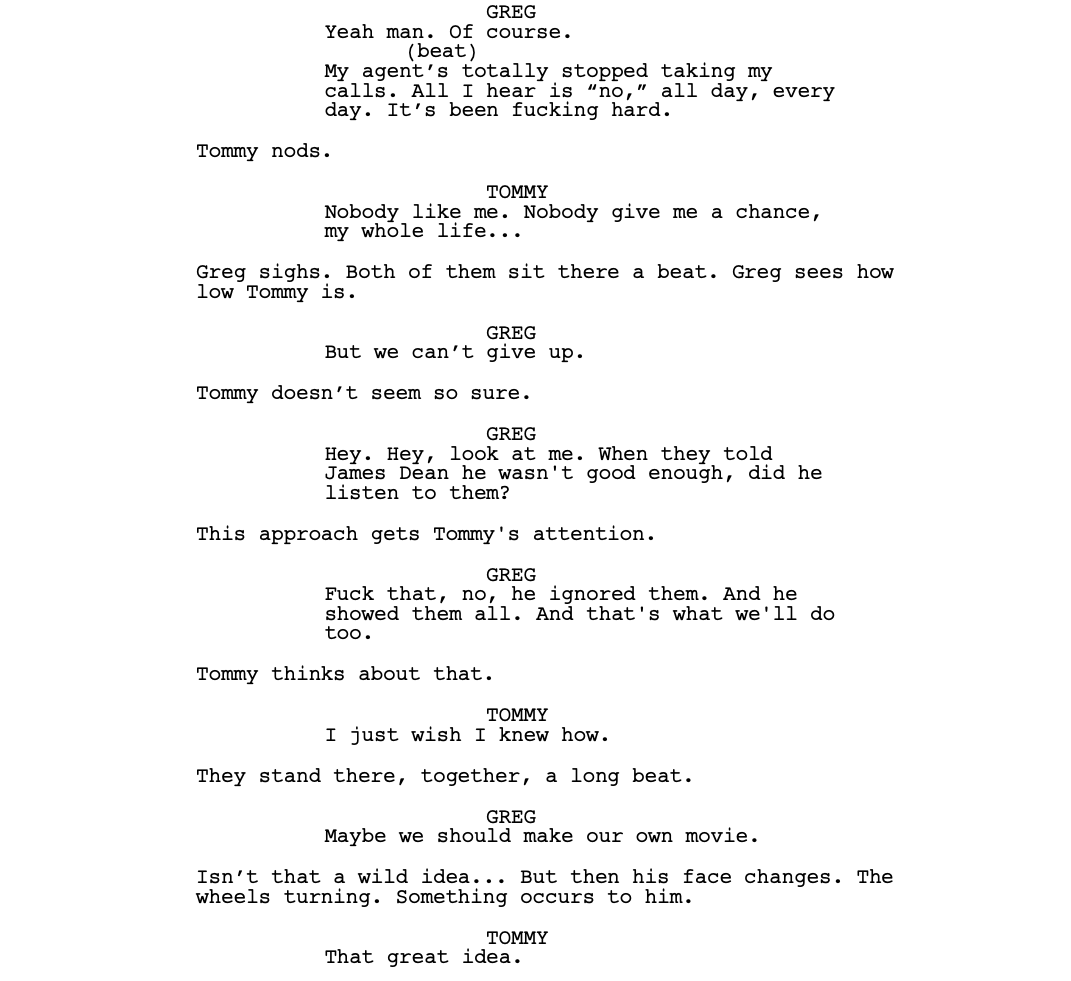
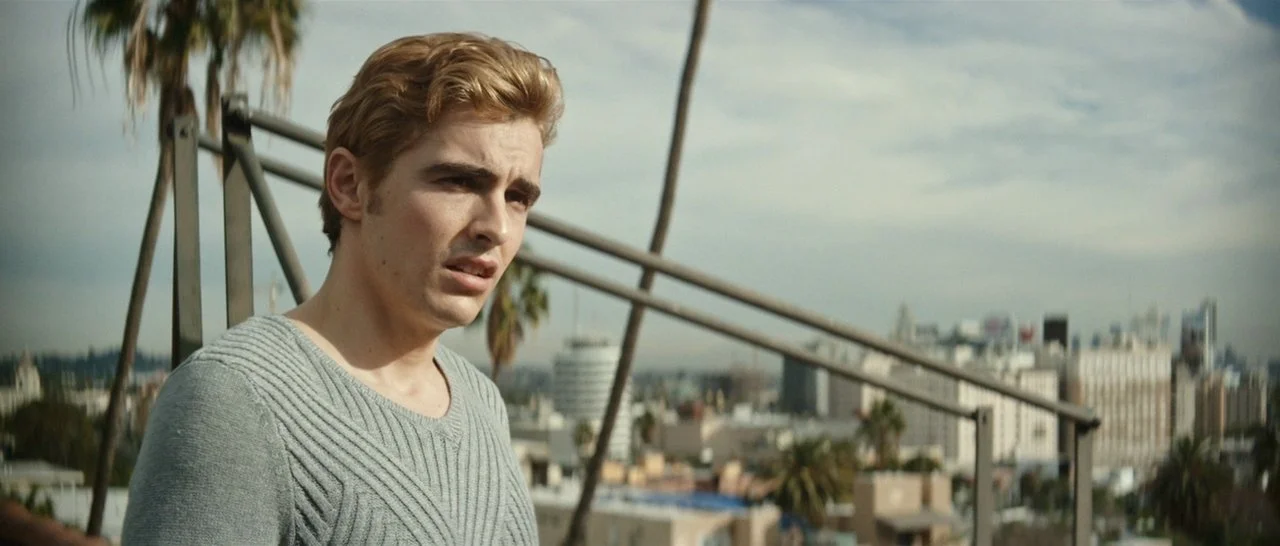
Part of Tommy’s frustration came from the belief that Greg was having so much more success than him. They both started from nothing, came here together, and were supposed to take over the town hand-in-hand. But when Greg started getting auditions while Tommy was facing rejection at every turn, it destroyed him. Greg was everything Tommy wished he could be, and his immediate “success” made him feel like the lonely loser he was before he got here. However, when Greg voices his own frustrations and reveals to Tommy that he was struggling as well, it brought them back together. Obviously, neither of these two were being given any favors. They would have to make their own luck.
MIDPOINT/ INCITING INCIDENT #2
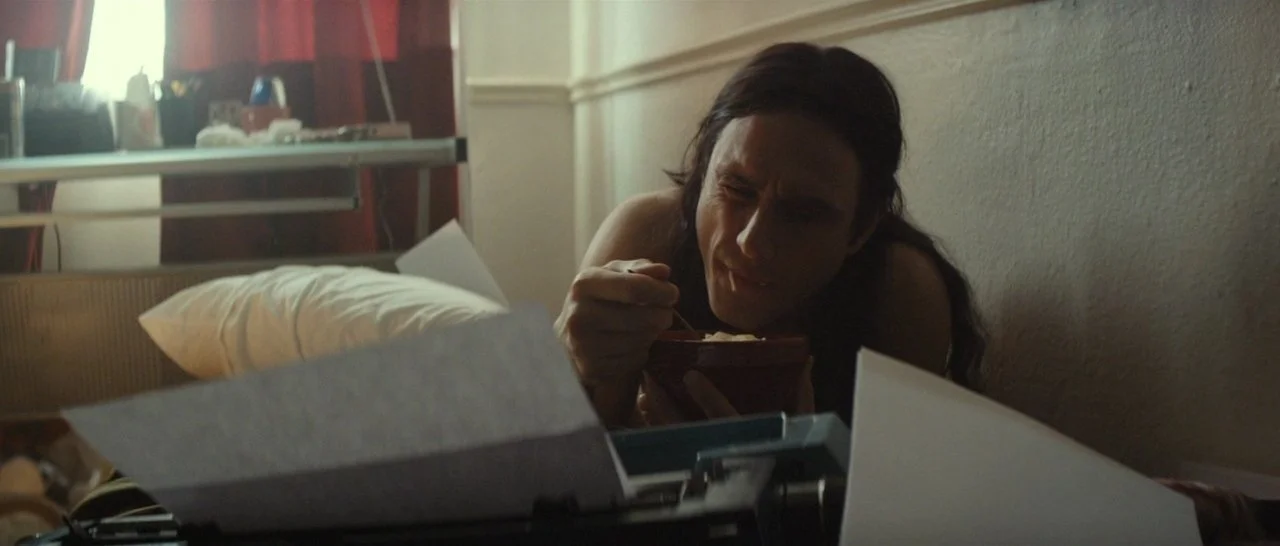
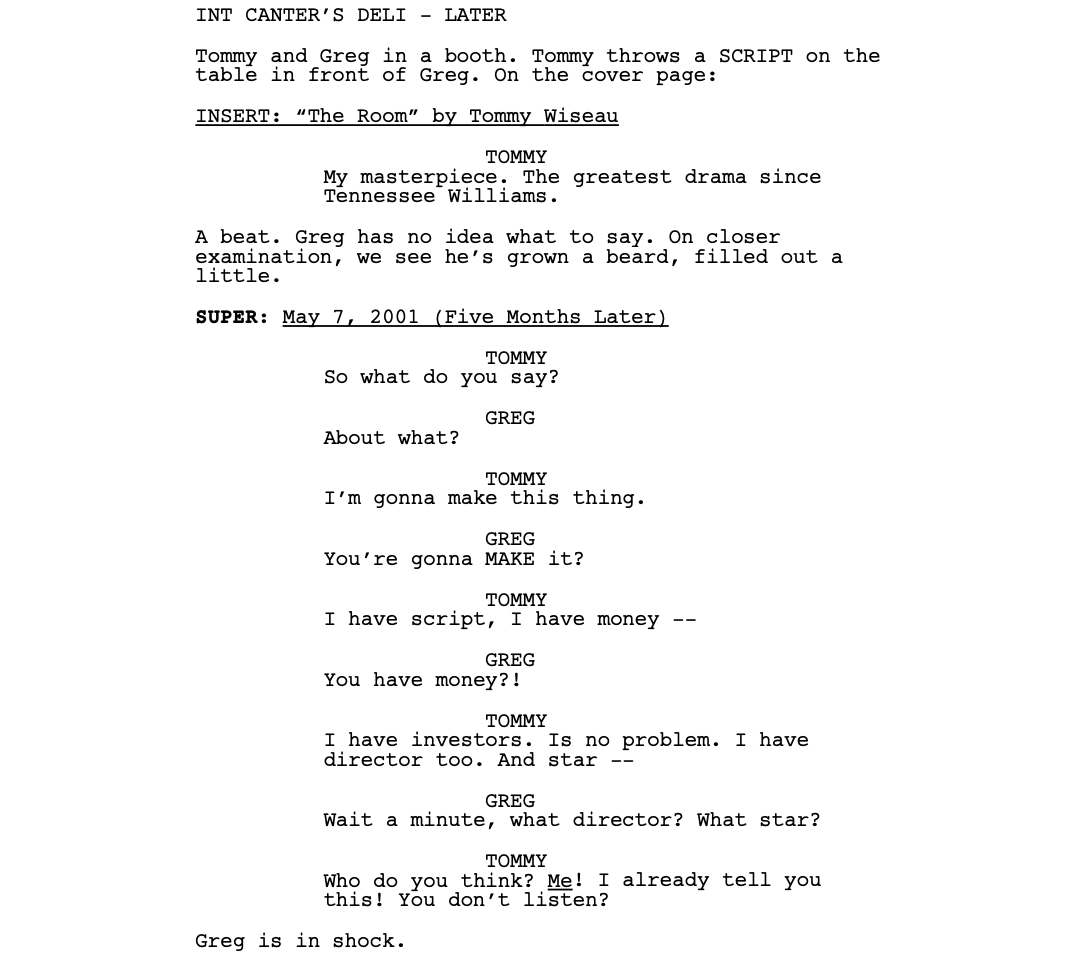
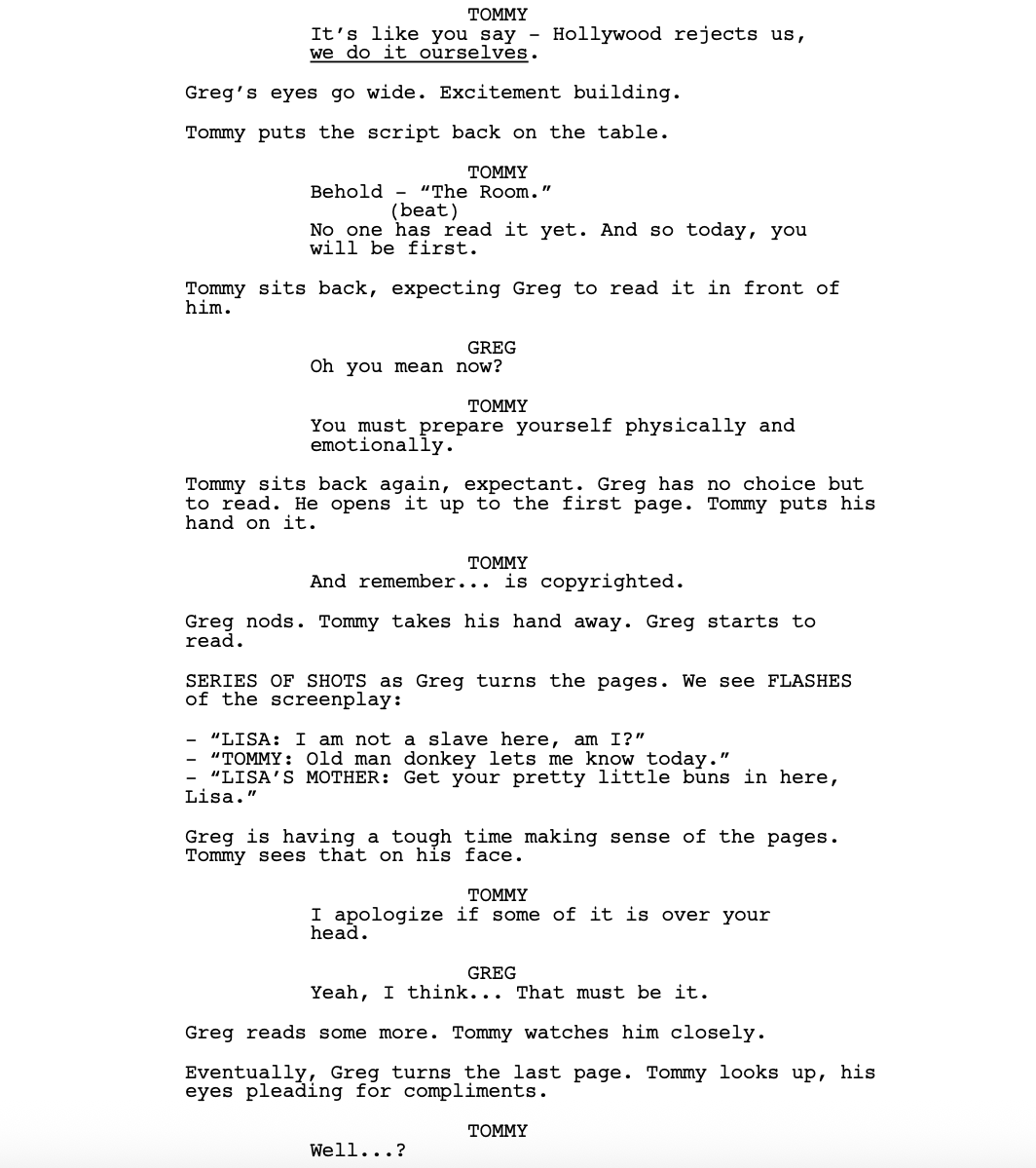
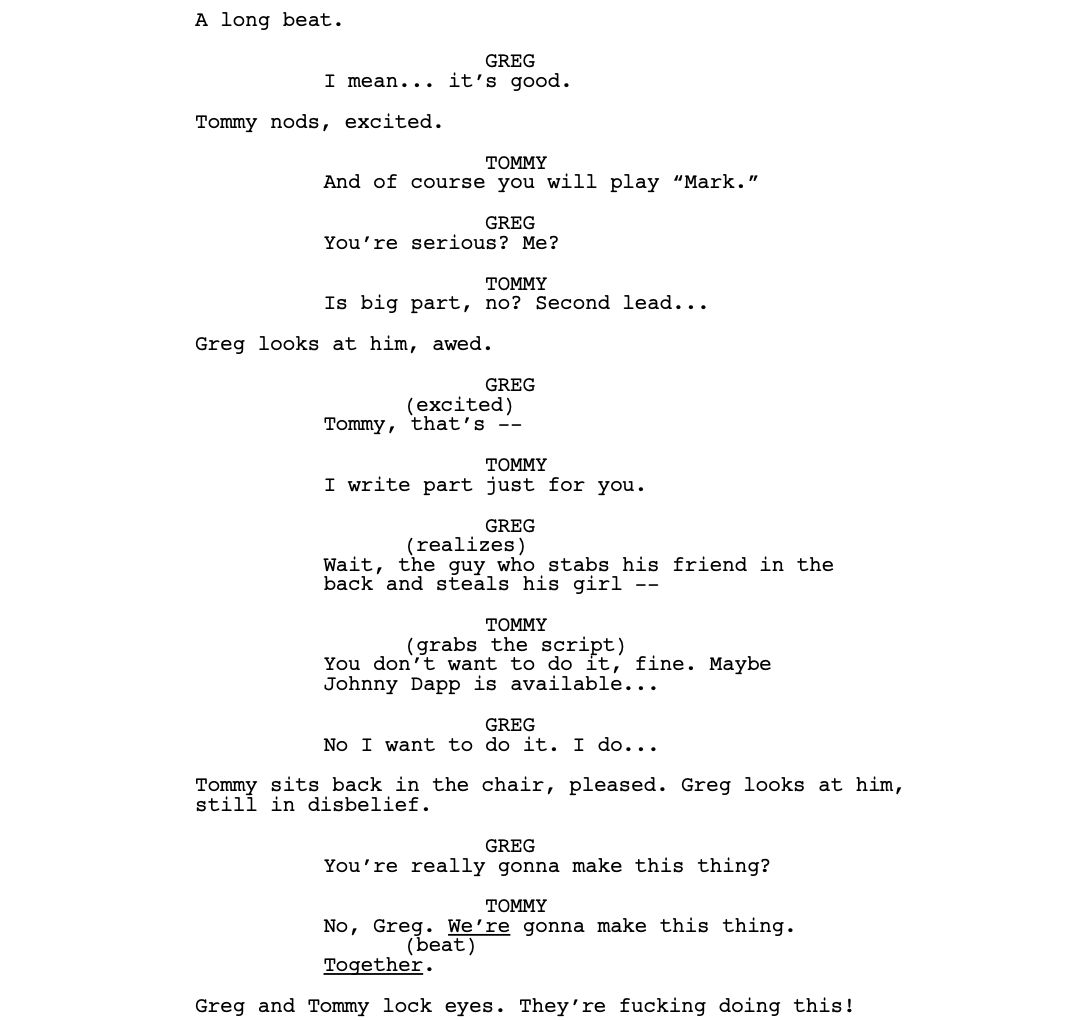
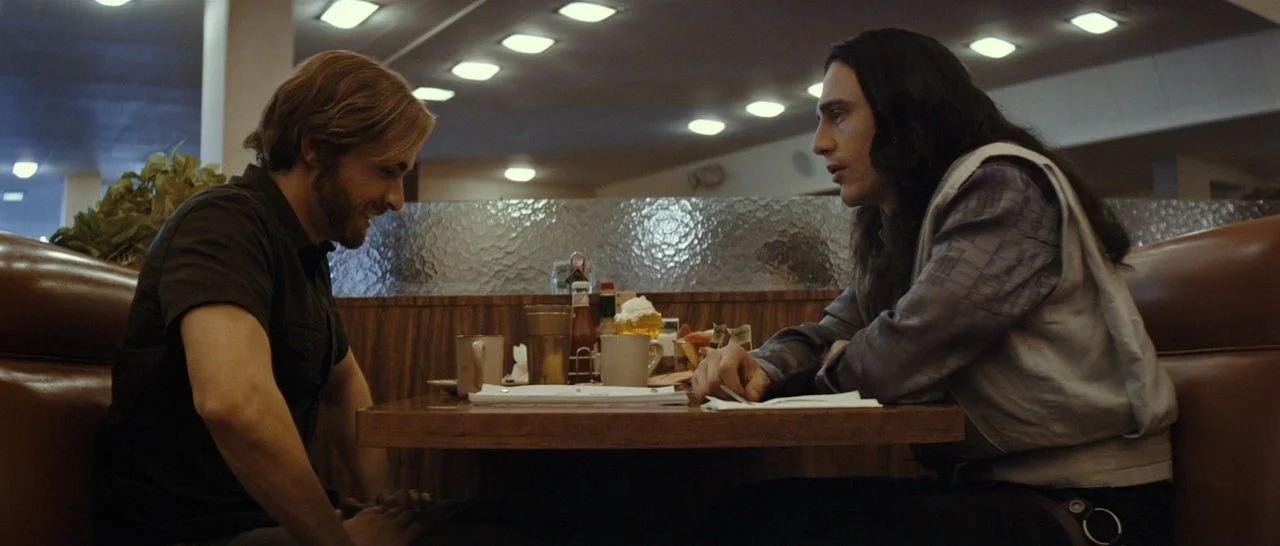
After a brief and hilarious montage of Tommy Wiseau writing the script for The Room, we cut to several months later, where he presents the finished product to his once-again best pal, Greg.
BAD TO WORSE
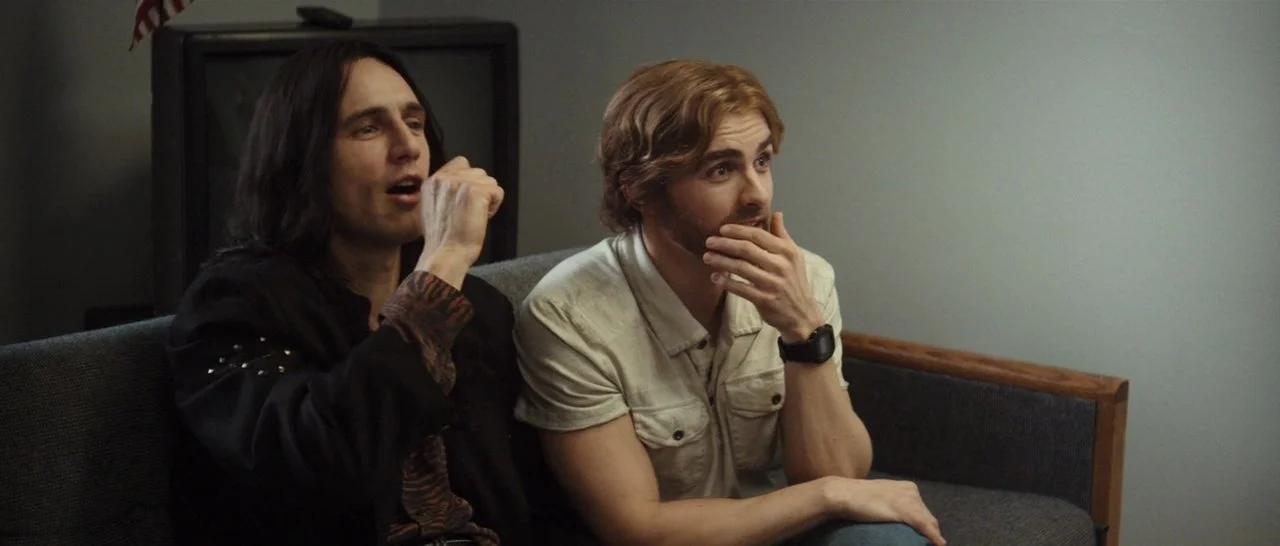
Tommy officially begins pre-production on The Room, which is already going poorly. At the equipment rental house, he confidently makes some pretty amateur mistakes. He demands to buy all of the equipment, wants to shoot both digitally and on film, and has absolutely no idea how long the shoot will take. On top of that, he hires everyone who was introduced to him without so much as asking a follow-up question. This is definitely going to be a long, hard, and expensive endeavor.
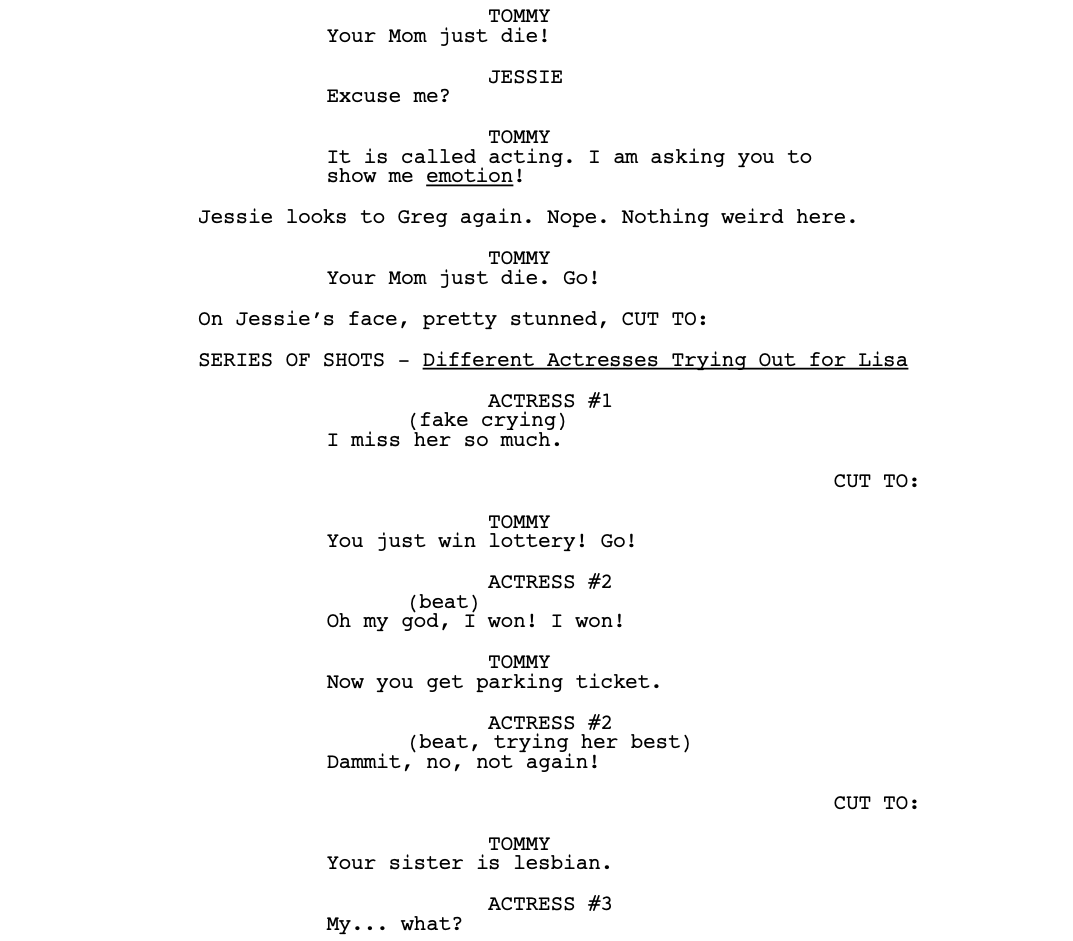
Then we get into the audition process, which is equally a nightmare.
BREAK INTO THREE
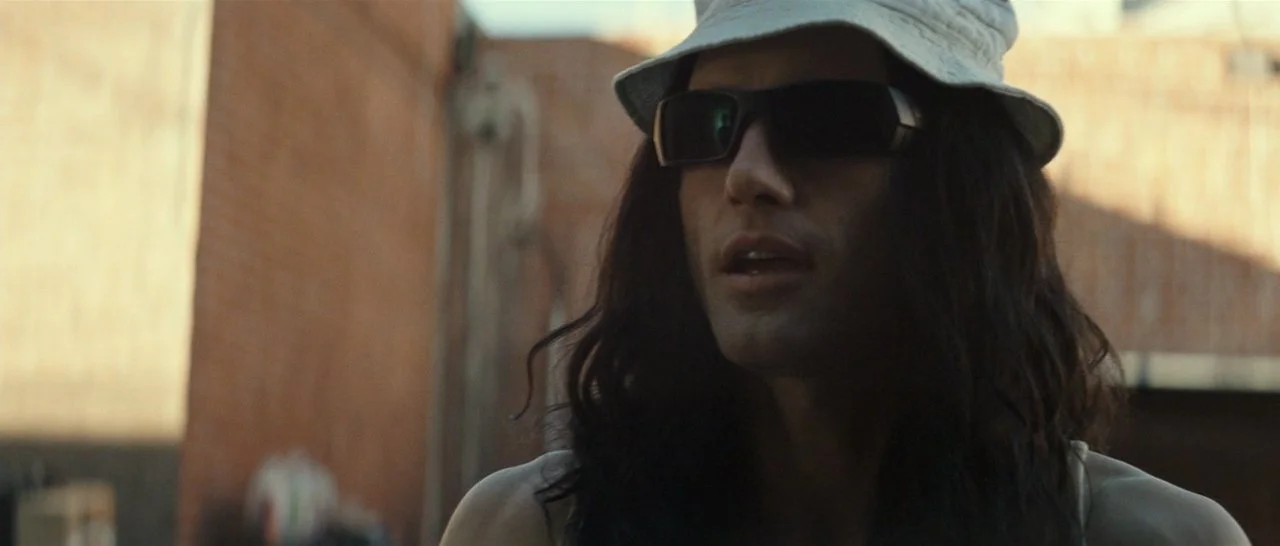
Act 3 begins with the first day of production, and Tommy wants to give a speech before they start.
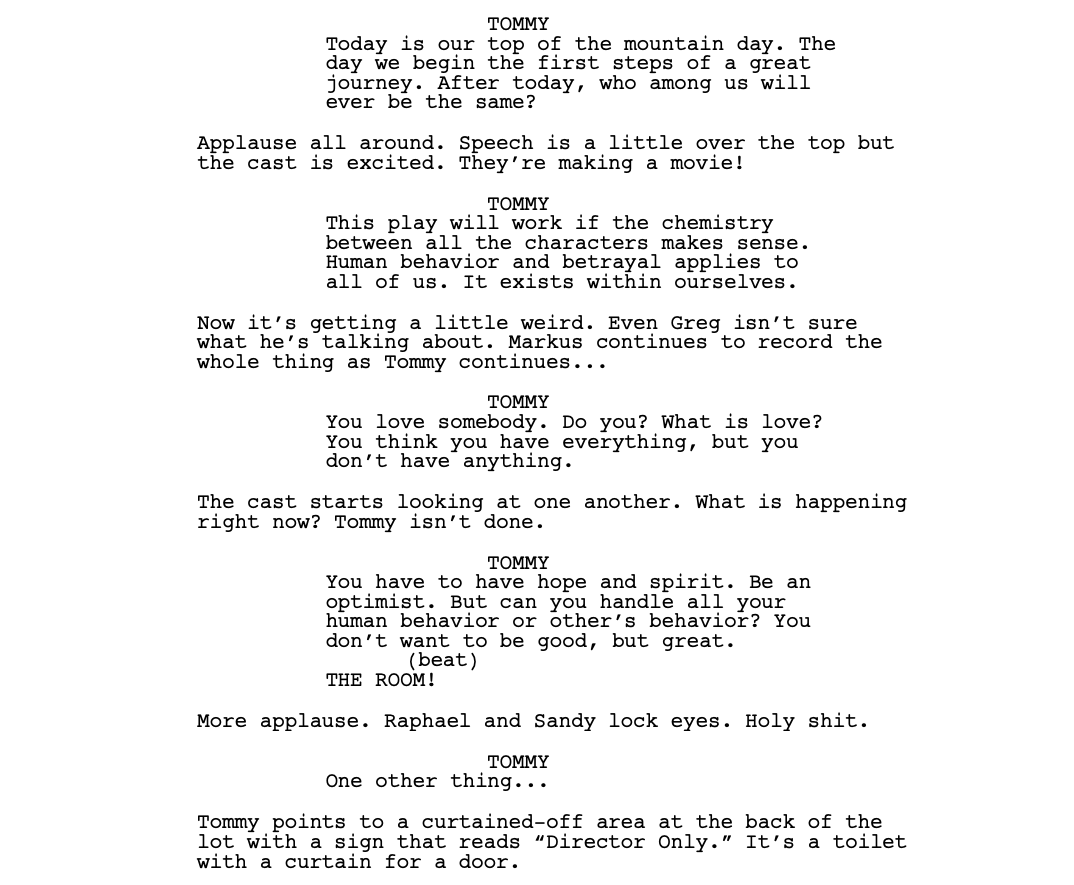
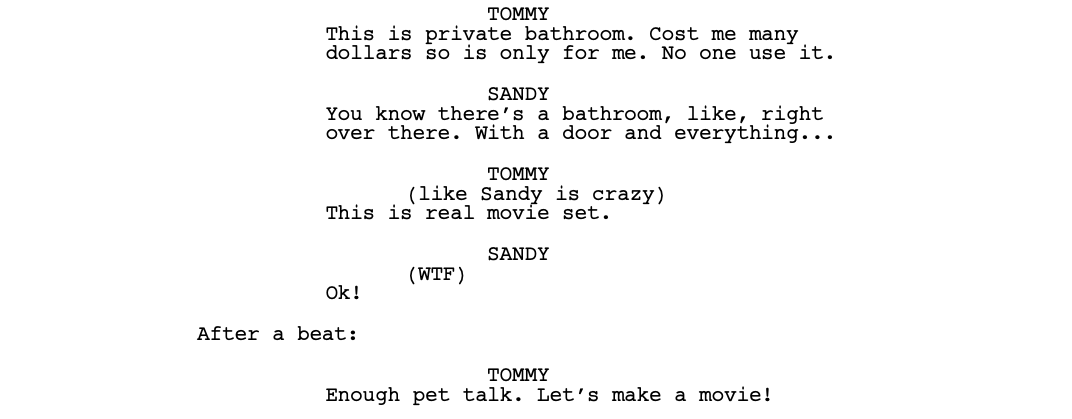
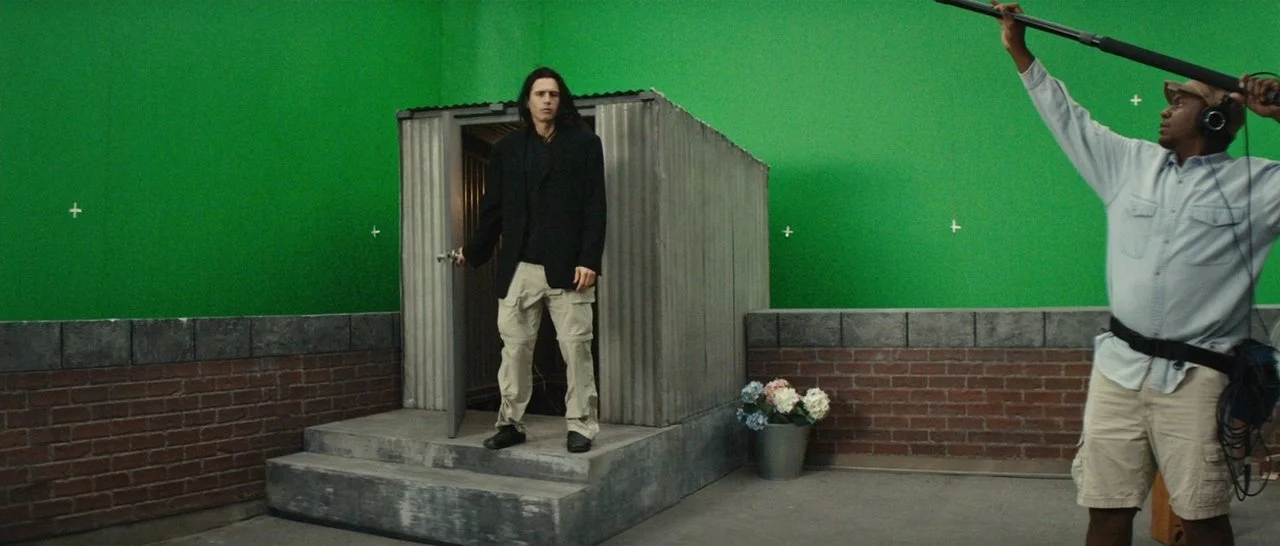
The filming process proceeds to be exactly what you’d expect: confusing character decisions, strange dialogue, plot points that come out of nowhere and never get answered. While the screenplay for The Disaster Artist utilizes these scenes to show how crazy the set was and how bizarre Tommy’s behavior was, there’s just too many instances to include all of them here. Basically, like the title of the movie implies, it’s a disaster.
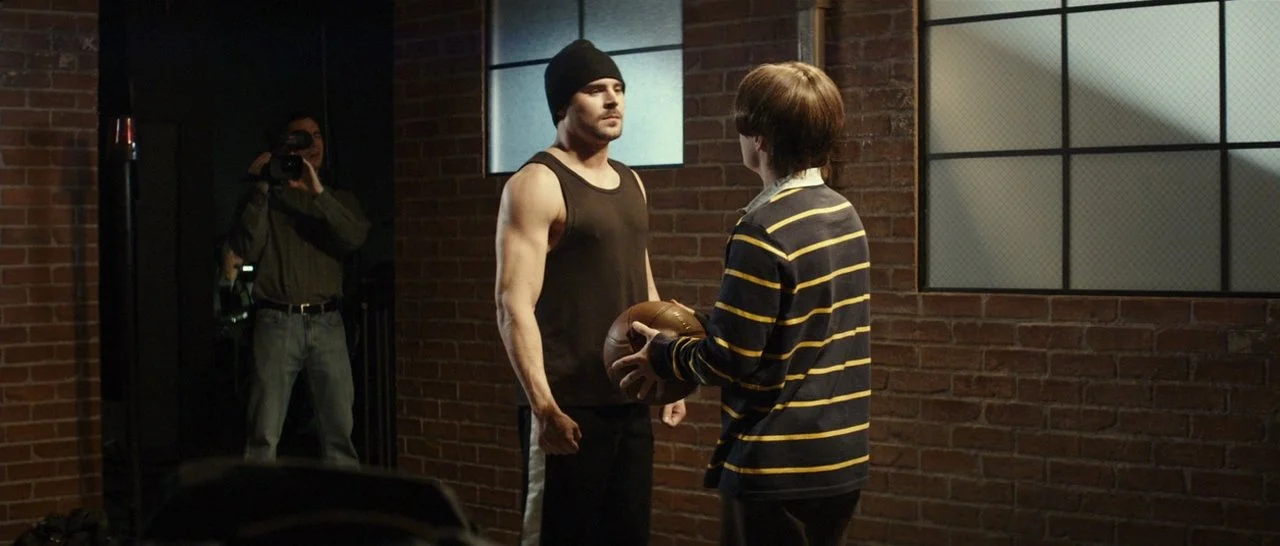
Oh, and we haven’t even gotten to Tommy’s acting debut…
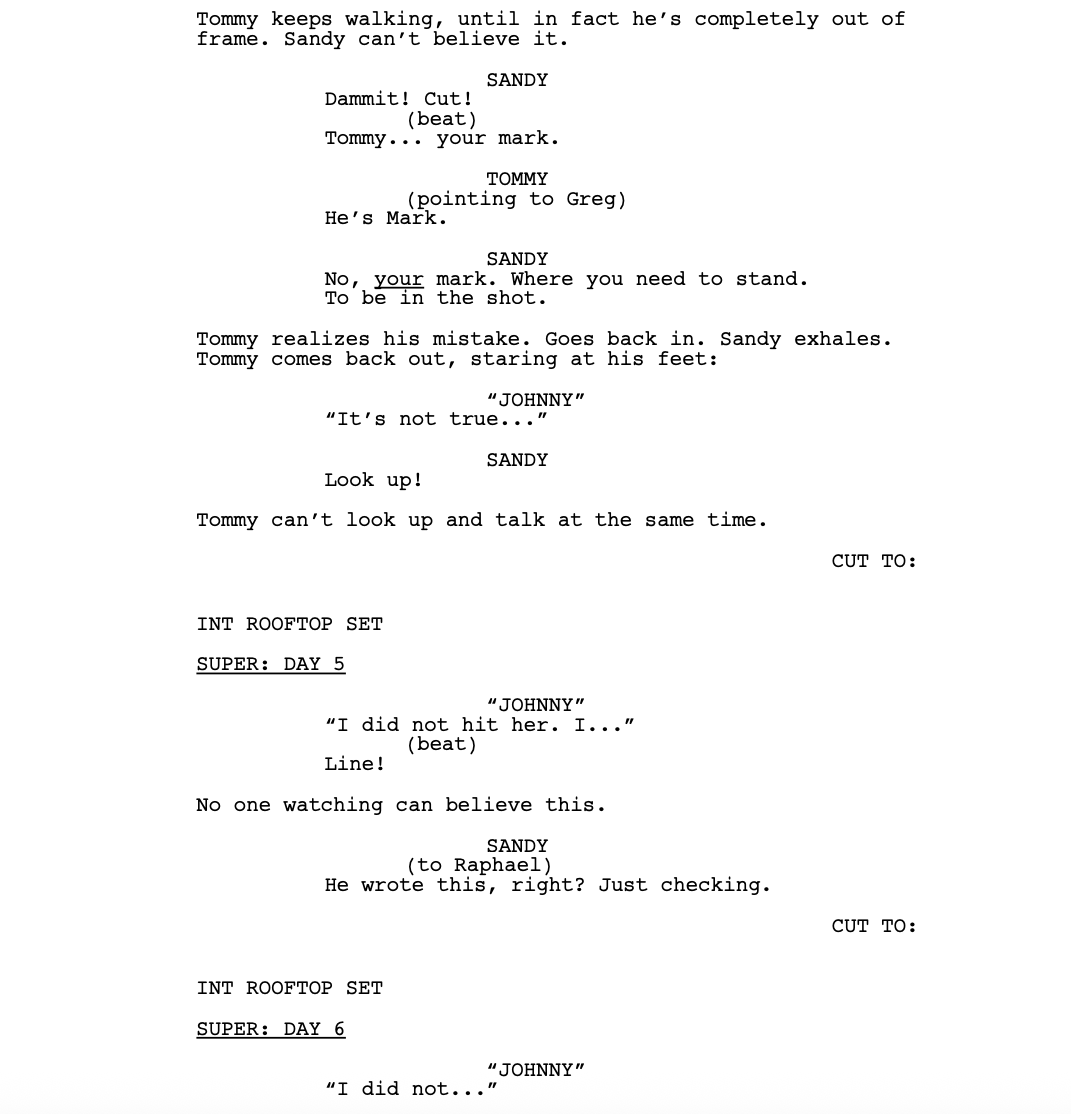
After wrapping that day, Sandy goes to cash his first check, which he isn’t entirely sure will go through. There’s not a chance Tommy actually has the money to make this whole thing work.
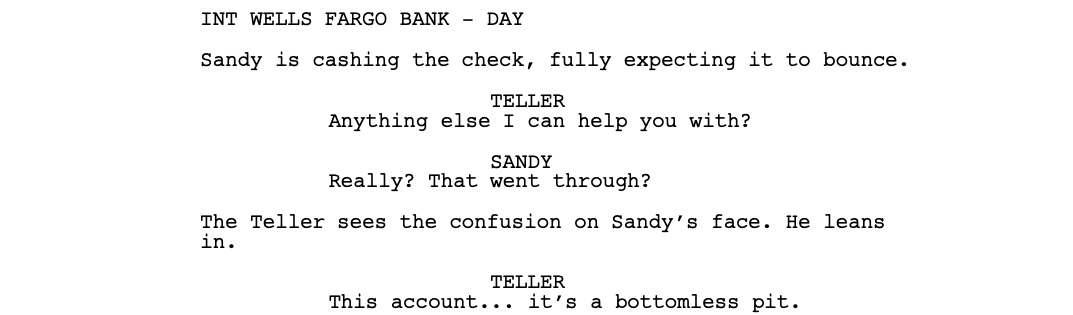
This revelation just leads to more questions. Where is Tommy from? How old is he? How does he have all of this money? These questions, along with Tommy’s behavior on set, the overall stressful environment, and the growing fears that this movie might not end up being good, cause everyone to become quite…concerned, to say the least.
FINALE
During a conversation with Amber, Greg is finally forced to face the reality of the situation at hand.
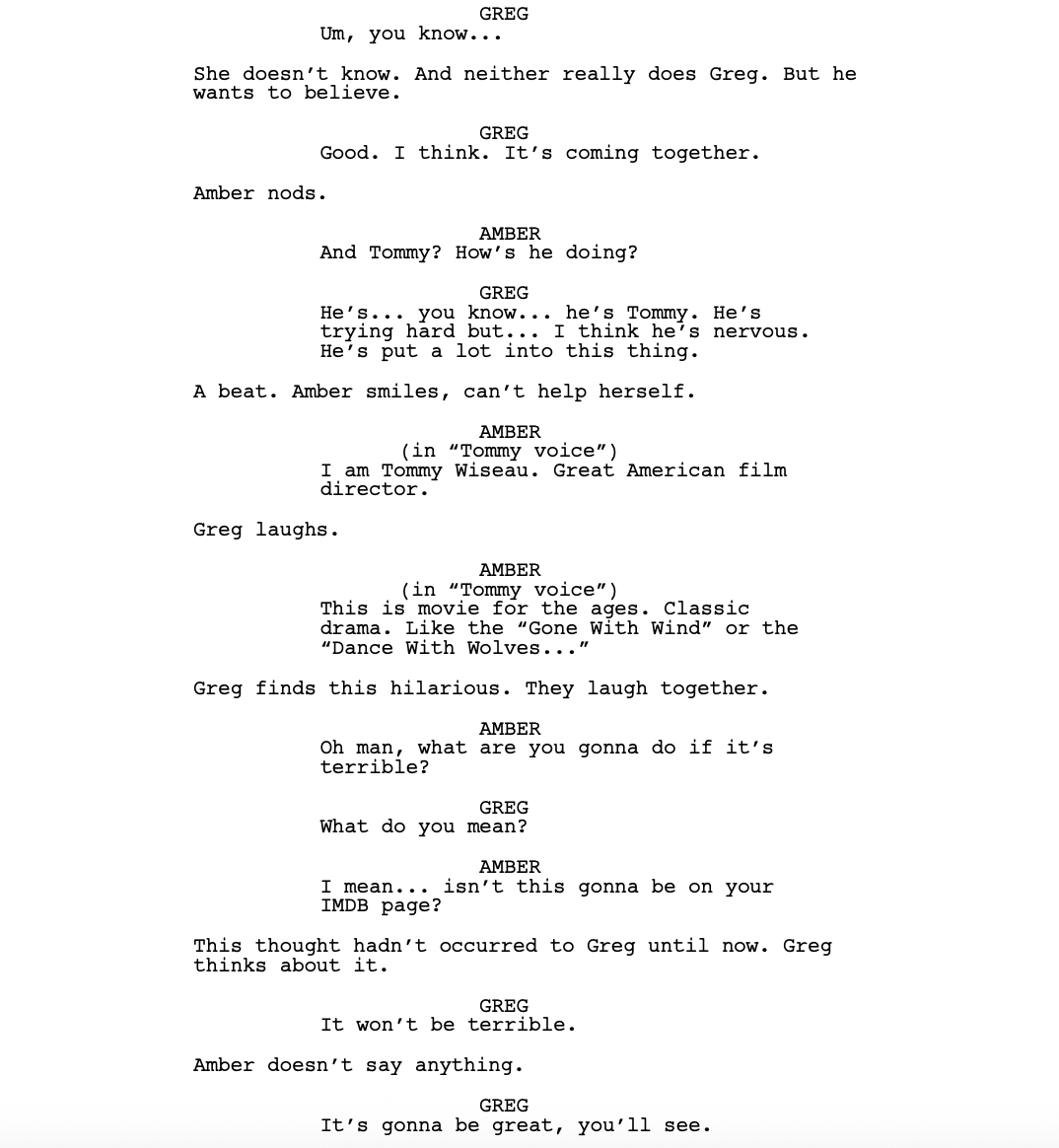
Later, the two of them meet with Tommy to deliver some news.
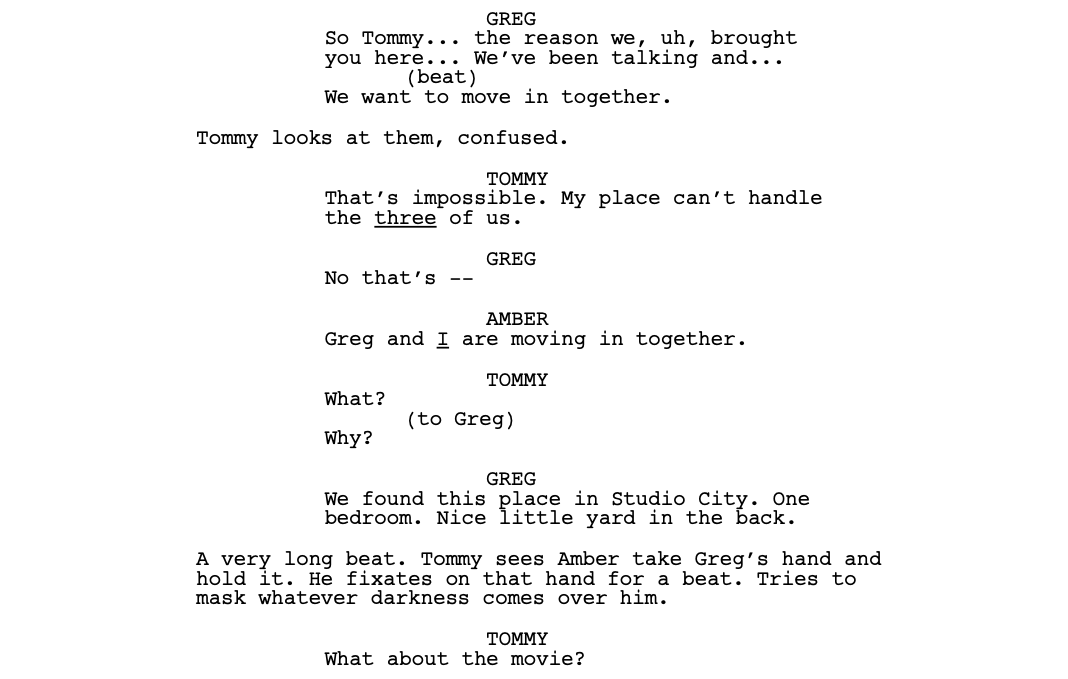
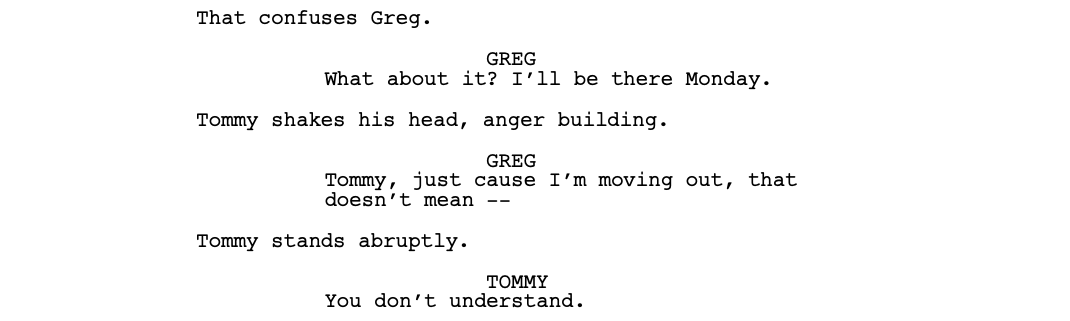
It becomes evident that this movie wasn’t just about making a movie; it was about doing something with a friend. Greg and Tommy had the same ambitions, and part of the beauty of pursuing them was to be able to do it together. Now that Greg’s moving in with Amber, Tommy’s movie is starting to feel like just another failed attempt at something that was supposed to be great.
After another miserable day on set, Amber finally tries to talk some sense into Greg.
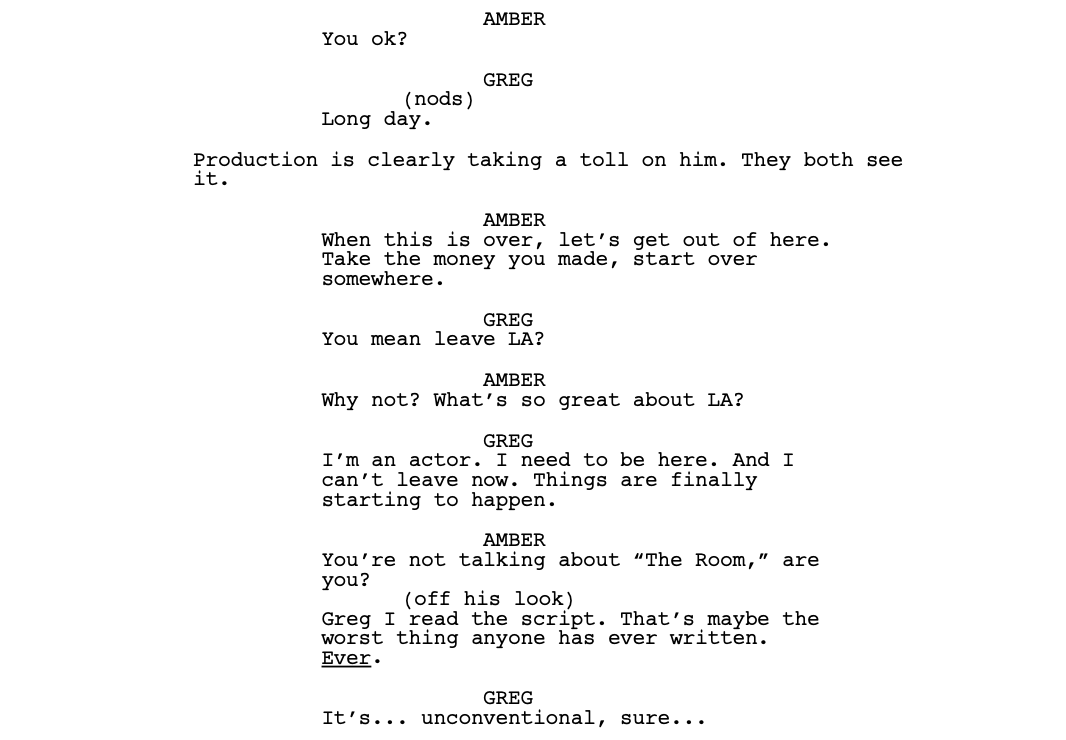
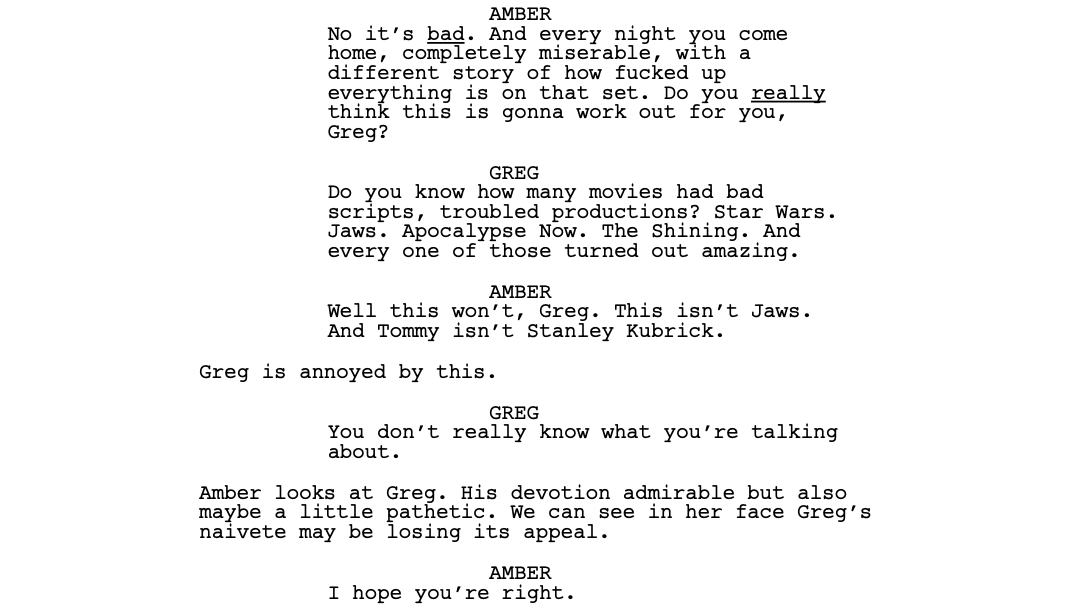
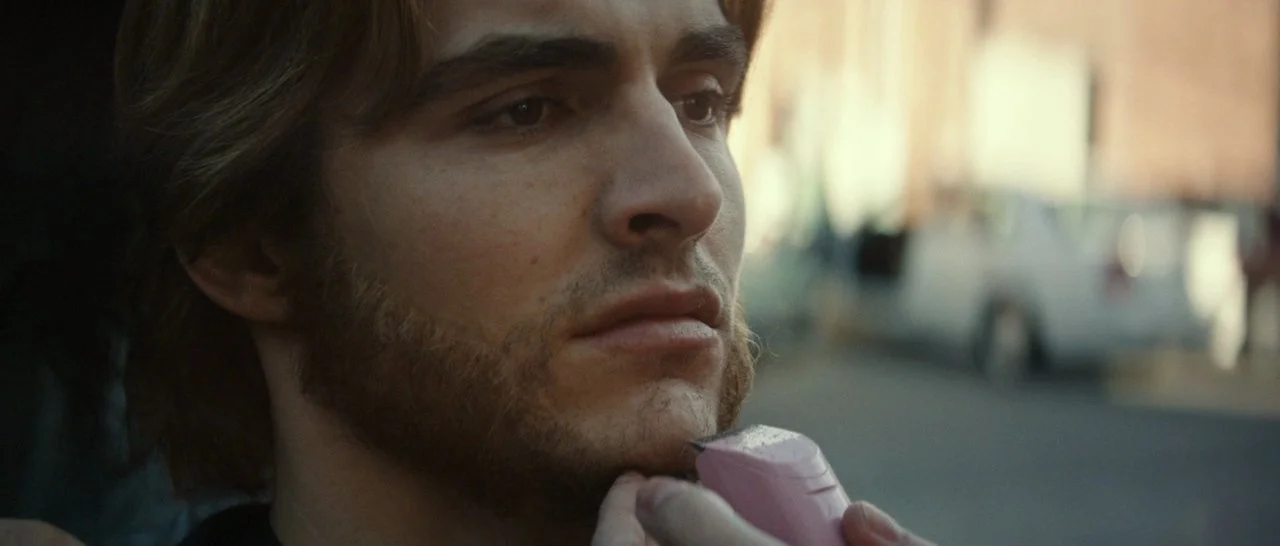
After several more humiliating days on set (including one where Tommy made Greg shave his beard, ruining his opportunity of being cast on a hit TV show), Tommy picks up Greg to drive to San Francisco. They’re just planning on shooting some exteriors on location, until…
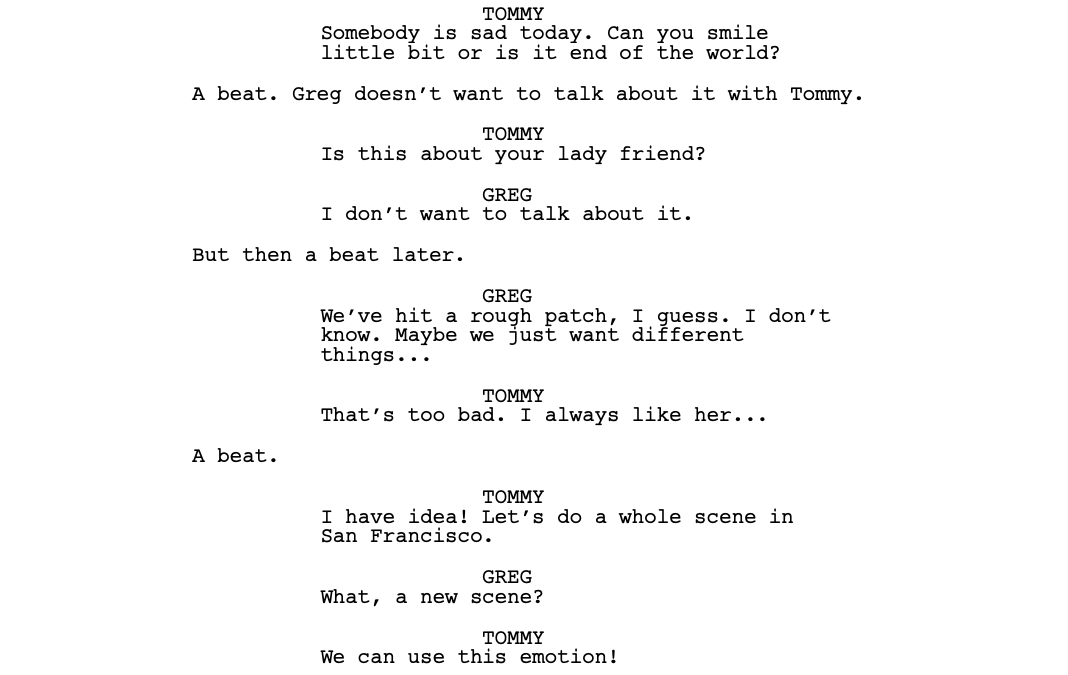
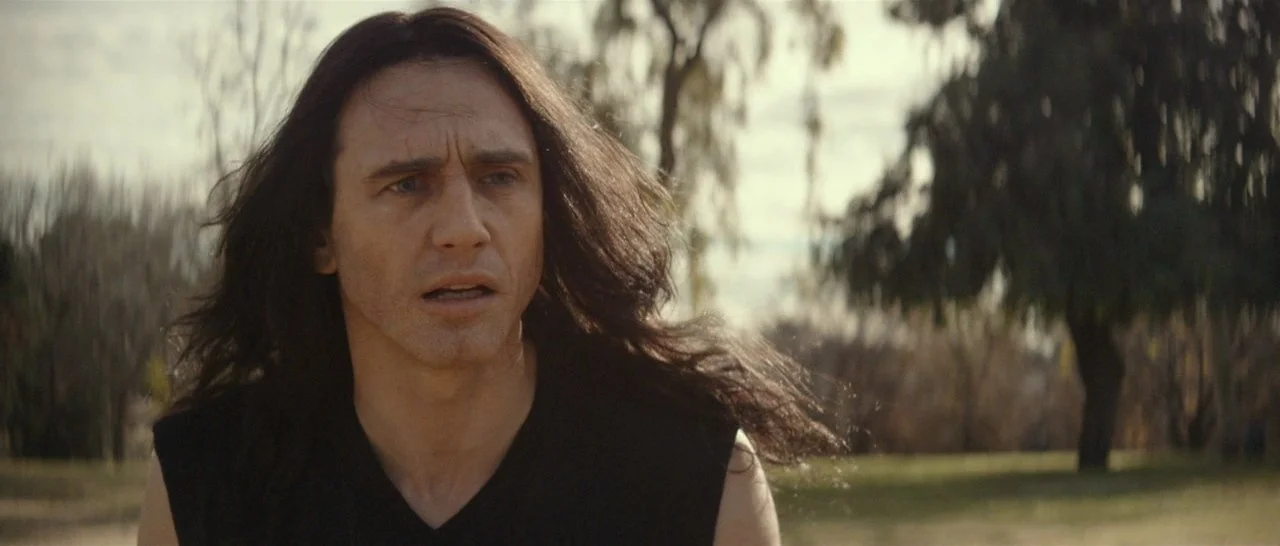
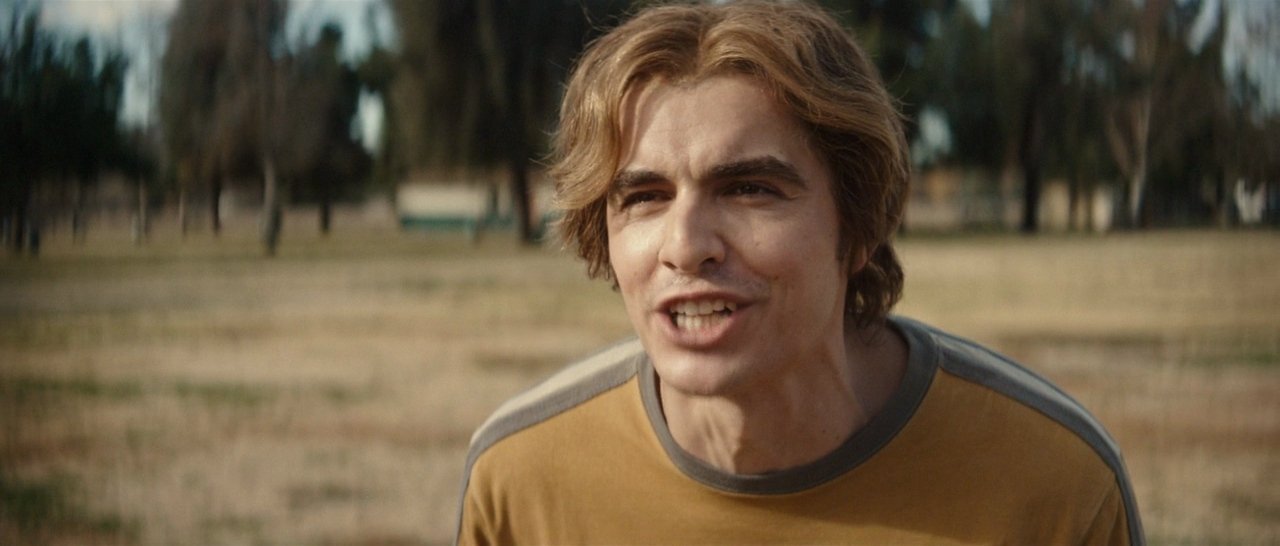
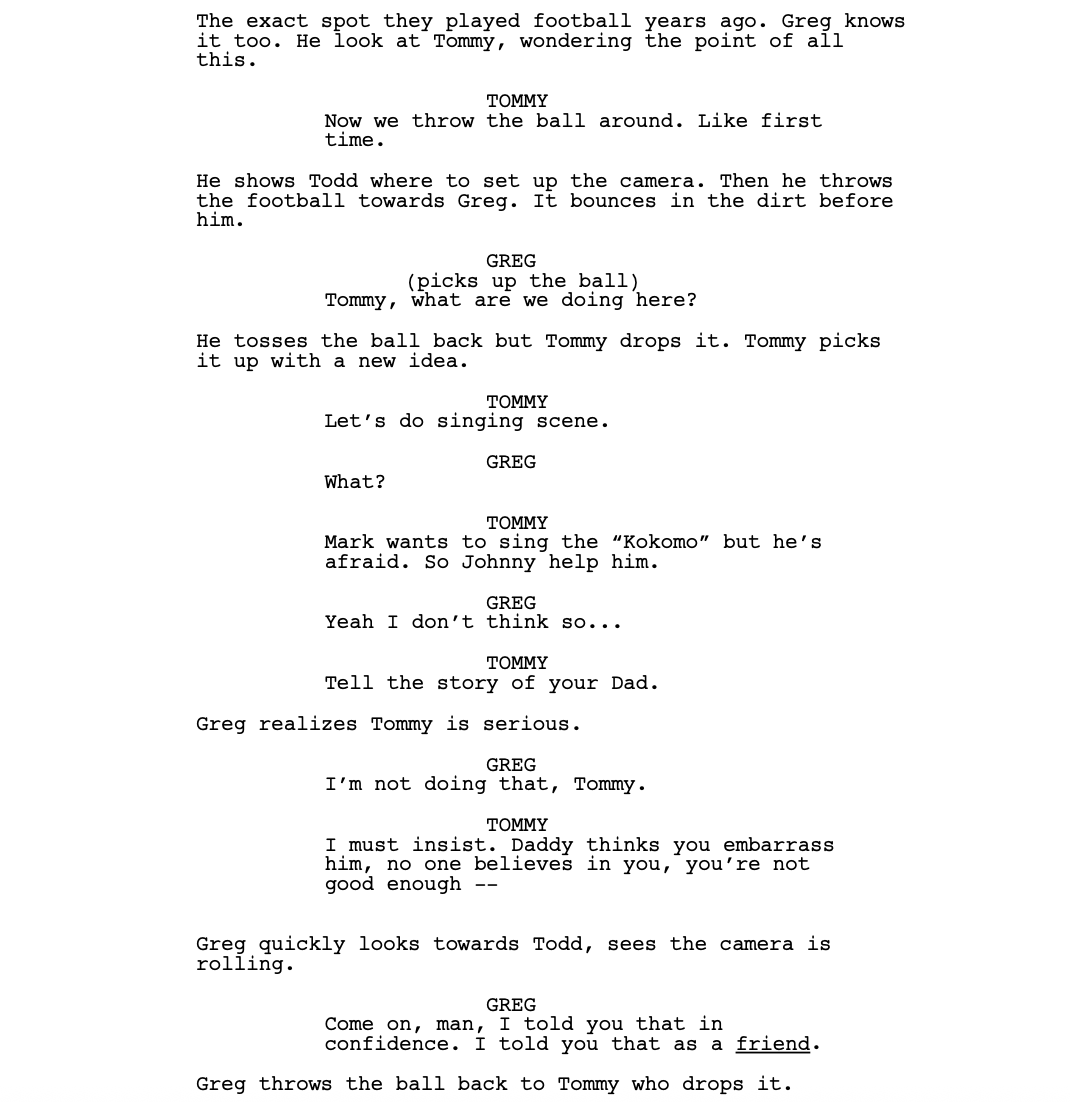
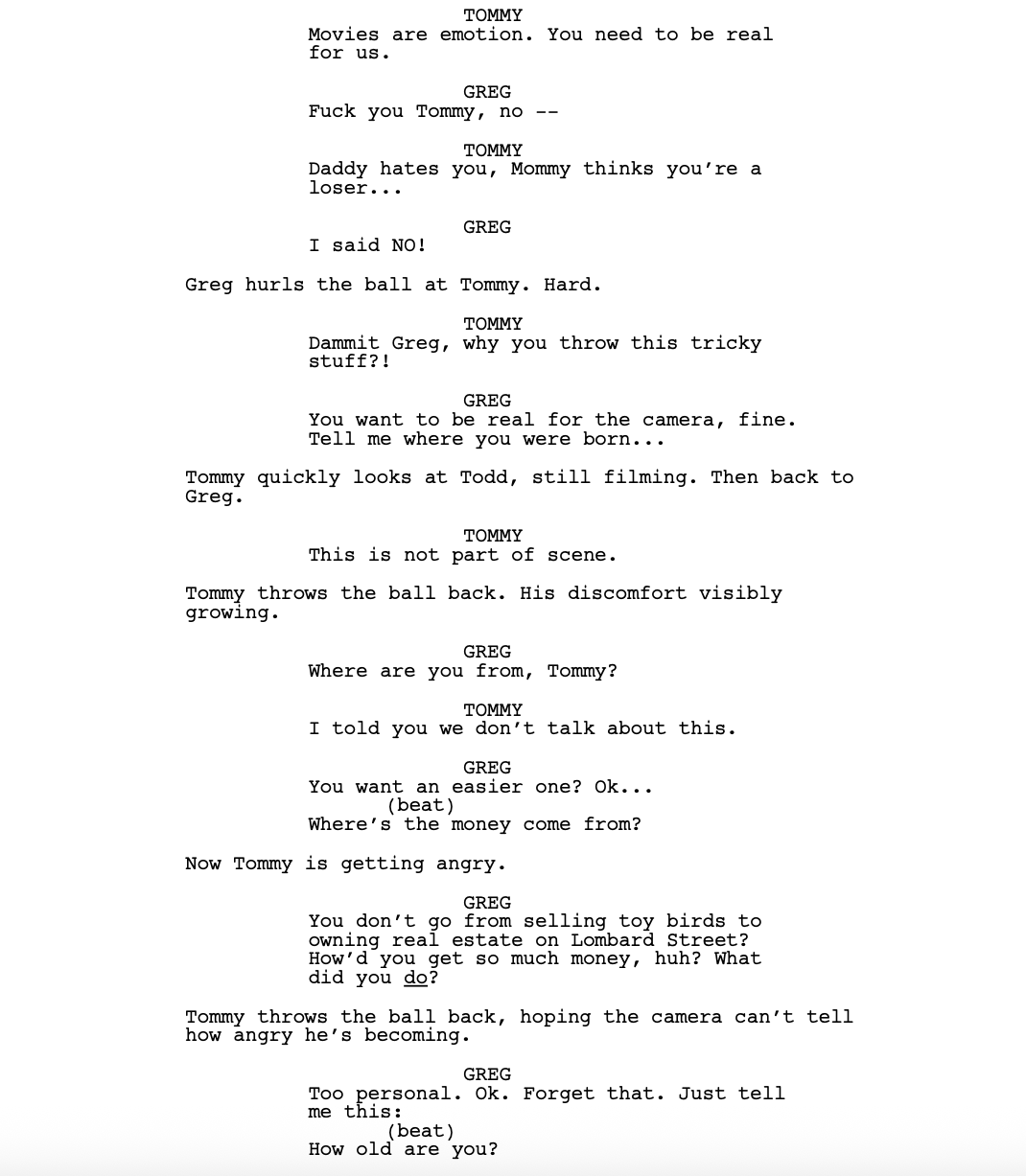
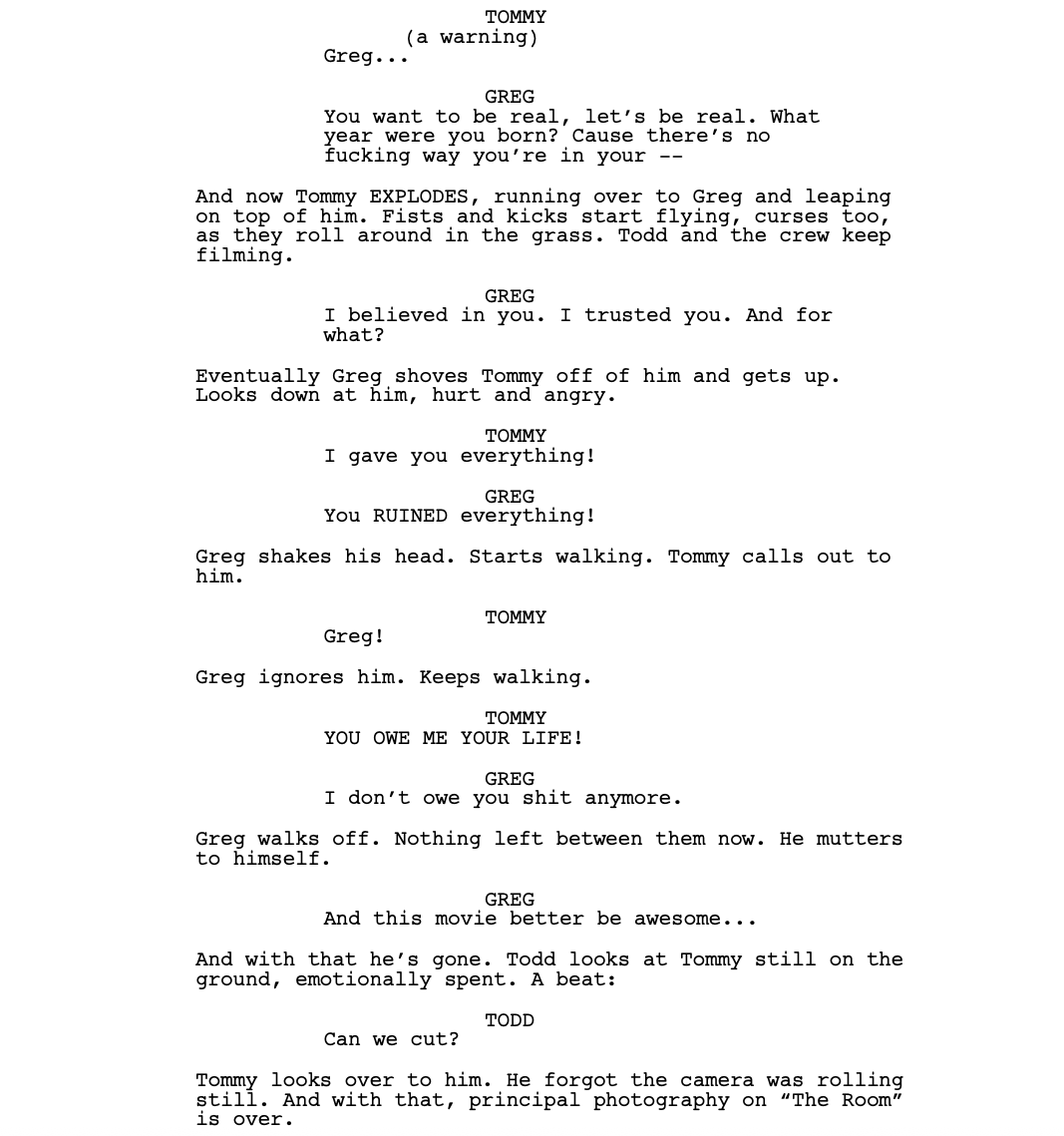
Cut to Greg and Tommy filming an impromptu football-throwing scene at the park, where Greg finally snaps.
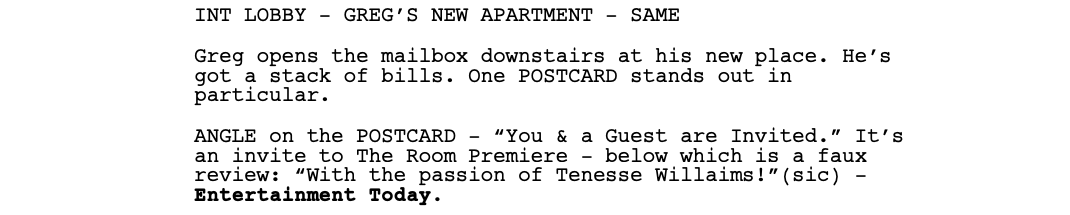
Months later, Greg receives an invitation to the premiere of The Room in the mail. It’s finally finished, and he doesn’t know how to feel.
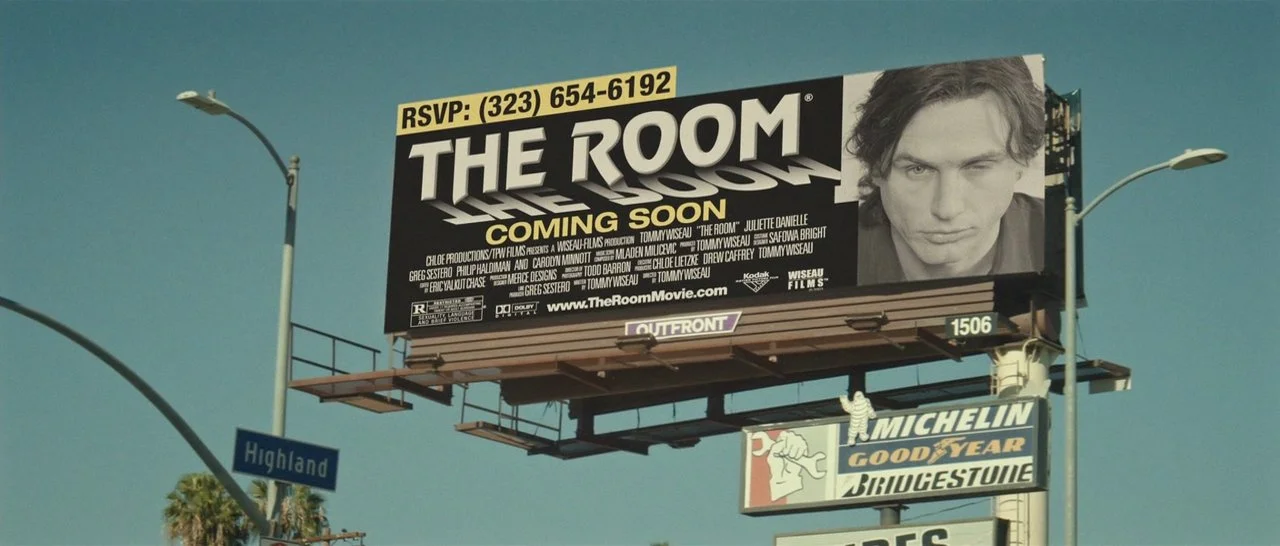
Without thinking twice, he throws it into the trash. He just wants to leave all of that behind him and pursue some real acting. He even performs in a rendition of The Death of a Salesman, in which Tommy makes a surprise appearance after the show.
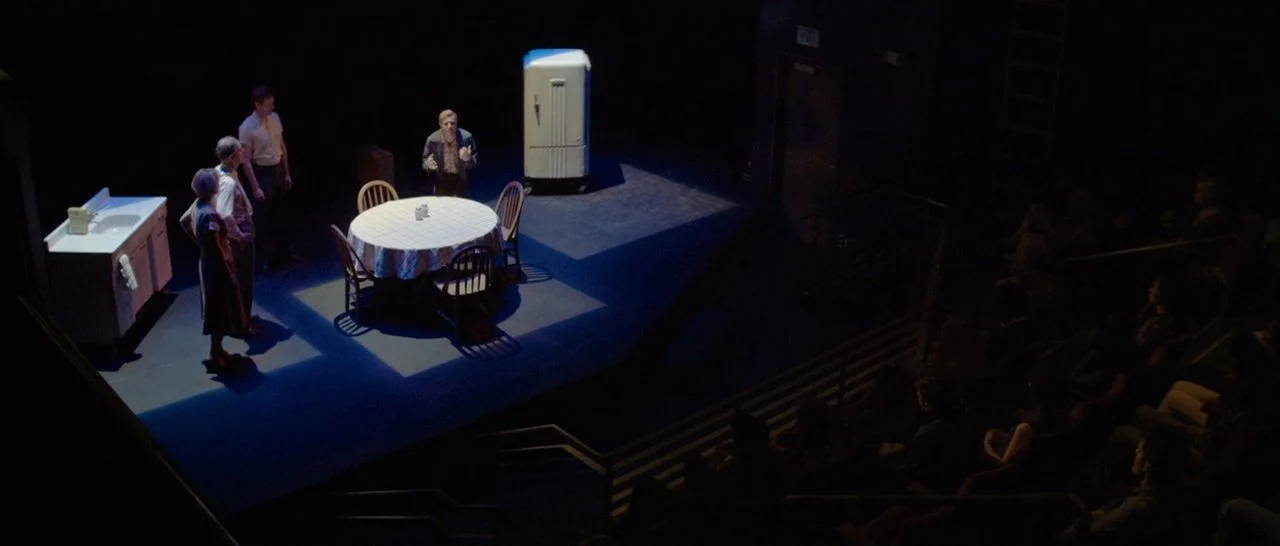
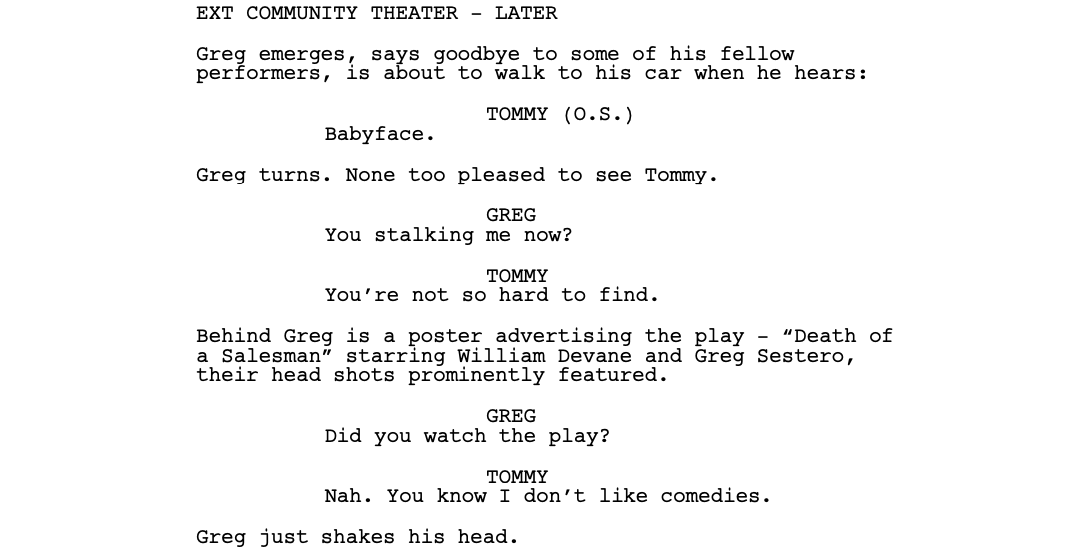
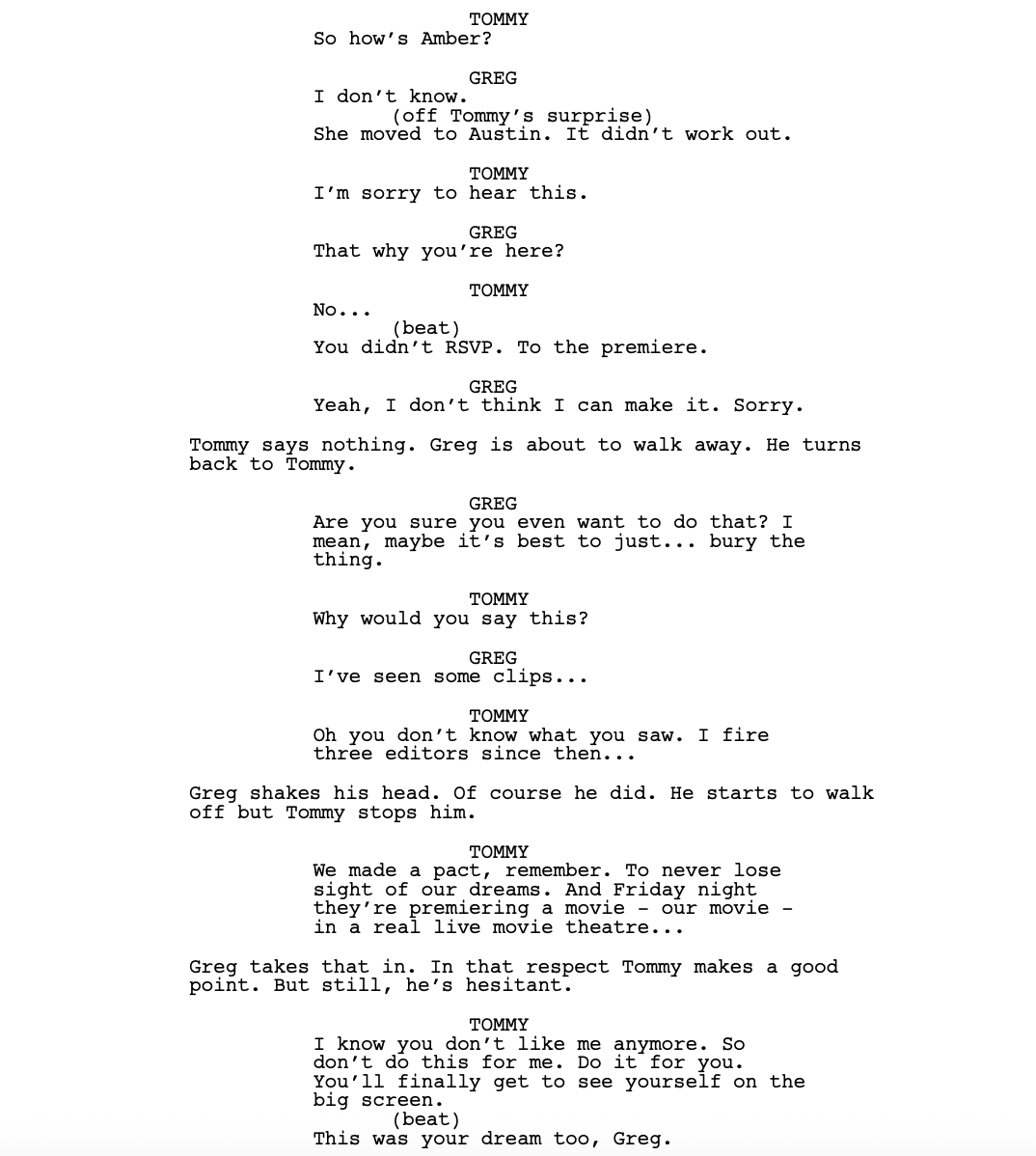
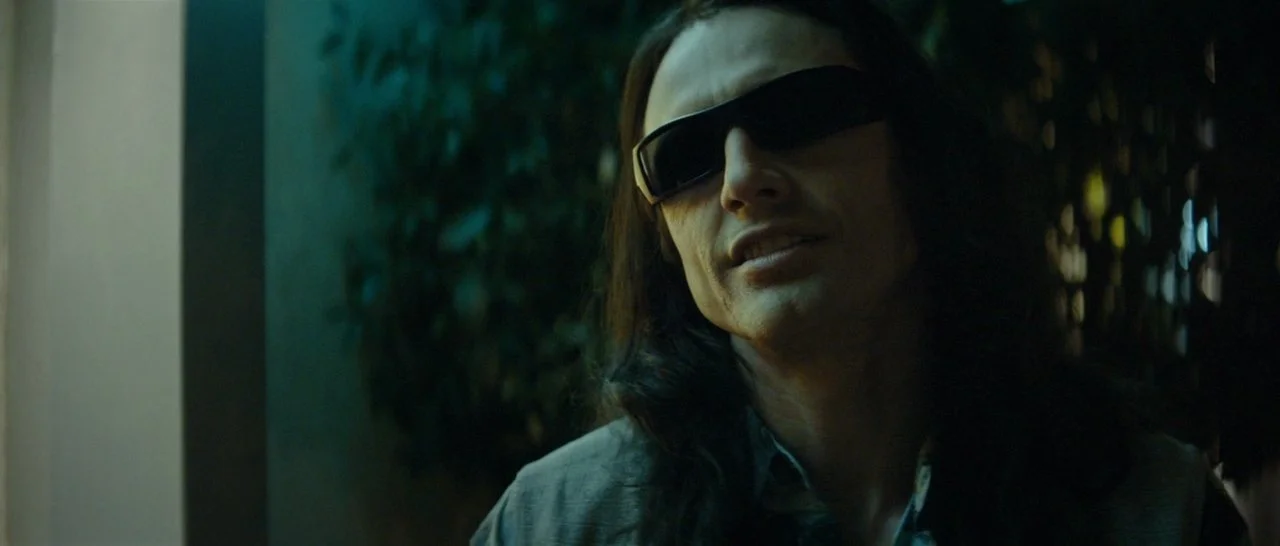
In the end, Greg knows that Tommy’s right. They still made this thing together, after all.
CLOSING IMAGE
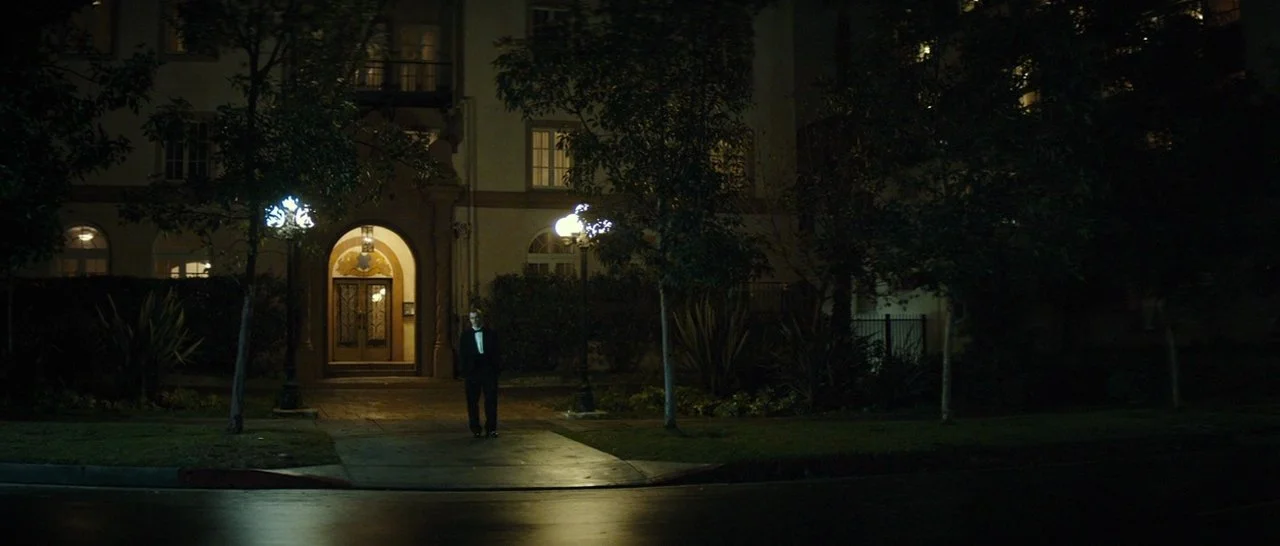
Days later, we cut to Greg, dressed in a tuxedo, waiting to be picked up for the premiere of The Room.
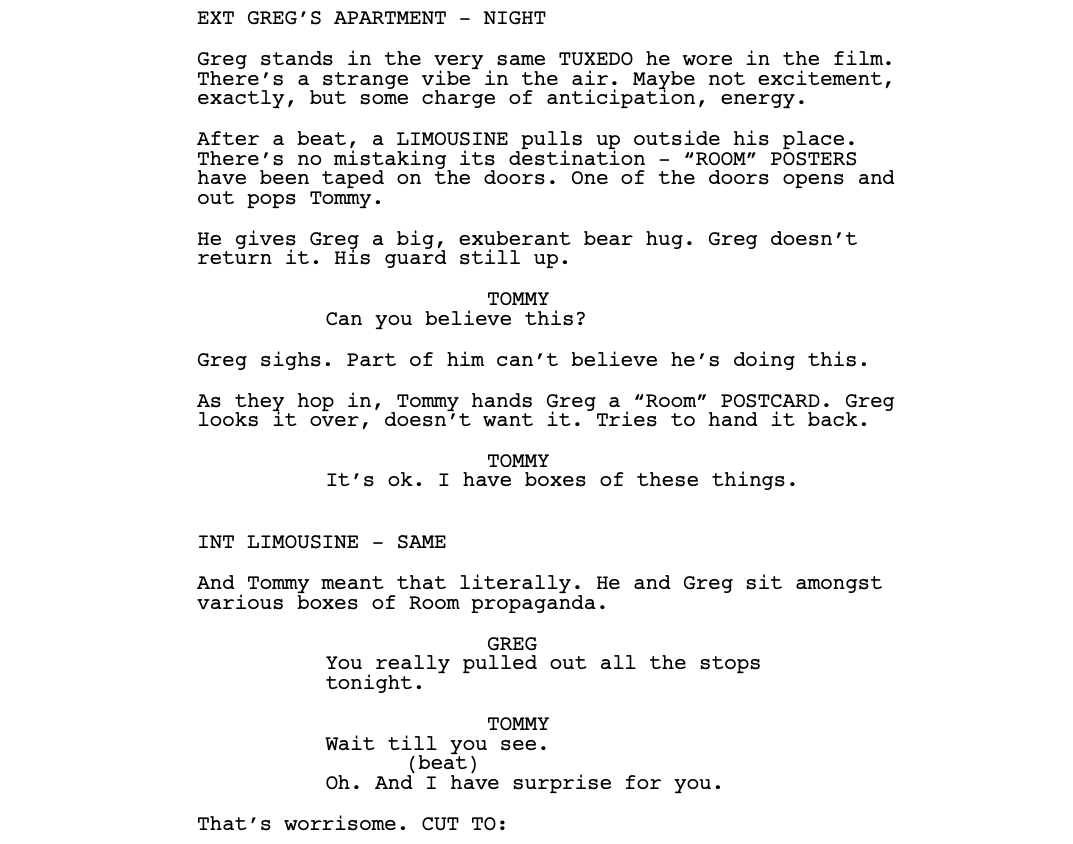
They arrive at the premiere, and to Greg’s surprise, it looks pretty legit.
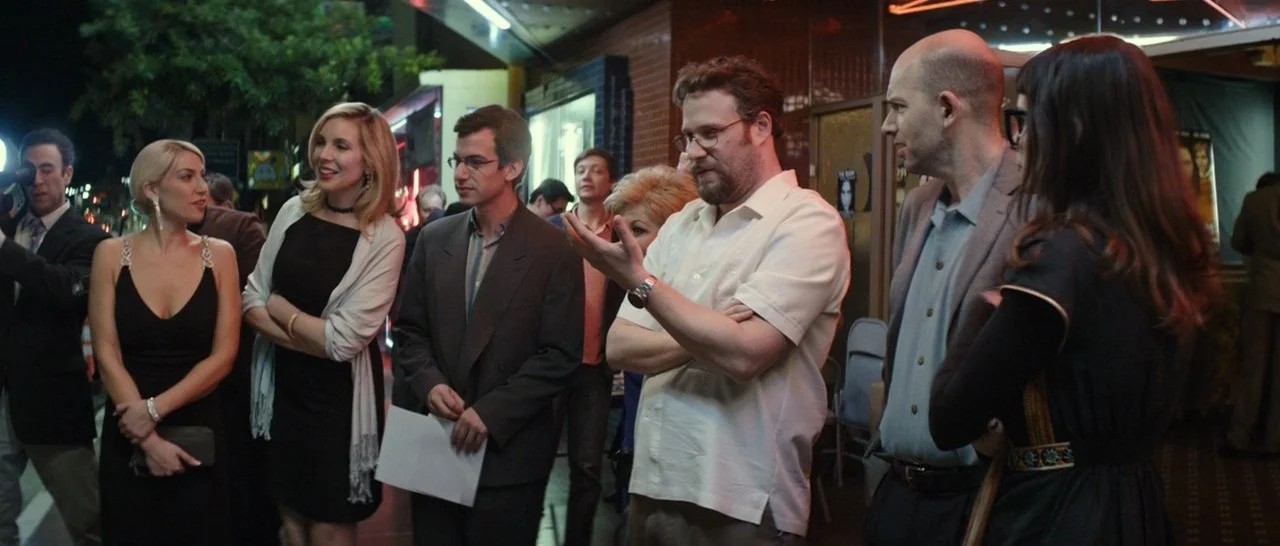
They go inside, where the rest of the cast and crew await them, and prepare for the big premiere.
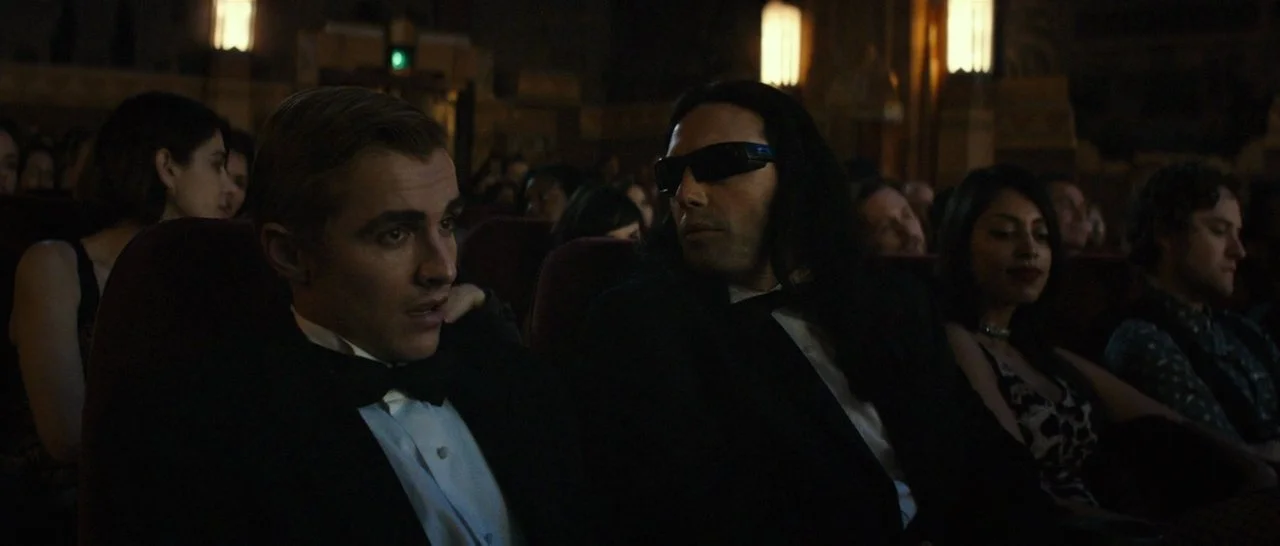
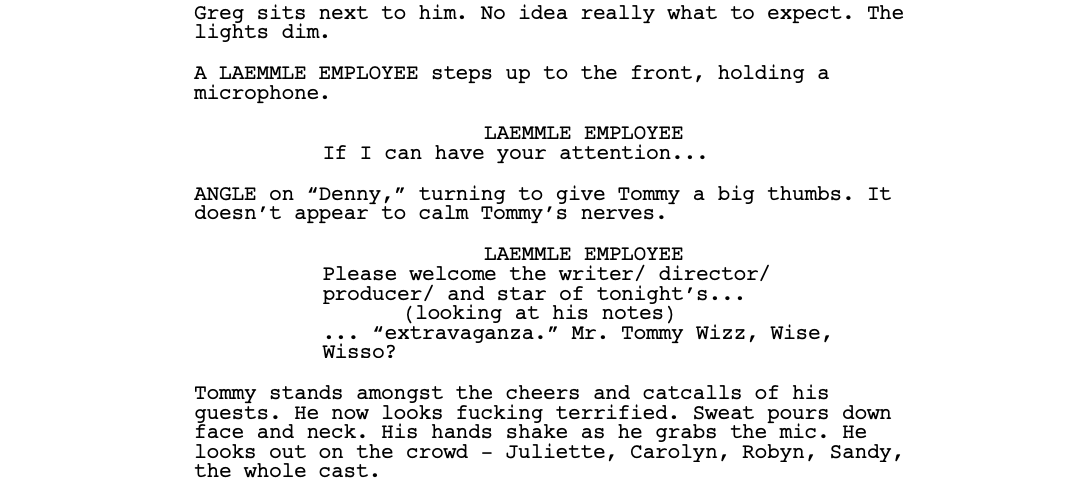
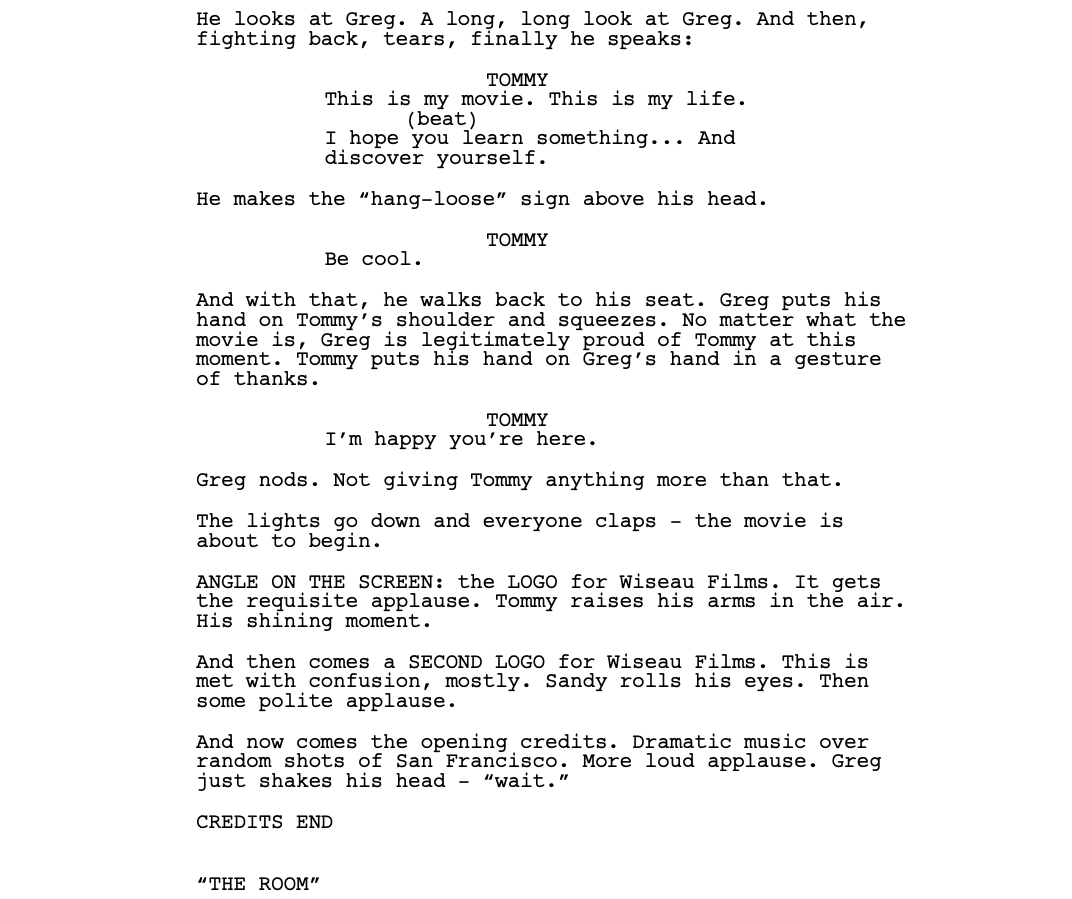
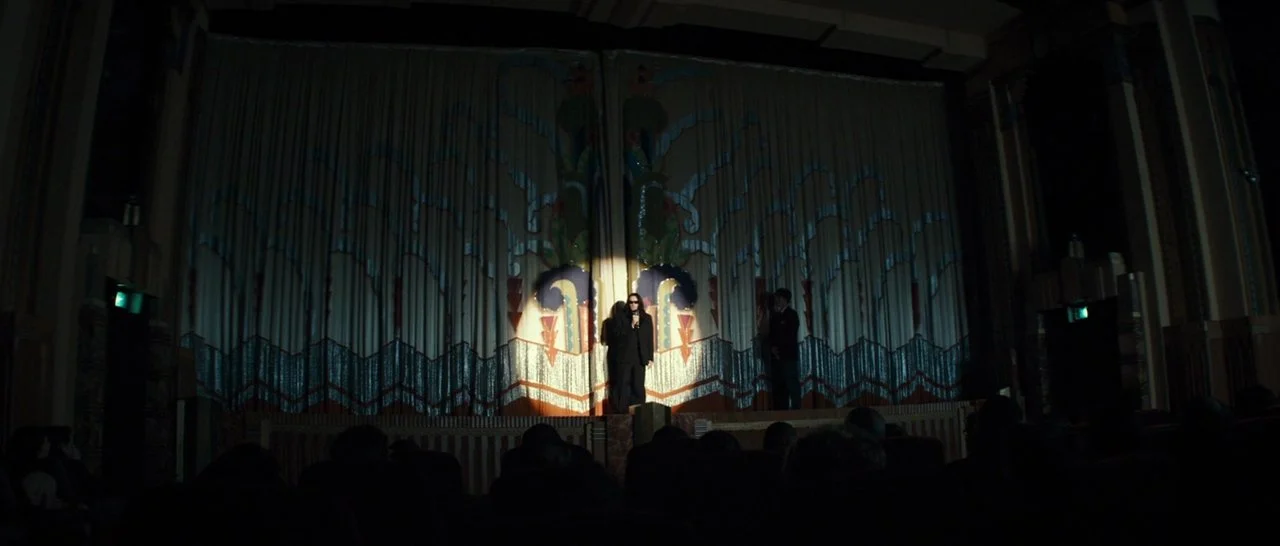
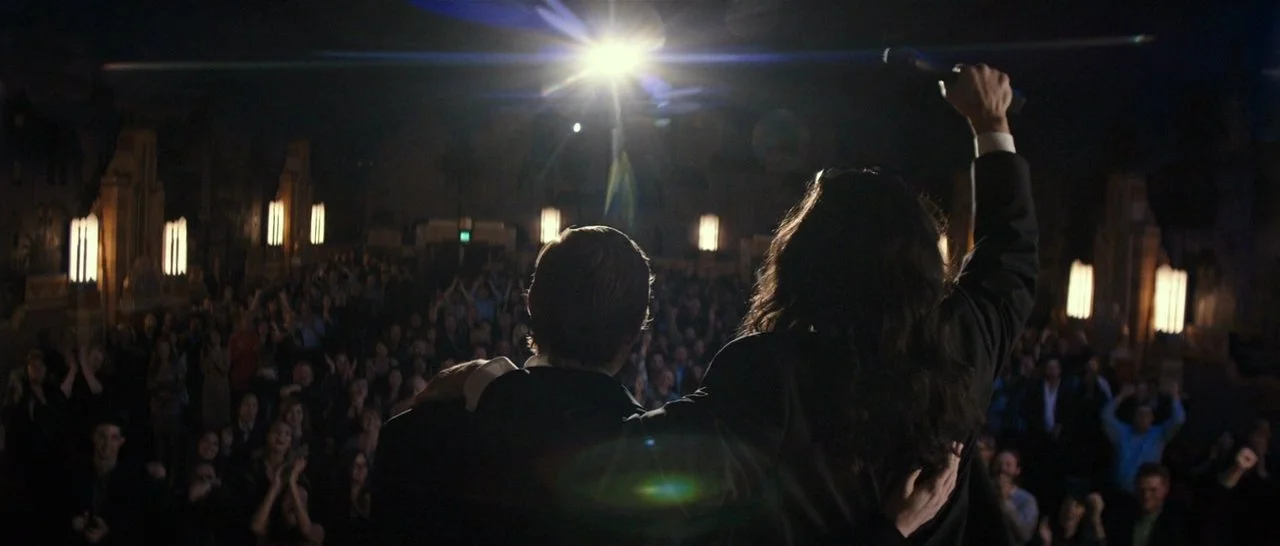
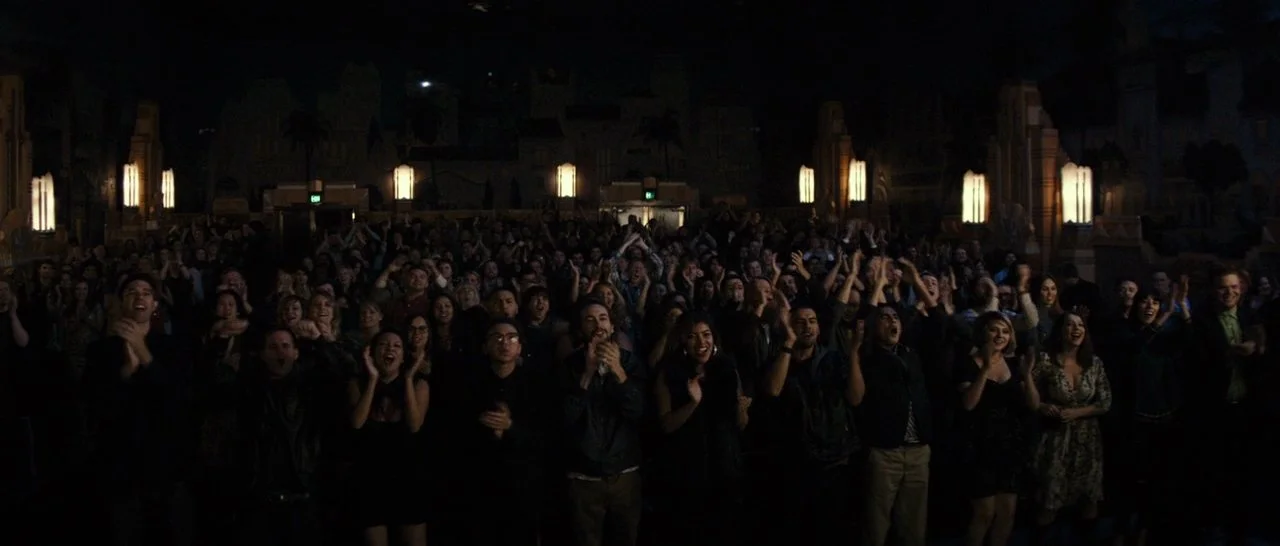
As the film goes on, the audience experiences a wave of emotions. Lots of embarrassment, lots of cringing, and surprisingly, a lot of pride. But then something unexpected starts happening: people start to laugh…

While everyone else has begun to fully enjoy themselves and appreciate the humor of it all, Tommy is heartbroken. Once again, he’s a joke. Tommy runs out of the theater, fully humiliated. Greg runs after him.
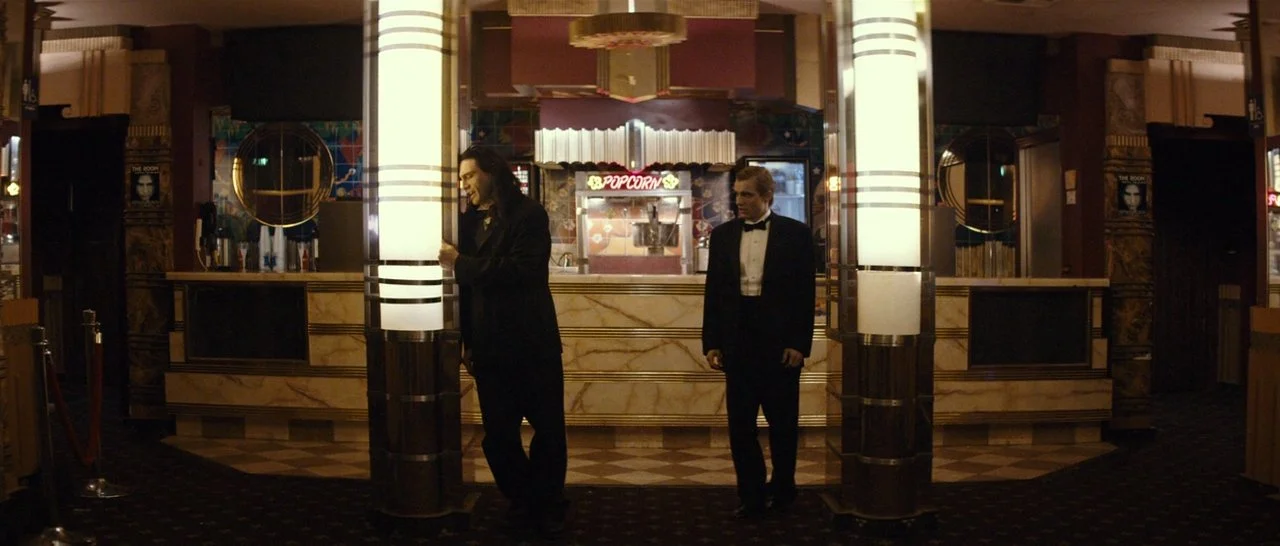
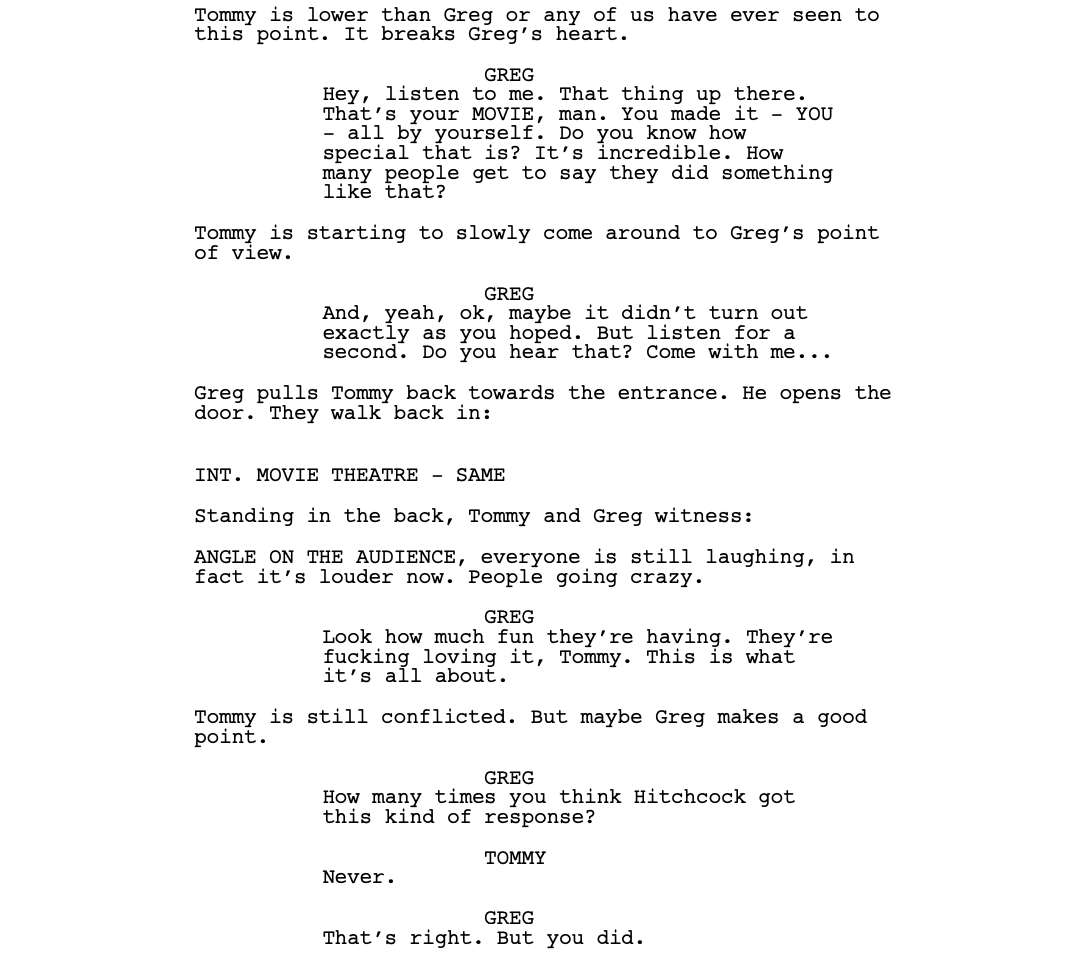

Greg has finally forgiven Tommy for everything that’s happened and just lets him, for one night, feel proud of his accomplishments. Even though The Room was a disaster from beginning to end, these two friends could finally be proud of what they’ve done here. It wasn’t good, it wasn’t an enjoyable experience, but they did it. And on that note, the film ends…
WHY IT’S GREAT
This film, much like The Room itself, is not good because of all the problematic events surrounding its creators and production, but despite them. It’s a larger-than-life tale about two people, who couldn’t be more different, going to the most extreme efforts to achieve a common goal. And unlike most fictional stories, which usually end with fairytale successes, this endeavor was essentially a failure. Which goes to show that not everything you seek out to do will go your way. It’s hilarious at every turn, beautifully sympathetic, and at the end of the day, incredibly inspirational. I can’t say enough about this movie and strongly recommend everybody give this script a read. Perhaps, if you feel the same way I do, it can inspire you as well.