How He Funded His Entire TV Pilot From Scratch [Podcast]
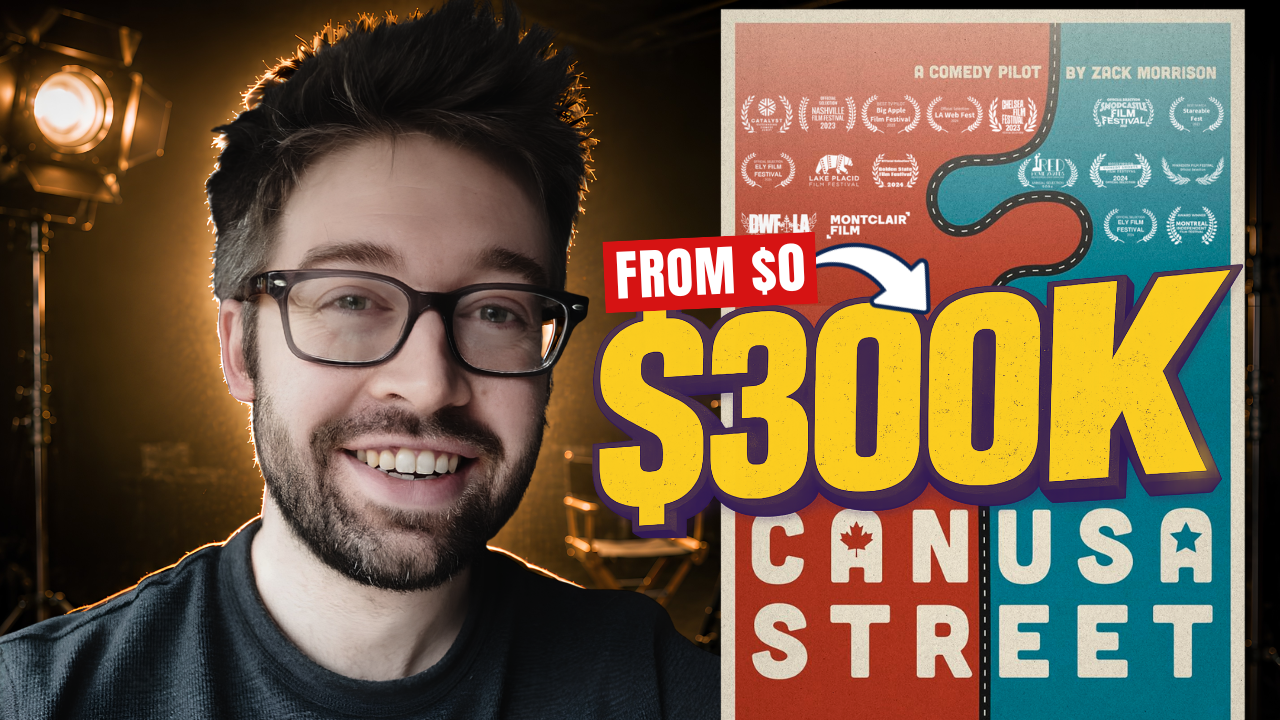
In this episode of the Kinolime podcast, screenwriter and filmmaker Zach Morrison shares his unconventional path to breaking into television and film, a journey that includes internships at Late Night with Seth Meyers, The Tonight Show with Jimmy Fallon, and Saturday Night Live, followed by a pivotal decision to finance and produce his own television pilot.
If you're an aspiring filmmaker, screenwriter, or creator wondering how to break into the entertainment industry without waiting for a studio greenlight, this episode is essential listening. Zach's story challenges the traditional narrative about how TV shows get made and offers practical insights into indie production financing, relationship-building in the entertainment industry, and the shifting landscape of streaming television.
In this episode, you'll discover:
How a childhood Lego set sparked a lifelong passion for filmmaking and comedy
What it takes to build relationships that lead to real opportunities in late night television
The exact strategy Zach used to raise $300,000 for his TV pilot "Kusa Street"
Why development hell is worse than ever—and why indie production is the solution
How state tax incentive programs can fund your creative projects
The critical mistakes networks made abandoning traditional TV formats (and why audiences want them back)
Practical advice for writing screenplays that actually get made
The role of persistence, saying "yes," and crushing every job—even the small ones
Whether you're interested in comedy writing, independent film financing, television production, or simply understanding how creative careers actually develop in the real world, this conversation with Zach Morrison offers honest, actionable insights that you won't find in typical filmmaking blogs or industry articles.
Full Transcript: Kinolime Podcast Episode 51:How He Funded His Entire TV Pilot From Scratch
Participants
John Schramm - Head of Development, Kinolime
Danny Murray - Creative Executive, Kinolime
Zach Morrison - Independent Filmmaker, Comedy Writer, Producer, and Director
The Pilot Problem: What Audiences Actually Want
Zach: I think audiences want a TV show to watch and not a nine-hour movie. That excuse I keep hearing, "you got to get through the first three episodes because it really picks up in episode four".
John: I hate that. I hear it all the time. No, I don't want to suffer through three or four episodes to get to maybe a good part of the project.
Zach: Your pilot isn't a good pilot if all the important stuff happens in episode two.
John: Exactly. Yep.
Welcome to Kinolime
John: Hey, welcome everyone to the Kinolime podcast. How are you. John Shramm
Danny: Danny Murray
John: We're here to talk with an amazing guest today, Zach Morrison. We're going to get into the Zack Morris "Saved by the Bell" quotes and comments, but Zach, how are you? Welcome to the Kino Pocket.
Zach: Thanks so much for having me. This is awesome.
Danny: So Zach is a screenwriter, producer, filmmaker. He's worked on Late Night with Seth Meyers, Fallon, he's a New York comedy guy, an East Coast guy, now an LA filmmaker.
John: But more importantly, we're here to talk because you just seem like someone who hustles. You're always doing something, making your own way into the world of the arts and film and TV. So I'm so happy we get to speak to you and really thanks again for taking the time to hop on.
Zach: Yeah, thanks guys. I appreciate you going through the long resume. Sometimes I forget all the details. But no, to your point, I've always been a guy who enjoys making stuff and the grind never ends. The energy is in.
John: We're all in the same place, trying to make it to the next pasture without sinking.
Finding Your Voice: From Lego Sets to Comedy
John: I always like to talk about origin stories. When did you discover your love? Is it more film, TV? Is it just storytelling in general? What's your true passion?
Zach: I mean, it really is both. I know that's a terrible answer, but it's always been filmmaking and visual storytelling that's been the guiding light for me. And then simultaneously, I learned at a very young age that I could be funny, and comedy was always the backbone of all the pieces I did when I was first starting up.
What really did it was when I was about 8 or 9 years old, right around 9/11. I was a big Lego fan, and as a kid I would always build Lego sets every Christmas. Every year it'd be like a pirate ship or a Star Wars thing.
John: This is New Jersey. You're northeastern. Is it in New Jersey?
Zach: Yeah. Born and raised in central New Jersey. And like every Christmas morning we would do one of these Lego sets when all the adults were nursing their hangovers from the night before. My grandpa and I would just get up early and do the Lego sets. And then one year my parents got a Steven Spielberg Lego set and it was the coolest thing on the planet.
John: What did you build, was it a Lego set of him, or?
Zach: No, so like, you built the back lot of a movie set. It was like you built a little city and there was a little dinosaur. That was the set, and then you built the crew people and the lights and all that stuff too, and that in and of itself was cool. But then the book that tells you how to build the Lego set, you flipped it over and it was a storyboard for a little Lego animation movie. It came with a little camera and editing software. This was a kids toy. And it taught you how to shoot a scene. At that point, I stopped playing with Legos because now I had a camera I could shoot stuff with. It was the coolest thing. From that point on, I was hooked.
I was stealing my dad's camcorder on every family vacation. I played sports in high school and really I sat the bench, so I edited all my friends' like highlight reels and stuff and I was shooting comedy sketches on mini DV tape in my backyard with friends. That's when I knew, oh, this is what I want to do for the rest of my life.
And then combined with the fact that around that time was peak Andy Samberg Lonely Island SNL era, and the idea that you could do sketch comedy on film and that's a job you can do on television, I was like, sign me up. This is it.
John: Well, I'm just amazed at this Lego set. As soon as we get off Zoom, I'm going to buy it because I want to play with this. I'm not even kidding. This sounds incredible.
Danny: My brother actually sells individual Lego pieces online. He's also a huge Lego guy and makes a living doing it.
John: All right. Well, we're going to have to ask him. So you were more into, this Lego set got you going and then comedy brought you in, right? It was like the hook into the mouth.
Zach: Yeah. I mean there were a couple times in middle school and high school that I tried to do like drama shorts and I learned very quickly that anytime I tried to write serious stuff, it became self-parody or it just became funny. I feel like filmmakers always have that "find your voice" conversation. For me it was like, oh, I'm bad at being serious and nothing I do can stay serious for long.
So yeah, comedy was what I just naturally attracted to. I grew up on old reruns of Saturday Night Live, Gilda Radner, SNL. My dad had all the tapes. I saw the Blues Brothers when I was like 11 years old and that unlocked a new thing because I'm also a musician. So it really was just, I enjoyed it. It was fun to be the funny guy.
John: Because I always like to ask this, what are three of your favorite comedies of all time? Are we talking film?
Zach: Let's go with film. The Blues Brothers, My Cousin Vinny, and A Knight's Tale with Heath Ledger.
John: Never would have guessed that.
Zach: It's like unironically a hilarious film. The visual comedy in that movie is right on and he was great in that.
John: That's a great pick. My Cousin Vinny, I always say this is a perfect screenplay. It's a perfectly structured story for anyone at home that wants to learn comedy. Zach brought up a great one. My Cousin Vinny, watch the film, study the film, look at the structure, read the screenplay. Like it is perfect. What about your top three favorite comedy shows?
Zach: For TV shows, Brooklyn Nine-Nine is a perfect show. I love it so much. If we're talking sitcom, I want to say How I Met Your Mother. It does not get enough love because of the way it kind of kept going on, but that is such a tight show. The jokes are incredible. They never forget a second shoe drop. Seasons later you get a callback to a joke and it's brilliant.
And then I could say The Office or Seinfeld, but I don't want to. Lately, Hacks. Hacks is a brilliant show and I've really been enjoying it.
John: I'm a big How I Met Your Mother fan. I really think it's underrated. You could watch that over and over. There's not, they always know how to do a callback. The acting is incredible. If you want to study TV, look at this.
Zach, you're doing my job for me. Go watch How I Met Your Mother. Study the pilot. Study the episodes. Look at their structure because it is so tight. They know what to do and TV structure is a little bit different than film, but you'll see the cadence and how it works and it is brilliant.
The Unconventional Route: Building a Film Program from Scratch
John: So you're fully hooked into story and comedy and filmmaking. You go to film school, right?
Zach: Actually no. After high school I went to Rutgers University in New Jersey, which at the time did not have a film program. I wanted to study filmmaking. I was applying to Tisch and USC and all those places and got rejected from all of them. So I went to Rutgers, which is the state college in New Jersey, to study journalism and broadcast television because that was at the time the closest they had to filmmaking. I was the one kind of "I want to make movies" kid in a class that was primarily broadcast journalists and news anchors.
But that said, it was cool because I lived in special interest housing for TV students. And instead of having a lounge in the dorm, they gutted it and made it the TV studio for the school. So I lived down the hall from the television station and at 2 in the morning we could roll out of bed, swipe out gear, and we shot comedy sketches all year long. It was so cool. There were no rules. We kind of did our own thing and we literally lived at the TV station at Rutgers.
At the same time, friends of mine were shooting short films all the time. It was definitely the school of DIY, do-it-yourself, the Kevin Smith ethos of filmmaking. The more we did it, the more we got involved with student film festivals out in Los Angeles. There was this group called Campus Movie Fest that came to school and allowed you to, if you didn't have a camera, they'd give you a camera to use for a week. It was truly unfiltered chaos, creative freedom. It was great.
I met some of my lifelong collaborators that I still work with and write with today who were my buddies from undergrad. At the same time, Rutgers was thinking about starting a film program but didn't know if there was interest. So I basically wrote a curriculum for the school and said, "Hey, I want to do this," and they said, "Okay, you know, as long as you get a real degree, you can do this other thing instead of a minor."
And so every semester I had to write like a paper. My freshman year I wrote this thing saying I want to do filmmaking classes and if you don't have them, here's my plan for what college is going to be like. I wrote into the thing, "Hey, if you just happen to add any new classes down the road, they'll count for my degree because you don't have any now, but if you add them later, they'll count." And they signed off on that.
One of my professors took that and ran with it. Every semester they added a directing class, a cinematography class, and other courses. I was like the guinea pig for a filmmaking curriculum at Rutgers. By the time I graduated, there's now a full BFA program at Mason Gross School of the Arts at Rutgers where I actually teach now in the summers, which I love wholeheartedly.
So I got to do sort of a DIY, it wasn't really film school, but I made it work.
Graduate School and the Late Night Pipeline
John: So then what happens? You go into grad school?
Zach: Well, after four years of kind of build-a-bear, do-it-yourself, film school adjacent, I really wanted the kind of traditional experience. Plus, I knew that I can't be self-sustaining. I need someone to say "do this or you fail," you know.
John: How are your parents? Were they into your career choice?
Zach: They love me to death now. They've been the greatest support. My family in general is the greatest support system. My parents, my two sisters, I love them. But it took some convincing at the time. I distinctly remember this moment. It was my freshman year at Rutgers, and there was a student film festival on campus and my film won one of the awards that night. My dad, who was always like my little league coach growing up, I distinctly remember this moment where he kind of says, "Okay, all right, so you're going to do this, huh?" Because at the time I was thinking film would be the minor, maybe get a business degree and minor in art, which is impossible. But he was like, "All right, so you're going to do this? Okay. But you're going to be the best. You're going to put the work in. You're going to make this your thing."
Now he's like my biggest fan. He'll call me up on like a Sunday and say, "Hey, I got this idea for a movie. You got to think about it."
John: Oh, that's fun.
Zach: But yeah, they were very supportive. So when I was my senior year, I applied to grad school. I applied to USC, Tisch at NYU, and Columbia. I was working at MTV at the time in their on-air promos department. And I got rejected from two out of three schools. I was like, "Okay, I'm not going to grad school. I'm just going to be a filmmaker in the city." But then Colombia accepted me for their MFA program, so I went straight from college to grad school at Columbia for television writing.
John: Well, so then you go through Columbia, right? You get your MFA. Tell us about how you got into the business. When was it that postgraduate you started working?
Zach: Actually, I got my first couple jobs, my first real entertainment jobs, while I was still in school, and it was very much a simultaneous process. I was making industry pathways while also in school.
My very first job in all of television was the summer after my sophomore year of undergrad. I was the director's assistant and office PA for the documentary about Bo Jackson. You know, the ESPN 30 for 30s? That was my first production experience.
But my first real job in television was when I was an intern at Late Night with Seth Meyers. Colombia was two-years of class and then two years of artist residency, thesis years. My first year of that, in 2016, I was the monologue intern at Late Night with Seth Meyers.
John: Oh, cool. That's awesome.
Zach: That was kind of my first job in late night, first real job in broadcast television. It was a crash course in joke writing.
John: Tell us what you learned from that. You're interning for Seth Meyers, and there's a system of how they do monologues and every host has their own schtick, but what did you learn working for him?
Zach: When I was at Seth Meyers, my job was to basically write the front half of every monologue joke. I was sitting outside the headwriter's office and the writer's room and I was researching all the news stories, like Donald Trump did this thing today or a man in Florida did this thing. I had to research the stories, find them, condense them, and write the copy for like the one-sentence joke premise. Because we would feed the writers just pages and pages of these joke premises so that way they didn't have to do the research. They could just sit there, read the premise, and be funny.
But I played volleyball in high school and college, and the way I looked at it was like, I knew I was doing a good job if I could find three different ways into a joke from the same story. It was a lot of anticipating what the punchline is going to be so you could work backwards to write the joke setup. It was a lot like being the setter in volleyball, knowing where to put the ball so the hitter could make the kill.
So it was, I learned so much just from joke structure and writing for Seth's voice. And he was truly the nicest person on the planet. I was the first one in the office every morning and he was the second one in the office every morning, and we always had a really nice exchange. It also taught me that work culture, whatever job it is, definitely comes from the guy at the top. The people at that show love to work for that show and that's very clear.
John: I want to stop you there because this is great and I think for everyone at home as well, look, we all want to get to the top quick. But take what Zach's doing. He took his job, and whether it's getting lunch or tying up wires, he made it his job to crush that because the dividends will pay off later down the road. Seth Meyers, I guarantee, knew that Zach was the first one in and made mental notes. Like, this is how it goes in the business. So like whatever you're doing, it may be getting coffee on set or tying up wires, make it your job to crush that because the dividends will pay off later down the road.
Zach: And I appreciate you shouting that out because I teach students now, like a college class, and that's all we talk about, just don't be a dick, right? Be the nice person. It's one of those things where you inherently, as a normal person in society, know that you're going to have to pay your dues, you know you're going to have to do that job. But sometimes it took me hearing that from someone saying, "Hey man, just do good at this. If you can get this, just crush the lunch order thing, then we'll let you do other stuff."
John: So you're crushing lunch orders at Jimmy Fallon. Where do you go from there?
Zach: So I did that for a semester, and then NBC was like, "You can't repeat your internships. You have to go somewhere else." So I went over to Fallon. I did the same thing at The Tonight Show. I was like the writer's intern. That was a bit of a different experience because the staff was much larger. There were like three writer assistants instead of one.
But what was cool about that was I was a little older, I was in grad school, so I was 25, 26 when all the other interns were 18, 19. So when stuff like Taylor Swift's here, can you show her where her room is, or Ed Sheeran needs the bathroom, can you walk him to, I got to do those cool things because you do lunch well, you know.
From Fallon, I went over to SNL in the script department and started script coordinating. I did a semester there, and then I'm finishing grad school. My thesis film was a musical comedy that I'm writing and directing. I was in post on it at the time, and I thought I wanted to step away from the internships because I did all three shows.
But Fallon actually calls me back to say, "Hey, our writer's assistant just left. Do you want to come and actually do the big job?" And I'm like, "Okay, hell yeah." You say yes to those opportunities that come your way.
So I'm back at Fallon as a writer's assistant, like with all the writers, monologue team. That's a grand total of two years at NBC at the time. And my thesis film from grad school starts making rounds in the film festival circuit. It ends up getting nominated for and then eventually winning the Television Academy Student Emmy Award for comedy in 2019.
The Emmy Win and the LA Connection
Zach: That award brings me out to Los Angeles and gets me like my first meetings, my first, I got my first manager because before that award happened, I was at a SNL afterparty at like 2 in the morning and I get like a tap on the shoulder. It's this woman and she's like, "Zack, I know you. Why do I know you?" And I'm like, "I know you. Why do I know you?" And we played that game for a second and we realized like, years ago when Facebook first started, our one friend was friends with another friend from summer camp and then we could be Facebook friends or whatever. So for 10 years this person is popping up on my Facebook feed.
And now she's like, "Oh, that's how we know each other. What are you doing here?" I'm like, "Oh, I work at the show. I'm here." She's like, "Oh, I'm a lit manager." So we get talking about that and I'm like, "Yeah, I'm a comedy writer. I'm finishing grad school. My film's doing this thing." She's like, "Send me your work. And when you're out in LA, give me a call." That was the conversation.
Immediately I go home and plan to go to LA at some point. My film wins that Emmy award. She's like, "I'm going to rep you. Let me be your first manager."
So I start getting meetings in Los Angeles and meeting with people and trying to pitch myself and doing packets. 2019 was a fantastic year to be living in Los Angeles working in television. And like, everything that little baby me would have thought, we're working in the pictures, we're making movies, we're doing lunch in Beverly Hills.
Yeah, everyone sounds like that out there, you know.
Danny: The player. The player. Truly.
Zach: Every other week I'm taking a meeting with like a producer at Universal who wants to adapt my grad school thesis film into a show. I'm submitting packets for like this show and this show and this show and like everything's going great.
And then 2020 hits and the world shuts down.
Yeah. That was just a very interesting time. Like it just clockwork, everything vanishes. Everything just goes away, you know?
John: So what did you do? I mean, like this is the low point. We're in our story here, in the dark of the soul. I just moved back to New York during COVID. Everything just stopped. What did you do?
Kusa Street: Creative Resistance During Lockdown
Zach: Well, I mean, that's where you know it's one of those weird things, especially in comedy, you take your pain and then you figure out a way to make it funny for other people. During the pandemic I started reading because I was in LA during the pandemic and did 2020 all in Los Angeles with roommates. Every day we're shooting little sketches in our apartment. We're watching all of Monty Python Flying Circus, so we were just kind of in comedy brain.
I read a newspaper article about this town because of the pandemic, we closed the borders with Canada, which is like the first time maybe in history we ever really did that. And there's this town in northern Vermont called Derby Line where the border runs through the middle of the town. It just bisects the town. It's like one town and two countries. Prior to the pandemic, no one really cared. But then the thesis of this article was like, "Hey, well, we closed the borders for the pandemic, but what do we do when there's one gas station and it's on this side and there's one supermarket and it's on that side?"
And I'm like, "Oh, that's hilarious." That's a sitcom. So I start writing this script for this sitcom. It truly was just like out of a pandemic mentality of needing to do something to not go insane.
John: Right.
Zach: And so I start writing this script for this sitcom because at the time my manager is like, "Yeah, you know, you need some kind of jokey type of a piece. My thesis, the stuff I wrote in grad school, was a little bit more kind of thinky, a little more soft humor. She's like, 'You should have something that's kind of a hard, multiple jokes per page, like network sitcom piece.'"
Anyway, I'm already kind of in this writer brain. So I start writing this show that ends up becoming Canusa Street. It's a sitcom about the border patrol in this town, and one agent is an American and her twin sister is a Canadian Mounty and they have this like Super Troopers-like cross-town rivalry thing over the smallest stakes possible. It's like an international felony to go across the street to your neighbor's house to borrow a cup of sugar.
Because it's a real place, I'm just fascinated by this world and I'm going into a deep dive into this very "stranger than fiction" type of place. I do a table read with friends over Zoom and I tell them, "Hey guys, I'm never going to shoot this. Don't give me notes on like production value and producability. Let's just read it for jokes."
Zach: And have fun. And lo and behold, two years later, I'm going into production making that show and shooting that pilot. It just, the more I fell in love with the script, the more it was manifesting itself. After 2020, I submit the script to a bunch of places. It doesn't really go anywhere. 2021, I move back to New York. I'm back at NBC doing a spin-off of Fallon called The Kids Tonight Show. It was on Peacock, and it was very like that All That Nickelodeon vibe.
John: I love all that.
Zach: Oh, it was so much fun. It ran for a season. I thought we were going to do more, but they canceled it. But I was one of the script coordinators there.
And then my phone starts blowing up one day and I have to actually step out of the office because someone on the Blacklist downloaded the script, gave it like the highest score, and that hit the algorithm. Now a bunch of industry people were downloading it. It hit the algorithm, you know.
So then I start getting conversations with people who knew me from my thesis film and were like, "Hey, is this your project? Is this going to be your big one? I might want to invest. Is it, you know?" And I'm like, "What do I do with my hands? I don't know."
And then I go to a film festival in northern Minnesota that's like a television writing festival. Canusa Street wins the festival's writing competition. So then I'm meeting people in Minnesota that are like, "How are you going to shoot this here?" And I'm like, "Who the hell shoots a pilot? Like, no one does that."
And that's exactly what we did. The snowball was happening. The train left the station, you know. The Minnesota folks were like, "Hey, you know, it's now November of 2021 and we have an opening in our slate for the state's production rebate program, where you know, every state has their tax incentive program, like 30% back. Like New York does that, New Jersey, Georgia with all the Marvel movies. And Minnesota's like, 'We do 70% back on the dollar, not 30%.'"
And I'm like, "Oh, this is a crazy thing that I have to capitalize on."
I go to potential investors and they're like, "Hey, you know, I can get you maybe 40, maybe 50% back after it all balances out." And they're like, "Okay, cool. Here's the money." And it just, I couldn't say no to any of it. The opportunities were presenting itself in a way that I'm like, "Oh, this is why I got into filmmaking. If this is my one chance, I'm not going to pass at this opportunity. I'm just going to say yes as the universe keeps spiraling this thing to me."
And then we shot it and then we were able to raise $300,000 to produce this television pilot. That was a life-changing experience to be able to actually do like a big thing outside. It was like all the resources that would have gone into my first feature eventually were directed into this project at the time. It was just amazing.
The Financing Strategy
Danny: I'm fascinated to know specifically, I've heard a lot about different producers going to smaller regional festivals where there's actually a lot of opportunity for financing for features. How did you go about finding financiers and getting your pilot financed from scratch?
Zach: Yeah, it was kind of a combination of a few factors. One was the 10 years of prior relationship building that I had before that, right? Like everything that came from all the shorts I made in undergrad that got me into grad school, that got me to my thesis film that won that Emmy award. There were relationships that were built over that period of time that were kind of like, you have that card, you keep that card in your pocket and you can make that phone call once. You kind of hold on to that, you know.
The second was when the Blacklist ranked the script, there was statistical industry heat on the script at the time. The Blacklist was one of those public-facing aggregates that you could point to and say, "Hey, this is an accepted metric for if a script is good or not, and they say it's good." CoverFly was another one. But at the time, Canusa Street was in like the top 1% of all scripts. It was one of the top comedy scripts of all time on that website. So I was able to go to investors and say, "Hey, I can prove like statistically that there's industry interest in this beyond like here's a bunch of shows that are similar to it that have done well."
We pointed to like Parks and Rec. We pointed to It's Always Sunny from kind of the scrappy indie side. We pointed to Insecure, which Issa Ray did in kind of a similar DIY space. Brooklyn Nine-Nine, very heavy on kind of narrative structural influence on Canusa Street. So we could in our kind of pitch to investors, we had here's all the soft metrics, like the industry likes this. Ted Lasso just splashed here's another comedy with heart.
But it's always hard to prove that, so having that like external validation of these industry aggregates was really validating.
John: Exactly. That's what Kinolime is all about. You're using data to make an informed decision about a project and you're using the accolades that it was receiving at the time to get investor dollar. I think that's great.
Zach: It was very entrepreneurial in that sense. I had to look at it as if I'm now selling a product, you know, and have to put a business plan together. So combined all of those things with now Minnesota's interest in the project, they introduced me to a lot of local production people and producers in Minnesota. They were introduced to all of our production services. It was the right place, right time for them because they were trying to prove to the state that there was interest.
And a year or two after we wrapped, they passed like written into state law $50 million for independent film production in the state of Minnesota. It was like the one thing politically everyone agreed on was that movies are good because money is good, you know.
Which which now, like New Jersey is doing that with Netflix and everything. So it really was like going to investors with, hey, here's the plan. Here's why the script is good. Here's why other people say it's good. And here is a way that we can get you some of your money back almost immediately to mitigate a little bit of the risk. It was like any other indie film, you're lighting your money on fire. The worst that's going to happen is we get you 30 to 40% back in a couple months.
And that's what we did. And instead, because most of these programs are designed to roll that money back into post or you can use that to settle debt financing that you did in pre-production, I was like, screw it. Let's attempt to make the investors whole partially in the beginning as sort of a sign of good faith. And that was sort of the process for us.
And then you know, there we also at the same time we wanted to do like a full version of it. We didn't want to do like oh here's the five-minute short film shot in New York City white wall apartments with some costumes. Let's actually show you what an episode of our show looks like.
Post-Production and the Festival Circuit
Danny: Nice. So then you shoot the pilot, you wrap. What's next from there?
Zach: At that point I cut the show. So I wrote and directed the pilot episode. I also cut the show myself. So I go into the editing hole and I'm housesitting for some friends in Laurel Canyon in Los Angeles, cutting the show over a summer. That's late 2022 going into 2023. We're trying to hit beginning of 2023 festival circuit and then the strike starts.
John: Yep. Boom.
Zach: And so like, we're just coming off the pandemic and I'm starting to feel good and then the world shuts down for a second time. So now there's rules about what we can and can't do in terms of trying to sell a project at that time. It was a lot of like putting the show on ice to a certain extent because I was out picketing.
That was a whole other chapter where we were able to screen at festivals that accepted us, but I couldn't have any business meetings about the show. So we had our world premiere at Dances with Films in July of 2023. And that kind of kicks off our festival run. We did festivals for about two years.
The strike ends October, November of 2023, and then we're like, "All right, let's get back into business sales. Let's try to pitch the show." We screen at Nashville. We screen at a few places in New York, a few places in LA. We played at Kevin Smith's Theater in Atlantic Highlands, which was a lot of fun. And so we just spent the next two years, 2023, 24, and 25, trying to pitch and sell it.
Yeah, that's kind of still my sort of back burner goal. But what happens in that time though is like, when we were doing our festival run, festivals didn't really know what to do with a 30-minute pilot. Like Sundance, Tribeca, Sundance that year just launched a pilot category. Tribeca was maybe in their second year of doing it, but it was still this like new thing. Like shorts for festivals need to be under 15 minutes or else they're never going to get programmed.
There's holes that shorts can fill and then there's like the awkward 45 minutes, which is technically a feature, but no one's going to make a 45-minute feature film, you know. So there was this big gap between 30 and 60 minutes where nothing gets made. Well, now you have a lot of filmmakers who are making independent television shows and indie pilots.
Since 2023, that was before Mark Duplass got on his indie TV kind of train. So like, now the industry is starting to pick up on the fact that they've been sleeping on a whole genre of material that's being made independently. So now there's this whole culture shift going around Hollywood at the moment where you can independently finance and produce a low-budget series the way you would an indie feature and just sell the whole product on its own, go straight to streamers with it.
The Streaming Industry Changes and Development Hell
Zach: Development hell is worse now than it's ever been. You have A-list celebrities who are not getting their projects through because no one in development on the studio side wants to take the financial risk of paying for development fees, the writer room, and any of that stuff.
But for that same reason, it's why you're seeing a million different like British cop shows on the front page of Netflix and Hulu right now because acquisitions are through the roof. Everyone needs more material.
John: The content...
Danny: It's kind of funny, as all these streamers mature and they're starting to, you know, like if you don't want an ad-supported Netflix, it's like almost $30, and the streamers are consolidating and also coming to terms like, "Oh, maybe we do like 22-minute sitcoms with 20 episodes a season because we need people to keep watching for the ads." It's just turning into cable television again, right?
Zach: And I think like now that I think we're past the quote "golden age of peak TV" with streaming, because I think everyone's realized like, "Oh, there's a reason we used to make television shows affordable at 22 episodes a season with full writers. Like there's a whole reason we did that for 70 years before Netflix launched House of Cards," you know?
And I think so many of the issues that led to the strikes in 2023 were direct results of that business model being entirely unsustainable. And I think now we're just getting to, I mean, Abbott Elementary gives me hope with their 18-episode seasons, you know. I feel like shows like The Pitt are demonstrating that not only are long seasons good, but the weekly release model that we used to do for decades.
John: See that in anime, you know, like Attack on Titan and all the other shows where they have like 30 episodes and people devour that, you know. They want to see more than an eight-episode season. They're craving it.
Danny: It's also largely why, like if you really think about Netflix's IP, how many shows do they have that you could really think of as like, "Oh, these are cultural touchstones that will live forever"? Not many, because you don't really live with them that long. You don't live with them long enough.
Zach: It's funny. I'm active on Twitter mainly just as a joke at this point because it's very entertaining. But someone was like, "Why is there no Gen Z sitcom the way millennials had Girls and How I Met Your Mother, and our parents had Seinfeld, Married with Children, and Friends and all this stuff?" And I wrote this whole thing that basically was like, "We've been a 10-year gap where we just have not made shows that way."
And it's the reason all the most popular shows on Netflix and wherever is The Office or Friends or these massive library shows because they were so cheap to produce and they became these cultural touchstones. And it's weird that we abandoned all of that to make these like nine-hour movie series. It's kind of weird.
And as slowly as every studio begins to make television like television again, you get a show like The Pitt where it's like, "Oh my God, the show's amazing. Why hasn't this been done before?" And I'm like, "Well, it has been. It's 24 out of 24 except in a hospital," right?
And that's not to belittle the amazing writing that's happening on the page. It's just like there's a reason I think audiences want a TV show to watch, you know, and not a nine-hour movie. Like you got to get through the first three episodes because it really picks up in episode four.
John: I hate that excuse. I hear it all the time. You just got to suffer through, no, I don't want to suffer through three or four episodes to get to maybe a good part of the project.
Zach: Like, your pilot isn't a good pilot if all the important stuff happens in episode two.
John: Exactly. Yep.
The Path Forward: DIY TV and Making Season One
Zach: You know, so for me, like what what really gives me hope is that one, it's never been more possible to make anything now. So like I'm out here trying to, as much as I would love to get Canusa Street at NBC or HBO or one of these places, there's a very real business opportunity worth pursuing on my end. Like, what if we tried to make season one ourselves? You know, what if we, because then we could have eight episodes or six episodes or whatever, and we could walk in the front door at Tuby or Roku or Hulu or whatever and say,
John: "Here's your full season. Write a check. It's yours."
Zach: Yeah. And so I think the combination of like production being more affordable now that all these states are having these incredible incentive programs combined with the fact that I think audiences just want a TV show to watch. They want sitcoms. They want "haha funny." You know, I'm staying optimistic despite all the other insanity in the world going on. I'm trying to make my stuff.
John: It is. And I think we'll kind of like exit the interview there because I think that you're giving so much hope. Like, as you're talking, I'm thinking about other little projects, some TV stuff, mostly features, but still. It's like, man, you're right. The model is broken, but it's such an opportunity to be fixed, you know? Where you're just going out and doing it. And I really hope and pray you make your season one. Let us know, keep us updated. We're big fans of your work. I just love that you're out there grinding.
And this is a great lesson again for everyone at home: go make your own destiny. Zach's doing it right. Like, the industry has a way of closing some doors, and it is cheesy but it's true, if one door closes, another one opens, right? It gives you an opportunity. TV people will always tune in. People want television, but we get to design and decide how that ship goes. So Zach's out there hustling on the street doing his thing. You could do it too. Go film your pilot. And you may not need the studio lighting. Go film with miniatures or other things or dolls. There's so many ways to get across what you're doing on the page and effectively doing it. Zach's doing it.
Parting Advice
John: So Zach, any parting words for our loyal fan base here that are just craving insight and tips, what would you pass on?
Zach: I mean, I feel like to that point, you hit the nail on the head in the sense that you really can just go make it. I'm seeing a lot of people who are like, "Oh my God, you got to like AI is the future and you got to, it's impossible to make a movie without artificial intelligence. Just like accept it. It's got to happen." And I'm at the same time, I'm like, literally yesterday Canon released a camera that's like the most incredible video camera they've ever released ever for under $3,000.
And I'm like, there's you can shoot on anything these days. But two, like the equipment's never been more accessible. The knowledge base has never been more accessible. And at the end of the day, like a good, just write a good screenplay. Like actually, a good screenplay. And have not friends, but colleagues chew it up and give you real notes and be open to those real notes.
But if you can write something good, you'll find a way to make it. And if it's a good story, like you can shoot a good story on a phone and it'll be better than a bad movie shot on the most expensive equipment, you know?
So I don't know. I know some people have an issue with the "just go do it" because it implies a degree of privilege or whatever, but I'm like everyone's got a phone in their pocket. You can shoot something today, you know?
John: Amen. Zach Morrison, thank you so much for your time, man. We'd love to have you on again. And I mean, like, everyone out there, can they read Canusa Street? Can they vote for things? Like, how could our base help you out?
Zach: Yeah, I think you can follow me on all the places. Instagram and Twitter are the big ones, @zackmorrison18. Because we all still have our high school football jersey number and handles from 20 years ago, you know?
John: I get it.
Zach: But then if you just Google me, you'll find my website. It has all my work. My musical comedy film Everything's Fine: A Panic Attack in D Major is on there. I'm writing for a late night podcast right now called The Dump where I'm just doing jokey jokes and silly voices. And hopefully we get Canusa Street out there someday.
John: Great. I'm going to check it out. I can't wait to watch it. We're going to post everything in our links in our comments. But Zach, thank you so much, dude. Really appreciate it. Best of luck on your journey. And don't be a stranger. And when you're in New York, like, come to the studio. Let's get you in person. Love to see it.
Zach: No, I'd love that. Really appreciate it, guys. Thanks so much for your time. Thank you, man.
John: If you got something out of today's podcast, please share it with your filmmaking and screenwriting community and hit subscribe. It genuinely helps us keep making these. We need them. And we'll see you in the next one.