Rocky Horror Picture Show Script Analysis: How Queer Liberation Broke Every Horror Trope
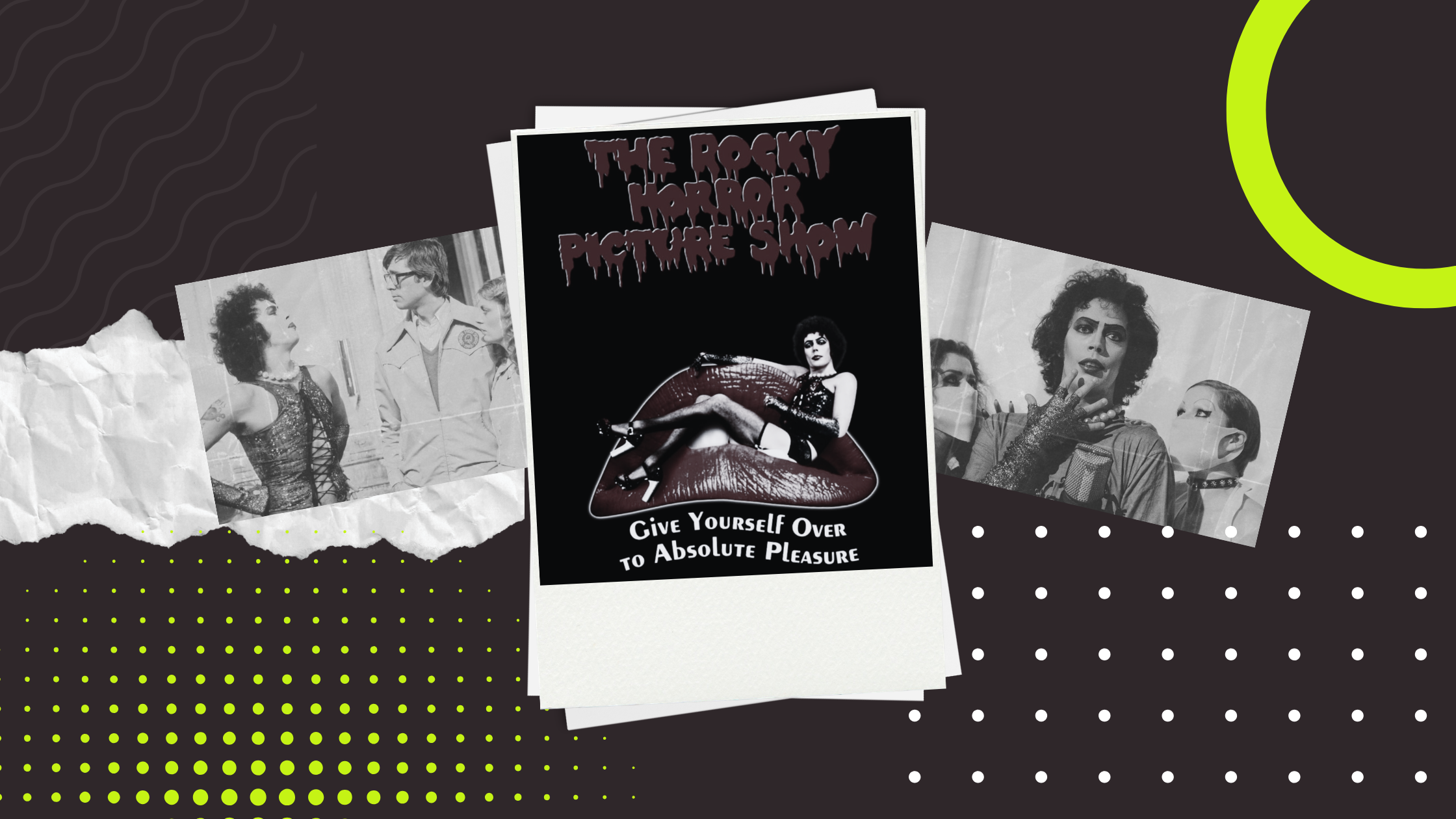
Dedicated to the late Tim Curry and his groundbreaking portrayal of Dr. Frank-N-Furter, the most charismatic being on any screen.
On April Fools’ Day of 1976, audiences of midnight screenings around New York City walk into the theaters not knowing that they are about to witness the birth of a cult classic. Rather like Brad and Janet, the protagonists of the film, the audience are pulled into the magnetic world of The Rocky Horror Picture Show, and find themselves transformed by the experience.
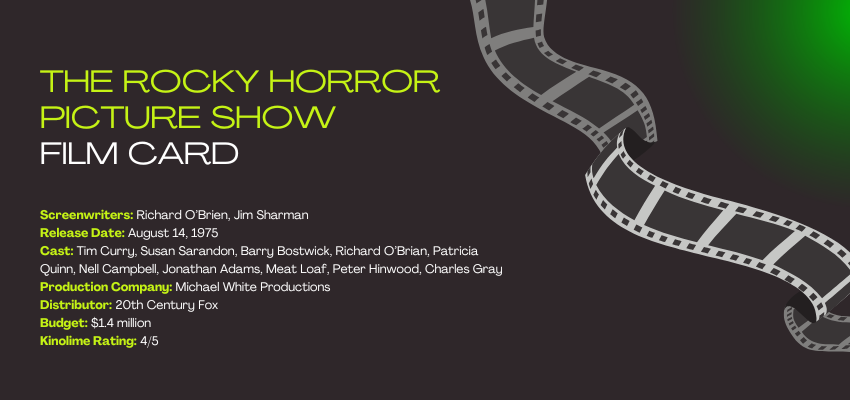
With music, book, and lyrics by Richard O’Brien, with the screenplay co-written between O’Brien and the film’s director Jim Sharman, The Rocky Horror Picture Show is a sci-fi, horror, comedy, and musical film that is a tribute to and a parody of the sci-fi and horror traditions from 1930s through 1960s. It follows some troupes, subverts the others, telling a beautiful story of sexual, cultural, and aesthetic liberation.
Opening Image
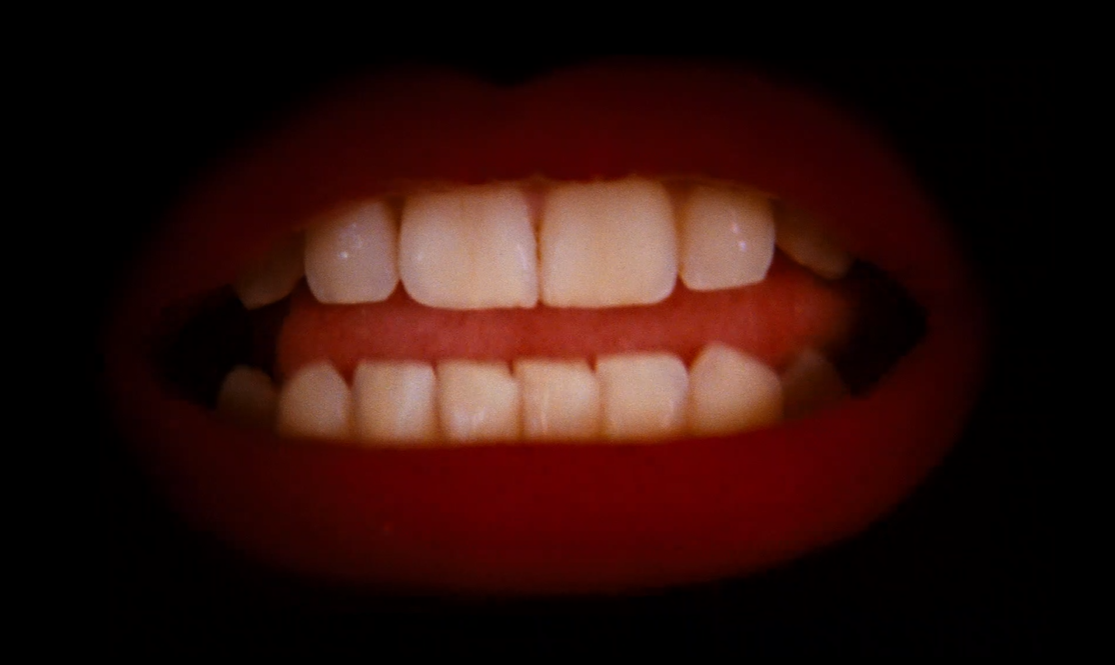
Probably one of the most famous opening images of all time, Rocky Horror begins with blood red lips emerging from the void, singing the film’s first song, “Science Fiction/Double Feature.” The lips, echoing Frank-N-Furter’s lips later in the film, evoke notions of femininity, passion, drag, and unabashed show-off of self, all themes that the film celebrates.
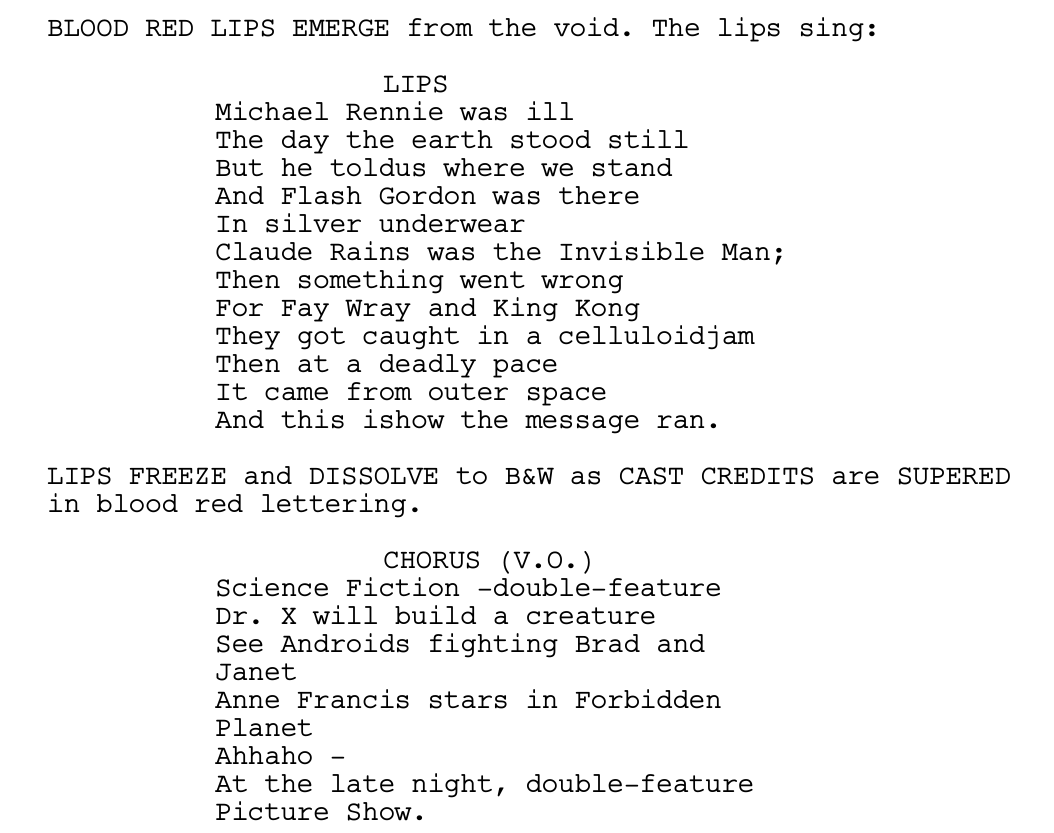
The song’s lyrics pay tribute to classic sci-fi and horror films, mentioning classic characters from King Kong to Dr. X. The lyrics “Science fiction - double-feature” and “late night, double-feature Picture Show,” evoke the idea of cinema on a meta level.
The song also foreshadows what’s to come: building a creature; Brad and Janet; as well as the first mention of Fay Wray, who will return in the floor show as the inspiration to the awakening of a queer/trans identity.
Set Up
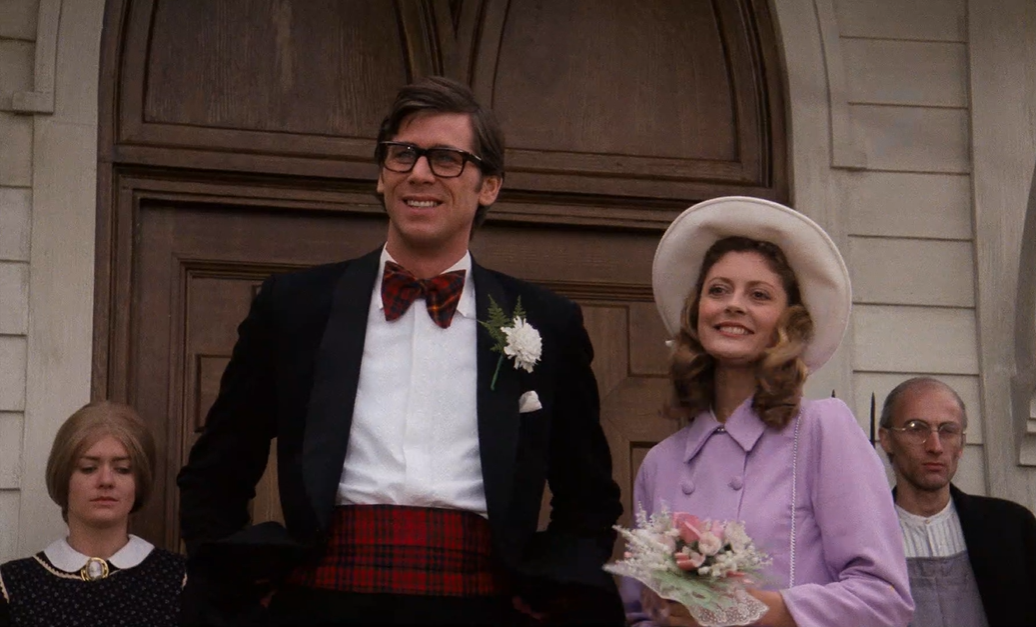
It all begins at a wedding. Brad Majors and Janet Weiss, friends with the bride and groom, form a connection. Brad is described as “a young, slightly awkward clean-cut American,” carrying all of society’s expectations of an American male. Janet embodies every troupe of an old-time Hollywood female main character—beautiful, emotional, and looking forward to the happy ending that a marriage will surely bring her. They both start off in more traditional roles, which sets them up for their later acts of defiance.
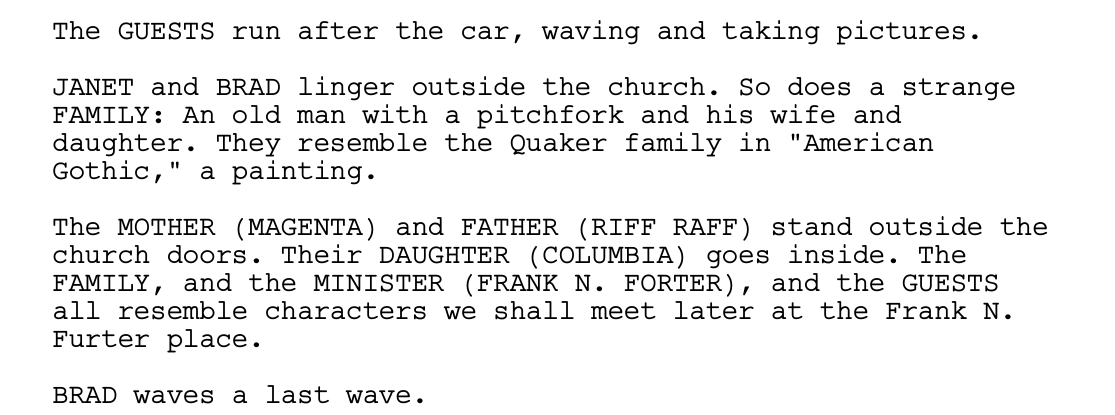
An interesting detail: the guests at the wedding are played by the same actors that will later be in Frank’s castle. This is Rocky Horror’s tribute to The Wizard of Oz, which used the same technique.
It also adds a layer of uncertainty to Brad and Janet’s experience—did it really happen? Or is it but their deepest desires surfacing in their dreams or imaginations?
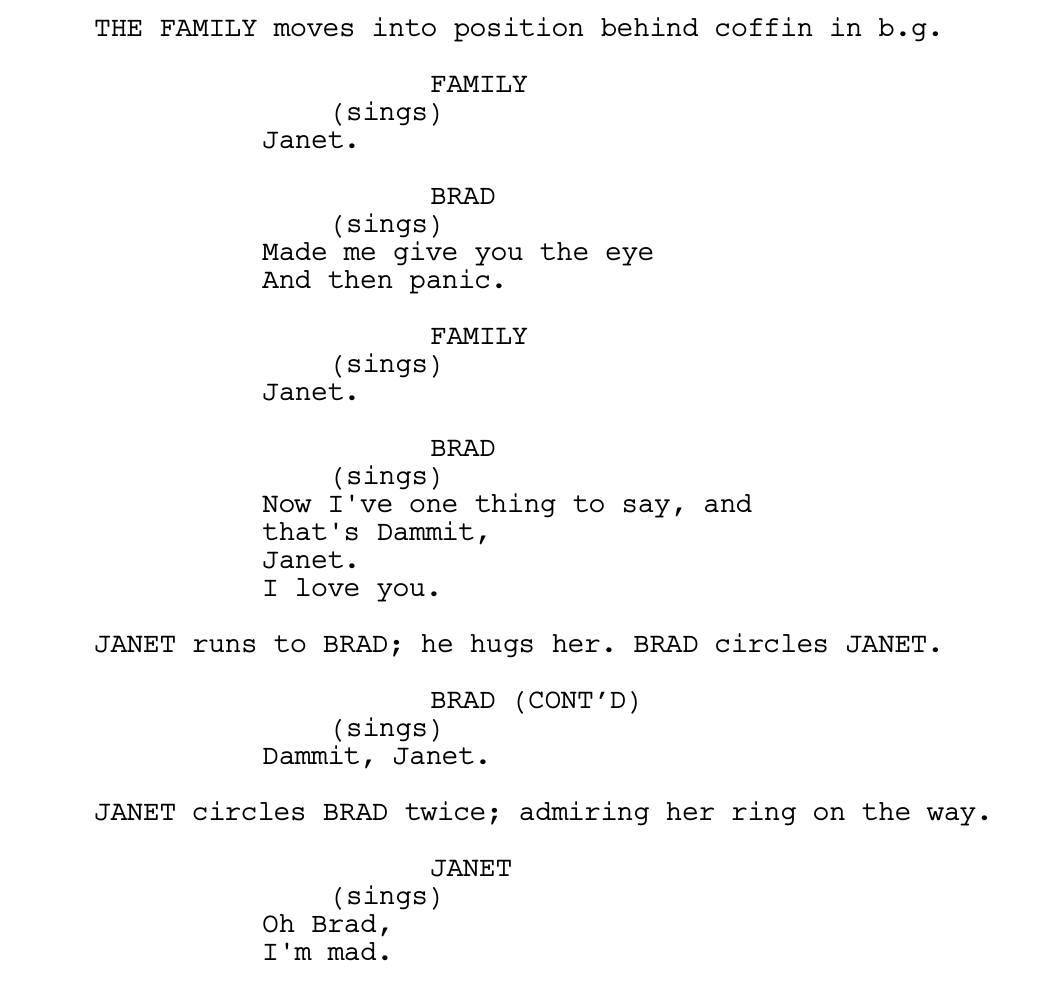
Brad and Janet sing their first duet, a comedic twist to a traditional musical theater love song. It has a hilarious rhyme scheme – “dammit” and “Janet,” “Brad” and “mad” – and a family deadpanning their names in the background.
Inciting Incident
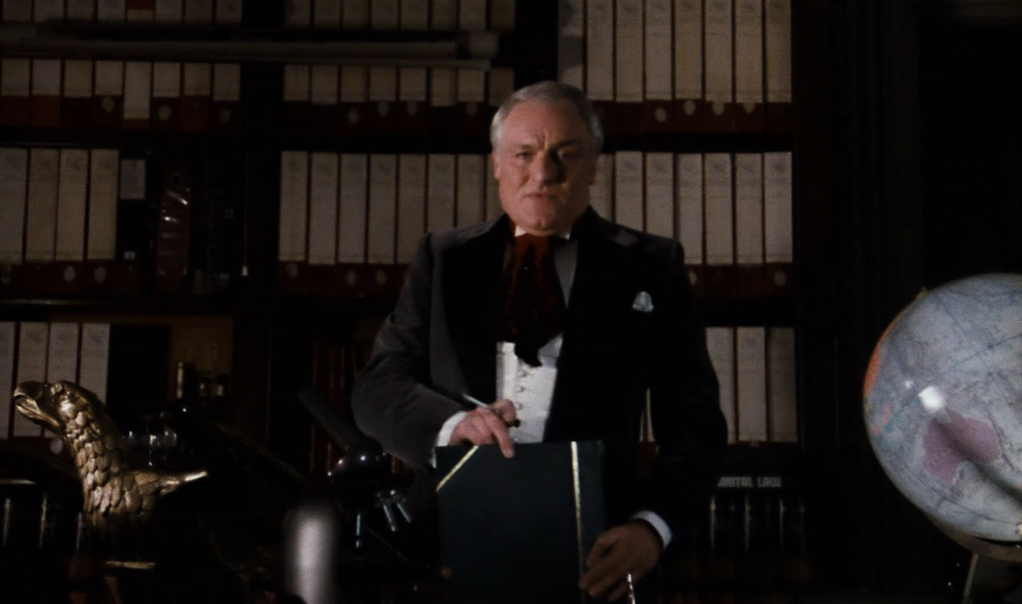
Introduce the Narrator – a criminologist whose scenes all take place in a single study. He details how Brad and Janet pay a visit to their old teacher, Dr. Everett V. Scott, where they drive out into a dark and stormy night without a working spare tire.
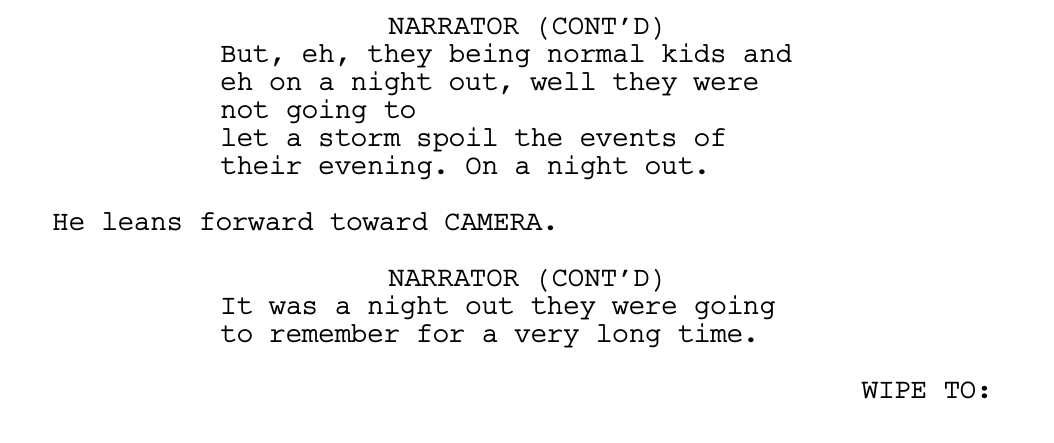
The Narrator speaks in a heightened, authoritative tone that is reminiscent of noir films. He treats Brad and Janet’s car trouble with the seriousness of narrating a crime scene, and pauses dramatically at completely unnecessary places, like before “on a night out.”
After Brad and Janet’s car breaks down in a pouring rain, they venture out to seek help. Brad remembers that they passed “a castle back down the road,” which, comedically, neither of them find odd.
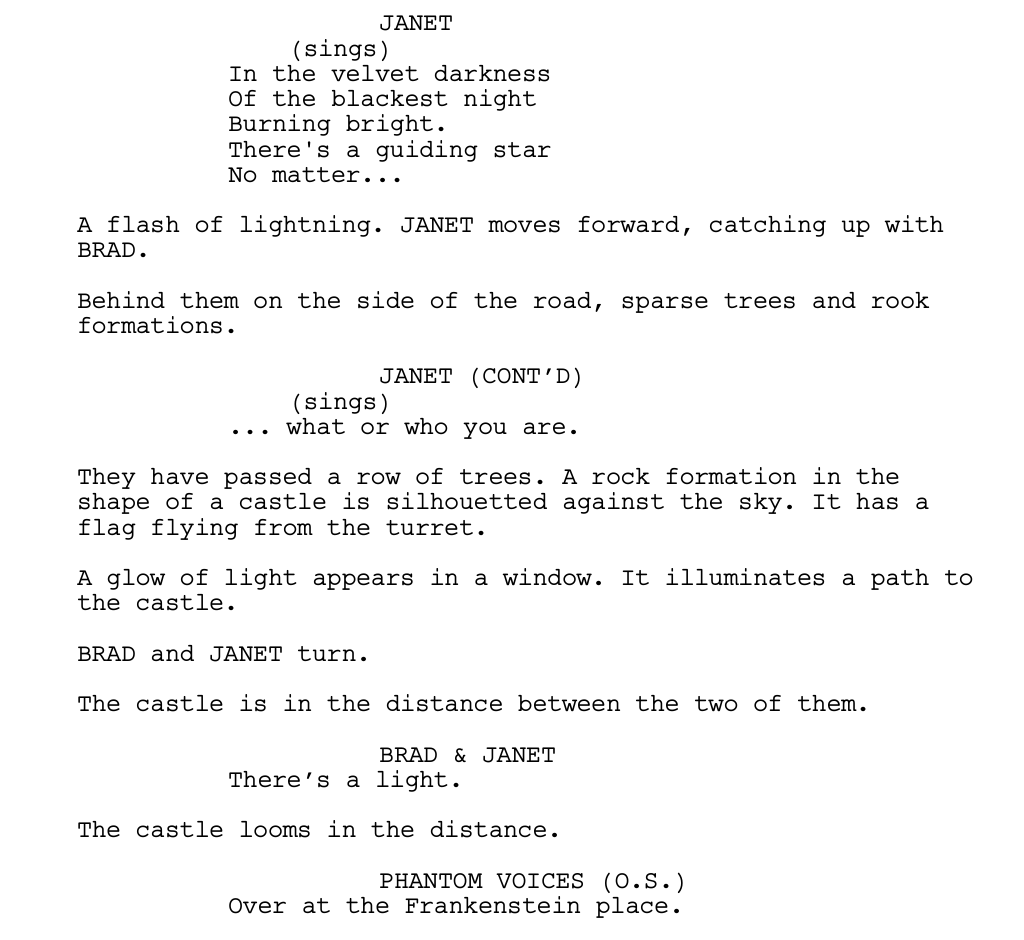
The lyrics, “There’s a light / Over at the Frankenstein place,” is a direct reference to the classic story that Rocky Horror is parodying, that of Frankenstein and his monster.
Debate
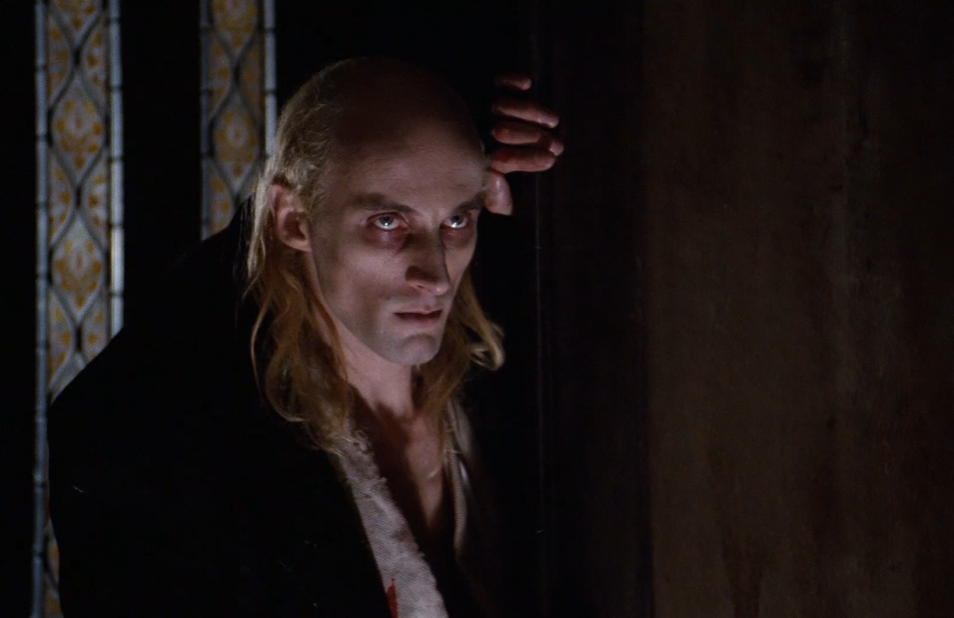
At the castle, they meet Riff Raff, the hunchbacked servant, and Magenta, Riff Raff’s sister and another servant. Magenta reveals that they’ve arrived “on a rather special night,” where their Master is having a party.
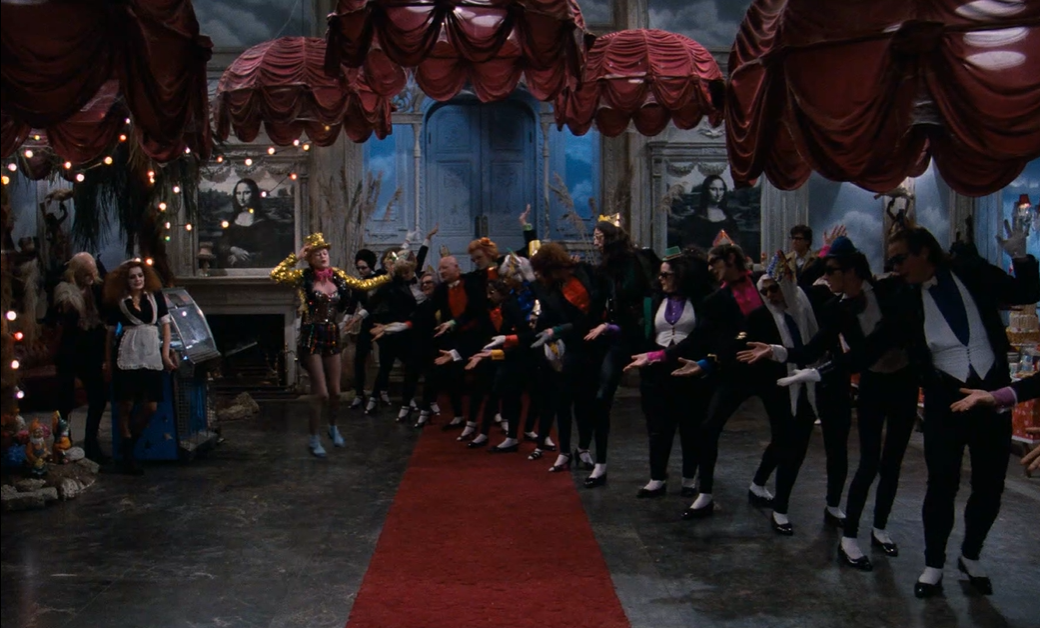
Into the party, we meet the Transylvanian guests, in “strange but elegant evening wear.” We also meet Columbia, a young girl and the household groupie. They sing and dance to a celebratory song, “Time Warp.”
One of my favorite bits of Rocky Horror’s writing is the fact that it never tries to make the Time Warp more than a dance routine. The way that the song keeps repeating it makes you wonder whether it means anything more. It has every right to be, but the film also makes it okay if it doesn’t.
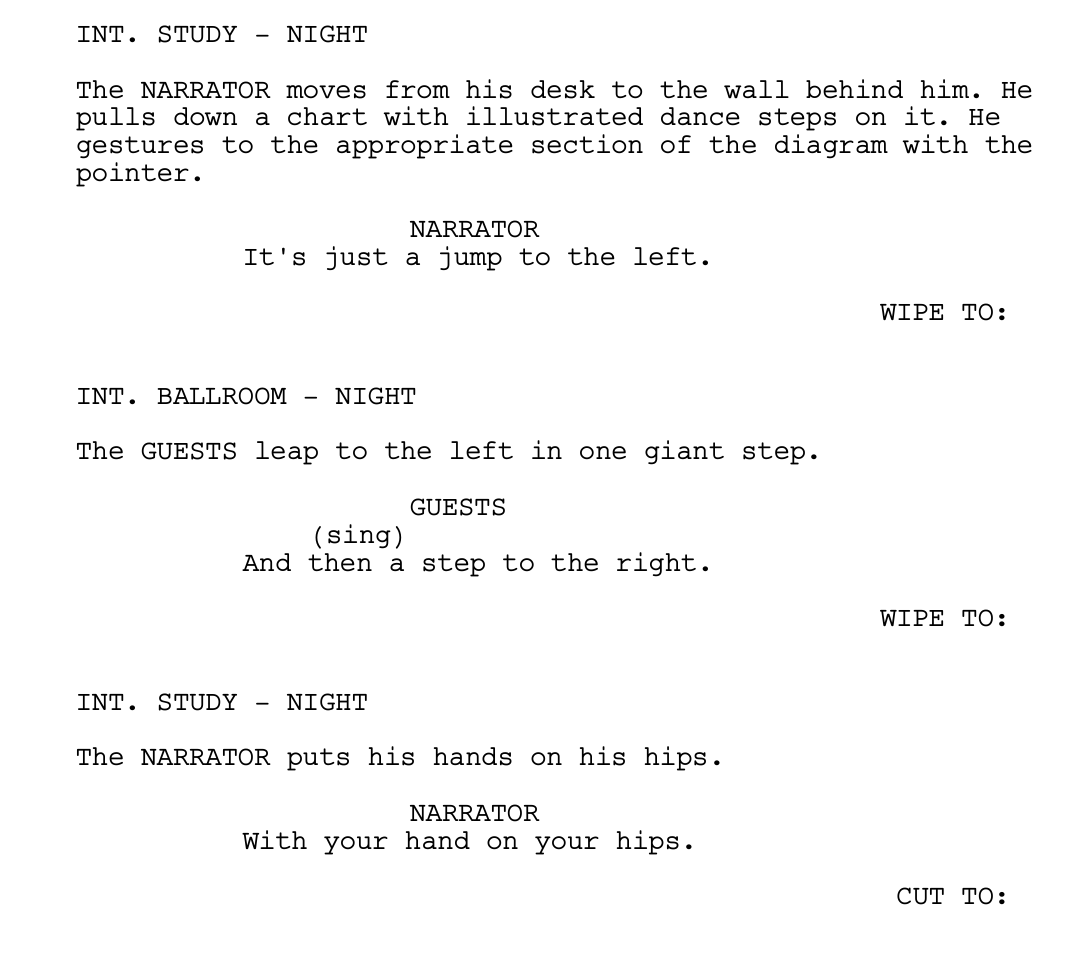
Janet is frightened by the guests’ behavior. She wants to leave. Brad insists on meeting the host and asking to use their phone first.
Break Into Two
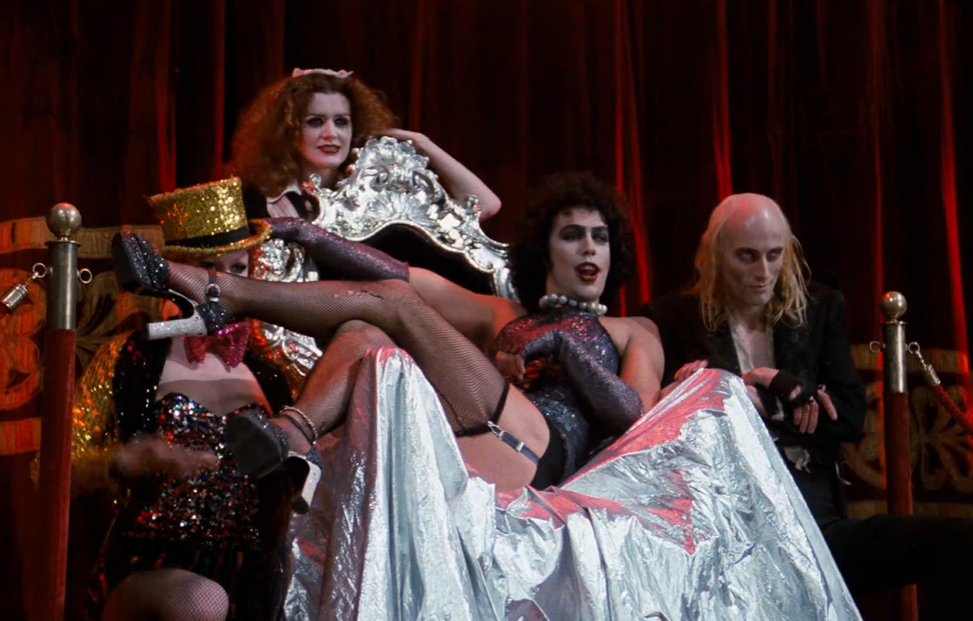
Introduce Frank-N-Furter, the master of the house, the intersection of a mad scientist and a drag queen. He is an attractive, transgressive, and self-centered “sweet transvestite / From Transsexual Transylvania.”
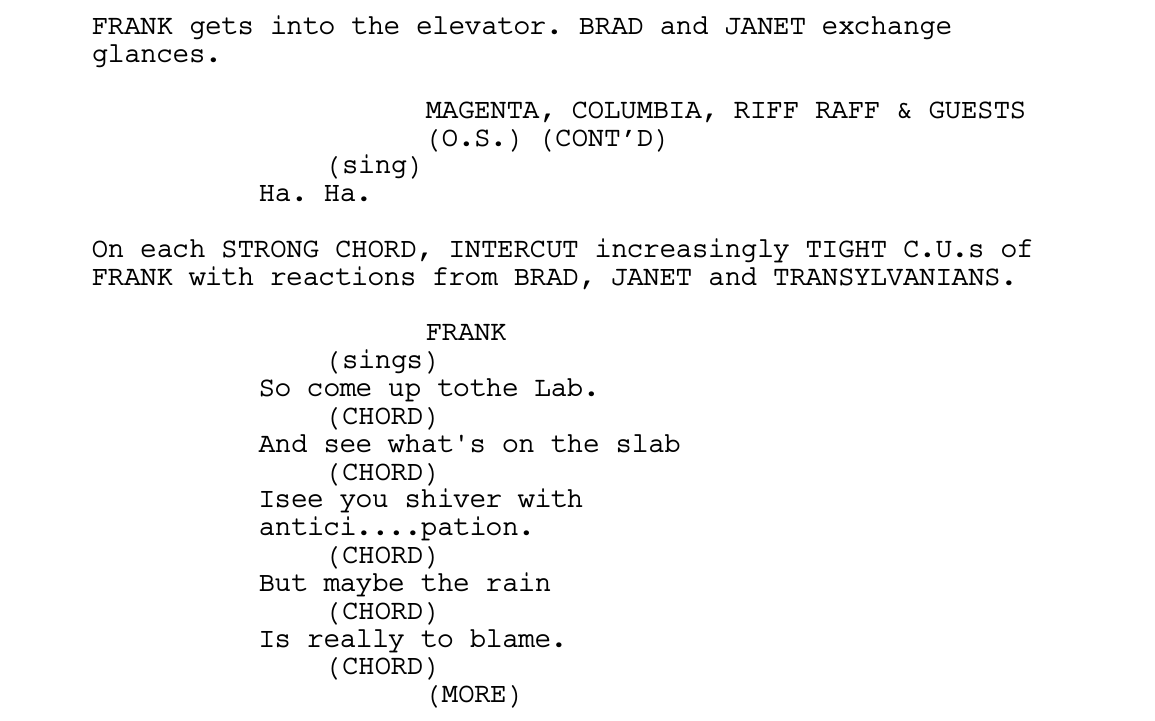
The famous “antici…pation” line is yet again a great example of putting a dramatic pause where you can’t explain why you need it – aside from wanting to be dramatic.
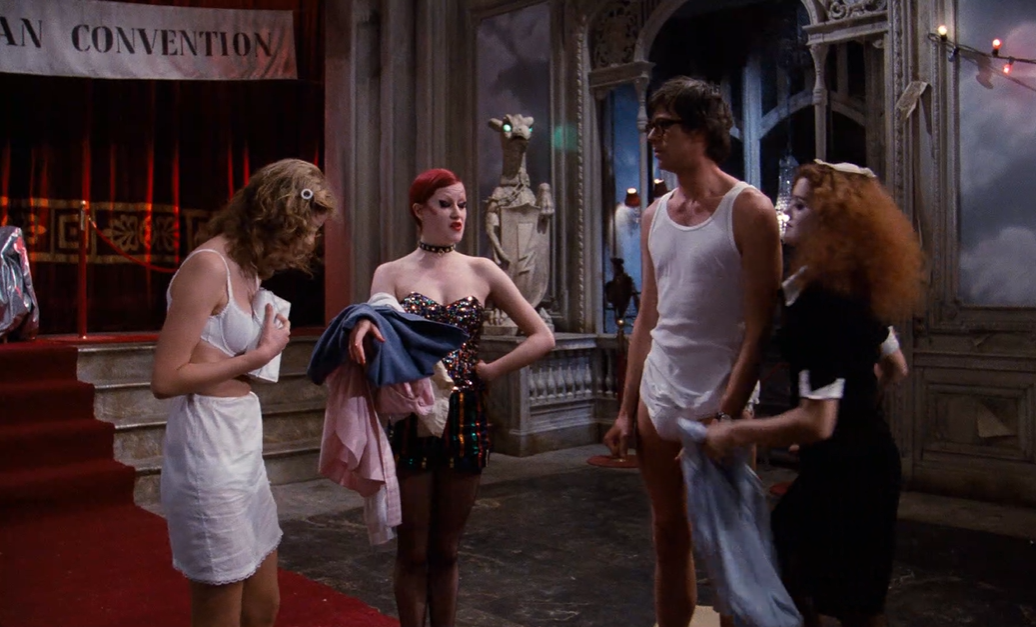
Frank invites Brad and Janet to stay the night and to visit his lab. After Frank disappears up the stairs, the servants take off Brad and Janet’s clothes, symbolizing the return to their truer forms.
There is one more thing I wish to mention here. In this article, I will be following the final cut of the film, addressing Frank in he/him pronouns. However, in this draft of the screenplay, Frank is in she/her pronouns. This means that Frank is, in this draft, transgender rather than only a transvestite.
I don’t want to speculate why the writers made this change. But I do wish to mention that while, in the film, Brad and Janet ask “is Frank your husband?” in this screenplay, they ask “is Frank your wife?” which carries very different social connotations.
Fun and Games
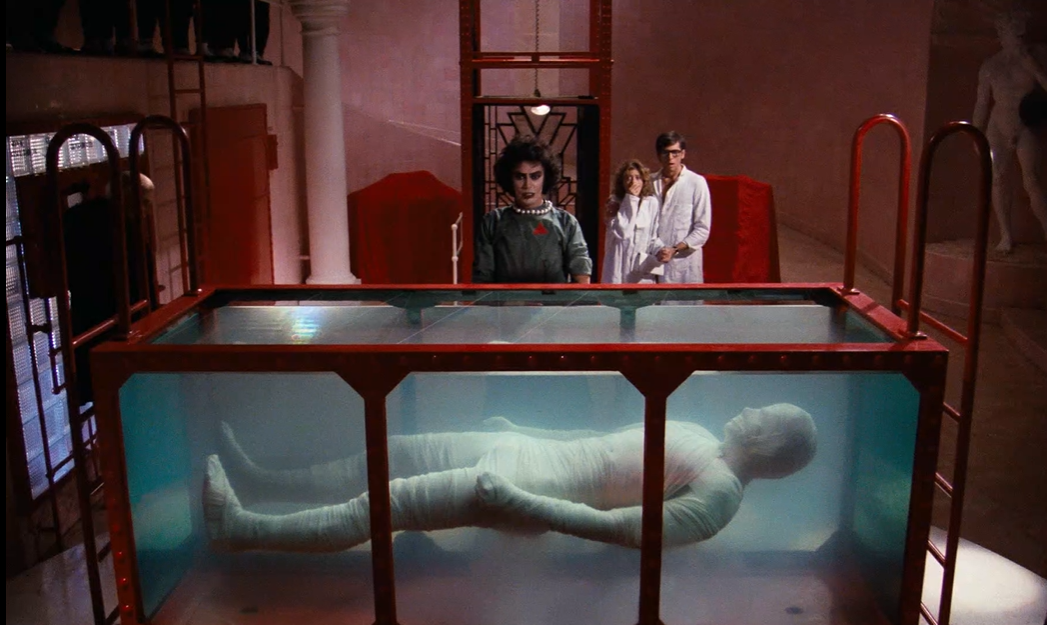
Welcome to Frank’s lab! He shows Brad and Janet the man he’s been making. Tonight is the final step. With the help from his servants, Frank uses the reactor to bring the man to life.
The creation’s name is Rocky Horror. And he is entirely as Frank devises him to be: muscular, with blonde hair and a tan, built to relieve Frank’s tension. He starts off growling like all Frankenstein’s monsters do. But then the film subverts the expectations entirely, and has Rocky bursting into song.
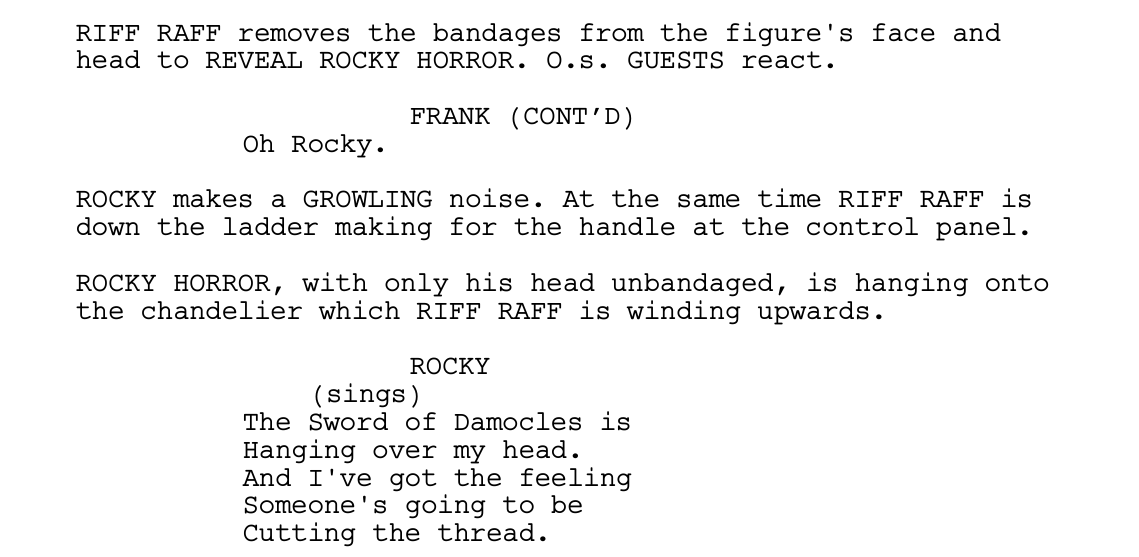
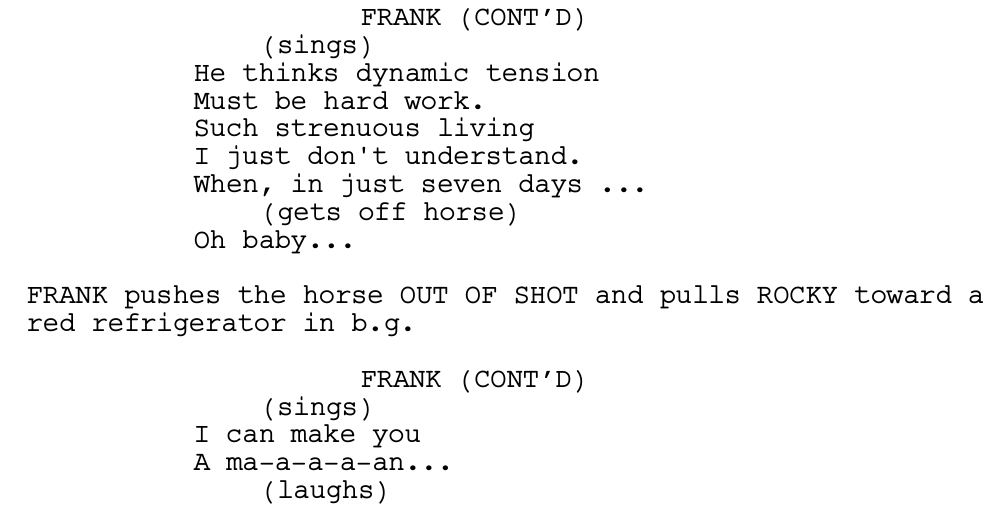
Rocky runs around the lab, sings about his confusion about his identity and his misery, before Frank finally gets hold of him again. The next number, “Make You a Man,” is Frank singing about how in seven days, he’ll make Rocky the perfect man for him.
Midpoint
Suddenly, the large refrigeration door falls, and Eddie, previously frozen by Frank, bursts in on his motorcycle. He sings about a rock-and-roll lifestyle. Columbia swoons for him, while the rest of the guests happily party with him.
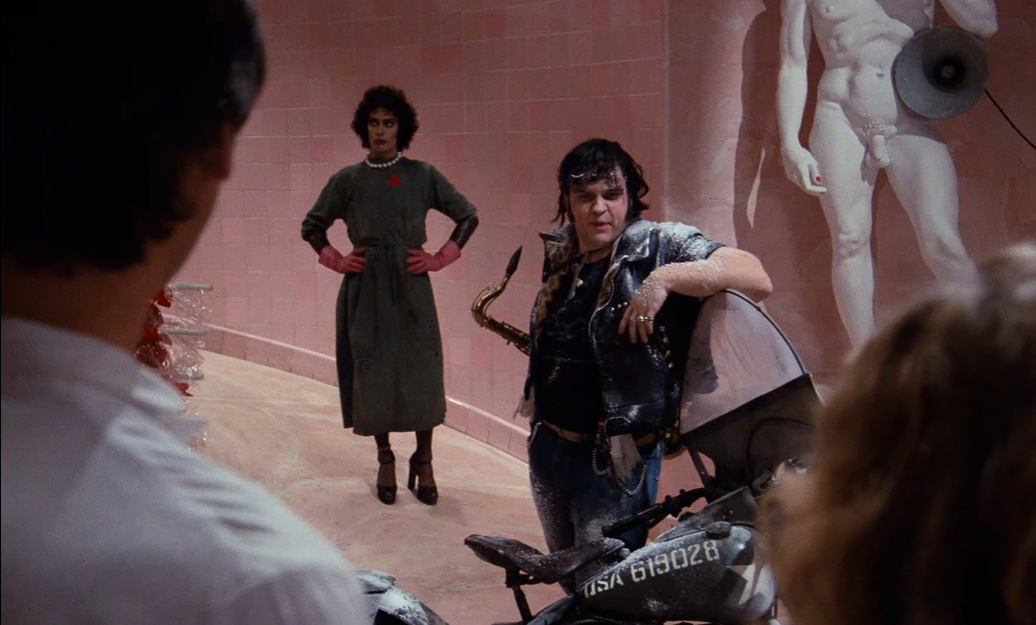
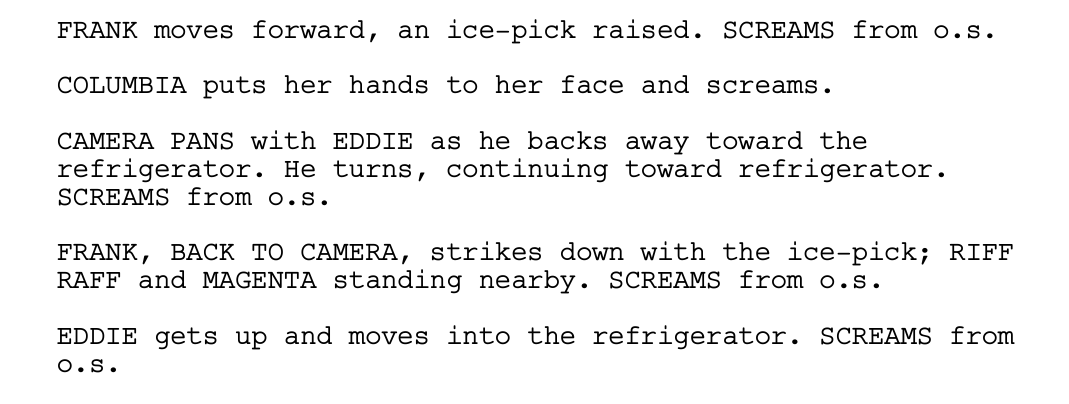
This interruption infuriates Frank. After locking Rocky in the elevator, he picks up an ice pick and murders Eddie.
P.S. The writing of Eddie’s murder is weirdly hilarious, with “SCREAMS from o.s.” added to the end of every single action line.
Rocky, frightened, flexes his muscles to Frank to prove his value. After a reprise of “Make You a Man,” Frank and Rocky depart for the bridal suite.
Bad To Worse
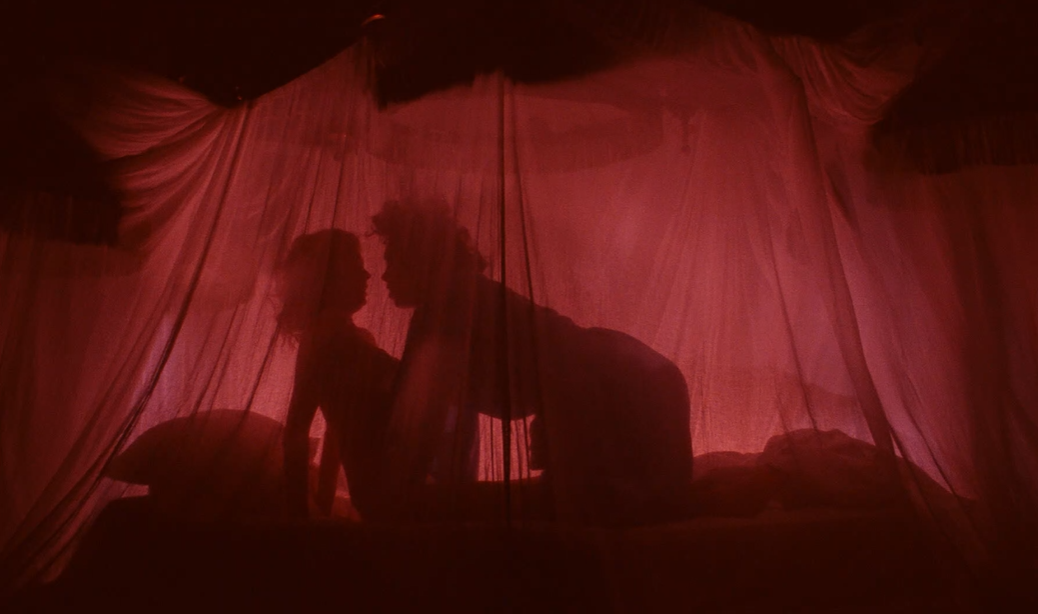
Brad and Janet are shown to separate rooms. Janet hears Brad’s voice, opens the door for him, and has sex with him, only to discover that it is actually Frank. Janet tries to object at first, but soon gives in to Frank’s temptation. The same thing happens between Frank and Brad.
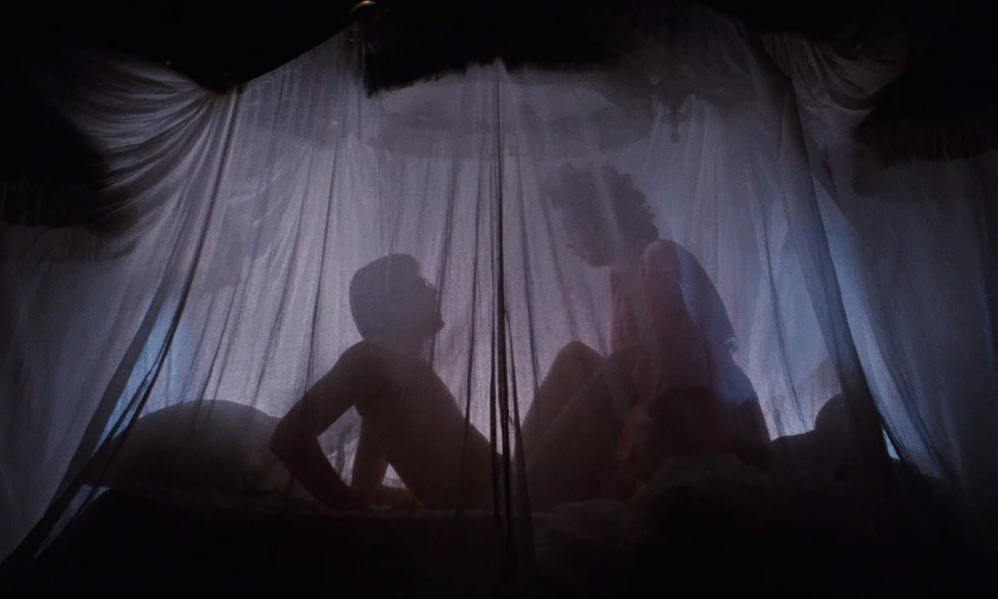
Meanwhile, because of Riff Raff’s mistake, Rocky escapes the chains that bind him to the bridal suite. Frank punishes Riff Raff for Rocky’s escape.
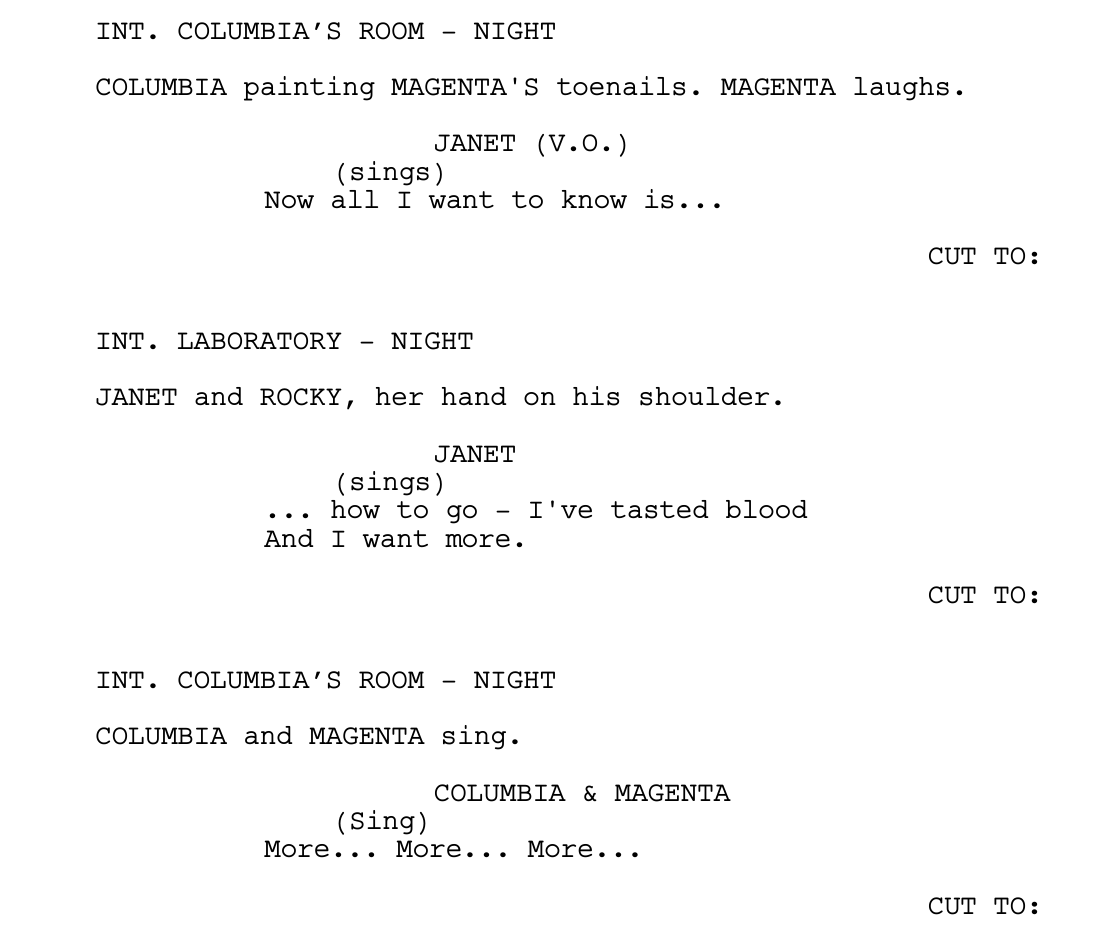
Janet discovers Brad and Frank’s affair from the lab’s monitor. There, she runs into Rocky, wounded from his escape. After cleaning his wounds, she fully gives in to her desires, and seduces Rocky, while Magenta and Columbia watch them from their TV monitor.
Break Into Three
A man in a wheelchair shows up at the castle’s gate. It is Dr. Scott, Brad and Janet’s tutor, now a government investigator of UFOs, and Franks’ rival scientist. Frank pulls Dr. Scott into the room with them, where Dr. Scott expresses his surprise finding Brad there, since he is there to look for Eddie, who turns out to be his nephew.
Frank also discovers Janet and Rocky together in the tank, which makes him furious. He invites everyone to a meal together. They sing a song reminiscing Eddie.
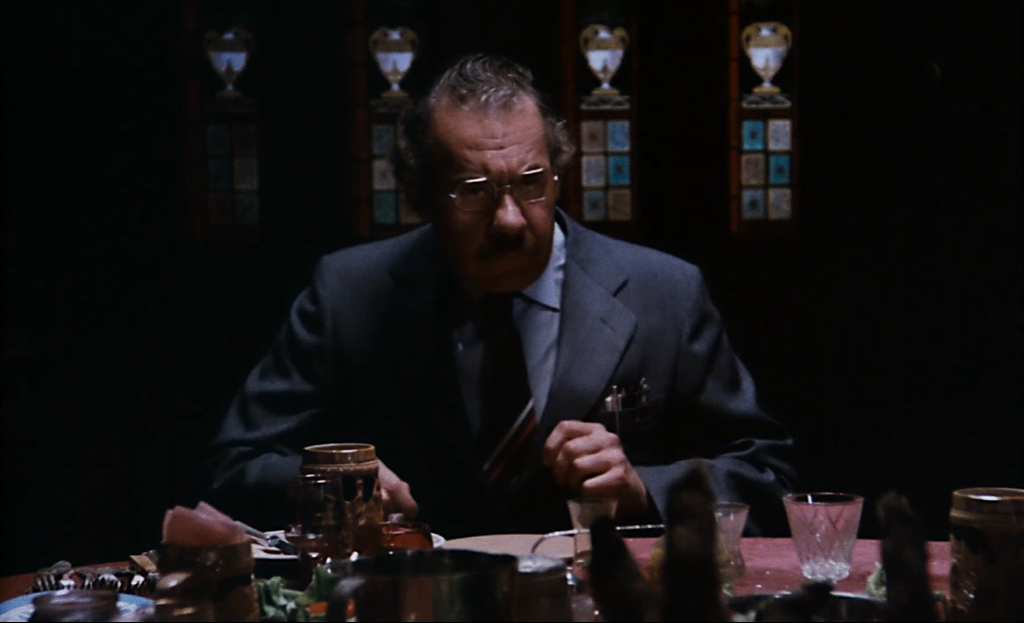
Dr. Scott realizes that Frank is in fact an alien. At the reveal that the meat they are eating is in fact made from Eddie’s remains, Janet screams in Rocky’s arms, which provokes a jealous Frank to chase her through the castle, warning her to wise up about what she’s doing.
When they arrive at the lab, Frank turns Janet, Brad, Dr. Scott, Rocky, and Columbia, who is saddened by Eddie’s death and wants nothing more to do with Frank, into nude statues.
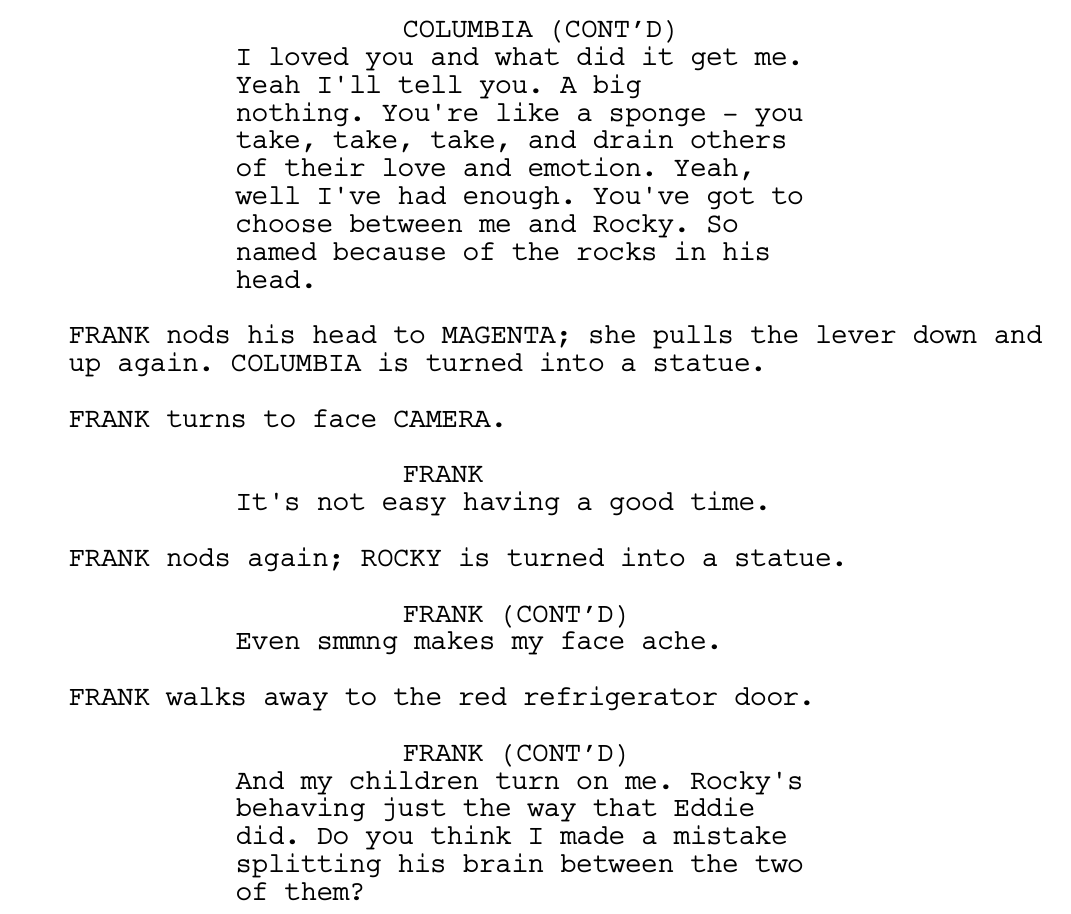
When Magenta asks Frank when they will return to Transylvania, claiming that she is weary of earth, Frank shows no sign of accepting her advice.
Finale
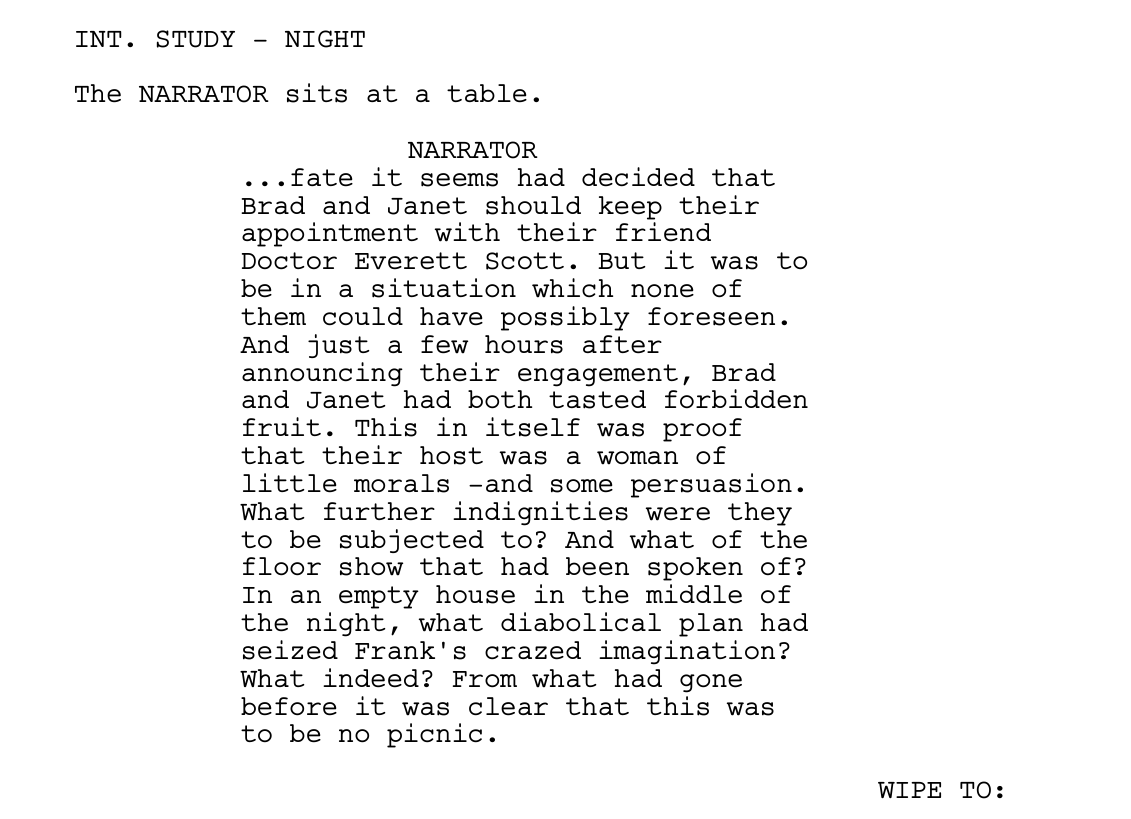
The narrator takes us to the finale: the big floor show, where Frank unfreezes the people he’s turned to statues, and puts on a show with them.
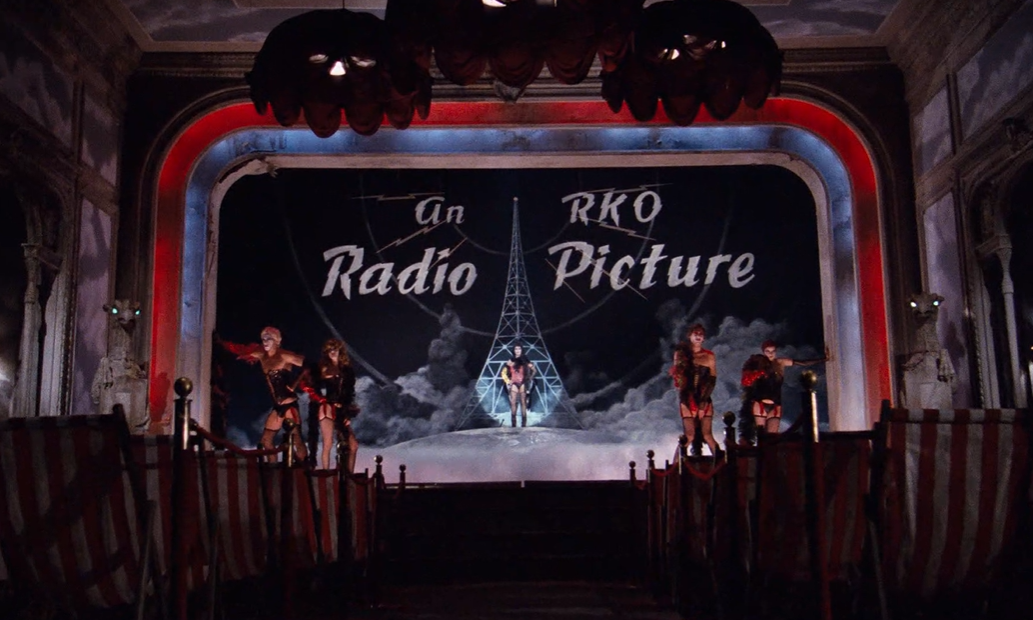
This is the moment that the entire film is building up to. The majority of lyrics for the first half of the film has been metaphorical, abstract, and hilarious, but in the second half, the lyrics have become far more literal and straightforward.
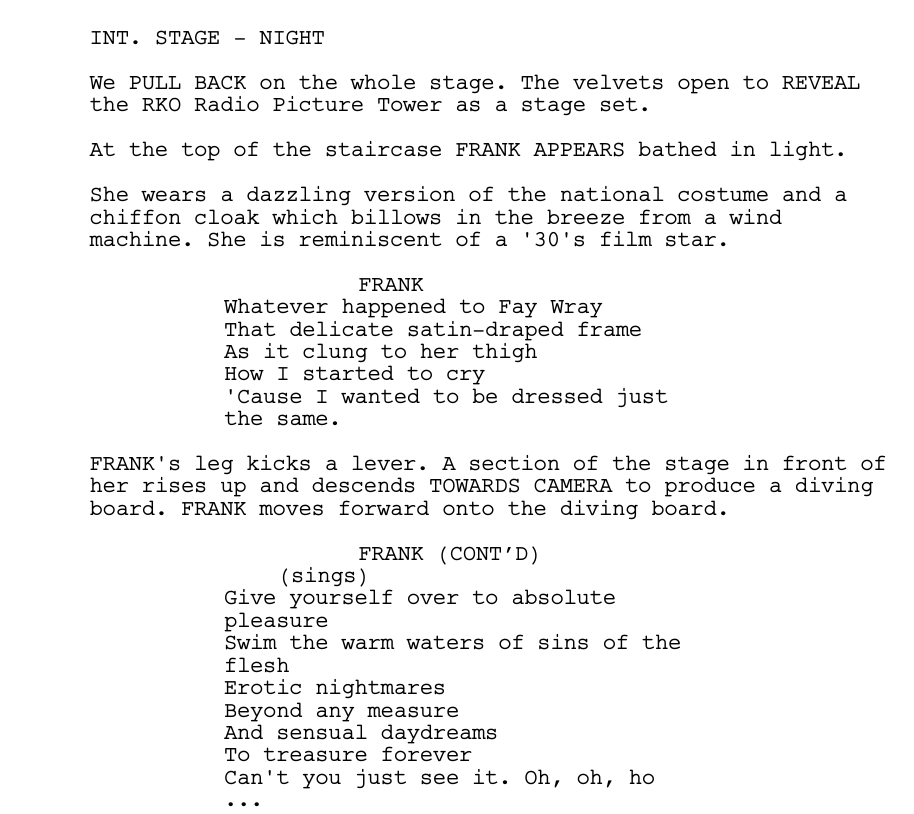
Frank begins with a description of the satin Fay Wray is dressed in, expressing how he wants to be dressed “just the same.” The lines of “Give yourself over to absolute pleasure” or the repeated “Don’t dream it. Be it” are also some of the most direct lines sung in this film.
The audience has been opening themselves up to this world, the same way that Brad and Janet have been. And in this final moment, there’s no swimming around the true message of the story anymore. The lyrics of “Rose Tint My World” is what Rocky Horror is about. It’s what the film wants you to carry in your mind as you go home.
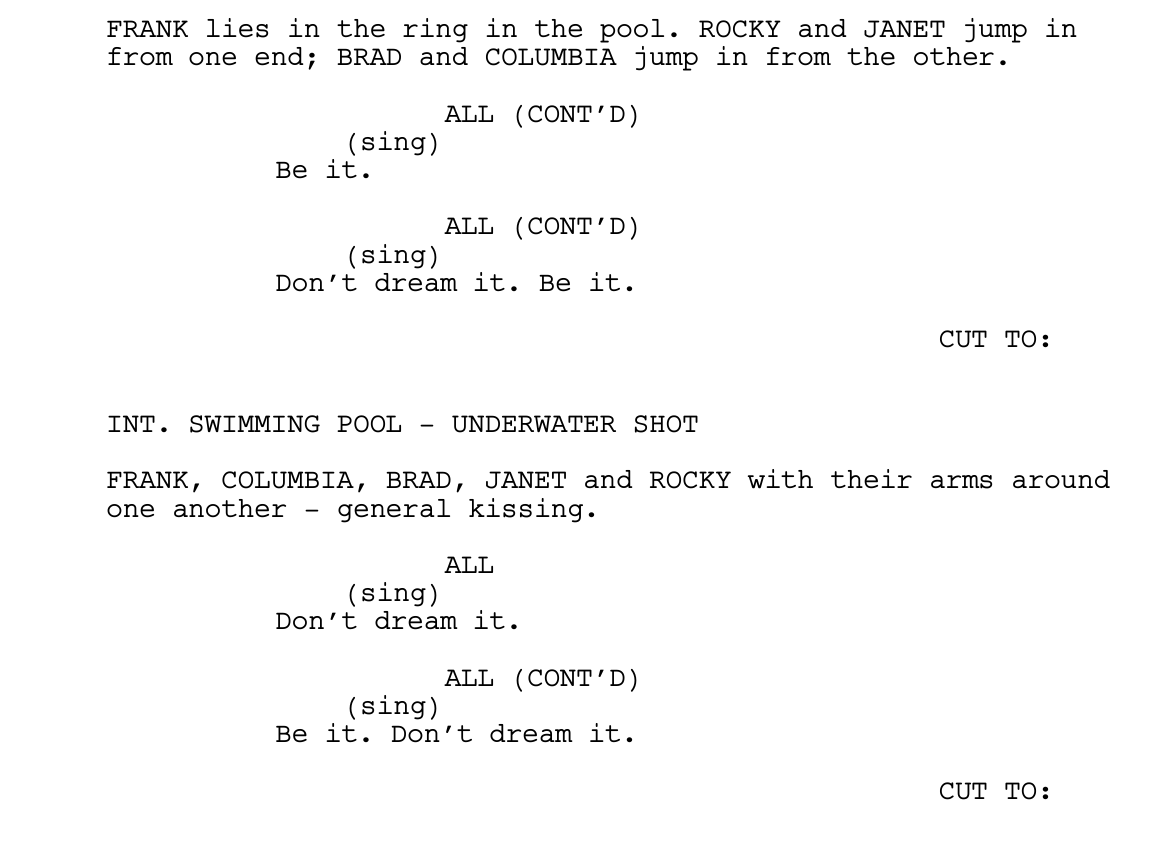
For some reason, one of the funniest lines in the script for me is here, with the cast in the pool, and the script simply writes: “general kissing” – basically saying “there’s quite some kissing, and you can picture them however you like.”
Riff Raff and Magenta suddenly enter, declaring that Frank is now their prisoner, a punishment for his extravagant style of living, and that they are returning to their home planet Transsexual.
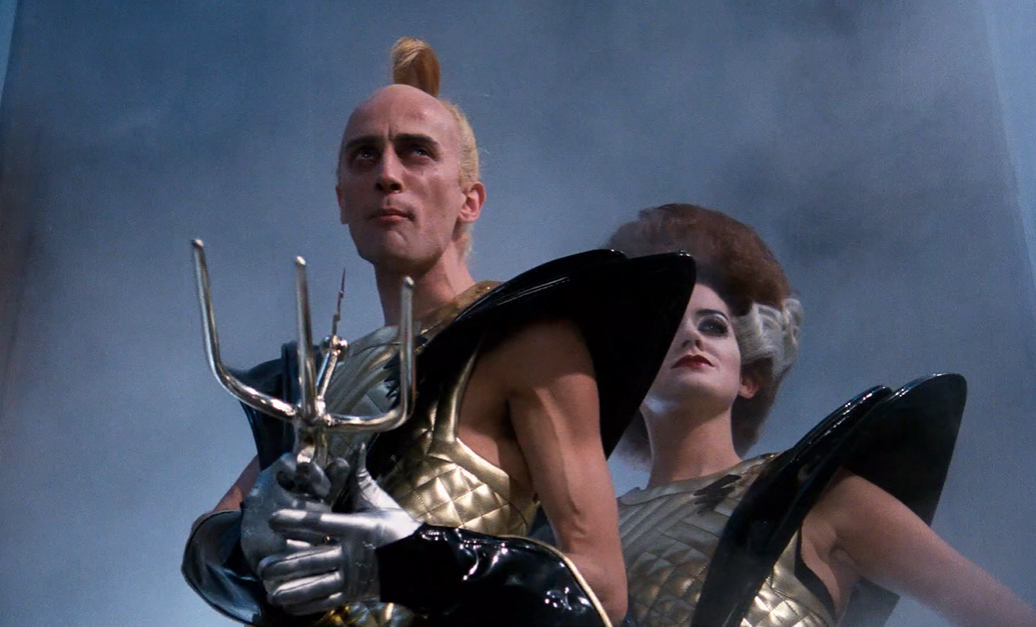
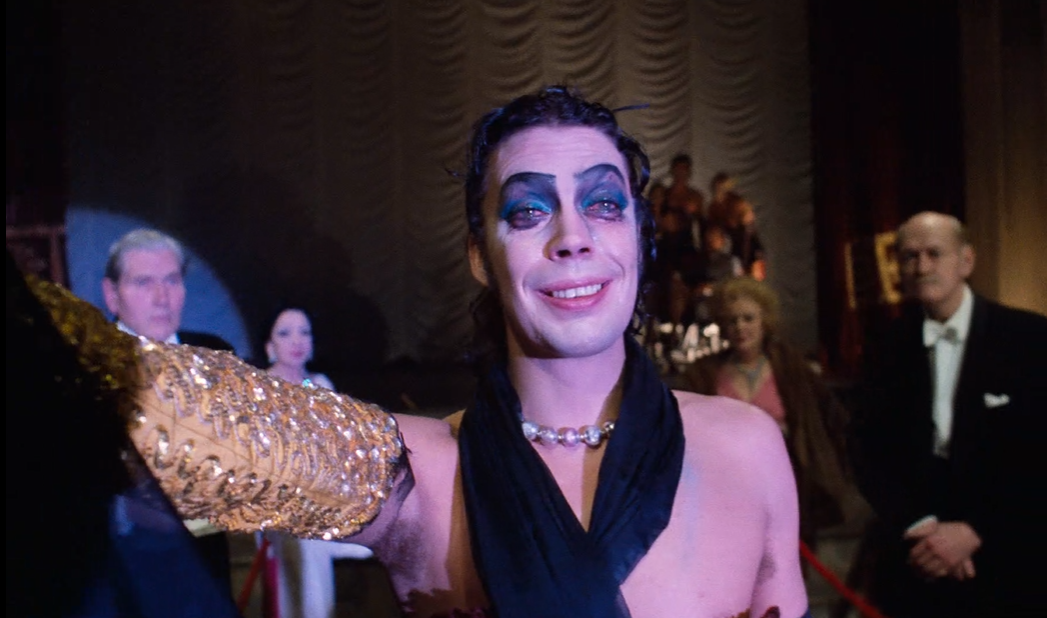
Frank sings one last song “I’m Going Home,” imagining an audience standing up and applauding his departure.
Riff Raff and Magenta reveal, however, that they are going to return without Frank. In the chaos that ensues, Riff Raff kills Columbia and Frank with the ray gun. And when Rocky sobs over Frank’s body, Riff Raff kills Rocky too.
While Brad, Janet, and Dr. Scott escape the castle, Riff Raff, Magenta, and the rest of the guests do the Time Warp again, before beaming the entire house back to Transsexual.
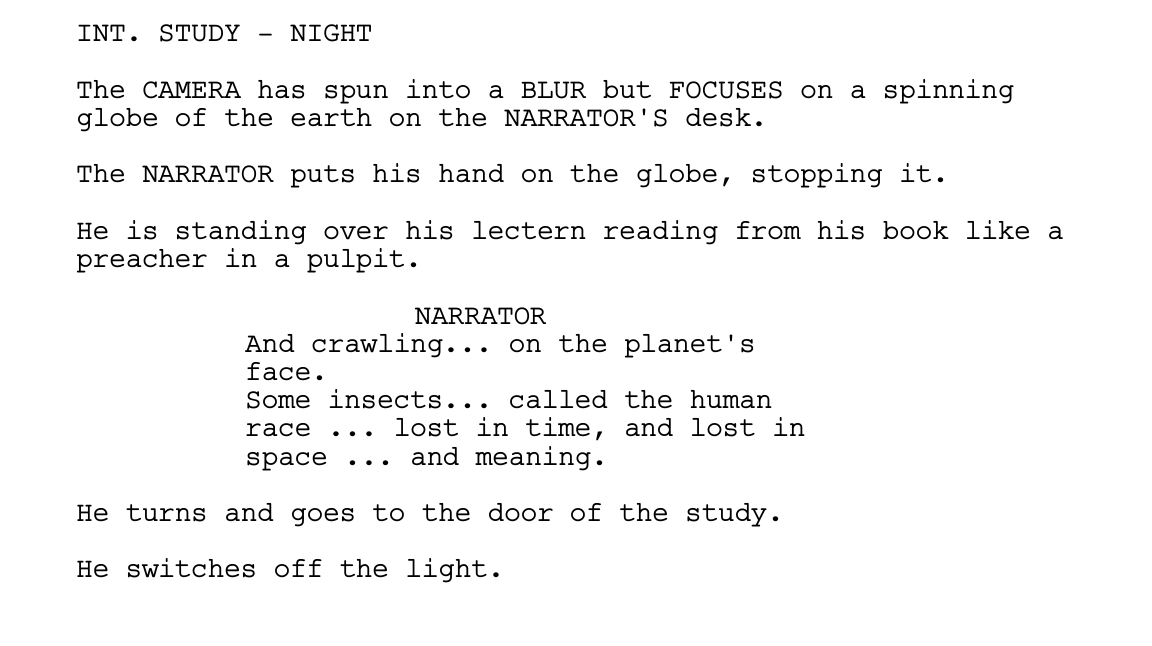
In the end, we see the narrator alone, exiting the study, leaving behind him “a sinister glow inside the globe of the earth.”
While I was writing this article, it came to me how difficult it is to judge The Rocky Horror Picture Show simply by its screenwriting qualities. Its plot and characters do not always make sense, yet it is the kind of story where things don’t have to.
The film born from this script is special in the way that everything works perfectly together. Its music, the acting, the costumes and set design… (I can talk all about how insane it is for thirty consecutive pages of the script to be set in a single lab, and how the production design still allows the story to be interesting and dynamic) and most of all, the cult following that it inspires, its social impact. It transforms the way cult classics are made, influences generations of queer people to be more comfortable with who we are, and inspires countless films and TV shows to come.
Therefore, if The Rocky Horror Picture Show has to teach our generation of screenwriters anything, I hope it teaches us this: write something that is so special, so uniquely yours, that there’s no way for the story to be anything but that; and that a story will take the form it’s meant to take. So don’t dream it. Be it.